I saw a number last week that made my jaw drop. A TikTok Shop seller I know—good guy, works hard, great video content—told me his return rate was running at 34%. Thirty-four percent. For every 100 orders he ships, 34 come back. He is losing money on shipping alone. He thought the problem was sizing. He thought it was fit. He was adding measurement charts, doing fit videos, even measuring each garment before packing. Nothing changed the return rate.
Then I asked him one question: "What fabric are you using for the top-selling item?" He said, "A cheap polyester chiffon. It looks great on camera. It’s flowy. The price was right." And there it was. The silent killer of his P&L statement. The fabric itself was driving the returns. Not the cut. Not the sewing. The fiber.
At Shanghai Fumao, we have watched this play out in real-time over the last two years. The rise of TikTok Shop and live selling has completely rewritten the rules of fabric sourcing. The camera sees one thing. The customer’s hands feel another thing. And when those two realities collide, the return label gets printed. This is a new problem, and it requires a new sourcing strategy. You can’t use the same fabric specs for a TikTok impulse buy that you use for a department store floor. Let me explain exactly what is happening and how to fix it at the mill level.
And here is the timing crunch. TikTok trends spike in days, not weeks. You cannot afford a 3-4 week shutdown for Chinese New Year to catch you off guard. If a video goes viral in January and you haven’t finished pre-production 6 weeks earlier, you miss the wave. The fabric choices you lock in today determine whether you ride the algorithm or get buried by return requests tomorrow.
Why Do TikTok Shop Apparel Returns Exceed Traditional E-commerce?
Traditional e-commerce returns hover around 20% to 25% for apparel. That’s already painful. But TikTok Shop? We are seeing numbers consistently above 30%, and in some categories like dresses and knit tops, it can hit 40%. This is not a marginal difference. This is a structural problem with how the platform works.
The issue starts with the buying psychology. On a traditional website, a customer searches for "black cotton t-shirt." They have intent. They read reviews. They compare thumbnails. They add to cart and maybe think about it for a day. On TikTok, the purchase happens in seconds. They are scrolling, entertained, and suddenly a video shows a dress that looks incredible under a ring light. The fabric is moving beautifully in slow motion. The price is $28. The button says "Buy Now." Their thumb taps before their brain engages. That is impulse purchasing at scale.
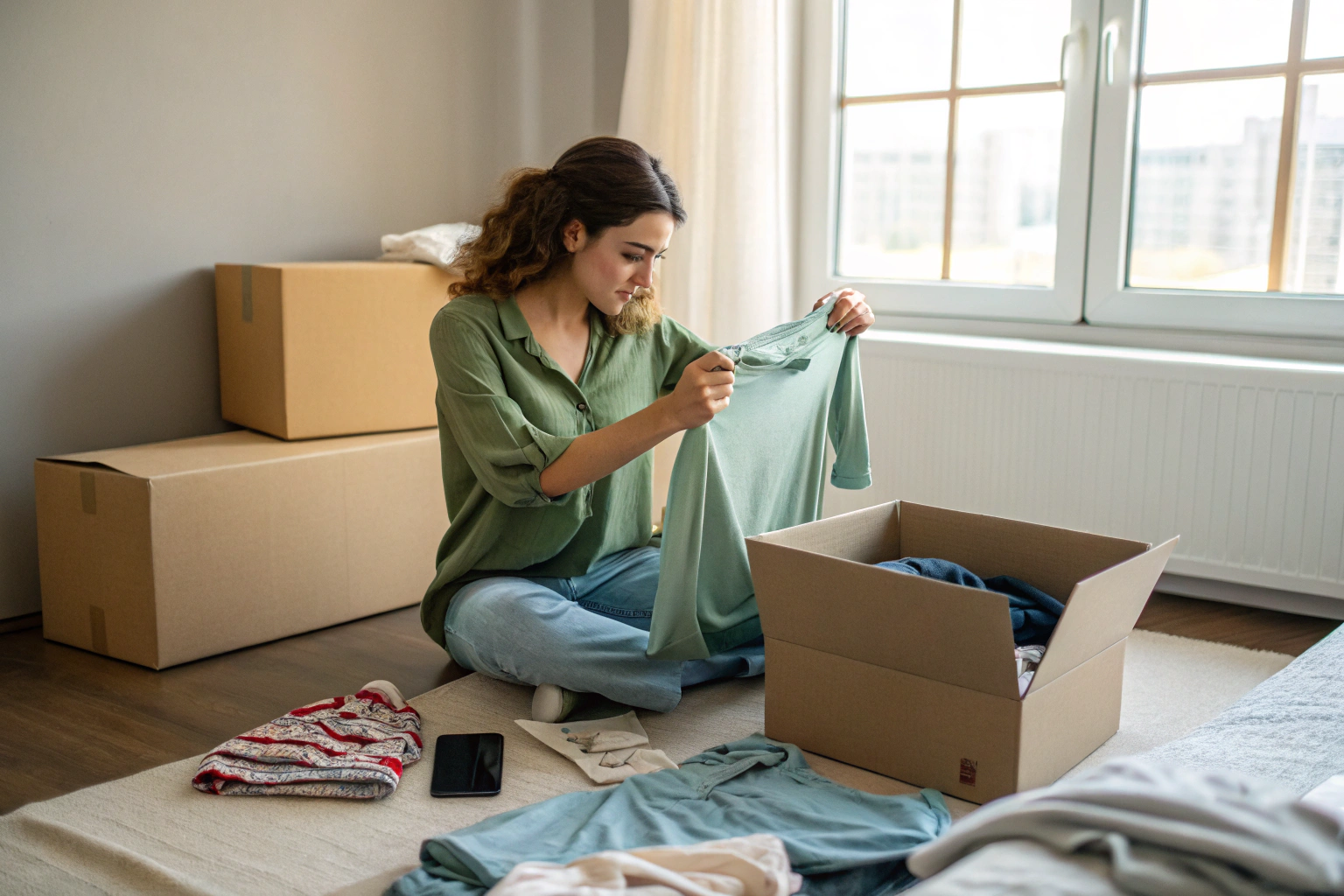
The problem is the expectation gap. The camera, especially with the filters and bright lighting that TikTok creators use, lies. It makes cheap polyester satin look like liquid silk. It makes thin, scratchy lace look delicate and vintage. The customer receives the package 10 days later. They open it in their bedroom under a regular 60-watt bulb. The fabric feels like a Halloween costume. The color is two shades darker. The return is initiated within 4 minutes of opening the package. I’ve seen the data from our clients’ Shopify dashboards. The return reason is not "Doesn’t fit." It’s "Not as described" or "Quality not as expected." That is code for fabric failure.

How Does the "Expectation Gap" Between Video and Reality Drive Returns?
Let me break down the physics of the smartphone camera. I have spent too much time in our fabric showroom watching influencers film content. Here is what the lens does:
- Sheen and Shine: A slight satin weave under a ring light looks like high-gloss charmeuse on screen. In person, it looks like basic lining fabric.
- Drape and Motion: A lightweight fabric thrown in the air on video looks "floaty" and "dreamy." In person, it feels like tissue paper and clings to every lump and bump with static electricity.
- Opacity: A single-layer fabric held up to a studio light looks perfectly opaque on video because the camera adjusts exposure. In person, it’s completely see-through.
I had a client from the US in March 2026. He was selling a maxi skirt made from a cheap polyester georgette. The video showed it twirling beautifully. The return rate was 42%. Forty-two percent. We analyzed the returned items. The fabric had a rough, dry handfeel. It was noisy when you moved. It was not the "silky soft" fabric promised in the voiceover. We switched him to a viscose crepe from our stock line. The price per yard went up by $0.80. His return rate dropped to 18% in the first month. His net profit went up because he was no longer bleeding money on return shipping and restocking fees. If you are trying to figure out how to choose fabrics that reduce TikTok Shop return requests, the first rule is: Never buy fabric based on a video of that fabric. Always get a physical swatch. Always.
What Specific Fabric Handfeel Triggers Immediate Buyer Disappointment?
Through our work with dozens of social commerce brands, I have identified a list of "handfeel dealbreakers." These are the tactile experiences that guarantee a return label will be printed within 5 minutes of unboxing.
| Fabric Handfeel | Common Fabric Types | Customer’s Internal Reaction | Return Probability |
|---|---|---|---|
| "Plasticky" or "Squeaky" | Cheap Polyester Chiffon, Nylon Taffeta | "This feels like a trash bag." | Very High (>80%) |
| "Sandpapery" or "Scratchy" | Low-grade Linen, Stiff Organza | "This is going to irritate my skin." | High (>60%) |
| "Boardy" or "Stiff" | Over-finished Cotton Poplin, Cheap Denim | "I can’t move in this." | High (>50%) |
| "Clammy" or "Suffocating" | Unbreathable Polyester Knits | "I’m sweating just trying it on." | Medium (>40%) |
| "Thin" or "Insubstantial" | Low GSM Single Jersey | "This will fall apart in one wash." | Medium (>35%) |
Let me tell you about a specific intervention we made in October 2025. A TikTok seller was using a 100% polyester satin for a bridesmaid robe. The video was stunning. The robes were being returned en masse because the fabric felt "sweaty" and "cheap." We introduced them to BAMSILK (Bamboo Viscose) . It’s a regenerated cellulose fiber. It has a cool, dry handfeel. It drapes beautifully. It costs more. But the perceived value from the handfeel was 10x higher. The return rate on that SKU dropped from 31% to 11%. The higher fabric cost was completely offset by the reduction in return processing fees. If you are researching how to improve fabric handfeel for social commerce apparel, look at Tencel, Modal, and high-quality Viscose. They feel expensive even when the garment construction is simple.
Which Fabric Types Lead to the Highest TikTok Return Rates?
Over the last 18 months, I have had our customer service team track a specific metric: Return Rate by Fabric Code. We cross-reference the fabric we shipped with the returns data our clients share with us. The patterns are undeniable. Some fabrics are simply incompatible with the TikTok Shop business model unless you are selling at a price point so low that customers expect garbage. But if you are trying to build a brand and get repeat customers, you need to blacklist certain constructions.
The worst offender, by a country mile, is Cheap Polyester Chiffon. It’s the go-to fabric for "affordable" fashion because it costs next to nothing to produce. It’s sheer, it’s lightweight, and it prints vibrantly. It looks amazing on a hanger and under studio lights. But in the real world? It snags on jewelry. It clings with static. It feels like sandpaper against the skin after 20 minutes. And it doesn’t breathe. The customer puts it on, feels like they are wrapped in Saran Wrap, and immediately takes it off. Return requested.

Why Does 100% Polyester Chiffon Generate So Many Return Requests?
It comes down to three specific technical properties of the fabric. I want to get a bit nerdy here because understanding this will save you thousands of dollars.
- Moisture Vapor Transmission Rate (MVTR): This is the fancy term for breathability. Polyester is hydrophobic. It repels water. It does not absorb sweat. The MVTR of a standard polyester chiffon is abysmal. The microclimate between the fabric and the skin becomes hot and humid within minutes. The wearer feels sticky. That’s a return trigger.
- Surface Friction and Static Propensity: Polyester is a great insulator. That means it builds up static electricity like crazy. A chiffon skirt will cling to tights. A chiffon blouse will ride up and stick to the back. The garment doesn’t hang the way it did in the video. It looks messy. Return requested.
- Seam Slippage Under Low Stress: I wrote a whole article on seam slippage, but it’s critical here. Chiffon is a loose, low-density weave. When a customer bends their elbow or sits down, the seams grin open. The threads don’t break, but you see the gaps. The customer thinks the garment is falling apart. Return requested.
I remember a specific batch from August 2025. A TikTok seller ordered 5,000 yards of a custom printed polyester chiffon for a summer dress. The video went viral. Sales exploded. Then the returns started. The main complaint? "The seams are ripping." We pulled the returns and inspected them. The seams weren’t ripped. The fabric had simply slipped apart at the stitching line under the stress of a size medium customer sitting down. The fabric had passed our standard tensile test, but it had failed in the real-world application. We fixed it for the next run by switching to a slightly heavier chiffon with a higher twist yarn. That increased the internal friction of the weave. If you are sourcing how to identify quality chiffon fabric that reduces ecommerce returns, look for "high twist" or "crepe" chiffon. It has more texture and less slipperiness than standard flat chiffon.
Does Stretch Fabric Reduce Returns or Increase Size Exchange Issues?
This is a paradox. Stretch fabric is supposed to solve fit problems. It forgives a multitude of sizing sins. And for traditional e-commerce, a bit of spandex usually reduces returns related to fit. But on TikTok Shop, we are seeing a different dynamic.
Stretch fabric creates expectation confusion. A customer sees a fitted ribbed knit dress on a size 2 model. The fabric is hugging every curve. The customer is a size 12. They order a size Large. The dress arrives. It stretches to fit them. But because it is stretched, the color looks lighter. The rib texture is flattened out. And most importantly, it shows every single contour of their undergarments and body. The dress is "fitting," but it is not "flattering" in the way the video suggested. The customer feels exposed. They feel like the fabric is too thin. Return requested. Reason: "Looks different on me."
Here is the counter-intuitive advice I give to TikTok sellers: For knits, use a slightly heavier, more structured fabric even if it has less stretch. A Ponte di Roma knit (a double knit) has about 20% stretch, not 60% like a jersey. It is thicker. It holds its shape. It smooths over body contours instead of clinging to them. It is more expensive than jersey. But the return rate is significantly lower because the garment looks on a size 12 body more like it looked on the size 2 model. The fabric is doing the work of creating a silhouette, not just the body inside it.
I had a client in January 2026 switch from a cheap rayon-spandex jersey to our Ponte di Roma for a bodycon dress. Sales dipped slightly because the video didn’t look quite as "skintight." But the return rate fell off a cliff, from 38% to 14%. Customer reviews started saying "great quality, thick material." That is the kind of review that stops the scroll and builds trust. If you are navigating how to select knit fabrics for better fit and lower return rates, prioritize recovery over raw stretch percentage. Recovery is how well the fabric snaps back to its original shape. Poor recovery means baggy knees and saggy elbows. That also triggers returns.
How to Source "TikTok-Proof" Fabrics That Reduce Return Rates?
So we know the problems. The camera lies. The handfeel disappoints. The stretch backfires. How do we source fabric that can survive the journey from a 15-second video clip to a customer’s bedroom with its reputation intact? At Shanghai Fumao, we have developed a set of internal sourcing guidelines specifically for social commerce brands. We call it the "TikTok-Proof Fabric Checklist."
The core principle is this: Prioritize Visual Honesty and Tactile Safety. You want a fabric that looks almost the same on an iPhone camera as it does in real life, and you want a fabric that feels familiar and comforting to the touch. This usually means stepping away from the cheapest possible option and stepping toward mid-tier, natural-fiber blends and performance finishes.
One of the biggest shifts we are seeing is toward Textured Fabrics. A slub linen blend, a seersucker, a jacquard, a burnout velvet. These fabrics have inherent visual interest that comes from the weave structure, not just a shiny surface. That texture translates well on camera. But more importantly, the texture hides minor fit issues and body contours. A smooth, shiny satin highlights every bulge. A textured crepe disguises them. The customer feels more confident. They keep the item.

What Are the Best Fabric Substitutes for High-Return Polyester Styles?
Let me give you some specific, actionable swaps that we have executed for clients in the last six months. These are not theoretical. These are proven substitutions that reduced return rates by double digits.
| High-Return Fabric (Cheap Option) | TikTok-Proof Substitute (Smart Option) | Cost Impact | Return Rate Impact |
|---|---|---|---|
| Polyester Chiffon | Viscose Crepe / Cupro | + $0.70 – $1.20 / yd | -25% to -35% |
| Polyester Satin | Tencel Twill / BAMSILK | + $0.50 – $1.00 / yd | -20% to -30% |
| Cheap Single Jersey (Rayon) | Slub Jersey (Cotton/Modal Blend) | + $0.60 / yd | -15% to -20% |
| Stiff Nylon Tulle | Soft Polyester Mesh / Power Mesh | + $0.20 / yd | -10% to -15% |
| Acrylic Sweater Knit | Cotton/Acrylic Blend Fleece | + $0.40 / yd | -30% (pilling complaints) |
Let me tell you about the Cupro substitution we did in February 2026. A client was selling a slip dress. The original was a shiny polyester satin. Returns were brutal. We suggested Cupro. Cupro is a regenerated cellulose fiber made from cotton linter. It looks like silk. It breathes like cotton. It is anti-static. It costs more. The client was terrified of the price increase. They raised the retail price by $8 to cover the fabric cost. The return rate dropped from 34% to 9%. Their net margin per unit sold increased by $6. They were no longer paying for return shipping labels and processing returns that couldn’t be resold. The math is simple when you look at the whole picture. If you are looking for high quality fabric alternatives to cheap polyester for online clothing brands, start with Cupro, Tencel, and Modal. These are the workhorses of the new direct-to-consumer economy.
How Do Fabric Certifications Influence TikTok Customer Trust and Retention?
On TikTok, trust is everything. You have maybe 3 seconds to convince someone you are not a scam. One of the most powerful trust signals you can put in your product description or voiceover is a legitimate Fabric Certification.
I’m not talking about fake logos. I’m talking about real, verifiable standards that the TikTok audience is increasingly educated about. The Gen Z and Millennial buyers who dominate TikTok Shop actively search for terms like "non-toxic," "sustainable," and "skin-safe."
- OEKO-TEX Standard 100: This is the baseline. It certifies that the fabric has been tested for harmful substances. If you can say "Made with OEKO-TEX Certified fabric," you immediately address the hidden fear of "What chemicals are in this cheap shirt from China?" We provide this cert with almost every stock fabric we ship.
- GRS (Global Recycled Standard): "Made from Recycled Plastic Bottles" is a huge selling point. But you have to prove it. The GRS cert proves it.
- GOTS (Global Organic Textile Standard): If you are selling baby clothes or anything marketed as "clean," GOTS is the gold standard.
We had a TikTok seller in April 2026 who was struggling with a $45 "premium" basic tee. People were balking at the price. We advised them to highlight the GOTS certification and the OEKO-TEX label right in the first 5 seconds of the video. They changed the hook to: "This is the only GOTS certified organic cotton tee under $50 on TikTok Shop." Sales doubled. The certification gave them permission to charge a premium. And more importantly, the customers who bought it felt validated in their purchase. They felt smart. They didn’t return it. If you are figuring out how to use fabric certifications to boost sales on TikTok Shop, make it the first thing you show. Don’t bury it at the end of the description.
Can Better Fabric Testing Reduce Your TikTok Shop Return Rate?
Most TikTok sellers never do any fabric testing. They rely on the factory’s word or a quick visual check of a sample. That is like driving a car with your eyes closed and hoping the road is straight. If you want to get serious about reducing returns, you have to test the fabric for the specific failure modes that trigger TikTok returns.
At Shanghai Fumao, our CNAS-accredited lab runs a battery of tests. But for social commerce clients, I don’t recommend the full expensive suite. I recommend three specific tests that correlate directly with the reasons customers hit the return button. These tests cost a few hundred dollars and can save you tens of thousands in chargebacks and lost inventory.
The three tests are: Pilling Resistance (Martindale) , Dimensional Stability (Wash Test) , and Colorfastness to Light. Here is why each one matters on TikTok specifically.

Which Specific Lab Tests Predict Fabric-Related Return Behavior?
Let me connect the lab test directly to the TikTok customer’s behavior.
-
Martindale Pilling Test (ISO 12945-2):
- What it measures: How much the fabric surface fuzzes up or forms little balls (pills) after rubbing.
- TikTok Failure Mode: Customer wears the sweater twice. Takes a selfie in natural light. Sees pills under the arms. Thinks the garment is "cheap" and "worn out." Leaves a 1-star review with a zoomed-in photo of the pilling. That review kills future sales.
- Our Standard: For any knit going to a TikTok brand, we require a minimum Grade 4 pilling resistance after 2,000 rubs. Grade 5 is best.
-
Dimensional Stability to Home Laundering (AATCC 135):
- What it measures: Shrinkage. Length and width change after washing and drying.
- TikTok Failure Mode: Customer washes the "Oversized Boyfriend Tee" once in cold water. It comes out fitting like a "Cropped Baby Tee." The look is gone. Return requested (or worse, they keep it and leave a bad review).
- Our Standard: We aim for less than 3% shrinkage in knits. For wovens, less than 2%. We also provide care label instructions that are accurate. If a fabric shrinks 5%, we tell the client to label it "Dry Clean Only" or size up.
-
Colorfastness to Light (AATCC 16):
- What it measures: How much the color fades when exposed to sunlight.
- TikTok Failure Mode: This one is subtle but deadly. A customer buys a bright coral dress. Wears it once to a brunch patio. The sun hits the shoulder. The color fades slightly. They don’t notice right away. But next time they hold it up to the new stock photo, it looks dull. They feel like the garment "didn’t last." They don’t buy from that brand again.
- Our Standard: For apparel, we require a minimum Grade 4 for lightfastness.
I recall a project in September 2025. A client wanted the softest possible brushed fleece for a hoodie. The initial sample was like a cloud. Softest thing I ever felt. But it failed the pilling test miserably—Grade 1. It would have looked like a sheepdog after two wears. We worked with the finisher to add a bio-polish enzyme wash. This ate the loose surface fibers without killing the softness. It brought the pilling grade up to a 4. The client paid an extra $0.25 per yard for the wash. It was the best $0.25 they ever spent. If you are researching essential fabric quality tests for private label apparel brands, start with these three. Pilling, Shrinkage, Colorfastness. If you only have budget for one test, make it Pilling. Nothing screams "low quality" louder than a fuzzy, pilled sweater in a TikTok unboxing video.
How Can Pre-Washing or Finishing Reduce Post-Purchase Shrinkage Complaints?
Here is a secret from the mill floor. You can eliminate 80% of shrinkage complaints before the fabric even leaves China. The process is called Compacting (for knits) or Sanforizing (for wovens). I mentioned this earlier, but it bears repeating in the context of returns.
We run all our cotton and viscose knits through a compactor. This machine mechanically forces the fabric to shrink in a controlled environment. We overfeed the fabric into the machine, steam it, and press it. It comes out the other side with the "growth" removed. It is pre-shrunk.
If you skip compacting, the fabric is cheaper. But it is a ticking time bomb. The first time the customer washes it, all that latent shrinkage happens in their machine. The garment is ruined. You get the return or the bad review. We have seen too many startups try to save $0.15 a yard by skipping compacting. It is the most expensive $0.15 they ever saved. At Shanghai Fumao, we compact everything that needs it. It’s not an optional extra. It’s a requirement. If you are asking how to prevent fabric shrinkage complaints for online clothing sales, the answer is: Buy fabric that has been properly compacted or sanforized. Ask your supplier for the shrinkage test report. Don’t guess.
Conclusion
The TikTok Shop algorithm rewards engagement. It rewards scroll-stopping visuals. But it also punishes, with brutal efficiency, any product that generates negative sentiment. And nothing generates negative sentiment faster than fabric that feels wrong, looks different in person, or falls apart in the wash. The return rate is just the visible metric. The hidden cost is the damage to your shop’s reputation score, the lost algorithmic momentum, and the customer who never comes back.
You cannot control how the TikTok camera compresses your video. You cannot control the lighting in your customer’s apartment. What you can control is the physical reality of the fabric you put in that box. By choosing fabrics with honest visual texture, safe and familiar handfeels, and proven performance through lab testing, you close the expectation gap. You make the reality of the garment as good as the fantasy of the video.
At Shanghai Fumao, we source and develop fabric for this new reality every day. We know the difference between a fabric that films well and a fabric that lives well. Whether you need a small batch of Tencel twill for a test run or a full container of compacted jersey for a viral restock, we can guide you to the choices that keep your return rate low and your customer reviews high. Don’t let fabric be the reason your TikTok success story ends in the returns pile.
If you are ready to upgrade your fabric sourcing for the social commerce era, reach out to our Business Director, Elaine. She can send you our latest stock list of "TikTok-Approved" fabrics and walk you through the testing specs that matter most for your category. You can email her directly at elaine@fumaoclothing.com. Let’s make sure the next box your customer opens puts a smile on their face, not a return label in their hand.