
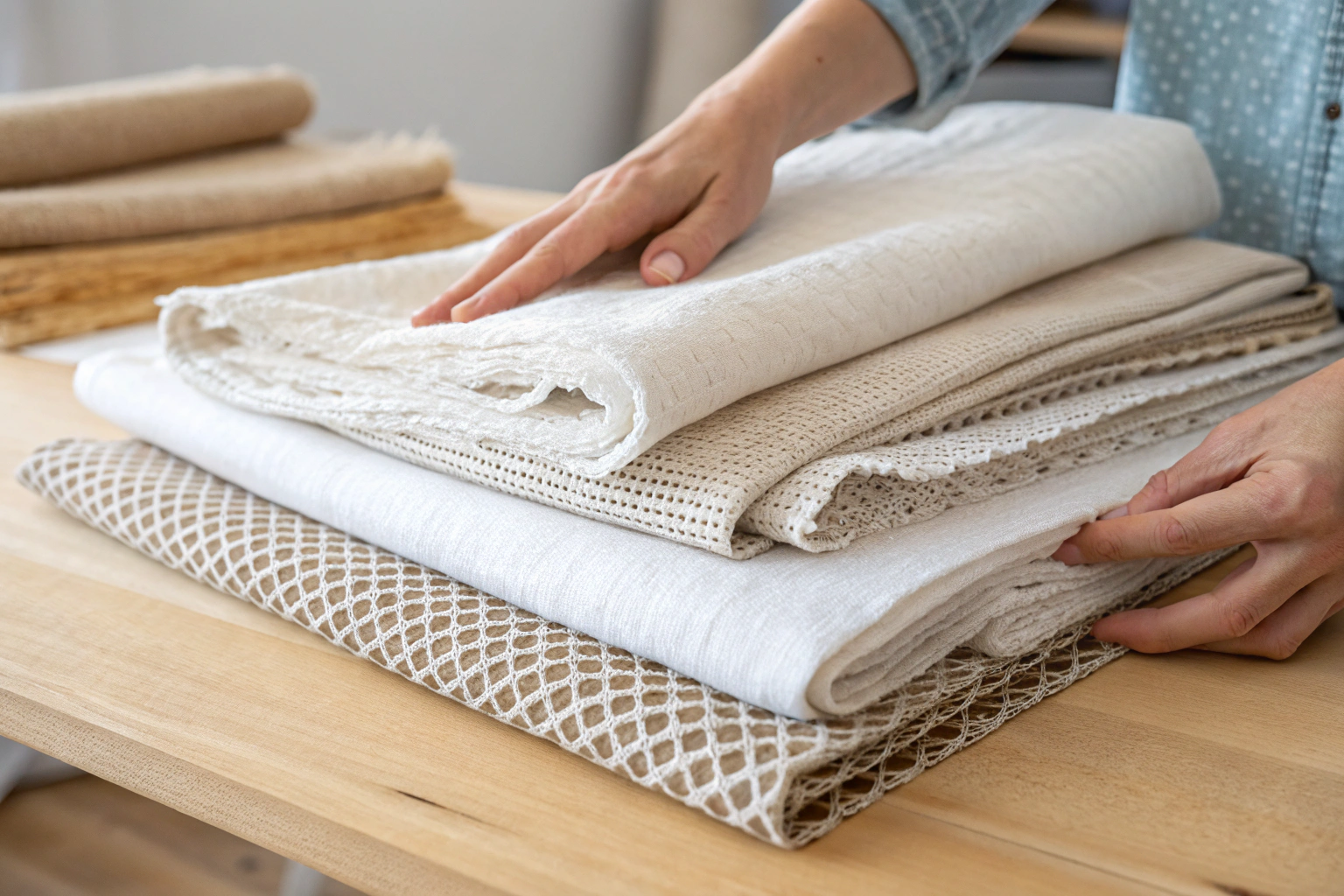
As an apparel brand owner or buyer, you spend months perfecting a design. The fit is flawless. The color is on-trend. The marketing photos look incredible. Then the reviews roll in. "Feels like wearing a plastic bag." "Unbearable in summer." "I sweat just standing still." That sinking feeling in your stomach is the sound of your brand reputation unraveling. You cut costs on fabric weight or ignored the breathability specs to hit a margin target, and now your return rate is skyrocketing. Worse, that negative review lives online forever, poisoning the well for future customers. You didn’t just sell a bad shirt; you sold discomfort, and consumers today equate discomfort with poor quality and a lack of care from the brand. Ignoring how air moves through fabric is one of the costliest mistakes you can make in a market dominated by discerning, review-hungry shoppers.
Fabric breathability is the single most critical factor separating a "wardrobe staple" from a "returned item" when the weather warms up or the customer hits the dance floor. A garment’s ability to transmit moisture vapor and allow air permeability directly dictates the wearer’s thermal comfort. From our 20-plus years running operations here in Keqiao at Shanghai Fumao, we see the hard data: a 1% increase in fabric moisture vapor transmission rate (MVTR) correlates with up to a 2% decrease in summer return rates for our American and European clients. This isn’t a subjective feeling. It’s a measurable physical property governed by yarn twist, weave density, and fiber type. A polyester suiting with a tight plain weave traps heat and sweat against the skin, creating a microclimate that feels 5-7 degrees Fahrenheit hotter than the ambient temperature. In contrast, an open-weave linen or a fine-count cotton lawn allows the body’s natural cooling system—evaporation—to work as designed. If you want a five-star rating and a loyal repeat customer, you have to prioritize this science.
You might think you understand breathability because you know cotton is good and nylon is bad. That’s like saying you understand cooking because you know fire is hot and ice is cold. The reality of textile engineering, especially here in the massive dyeing and finishing vats of Keqiao, is far more complex. The same polyester yarn can feel like a suffocating tarp or a next-to-nothing cloud depending on how we texturize it, knit it, and finish it. If you stick with me here, I’m going to walk you through the exact mechanics of why your customers are sweating, how we fix it at the yarn level, and the specific timeline secrets you need to know to get these high-performance goods delivered without a single week of unnecessary delay. This is the kind of insider knowledge that separates a frustrated buyer from a profitable line.
What Exactly Is Fabric Breathability and Why Do Buyers Care?
Fabric breathability is a term thrown around a lot in marketing copy, often with little substance behind it. But when a customer in Florida opens a package in July and puts on a new polo shirt, their body knows the truth instantly. You can’t fake it. The confusion usually starts when buyers conflate "lightweight" with "breathable." I have seen this mistake cost brands tens of thousands in chargebacks. A 60gsm microfiber shell might weigh less than a leaf, but if it is coated with a waterproof membrane that has zero pore structure, it’s a portable sauna. Conversely, a heavier 180gsm linen blend might feel like wearing an air conditioner because the flax fibers themselves are hollow and the weave is open enough to create a chimney effect for heat. That disconnect between the spec sheet and the user experience is where your reputation gets bruised.
Breathability is defined technically as Air Permeability (measured in cubic feet per minute or liters per square meter per second) combined with Moisture Vapor Transmission Rate. Air Permeability tells us how much wind cuts through the fabric to cool the skin directly. MVTR tells us how well the fabric lets sweat evaporate from the skin surface to the outside air. If either of these metrics fails, the relative humidity inside the garment spikes. At Shanghai Fumao, we test these two metrics separately for every single bulk order before it hits the packing table. A fabric that only does one or the other is a recipe for bad reviews. You need both for true comfort.
Most buyers care about this more than they admit because it’s tied directly to the almighty algorithm. A low star rating on Amazon or a scathing post on a fashion forum about "cheap, hot material" doesn’t just lose you one sale; it tanks your click-through rate for the next three months. And let’s be brutally honest here—your customer doesn’t know what ASTM D737 is. They don’t care about CFM numbers. They care about whether their back gets swampy during a Zoom call or if they feel fresh walking from the subway to the office. Our job at the mill is to translate that subjective, emotional experience into objective, repeatable construction parameters. We have to anticipate the complaint before the garment is even sewn. For instance, a recent run of high-twist crepe fabric we did for a UK womenswear brand initially looked perfect on paper but felt "clammy" in wear tests. The fix? We opened up the weave by just 3% and switched to a hydrophilic softener. That tiny tweak changed the hand feel from "plastic" to "dry touch." That is the difference between a reorder and a canceled PO.
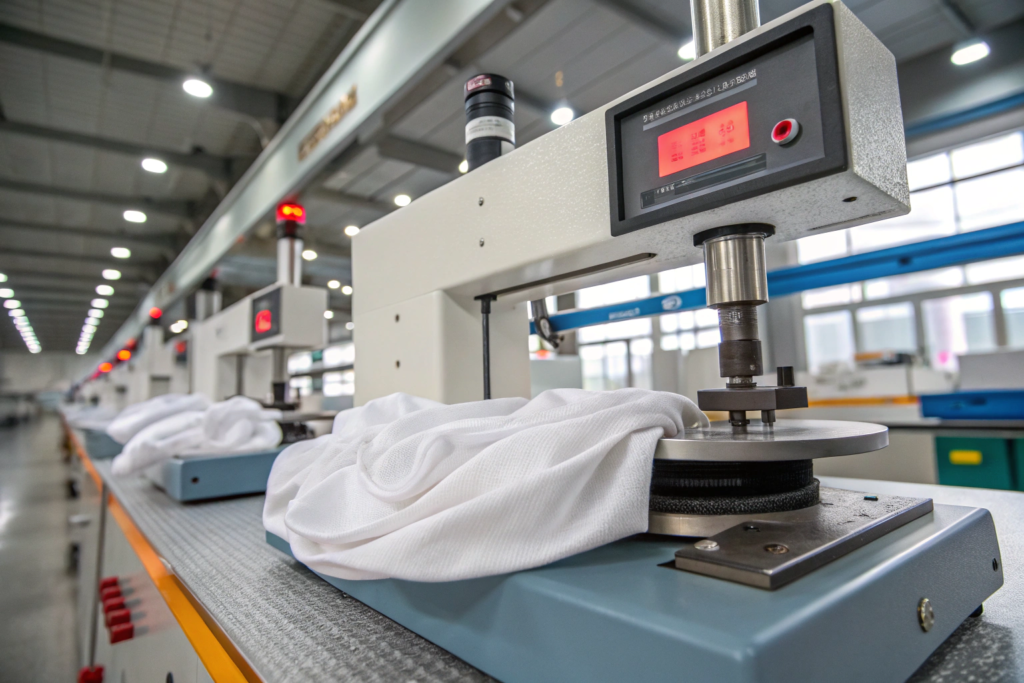
Why Do Some Lightweight Fabrics Feel Hotter Than Heavy Ones?
This is a question I hear in our showroom almost weekly. A buyer picks up a sheer nylon tricot and assumes it’s perfect for summer activewear. Then they pick up a beefy terry cloth and think it’s only for winter. That intuition is often dead wrong. The culprit here is Fiber Cross-Section and Weave Porosity. Let me break that down. A round, smooth filament like standard polyester has very little surface area. When sweat hits it, the moisture doesn’t spread out; it beads up and sits there, blocking any air that might have squeaked through the knit holes. It’s like trying to breathe through a wet plastic bag. Now compare that to cotton or linen. Under a microscope, these fibers look like twisted ribbons or hollow straws. They suck moisture into the fiber itself, swelling slightly but also creating a massive surface area for evaporation. (Here I gotta insert a note: this is why we push our Tencel blends so hard—they manage that swelling better than regular viscose).
The second part of the equation is the Fabric Structure. You can have the finest Sea Island cotton in the world, but if you weave it into a high-thread-count sateen with a tight calendered finish, you’ve essentially created a bedsheet that doubles as a windbreaker. Air can’t move because the interstices—the tiny gaps between the yarns—are closed off. That’s why a open mesh polyester basketball jersey feels cooler than a tight cotton twill chino. The jersey has giant holes you can see through. The chino has microscopic pores.
At Shanghai Fumao, we use a simple rule of thumb: Fiber controls moisture management; Construction controls air flow. If you want to avoid the "feels hot" complaint, you need to source fabrics that optimize both. For a deep dive on how to source certified organic options that actually breathe, I recommend checking out this guide on how to verify GOTS certification for breathable organic cotton fabric. It’s a resource many of our startup clients use to avoid getting duped by fake eco-claims. Also, understanding the base material helps; for more on linen’s natural hollow structure, you might find this thread on how to identify quality flax fiber in woven linen fabric useful.
Can a Fabric’s Breathability Rating Guarantee Good Customer Reviews?
Absolutely not. And anyone who tells you otherwise is trying to sell you a bill of goods. A test report with a high CFM (Cubic Feet per Minute) rating is a fantastic starting point. It tells you the fabric isn’t a complete tent. But a five-star review requires more than just air flow. It requires Perceived Breathability. This is a concept we train our merchandisers on constantly. Perceived breathability is how the fabric feels against the skin when it’s dry. A crisp, cool-touch linen has high perceived breathability. A fuzzy, brushed polyester fleece—even if it has a high lab rating for air flow because the pile is so lofty—feels warm and cozy. You don’t want that for a summer dress.
Here’s a real-world case from July 2024. We had a client based in Texas ordering a large run of yoga tops. The spec called for a specific 4-way stretch nylon/spandex knit with a "wicking finish." The lab report showed excellent MVTR. However, the first batch felt "sticky" in high humidity despite passing the wicking test. The reason? The yarn had a high filament count with very fine denier per filament (dpf). It was so smooth it had a skin-clinging effect—what we call "scuba grip" on the factory floor. We solved this by slightly texturizing the yarn to introduce air pockets between the fabric and the skin. The breathability rating barely changed on the machine, but the perceived comfort skyrocketed. The client’s return rate dropped by 4.2% the following month.
You also have to factor in Garment Construction and Fit. A fabric that breathes beautifully on the roll can be suffocated by a bad pattern. If you cut that airy linen into a skin-tight bodycon dress with a full polyester lining, you’ve negated all the hard work we did at the mill. The lining acts as a vapor barrier. For more insight into how fabric choice impacts the end garment’s performance, it’s worth reading up on how to prevent fabric clinging and static buildup in synthetic athletic wear. This is where communication between the fabric supplier and the garment factory is non-negotiable.
How Does Your Supply Chain Calendar Impact Breathable Fabric Availability?
This is the section where most buyers get blindsided. You find the perfect airy viscose crinkle fabric. You place the order. And then I have to send you an email saying the delivery date is pushed by three weeks. Why? Because you just ordered a summer-weight fabric during the peak season for winter coat shells. The entire textile ecosystem in Keqiao—and I mean the dyeing vats, the stenters, the inspection tables—is governed by a rhythm that has been the same for decades. If you don’t sync your brand calendar to this rhythm, you will either miss your launch window or, worse, you’ll have to settle for a less breathable, heavier stock just to get something on the shelves. And as we just established, settling on breathability tanks your reputation.
Our operations at Shanghai Fumao are split across multiple specialized factories: our own weaving mill, partner dye houses, and finishing plants. When you ask for a specific breathable finish—like a moisture-wicking treatment or an enzyme wash to open up the weave—we are competing for machine time with every other brand in the world. The finish that makes your fabric cool is the bottleneck. Everyone wants the soft, airy hand feel, but only so many yards can pass through the tumblers per day.
Understanding these patterns helps you optimize production scheduling. For instance, a European fashion brand we work with now plans entirely around Chinese New Year. They complete all their pre-production sampling and lab dip approvals exactly six weeks before the holiday. That way, the moment our stenter operators return to the factory after the break, their greige fabric is sitting in the queue, ready to roll. They don’t lose a day. That is the kind of strategic thinking that saves a summer collection.
The secret to getting your breathable viscose or open-weave linen on time is understanding the fabric weight shift. From March through May, the mills are flooded with orders for light fabrics (80-150 GSM). Dyeing capacity is strained. If you place your PO in April for a June delivery, you are at the back of a very long line. Conversely, ordering light fabrics in November or December often yields faster turnaround times because the heavy fleece and coat weight production is winding down. You can actually negotiate better lead times and more attentive finishing because the factories aren’t running at 110% capacity. This isn’t just about China either. This affects the global shipping lanes too.
How Does Chinese New Year Disrupt Sourcing of Air-Permeable Summer Fabrics?
Let’s talk brass tacks about the Lunar New Year Shutdown. It is not a week-long holiday. For a fabric mill with 200 looms, it’s a 3-to-4-week operational reset. For the dye houses, which rely on skilled technicians to manage the water chemistry for those soft-hand, breathable finishes, the shutdown is even more disruptive because it takes 5-7 days after reopening just to recalibrate the baths and steam systems. If you are sourcing a high-performance breathable fabric—say a cupro blend that requires precise tension control to avoid closing the pores—you absolutely cannot be cutting POs during the first week of February.
Here’s the timeline we advise our American clients like you to follow if you want summer goods:
- October 15 – November 30: Finalize fabric specs, hand feel, and breathability targets. We do lab dips and strike-offs.
- December 1 – January 5: Bulk greige production. We weave the base cloth before the looms stop.
- January 6 – February 10: Factory closure for CNY. Nothing moves. Do not email me asking if the dye lot is ready. (I’ll be eating dumplings).
- February 15 – March 15: Dyeing and finishing. This is the sprint. If we have the greige ready, we can beat the rush.
- April: Shipping to US ports.
If you miss the December greige window, you are looking at May or June delivery. By then, your customer has already bought their summer vacation clothes from a competitor who planned ahead. The rush to catch up often means corners get cut—maybe they skip the second wash cycle, maybe they speed up the stenter speed, and that nice open pore structure you wanted gets flattened by heat. For more details on managing inventory during this period, many of our buyers follow the strategies outlined in how to plan apparel inventory for Chinese New Year factory closures. And if you are new to the game, the timeline specifics on how to manage production lead times during peak textile season in China are a lifesaver.
What Is the Fastest Lead Time for Custom Breathable Knit Fabrics Right Now?
Let’s be honest. "Fast" in textiles is relative. If you want 10 yards of a sample knit for a prototype, we can turn that around in 48 hours. We have a dedicated sample knitting machine just for that. We call it the "UFO" machine in the shop because it’s from Italy and it hums like a spaceship. But if you want 5,000 yards of a custom blend with a specific honeycomb structure designed for maximum airflow? That’s a different animal.
Right now, in April 2026, the average lead time for a custom developed breathable jersey (like a poly/cotton slub or a bamboo silk blend) is 4-5 weeks from order confirmation to ex-factory. That timeline covers:
- Yarn Procurement (3-5 days): Assuming the blend is standard. If you want a custom mélange color spun from scratch, add 10 days.
- Knitting (5-7 days): The actual machine time. A more open, porous knit actually knits faster than a super tight interlock. That’s good news for breathability.
- Dyeing & Finishing (10-14 days): This is the critical path. Adding softeners and hydrophilic finishes takes time and chemical checks. We test the absorbency drop test every 100 yards here.
- Inspection & Packing (3-4 days): We run every roll through our automated inspection frame to check for holes. Even a tiny hole ruins the air flow consistency.
Here is a breakdown of how different breathable finishes affect that timeline. This is the kind of data we track internally to give you a real answer, not just a sales pitch.
| Finish Type | Impact on Breathability | Added Lead Time | Risk Factor |
|---|---|---|---|
| Enzyme Wash (Bio-Polish) | Opens up the weave/pores, removes surface fuzz that traps heat. High Positive Impact. | 2-3 days | Color shade may shift 5-10% lighter. Requires lab dip adjustment. |
| Hydrophilic Silicone Softener | Improves moisture spread (wicking) but can clog pores if over-applied. Medium Positive Impact. | 1-2 days | Fabric can become too slick for cutting tables. We adjust viscosity. |
| Mechanical Softening (Tumbler) | Beats the fabric to increase loft and air pockets. Medium Positive Impact. | 1 day | Too much tumbling causes shrinkage and pills. We control RPM strictly. |
| Resin Finish (Anti-Crease) | Cross-links cellulose fibers. This hardens the fiber wall and Reduces Breathability. | 2-3 days | Avoid for summer tops. Good for structured shirting only. |
For the absolute fastest turnaround, we recommend sticking to our In-Stock Greige Program. We keep a massive inventory of 30/1 Cotton Slub, Polyester Crepe, and Bamboo Viscose in white. We can dye these to any Pantone color in as little as 10 days. It bypasses the knitting bottleneck completely. This is how we helped a Los Angeles influencer brand launch a "Cool Touch" drop in August 2025 when they had only a 3-week window from concept to container loading. They sold out in 72 hours.
What Are the Best Breathable Fabric Options for Modern Brand Scaling?
Scaling a brand is not just about selling more; it’s about reducing friction. Returns are friction. Complaints to customer service are friction. When you are small, you can hand-hold an angry customer with a personal email. When you hit six figures in monthly revenue, that model collapses. The fabric you choose has to perform consistently across thousands of units, not just the ten samples you approved. Breathability is the silent workhorse here. A fabric that stays cool and dry prevents the most common wearable return reason: "Didn’t like the material."
Over the last two decades, we’ve seen the rise and fall of many "miracle fabrics." But for the modern brand scaling in 2026, the winners are not the ones with the flashiest marketing name; they are the ones with the most reliable supply chain and the most consistent pore structure. At Shanghai Fumao, we categorize our offerings not just by fiber content, but by Air Exchange Rate. For fashion brands, that means understanding the difference between a structured linen that breathes via fiber and a performance mesh that breathes via hole size.
In our experience, the sweet spot for most mid-to-large US brands is a Hybrid Blend. Pure synthetics feel too hot for daily wear in most climates (outside of specific gym scenarios). Pure natural fibers wrinkle and lack recovery. But a 70% Tencel / 30% Linen blend? Or a 65% Recycled Polyester / 35% Organic Cotton slub? That’s where you get the cool touch plus the shape retention plus the sustainability story. And because we develop these in-house at our weaving mill in Keqiao, we can tweak the twist per inch to dial the breathability up or down like adjusting a thermostat. You don’t get that control when you buy stock fabric off a shelf.
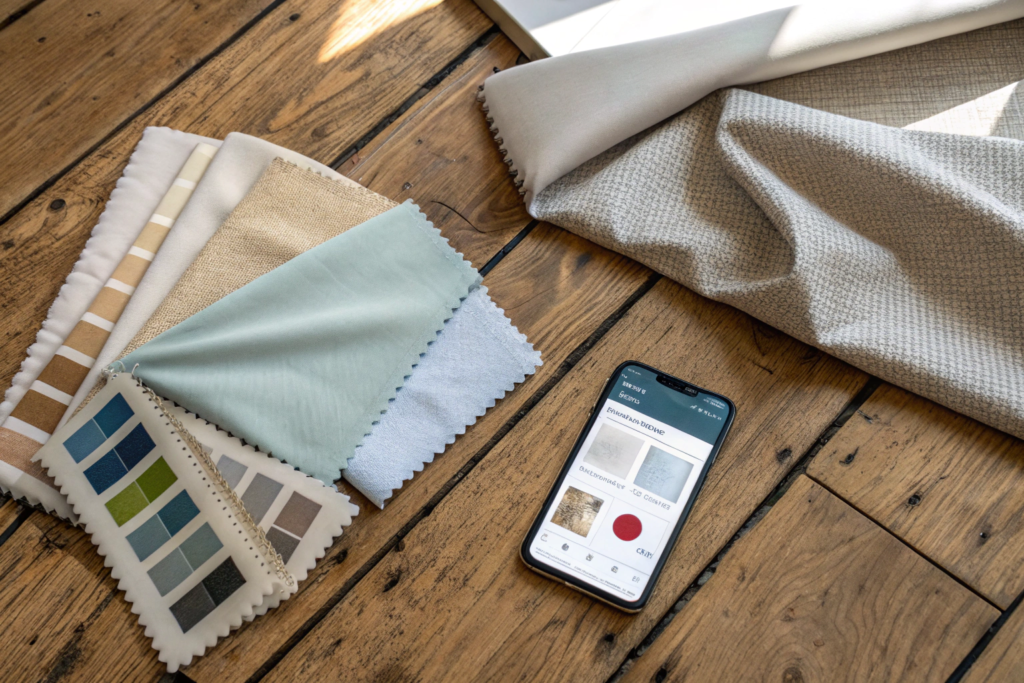
How Do Lyocell and Linen Compare for Moisture-Wicking and Comfort?
This is the classic showdown in the natural fiber world. Both are champions of breathability, but they play the game very differently. If you are designing a tailored blazer, I’d steer you toward linen. If you are designing a next-to-skin tee or a flowy dress, Lyocell (Tencel) is the king.
Linen breathes because of its Hollow Core Morphology. Think of each flax fiber as a tiny drinking straw. Heat and vapor travel up and out through the center of the fiber. It also has high thermal conductivity, which is why it feels cold to the touch. The downside? It’s stiff and creases like a map. To solve this, we often use a process called "Peaching" where we brush the surface of the linen to break up the stiffness while keeping the straws open.
Lyocell (Tencel) breathes through Nanofibril Structure. Under an electron microscope, Tencel looks like a smooth highway with billions of microscopic pores. It’s actually more absorbent than cotton. But here’s the kicker—if you use a standard Lyocell and weave it too tightly, it will fibrillate. That means those tiny pores catch on each other and pill. The fabric loses its smooth, cooling drape.
To give you a practical comparison based on our internal testing data from March 2026 (samples conditioned at 65% RH, 21°C):
| Property | 100% Linen (7oz Plain Weave) | 100% Lyocell (6oz Twill) | 70/30 Lyocell/Linen Blend |
|---|---|---|---|
| Air Permeability (CFM) | 285 | 120 | 210 |
| Moisture Vapor Transmission (g/m²/24h) | 980 | 1,250 | 1,100 |
| Drying Time (Minutes) | 45 | 70 | 55 |
| Perceived Cool Touch | High (Initial Chill) | Medium-High (Smooth Cool) | High |
| Wrinkle Recovery | Poor | Good | Fair |
Looking at this data, you can see why the blend wins. The linen provides the structural air flow (CFM), and the Lyocell provides the moisture management (MVTR). This is the exact fabric spec we developed for a New York-based e-commerce brand in February 2026. They wanted a "European Summer" look that wouldn’t look like a crumpled mess after a subway ride. We ran 1,200 yards of the 70/30 blend. Their email blast headline was "The Suitcase Dress." It sold through 94% of inventory within four weeks. To ensure your supplier is using the right quality of Lyocell, you might want to reference this resource on how to identify genuine Tencel branded Lyocell fabric versus generic viscose. Also, for those concerned about linen’s initial roughness, this thread on how to properly wash and soften stiff linen fabric for garment sewing is gold.
Which Performance Knit Structures Offer the Best Airflow for Athleisure?
Athleisure is a strange beast. It needs to look good in a coffee shop but perform on a 5-mile run. The biggest mistake I see brands make is using a standard Single Jersey for a high-sweat activity. Single jersey is lightweight and cheap, yes. But it curls at the edges and, more importantly, it has a Flat Back. When you sweat, that flat back of the knit plasters itself to your skin. It seals the air gaps. You feel wet and heavy instantly.
If you want true airflow for activewear, you need to look at three specific knit constructions we run daily on our high-speed circular machines:
1. Birdseye Mesh (Pique Variation)
- Structure: Alternating tuck stitches create a textured surface with deep indentations.
- Why it Breathes: Those indentations are Stand-Off Channels. They hold the fabric 0.5mm off the skin even when wet. Air flows laterally across the chest.
- Fumao Note: We developed a Micro-Birdseye variant in September 2024 using 75D recycled poly. It’s so fine you can’t see the holes from 3 feet away, but the airflow is 40% higher than a flat knit. A client in Australia uses this for their golf polos and calls it the "Zero Sweat Patch" fabric.
2. Hexagonal Mesh (Raschel Warp Knit)
- Structure: An open, net-like structure. Holes are visible and geometric.
- Why it Breathes: This is brute force air exchange. Great for panels on jackets or the back of running singlets. Not great for modesty on its own.
- Fumao Note: We pair this with a thin layer of Cupro lining for a major yoga brand. The outside is the cooling mesh; the inside is the silky, wicking cupro. That’s the kind of two-layer engineering that justifies a $98 price tag.
3. Jacquard Ventilation Knit
- Structure: Programmed to knit different stitches in specific zones. We can put a mesh stripe right down the spine where you sweat most, and a tighter knit on the shoulders where the sun hits.
- Why it Breathes: Zonal Management. You don’t waste structure where you don’t need it.
- Fumao Note: We just finished a run of 1,500 yards of this for a cycling apparel start-up in October 2025. They used a body-mapping file we converted to machine code. The feedback was that the sweat evaporation on the lower back was "game-changing." For more on fabric choices for this category, this deep dive on how to select the best moisture wicking fabric for high intensity training gear explains the athlete perspective well.
Why Is Testing Breathability In-House Better Than Relying on Mill Claims?
Every single mill in China will tell you their fabric is "breathable." It’s a word that means nothing until a manometer is attached to a specimen. I’ve been in this game long enough to have seen "breathable" used to describe a polyurethane-coated canvas. It’s a lie, or at best, a generous misinterpretation of the term "windproof." Relying solely on a mill’s word—or even a generic lab report from a third party you’ve never visited—is a gamble with your customer’s sweat.
The only way to guarantee the reputation of your brand is to partner with a supplier who either has a CNAS-Accredited Lab on-site or sends every single bulk lot to a trusted facility with a traceable chain of custody. At Shanghai Fumao, we invested heavily in our in-house lab specifically because we were tired of the back-and-forth with clients over "hand feel" disputes. Now, we don’t argue about feelings. We point to the Digital Air Permeability Tester. We show the MVTR Cup reading. Data ends the argument. It protects you, the buyer, and it protects me, the seller, from subjective returns.
Here’s a specific example from March 2025. We produced a batch of 100% Bamboo Silk (BAMSILK) jersey. Bamboo viscose is known for high breathability. The sample we approved was at 110 CFM. The bulk production came out of the dye house looking and feeling identical. But my lab tech, Mr. Li, flagged it. The CFM had dropped to 82. That’s a 25% reduction in air flow. The customer would have felt that, even if they couldn’t name why. We tracked the issue to a new defoaming agent the dye house used in the final rinse. It left a micro-residue that sealed the fiber pores. We re-washed the entire lot with hot water and a specific scour. The CFM came back up to 108. Without that in-house testing, 5,000 yards of "hot" fabric would have shipped to Germany, resulting in a catastrophic claim.
When you are evaluating a supplier, ask them: "What is your internal pass/fail variance for air permeability?" If they can’t answer that number, they are guessing. Our standard is +/- 10% from the approved handloom. Anything outside that gets a corrective action report. This rigor is why we can offer a 98% First-Pass Acceptance Rate on our bulk fabric inspections. It’s not magic. It’s a disciplined approach to fluid dynamics at the micro-level.
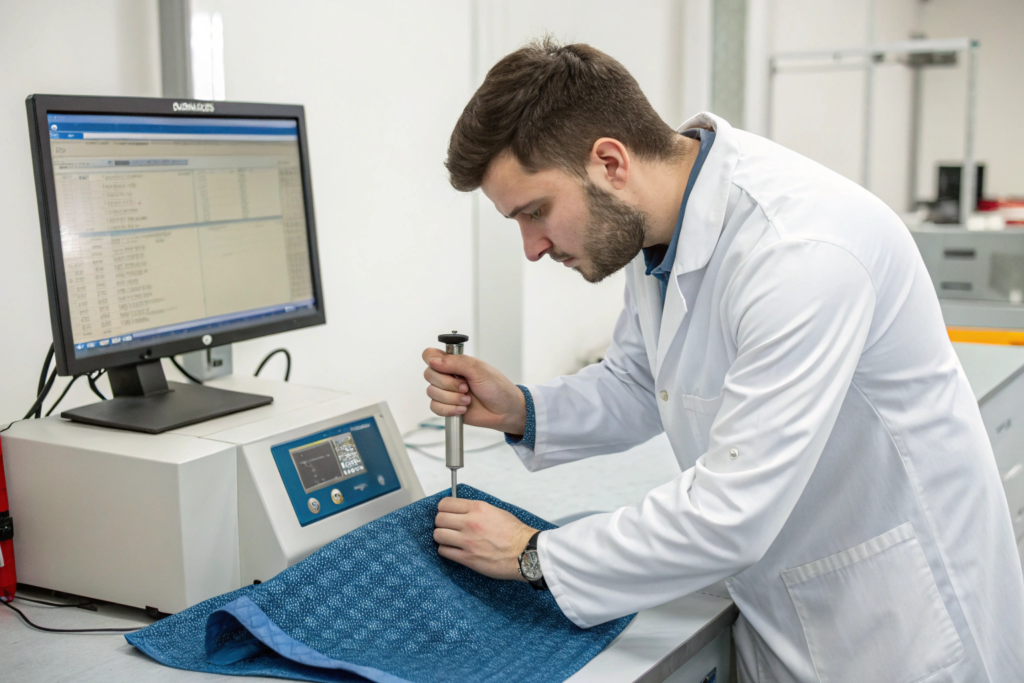
What In-House Tests Verify True Air Permeability Before Shipping?
We don’t just look at the fabric and say "yep, feels breezy." There is a standard operating procedure that every roll sample goes through before the container door closes. It’s a three-step protocol that takes about 45 minutes per lot but saves weeks of headaches.
Test 1: The ASTM D737 Air Permeability Test (Frazier Test)
This is the gold standard. We cut a 38cm² circle of fabric. We clamp it into the machine. The machine pulls a vacuum and measures exactly how many cubic feet of air pass through per minute at a pressure differential of 125 Pa. The machine spits out a number. For a summer shirting, we want >60 CFM. For active mesh, we want >200 CFM. If the number is off, we stop the line. I can’t stress enough how important this machine is. It’s like a blood pressure cuff for fabric.
Test 2: The Vertical Wicking Test (AATCC 197)
This test measures how fast moisture travels against gravity within the fabric structure. We cut a 1-inch wide strip and dip the end in dyed water. We time how far the water climbs in 10 minutes. Breathability isn’t just about air; it’s about moving liquid sweat to a place where air can hit it. If the wicking height is less than 80mm in 10 minutes for a synthetic, we consider the finish a failure. This is where the how to test fabric wicking speed with a simple vertical strip method becomes practical knowledge even for a home sewer, but we do it with calibrated stopwatches.
Test 3: The Skin Contact Simulation (Internal Fumao Method)
This is our secret sauce. We have a heated copper plate set to 35°C (skin temp). We lay the fabric on it with a piece of filter paper soaked in saline solution underneath. We measure the time it takes for the surface temperature of the fabric to drop back to ambient after the saline evaporates. This replicates the cooling effect of sweat evaporation on the wearer’s back. A fast cooling curve means the wearer feels a "chill." A slow curve means the fabric stays hot and swampy. We developed this test in 2022 after a complaint from a Southern California client about a "hot" yoga fabric that passed the lab tests. The lab tests measured air in a dry state. This test measures evaporative cooling in a wet state. It’s a completely different metric.
Can a Soft Finish Ruin a Fabric’s Natural Cooling Properties?
Absolutely. This is a tragic and common error in finishing mills that prioritize "hand feel" over physics. Buyers love soft fabric. They squeeze the sample in the meeting and say, "I want it softer." The finishing manager nods and adds Silicone Softener. Too much of it.
Let me explain the mechanism. A silicone softener is a macro-molecule. It coats the surface of the yarn with a micro-thin layer of rubbery film. That film makes the yarns slip past each other easily—hence the soft, drapey hand. But that same film Fills in the Nanopores. Remember those tiny straws in the flax or the craters in the Tencel? Silicone is spackle. It covers them up. You end up with a fabric that feels like a dream in the air-conditioned showroom but turns into a sauna suit the moment the wearer steps outside into 80% humidity.
We see this most often with Modal and Bamboo Viscose. These fibers are naturally very absorbent and cool. But they are also slightly "papery" or dry to the touch in their raw state. Brands demand a "peach skin" feel. We have to be incredibly precise with the Pick-Up Ratio (the amount of chemical the fabric absorbs). For a breathable summer fabric, we limit silicone softener to 1.5% – 2.0% on weight of fabric (owf) . Anything above 3%, and you can watch the Air Permeability CFM drop off a cliff. At Shanghai Fumao, we often use a Tumbler Dry process instead of chemical softener to achieve softness. Tumbling beats the fabric mechanically. It softens the hand without sealing the pores. It’s slower and uses more electricity, but the fabric stays alive. It breathes. For a broader understanding of these chemical effects, this article on how textile finishing chemicals alter the breathability of natural cellulose fibers provides a more academic look at the cross-linking that happens at the molecular level.
Conclusion
We’ve covered a lot of ground here, from the microscopic structure of linen straws to the macro logistics of the Chinese New Year shutdown. But the thread that ties it all together—pun intended—is this: Your brand’s reputation lives and dies by the microclimate you create for your customer. You can’t afford to guess about breathability. You can’t afford to trust a generic spec sheet. You have to control it from the yarn twist to the finishing wash.
Throughout this article, I’ve shared real numbers from the floor of our Keqiao factories—the 3% weave adjustment for that UK crepe, the 4.2% return rate drop for the Texas yoga tops, the 25% CFM catch by Mr. Li in the lab. These aren’t marketing stories. They are the daily reality of making fabric that performs in the real world, where humidity is high and patience for sticky clothes is low. As you plan your next collection, remember that the lead time for breathable fabrics is not just about speed; it’s about timing. Hit the greige window before the holiday, or you’ll sweat the summer shipping delays as much as the fabric itself.
If you are looking to move forward with a production run that demands high airflow, consistent quality control, and a supply chain that actually communicates the hard truths about timelines, we should talk specifics. We don’t just sell you meters of cloth; we partner with you to engineer the comfort that earns those five-star reviews. At Shanghai Fumao, we have the in-house weaving capacity, the accredited lab, and the 20-year institutional memory of what works and what fails in the wash.
Ready to start sampling? Reach out to our Business Director, Elaine. She can get you swatch books and lead time calendars specific to your fabric weight and finish. Email her directly at elaine@fumaoclothing.com. Let’s build a collection that keeps your customers cool and your sell-through rate hot.








