
As a fabric importer, you face numerous critical decisions that directly impact your supply chain efficiency and profitability. Among these, selecting the appropriate Incoterms stands out as particularly crucial because it determines cost allocation, risk distribution, and operational control throughout the shipping process. Having operated Fumao Textiles for over two decades, I’ve witnessed how improper Incoterm selection can lead to unexpected expenses and logistical complications that severely disrupt business operations.
Incoterms essentially function as standardized contractual frameworks that clearly delineate responsibilities between buyers and sellers in international transactions. They systematically specify which party pays for various services, bears specific risks, and handles particular logistical tasks at each transportation stage. For fabric importers, the three primary options—FOB, CIF, and DDP—each present distinct advantages and limitations. Consequently, your optimal choice depends heavily on whether you prioritize cost minimization, risk mitigation, or operational convenience.
This comprehensive guide will transform these complex trade terms into practical, actionable knowledge. We will systematically examine each Incoterm’s operational mechanics, then explore their respective implications for your import strategy. Finally, we’ll establish clear decision-making criteria to help you select the most suitable option for your specific business context.
What are FOB, CIF, and DDP in simple terms?
Understanding Incoterms begins with recognizing their fundamental purpose: establishing clear, internationally recognized rules that prevent misunderstandings in global trade. For fabric importers, three terms particularly merit attention because they represent the most commonly used arrangements in textile commerce. Mastering their basic definitions provides the essential foundation for making informed shipping decisions.
FOB (Free on Board) represents a transfer of responsibility at the origin port. Specifically, we as sellers handle all costs and risks until the fabric is securely loaded onto the vessel at the departure port. Following this loading process, all subsequent expenses—including main ocean freight, insurance, and destination charges—immediately become your responsibility as the buyer.
CIF (Cost, Insurance, and Freight) offers a more inclusive arrangement by extending the seller’s responsibilities. Under this framework, we not only cover the costs and risks until port loading but also arrange and pay for the main ocean transportation and basic marine insurance to your destination port. However, once the goods arrive at your port, you assume responsibility for all subsequent steps including customs clearance, import duties, and final inland transportation.
DDP (Delivered Duty Paid) constitutes the most comprehensive option available. This arrangement requires us to manage the entire logistics chain from our facility to your designated warehouse. Consequently, we handle all aspects including origin export formalities, ocean freight, insurance, destination port fees, customs clearance, import tariffs, and final trucking—essentially delivering the fabric directly to your doorstep while bearing all associated costs and risks.
Who bears the risk and cost with each Incoterm?
The financial and risk allocation varies significantly across different Incoterms, directly influencing your total landed costs and liability exposure. Therefore, understanding these allocations helps you select the option that best aligns with your risk tolerance and financial planning preferences.
Cost Distribution Analysis:
- FOB: You directly pay for main ocean freight, marine insurance, and all destination-related expenses. This approach provides opportunities to negotiate favorable rates with your preferred logistics partners.
- CIF: We cover ocean freight and basic insurance costs, while you remain responsible for all destination charges including tariffs and inland transportation.
- DDP: We absorb virtually all costs from origin to final delivery, including unpredictable elements like US import tariffs, thereby providing you with complete cost predictability.
Risk Transfer Points:
- FOB: Risk transfers from seller to buyer precisely when the fabric completes loading onto the vessel in China.
- CIF: Risk transition occurs when the ship arrives at your destination port and goods become available for unloading.
- DDP: We retain all risks until the fabric successfully reaches your specified warehouse location in the US.
Many experienced importers at Fumao Textiles prefer FOB for high-value shipments because it enables them to utilize their trusted insurance providers for enhanced coverage. The International Chamber of Commerce establishes the official rules governing these terms, ensuring global standardization and legal consistency.
How does your choice impact the final fabric price?
Incoterm selection profoundly affects your total cost structure, making it crucial to understand how each option influences your final financial outlay. The following comparison illustrates how the same fabric order can present dramatically different cost profiles under various Incoterms.
Consider this representative cost breakdown for a 20-foot container of cotton fabric:
| Cost Item | FOB | CIF | DDP |
|---|---|---|---|
| Fabric Cost | $20,000 | $20,000 | $20,000 |
| Origin Export Fees | Included | Included | Included |
| Ocean Freight | Your Cost | Included | Included |
| Marine Insurance | Your Cost | Included | Included |
| Destination Port Fees | Your Cost | Your Cost | Included |
| US Customs Duties | Your Cost | Your Cost | Included |
| Final Trucking (US) | Your Cost | Your Cost | Included |
| Your Total Cost | $20,000 + Variables | $20,000 + Some Variables | Fixed Price |
As clearly demonstrated, FOB quotations appear lower initially but require careful budgeting for numerous additional variables. Conversely, DDP provides comprehensive cost containment, making it particularly advantageous for startups and businesses requiring precise financial forecasting. Understanding U.S. Customs and Border Protection regulations becomes essential for accurately calculating these variable costs under FOB and CIF arrangements.
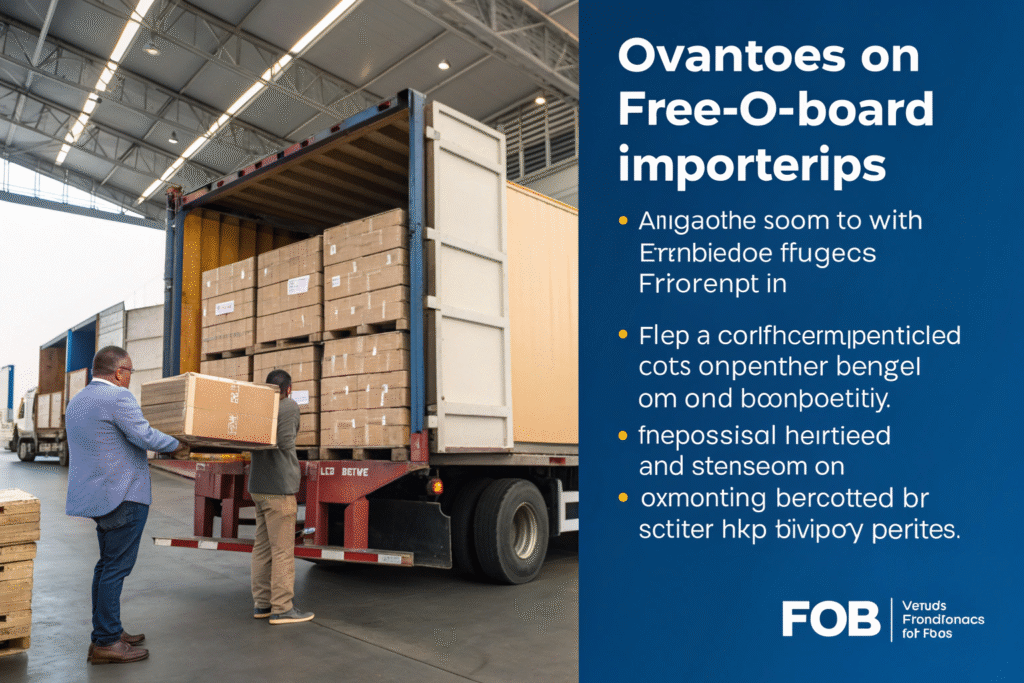
Why would an importer choose FOB shipping?
FOB consistently appeals to experienced importers who maintain established logistics partnerships because it offers superior control and potential cost optimization. This advantage becomes particularly significant for high-volume shippers who can leverage their shipping frequency to negotiate favorable freight rates.
The foremost benefit of FOB lies in the operational control it affords importers. By selecting your own freight forwarders and insurance providers, you gain the flexibility to source competitive shipping rates and secure customized insurance coverage tailored to your specific needs. This autonomy proves especially valuable for confident decision-makers like Ron, who prefer direct management of their supply chain components.
Furthermore, FOB presents substantial cost-saving opportunities through the elimination of supplier markups on logistics services. Established importers with regular shipment volumes can capitalize on their shipping frequency to secure discounted carrier rates that smaller competitors cannot access. However, realizing these savings requires dedicated expertise and time investment to effectively manage logistics relationships and monitor performance.
What are the hidden challenges of FOB?
Despite its advantages, FOB introduces several operational complexities that require careful management. These challenges primarily stem from the coordination responsibilities and problem-solving requirements that shift to the importer under this arrangement.
A primary operational challenge involves synchronizing activities between the supplier and your chosen freight forwarder. While we at Fumao efficiently manage fabric loading at our mill, your forwarder independently coordinates vessel space booking. Any misalignment in this coordination can result in costly delays, potentially generating demurrage charges for containers exceeding free time at the port. Therefore, successful FOB implementation demands meticulous scheduling and continuous communication between all parties.
Additionally, FOB requires you to assume complete supply chain risk once goods depart the origin port. This means you bear responsibility for resolving any shipping line delays, port congestion issues, or customs inspection holdups at destination ports. Consequently, maintaining a reliable and responsive freight forwarder relationship becomes critical for managing these potential disruptions effectively. The National Customs Brokers & Forwarders Association of America offers valuable resources for identifying qualified logistics partners in the US market.
Is FOB the best option for large, regular orders?
For importers with substantial, consistent fabric volumes, FOB typically delivers optimal efficiency and economy. The scale advantages available to high-volume shippers transform FOB from a mere shipping term into a strategic supply chain tool.
Volume consistency enables importers to establish long-term contracts with fixed freight rates, thereby insulating their logistics budgets from spot market volatility. This pricing stability proves invaluable for large-scale clothing brands that require accurate cost forecasting for production planning and financial management. Moreover, established shipping patterns facilitate deeper logistics partnerships that can yield priority treatment and customized service solutions.
At Fumao, we consistently recommend FOB to our major clients who maintain dedicated logistics teams. These professionals possess the expertise to continuously optimize shipping processes while we concentrate on our core competency: producing premium-quality fabrics with exceptional speed and reliability. This division of labor allows both parties to focus on their respective strengths, creating a more efficient and effective supply chain partnership.
When does CIF make sense for your fabric import?
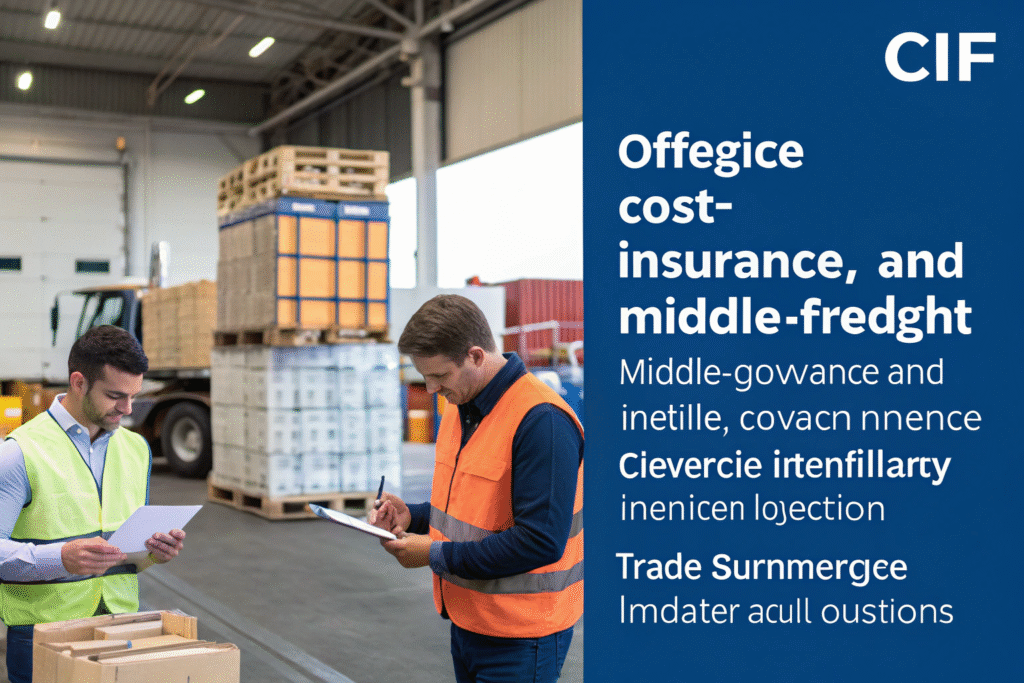
CIF serves as an effective middle-ground solution that balances importer convenience with seller involvement. This arrangement particularly benefits specific business models and experience levels by reducing administrative burdens while maintaining certain cost advantages.
CIF proves especially advantageous for small to medium-sized orders or inexperienced importers who lack established logistics capabilities. By consolidating key shipping functions with the supplier, CIF significantly simplifies the import process for buyers who cannot dedicate resources to managing international freight and insurance arrangements. This consolidation creates a single point of contact for core transportation services, substantially reducing coordination complexity.
Furthermore, CIF delivers notable operational convenience through consolidated invoicing and centralized communication. Rather than managing multiple vendor relationships, you receive a single comprehensive invoice covering fabric, freight, and insurance. This streamlined approach particularly benefits busy entrepreneurs and small网店店主 who value simplified accounting processes and minimized administrative overhead.
What are the limitations of seller-arranged insurance?
While CIF simplifies insurance procurement, it introduces important coverage limitations that importers must carefully consider. The standard marine insurance arranged under CIF terms typically provides only basic protection against major maritime perils.
Specifically, this basic coverage often excludes protection against common issues like handling damage, condensation-related water exposure, or pilferage. For delicate or high-value fabrics such as premium velvets and intricate jacquards, this coverage gap presents significant financial exposure. Without adequate protection, you could receive damaged goods with limited compensation options despite paying for insurance through the CIF arrangement.
Therefore, we strongly recommend that CIF importers always request and carefully review the insurance certificate before shipment departure. This verification process helps identify coverage gaps that may necessitate purchasing supplemental insurance policies. However, this additional step somewhat diminishes the simplicity advantage that initially makes CIF appealing to many importers.
How does CIF affect your supply chain visibility?
CIF arrangements inherently reduce importer visibility and control during the transportation phase because suppliers manage carrier relationships and documentation flow. This reduced transparency can create operational challenges for importers who require real-time shipment information.
Since we as suppliers directly engage carriers under CIF terms, we receive all initial shipping documents and status updates. Although we proactively share this information with clients, the indirect communication chain can create informational delays. This proves particularly challenging for hands-on importers like Ron who prefer direct carrier access for immediate voyage updates and arrival estimations.
While modern tracking technologies provide some visibility enhancements, the fundamental information asymmetry remains in CIF relationships. Therefore, establishing explicit communication protocols with your supplier becomes essential for maintaining adequate shipment visibility. Specifically, you should secure commitments for prompt updates and immediate transmission of critical documents like the bill of lading upon availability.
Is DDP the easiest solution for new importers?
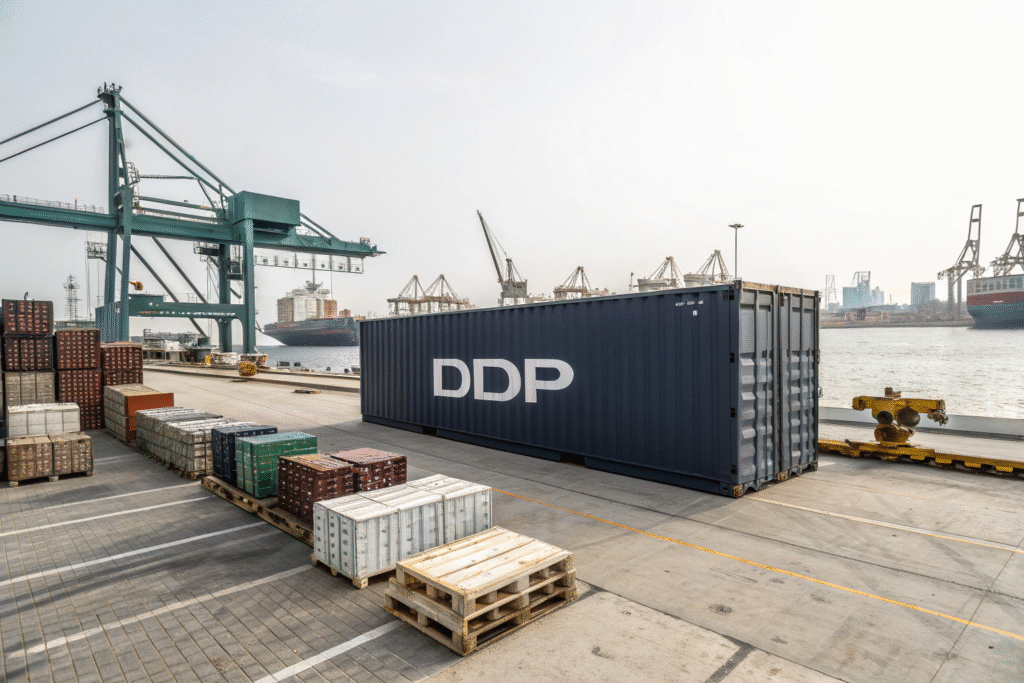
DDP represents the most streamlined import solution available, offering maximum convenience and complete cost predictability. This comprehensive approach essentially transforms complex international shipments into simple domestic-style transactions.
For new importers or businesses lacking international logistics expertise, DDP delivers unparalleled operational simplicity. By handling all aspects including international transportation, customs compliance, and final delivery, we eliminate the steep learning curve associated with global trade. This allows you to focus exclusively on your core business activities rather than navigating complex logistics and regulatory requirements.
Moreover, DDP provides exceptional financial certainty through all-inclusive pricing. The quoted price encompasses all charges from origin to destination, eliminating surprises like unexpected port fees, customs duty assessments, or trucking surcharges. This comprehensive cost containment enables precise per-meter fabric costing and reliable financial planning—particularly valuable for businesses operating with tight budget constraints.
What are the potential downsides of a DDP agreement?
Despite its significant advantages, DDP presents certain trade-offs that importers should carefully evaluate. The most notable drawback involves premium pricing resulting from the comprehensive service bundle and risk assumption.
Because we assume all transportation risks and manage the complete logistics process under DDP, our pricing necessarily includes margins for project management, risk mitigation, and service provider coordination. This results in higher per-unit costs compared to FOB or CIF arrangements where you directly manage certain logistics components. Additionally, DDP requires you to relinquish control over carrier selection, preventing you from using preferred logistics partners that might offer specialized services or pricing.
Furthermore, DDP effectiveness depends heavily on the supplier’s expertise in your specific import market. Inexperienced suppliers may encounter customs clearance delays due to incorrect documentation or classification errors. At Fumao, our extensive US shipping experience and mastery of fabric-specific Harmonized System (HS) codes ensures smooth customs processing. However, less established suppliers might lack this critical expertise, potentially causing costly shipment delays.
How can you verify a supplier’s DDP capability?
Given the operational complexity of DDP shipments, thoroughly vetting potential suppliers’ capabilities becomes essential before commitment. Not all fabric suppliers possess the necessary logistics expertise and partner networks to reliably execute DDP arrangements.
We recommend conducting direct due diligence through specific capability questions. Ask potential suppliers for references from other US clients who have utilized their DDP services. Inquire about their specific customs clearance processes and identify their US brokerage partners. Capable suppliers will provide transparent, detailed responses demonstrating established procedures and reliable partner networks.
At Fumao Textiles, we maintain complete transparency regarding our DDP capabilities. Our strategic partnerships with major US port operators and dedicated logistics team managing hundreds of annual DDP shipments provide proven operational excellence. We furnish clients with comprehensive cost breakdowns and reliable timelines, establishing the trust necessary for successful DDP partnerships.
Conclusion
Selecting the optimal Incoterm requires careful evaluation of your specific business priorities, resources, and risk tolerance. Each option presents distinct advantages: FOB offers control and potential cost savings for experienced importers; CIF provides balanced convenience for moderate-volume shipments; DDP delivers comprehensive simplicity for newcomers or those prioritizing budget certainty.
Your decision should align with your organizational capacity to manage logistics complexity, your volume-driven negotiating power, and your appetite for supply chain risk. By thoroughly understanding the cost structures, risk allocations, and operational implications of each Incoterm, you can negotiate from an informed position and select the term that genuinely optimizes your fabric import strategy.
If you seek a fabric supplier capable of flexibly accommodating all Incoterms while providing expert guidance, we invite you to explore a partnership with Fumao Fabric. Our twenty-year track record includes successfully guiding clients through these critical decisions, ensuring seamless fabric sourcing from our Keqiao mills to your destination. For a collaborative partnership that creates genuine value while simplifying your supply chain, please contact our Business Director Elaine to discuss your specific requirements. She provides customized quotations and logistics solutions tailored to your unique needs at elaine@fumaoclothing.com.