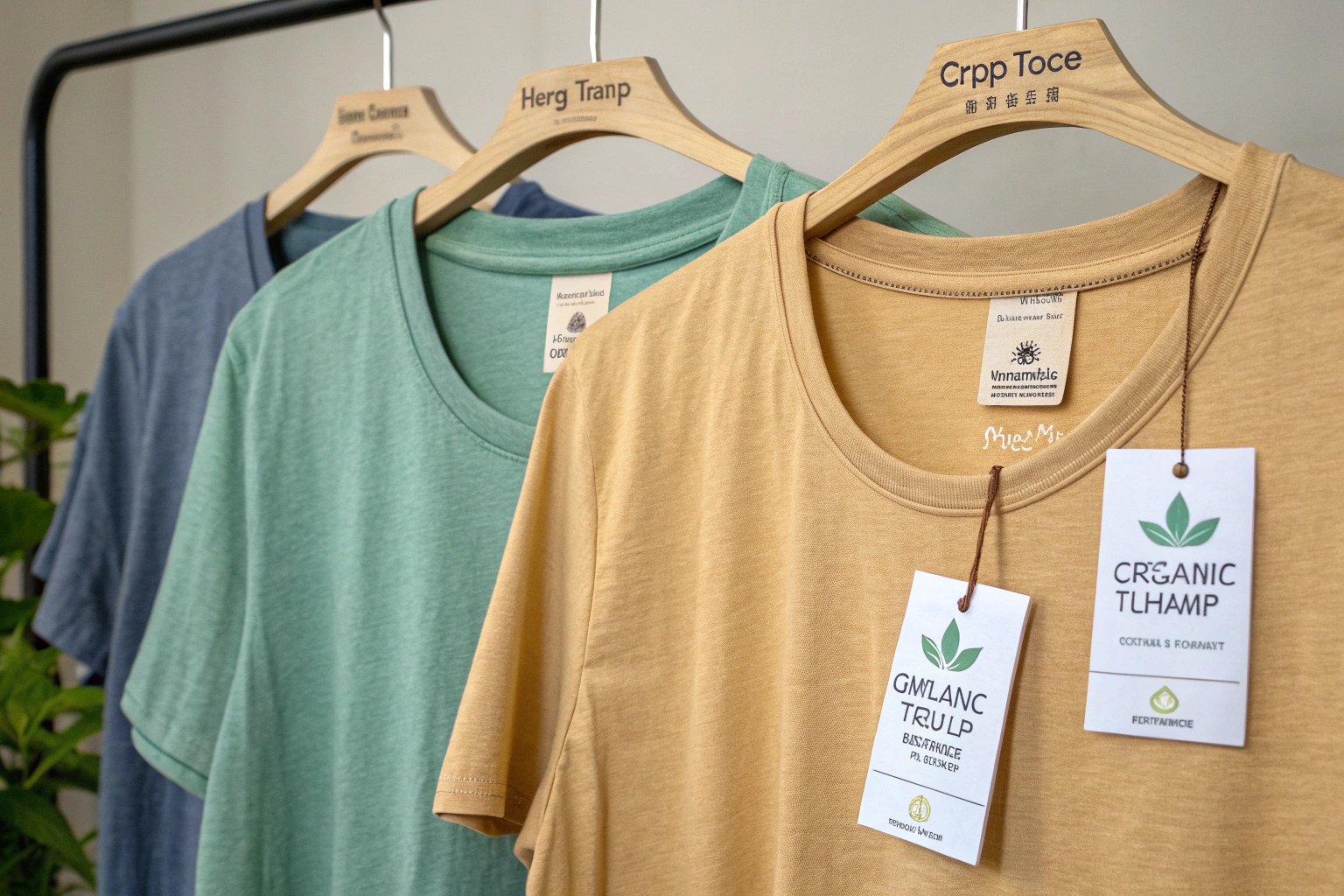
I was on a call with a Portland-based startup last month that perfectly captures the dilemma many brands face. They wanted to launch a line of "eco-friendly" t-shirts but were completely stuck choosing between organic cotton, hemp, and Tencel™. Each fabric promised sustainability, but their research revealed conflicting information about durability, cost, and consumer perception. After testing samples of all three, they discovered something surprising: the "best" choice wasn’t universal—it depended entirely on their specific brand values, target price point, and performance requirements.
Choosing between organic cotton, hemp, and Tencel™ for eco-tees requires evaluating your priorities across four key dimensions: sustainability credentials, performance characteristics, cost structure, and brand storytelling potential. Organic cotton leads in comfort and consumer familiarity, hemp excels in durability and land-use efficiency, while Tencel™ offers superior softness and closed-loop production. The decision ultimately hinges on which combination of attributes aligns with your brand’s specific sustainability definition and customer expectations.
The choice between these fibers isn’t just technical—it’s strategic. Each represents a different sustainability narrative and delivers distinct performance benefits. I’ve watched brands make the expensive mistake of choosing a fiber based on trends rather than their actual business needs. Let me break down the real-world differences we’ve observed through supplying all three fibers to American brands for over a decade.
What are the true environmental impacts of each fiber?
The sustainability conversation has moved beyond simple "natural vs. synthetic" to a more nuanced understanding of full lifecycle impacts. Last year, we conducted a comparative analysis for a Chicago-based brand that revealed surprising findings about these three fibers’ environmental footprints.
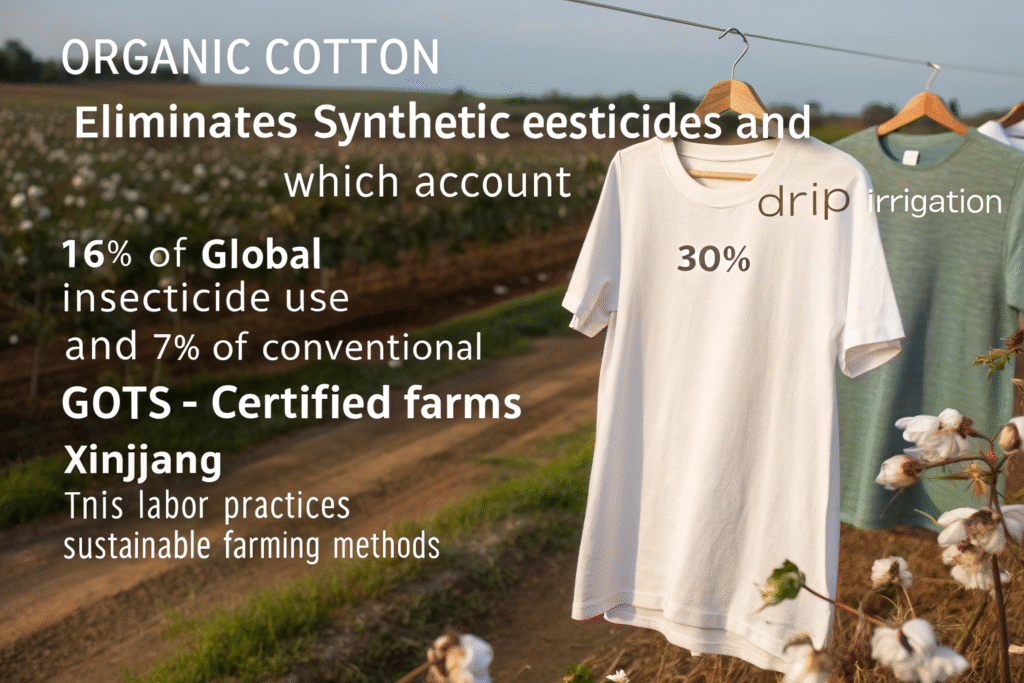
Organic cotton’s primary advantage is eliminating synthetic pesticides and fertilizers, which accounts for about 16% of global insecticide use and 7% of pesticide use in conventional cotton. However, it remains water-intensive, though better practices are emerging. Through our partnership with GOTS-certified farms in Xinjiang, we’ve seen water consumption reduced by 30% through drip irrigation compared to traditional methods. The certification ensures not just organic farming but also fair labor practices—a growing concern among US buyers.
Hemp is arguably the most environmentally efficient option from a land and water perspective. It requires approximately 50% less water per kilogram than organic cotton and yields 200-250% more fiber from the same land area. Hemp also naturally enriches soil through phytoremediation and doesn’t require pesticides. However, the current limited scale of hemp processing infrastructure means higher transportation emissions, as most processing occurs in specific regions.
Tencel™ (Lyocell) stands out for its closed-loop production, where 99% of solvents are recycled and reused. The fiber comes from sustainably sourced wood pulp, typically from eucalyptus trees that grow on marginal land unsuitable for food crops without irrigation. The production process uses significantly less water than cotton—up to 80% less according to some studies. However, as a manufactured fiber, it requires more energy for processing than natural fibers.
How does land use efficiency compare across these fibers?
Hemp delivers the highest fiber yield per acre at approximately 1,500-2,000 pounds, compared to organic cotton at 400-500 pounds and eucalyptus (for Tencel™) at around 800-1,000 pounds of pulp. This land efficiency makes hemp particularly compelling for brands focused on regenerative agriculture and maximizing resource utilization. However, the current limitations in global hemp processing capacity create practical supply chain challenges that can offset these theoretical advantages.
What are the water consumption realities behind marketing claims?
Organic cotton’s water footprint varies dramatically by region—our Turkish sources use 2,500 liters per kilogram while our Chinese partners have reduced this to 1,800 liters through better practices. Tencel™ requires approximately 300-500 liters per kilogram, while hemp needs just 1,000-1,200 liters. These numbers matter because water scarcity is becoming a critical factor in sustainable sourcing decisions, particularly for California-based brands facing their own water challenges.
How do performance characteristics differ in everyday wear?
Beyond sustainability metrics, t-shirts must perform in real life. We recently supplied all three fabrics to a Denver-based brand for wear-testing, and the results revealed clear strengths for each application.
Organic cotton remains the comfort benchmark with excellent breathability and soft hand-feel. The fiber’s natural crimp creates air pockets that provide thermal regulation, making it comfortable across varying temperatures. However, cotton tends to hold moisture rather than wick it, which can feel clammy during intense activity. It also has relatively poor elasticity and can lose shape over time unless blended with other fibers.
Hemp offers exceptional durability—approximately three times the tensile strength of cotton. The fiber becomes softer with each wash while maintaining its structural integrity. Hemp’s natural antimicrobial properties reduce odor retention, a significant advantage for travel or multi-day wear. Initially stiffer than cotton, hemp requires several washes to achieve optimal softness, which we address through advanced finishing techniques.
Tencel™ provides unparalleled drape and silky smoothness right out of the package. The fiber has excellent moisture-wicking capabilities, absorbing 50% more moisture than cotton while feeling dry to the touch. Its natural glossiness gives it a premium appearance that justifies higher price points. However, Tencel™ can be prone to pilling in 100% form, which is why we often recommend blends for heavy-use applications.
Which fiber offers the best color retention and printing surface?
Our testing shows Tencel™ accepts and retains dyes most vibrantly, requiring less dye for the same color depth compared to cotton. The smooth fiber surface creates an excellent base for digital printing with sharp detail reproduction. Hemp’s natural beige color requires more bleaching for pure whites but develops a beautiful patina with natural dyes. Organic cotton provides the most predictable and consistent results across different dyeing and printing techniques, making it the safest choice for complex graphic tees.
How does durability compare after 50 wash cycles?
In our accelerated wear tests, hemp showed the least shrinkage (approximately 3% vs. 5-8% for cotton) and maintained tensile strength best. Tencel™ showed some surface pilling in 100% form but maintained its drape and color vibrancy. Organic cotton showed expected softening and some seam distortion unless blended with reinforcement fibers. Based on these results, we typically recommend specific fabric care instructions for hemp-blend garments to maximize longevity, and we’ve developed proprietary finishing techniques that reduce Tencel™ pilling by over 40%.
What are the cost and supply chain considerations?
The business case for each fiber extends beyond per-meter pricing to include availability, minimums, and production complexities. Understanding these practical considerations prevents costly surprises during scaling.
Organic cotton currently offers the most mature supply chain with predictable pricing and global availability. Our GOTS-certified organic cotton costs approximately 20-30% more than conventional cotton but comes with full traceability. Minimum order quantities start at 1,000 meters for standard knits, making it accessible for emerging brands. The established supply chain means reliable lead times of 45-60 days from order to shipment.
Hemp faces supply chain fragmentation that creates price volatility and higher minimums. Our hemp sources require 3,000-meter minimums, and pricing can fluctuate 15-20% seasonally. The limited number of spinning facilities capable of processing hemp into fine yarns creates bottlenecks. However, scaling initiatives are underway, and we project price parity with premium organic cotton within 3-5 years as processing infrastructure expands.
Tencel™ offers stable pricing through Lenzing’s controlled production but commands a significant premium—approximately 40-50% above organic cotton. The supply chain is vertically integrated, ensuring consistent quality but limiting customization options. Minimums are reasonable at 1,500 meters, but lead times can extend to 75 days for specialized weights or finishes.
How do blending strategies optimize cost and performance?
Most of our successful eco-tee programs use strategic blends rather than 100% single fibers. A 50% hemp / 50% organic cotton blend reduces cost by 15% versus 100% hemp while maintaining most durability benefits. Our bestselling formulation—70% Tencel™ / 30% organic cotton—offers the drape and moisture-wicking of Tencel™ with improved durability and reduced pilling. These blends allow brands to balance sustainability stories with practical performance requirements.
What certifications should you require for each fiber?
For organic cotton, GOTS certification is non-negotiable—it verifies both organic farming and responsible processing. Hemp should carry either GOTS or similar third-party verification of organic cultivation and processing. Tencel™ comes with Lenzing’s certification, but we recommend additional Oeko-Tex Standard 100 certification for finished fabrics to verify chemical safety. Understanding the cost breakdown of GOTS certification for small to medium brands helps realistic budgeting, while our partnership with certification bodies streamlines this process for our clients.
How do consumer perceptions and marketing narratives differ?
The sustainability story resonates differently across consumer segments, and choosing the right fiber can strengthen your brand positioning. Through customer interviews and market research, we’ve identified distinct perception patterns.
Organic cotton carries the advantage of familiarity—95% of US consumers recognize "organic" as a positive attribute. The story is easy to communicate: "no toxic pesticides, better for farmers and the environment." However, some sustainability-focused consumers now view organic cotton as "basic" sustainability rather than cutting-edge.
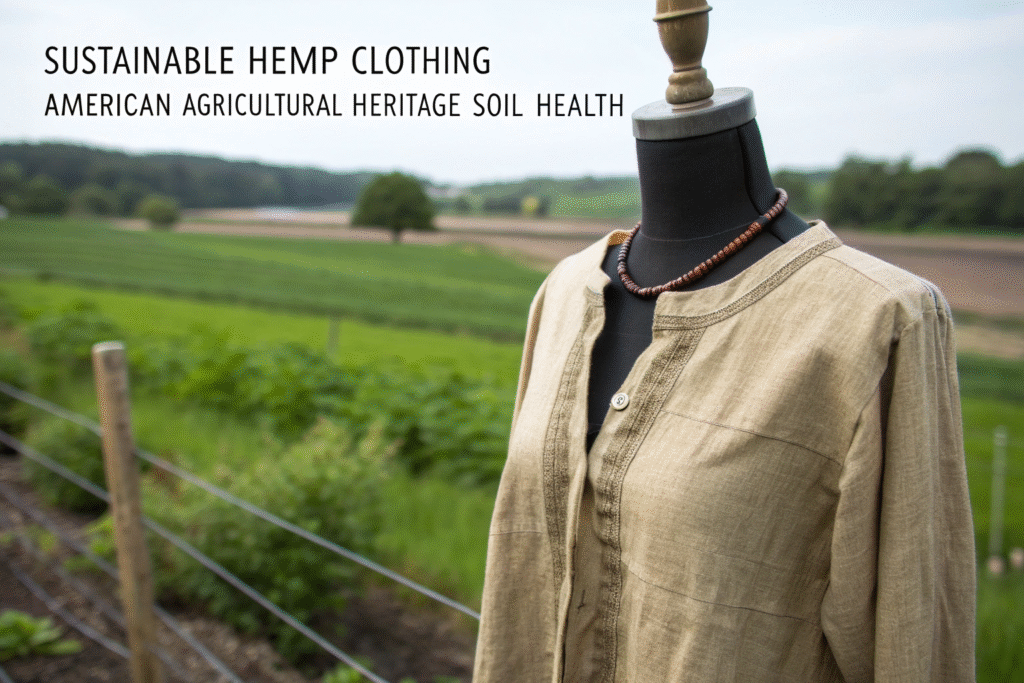
Hemp attracts consumers interested in regenerative agriculture and circular economy principles. The fiber’s historical connection to cannabis creates both intrigue and occasional hesitation, though this is diminishing rapidly. Brands using hemp effectively emphasize its durability, soil benefits, and American agricultural heritage when sourced domestically.
Tencel™ appeals to consumers seeking technological innovation alongside environmental responsibility. The closed-loop story is powerful and easily understood. The fiber’s premium hand-feel and association with luxury brands justify higher price points. However, some consumers remain skeptical of "man-made" fibers, regardless of their natural origins.
Which fiber aligns with specific brand values?
For brands emphasizing soil health and regenerative practices, hemp presents the strongest story. Those focused on water conservation find Tencel™ most compelling. Brands prioritizing social responsibility and supply chain transparency typically choose GOTS-certified organic cotton. The key is matching your fiber choice to your core sustainability message rather than trying to be everything to everyone.
How are successful brands communicating these choices?
The most effective marketing connects fiber choices to tangible benefits. A Seattle brand we work with highlights their hemp-cotton blend with "Gets Softer, Lasts Longer" messaging, emphasizing durability to justify premium pricing. A Los Angeles label using Tencel™ focuses on "Silky Comfort, Clean Conscience" to communicate both feel and environmental benefits. The messaging that resonates acknowledges trade-offs while clearly articulating why their specific choice represents the best balance for their values.
Conclusion
Choosing between organic cotton, hemp, and Tencel™ requires honest assessment of your brand’s specific priorities. Organic cotton delivers proven comfort and familiarity with a mature supply chain. Hemp offers superior durability and land-use efficiency despite current supply challenges. Tencel™ provides premium aesthetics and closed-loop production at a higher cost. The optimal choice emerges when you align fiber properties with your target price point, performance requirements, and sustainability narrative.
The most successful brands we work with often avoid binary choices altogether, instead creating strategic blends that combine the strengths of multiple fibers while mitigating their individual limitations. This approach allows for both compelling storytelling and practical performance across different product categories and price segments.
If you’re struggling to navigate these fiber decisions for your eco-tee line, let’s conduct a fabric analysis based on your specific requirements. We can provide swatches, technical data, and cost comparisons to inform your decision. Contact our Business Director, Elaine, at elaine@fumaoclothing.com to arrange a consultation and receive our Eco-Tee Fiber Comparison Kit with actual samples and complete sustainability metrics for each option.