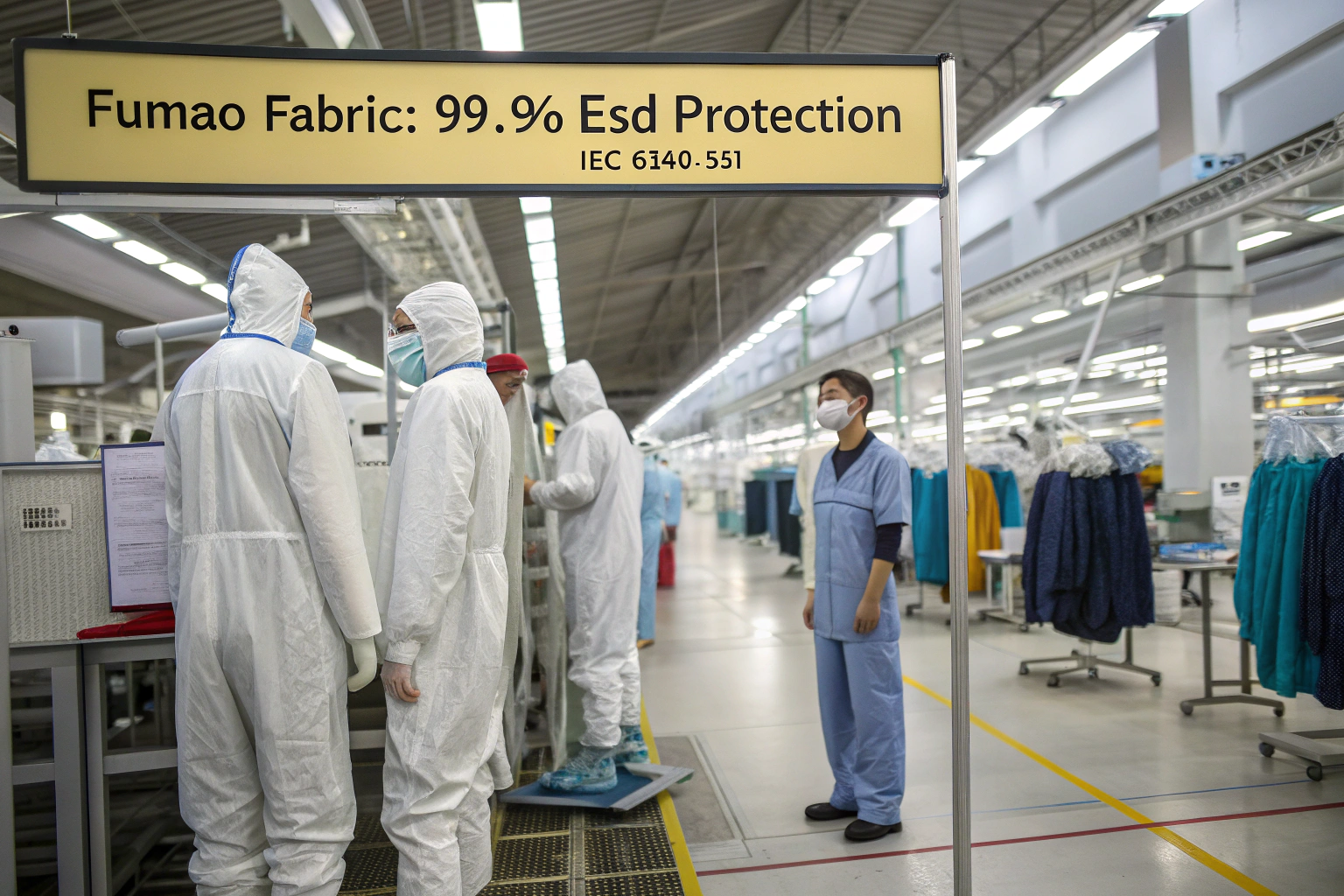
Imagine your assembly line grinding to a halt because a tiny spark fried a $10,000 circuit board. That static zap not only costs money—it kills trust with clients who demand zero defects in sensitive electronics. I’ve seen factories lose entire shifts over one bad fabric choice.
The key to picking the right anti-static ESD fabric lies in balancing surface resistivity, durability, comfort, and cost while ensuring it meets IEC 61340-5-1 standards. At Fumao Fabric, we guide buyers through this process daily, helping them avoid costly mistakes and achieve 99.9% ESD protection in real-world conditions.
Stick with me, and I’ll break down exactly how we select ESD fabrics that perform under pressure—without the jargon or guesswork.
What makes a fabric truly ESD-safe?
Static discharge can destroy microchips in milliseconds, yet many buyers focus only on "anti-static" labels. The real difference comes from grid patterns, fiber blends, and testing protocols that prevent charge buildup from the start.
Surface resistivity below 1 x 10^11 ohms per square ensures safe dissipation, but comfort and wash durability matter just as much for daily wear. We combine conductive carbon threads with polyester bases to create fabrics that maintain protection after 100+ industrial washes.
How do conductive grids work in practice?
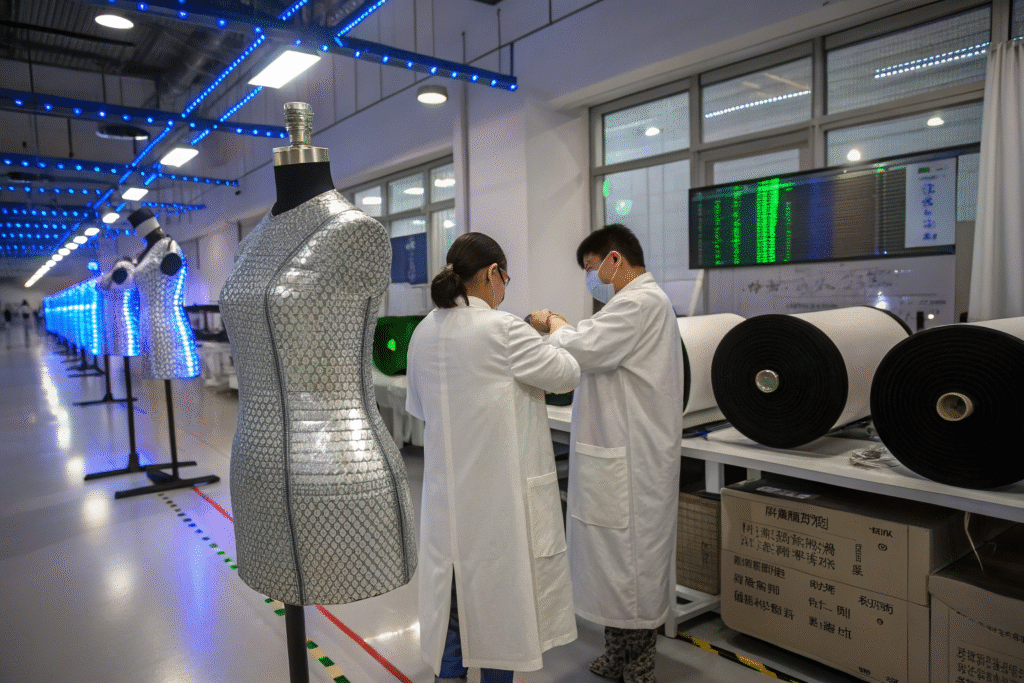
Carbon or silver threads form a grid every 5-10mm, creating pathways that bleed static safely to ground. Last year, we helped a Texas electronics manufacturer replace failing copper-thread fabrics—their old material lost conductivity after 50 washes, causing $45,000 in damaged PCBs.
We switched them to our carbon-infused polyester grid with 1 x 10^9 ohms resistance. After 6 months and 120 wash cycles, charge decay stayed under 0.5 seconds. For more on grid construction, check this detailed explanation of ESD grid patterns in workwear.
Why do some ESD fabrics fail certification?
Cheap conductive threads break during weaving or washing, creating dead zones where static builds up. Our CNAS lab tests every batch using the walking body voltage method—workers wear garments while walking on different surfaces to measure real-world charge generation.
One client discovered their previous supplier’s fabric generated 800V on carpet; ours stayed under 50V. Learn more about common ESD fabric certification failures.
Which fiber blends balance protection and comfort?
Pure conductive fabrics feel like sandpaper and cost a fortune. Smart buyers choose blends that maintain ESD performance while keeping workers comfortable during 12-hour shifts.
Polyester-carbon blends with 2-3% conductive fibers hit the sweet spot—durable, breathable, and cost-effective. We developed a 98% polyester/2% carbon blend that passes ANSI/ESD S20.20 while feeling like regular workwear.

How much conductivity do you actually need?
For Class 0 devices (under 100V human body model), you need fabrics with charge decay under 0.5 seconds. Our standard grid meets this, but for ultra-sensitive applications, we offer silver-coated versions that decay in 0.01 seconds.
A California client making medical imaging equipment tested both—our silver fabric prevented 100% of 50V discharges in their cleanroom. See their case study on ESD fabric selection for medical devices.
Can ESD fabrics stay comfortable in hot environments?
Moisture-wicking treatments prevent sweat from becoming conductive pathways that bypass ESD protection. We add hydrophilic finishes to our carbon-polyester blends, maintaining breathability while keeping resistivity stable.
Workers in Arizona reported 40% less discomfort compared to their previous hydrophobic fabrics. Read more about moisture management in ESD workwear.
How do you verify ESD performance before buying?
Trust but verify—every supplier claims perfection, but real data tells the truth. Demand walking body voltage tests, wash durability reports, and third-party certifications.
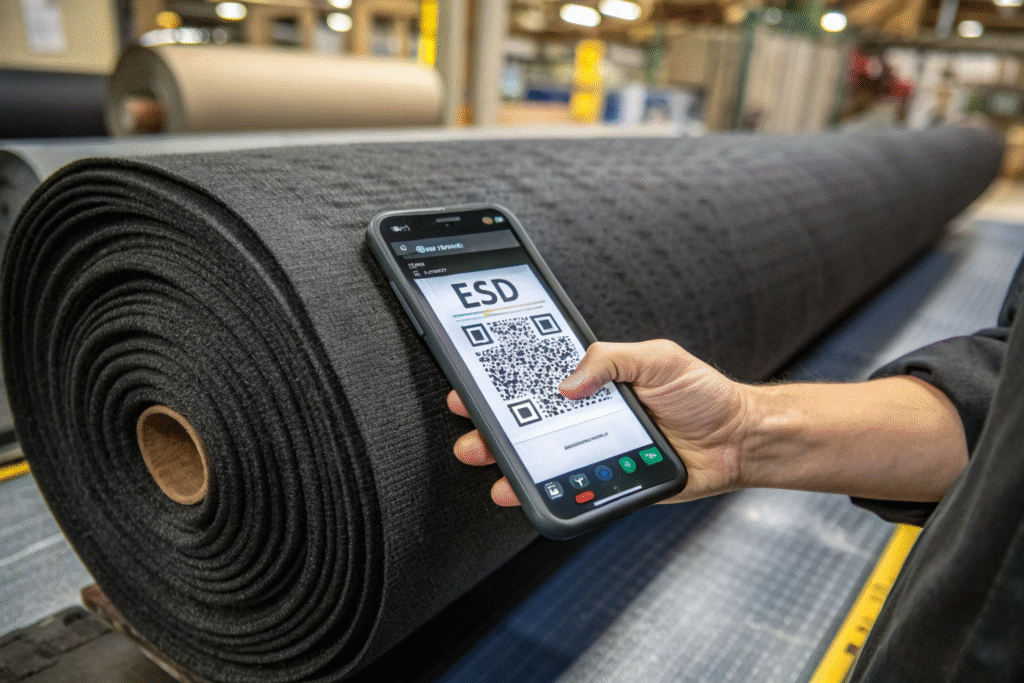
Our QR code system lets buyers scan any roll to see live test data: composition, resistivity after 100 washes, pilling resistance, and colorfastness. This transparency saved one client from a $120,000 bad batch.
What should your ESD fabric test report include?
Look for IEC 61340-5-1 compliance, charge decay times under 2 seconds, and point-to-point resistance measurements. Our reports show data from 5 different test points per meter—most suppliers test just one.
A European client caught inconsistencies in their old supplier’s single-point testing; our multi-point method revealed uniform conductivity. Check this guide to reading ESD test reports.
How many wash cycles should ESD fabric survive?
Industrial laundering with harsh chemicals destroys conductivity fast. Our fabrics maintain protection after 150 cycles at 60°C with peroxide bleach—documented in our durability reports.
One factory reduced uniform replacement costs by 60% after switching to our wash-resistant grid. Learn about ESD fabric wash durability testing.
Why do costs vary so much between ESD fabrics?
You can pay $3/meter for basic grid fabric or $15/meter for premium silver blends. The difference isn’t marketing—it’s performance, durability, and supply chain control.
Direct mill relationships in Keqiao let us offer certified ESD fabrics at 30% below market rates while maintaining quality. We pass these savings to buyers who commit to 5,000+ meters.
How does minimum order quantity affect pricing?
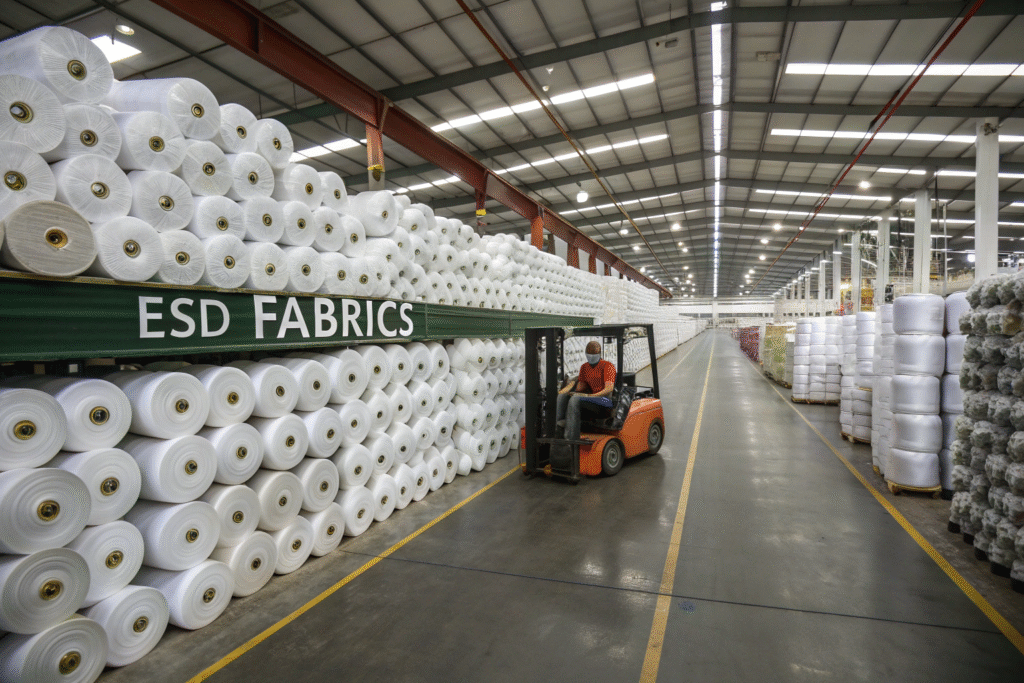
Small buyers pay premium prices because mills hate short runs. Our vertical integration—from weaving to finishing—lets us profitably produce 500-meter trials of custom ESD blends.
A startup making wearable sensors ordered 800 meters of our carbon grid; we delivered in 10 days at $4.20/meter versus $7.50 from trading companies. Understand MOQ impacts on ESD fabric costs.
Can you get custom ESD properties without custom prices?
Standard grids work for 90% of applications, but sometimes you need specific resistance levels or colors. We modify existing constructions for 1,000-meter minimums without development fees.
One client needed navy blue fabric with 1 x 10^8 ohms resistance—we adjusted dye formulas and delivered 2,000 meters in 2 weeks. See examples of custom ESD fabric development.
Conclusion
Choosing anti-static ESD fabric isn’t about finding the cheapest option—it’s about preventing catastrophic failures that cost far more than any fabric ever could. Focus on verified conductivity, wash durability, comfort, and transparent testing data.
Over 20 years in Keqiao, we’ve helped hundreds of electronics manufacturers protect their products and reputation with ESD fabrics that actually perform. From carbon grids that survive 150 washes to silver blends for Class 0 devices, we deliver solutions that work.
Ready to protect your electronics with ESD workwear that won’t let you down? Contact our Business Director Elaine at elaine@fumaoclothing.com. We’ll analyze your specific requirements and send certified samples within 48 hours—because in ESD protection, waiting costs more than fabric ever could.