
You’re staring at a buyer’s sustainability mandate. It demands a specific percentage of recycled content in the fabric composition, or you lose the contract. You love the look and feel of our cotton-linen blends. The drape is perfect. But your eco-conscious end consumer, the one who reads labels with a magnifying glass, won’t accept virgin cotton anymore. You’re caught between the aesthetic of a natural flax blend and the hard requirement for a circular, waste-reducing supply chain. The fear is that "recycled" means a scratchy, weak, visually inconsistent fabric that will ruin the premium hand-feel of your linen. You think sustainability forces a compromise on quality.
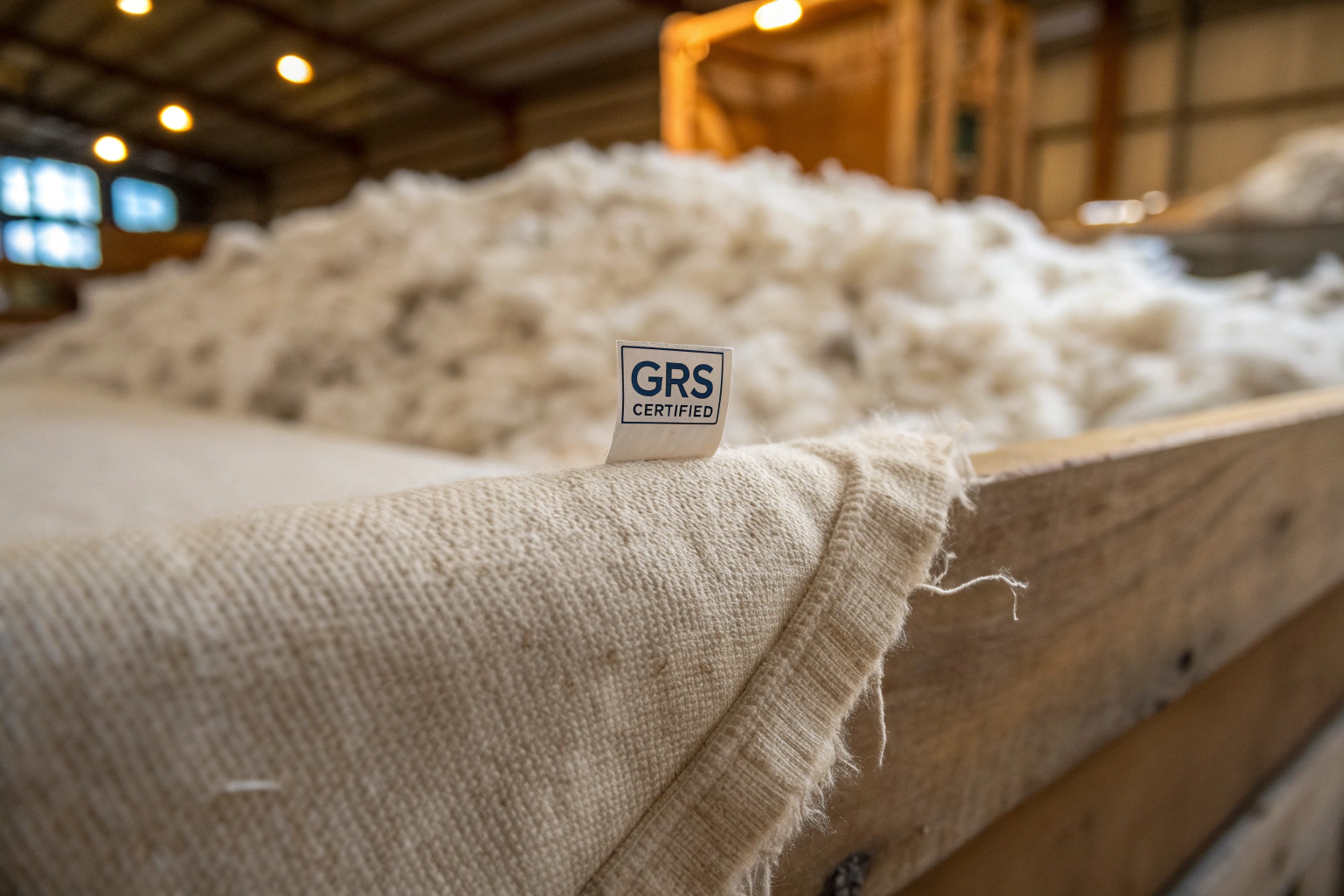
We have broken through that compromise. We absolutely source and blend high-quality recycled cotton into our eco-conscious linen blends. And I’m not talking about a low-grade shoddy that pills after two washes. We use mechanically recycled, pre-consumer cotton waste sourced from our own cutting tables and from certified partner spinning mills in the Keqiao cluster. We feed the scraps through a precision fiber-opening line that gently pulls the woven cotton back into individual fibers without destroying the staple length. We then intimately blend this recycled cotton with our premium long-staple linen in a specific ratio—usually 30% recycled cotton to 70% virgin linen—and spin it into a beautiful, character-rich yarn. The result is a fabric with a soft, dry hand-feel, a slightly heathered, "already-lived-in" texture, and a fully traceable, GRS-certified chain of custody. The sustainability story is real, and the fabric stands up to it.
But integrating a recycled fiber into a bast fiber like linen is a specific engineering challenge. Recycled cotton has a shorter staple length. It can reduce the tensile strength if the spinning isn’t adjusted. We have to tweak the twist multiplier, the weaving tension, and even the enzyme wash to compensate. I’ll break down exactly where our recycled cotton comes from, how we verify its authenticity, and how we manage the performance parameters to ensure this green fabric doesn’t sacrifice any of the performance you expect from a premium textile.
Where Does Fumao’s Recycled Cotton Fiber Come From?
The biggest lie in the recycled textile market is "post-consumer" mystery waste. You don’t know if it was a hospital sheet or a pair of oil-stained jeans. This contaminated feedstock produces a weak, grey, and inconsistent fiber. We refuse to play that game. Our integrity depends on the purity of the input, so we strictly use pre-consumer recycled cotton. This is the clean, sorted waste from the cutting rooms of our own garment-making partners and the spinning mills within a 50-kilometer radius of our factory in Keqiao. It’s essentially virgin cotton that has been cut off during pattern making, or the edge trims from a loom. It has never been worn, washed, or exposed to consumer contaminants. It’s brand-new cotton that was simply the wrong shape.
The process is a physical one, not a chemical one. We collect these clean white and natural cotton clippings and bring them to our mechanical recycling line. The fabric scraps go into a series of rotary cutting blades and spiked lattices that literally rip the woven structure apart. We don’t use water or solvents. It’s a dry, mechanical shredding process. The machine pulls the rags back down to their individual fiber state. The key is to run the machine slowly to preserve the maximum fiber length. Cheap recycling hammers the cotton to dust. We run our line at a reduced speed and a specific angle on the pinned rollers, which teases the fibers apart like a cotton gin. This "gentle pulling" action results in a recycled fiber with an average staple length of about 18-22mm. It’s shorter than virgin cotton (28-30mm), but it’s long enough to spin a high-quality yarn with the right technique.

Is Your Recycled Cotton GRS (Global Recycled Standard) Certified?
Yes, and we don’t just claim this; we ship every batch with a Transaction Certificate (TC). The Global Recycled Standard (GRS) is the most rigorous third-party standard for recycled textiles. It verifies the chain of custody from the recycler to the spinner, to the weaver, and finally to the finished fabric bolt. Every step in our process is audited by an external certification body.
Here’s how the paper trail works. Our cutting-room waste supplier has a GRS Scope Certificate. When they ship us a bale of recycled fiber, they issue a TC that states the exact weight, the input material category (pre-consumer), and the batch number. When we spin that fiber into our recycled cotton-linen yarn, we issue our own TC, linking the yarn batch back to the fiber TC. Then, when we weave the fabric, another TC is issued. You, as the buyer, receive the final TC that allows you to print the GRS label on your garment. This isn’t a one-time "certificate on the wall." It’s a transactional document for every single bulk order. This traceability is what separates a real eco-product from a greenwashed one. You can scan the QR code on our recycled linen blend and see the entire chain of custody from garment trim to fabric roll.
What Percentage of Recycled Cotton Can You Blend with Linen?
The blend ratio is the most critical performance and aesthetic decision we make together. We have run extensive spinning trials to find the sweet spot. You can’t just replace 100% of the cotton with recycled and expect the fabric to behave the same. Recycled cotton has a lower tensile strength and a higher short-fiber content than virgin cotton because the mechanical shredding process inevitably causes some fiber breakage. If you put 50% recycled cotton in a linen warp, you’ll start seeing yarn breakages on the high-speed air-jet loom. The weaving efficiency drops, and the cost per meter goes up sharply.
Our factory-standard, performance-balanced blend is 70% virgin long-staple linen / 30% GRS recycled cotton. This ratio achieves a measurable reduction in virgin resource use (30% less virgin cotton) while maintaining a weaving efficiency above 90% and a final fabric tensile strength that exceeds industry standards for apparel. The recycled cotton fills the weft direction beautifully, where the demands are slightly lower than the warp. We can push it to a 50/50 recycled cotton/linen blend for a very specific "chunky, rustic, heavily slubbed" aesthetic, but I warn clients that the fabric will be weaker and have a much rougher, more irregular surface. It’s suitable for a stiff tote bag or a heavy curtain, not a tailored garment. The 30% ratio is where the eco-narrative meets reliable, scalable quality.
How Does Recycled Cotton Affect the Quality of the Linen Blend?
I won’t sugarcoat the technical reality. Recycled fibers are mechanically damaged fibers. Under a microscope, a virgin cotton fiber looks like a smooth, twisted ribbon with a consistent diameter. A recycled cotton fiber looks slightly frayed, with microfibrils sticking out and a roughened surface. It’s essentially a "wounded" fiber. If you don’t adjust the spinning and weaving process to account for this damage, the recycled blend will be weaker, more prone to pilling, and less dimensionally stable than the virgin equivalent. The quality risk is real, and I’ve seen competitors ship recycled linen blends that were an absolute pill-factory because they didn’t respect the fiber’s weakness.
Our quality strategy is compensation through engineering. We don’t just drop the recycled cotton into the standard recipe. First, we increase the twist per inch (TPI) in the spinning frame by about 10% for the recycled weft yarn. The higher twist binds the shorter, rougher fibers more tightly, compensating for their reduced natural cohesion. Second, we apply a light coating of a biodegradable spinning lubricant (a potato-starch based size) to the recycled cotton sliver before spinning. This smooths down the micro-fibrils temporarily, allowing the yarn to pass through the loom’s heddles without generating destructive lint. Third, our finishing process includes an extended bio-polish wash. The cellulase enzymes digest the most damaged, protruding short fibers, leaving a clean, soft surface with a pilling resistance that matches our virgin fabric. The result is a fabric that has a slightly softer, more "powdery" hand-feel than pure linen-cotton, but a tensile strength that is only about 8-12% lower—a reduction that’s imperceptible in a well-designed garment.

Will the Recycled Content Make the Fabric More Likely to Pill?
It would, if we stopped at spinning. The shorter fibers in recycled cotton are the very definition of a pilling hazard. Pills are formed when short, loose fibers migrate to the fabric surface, entangle, and form those ugly little fuzz balls. Recycled cotton introduces more short fibers. A lazy manufacturer will deliver you a fabric that looks beautiful on the bolt but explodes into pills after three washes.
Our defense against this is an aggressive three-stage surface management protocol. Stage 1: Singeing. The woven greige fabric passes over a gas flame at high speed, burning off the longest, most dangerous surface fuzz. Stage 2: Bio-polishing. We use a concentrated neutral cellulase enzyme to chemically eat away the remaining short fiber ends that are weakly anchored to the yarn core. Stage 3: Resin-free anti-pill finish. We apply a water-based polyurethane micro-emulsion that creates microscopic "spot welds" between the surface fibers, locking them down without changing the hand-feel. We test the finished fabric to the ASTM D4970 Martindale pilling standard at 2,000 rubs. Our 70/30 recycled cotton-linen consistently achieves a Grade 4 (Slight Pilling) or better. This is the same rating as our premium virgin linen. The problem is solved with chemistry and mechanical finishing.
Does Recycled Cotton Change the Color Consistency of the Fabric?
Yes, and this is actually a design feature if you embrace it. Virgin cotton and virgin linen take dye differently, but they both start as a uniform, creamy white. Recycled cotton is never a pure, bright white. Even the cleanest pre-consumer cutting waste has a slight variation in shade. White scraps from different cotton origins reflect light slightly differently. When we mechanically recycle them, we get a fiber that is an "ecru" with a subtle, almost invisible heathered tone.
If you want to dye the recycled blend to a bright, optical white or a brilliant neon color, you will struggle. The base is too warm. You’ll get a creamy, vintage white, not a surgical white. However, if you want to dye it to a natural, earthy palette—charcoal, olive, rust, indigo, natural ecru—the slight heathered base of the recycled cotton actually enhances the color depth. It gives the fabric a "ring-spun," artisanal quality straight off the loom. A solid black piece-dyed on a 100% virgin fabric looks flat and synthetic. The same black dye on our 30% recycled cotton blend has a deep, slightly dusty, soft black, like a vintage work jacket. Designers pay extra for that effect. With recycled content, you get it naturally. I always show clients a color blanket of the specific palette that works best with the recycled base so they can design into the fabric’s strengths.
What Is the Cost vs. Benefit of Using Recycled Cotton?
Here’s the honest math. Our GRS-certified recycled cotton-linen blend costs about 15% to 20% more per meter than an equivalent virgin cotton-linen blend. That’s the FOB price reality. The premium comes from the cost of sourcing, sorting, and mechanically recycling the pre-consumer waste. The gentle mechanical opening line is slow and energy-intensive. The extra spinning adjustments and the extended bio-polish finishing add processing steps and time. A cheap, vertically integrated mill could perhaps make a claim for less, but without the GRS certification and the quality control, they’re selling a story, not a textile.
But the benefit side of the ledger is far heavier. This 20% cost premium unlocks doors that are slamming shut for virgin fibers. Major retailers in the EU and US now have mandatory sustainable fiber targets. If you can’t provide a credible recycled content option, you simply can’t get a purchase order. The recycled content also commands a retail price premium of 30% to 50% or more with the eco-conscious consumer. A brand can sell a recycled linen-cotton blazer for $280 instead of $220, more than covering the $3 extra in fabric cost per garment. Then there’s the marketing asset value. The GRS certificate and the traceability story are content gold for social media. You get to tell a genuine circularity story, not a vague "we care about the planet" platitude. When you look at the total product lifecycle, the recycled blend is not a cost burden; it’s a margin enhancer and a market access key.

Why Is Recycled Cotton Sometimes MORE Expensive Than Virgin?
It seems counterintuitive. We’re using waste, so shouldn’t it be cheaper? The infrastructure is the answer. Virgin cotton has a global commodity pipeline that has been optimized for 200 years. Massive farms, standardized ginning, bulk shipping. Recycled cotton has a fragmented, labor-intensive supply chain. The pre-consumer scraps have to be collected from hundreds of cutting rooms. They have to be sorted by color and fiber composition to avoid contamination. A single piece of polyester thread mixed in will melt and ruin a batch.
The mechanical recycling process is also low-throughput. A modern cotton gin processes tons per hour. A precision mechanical fiber opener, designed to preserve fiber length, processes maybe 100 kilograms per hour. The energy per kilo of fiber is higher. The labor to remove zippers, labels, and stray threads is all manual and skilled. This is why chemically recycled cotton (which dissolves the fiber into a pulp) is being developed, but that technology is still in its infancy. The cost of genuine, traceable, high-quality recycled cotton reflects this artisan industrial process. When you pay the 20% premium, you are not paying for waste. You are paying for the complex logistics and the gentle engineering required to resurrect that waste into a wearable fiber.
Can I Use the Recycled Story to Increase My Retail Margins?
Absolutely, and I’ll tell you how to do it effectively. The story is worth as much as the fabric. A generic hangtag with a green leaf means nothing. A specific, scannable QR code that plays a 60-second video of our Keqiao recycling line shredding the cut-offs and spinning the yarn—that’s a conversion machine. We provide that video content as part of our recycled fabric partnership.
One of our London-based contemporary brands created a "Passport" hangtag for their recycled linen blazer. The hangtag showed the exact percentage of water saved (using the Textile Exchange’s LCA data) and the kilograms of waste diverted. They retail the blazer at a 40% premium to their main line, and it’s consistently their top seller. The consumer wants to feel like they are part of a solution. You give them the hard data, the transparent supply chain, and the beautiful, soft, heathered fabric, and they will pay more. You’re not selling a cheaper product; you’re selling a more valuable story. This differentiation is how a small brand fights the fast-fashion giants. They can’t replicate the traceability story because their supply chain is a black box. Yours, with our help, is an open book.
What Certifications Verify the Recycled Cotton Content?
In a market flooded with greenwashing, a certificate is the only thing that separates a verified ecological product from a marketing lie. Anyone can type "eco-friendly" on a website. Very few can produce a valid, third-party audited Transaction Certificate for each bulk lot. The certification landscape can be confusing, with OEKO-TEX, GOTS, and GRS all covering different aspects. For recycled content claims specifically, the certification must verify the origin and the chain of custody of the recycled fiber. Without this, you are legally vulnerable to making an unsubstantiated claim in jurisdictions with strict green marketing laws, like the EU and California.
For our recycled cotton-linen blends, the primary certification is the Global Recycled Standard (GRS) , managed by Textile Exchange. This standard covers the full supply chain. It verifies the recycled content, but it also imposes strict environmental and social requirements on the processing stages, including wastewater treatment and worker rights. We also hold the Recycled Claim Standard (RCS) , which is a simpler, chain-of-custody-only standard. Additionally, because our blend contains linen (a natural fiber) and recycled cotton, we can optionally certify the entire fabric to OEKO-TEX Standard 100, confirming that the final product is free from harmful substances. The combination of GRS + OEKO-TEX is the "golden ticket" for a sustainable textile in the European and North American markets. We provide a "Certificate Pack" with every shipment: a copy of our GRS scope certificate, the lot-specific Transaction Certificate, and the OEKO-TEX certificate for the finished fabric.

What Is the Difference Between GRS and RCS Certification?
This is a distinction that often confuses buyers, and I want you to be able to speak about it clearly with your own customers. The Recycled Claim Standard (RCS) is purely a chain-of-custody standard. It tracks and verifies the recycled material content from the source to the final product. It answers the question: "Is there really 30% recycled cotton in this fabric?" RCS certification allows you to make a factual, verified claim about the percentage of recycled content. It sets the minimum percentage for labeling (usually 5%), and it requires a Transaction Certificate trail.
The Global Recycled Standard (GRS) includes everything in the RCS, plus additional layers. A GRS-certified product must contain at least 20% recycled content (for the "Made with X% Recycled Material" label) or 50% for the "GRS" logo. Crucially, GRS also audits the processing facilities for their environmental management systems, chemical restrictions (like the ZDHC MRSL), and social responsibility (worker health and safety, no forced labor). So, GRS certification is a broader guarantee of both the recycled content and responsible manufacturing. I always recommend GRS to brands because it tells a much stronger story. It says, "Not only is this fabric recycled, but the people who made it were treated fairly and the water was cleaned." That’s a premium, defensible sustainability narrative.
How Can I Trace the Recycled Content Back to the Source?
Through the Transaction Certificate audit trail. Each step in the supply chain issues a numbered TC. This creates an unbroken digital chain. We give you the final TC, which lists the input certificates from our yarn spinner and our waste supplier. You can literally trace your specific batch of fabric back to the batch of pre-consumer cutting waste that was used to make it.
We make this even more tangible with our QR code system. Scan the code on the fabric header, and the traceability page opens. It shows a simplified "Chain of Custody Map" with the dates, the TC numbers, and even photos of the recycling facility and our spinning frame. For a recent capsule collection with a US outdoor brand, we geotagged the cutting-room waste supplier in Zhejiang and the recycling line in Keqiao. The brand put this QR code on their retail hangtag. Customers could scan it in the store and see the actual machine that shredded the cotton for their jacket. That level of radical transparency builds an unbreakable bond of trust. It turns a commodity into a story. This is the future of textile marketing.
Conclusion
We’ve untangled the full journey of our recycled cotton-linen blend, from a cutting-room floor to a premium, GRS-certified garment. You’ve seen that the integrity of this fabric rests on a simple, unshakeable foundation: clean, traceable, pre-consumer feedstock that is mechanically revived with gentle engineering, not chemically melted down. We’ve confronted the technical realities—the shorter staple length, the pilling risk, the warm ecru base color—and shown how our specific spinning twists, our three-stage finishing protocol, and our honest design guidance turn those challenges into the very features that make the fabric beautiful: a soft, powdery hand-feel and a heathered, vintage depth. The cost-benefit analysis is clear: the 20% premium buys you a GRS Transaction Certificate, a powerful marketing story, and access to the most valuable retail shelves in the world.
Your eco-conscious customer deserves a fabric that performs as beautifully as it tells its story. I don’t want you to have to choose between your aesthetic standards and your sustainability commitments. With our recycled cotton-linen, you get the full, textured soul of the flax and the verified, circular integrity of the reclaimed cotton, in one seamless textile. If you’re ready to develop a collection that makes this closed-loop story visible to your customers, let’s start the conversation. Reach out to our Business Director, Elaine. She can send you the full GRS Certificate Pack, a color blanket of our recycled palette, and a cost comparison sheet. Her email is elaine@fumaoclothing.com. Let’s make something beautiful that gives waste a second life.








