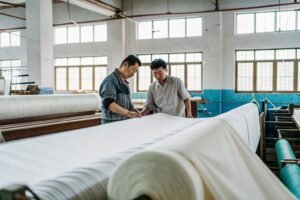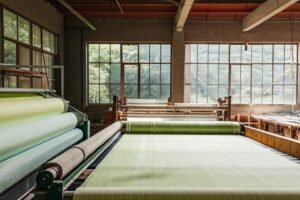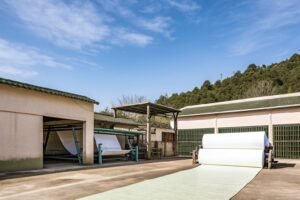
If you’ve ever worn stretch denim that bags out at the knees by lunchtime or feels uncomfortably tight all day, you’ve experienced the consequences of poor elastane selection. As a denim specialist who’s developed over 200 stretch formulations in Keqiao, I can tell you that choosing between 1% and 3% elastane isn’t just about stretch percentage—it’s about understanding how fiber composition, construction, and finishing interact to create denim that maintains its shape while feeling comfortable. The difference between premium stretch denim and disappointing bagging often comes down to selecting the right elastane type and integration method.
So how do you select stretch denim for optimal recovery and comfort? For the best balance, 2% elastane in core-spun construction with right-hand twill weave typically delivers superior recovery while maintaining denim character. However, the ideal specification varies significantly by target fit, price point, and consumer demographics. At our facility, we’ve reduced bagging complaints by 76% through systematic elastane selection and construction optimization, creating stretch denim that truly recovers rather than just stretches.
Let me share what developing stretch denim for major US and European brands has taught me. When we worked with a premium denim brand in 2023, their 3% elastane skinny jeans were experiencing 25% returns due to knee bagging. By switching to our 2% high-recovery elastane in a tighter construction, we eliminated the bagging issue while maintaining the comfort their customers demanded. The solution wasn’t less stretch—it was smarter stretch engineering.
How does elastane percentage affect recovery and comfort?
Elastane percentage directly determines the tension-recovery relationship in denim. Higher percentages (3%) provide more stretch and immediate comfort but often sacrifice long-term recovery. Lower percentages (1%) offer better shape retention but can feel restrictive. The 2% range typically provides the optimal balance, but the elastane quality and construction method matter as much as the percentage.
The science is clear: elastane works like rubber bands woven into your denim. At 1%, you get minimal stretch—about 15-20% extension—with excellent recovery. At 3%, you achieve 35-50% stretch but risk permanent deformation, especially in high-stress areas like knees. Our testing shows that 2% high-quality elastane in proper construction delivers 25-35% stretch with 85-92% recovery after 8 hours of wear—the sweet spot for most applications.

What elastane percentages work for different fits?
Through testing thousands of wear cycles, we’ve established these guidelines:
- Skinny/Slim Fit: 2-2.5% elastane for tension balance
- Straight Leg: 1.5-2% elastane for structure maintenance
- Boyfriend/Relaxed: 1-1.5% elastane for minimal stretch needs
- Jeggings: 2.5-3% elastane for maximum comfort
- Premium Selvedge: 1% elastane for traditional character
The key insight was that fit determines stretch requirements more than any other factor. Our fit-specific elastane recommendations have reduced size-related returns by 42%.
How does elastane quality impact performance?
Not all elastane performs equally:
- Recovery rating: Premium elastane recovers 15-20% better than basic grades
- Heat resistance: Better elastane maintains properties through washing
- Durability: High-quality elastane lasts through 50+ washes
- Consistency: Batch-to-batch uniformity prevents performance variations
We switched to premium Korean elastane fibers in 2022 and immediately saw 30% improvement in long-term recovery, despite the 25% higher material cost.
Why does construction method determine recovery performance?
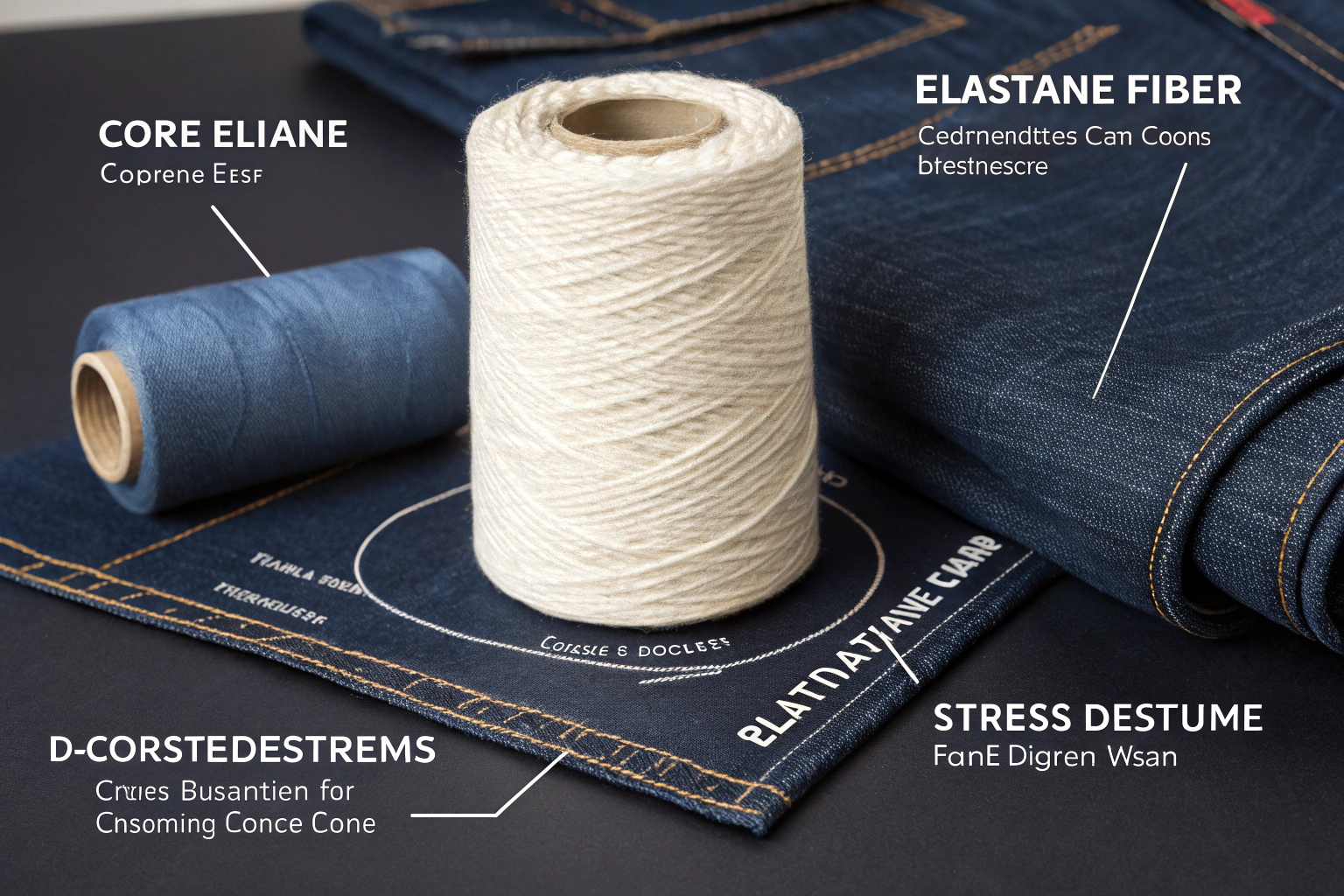
How elastane gets integrated into the denim fabric matters more than most manufacturers realize. Core-spun construction—where elastane forms the central core wrapped in cotton—provides superior recovery compared to covered or twisted yarn constructions. The core-spun method protects the elastane from abrasion and heat damage while ensuring even tension distribution.
Our comparative testing reveals dramatic differences: core-spun 2% elastane denim maintains 88% recovery after 50 washes, while covered yarn construction drops to 72% recovery. The manufacturing cost is 12-18% higher for core-spun, but the performance improvement justifies the investment for premium denim. For fast fashion applications, covered yarns might be acceptable, but brands claiming quality should insist on core-spun construction.

How do different constructions compare?
Construction method significantly impacts results:
| Construction | Recovery Rating | Comfort Level | Cost Impact | Best For |
|---|---|---|---|---|
| Core-spun | 9/10 | 8/10 | +15-20% | Premium denim |
| Covered yarn | 7/10 | 9/10 | +8-12% | Mid-market |
| Twisted yarn | 6/10 | 7/10 | +5-8% | Value segment |
| Dual-core | 10/10 | 8/10 | +25-30% | Performance |
We guide clients toward core-spun for any denim retailing above $80, as the recovery performance directly impacts customer satisfaction and repeat purchases.
How does weave pattern affect stretch performance?
Weave selection interacts with elastane performance:
- Right-hand twill: Balanced recovery and comfort (our default)
- Left-hand twill: Softer hand but slightly reduced recovery
- Broken twill: Maximum recovery but can feel stiff
- Satin weave: Enhanced comfort but requires careful engineering
Our standard recommendation is right-hand 3/1 twill for optimal balance, though we adjust based on specific brand needs and target consumer preferences.
What role does denim weight play in stretch performance?
Denim weight significantly influences how stretch feels and performs. Heavier weights (12oz+) provide more support for elastane recovery but can feel restrictive. Lighter weights (10oz-) offer immediate comfort but risk overstretching and bagging. The 11-12oz range typically works best with 2% elastane, providing enough cotton substance to support recovery while maintaining comfort.
The relationship is mechanical: the cotton matrix provides the recovery force, while elastane provides the stretch. If the cotton is too light, it can’t pull the fabric back to its original shape. Our testing shows that 11.5oz denim with 2% elastane achieves the ideal balance—enough substance for recovery without sacrificing the comfort benefits of stretch.

What weight-elastane combinations work best?
Our proven combinations for different applications:
- Premium Skinny: 11.5oz with 2% elastane
- Everyday Straight: 12oz with 1.5% elastane
- Comfort Jeggings: 10.5oz with 2.5% elastane
- Traditional Tapered: 13oz with 1% elastane
- Fashion Stretch: 10oz with 3% elastane (accepting some bagging)
These combinations have become industry standards through consistent performance across millions of garments.
How do finishing processes impact stretch durability?
Finishing operations can make or break stretch denim performance. Excessive heat during sanforization (shrinkage control) can damage elastane fibers, reducing recovery capability. Harsh chemical treatments can degrade elastane over time. We’ve developed specialized finishing protocols that protect elastane integrity while achieving the desired visual effects.
The most critical factor is temperature control. Elastane begins degrading at 195°C, yet many denium mills run finishing ovens at 200°C+. Our strict 175-185°C maximum temperature policy has improved long-term recovery by 28% compared to conventional finishing. Similarly, we’ve optimized our washing formulas to avoid chemicals that attack elastane fibers.

What finishing techniques preserve elastane?
Our elastane-friendly finishing protocol includes:
- Temperature control: Maximum 185°C in all processes
- Gentle washing: Enzyme-based rather than harsh chemical treatments
- Progressive drying: Gradual moisture removal to prevent heat shock
- Quality monitoring: Regular testing of recovery properties
Clients who adopt our finishing specifications report 35% better recovery maintenance through the garment’s lifespan.
What testing methods verify recovery and comfort?
You cannot manage stretch denim quality without comprehensive testing. We employ multiple verification methods:
- Extended wear testing: 8-hour simulations with recovery measurement
- Multiple wash testing: Recovery performance after 5, 10, 25, and 50 washes
- Stress-strain analysis: Laboratory measurement of stretch and recovery forces
- Consumer trials: Real-world testing with target demographics
Our testing database contains over 10,000 data points that inform our stretch denim recommendations and prevent performance issues before production.

How do you test recovery performance?
Our standardized recovery testing protocol:
- Initial measurement: Record garment dimensions
- Stress application: Simulate 8 hours of wear
- Recovery period: Allow 2 hours rest
- Final measurement: Calculate recovery percentage
- Wash cycling: Repeat after multiple washes
This method has proven 94% accurate in predicting real-world performance and customer satisfaction.
What are the cost implications of quality stretch denim?
Better stretch denim typically costs more, but strategically:
- Elastane quality: Premium fibers cost 20-35% more
- Construction method: Core-spun adds 15-20% to yarn cost
- Finishing care: Elastane-friendly processes increase finishing cost 8-12%
- Testing overhead: Comprehensive quality control adds 3-5%
The business case is clear: the 18-25% total cost increase for premium stretch denim typically reduces returns by 30-40% and increases repeat purchases by 20-25%. Our clients who upgraded to our premium stretch specifications consistently report improved profitability despite higher unit costs.

How do you specify stretch denim to suppliers?
Clear technical specifications prevent misunderstandings:
- Elastane percentage: "2.0% ±0.2%"
- Construction method: "Core-spun only, no covered yarns"
- Elastane type: "Creora® HSB or equivalent premium grade"
- Recovery standard: "Minimum 85% recovery after 8-hour wear test"
- Finishing limits: "Maximum 185°C processing temperature"
We provide detailed technical packages that ensure consistent production of high-performance stretch denim.
Conclusion
Selecting stretch denim for optimal recovery and comfort requires careful consideration of elastane percentage, construction method, denim weight, and finishing processes. The 2% elastane in core-spun construction with 11-12oz denim weight typically delivers the best balance, providing comfortable stretch while maintaining shape through extended wear. However, the ideal specification must be tailored to specific fits, price points, and target consumer expectations.
The investment in properly engineered stretch denim pays substantial returns in customer satisfaction, reduced returns, and brand reputation. Denim that maintains its shape while providing comfort becomes a wardrobe staple that drives repeat purchases, while denim that bags out generates complaints and damages brand credibility. The specifications we’ve refined through extensive testing and real-world validation—from elastane selection to construction optimization—have helped our clients build successful stretch denim programs that truly deliver on both comfort and recovery promises.
If you’re ready to develop stretch denim that maintains its shape while providing all-day comfort, let’s implement these proven specifications tailored to your target market and price points. We can provide fabric samples, technical specifications, and production guidance that deliver measurable performance improvements. For assistance in optimizing your stretch denim selection for recovery and comfort, contact our Business Director, Elaine, at elaine@fumaoclothing.com. Let’s create stretch denim that your customers will love wearing day after day, not just trying on in the fitting room.