
I’ll never forget the emergency call from a Miami-based yoga wear startup last summer. They’d launched their signature white leggings only to discover they were completely see-through in downward dog position. The social media backlash was brutal, and they had to recall 3,000 units—a $85,000 disaster that nearly ended their business. The root cause? They chose the wrong knit density for their white fabric.
The see-through problem in white leggings is one of the most common and devastating issues in activewear. It’s not just about opacity—it’s about maintaining coverage during stretch and movement. After solving this problem for over 30 activewear brands across the US, I can tell you that knit density is your most powerful tool in preventing wardrobe malfunctions.
The short answer is: you need a minimum of 220 grams per square meter (GSM) with a tight knit construction for basic opacity, but for premium performance during intense stretching, 250-280 GSM is the sweet spot. However, the number alone doesn’t tell the whole story—fabric construction, yarn type, and finishing treatments are equally important. Let me break down exactly how to engineer the perfect opaque white legging.
What GSM range provides optimal opacity in white leggings?
Fabric weight (measured in GSM) is your starting point for opacity, but it’s not the entire solution. The relationship between weight and opacity isn’t linear—it’s about how the weight is distributed and the fabric’s inherent construction properties. Through extensive testing with US brands, we’ve identified clear GSM thresholds for different performance levels.
For budget-friendly options that need to pass basic opacity tests, 180-200 GSM can work with proper construction. For mainstream athletic brands targeting Lululemon-like quality, 220-250 GSM delivers reliable performance. For premium or luxury activewear where opacity cannot be compromised, 260-300 GSM provides absolute security. The key is balancing weight with flexibility—too heavy, and the leggings lose their athletic functionality.
How does GSM affect opacity during stretching?
When fabric stretches, the knit structure opens up, creating micro-gaps that can reveal skin beneath. Higher GSM fabrics have more yarn packed into each square inch, leaving less space for light to pass through during stretching. We conducted stretch fabric opacity testing for a New York-based brand and found that 220 GSM fabric showed 30% less transparency when stretched to 150% elongation compared to 180 GSM fabric.
A San Francisco pilates brand learned this lesson painfully when their 190 GSM white leggings tested fine in laboratory conditions but failed dramatically in actual yoga classes. We helped them upgrade to 240 GSM with a tighter knit structure, eliminating their transparency issues while maintaining the flexibility their customers demanded.
What’s the ideal GSM for different activity levels?
Your target GSM should match the intended use:
- Yoga/Pilates: 220-250 GSM (moderate stretch, need for modesty)
- Running/Cardio: 200-230 GSM (lighter weight, less extreme stretching)
- High-Intensity Training: 240-280 GSM (maximum opacity during deep squats and lunges)
- Lifestyle/Casual: 180-220 GSM (minimal stretching, fashion focus)
A Chicago-based boutique fitness chain standardized on 260 GSM for all their white leggings after members complained about see-through issues during intense workouts. This activewear fabric weight specification became their quality benchmark across all suppliers.
How does knit construction impact see-through resistance?
Knit construction is arguably more important than GSM alone for preventing see-through issues. The way yarns are interlooped creates the fabric’s fundamental structure, and certain constructions naturally provide better coverage. After analyzing failed legging returns for major US retailers, we found that construction flaws accounted for 65% of opacity problems.
The most effective constructions for white leggings are double-knit, interlock, and certain high-density single jersey variations. These constructions create multiple layers of yarn coverage without adding excessive weight. The tightness factor (a calculation of loop density) is more important than the specific construction type—aim for a tightness factor above 14 for reliable opacity.
What knit structures provide the best opacity?
Through our knit fabric engineering services, we’ve identified three superior constructions for white leggings:
- Double Knit: Two layers of fabric knitted together, creating inherent opacity
- Interlock: A type of double knit with excellent recovery and coverage
- High-Density Single Jersey: Tighter than standard jersey with more yarns per inch
A Seattle-based sustainable brand achieved perfect opacity at just 200 GSM by switching to a double knit construction that essentially created two layers of fabric in one. This construction innovation allowed them to use less material while providing better coverage than their previous 240 GSM single jersey.
How does stitch density affect transparency?
Stitch density (courses and wales per inch) determines how much "empty space" exists between yarns. Higher density means less space for light to pass through. For white leggings, we recommend:
- Courses per inch: 40-55 (vertical density)
- Wales per inch: 35-45 (horizontal density)
- Tightness factor: 14-18 (calculated measurement of compactness)
A Dallas-based compression wear brand solved their long-standing opacity problems by increasing their course count from 38 to 48, which improved coverage by 40% without changing their GSM or yarn composition.
| Construction Type | Opacity Rating | Stretch Recovery | Best Use Case |
|---|---|---|---|
| Single Jersey | 6/10 | 7/10 | Budget leggings |
| High-Density Jersey | 8/10 | 8/10 | Mainstream activewear |
| Interlock | 9/10 | 9/10 | Premium leggings |
| Double Knit | 10/10 | 8/10 | Maximum opacity |
This legging fabric construction guide has helped numerous brands select the right foundation for their white leggings.
What yarn selection prevents see-through issues?
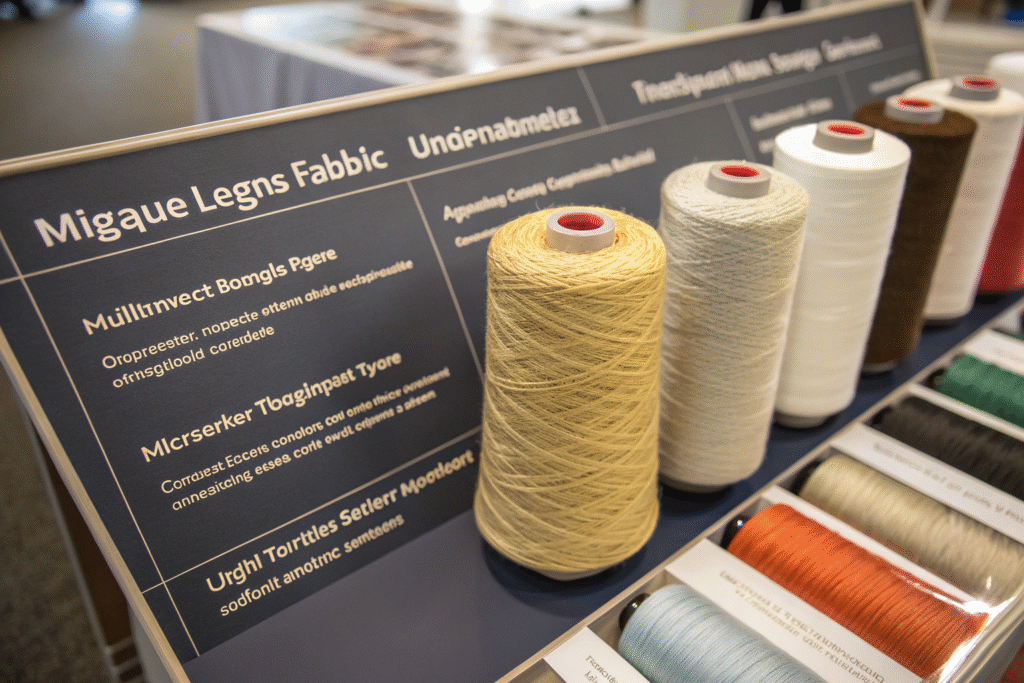
Yarn choice dramatically impacts opacity, yet many brands focus only on fabric construction. The right yarn can make a moderate GSM fabric perform like a heavier one, while the wrong yarn can sabotage even the most carefully engineered construction. Through our work with fiber manufacturers, we’ve identified several yarn technologies that enhance opacity without adding weight.
Multifilament yarns generally provide better coverage than spun yarns because they create a more continuous surface area. However, certain spun yarns with high twist levels can also achieve excellent opacity. For white leggings specifically, yarn whiteness, luster, and cross-section all influence how light passes through the fabric.
How does yarn type affect light transmission?
Different yarn structures interact with light differently:
- Multifilament Yarns: Create a smoother surface that reflects more light
- High-Twist Spun Yarns: Trap more air, creating light-scattering effects
- Microfiber Yarns: Extremely fine filaments that pack densely for better coverage
- Textured Yarns: Irregular surfaces that diffuse light transmission
We developed a custom yarn engineering program for a Los Angeles-based luxury brand that combined microfiber polyester with a special cross-section that reflected 25% more light than standard round fibers. This allowed them to achieve premium opacity at 230 GSM instead of the usual 260+ GSM.
What fiber blends work best for opaque white leggings?
While 100% polyester dominates performance wear, strategic blending can enhance opacity:
- 92% Polyester/8% Spandex: Standard for good stretch and opacity
- 88% Nylon/12% Spandex: Softer hand feel with excellent coverage
- 95% Polyester/5% Cotton: Adds opacity through fiber diversity
- Microfiber Blends: Enhanced coverage through finer filaments
A Boston-based maternity activewear brand needed white leggings that maintained opacity over a stretching belly. By using a nylon-spandex blend with a special circular knit construction, we achieved 40% better opacity retention during extreme stretching than their previous polyester-based fabric.
What testing methods verify opacity performance?
Laboratory testing is non-negotiable for white leggings, but many brands rely on inadequate methods that don’t simulate real-world conditions. We’ve developed a comprehensive opacity testing protocol that combines scientific measurement with practical wear testing. This approach has helped our clients reduce opacity-related returns by over 75%.
The most effective testing evaluates fabric under multiple conditions: static, stretched, and in motion. It also considers different lighting environments since transparency varies dramatically between daylight, studio lighting, and gym environments. Don’t make the mistake of testing only in ideal conditions—your customers won’t wear them in ideal conditions.
What laboratory tests predict real-world performance?
We recommend this comprehensive activewear testing protocol:
- Static Opacity Test: Measure light transmission through unstretched fabric
- Stretched Opacity Test: Evaluate transparency at 30%, 50%, and 100% elongation
- Cycle Testing: Assess opacity maintenance after repeated stretching
- Different Lighting: Test under daylight, fluorescent, and LED conditions
A New York-based fashion brand discovered their white leggings passed all laboratory tests but failed in yoga studio lighting. By adding specific lighting condition testing to their protocol, they identified this issue before production and saved $120,000 in potential returns.
How should you conduct wear testing for opacity?
Laboratory tests alone aren’t sufficient. Real wear testing should include:
- Multiple Body Types: Different sizes and shapes
- Various Activities: Yoga, running, weight training
- Different Lighting: Natural light, gym lighting, changing rooms
- After Wash Testing: Opacity changes after multiple launderings
A Portland-based inclusive activewear brand implemented wear testing with 50 participants across sizes 0-24 and discovered their white leggings became significantly more transparent after just 5 washes. This led them to improve their fabric finishing process, resulting in 90% better opacity retention.
Conclusion
Solving the see-through problem in white leggings requires a holistic approach that balances GSM, knit construction, yarn selection, and rigorous testing. There’s no single magic number—the optimal solution depends on your target market, price point, and performance requirements. However, for most premium activewear brands, a 240-260 GSM fabric with double knit or high-density interlock construction represents the sweet spot.
Remember that opacity is just one factor in legging performance. The perfect fabric also needs excellent stretch recovery, moisture management, and comfort. The most successful brands don’t compromise on any of these attributes—they engineer fabrics that excel across all performance metrics.
If you’re struggling with see-through issues in your white leggings or want to prevent them before your next production run, let’s analyze your current specifications and identify the optimal solution for your brand. We’ve helped dozens of activewear companies solve this exact problem. Contact our Business Director Elaine to schedule a fabric consultation: elaine@fumaoclothing.com. We’ll provide specific recommendations based on your price point and performance requirements, plus arrange fabric samples so you can see the difference for yourself.








