
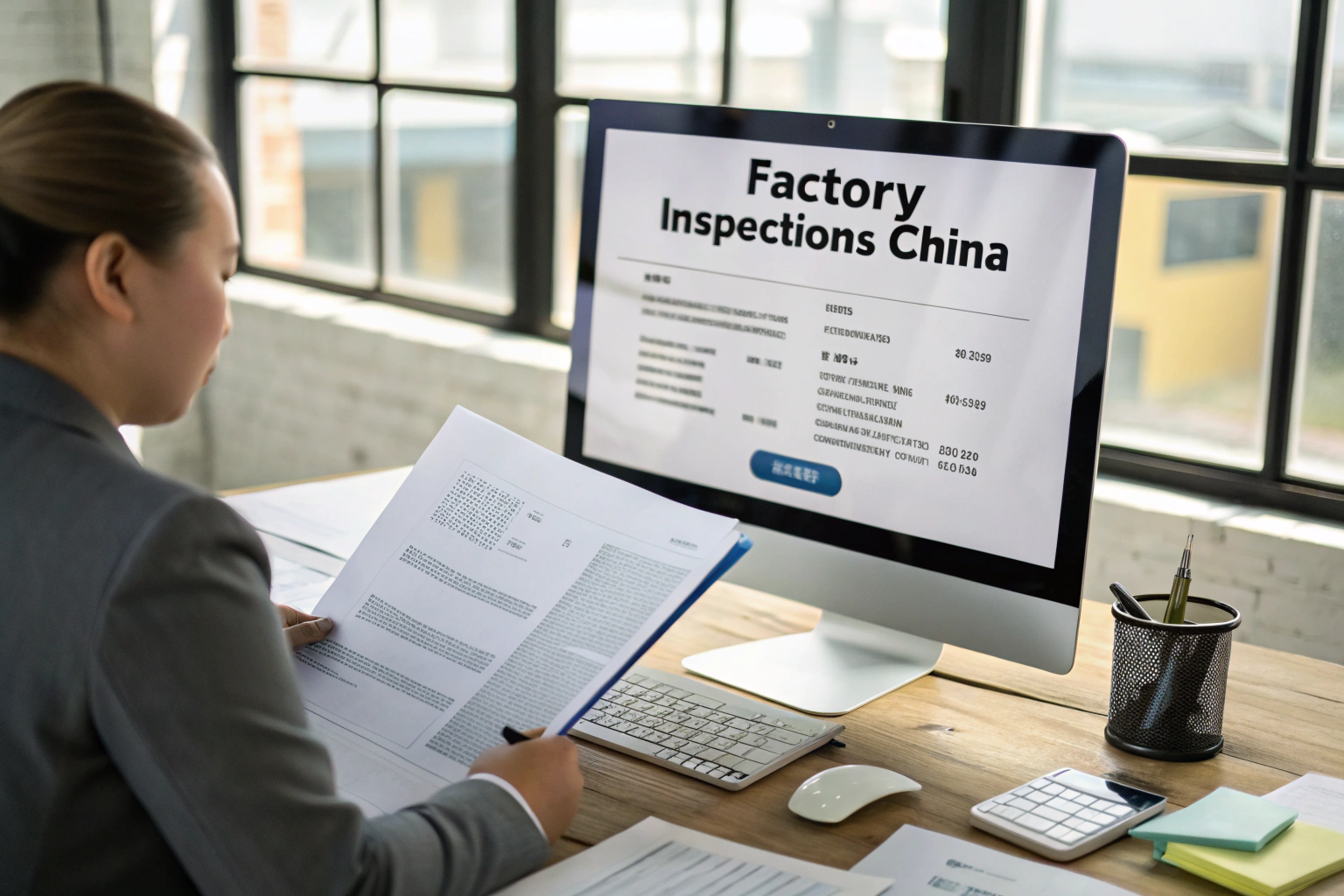
You found a fabric supplier whose pricing looks good and whose samples feel great. But you’re sitting in Chicago or Copenhagen, and the factory is in Keqiao, China. You can’t just hop on a plane for a surprise walkthrough. You need independent verification that this factory is real, ethical, and capable of producing your order without cutting corners. The fear is real: we’ve all heard horror stories of buyers who wired deposits to suppliers that looked legitimate on Alibaba but turned out to be a WeChat account running out of a residential apartment. A remote third-party audit is your eyes and ears on the ground when you can’t be there yourself.
At Shanghai Fumao, we don’t just tolerate third-party audits—we actively encourage them. Our factory has been audited by Bureau Veritas, SGS, and several brand-specific compliance programs over the past decade. We maintain a current audit report on file and a "pre-audit packet" that we send to clients before the inspector even books a flight. This packet includes our business license, our floor plan with square meterage labeled, our machine list with serial numbers, and our most recent social compliance certificate. We remove the friction from the audit process because we believe transparency is our strongest sales tool. A factory that hides from auditors is a factory hiding something else.
But ordering an audit isn’t as simple as Googling "factory inspection China" and picking the cheapest link. You need to know which type of audit matches your risk profile, which agencies are genuinely independent, what the audit will actually cover, and how to read the report you receive. I’m going to walk you through the entire remote audit workflow from a factory owner’s perspective—what we prepare, what the auditor checks, what the report reveals, and how you can commission an audit on Fumao without ever leaving your office.
What Types of Third-Party Factory Audits Are Available for Textile Suppliers?
Not all audits are created equal, and ordering the wrong type is a waste of your money and our time. The textile industry uses three main audit categories: social compliance audits, technical/quality capability audits, and structural safety audits. Each answers a different question. Social compliance asks: "Are the workers treated fairly?" Technical capability asks: "Can the factory actually make your product to spec?" Structural safety asks: "Will the building collapse on the workers?" For most fabric buyers, a combined social compliance and technical capability audit is the right starting point.
Social compliance audits follow established frameworks. The most common are SMETA (Sedex Members Ethical Trade Audit), BSCI (Business Social Compliance Initiative), and SA8000. These audits check for forced labor, child labor, working hours, wages, health and safety, and environmental compliance. The auditor interviews workers privately, reviews payroll records and time cards, inspects dormitories if applicable, and walks the production floor looking for safety violations. A SMETA 4-pillar audit, which includes environmental assessment, is the gold standard for European buyers. For US buyers, many accept WRAP (Worldwide Responsible Accredited Production) certification, which is common in the apparel and textile sector.

How Does a Social Compliance Audit Differ From a Technical Quality Audit?
A social compliance audit is about people; a technical quality audit is about machines and processes. The social auditor spends their time in the HR office and the worker break areas. The technical auditor spends their time on the production floor with a clipboard and a checklist. They’re looking at your fabric supplier’s actual ability to deliver consistent quality. They check machine maintenance logs, calibration certificates for testing equipment, fabric inspection procedures, and the training records of QC staff.
A technical audit typically includes a "process walkthrough" where the auditor follows a single product from raw material warehouse to finished goods dispatch. They check whether the factory has a documented quality management system (usually ISO 9001), whether they perform inline inspection during production, and whether their lab equipment—spectrophotometers, tensile strength testers, washing fastness machines—is properly calibrated. At Shanghai Fumao, our CNAS-accredited lab is one of the first things we show a technical auditor because it’s our strongest evidence of quality commitment. The auditor can pull a random sample from our finished goods warehouse and run a colorfastness test on the spot using our equipment, checking the result against our own internal records. A factory that claims to have a lab but won’t let the auditor use it is waving a red flag. The how to choose between social compliance and technical capability audits for Chinese textile factories guide is something every importer should read before commissioning an audit.
What Are the Most Recognized Audit Standards for European and US Importers?
For European importers, the hierarchy is clear. SMETA 4-pillar is the most widely accepted, recognized by brands from Zara to H&M. BSCI is also common, particularly for German and Scandinavian markets. If your fabric will end up in a product with an OEKO-TEX or GOTS label, the factory should also hold those specific certifications, which involve their own auditing processes. For US importers, WRAP is the dominant social compliance standard, with a strong focus on labor practices. Many large US retailers also accept SMETA, and some maintain their own proprietary audit protocols that they send through third-party firms.
There’s also the specialized environmental audit. Brands committed to the ZDHC (Zero Discharge of Hazardous Chemicals) roadmap often commission a wastewater and chemical management audit. The auditor samples the factory’s discharge water and tests it against the ZDHC MRSL (Manufacturing Restricted Substances List). We’ve passed this audit for our dyeing cooperative, and we maintain the test reports on file. If your brand markets itself as sustainable, you should verify that your supplier’s dyeing and finishing operations aren’t dumping APEOs or heavy metals into the local river. The which third-party audit certifications are recognized by European and US fashion brands for textile suppliers landscape is complex, but a SMETA 4-pillar audit is the safest universal starting point.
How Can You Commission a Remote Audit of Shanghai Fumao From Your Home Country?
Commissioning an audit on our factory is a four-step process that you can manage entirely by email. Step one: choose your audit firm and audit type. Step two: contact us for our available audit windows—we typically schedule audits on Tuesdays through Thursdays, avoiding Mondays when production is ramping up and Fridays when it’s winding down. Step three: sign the audit agency’s service agreement and pay their fee directly. Step four: we receive the auditor on the scheduled date, and you receive the report typically within five to seven working days.
You pay the audit firm, not us. This is a critical independence safeguard. The financial relationship is between you and the auditor; we simply open our doors. The cost for a standard SMETA 2-pillar audit (labor and health & safety) typically runs $1,200 to $1,800 depending on factory size. A 4-pillar audit (adding environment and business ethics) runs $1,800 to $2,500. A technical quality audit usually costs $1,000 to $1,500. These are approximate figures; the audit firm quotes based on factory square footage and employee count. We’ll provide our current employee headcount and floor plan dimensions when you request a quote so the agency can price accurately.

Which Third-Party Audit Firms Have Experience With Textile Factories in Keqiao?
Keqiao is the world’s textile capital, and the major audit firms have dedicated offices or agents here. Bureau Veritas, SGS, and Intertek are the big three international firms. They all have textile specialists who know the difference between a rapier loom and an air-jet loom, which means they can conduct a meaningful technical audit rather than just ticking generic boxes. We’ve been audited by all three at various points, and our most recent SMETA report (January 2025) was conducted by SGS.
There are also specialized firms that focus exclusively on the China-Asia textile supply chain. AsiaInspection (now QIMA) is popular with mid-sized brands for its online booking platform and faster report turnaround. TUV Rheinland has a strong presence in Zhejiang province and offers combined social-technical audit packages. For brands on a tighter budget, smaller regional firms like CTI (Centre Testing International) offer competent audits at slightly lower rates, though their reports may carry less name recognition with Western retailers. We don’t endorse a specific firm—that would compromise independence—but we’re happy to confirm whether a firm you’re considering has prior experience auditing textile factories of our scale in the Keqiao district. The how to select a qualified third-party inspection agency for textile factory audits in Zhejiang province decision should weigh the agency’s industry expertise as heavily as their price.
What Information Do We Provide to Speed Up the Audit Preparation Process?
We’ve streamlined audit prep because a disorganized factory wastes the auditor’s time and your money. When you inform us that you’re commissioning an audit, we send you our "Audit-Ready Packet" within 24 hours. This PDF contains: our full business license with unified social credit code, a factory profile with square meterage broken down by department, an organizational chart with key personnel names, our latest machine inventory list including brand, model, and year of manufacture, our previous audit reports (with client-specific information redacted), our ISO 9001:2015 certificate, our OEKO-TEX Standard 100 certificate for our main product categories, and a sample of our employee attendance records and payroll slips (with personal identifying information redacted for privacy in the pre-audit stage—the auditor sees unredacted versions on site).
We also provide a "Factory Layout and Access Guide" that shows the auditor exactly where to find each department, where the fire exits are located, where the chemical storage area is situated, and where the first aid kits and fire extinguishers are mounted. This document alone saves the auditor about 45 minutes of orientation, which means more of your audit budget goes toward substantive inspection rather than navigation. The how Chinese textile factories prepare documentation for third-party social compliance and technical audits packet is something we update quarterly to ensure every certificate is current and every floor plan reflects any layout changes.
What Does a Third-Party Auditor Actually Inspect During a Remote Factory Audit?
The audit day typically begins at 9:00 AM and runs until 4:00 or 5:00 PM. The auditor arrives, presents their credentials, and conducts an opening meeting with our general manager and our HR supervisor. They explain the scope, the methodology, and the confidentiality protocols. Then the real work begins. The audit is divided into three broad segments: documentation review, physical factory walkthrough, and worker interviews. Each segment generates findings that are cross-referenced against the others. If the payroll records say workers are doing 60-hour weeks but the workers say they’re doing 80, the auditor flags the discrepancy.
During the documentation review, the auditor sits in our conference room with a stack of files. They’re checking employment contracts for all workers (not just a sample), verifying that every worker has signed a contract that meets Chinese labor law requirements. They’re reviewing time cards or biometric punch-in records for the past twelve months, looking for patterns of excessive overtime. They’re checking payroll records against bank transfer statements to confirm workers are actually receiving the wages on paper. They’re verifying social insurance payments—China’s "five insurances" system—to ensure all eligible workers are enrolled. They’re also reviewing our fire safety inspection reports, our environmental discharge permits, and our hazardous chemical handling licenses. This paper audit alone takes two to three hours.

How Does the Auditor Verify Working Conditions and Worker Treatment?
After the document review, the auditor walks the production floor unaccompanied. We give them a visitor badge and a floor plan, and they wander. They’re trained to look for things that a guided tour would conveniently avoid. Are the fire exits unlocked during working hours? (They push the doors.) Are the fire extinguishers inspected monthly and tagged? (They check the tags.) Is the lighting adequate on the inspection tables? (They carry a lux meter.) Is the noise level in the weaving shed within acceptable limits? (They carry a decibel meter.) Are workers wearing the correct PPE—earplugs in the weaving shed, steel-toe shoes in the warehouse, gloves in the cutting room?
The worker interviews are the most sensitive and revealing part of the audit. The auditor selects workers randomly from the production floor—not the ones management suggests—and conducts private, one-on-one interviews in a closed room. No manager is present. The auditor asks about hiring practices (did you pay a recruitment fee?), working hours (what time did you leave last night?), overtime payment (do you get paid extra for weekend shifts?), and general treatment (do you feel safe here? can you use the toilet when you need to?). These interviews are conducted in Mandarin or the local Zhejiang dialect, and the auditor speaks both fluently. At Shanghai Fumao, we’ve never had a worker interview reveal a violation, but we treat the process with complete seriousness. The how third-party auditors verify working conditions and worker treatment in Chinese textile factories methodology is designed to detect even well-hidden abuses, and it works.
What Quality Control Systems Does the Auditor Evaluate During a Technical Audit?
A technical auditor focuses on systems, not just outputs. They don’t just look at the finished fabric and say "looks good." They trace backward from the finished product to verify that quality is built in, not inspected in at the end. They start with incoming raw material inspection: does the factory test incoming yarn for count, twist, and evenness before accepting it? They check the yarn warehouse for a quarantine area where unapproved raw materials are held. At Fumao, our yarn inspection protocol includes an Uster evenness test on every incoming lot; the auditor can pull the test reports and match them to the yarn batch numbers in storage.
They then follow the production flow. In the weaving shed, they check whether the looms have stop-motion devices that halt the machine when a warp yarn breaks, preventing long missing-end defects. They check whether the fabric inspection tables have adequate lighting (minimum 1075 lux, per the 4-point system standard) and whether the inspectors are marking and grading defects consistently. They pull a random roll from finished goods, unroll it on the inspection table, and do their own mini-inspection, comparing their defect score to the one on the roll ticket. A discrepancy here is a major finding. They also check the lab: is the spectrophotometer calibrated daily? Are the colorfastness tester’s temperature and RPM settings correct for the AATCC 61 standard? Are the wet and dry crocking tests being run with the correct pressure and stroke count? The how technical auditors evaluate quality management systems and production capability in textile mills checklist is exhaustive, and a factory that scores well on it is one you can trust with a 50,000-meter order.
How Should You Read and Interpret a Third-Party Factory Audit Report?
You’ll receive the audit report as a PDF, typically 20 to 40 pages long, with a cover letter summarizing the findings. Don’t skip to the score and close the file. Read the full report, because the score can hide important nuance. A factory can score 85% overall but have a critical violation in a single category that’s a dealbreaker for your brand. Conversely, a factory might score 75% because of minor documentation issues that are easily fixed, with zero critical violations and excellent technical capability scores. The score is a starting point, not a verdict.
Audit reports use a traffic-light or severity-rating system. "Critical" or "Zero Tolerance" findings are red flags: child labor, forced labor, life-threatening safety hazards, bribery attempts. These should stop a sourcing decision immediately. "Major" findings are serious but fixable: excessive overtime, missing safety permits, inadequate PPE, inconsistent wage records. "Minor" findings are housekeeping issues: a missing fire extinguisher inspection tag, a poorly organized chemical storage shelf, a training record that wasn’t signed. Most factories, including ours, accumulate minor findings on any audit. The difference between a good factory and a bad one is how they respond. Ask the supplier for a Corrective Action Plan (CAP) with specific deadlines. We provide one within 48 hours of receiving the report.

What Differentiates a Minor Finding From a Critical Violation in Textile Audits?
A minor finding is a gap in documentation or a small procedural slip. For example, the auditor might note that the fire extinguisher in the cutting room was last inspected 35 days ago instead of the required 30. This is a real finding, and it needs fixing, but it doesn’t indicate a systemic disregard for safety. It means the monthly inspection schedule slipped by a week. We’ll fix it the same day by calling our fire safety contractor, and we’ll put a recurring calendar reminder in the maintenance supervisor’s phone so it doesn’t happen again.
A critical violation is a fundamental failure that endangers workers or constitutes fraud. An unlocked fire exit that leads to a dead-end alley is a critical safety violation. A worker who tells the auditor they’re 15 years old is a critical child labor violation. Two sets of payroll records—one real, one fake for the auditor—is a critical business ethics violation. A dyeing facility discharging untreated wastewater directly into a public canal is a critical environmental violation. These findings indicate that management is either complicit in the violation or grossly negligent. A single critical finding should usually disqualify a supplier unless there’s a compelling explanation and immediate, verifiable remediation. The how to classify audit findings severity levels in textile factory social compliance reports framework is standardized, so a critical at one factory means the same as a critical at another. Consistency is the point.
How Can You Verify That a Factory Has Fixed the Issues Found in a Previous Audit?
A single audit is a snapshot. Two audits are a trend. When you review an audit report, ask the factory for the previous audit report as well. Compare them. Did the number of findings decrease? Were the previous findings closed out? A factory that makes the same major finding two audits in a row is either unable or unwilling to fix the root cause. That’s a red flag. A factory whose minor findings dropped from twelve to four, with all previous majors closed, is on an improvement trajectory. We maintain a running "Audit History" spreadsheet that tracks every finding from every audit, with the corrective action taken and the date of closure. We share this with clients who ask.
Most audit firms also offer a "follow-up audit" or "desktop review" service. A follow-up audit is a physical revisit, usually shorter and cheaper than the initial audit, focused exclusively on verifying that the corrective actions were implemented. A desktop review is cheaper still: you send the auditor evidence—photos, updated documents, training records—and they verify remotely. For minor findings, a desktop review is usually sufficient. For major findings, especially safety-related ones, a physical follow-up is worth the cost. If a factory reported a missing fire exit door and claims to have installed one, you want photographic proof with a timestamp, preferably verified by a third party. The how to verify corrective action plan implementation after a textile factory audit process is your guarantee that the factory didn’t just clean up for the audit day and then slide back into old habits.
Conclusion
A remote third-party audit transforms your supplier relationship from a leap of faith into a verifiable partnership. You don’t need to physically stand in our weaving shed to know that our looms are modern, our workers are treated fairly, and our quality systems are real. The audit report, conducted by a trained professional who speaks the language and understands the industry, gives you that certainty. It costs a fraction of a plane ticket and delivers more objective data than a guided factory tour ever could. For any brand committing significant capital to a fabric order, an audit is not an expense; it’s insurance.
At Shanghai Fumao, we’ve made the audit process as smooth as possible because we believe our operations can withstand scrutiny. Our Audit-Ready Packet, our open-door policy with major agencies, and our track record of corrective action follow-through are all designed to give you confidence that what you see on the report matches what you’ll experience as a client. A factory that resists audits is a factory that’s hiding its true cost structure—whether that’s underpaid workers, unsafe conditions, or shoddy quality control. We don’t hide anything.
If you’re ready to verify Fumao’s capabilities and ethics through an independent third-party audit, contact our Business Director Elaine. She’ll send you our Audit-Ready Packet, coordinate the scheduling with your chosen audit firm, and ensure the auditor has full access to our facilities and records. You can reach her at elaine@fumaoclothing.com. Let’s put your mind at ease with evidence, not promises.








