
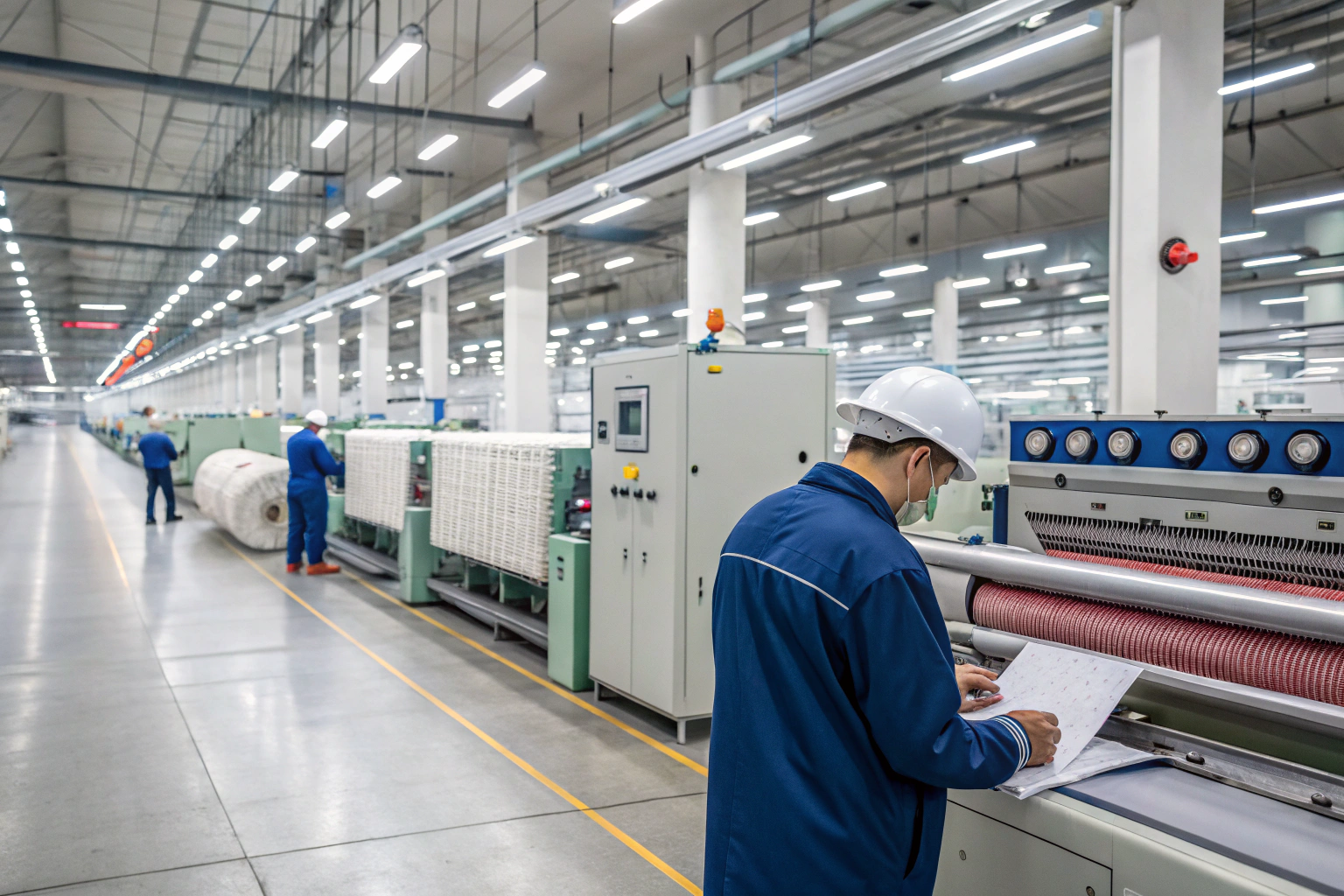
You open an email from your fabric supplier, and your stomach drops. "Due to unforeseen cotton futures volatility, our prices will increase by 18% effective next month." Your entire collection costing just went out the window. Your retail price points were locked in six months ago with your wholesale buyers. You can’t pass the increase on. So you eat the margin, or you scramble to find a cheaper alternative that probably won’t match the quality. I’ve watched raw material spikes destroy small fashion brands faster than a bad season of sales. The commodity market doesn’t care about your P&L statement.
At Shanghai Fumao, we don’t send that email. In the past five years, through a global pandemic that snarled cotton supply chains, a urea shortage that spiked polyester prices by 40%, and a war that disrupted European flax exports, our fabric prices have stayed within a 5% to 7% band for our contract clients. We’ve never imposed a mid-contract price hike. Not once. This isn’t because we’re noble or because we have a magic crystal ball. It’s because we’ve built a price stabilization system that combines raw material hedging, multi-source yarn qualification, and production efficiency gains that offset inflationary pressure before it reaches your invoice.
The textile industry treats raw material volatility as an unavoidable cost to pass downstream. We treat it as a risk to be managed internally. If you understand the mechanisms we use—the futures contracts, the alternative fiber blending, the energy recovery systems in our dyeing cooperative—you’ll see why working with a supplier who owns the pricing problem is the difference between a predictable business and a constant negotiation nightmare. I’m going to walk you through exactly how we absorb the shocks that cripple other factories, and why our model makes your cost forecasting reliable enough to plan a year ahead.
How Do Raw Material Price Swings Actually Affect Fabric Manufacturing Costs?
Fabric pricing isn’t just about the fiber. The raw material—the cotton boll, the polyester chip, the flax stalk—is the single largest cost component, usually 50% to 70% of the total fabric cost. When the Cotlook A Index, which tracks global cotton prices, jumps from $0.85 per pound to $1.20 per pound in six months, a typical 200 GSM cotton jersey doesn’t just get slightly more expensive. The cost per meter can swing by $0.60 to $1.00, which on a 5,000-meter order is a $5,000 surprise. Most factories operate on net margins of 5% to 8%. They literally cannot absorb a 30% raw material spike without going bankrupt. So they pass it on.
But the fiber price is only the starting gun. Yarn manufacturing adds a conversion cost that’s sensitive to energy prices. A spinning mill in Zhejiang runs ring frames that consume massive amounts of electricity. When coal prices spike—and China’s energy policy can cause those spikes—the spinning cost per kilogram rises, adding another layer of inflation. Then there’s the auxiliary chemicals for dyeing and finishing. The urea used in reactive dye printing, the acetic acid for pH adjustment, the hydrogen peroxide for bleaching. These are petrochemical derivatives. When oil spikes, everything downstream spikes. A factory that only tracks cotton prices is missing two-thirds of the cost picture. We track the entire chemical supply chain, down to the specific colorant index numbers.
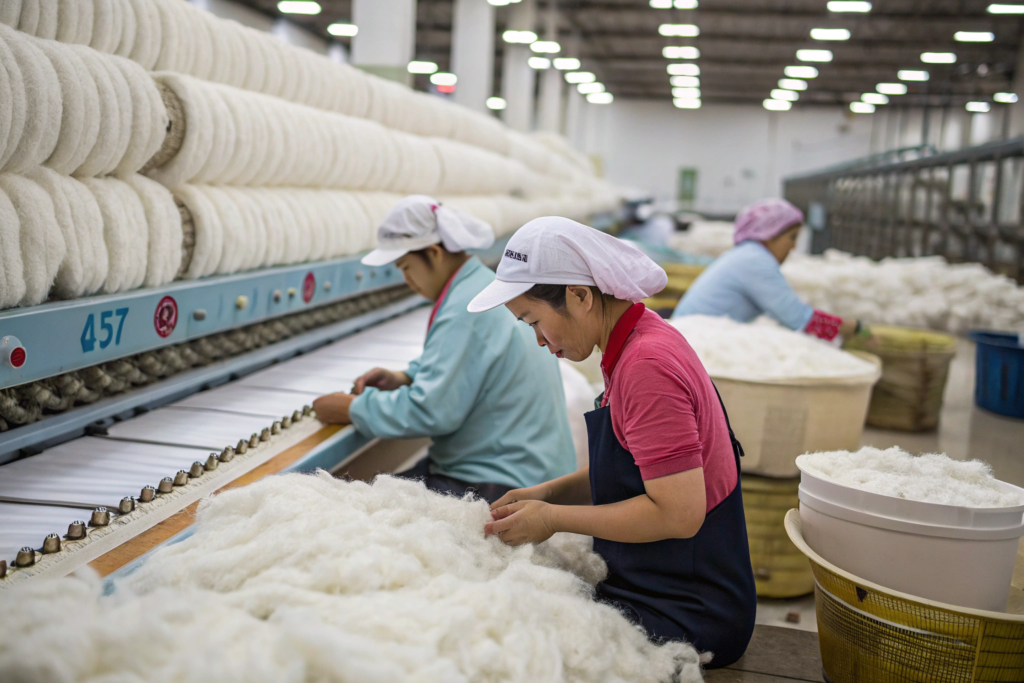
What Happens When the Global Cotton Futures Index Suddenly Surges?
A cotton futures spike hits the textile supply chain like a shockwave through water. The Intercontinental Exchange (ICE) cotton contract in New York sets the global benchmark. When that number jumps 15% in a week—which happened in March 2024 due to drought fears in Texas—the immediate effect is psychological. Yarn spinners in India and China immediately raise their quotes, even on cotton they bought at the old price. They’re pricing in replacement cost, not actual cost. This is speculative inflation, and it ripples down to the fabric mill within days.
For a conventional factory, a futures spike triggers a chain reaction. The greige fabric supplier raises their price. The dyeing house adds a surcharge. The fabric trading company re-quotes the client at a higher rate. The client either accepts or walks. If they walk, the order gets cancelled, the factory loses capacity utilization, and everyone loses. We’ve insulated ourselves from this panic cycle through physical cotton inventory and forward contracts. We typically hold 60 to 90 days of cotton yarn inventory for our core bases—40s combed, 30s carded, 20s slub. This buffer means a short-term futures spike doesn’t immediately change our input cost. We can ride out a 4-to-6-week price blip without adjusting a single quote. The how to hedge raw cotton procurement for textile manufacturing against commodity price volatility strategy is about creating a time cushion between the commodity market and your production floor.
Why Do Synthetic Fiber Prices Fluctuate With Crude Oil Markets?
Polyester and nylon are literally solidified oil. The raw material for polyester is purified terephthalic acid (PTA) and monoethylene glycol (MEG), both derived from petroleum refining. When Brent crude jumps from $75 to $95 per barrel, the feedstock cost for polyester chip increases within weeks. The correlation is not exact—chemical intermediates have their own supply-demand dynamics—but the direction is reliably linked. In 2022, when crude spiked after the Russia-Ukraine conflict, recycled polyester actually became temporarily cheaper than virgin polyester, an inversion that scrambled every activewear brand’s cost model.
Nylon 6,6 is even more volatile because its precursor, adiponitrile, is produced by only a handful of global chemical plants. A force majeure declaration at a single plant in Texas can double the price of nylon yarn in six weeks. We’ve seen this movie before. Our defense is a multi-pronged strategy: we qualify at least three chemically equivalent synthetic yarn sources for every base we offer, we maintain a recycled polyester line that operates on a parallel supply chain less tied to crude spot prices, and we work with yarn spinners who are willing to lock in a fixed-price supply agreement for a rolling quarter. This how petrochemical price volatility affects synthetic textile fiber costs and procurement strategies knowledge is built into our costing model. We don’t guess the price of polyester six months out; we contract it.
What Sourcing Strategies Does Fumao Use to Stabilize Yarn Costs?
The most powerful tool we have against raw material volatility is supplier diversification. We never rely on a single yarn source for any fiber category. For combed cotton, we maintain active accounts with three spinners: one in Shandong province, one in Gujarat, India, and one in Vietnam. Each supplier has a different cost structure, a different currency exposure, and a different raw cotton procurement strategy. When Chinese domestic cotton prices rise due to a government reserve policy change, our Indian and Vietnamese sources often become more competitive. We shift our order allocation within the quarter to capture the best relative price.
But diversification only works if the yarn quality is interchangeable. A 40s combed cotton from India is not automatically identical to a 40s combed from Shandong. The staple length, the trash content, the twist multiple, and the hairiness index can all vary. If we switch sources and the fabric handfeel changes, we’ve just created a quality problem that’s worse than a price increase. So we do the unsexy work of pre-qualification. Every new yarn source undergoes a full characterization in our CNAS lab: evenness testing on an Uster Tester 5, single-end strength on a Tensorapid, and a knitting trial on our sample machines to verify running performance. Once qualified, the yarn gets a unique internal code that links it to the specific spinning mill, machine line, and cotton origin. When we shift allocation, we shift between pre-approved equivalents, not unknowns.

How Does Multi-Country Cotton Sourcing Protect Against Regional Crop Failures?
Cotton is a crop, not a widget. It’s vulnerable to drought in Texas, floods in Pakistan, and pest outbreaks in India. A single bad monsoon season in Gujarat can slash India’s cotton output by 15%, driving up global prices for all medium-staple cotton. If we’re sourcing exclusively from Indian cotton, we’re captive to that monsoon. By maintaining qualified supply chains for Xinjiang cotton, Brazilian cotton, and West African cotton, we create optionality. When one origin spikes, we blend or switch.
This isn’t as simple as just ordering a different bale. Different cotton origins have different fiber characteristics. Brazilian cotton tends to have a higher micronaire value, meaning the fiber is coarser. West African cotton is hand-picked, resulting in lower trash content but more neps. Our spinning partners know how to adjust their blending ratios, carding speeds, and combing settings to produce a yarn with a consistent tensile strength and evenness from variable inputs. The specification we hand them is performance-based: "Deliver a 40s combed yarn with a Uster CVm of 11.5% or better, minimum single-end strength of 220 cN, using whatever origin achieves the best current cost." The how to diversify cotton sourcing origins to mitigate climate-related textile supply chain disruptions is a playbook we update quarterly based on USDA global production forecasts and our own spinner feedback.
Can Recycled and Alternative Fibers Offer a Price Buffer When Virgin Materials Spike?
Recycled polyester is the clearest example of price decoupling. Virgin polyester chip tracks crude oil with a lag of about four to six weeks. Recycled polyester (rPET), made from post-consumer plastic bottles, tracks a different supply chain entirely: bottle collection rates, flake washing capacity, and pelletizer availability. In 2022, when virgin polyester prices surged 40%, rPET prices increased only 15%, because the bottle feedstock supply was abundant. Brands that had switched to rPET for sustainability reasons suddenly found it was also the cheaper option. We doubled down on our rPET inventory during that window, and our clients reaped the benefit.
Other alternative fibers offer similar decoupling effects. Lyocell (Tencel), made from sustainably harvested wood pulp, is not correlated with cotton prices at all. When cotton spikes, Tencel blends become relatively more attractive. We’ve worked with a European loungewear brand to develop a 70% Tencel / 30% organic cotton French terry specifically as a hedge against cotton volatility. The handfeel is luxurious, the drape is fluid, and the input cost is less twitchy than a 100% cotton equivalent. Bamboo viscose is another stabilizer; bamboo grows fast, doesn’t compete with food crops for land, and processes through a chemical supply chain that’s more tied to caustic soda prices than agricultural commodity markets. The how recycled polyester and alternative cellulosic fibers can hedge against virgin raw material price spikes in fabric sourcing approach is about building a fiber portfolio that doesn’t all move in the same direction at the same time. Diversification in your raw material basket is just as important as diversification in your supplier base.
How Do Our Production Efficiency Gains Offset Rising Input Costs?
Price stabilization isn’t just about buying smarter; it’s about wasting less. A factory that loses 8% of its input material to process waste needs an 8% higher price to achieve the same margin. We’ve driven our process waste down to under 3% on most lines. This didn’t happen by accident. It happened through a decade of incremental investment in precision machinery, operator training, and real-time monitoring systems that catch defects before they become waste. Every percentage point of waste reduction is a cost buffer we can use to absorb a raw material increase without touching your price.
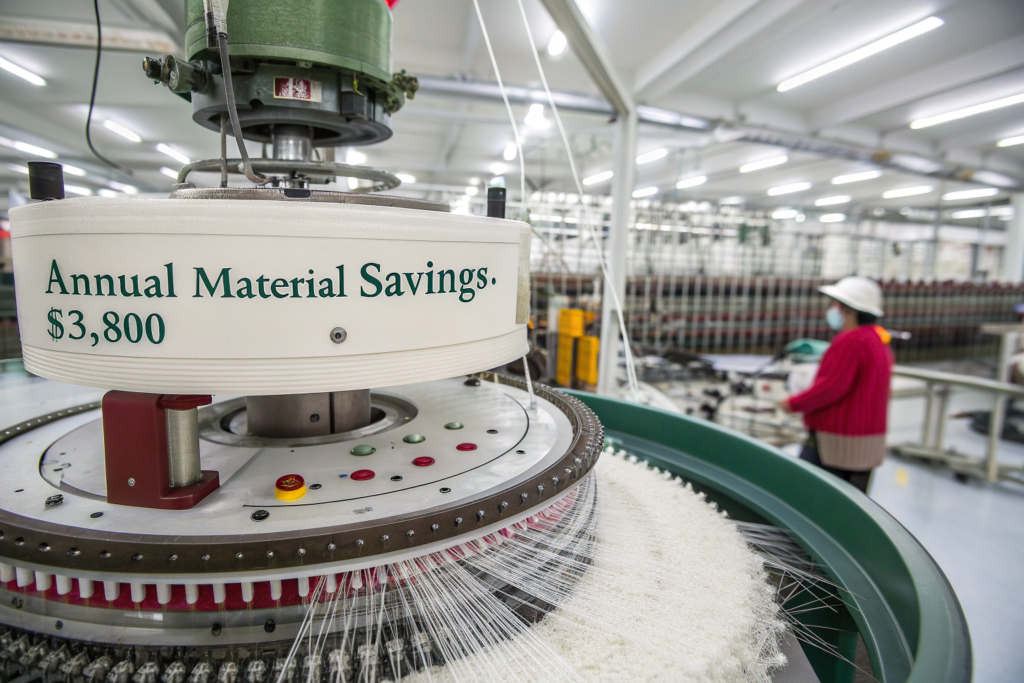
Let me give you a concrete example from our knitting department. A standard circular knitting machine generates a certain amount of "yarn fly"—tiny fiber fragments that shear off during high-speed loop formation. This fly accumulates on the machine and on the floor, and it represents lost raw material. We’ve retrofitted our knitting machines with active suction systems that capture this fly at the point of generation, preventing it from contaminating the fabric and allowing us to recycle it back into lower-grade yarns. The investment was about $1,200 per machine. The annual material savings per machine is roughly $3,800. That’s a three-month payback, and every dollar saved is a dollar we don’t have to charge you.
How Does Our Energy Recovery System in the Dyeing Plant Reduce Processing Costs?
Dyeing is an energy hog. Heating water from ambient temperature to 130°C for polyester dyeing consumes enormous amounts of steam. In a typical dyeing house, that hot water gets dumped down the drain after the cycle, taking all the thermal energy with it. We’ve installed a plate heat exchanger system that captures the heat from the discharged dyebath effluent and uses it to pre-heat the incoming fresh water for the next batch. The incoming water, which might enter at 20°C in winter, gets pre-warmed to 55°C before it even hits the boiler. That cuts the steam demand—and the coal or gas bill—by roughly 25%.
We’ve also invested in a caustic soda recovery system for our mercerizing line. Mercerizing cotton involves passing it through a strong sodium hydroxide solution to improve luster and dye uptake. Instead of neutralizing and discharging that caustic after use, we run the weak liquor through an evaporator that concentrates it back to process strength. We recover about 90% of the caustic. The system paid for itself in 18 months, and it insulates us from caustic soda price swings that would otherwise hit your dyeing cost. The how energy recovery and chemical recycling systems reduce textile dyeing and finishing costs is not a sustainability talking point for us; it’s a cost management tool that directly protects your price stability.
Can Real-Time Defect Detection Lower the Effective Cost Per Meter?
A fabric defect that escapes the factory and reaches your cutting table is catastrophically expensive. It’s not just the lost meter of fabric. It’s the shipping cost to return it, the production downtime waiting for replacement, the cutting labor wasted, and the potential chargeback from the garment factory. We attack this problem with computer vision. Our inspection tables are equipped with high-resolution cameras and an AI model trained on our defect library—10 years of images labeled by our senior inspectors. The system scans fabric at 60 meters per minute, flagging anomalies in real time.
The AI doesn’t replace the human inspector; it augments them. The human eye gets tired after a few hours of looking at grey fabric rolling by. The camera doesn’t blink. It catches the subtle start of a broken needle line before it becomes visible to a person. When the system flags a potential defect, the inspector reviews the flagged frame on a tablet and decides whether to mark the fabric. This has improved our defect capture rate from 92% to over 98%. The result? Fewer defects reach the customer. Fewer claims. Less rework. And a lower effective cost per usable meter. The how AI-powered fabric inspection reduces waste and lowers cost per meter in textile production is a competitive advantage that compounds every year as the model gets smarter.
Why Our Contract Pricing Model Protects You From Mid-Season Cost Surges?
The most powerful price protection we offer isn’t a technology or a sourcing strategy. It’s a contractual commitment. We offer fixed-price supply agreements for periods of six to twelve months on our core fabric bases. Once we sign that agreement, the price per meter is locked. If cotton doubles in month three, your price doesn’t move. If cotton drops by 30%, we’ll renegotiate downward on the next contract cycle, but we’ll never adjust upward mid-stream. This is a risk transfer. You transfer the raw material price risk to us, and we manage it using the toolkit I’ve described.
This pricing model requires financial discipline and a willingness to occasionally lose money on a specific contract. In 2022, when cotton spiked 40% in the middle of our contract cycle, we lost margin on several fixed-price agreements. We honored every single one. We didn’t ask for a surcharge. We didn’t delay shipments. We absorbed the loss because the long-term value of a client who trusts our pricing is worth far more than the short-term gain of a contract renegotiation. That year was painful, but it cemented our reputation. Most of those clients are still with us today, and their order volumes have grown significantly. The how fixed-price fabric supply contracts protect fashion brands from commodity price volatility is not a common offering in this industry, but it’s central to how we build relationships that last decades, not seasons.

What Is a Price Lock Agreement and How Does It Work for Your Core Fabric Line?
A price lock agreement is a simple document that lists specific fabric SKUs—usually your core bases that you reorder season after season—with a fixed per-meter price and a validity period. For a US brand running four seasonal drops, a typical agreement might cover their top three fabrics: a 180 GSM cotton slub jersey, a 100 GSM polyester chiffon, and a 260 GSM brushed-back fleece. The price for each is locked for twelve months from the agreement date, regardless of market fluctuations.
The agreement includes a volume commitment from you, which is how we manage our own risk. You commit to a minimum total volume over the contract period—say, 8,000 meters across the three SKUs. This commitment allows us to forward-purchase yarn with our spinners and reserve production capacity in our knitting and dyeing schedule. Your price is lower than the spot market price would be because you’re giving us predictability. We’re giving you price certainty. It’s a trade of risk for stability. If you exceed your committed volume, the fixed price still applies. If you fall short, we have a graduated adjustment clause, but we’ve never had to invoke it because the brands that commit to a price lock are serious about their production plans. The how to negotiate a fixed-price fabric supply agreement with Chinese textile mills is a conversation Elaine has with every returning client who’s ready to scale from ad-hoc buying to a structured partnership.
How Does Transparent Cost Breakdown Build Trust When Raw Materials Do Increase?
Sometimes, despite every buffer and hedge, the cost increase is too large and too structural to fully absorb. When that happens, we don’t send a vague "prices are going up" email. We send a cost breakdown. We show you the old cotton price per kilogram, the new cotton price, the percentage change, and exactly how that translates to the yarn cost, the knitting cost, and the finished fabric cost. We invite you to scrutinize our margins. We show you our work.
This transparency transforms a painful price conversation into a collaborative problem-solving session. In early 2025, the price of a specific high-tenacity nylon filament yarn we use for a technical outerwear fabric jumped 22% due to a precursor shortage. We sat down (virtually) with the affected client, shared the supplier’s price notification letter, our cost breakdown showing the impact, and three options: we could switch to a functionally equivalent yarn from a different supplier with a smaller price increase but a slightly different handfeel; we could adjust the fabric construction to use less nylon and more polyester while maintaining the same tensile strength; or they could accept the full increase. They chose option two. The performance specs stayed the same, the cost increase was halved, and the project stayed on budget. The how transparent raw material cost breakdowns strengthen buyer-supplier relationships in textile sourcing is a practice we apply to every difficult pricing conversation. Trust isn’t built by hiding bad news; it’s built by sharing the math and collaborating on the solution.
Conclusion
Raw material spikes are a permanent feature of the textile industry. Cotton will rally on a Texas drought. Polyester will surge on an oil shock. Wool will spike on an Australian bushfire. The question isn’t whether these events will happen; it’s whether your supplier has built a system to absorb them or whether they’ll pass every shock directly to your invoice. At Shanghai Fumao, we’ve chosen to build the system. We hedge across cotton origins. We qualify parallel synthetic supply chains. We invest in energy recovery and AI inspection to squeeze waste out of the production process. And we offer fixed-price contracts that transfer the commodity risk from your P&L to ours.
This approach isn’t free. It requires capital, discipline, and the willingness to occasionally lose margin on a contract to preserve a relationship. But the payoff is a client base that can plan with confidence. When you know your fabric cost twelve months out, you can lock in your wholesale pricing, plan your marketing spend, and sleep at night without checking the Cotlook Index. That predictability is worth more to your brand than a slightly lower spot price from a factory that’ll change it on you next month.
If you’re tired of pricing surprises and you want a fabric partner who manages raw material risk instead of passing it on, let’s put a fixed-price agreement in place for your core bases. Reach out to our Business Director Elaine with your top fabric SKUs and your projected annual volumes. She’ll build a customized proposal that locks your costs and frees your mind to focus on design and sales, not commodity futures. Email her at elaine@fumaoclothing.com. Let’s make your fabric budget boringly predictable.








