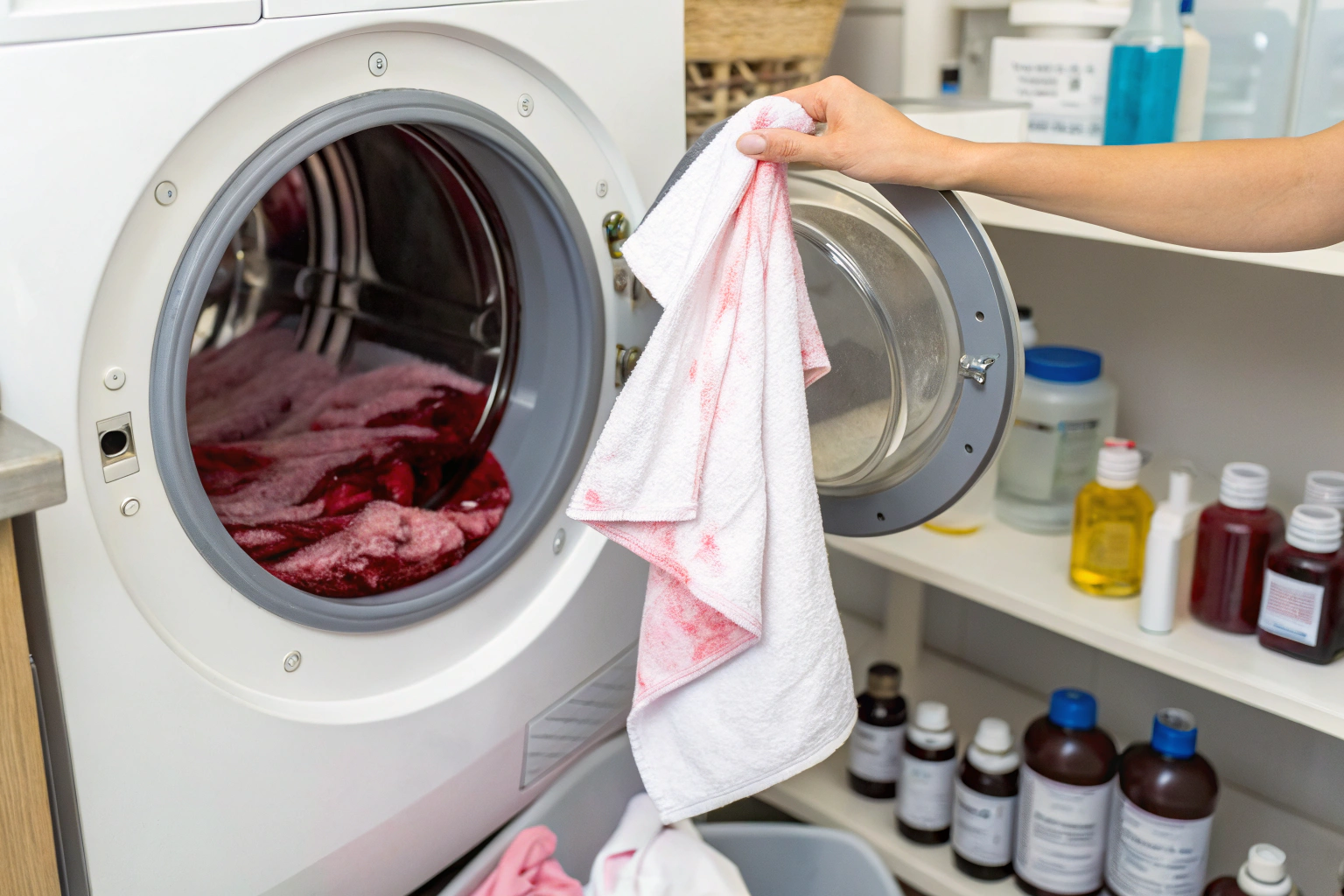
You unload the washing machine. You reach for your new burgundy linen dress, the one you spent months perfecting. Your hand touches wet fabric, and your stomach drops. The water is running red. The white trim is now a sickly pink. The dress is ruined. For a brief, panicked second, you hope it is a fluke. But you check the rest of the load, and everything has been tie-dyed by your "colorfast" fabric. The sample was perfect. The lab dip was approved. But the bulk production just destroyed your brand’s credibility in a single wash cycle. I have received that frantic phone call more times than I can count, and the anger in the buyer’s voice is always mixed with genuine confusion.
Fabric bleeds on the first wash because of a failure in the chemical marriage between the dye molecule and the fiber polymer. This is not a minor oversight. It is a catastrophic breakdown in the "fixation" and "soaping" stages of wet processing. At Shanghai Fumao, we treat colorfastness not as a desirable feature but as a binary condition: either the dye is chemically bonded to the cellulose or protein chain, or it is not. There is no middle ground. When a fabric bleeds, it means unreacted, loose dye molecules were left sitting on the fiber surface like dust on a table, and the first contact with water swept them off. I want to explain exactly what went wrong in the dye bath, how to detect it with a simple home test before you cut a single piece, and how to write a spec that legally binds the mill to a wash-fastness standard they cannot fudge.
What Chemical Process Failure Causes Reactive Dyes to Bleed?
Reactive dyes are the workhorse of the cellulosic textile world—cotton, linen, viscose, Tencel. They are called "reactive" because they are designed to form a permanent covalent bond with the hydroxyl groups in the cellulose polymer. When the dyeing process is executed correctly, the dye molecule becomes part of the fiber itself. You cannot wash it out any more than you can wash the green out of a blade of grass. But this chemical reaction is finicky. It requires a precise pH window, a specific temperature hold time, and an aggressive post-dyeing scrub to remove the dye molecules that failed to react. Skipping any of these steps leaves a ticking time bomb in your fabric roll.

Why Does Insufficient Fixation Time Turn the Dye Bath into a "Time Bomb"?
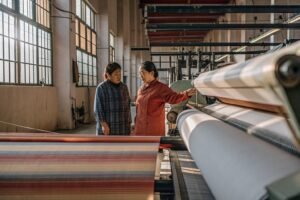
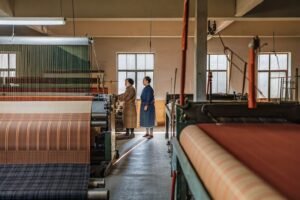
The covalent bond between the reactive dye and the cotton fiber does not form instantly. It needs time, heat, and alkali. Inside the dyeing vessel, the dyer must hold the fabric at roughly 60°C to 80°C for 30 to 60 minutes, depending on the depth of the shade and the specific dye chemistry. During this "fixation phase," the alkali agent raises the pH, causing the cellulose to swell and the dye to chemically attack the fiber.
If the dye house is rushing to clear the machine for the next order, they might cut the fixation time short. A dark navy or a deep burgundy needs the full 60 minutes. If the dyer pulls the fabric out after 35 minutes, only 80% of the dye molecules might have formed the covalent bond. The remaining 20% are physically trapped in the fiber but not chemically locked. The fabric looks perfect when dry. The lab even gets a passing crocking test because the loose dye is dry and static. But the moment that fabric hits water and detergent, those unbound molecules release, and the bleed begins. I caught a subcontractor doing exactly this during a capacity crunch in 2022. Our lab tested a random sample from the lot and found the wash fastness was Grade 2 instead of Grade 4. We rejected the entire 3,000-meter lot before it left the dye house. The fix was a re-process: a hot soaping and a re-fixation with a clear reactive agent.
How Does Incomplete Soaping Leave Unfixed Pigment on the Surface?
After fixation, the fabric is saturated with "hydrolyzed dye"—dye molecules that reacted with water instead of the fiber. These molecules are chemically inert and will never bond to the cotton. They sit on the fiber surface as a loose powder. The only way to remove them is a rigorous soaping process: boiling the fabric in a detergent bath at 95°C for 20 minutes, sometimes twice, until the rinse water runs crystal clear.
A lazy dye house will do a quick cold rinse and call it done. The fabric looks fine because the hydrolyzed dye is invisible when dry. But this is the most common cause of the "first wash bleed" horror. The fix is not complicated chemistry. It is just boiling water and time. I once visited a dye house in Zhejiang that was trying to save on steam costs by reducing the soaping temperature to 70°C. The colorfastness of their reactive-dyed cotton dropped by a full grade. We stopped using that facility for any dark color lots. At Shanghai Fumao, our post-dye soaping protocol requires a minimum of two hot soaping cycles for any shade above a 2% depth, and our QC team checks the residual dye in the final rinse water with a light transmission test.
How to Perform a "Crocking Test" at Home Before Cutting the Fabric?
You do not need a $50,000 lab machine to catch a bleeding fabric before it destroys your production run. You need a white cotton cloth, some warm water, and five minutes of focused attention. I teach every new designer I work with a simplified version of the AATCC Crocking Test that they can do on their own cutting table. This is not a substitute for the formal lab report I provide with every bulk lot, but it is an instant red flag detector. If a fabric fails this home test, stop everything. Do not cut. Do not sew. Do not ship. The lab will confirm the failure with precise numbers, but your hands will already know.

What is the "Dry Rub" and "Wet Rub" Method Using Household Items?
Grab a clean, white, 100% cotton cloth. Cut a square about 10cm by 10cm. Place your fabric sample on a flat, hard surface. Press the white cloth onto the fabric with your index finger. Now, rub it back and forth firmly ten times across the same area. Look at the white cloth. If there is significant color transfer—more than a faint ghost of pigment—your fabric has a dry crocking problem. This means the color will rub off onto furniture, other garments, or the customer’s skin even when the fabric is dry.
Now do the wet rub. Wet the white cloth with room-temperature water and wring it out until it is damp, not dripping. Repeat the ten rubs on a new area of the fabric. This is the brutal test. A fabric that passes the dry rub might still fail the wet rub catastrophically. If the wet cloth comes away deeply stained with the fabric’s color, the dye is not fixed, and the first wash will be a bloodbath. I always film this test and send the video to the supplier immediately. A picture of a stained white cloth is the universal language of a dyeing failure, and it cannot be argued with.
How to Match Your White Cloth Stain to the Standard Grey Scale?
The formal AATCC Grey Scale for Staining is a chart of nine pairs of grey and white chips, ranging from Grade 1 (severe staining) to Grade 5 (no staining). You can purchase one for about fifty dollars, or you can find a high-resolution printed version online. After you do your rub test, hold the stained white cloth next to the grey scale under daylight. The grade is the number where the contrast between the clean white and the stained area visually matches the contrast on the chart.
A Grade 4 or 5 is a pass for almost any commercial application. A Grade 3 is acceptable for light colors but unacceptable for deep darks or denim. A Grade 2 or below is an outright failure. If your wet rub test shows a Grade 2 stain, your fabric will bleed in the wash, and it will also bleed onto a customer’s white leather handbag when they wear it on a humid day. I ask my clients to send me a photo of their stained cloth next to the grey scale in good daylight. I can usually diagnose the severity of the dyeing failure just from that photo and tell them whether the lot can be salvaged with a re-wash or whether it needs to be completely re-dyed.
Why Do Certain Colors Like Turquoise and Red Bleed More Frequently?
There is a reason your black, navy, and cream fabrics ship on time, but your brilliant turquoise and deep crimson lots are always a problem. The chemistry of certain dye chromophores is fundamentally more difficult to work with. Turquoise dyes, particularly the phthalocyanine-based reactive blues, are massive, flat molecules. They give a stunning, brilliant shade that smaller blue molecules cannot match, but their size creates physical and chemical problems in the dye bath. Red dyes, particularly certain reactive reds, have a nasty tendency to "hydrolyze" faster than they "fix," meaning they react with the water in the dye bath before they can react with the cotton.

What Makes a Phthalocyanine Turquoise Dye Molecule So Hard to Fix?
The phthalocyanine ring is a molecular monster. It is a large, flat, square structure built around a copper atom. This structure gives it extraordinary lightfastness—turquoise fabrics resist fading in sunlight better than almost any other color. But the size of the molecule makes it difficult to penetrate the amorphous regions of the cotton fiber. It sits on the surface rather than diffusing deep inside. Because it sits on the surface, it is highly dependent on the soaping process to remove the unfixed portion. And because the molecule is flat and substantive, it actually has a physical attraction to the cotton surface even without a covalent bond. It stains the cotton, but it does not lock in.
A dyer can trick you with a turquoise. The fabric comes out of the machine looking brilliant and uniform. The dry crock test passes because the molecule is physically sticky. But the wet crock and the wash test fail because water lubricates the molecule and lifts it off. The fix for turquoise is a longer fixation time, a higher alkali concentration, and a double soaping at the absolute maximum temperature the fabric can tolerate. At Shanghai Fumao, we run turquoise shades on a dedicated extended cycle. We know the molecule needs more time to bond, and we build that time into the production schedule rather than trying to force it through the standard 8-hour shift.
Why Are Some Reactive Reds Prone to "Hydrolysis" Over Fixation?
Reactive red dyes often have a higher reactivity rate than their blue or yellow counterparts. In the dye bath, the dye molecule has two choices: react with the cotton fiber’s hydroxyl group, or react with a water molecule and become inert. This water reaction is called hydrolysis. A hydrolyzed red dye molecule is permanently loose. It can never bond to the fiber. The dyer’s job is to create conditions where the fiber reaction is faster than the water reaction.
For certain reds, the hydrolysis rate is so high that the dyer must carefully control the temperature ramp and the alkali dosing. If they dump in the soda ash too fast, the pH spikes, the hydrolysis accelerates, and half the dye bath is wasted on dead, un-reactive molecules before the fiber even gets a chance. The fabric comes out looking the right shade because the hydrolyzed dye is staining the surface. But the wash fastness is a Grade 1 or 2 disaster. A skilled dye master knows their "red recipes" intimately. They know that C.I. Reactive Red 239 behaves completely differently from C.I. Reactive Red 195, and they adjust the alkali profile accordingly. A cheap dye house treats all reds the same and produces bleeding fabric.
How to Write a Wash-Fastness Warranty Clause in Your Fabric Contract?
A handshake and a promise do not hold up when a container of 10,000 meters of bleeding fabric is sitting in your warehouse. You need a legally enforceable, technically specific warranty clause in your purchase contract that defines exactly what colorfastness standard the fabric must meet, which test method applies, and what the remedies are if it fails. Most small brands do not have this clause. They rely on the supplier’s generic "quality guarantee." And when the fabric bleeds, they have no leverage. I am going to give you the exact language I use with my own yarn and chemical suppliers, and the language I accept when a large US buyer imposes their terms on Shanghai Fumao. A fair warranty clause protects both sides.

What AATCC Test Method Number Should You Specify by Name?
Do not write "colorfastness to washing" in your contract. That is vague and invites the supplier to use the easiest, least aggressive wash test they can find. You must specify the exact AATCC test method and the exact parameters.
For apparel fabrics that will be machine washed at home, specify AATCC 61-2A. This is the accelerated laundering test that replicates five commercial or home launderings at 49°C with a 0.15% detergent solution and steel balls for mechanical abrasion. It is aggressive, and it exposes weak fixation mercilessly. A darker shade passing 61-2A at Grade 4 has excellent wash fastness. A fabric passing Grade 3 is borderline for darks and acceptable for pastels.
For denim and indigo-dyed goods where some controlled bleeding is part of the aesthetic, specify AATCC 61-1A at a lower temperature and make a written note that "Grade 3 minimum acceptable due to wash-down effect." This protects you from a supplier shipping a denim that bleeds entirely white after one wash while still allowing the natural indigo crocking that denim customers expect. Including the specific AATCC method number means the third-party lab you hire for a dispute resolution test has an unambiguous protocol to follow.
What is a Fair "Remedy Ladder" for Failed Wash-Fastness Lots?
The remedy ladder is a pre-agreed sequence of corrective actions triggered by a failed lab test. Do not leave the remedy to negotiation after the failure. By then, the power dynamic is toxic. Agree on the ladder before the order is placed.
A fair ladder looks like this:
- Step 1: Re-Processing at Supplier’s Cost. If the independent lab reports a wash fastness below the contracted grade, the supplier must recall the fabric, re-wash, re-soap, or re-fix it at their own expense, including all freight costs. This fixes 90% of bleeding problems.
- Step 2: Price Reduction by Agreed Percentage. If re-processing fails to bring the fabric to spec, but the fabric is still commercially usable for a less demanding application, the price is reduced by a pre-agreed percentage (10% to 25%). The buyer accepts the fabric with a documented waiver for the specific defect.
- Step 3: Full Refund and Rejection. If the wash fastness is below Grade 2, the fabric is legally defective. The supplier must issue a full refund of the invoice value plus all shipping costs incurred, or produce a new compliant lot at their own cost.
I sign contracts with this ladder frequently. It is not adversarial. It is clarity. It tells the dye house that Shanghai Fumao will not absorb the cost of their chemical shortcuts. And it gives the buyer immediate, pre-authorized recourse if the fabric bleeds. A supplier who refuses to include a remedy ladder is a supplier who knows their dyeing process is unreliable.
Conclusion
A fabric that bleeds on the first wash is not a random accident. It is the predictable, inevitable consequence of a dyeing process that was rushed, cooled, or chemically starved. The reactive dye did not lock. The soaping did not purge. The turquoise molecule was too big to penetrate, or the red molecule hydrolyzed before it could fix. You now know how to catch this failure before it becomes a customer service disaster. You can do the wet rub test on your kitchen table and compare the stain to a grey scale. You can write a contract that names AATCC 61-2A and defines a three-step remedy ladder. You do not need to be a chemist to enforce a wash-fastness standard. You just need to know the right questions to ask and the right clauses to write.
At Shanghai Fumao, our CNAS-accredited lab runs AATCC 61 on every bulk lot of dark or brilliant shade before it leaves our facility. We do not wait for you to find the bleed. We find it ourselves, fix it in our re-processing line, and only ship when the test report shows a Grade 4 or better. If you have a fabric shipment that bled, or if you are developing a new collection and want to build wash-fastness into your spec from day one, please reach out to our Business Director, Elaine. She can review your current quality manual and suggest the exact test methods and warranty language that protect your brand. Email her at elaine@fumaoclothing.com. Let us make sure the only thing your customer feels in that first wash is softness, not panic.