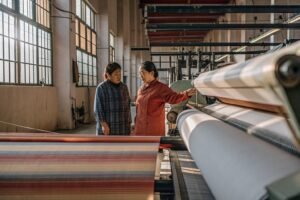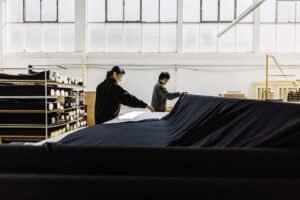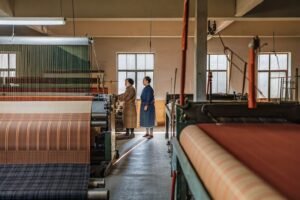
You send the inquiry. The quotation comes back. Your heart sinks. The price per meter is 15% higher than your target cost, and you have already pitched the collection to your retail buyers at a fixed wholesale price. You are trapped between a supplier who won’t budge and a customer who expects a specific hand feel. You consider the nuclear option: asking for the cheapest possible yarn, thinning out the weave, or finding a factory that promises the same fabric for half the price. But you know in your gut that the cheaper option will pill after three washes, and the returns will eat your brand alive. You feel like you are being forced to choose between your margin and your reputation.
You do not have to make that choice. I have been on the other side of this negotiation for twenty years at Shanghai Fumao, and I can tell you with absolute certainty that the most profitable deals I make are not the ones where I charge the highest price. They are the ones where the buyer understands where the cost lives inside the yarn, the dye, and the construction, and intelligently removes cost without removing integrity. A skilled fabric negotiator does not beat the supplier down. They engineer the cost out together, using technical substitutions and process optimizations that the sales rep might not volunteer unless you ask the right questions.
I am going to show you the exact levers I pull when a buyer needs to hit a sharp price point, the substitutions that work, the ones that backfire spectacularly, and the commercial concessions that unlock discounts without touching a single thread.
What Technical Substitutions Cut Cost Without Losing the Hand Feel?
The smartest way to reduce fabric cost is to substitute a component that the consumer cannot perceive. The end user touches the garment. They feel softness, weight, and drape. They do not touch the spinning method or the dye stuff batch number. This is where a technical negotiation becomes an art form. I have sat with designers in our Keqiao showroom, handed them two identical-looking swatches, and asked them to guess which one was 20% cheaper. They almost always guess wrong. Why? Because we changed something structural at the yarn level that preserved the surface aesthetic but removed processing steps or raw material premiums. This is not about cheapening the fabric. This is about value engineering it.

Can You Swap Ring-Spun for Open-End Yarn in a Hidden Application?
Yes, and this is one of my favorite cost-reduction plays for internal linings, pocketing, and the back side of quilted fabrics. Ring-spun yarn is soft, strong, and expensive because it goes through a slower, more labor-intensive twisting process. Open-end yarn is made on a rotor machine at roughly five times the speed, using shorter, cheaper cotton fibers. The cost difference can be 15% to 25% per kilo of yarn.
If your fabric is a double-face knit where the back side never touches the skin, or a bonded interlining inside a winter parka, using an open-end yarn on the hidden side slashes the raw material cost while the public-facing side retains the premium ring-spun hand feel. I did this exact swap for a Canadian outerwear brand in 2023. They needed a heavy sherpa fleece for the inside of a bomber jacket. The face was a premium matte nylon taffeta. We used a 70% open-end cotton, 30% recycled poly blend for the sherpa pile. The pile was still fluffy and warm, but the cost dropped by $1.20 per meter. On a 5,000-meter order, that was a $6,000 saving that did not change the jacket’s appearance or warmth rating one bit. If you want to understand the practical limitations of this swap, learning how to specify open-end yarns for cost-sensitive fabric applications is a good starting point.
When Does a Slight Blend Adjustment Increase Tear Strength at a Lower Cost?
Pure fiber is often more expensive and weaker than a smart blend. A 100% linen fabric is beautiful but creases like a crumpled paper bag and has a low tear strength relative to its cost. A 55% linen, 45% cotton blend is significantly cheaper per kilo, wrinkles less dramatically, and often has better seam slippage resistance because the cotton fibers are more grippy than the rigid flax fibers.
The trick is to stay within a fiber composition that still allows you to legally and honestly label the garment as "Linen Blend" or "Linen-Rich," which maintains the premium marketing perception. I recently worked with a US home textile brand on a heavy drapery linen. The 100% linen spec was $8.40 per meter. We shifted to a 60% linen, 40% recycled cotton blend, which dropped the price to $6.90 per meter. The recycled cotton added a soft, broken-in drape that actually looked more authentic for a rustic farmhouse aesthetic. The fabric was better, cheaper, and more sustainable. That is the holy trinity of cost negotiation, and it only happens when you treat the mill as a development partner rather than a price list.
How Do Order Timing and Production Slotting Unlock Bulk Discounts?
Fabric pricing is not a fixed number. It is a wave. It rises and falls with the agricultural calendar, the factory utilization rate, and the urgency of the shipping deadline. Walking into a mill in September and demanding the lowest price is like walking into a beachfront hotel in July and asking for the off-season rate. You will be laughed out of the lobby. But if you understand the rhythm of the textile year, you can place the exact same order at a 10% to 15% discount just by shifting your purchase order by four weeks. The fabric is identical. The yarn is identical. The only variable is the mill’s desperation to keep the machines running and the workers employed during a slow period.

What Is a "Valley Season" Booking and How Much Can It Save?
The textile industry has two dead zones: the weeks immediately after Chinese New Year (late February to early March) and the summer lull (late June to early August). During these periods, the domestic Chinese garment factories are not ordering, and many international buyers are between seasons. The weaving sheds and dyeing houses are hungry. At Shanghai Fumao, I often offer a "Valley Season Incentive" of 8% to 12% off the standard price for orders that can accept a slightly flexible delivery window during these months.
Why does this work for me? Because I have fixed costs. The factory rent, the machine depreciation, and the core technician salaries continue whether the looms are running or not. If I can cover those fixed overheads and a small margin, I am better off running the machines at a discount than letting them sit idle. The fabric quality does not change. The dye master and the weaving supervisor are the same people. You get the premium quality at a discounted rate because you are buying during a demand trough. If you structure your design calendar to finalize your bulk orders in May for a July production slot, you unlock this valley discount year after year.
How Does "Ganged Production" Reduce the Price Per Meter for Small Brands?
Small brands face the "MOQ penalty." You order 500 meters of a custom color, but the dyeing vessel holds 500 kilograms, which is roughly 1,500 meters of your medium-weight twill. You are paying for the full vessel capacity but only using a third of it. The dye house charges you the full vessel cost, which makes your per-meter dyeing fee triple that of a 10,000-meter order.
Ganged production is the workaround. This is when a supplier groups several small orders from different brands into the same dye vessel or the same weaving run. Your 500 meters of navy and another brand’s 500 meters of navy run in the same bath. You both pay a proportional share of the vessel cost. This requires a supplier with a diversified client base and a willingness to do the logistical juggling act. At Shanghai Fumao, we run a "Color Consolidation" program. If three brands all want a core black or a core white in the same base cloth, we gang the orders and split the savings. The brands do not need to know each other. They just get a lower minimum and a lower per-meter cost. (Here I have to be upfront—this only works for basic colors and standard base fabrics. A custom Pantone-matched lavender for a single luxury brand cannot be ganged, and you will pay the full vessel surcharge. But for core colors, this is a pricing hack that small brands rarely ask about.)
Which "Non-Essential" Quality Steps Can You Realistically Waive?
This is the most dangerous part of the negotiation, and I need to be blunt about it. Some buyers ask for price cuts by eliminating quality checks, and that is like asking a surgeon to save money by not washing their hands. But there are real, non-critical steps that add cost without adding proportionate value. The difference between a smart waiver and a suicidal one is understanding which defects your specific end-use can tolerate. A fabric destined for a structured handbag lining does not need the same drape consistency as a fabric for a bias-cut slip dress. A tent fabric does not need the same colorfastness to saliva as a baby bib.

Is the 4-Point Inspection Always Necessary for Your Product Tier?
The 4-Point System is the global standard for fabric inspection, where inspectors assign penalty points for defects per 100 linear meters. An acceptance level of 20 points per 100 meters is a common standard. But if you are producing non-critical home textiles like basic cushion covers or shopping tote bags, you can realistically accept a 30-point standard. The defects that would disqualify a luxury silk blouse—a small slub, a minor oil spot near the selvedge—can often be cut around in a tote bag pattern.
By lowering the inspection threshold from a strict 20 points to a relaxed 30 points, the mill’s first-quality pass rate increases. Less fabric gets downgraded to second-quality, and the mill can offer you a lower per-meter price because their yield has improved. I always ask my buyers: "What is your cutting table tolerance?" If your pattern pieces are small and the seamstress can easily skip around a minor knot, do not pay for a medical-grade inspection. The key is to put this waiver in writing. I specify exactly which defect types are being relaxed so there is no argument later that I shipped "rejected" goods. If you are negotiating this for the first time, understanding what is the acceptable 4-point system threshold for promotional apparel can help you set the right number.
Can You Skip the "Hand Feel" Sorting for Industrial or Lining Applications?
Hand feel sorting is a subjective process where an experienced QC technician runs their palm over every roll and categorizes the fabric as "soft," "medium," or "firm" within the same lot. For a fashion brand selling a jersey dress where the hand is the primary selling point, this sorting is critical. Two rolls from different dye batches can feel slightly different, and if a customer buys two sizes of the same dress and they feel different, you get a return.
But for an industrial application—say, a filtration fabric, a reinforcement scrim, or an internal pocketing fabric that never touches the skin—hand feel sorting is a waste of money. The technician’s time costs money. The extra handling and re-rolling costs money. I worked with a US luggage brand that was using a heavy 600D polyester oxford for the interior lining of suitcases. They were paying a premium for hand feel consistency. I told them to drop that requirement entirely. The lining is hidden, the zipper covers the edge, and the end user only cares that it does not rip. We removed the hand feel sorting step from the spec sheet, and the price dropped by 4%. The luggage brand saved $8,000 on one container, and their return rate did not budge.
How to Use Payment Terms as a Price Lever Instead of a Risk?
Cash is oxygen to a textile mill. A massive weaving shed consumes yarn, electricity, and labor every hour, and those bills are due before your fabric is even loaded onto the ship. When you negotiate on price alone, you are fighting over a fixed pie. When you bring payment terms into the negotiation, you are expanding the pie. A buyer who can offer faster cash flow often gets a better price than a buyer who demands net 60 but expects the lowest cost. I have given a 5% discount on the spot for a simple structural change in how the deposit is structured, not because the fabric was cheaper to make, but because the cash flow certainty reduced my financial risk.

Why Does a 50% Deposit Sometimes Unlock a Better Price Than a 30% One?
Most importers fight to pay the lowest possible deposit. They want 10% or 20% down to protect themselves. And I understand that instinct. But a higher deposit directly reduces the mill’s working capital cost. If I take a 30% deposit, I might need to borrow the remaining 70% from the bank to buy the yarn and pay the dye house. That bank loan has interest, usually 5% to 7% annualized. If your order takes 60 days from deposit to shipment, I am paying roughly 1% of the order value in interest.
If you offer a 50% or even a 70% deposit, I do not need to borrow as much. My interest cost disappears. I can pass that 1% saving directly to you, plus maybe an additional 2% to 3% as a reward for derisking my production run. I have a tiered pricing table at Shanghai Fumao that openly shows the relationship between deposit percentage and price. A buyer who pays 50% deposit gets a 2% discount. A buyer who pays 70% gets a 4% discount. You are not losing leverage; you are buying down the cost of capital. And if you use a third-party inspection service to verify the goods before the final balance, the risk of the higher deposit is mitigated by the inspection protocol.
What Is "Early Settlement Discount" and How Does It Stack with Volume Rebates?
An early settlement discount is a small price reduction, typically 2% to 3%, offered if you pay the final balance immediately after the goods pass inspection, rather than waiting the standard 15 or 30 days. This is pure cash flow optimization. The mill closes their receivable book faster, and you get a discount on the total invoice value.
This stacks beautifully with volume rebates. Let us say you negotiate a 5% volume discount for placing a full container order. You then negotiate a 3% early settlement discount on top of that. You also book the order in the valley season for an 8% timing discount. These discounts are not mutually exclusive. A $50,000 order can realistically drop to $42,500 through stacking, which is a 15% total reduction, without changing a single yarn or stitch. I have structured deals exactly like this for mid-sized North American brands that have the cash reserves to pay quickly and the forecasting discipline to book early. The fabric is identical to the high-season, low-deposit, late-paying version. The price is just mathematically optimized.
Conclusion
Negotiating a better fabric price without killing the quality is not a single dramatic moment where you demand a discount. It is a series of technical conversations and commercial concessions that remove cost from the parts of the fabric and the process that do not add value to your specific end-use. You swap a hidden yarn to open-end, you shift your order into the valley season, you gang your black dye lot with another brand, you relax an inspection standard that your cutting table can tolerate, and you offer fast payment in exchange for a cash-flow discount. None of these moves touches the public-facing hand feel, the durability, or the color accuracy that your customer actually cares about.
At Shanghai Fumao, I have built a pricing culture that rewards intelligence over aggression. I do not respond well to a buyer who just says "cheaper, cheaper, cheaper." But I love a buyer who says, "Hey, can we run this in open-end on the back face and use a valley season slot to hit my target cost?" That buyer gets my best engineering brain and my sharpest pricing pencil. If you are looking at a quotation right now and need to close the gap between your target and the price on the page, please reach out to our Business Director, Elaine. She can walk you through the specific cost-reduction levers available on your particular fabric spec, without sacrificing the quality that defines your brand. Email her at elaine@fumaoclothing.com with your target price and your current spec, and we will find the overlap together.