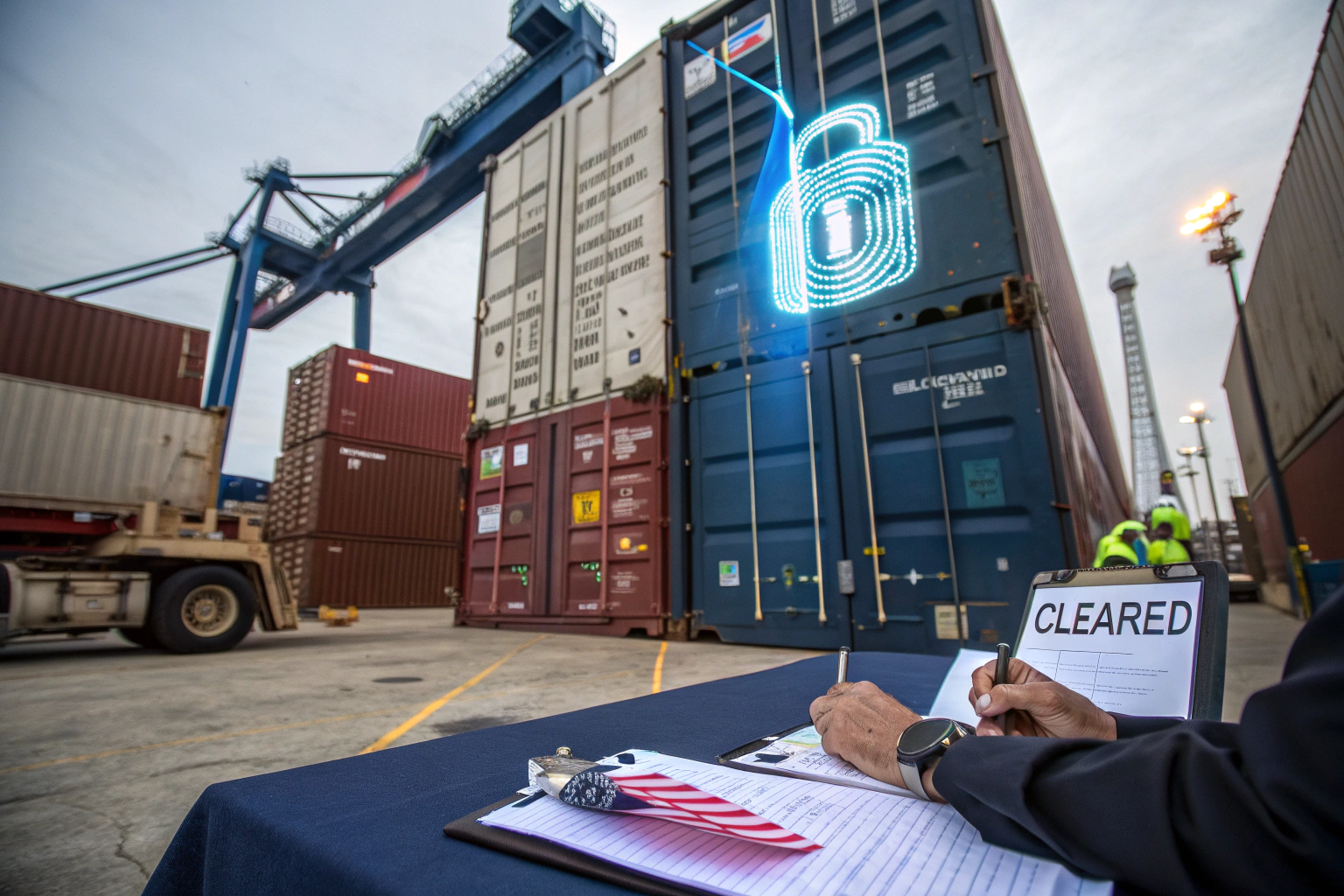
You tracked the vessel for 28 days. You watched the little icon on the map cross the Pacific, pass through the Panama Canal, and dock at Long Beach. You are excited. And then the status flips to "Customs Hold." No explanation. No timeframe. Just silence. Your stomach drops because you know what this means: demurrage fees stacking up daily, your launch deadline evaporating, and a CBP officer somewhere deciding whether your perfectly good organic cotton is actually illegal contraband. I have had clients call me in tears over this exact scenario. A shipment of 8,000 yards of spandex-blend athleisure fabric sat in a warehouse for three weeks, racking up $4,500 in storage fees, all because a single digit in a tariff code was wrong.
Getting your fabric through US Customs in 2026 without a delay is not about luck. It is about surgical precision in paperwork and understanding the new enforcement triggers that CBP has rolled out in recent years. The game has changed. The de minimis rule is under a microscope, forced labor checks are more aggressive, and fiber content discrepancies are being caught by portable lab scanners right there at the terminal. I have shipped tens of thousands of meters from our Shanghai Fumao warehouse to the US, and I can tell you exactly where the landmines are buried.
I am going to hand you the exact documentation checklist we use, explain how to describe your fabric like a chemist, and show you how to build a shipping packet that makes a CBP officer nod their head and release your goods in 24 hours instead of 24 days. This is not generic advice—these are the real standards we have tightened in our own export department this year specifically to keep your fabric flowing.
What Are the 2026 UFLPA and Forced Labor Documentation Requirements for Textiles?
If there is one word that scares every fabric exporter right now, it is "UFLPA"—the Uyghur Forced Labor Prevention Act. Since its full enforcement began, CBP has shifted from a "random check" model to a "guilty until proven innocent" stance for certain fibers, especially cotton and viscose rayon originating from specific regions. A European fast-fashion brand learned this the hard way in early 2025 when their entire container of denim was seized because the supplier could not prove the cotton was not sourced from Xinjiang. The container was held for six months before they finally abandoned it. I do not want you to become that cautionary tale.

How to Build a Traceability Map from Xinjiang to Your Bale?
You need to go beyond a simple supplier declaration. A letter saying "we promise this is not Xinjiang cotton" is worth less than the paper it is printed on, according to CBP’s current guidance. You need forensic traceability. At Shanghai Fumao, we have implemented a "Bale-to-Bolt" tracking protocol for all cotton destined for the US market. Here is what I now require from my cotton yarn spinners and what you should demand from any supplier:
- Gin Bale Tags: Every bale of raw cotton has a permanent bale identification tag from the gin. It states the region, the gin date, and the gin name. Ask for a photo of these actual tags before the bale is opened.
- Yarn Spinner’s Batch Records: We match the bale tag numbers to the spinner’s lot numbers. If I buy 500 kilos of 40s combed cotton, I want to see the internal log that says "Lot 2405-XJ-00" is strictly forbidden. We cross-reference the gin address with the USDA cotton belt maps to ensure it comes from a recognized, compliant region.
- Third-Party Audit Certificates: For high-risk fibers, we also attach a recent social compliance audit report from the yarn and greige mill. We use a recognized standard like SLCP or a specific anti-forced-labor audit conducted by an accredited body.
I recall a messy situation in March 2026 (just a few months ago) where a US activewear buyer wanted to verify compliance before paying their 70% deposit. We shipped them not just a fabric swatch but a 50-page digital dossier containing the gin tags, the spinner’s electricity bills to prove continuity of operation, and the employee roster from the dyeing plant. They took that dossier to their customs broker, who ran it past CBP’s internal review team before the fabric even left the loom. The container sailed through the port in Savannah without a single hold. That is what proactive compliance looks like, and if you are wondering about the specifics of navigating the Uyghur Forced Labor Prevention Act for textile sourcing, this level of detail is now the baseline expectation.
What Specific Certifications Are Now Mandatory for Viscose and Rayon?
Viscose has its own special hell in customs right now. It is a semi-synthetic made from wood pulp, and much of the global dissolving pulp comes from regions with documented forced labor risks. If you are shipping a beautiful cupro twill or a bamboo viscose jersey, you absolutely must include the "Forest to Fabric" audit trail. I no longer ship any cellulose-based fabric without a CanopyStyle audit confirmation. This proves the wood pulp did not come from ancient or endangered forests and, critically, that the pulp mill has been audited for labor practices.
Additionally, I strongly recommend attaching a chemical safety report. Viscose plants use carbon disulfide, a toxic neurotoxin. A CBP officer might flag a rayon shipment not just for labor concerns but because it smells off. If the fabric has a residual sulfur smell, they can suspect improper processing and detain it for safety testing. We run a "residual sulfur test" in our CNAS lab before packing. If the level is above 50mg/kg, we re-wash the fabric. I staple that test result to the outside of the poly bag inside the carton, so if an inspector opens the box, the first thing they see is an independent lab report showing the chemical is within safe limits. This has saved multiple shipments.
How to Write an Invoice That CBP Officers Will Approve Immediately?
Your commercial invoice is your primary weapon against a customs hold. Most people treat it like a boring accounting document. I treat it like a legal brief to a judge. The CBP officer has about two minutes to look at your paperwork before deciding to release or flag your container. If the invoice is vague, missing a phone number, or uses cutesy marketing descriptions instead of technical compositions, you just bought yourself a warehouse exam. An exam costs a minimum of $500, plus the per-diem storage. It can take a week to schedule the exam team. All because you could not be bothered to type five digits on a piece of paper.

What Exactly Belongs in the "Product Description" Field?
"Fashion fabric" is a cursed phrase. "Soft touch material" will get you detained. The product description must be exactly what a chemist would write. I follow a strict formula for every meter I ship out of Shanghai Fumao:
Formula: [Process] [Composition Percentages] [Weave Type] Fabric, [Weight]gsm, [Width]cm
A bad description: "Black Stretchy Fabric"
My description: "Dyed Woven Twill Fabric 74% Recycled Polyester 20% Tencel Lyocell 6% Spandex, 230gsm, 150cm Width"
Why does this matter? Because CBP uses an automated targeting system that scans invoice data. The system is looking for an exact match between your description and the Harmonized System (HS) code you are claiming. If you say "stretchy fabric" but your HS code describes a rigid woven cotton, the system flags a mismatch. It is not a human doing this; it is an algorithm. Also, CBP is now increasingly interested in the specific percentage of recycled content in 2026, given the new greenwashing scrutiny. If you label it "recycled poly," you better have the GRS certificate and the exact fraction tested in a lab. Here is a piece of advice from a seasoned freight forwarder: always structure your invoice descriptions to mirror the HS code explanatory notes precisely.
Who Needs to Be Listed as the "Importer of Record" and Why It Matters?
This is the single most dangerous mistake I see small brands make. The Importer of Record (IOR) is the entity legally responsible for the customs entry. If you are a US brand buying from us, your company name, your EIN number, and your physical address must be on the customs paperwork. Some buyers ask us to "handle it" under our name to avoid complexity. Absolutely not. Never let a foreign factory be the IOR of record for a shipment of significant value unless you have a bulletproof Power of Attorney structure.
If we are the IOR, we technically own the goods in the eyes of CBP until they clear. That means if there is a patent infringement issue, a health safety recall, or a UFLPA hold, the fine comes to us. But more importantly for you, if the goods are seized because of a problem with your design (say, a logo print that violates a US trademark), and we are the IOR, we are the ones getting sued by the trademark holder. That creates a massive conflict of interest. Reputable suppliers will insist that you, the US buyer, act as the IOR with your customs bond. We supply the FOB paperwork; you handle the import. If a supplier insists on shipping DDP to your door for your first order, be very cautious; they might be hiding the true origin of the components by controlling the entry process.
Why Your Packing List Is a Key to Passing Container Exams?
Let’s be brutally honest about container exams. CBP does not call a stylist to open your box. They call a warehouse worker with a box cutter. That worker slashes open a carton, pulls out the rolls, slices open a poly bag, and digs around for a sample. Then they stuff everything back in. Half the time, the fabric gets ruined by a dirty blade or left to drag on a dusty floor. The only way to protect your goods during this violent process is to make the inspection so fast and easy that they don’t have to dig. The packing list is your tactical map for them. If you want to catch a candid look at the chaos inside an actual customs exam site, you will understand why predictability and bold labeling win the day every single time.

How to Use "Over-Packing" and Vacuum Sealing to Protect Goods?
A torn poly bag means a water-damaged fabric roll. Customs warehouses are not climate-controlled. To mitigate this, we use a "double-bag and interleave" method specifically for US-bound cartons. First, we vacuum-seal the fabric tightly. This reduces the volume and, more importantly, creates a hard, dense package that a box cutter is less likely to penetrate deeply into. Second, before sealing the outer carton, we take the original commercial invoice and packing list and put them in a bright red, waterproof, adhesive envelope stuck to the inside of the carton’s top flap. We write "DOCUMENTS INSIDE—PLEASE DO NOT DESTROY" in English and Spanish. If the box cutter slices the top tape, the red envelope is the first thing they see. They don’t need to rip apart the fabric to find the roll numbers.
I also use "tare and net" methodology on the packing list. I state the exact weight of the empty carton, the pallet, and the plastic wrapping. Why? Because CBP uses giant floor scales. If they weigh a pallet and it is 5 kilos heavier than your manifest, they will pull it apart looking for contraband, which often means they think something is hidden inside the fabric rolls. By giving them the math upfront—the tare weight of the pallet, the core weight of the roll tube, the net weight of the yarn—you satisfy their weight check instantly.
Why Individual Roll Tagging Prevents a "Full Strip" Examination?
A "tailgate exam" is a quick look. A "strip exam" is when they unroll every single meter. You want the former. To get it, you need to make the inspector trust your packaging at a glance. Every roll that leaves Shanghai Fumao for the US has a unique barcode sticker wrapped around the plastic so it can be scanned while still sealed. The barcode links to a shared cloud folder, which is written on the roll label: "Scan to Verify: Lot #, Composition, Test Results."
When the CBP officer grabs a roll from the front of the container, they can scan the QR code with their phone and instantly see a video of that exact roll going through our inspection machine, complete with the GSM report. They don’t need to cut it open. They see the digital twin and move on. I have had an entire 200-roll shipment clear an X-ray exam in Seattle purely because the inspector scanned five random rolls, saw the data was perfectly consistent with the manifest, and signed off. The alternative, where every roll is just a blank white plastic tube, is a guaranteed 24-hour delay because they have to physically audit a percentage of the cargo. Labeling is not just organization; it is psychological reassurance for an overworked officer.
What Role Does Your Customs Broker Play in Pre-Clearing Fabric?
A great customs broker is not just a form filler; they are a defense attorney arguing your case before the shipment lands. I have worked with a dozen brokers over the years, and the bad ones wait for a problem to happen. The good ones submit your paperwork 72 hours before the vessel docks. ISF (Importer Security Filing), or "10+2," must be filed 24 hours before the cargo is loaded on the ship overseas. A late ISF is a $5,000 fine, and CBP keeps a record of your filer. If your broker is filing at the last second, you are being flagged as a high-risk importer. I dropped a broker in 2024 because they forgot to file the ISF until the day of departure, and my client almost got blacklisted.

How to Choose a Broker Who Understands Apparel and Home Textiles?
Customs brokers, like doctors, have specializations. A broker who is a wizard at importing heavy machinery or food products is often useless when it comes to classifying an embroidered lace trim or a quilted bedspread. Textiles have the highest duty rates and the most complex classification rules of any consumer good. You need a broker who understands the difference between a "knit" and a "woven," who knows the proper distinction between a "pile fabric" and a "tufted fabric."
When I interview a new broker for my US clients, I give them a stress test. I describe a fabric without saying the exact HS code: "A 3-thread fleece, 80% cotton 20% poly, napped on both sides, cut into a 90-inch by 90-inch piece with a zig-zag stitch on the edge." A general broker will panic and throw it in a generic chapter 63 "other made-up textile article" and pay a random duty rate. A textile broker will immediately know this is an argument between Chapter 6001 (knitted pile) and Chapter 6302 (bed linen) and will deploy binding rulings to justify the lowest legal rate. That expertise saves you money every single shipment and prevents a misclassification penalty.
What is "Remote Filing" and Can It Clear a Shipment Before It Docks?
Yes, and it is the secret to a 24-hour release. The process is called "PAPS" (Pre-Arrival Processing System) for truck shipments or the ocean equivalent for vessel shipments. Your broker transmits the CBP entry package (the 3461 form, the invoice, the packing list, the B/L) while the vessel is still in the ocean. If CBP has no questions, they will issue a "provisional release" electronically, often 48 hours before the ship even ties up at the pier. When the container hits the terminal, the chassis just picks it up and drives it away.
This only works if the paperwork is perfect. I send the final commercial invoice to the broker as soon as the container is sealed in Ningbo or Shanghai. I do not wait for the vessel to sail. This gives the broker a full two weeks to review and submit. If there is a query, CBP sends it via the ABI system. The broker answers while the ship is still in the middle of the ocean. By the time the anchor drops, the administrative work is done. This pre-clearing magic is why I always push buyers to finalize their labels and packaging specs before the container door closes, because those final details must be reflected in the paperwork the broker files. If you change the barcode style mid-transit, you introduce a discrepancy that kills the pre-clearance.
Conclusion
Your fabric shipment does not need to become a hostage at the border. The road to a clean release in 2026 is paved with chemistry-level product descriptions, bale tags that trace back to a specific farm, and a packing list so detailed it answers every question before it is asked. You must treat the US Customs process not as a shipping afterthought, but as a design feature of your product launch. The UFLPA enforcement is real and aggressive, the invoice algorithm is scanning for mismatches, and the physical exam at the terminal is a destructive mess that only order and transparency can prevent.
We at Shanghai Fumao have engineered our export workflow exclusively to keep you out of the storage rack and out of the penalty notice file. From vacuum-sealed double-bagging to the bright red document envelopes and the per-roll QR codes that link back to a gin tag audit trail, our system is built for the 2026 enforcement environment. If you are preparing a new collection and want to ensure your goods hit your New Jersey or Los Angeles warehouse without a single CBP hold, please speak with our Business Director, Elaine. She can connect you with a textile-specific broker we trust and prepare a pre-shipment customs review package for your order. Write to her directly at elaine@fumaoclothing.com. Let us push the paperwork through while your fabric is still at sea, so when it docks, it just drives home.