
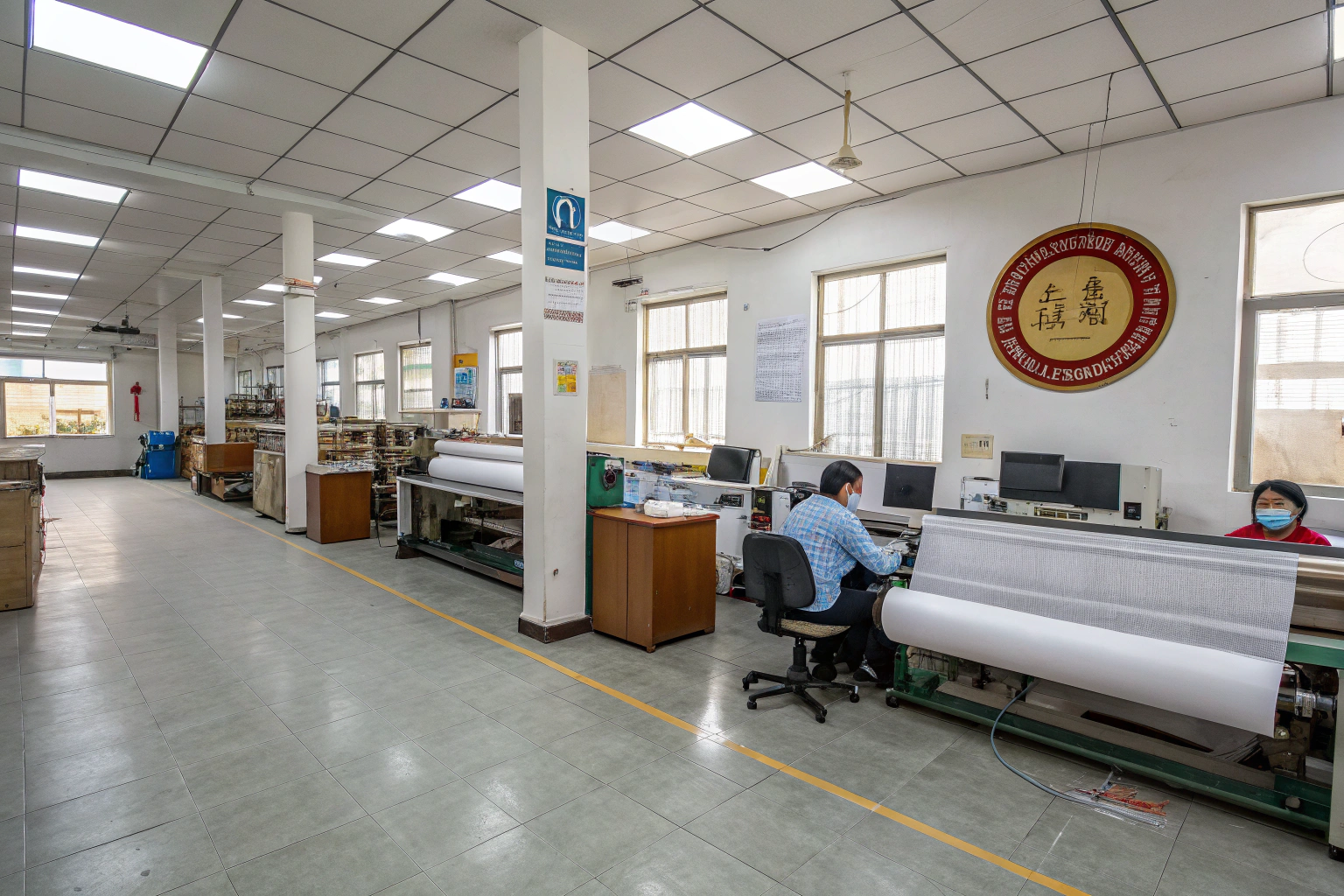
You think you’re talking to a factory. The website showed smokestacks and weaving looms. The Alibaba page is a "Gold Supplier" with a "Verified" badge. The salesperson signs their emails as "Factory Representative." They sent you a video tour of a production floor. But here’s what’s actually happening: you’re talking to a trading company operating out of a shared office in a commercial building in Shaoxing, 20 kilometers from the nearest loom. That factory tour video? Licensed from a real mill, or filmed during a one-time, paid access visit to a facility the trader doesn’t own. The sample they sent you? Cut from a roll of fabric they bought retail from a genuine manufacturer, hoping you’ll order bulk so they can source a cheaper, lower-quality substitute from a completely different, unknown mill. The pain of discovering you’re working with a trader isn’t just the 15-25% markup you’re paying for zero manufacturing value. It’s the total absence of control. The trader doesn’t own the yarn inventory. They don’t control the dyeing process. They can’t walk onto the factory floor and fix a quality problem. They are a middleman, and when your 5,000-meter order goes wrong, they will disappear or blame "the factory," a factory you have no relationship with and no recourse against.
At Shanghai Fumao, we are the manufacturer. We own our weaving shed. We own our inspection center. We have direct, long-term contracts with our dyeing and finishing cooperative partners, where our own QC staff work on-site. When you visit us on a video call, I can walk you to a running rapier loom, show you the warp beam with your lot number on it, and introduce you to the shift supervisor who has been with us for 15 years. I want you to know how to find a real manufacturer like us, and how to avoid the traders who are cosplaying as mills. I’m going to give you a field guide: the specific questions that expose a trading company, the documentation that only a real manufacturer can provide, and the physical and digital traces that reveal the true source of the fabric.
What Specific Questions Expose a Trading Company in Minutes?
A trading company’s entire business model is built on a single, fragile illusion: that they are the factory. Their salespeople are trained to answer questions in a way that maintains this illusion, but they can only maintain it as long as you ask general, passive questions. The moment you ask specific, operational, verifiable questions that require physical presence on a factory floor, the illusion shatters. Here are the five questions that can expose a trading company in under ten minutes.
Question 1: "Can you walk me to the yarn storage area right now on a video call?"
A real manufacturer has a physical inventory of raw yarn—pallets of cones, labeled with yarn count, composition, and lot number. When you ask this question on a live video call, a real manufacturer can walk the camera to the warehouse, show you the yarn stock, and read the labels on the cones. A trading company cannot. They have no yarn. They will say the warehouse is "in another building," or "not accessible right now," or they’ll try to schedule a video call for "next Tuesday" while they scramble to arrange access to a friendly mill.
Question 2: "What is the lot number of the cotton yarn you’re currently running on your looms?"
A real manufacturer knows exactly what’s on the looms right now. They have a production schedule, and every yarn batch has a lot number. They can answer instantly: "We’re running Lot LY-2026-089, a Ne 40/1 BCI cotton, on the rapier looms in Building 2." A trading company has no idea what’s on a loom they don’t own. They will give a vague answer or change the subject.
Question 3: "Can you send me a photo of my specific fabric on the inspection table with today’s newspaper in the frame?"
This is the "proof of life" test for a specific order. If you have a trial order or a production run underway, a real manufacturer can walk to the QC inspection table, lay today’s newspaper next to your fabric, and take a photo. This proves your fabric is physically in their facility, being processed. A trading company cannot do this because your fabric is in a different factory they don’t control.
Question 4: "Who is your shift supervisor for the dyeing department, and how long have they worked there?"
A real manufacturer knows their people by name. "Lao Wang has been our dyeing shift supervisor for 11 years. Would you like to speak with him?" A trading company doesn’t employ a dyeing shift supervisor. They won’t know the name of the person running the dyeing at the subcontracted mill.
Question 5: "Can I see the purchase invoice for the raw flax fiber you bought last quarter?"
A real manufacturer buys raw materials. They have purchase invoices from fiber suppliers. A trading company buys finished fabric. They have purchase invoices from a mill. The supplier’s willingness to show you a redacted raw material purchase invoice is a powerful signal. A trading company will refuse, citing "confidentiality," or they will provide a fabric purchase invoice that reveals their supplier.
I’ve had potential clients tell me they used these questions on other suppliers before finding us. One buyer told me a supplier answered Question 1 with, "The yarn warehouse is closed for inventory today, we cannot enter." The buyer asked Question 5. The supplier sent a fabric purchase invoice from a different Chinese mill, revealing they were a trader. The buyer walked away. For a complete interrogation toolkit, reading about the specific, probing questions to ask a potential Chinese supplier that separate a genuine manufacturer from a trading company, with examples of common trader evasions provides a comprehensive list, and understanding the operational structure of a genuine textile factory—yarn procurement, production scheduling, shift management—so you know what a real answer sounds like gives you the baseline.

How Can a Business License Reveal the True Company Type?
The Chinese business license is a public, legally required document that contains a specific field many buyers never check: the "Business Scope" (经营范围). This field is a list of the specific business activities the company is legally registered to perform. The wording of this scope is a powerful, objective indicator of whether the company is a manufacturer or a trader.
A genuine textile manufacturer’s business scope will include phrases like: "Manufacturing of woven fabrics" (制造机织面料), "Production of textile products" (生产纺织产品), "Spinning of cotton and bast fibers" (纺纱), "Fabric dyeing and finishing" (面料印染加工). The key word is 制造 (manufacturing) or 生产 (production).
A trading company’s business scope will include phrases like: "Wholesale and retail of textiles" (纺织品批发与零售), "Import and export of textile products" (纺织品进出口), "Agent of textile trade" (纺织品贸易代理). The key word is 贸易 (trading) or 批发 (wholesale). They are legally registered to buy and sell, not to manufacture.
Ask the supplier for a copy of their business license. Every legitimate company will provide it. Look for the Business Scope section. It’s in Chinese, so use a translation tool if needed. If the scope says the company is authorized to "manufacture" or "produce" textiles, that’s a positive signal. If the scope only authorizes "trading" or "wholesale," the company is legally a trading company, regardless of what their website says. A "trading" scope combined with marketing that claims "We are a factory" is a direct contradiction and a major red flag.
Additionally, check the Registered Capital (注册资本). While not definitive, a manufacturer with physical assets—a factory building, expensive machinery—typically has a higher registered capital than a pure trading company operating from a rented office. A trading company with a registered capital of $50,000 and a business scope of "textile trading" is not the owner of the massive factory shown on their website. For more on this, reading a guide to reading a Chinese business license, with specific focus on the Business Scope field, Registered Capital, and Legal Representative, and how these indicate a company’s true operating structure provides a detailed walkthrough, and understanding how to independently verify the information on a Chinese business license using the National Enterprise Credit Information Publicity System (NECIPS) allows you to confirm the license is authentic.
Does a "Verified" Gold Supplier Badge Prove They Are a Factory?
No. The Alibaba Gold Supplier badge, and the associated "Verified" or "Assessed Supplier" checks, do not prove that a company is a manufacturer. They prove that the company exists, has a business license, and has paid a fee to Alibaba. The verification process confirms the legal entity, but it does not distinguish between a factory and a trading company.
A trading company can obtain a Gold Supplier badge and a "Factory Assessment" verification by arranging for the third-party inspector to visit a rented or borrowed factory space. There are documented cases of trading companies renting a section of a genuine factory for a day, populating it with their company signage, and passing the assessment. The inspector verifies that "production equipment exists" at that location. The inspector does not verify that the equipment is owned by the audited company, that the company’s own workers operate it daily, or that the company’s own yarn inventory is stored there.
The Gold Supplier badge is a starting point, not an endpoint. It’s a signal that the company has passed a basic existence check. It is not a substitute for the specific interrogation questions, the business license scope check, and the live video verification I’ve described. Treat the badge as a filter for the most basic level of legitimacy—the company is real, not a total phantom—and then apply your own, deeper due diligence. For a realistic assessment, reading about what the Alibaba Gold Supplier and Assessed Supplier verifications actually check, their limitations, and why they should not be your sole verification method provides the critical perspective, and seeing real-world case studies of trading companies that have obtained factory verification badges on Alibaba by using rented or borrowed facilities illustrates the risk.
What Physical Evidence Proves a Supplier Owns the Factory?
A website, a business license, and a video tour can all be faked or rented. But there is a class of evidence that is extremely difficult for a trading company to falsify: the official, government-registered documents that prove physical ownership of a specific piece of industrial land and the expensive, permanently installed machinery on it. A real manufacturer can provide these documents. A trading company cannot.
The first and most powerful document is the Land Use Rights Certificate (国有土地使用证). In China, all land is owned by the state, but companies can hold long-term "land use rights" for specific parcels. The certificate is a formal, government-issued document with a red stamp, a parcel number, and a map of the land. It proves that the company has the legal right to occupy and use a specific industrial site. A manufacturer will hold this certificate for their factory site. A trading company operating from a rented commercial office will not.
The second document is the Fixed Asset Register or the company’s audited financial statements that list the company’s fixed assets. Textile manufacturing machinery—rapier looms, air-jet looms, spinning frames, dyeing jiggers, stenter frames—are major capital investments. A single rapier loom costs $30,000 to $60,000. A stenter frame costs $200,000 to $500,000. These assets appear on the company’s balance sheet. A real manufacturer will have a significant fixed asset base in textile machinery. A trading company’s fixed assets will be limited to office equipment, computers, and perhaps a small sample-cutting table.
Ask the supplier: "Can you provide a redacted copy of your Land Use Rights Certificate for the factory site?" and "Can you provide a summary of your fixed assets in textile manufacturing machinery?" A manufacturer may decline for confidentiality reasons, but a trader will decline because the documents don’t exist. The way they decline is also informative. A manufacturer will say, "I can show you the certificate on a video call, but I can’t send a copy for security reasons." A trader will make an excuse or change the subject. For more on property verification, reading about the legal framework for land use rights and property ownership for industrial enterprises in China, and how to verify a Land Use Rights Certificate provides the legal background, and understanding how to interpret a Chinese company’s audited financial statements, with specific focus on the fixed asset register and what it reveals about the company’s true operational structure gives you the analytical skill.

How Can Utility Bills and Tax Records Confirm Real Manufacturing?
A factory consumes electricity and water on a scale that a trading office does not. A single rapier loom consumes 5-8 kilowatts of power. A dyeing machine consumes vast quantities of water and steam. A stenter frame is a massive natural gas or electric heater. A real manufacturer’s monthly electricity bill is a substantial, four or five-figure expense that directly correlates with their production output.
A trading company’s electricity bill, by contrast, is an office expense—lights, computers, air conditioning. It’s a fraction of a factory’s consumption. This difference is a powerful verification signal.
Ask the supplier, specifically during a video call, to show you a recent, redacted electricity bill for the factory site. The bill should be addressed to the company’s legal name, at the factory address. The kilowatt-hour consumption should be large—indicative of industrial machinery running substantial hours. A trader cannot produce this. They might show you an office electricity bill with low consumption, which proves they are an office, not a factory.
Similarly, a real manufacturer pays value-added tax (VAT) on their production output and can claim VAT refunds on their exports. Their tax records reflect genuine manufacturing activity. A legitimate manufacturer will have a "General Taxpayer" (一般纳税人) status, which allows them to issue official VAT invoices (增值税专用发票) for their products. Ask if the supplier can issue a VAT invoice for your order. A trading company can also issue VAT invoices, but combined with the electricity bill and the business license scope, the tax status adds another layer of verification. A manufacturer’s tax profile is that of a producer. A trader’s tax profile is that of a reseller. For a deeper investigation, reading about how to use utility consumption data and tax registration status to verify the true operational nature of a Chinese factory provides a practical investigation guide, and understanding the different Chinese VAT taxpayer categories and what a "General Taxpayer" status indicates about a company’s scale and operational substance adds a crucial compliance dimension.
What Factory Certifications Are Only Issued to the Actual Producer?
Not all certifications are created equal. Some certifications, like OEKO-TEX Standard 100, can be held by a trading company. The certificate covers a specific product, and a trader can submit a sample for testing and obtain a certificate for that product, even if they don’t manufacture it. Other certifications, however, are issued only to the specific manufacturing facility that undergoes an on-site audit. These facility-specific certifications are the gold standard for proving manufacturer status.
The most important of these is a GOTS Scope Certificate that lists the processing activities as "Weaving," "Dyeing," or "Finishing." A GOTS certification with a "Trading" scope is held by a trader. A GOTS certification with a "Weaving and Dyeing" scope is held by a manufacturer. The GOTS on-site audit verifies the physical processing equipment, the chemical management systems, the wastewater treatment plant, and the social compliance of the workers on the factory floor. A trading company cannot pass a GOTS weaving or dyeing audit because they don’t have a weaving or dyeing facility.
Similarly, an ISO 9001 quality management system certificate that is specifically scoped to "Manufacturing of Woven Cotton and Linen Fabrics" and that lists the factory address, is a strong manufacturer indicator. An ISO 9001 scoped to "Trading and Distribution of Textiles" is a trader indicator. The scope wording is, again, the key.
Ask the supplier: "Can I see your GOTS Scope Certificate? What processing activities are listed in the scope? Can I see the address of the certified facility? Is it the same as your factory address?" A manufacturer will provide a GOTS certificate with a manufacturing scope, and the facility address will match. A trader will either have no GOTS certificate, a GOTS certificate with a "Trading" scope, or a GOTS certificate for a different facility. For your own verification, the GOTS public database allows you to search for a company and see their exact certified scope and facility address.
How Does the DDP Shipping Paperwork Reveal the Real Supply Chain?
The shipping and customs documentation that accompanies your fabric is a legal, official record of the supply chain. It doesn’t lie, because lying on a customs declaration is a crime in both the exporting and importing countries. For buyers shipping on DDP terms, where the supplier acts as the importer of record and handles all customs formalities, you have a right to see this paperwork. It reveals exactly who made the fabric and who is shipping it.
The key document is the Export Customs Declaration (出口报关单) and its equivalent in the importing country, the Customs Entry Summary. These documents list the "Exporter of Record," the "Manufacturer," and the "Supplier." Compare these fields. If the company you are buying from is the manufacturer, their name and address should appear in all three fields. If the "Manufacturer" field shows a different company name than the supplier you’re paying, you have discovered the real factory, and you are dealing with a trading company that is drop-shipping or white-labeling the product.
On a Certificate of Origin, the "Producer" or "Manufacturer" field must be completed. A trading company may list themselves as the "Exporter" but must list the actual factory as the "Producer." This is a legal requirement for the certificate to be valid. Ask for a copy of the Certificate of Origin for your order. The name of the producer is the name of the factory that made your fabric.
On the commercial invoice and packing list, look for the "Shipped From" address. A manufacturer ships from their factory address, which is an industrial location. A trader ships from a warehouse or a freight forwarder’s consolidation point. The physical pickup address is a clue.
I provide all of this paperwork to our DDP clients transparently. Our name—Shanghai Fumao—appears as the manufacturer, the exporter, and the supplier on every document. There’s no mystery. A buyer from a UK brand once told me he discovered his previous supplier was a trader by reading the Certificate of Origin. The "Producer" was a mill he’d never heard of in a different province. He contacted the mill directly and cut out the trader, saving 20% on his next order. The paperwork told the truth. For more on using documents, reading about how to trace the true supply chain of imported goods using standard customs and shipping documents—the Export Declaration, the Certificate of Origin, and the Bill of Lading is a forensic guide, and understanding the specific data fields on a Certificate of Origin and how to interpret the Exporter, Producer, and Consignee information empowers you to read the paper trail.

Can a GOTS Transaction Certificate Expose a Hidden Middleman?
Yes, and it’s designed to do exactly that. The entire purpose of the GOTS chain of custody system is to provide transparency from the certified processor to the certified buyer. A GOTS Transaction Certificate (TC) is a shipment-specific document that lists the seller (the last certified handler), the buyer, the product, and the certification numbers of both parties.
If you are buying what you believe to be GOTS-certified fabric directly from a manufacturer, the TC should list you (or your brand) as the "Buyer," and the manufacturer as the "Seller." The seller’s GOTS Scope Certificate number should match the manufacturer’s facility.
If a trading company is involved, they will appear as a link in the chain. The TC might list the real manufacturer as the "Seller" and the trading company as the "Buyer." You would then receive a separate TC (or no TC at all) from the trading company. If the trading company’s name does not appear on a GOTS Scope Certificate with a manufacturing scope, they are a trader inserting themselves into the chain. They may be adding cost, but they are not adding manufacturing value, and they are breaking the direct chain of custody between you and the real factory.
Always demand a GOTS Transaction Certificate for every order of GOTS-certified fabric. Trace the seller on the TC back to the GOTS public database. Verify that the seller has a valid manufacturing scope. If there are multiple TCs in the chain, map the entire chain. Any entity in the chain that has a "Trading" scope and no manufacturing facility is a middleman. You can then decide whether the value they add (consolidation, logistics, financing) justifies their margin, but you will have a clear, documented view of the true supply chain. For complete guidance, reading about how to trace the entire GOTS-certified supply chain for a textile product using Transaction Certificates and the GOTS public database, and how to identify and evaluate the role of each certified entity provides the official methodology, and understanding the specific data fields on a GOTS Transaction Certificate and how to use them to verify the seller’s certification scope and the product’s chain of custody gives you the practical decoding key.
Does the Shipping "Pickup Address" Give Away a Trading Company?
Yes, often very simply and directly. When a shipment is arranged, whether by the buyer’s forwarder or the seller’s, a truck is dispatched to pick up the finished goods from the factory or warehouse. This pickup address is recorded on the shipping documentation—the bill of lading, the forwarder’s cargo receipt, or the trucking waybill.
Ask the supplier for the pickup address for your shipment. A manufacturer’s pickup address is an industrial location—"No. 88, Textile Industrial Zone, Keqiao District, Shaoxing City, Zhejiang Province." This is the factory address. It should match the address on the business license and the GOTS Scope Certificate.
A trading company’s pickup address will often be different. It might be a commercial address—"Room 1502, Building A, Global Trade Center, Shaoxing"—which is an office, not a factory. It might be a freight forwarder’s consolidation warehouse near the port. It might be the address of a different factory entirely—the real manufacturer that the trader is using. If the pickup address is not an industrial factory location, and if it doesn’t match the supplier’s claimed factory address, the supplier is not the manufacturer.
This is a simple, factual check. It doesn’t require the supplier’s cooperation. Once your order is ready for shipment, the pickup address is an operational necessity. Ask for it. Compare it. If it’s an office building in a city center, you’re dealing with a trader. For a practical guide, reading about how to interpret the various addresses on international shipping documents—pickup address, shipper address, factory address—and what discrepancies reveal about the supply chain explains the logistics paperwork, and understanding the difference between an industrial factory address and a commercial office or warehouse address in Chinese textile manufacturing centers helps you interpret the physical location.
Conclusion
Finding the real manufacturer instead of a trading company is not about luck or trust. It’s about asking specific, operational questions that a trader cannot answer. It’s about inspecting the business license for the word "manufacturing," not "trading." It’s about demanding the documentation that only a factory owner can produce—the land use rights certificate, the industrial electricity bill, the GOTS scope with a "weaving and dyeing" authorization. It’s about following the paper trail of the shipping documents, the Certificate of Origin, and the GOTS Transaction Certificate to see whose name appears next to "Manufacturer." And it’s about using the pickup address and the live video call to physically locate the factory floor.
Every one of these checks is something you can do this week, with the supplier you’re currently evaluating. Do them. Apply them to us at Shanghai Fumao. Request our business license. Ask for the video call walkthrough of the yarn warehouse. Ask for the GOTS Scope Certificate and verify it on the public database. Request the Certificate of Origin for your first order and check who is listed as the producer. We will pass every check, and we will provide every document, because we are the manufacturer.
If you’re tired of the trader markups, the quality roulette, and the feeling that you’re one step removed from the source of your fabric, take these verification steps with your current supplier. And if they fail, and you’re ready to work directly with a factory that invites this level of scrutiny, contact our Business Director, Elaine. She can provide the verification documents, schedule the live factory tour, and become your direct contact at the source. Her email is elaine@fumaoclothing.com. Cut out the middleman. Find the real manufacturer. Your fabric, your margin, and your peace of mind depend on it.








