Your brand is not a logo. It’s not a website, and it’s not a clever Instagram campaign. Your brand is a promise to your customer, and that promise is made of fabric. When you sew a "100% Organic Cotton" label into a garment, or you market a collection as "OEKO-TEX Certified, Safe for Your Baby," you are making a legal, ethical, and commercial commitment. If that commitment is false—not because you lied, but because the certificate your Chinese supplier sent you was a high-quality Photoshop job—your brand absorbs the damage. Not the supplier. The supplier will vanish, change their Alibaba store name, and sell the same fake-certified fabric to another hopeful brand. You will be left with a recall, a consumer protection lawsuit, a devastated reputation, and a box of fabric you can’t legally sell. The pain isn’t a supply chain hiccup. It’s a brand extinction event.
At Shanghai Fumao, we lose business to these fake-certificate suppliers every single month. They offer a GOTS-certified organic cotton poplin at $2.80 per meter when the genuine organic yarn alone costs more than that. They send a PDF of an OEKO-TEX certificate that looks perfect on a phone screen. They count on the fact that you, the buyer, are busy, trusting, and don’t know how to verify a certificate at the source. I’m going to teach you how to do exactly that. This article is your field guide to certificate authentication in the textile industry. I’ll show you how to verify an OEKO-TEX certificate in 30 seconds on the official database, how to spot the visual and typographic tells of a forged GOTS document, and how to interpret the "scope" of a certificate so you don’t get fooled by a trader posing as a manufacturer. Use these methods on us. Test every certificate we send you. A legitimate supplier will thank you for your diligence. A fraudulent one will make excuses, apply pressure, and disappear.
How Can the OEKO-TEX Label Check Expose a Forged Certificate?
The OEKO-TEX Standard 100 certificate is the most widely recognized textile safety certification in the world. It’s also one of the most forged documents in the industry. The reason is simple: a buyer sees the OEKO-TEX logo, assumes the fabric is tested and safe, and doesn’t look any further. A forger can copy a real certificate number from a legitimate company’s website, change the company name and the dates in Photoshop, and send the fake PDF to you. If you don’t verify it independently, you will never know the certificate is stolen.
The OEKO-TEX Association anticipated this fraud and built a powerful, free, and instant verification tool that kills the fake certificate on the spot. It’s called the OEKO-TEX Label Check, and it’s available on the official OEKO-TEX website. Every valid OEKO-TEX certificate has a unique certificate number. This number is printed on the certificate itself. It’s not secret. It’s meant to be verified.
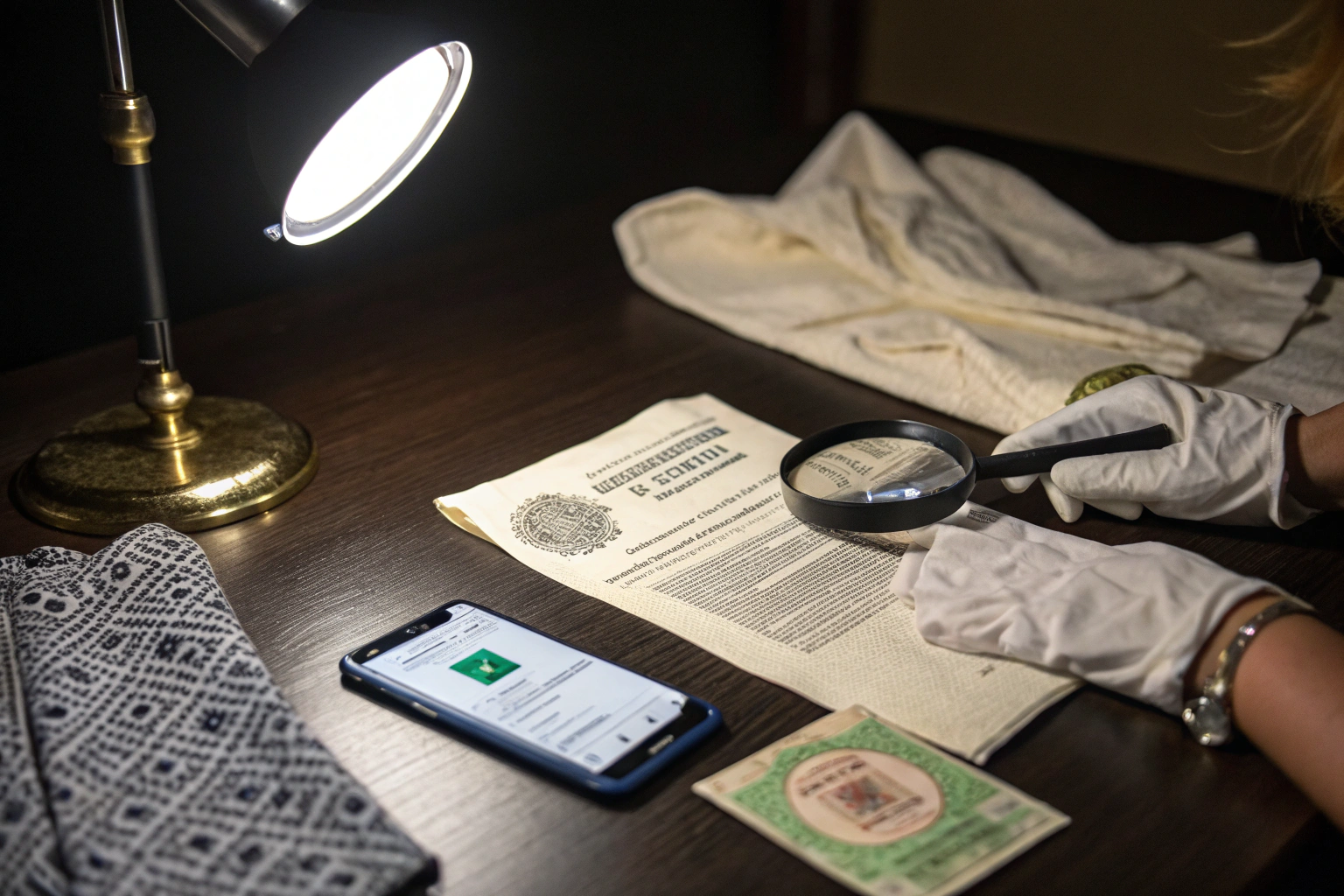
Here’s the verification protocol. When you receive a certificate from a supplier, do not just look at the PDF. Do not accept a screenshot. Open your own browser, go to the official OEKO-TEX website (oeko-tex.com), and find the "Label Check" tool. Enter the certificate number exactly as it appears on the supplier’s document. Click verify.
The tool will return one of three results. "Valid": The certificate is genuine and current. The tool will display the exact legal company name that holds the certificate, the product description the certificate covers, the certification body that issued it (e.g., "Testex," "Hohenstein"), and the expiry date. If the company name on the website does not match the company name on the supplier’s proforma invoice—exactly, character for character—the certificate is stolen. If the expiry date has passed, the certificate is lapsed, even if the supplier "updated" the date on the PDF they sent you. "Invalid" or "Not Found": The certificate number is fake, expired, or belongs to a different company. The supplier has sent you a forged or misappropriated document. Do not do business with them.
This verification takes 30 seconds. It is free. It is definitive. There is no excuse for not performing it. A UK-based children’s wear brand told me in 2025 that they verified an OEKO-TEX certificate from a new Indian supplier. The Label Check returned "Invalid." The supplier claimed it was a "database error." The brand walked away. Three months later, they heard from another brand that the same supplier had shipped fabric treated with a banned azo dye. The OEKO-TEX check saved their baby clothing line from a catastrophic recall. For a complete walkthrough, reading the official OEKO-TEX guide to using the Label Check tool, including how to interpret the results, what the company name and scope fields mean, and how to report a suspected fake certificate is required reading for every textile buyer.

What Does the "Issuing Institute" Tell Me About a Certificate’s Legitimacy?
The OEKO-TEX Association does not directly test and certify fabrics. It licenses a network of independent, authorized testing institutes around the world to perform the testing and issue the certificates. These institutes are named on the certificate, and their identity is a powerful verification clue that many buyers ignore.
The major OEKO-TEX issuing institutes include Testex (Switzerland), Hohenstein (Germany), Centexbel (Belgium), OETI (Austria), and Shirley Technologies (UK). In China, TESTEX Shanghai and Hohenstein Shanghai are the primary issuers for Chinese textile manufacturers. A legitimate certificate from a Chinese fabric supplier will almost always be issued by one of these recognized institutes with a Shanghai or Hong Kong office.
A forged certificate might list a fake or obscure "issuing institute." The forger invents an official-sounding name, or uses the name of a legitimate testing lab that is not, in fact, an authorized OEKO-TEX institute. The OEKO-TEX website maintains a public directory of all authorized institutes. If the institute on the certificate is not on that list, the certificate is fake. This is a simple cross-reference check that takes two minutes.
Even if the institute is legitimate, the style and language of the certificate should be consistent with that institute’s known templates. A genuine Testex certificate has a specific layout, font, and wording. If you receive a "Testex" certificate that looks different from other Testex certificates you’ve seen, or that has grammatical errors in the English text, it may be a forgery. The issuing institute can be contacted directly to confirm that they issued the specific certificate number to the specific company. A phone call or an email to the institute’s certification department can definitively resolve any doubt.
I keep a personal reference file of genuine OEKO-TEX certificates from Testex and Hohenstein, specifically so I can compare new certificates against known templates. A European outdoor brand’s sourcing manager once showed me a "Hohenstein" certificate from a potential supplier that had a slightly wrong shade of blue in the Hohenstein logo and a formatting error in the date field. We called Hohenstein Shanghai. The certificate was fake. The attention to graphic design detail prevented a costly mistake. For direct verification, accessing the official OEKO-TEX list of authorized testing institutes, with contact information for each allows you to independently verify the issuer, and understanding the typical format, security features, and language of a genuine OEKO-TEX certificate from the major Chinese issuing institutes trains your eye to spot anomalies.
Can a Certificate Be Genuine but Not Cover the Fabric I’m Buying?
Absolutely. This is one of the most common and dangerous "technically not fake" pitfalls. A supplier holds a genuine, valid OEKO-TEX certificate. They send it to you with pride. You verify it on the Label Check tool, and it comes back "Valid." You assume you’re protected. You place the order. What you didn’t check is the certificate’s scope.
An OEKO-TEX Standard 100 certificate is issued for a specific, defined product range. The scope of the certificate is stated on the certificate itself and is visible in the Label Check tool. It might read: "100% Cotton Woven Greige Fabrics, Natural (undyed, unbleached)." If the fabric you are buying is a dyed, finished, 55/45 cotton-linen blend with a water-repellent coating, the certificate does not cover your fabric. The certificate covers only the specific, narrow product category listed in the scope.
The testing requirements for OEKO-TEX certification differ by product class and by the specific materials and finishes used. A fabric that has been dyed must be tested for the specific dye chemicals used. A fabric with a coating must be tested for the coating chemicals. A certificate that covers "greige natural fabrics" provides zero assurance about the safety of a dyed, coated fabric. The supplier may have a genuine certificate for one product and be selling you a completely different, uncertified product, while using the certificate as a "halo" of false legitimacy.
Always, always, read the product scope on the certificate and compare it to the exact specification of the fabric you are buying. Does the fiber composition match? Does the dyed/undyed status match? Does the finishing treatment match? If the scope is narrower than your fabric, the certificate is not valid for your purchase. A German workwear brand told me they rejected a supplier who had a valid OEKO-TEX certificate for "polyester fleece" but was trying to sell them "organic cotton canvas" under that same certificate. The supplier argued that "a certificate is a certificate." The brand correctly walked away. For more on this, reading the OEKO-TEX Standard 100 certification scope and product class definitions, explaining exactly what each product class covers and the testing requirements for different materials and finishes is the technical reference, and understanding how to map your specific fabric specification—fiber, construction, dye type, finishes—against the scope of a supplier’s OEKO-TEX certificate to confirm genuine coverage provides a practical matching guide.
What Are the Visual Red Flags of a Forged GOTS Certificate?
The Global Organic Textile Standard (GOTS) is the gold standard for organic textile certification. It covers not just the organic fiber content, but also the environmental and social criteria for the entire processing chain. Because it’s so rigorous and so valued by consumers, the GOTS logo and certificate are prime targets for forgers. A GOTS certificate is more complex to forge than an OEKO-TEX certificate, because GOTS certificates are typically issued as part of a transactional "scope certificate" system, and the forgery often has visual tells that a trained eye can spot.
The most immediate visual check is the GOTS logo itself. The official GOTS logo is a specific, protected design. The font, the color (a specific dark green, Pantone 3435 C or similar), and the proportions of the logo are standardized. A forged certificate often uses a GOTS logo downloaded from a Google image search, which may be slightly off in color, stretched or squashed in proportions, or rendered in low resolution. Zoom in on the PDF. Is the logo crisp and vector-sharp, or is it pixelated? A genuine certificate is generated from a professional document template. A forged one is often a screenshot pasted into a Word document and exported as a PDF.
The second visual check is the certification body’s logo and details. A GOTS certificate is not issued by "GOTS." It’s issued by an authorized, independent certification body, such as Control Union, Ecocert, Soil Association, or ICEA. The certificate will prominently display the certification body’s logo, name, address, and accreditation number. Verify that this certification body is indeed a GOTS-approved certifier by checking the official GOTS website. Then, look closely at the certification body’s logo. Is it authentic? A forger might use the logo of a real certifier but with a slightly altered name—"Eco-Cert" instead of "Ecocert," or "Control Union Ltd" instead of "Control Union Certifications B.V." Read the certifier’s name carefully.
The third visual check is the layout and language. Genuine GOTS certificates from the major certifiers have a consistent, professional layout. The text is in clear, correct English (or the local language of the certifier). A forged certificate often has awkward phrasing, grammatical errors, or formatting inconsistencies—misaligned text boxes, inconsistent fonts, odd spacing. These are the hallmarks of a document that was manually assembled, not generated from a certified database.
A US organic bedding brand shared a story with me. They received a "GOTS certificate" from a supplier that had a spelling error in the certification body’s address. "Certifications" was spelled "Certifcations." That single missing letter unraveled the whole fraud. They checked the GOTS database, and the supplier was not listed. The visual detail was the first clue. For detailed reference, the official GOTS website page listing all GOTS-approved certification bodies, with their correct names, logos, and license numbers is your master reference list, and studying the standard layout, security features, and content of a genuine GOTS Scope Certificate and Transaction Certificate, issued by a major certifier like Control Union provides a template for comparison.

How Do "Scope Certificates" vs. "Transaction Certificates" Differ?
Understanding the difference between a GOTS Scope Certificate (SC) and a GOTS Transaction Certificate (TC) is fundamental to catching two different types of fraud. A supplier showing you the wrong type of document for your purchase is either ignorant or deceptive.
A Scope Certificate (SC) is the foundational certificate. It is issued to a specific company for a specific facility, and it lists the GOTS-approved processing activities that company is authorized to perform—for example, "Weaving, Dyeing, Finishing of Organic Cotton and Linen Woven Fabrics." The SC is valid for one year and is verified by an annual on-site audit. A supplier who is a genuine GOTS-certified manufacturer will have a current, valid SC. You should verify this SC on the GOTS public database before placing any order.
A Transaction Certificate (TC) is a shipment-specific document. It is issued for a specific sale of GOTS-certified goods from a certified seller to a certified buyer. The TC lists the exact products, quantities, and the SC numbers of both the seller and the buyer. It is the proof that a particular shipment of fabric is genuinely GOTS-certified.
The fraud occurs when a supplier shows you their Scope Certificate and says, "We are GOTS certified, so all our fabric is organic." But they do not, and cannot, provide a Transaction Certificate for your specific order. Without a TC, the fabric you receive is not legally GOTS-certified, even if the factory is. The TC is the chain of custody document. If the supplier cannot provide a TC that lists your company (or your brand) as the buyer, and that references the specific fabric you ordered, the goods are not GOTS-certified.
Another fraud variant is the "fake TC." A supplier purchases a small quantity of genuine GOTS fabric, receives a TC for that small quantity, and then alters the TC to show a larger quantity, or to cover a different, non-organic fabric. Always cross-reference the TC with the seller’s and buyer’s SC numbers on the GOTS database. If the TC number or the quantities don’t match the supplier’s records, it’s a red flag. For a complete explanation, reading the GOTS certification system overview, explaining the roles and interrelationship of Scope Certificates, Transaction Certificates, and the GOTS public database is essential education, and understanding how to verify a GOTS Transaction Certificate using the GOTS public database and by cross-referencing with the issuing certification body provides the practical verification steps.
Is the GOTS "Public Database" the Final Word on a Supplier’s Status?
Yes. The GOTS public database is the definitive, authoritative source of truth for whether a company holds a valid GOTS certification. If a company is not listed in the database with a current, valid Scope Certificate, they are not GOTS-certified, regardless of what paperwork they show you.
The database is freely accessible on the GOTS website. You can search by company name, license number, or country. The search result will show the company’s full legal name, the address of the certified facility, the scope of certification (exactly which processing activities are authorized), the product categories, the certification body that issued the certificate, and the certificate’s validity dates.
Here’s the critical, non-obvious step: the company name on the database must exactly match the company name on the supplier’s proforma invoice and bank account. A common fraud technique is to use a "sound-alike" name. The database shows "Zhejiang Fumao Textile Co., Ltd." as GOTS-certified. The supplier contacting you uses the name "Fumao International Textiles," which is a different legal entity, not in the database. The supplier is free-riding on the reputation of the certified company, hoping you won’t notice the name discrepancy. Always match the legal names precisely.
Another check: look at the "Certification Body" field in the database. Does it match the certification body on the Scope Certificate the supplier sent you? A mismatch indicates a manipulated document.
I always advise clients to take a screenshot of the GOTS database result for the supplier and keep it in their compliance file. If the database shows the supplier as certified on the day you verify them, and later their certification lapses or is revoked, you have proof of your due diligence at the time of the transaction. A Canadian eco-fashion brand uses this screenshot practice for every new supplier. It saved them once when a supplier’s GOTS certification expired between the order date and the shipment date. The brand had the screenshot proving the certification was valid at the time of the contract. For your own verification, the official GOTS public database search portal is the only source you should trust for verifying GOTS certification status.
How Do I Verify the Legitimacy of a Recycled Material Certificate?
The global demand for sustainable fabrics has made recycled material claims—"100% Recycled Cotton," "Made from 50% Recycled Polyester"—a powerful marketing tool. And, predictably, it has made forged or exaggerated recycled content claims a booming business in fraudulent textiles. A supplier takes conventional cotton, adds a few scraps of recycled fiber for appearance, and sells it as "Recycled Cotton" at a premium price. The brand makes a sustainability claim to the consumer that is false. When the truth emerges—and it often does, through investigative journalism or random testing—the brand’s greenwashing scandal is public, and the damage is severe.
The legitimate certification for recycled material claims is the Global Recycled Standard (GRS) , administered by Textile Exchange. A GRS certificate, like a GOTS certificate, comes in two forms: a Scope Certificate for the facility’s ongoing certification, and a Transaction Certificate for a specific shipment. The verification process is similar, but with a focus on the specific recycled content percentage and the chain of custody.
First, verify the supplier’s GRS Scope Certificate on the Textile Exchange public database or through the certification body that issued it (the major certifiers for GRS are the same as for GOTS—Control Union, Ecocert, etc.). Check that the scope covers "Recycled Cotton" or the specific recycled fiber you are purchasing.
Second, and critically, check the stated recycled content percentage. A GRS certificate specifies a minimum recycled content for the certified product. It might say "This product contains a minimum of 95% recycled cotton fibers." A supplier showing a GRS certificate and claiming "This is 100% recycled cotton" when the certificate says "minimum 50%" is misrepresenting the certification.
Third, request a Transaction Certificate for your specific order that states the exact recycled content percentage. Without a TC, the fabric is not GRS-certified, even if the mill is.
Fourth, use isotope testing for ultimate verification. It is now scientifically possible to test a cotton fabric and determine the ratio of virgin to recycled fiber by analyzing specific organic chemical markers that differ between virgin and mechanically recycled cotton. This testing is expensive, but for a brand making a high-stakes "100% Recycled" claim on a major product line, it provides definitive, forensic proof that the fabric matches the certificate. For more on this, reading the Textile Exchange GRS standard document, detailing the certification scope, chain of custody requirements, and labeling rules for recycled content claims is the official source, and understanding how to verify a GRS certificate through the certification body and the Textile Exchange database, including interpreting the recycled content percentage statements is the practical verification path.

What Is an "Isotope Test" and When Should I Demand One?
An isotope test is a forensic chemistry analysis that measures the ratio of specific stable isotopes—variants of chemical elements—within the fabric’s cellulose molecules. It sounds like nuclear physics, and in a sense, it is. But its application to textile authentication is profoundly practical and increasingly accessible.
The principle is this: virgin cotton has a specific isotopic signature that reflects the soil, water, and atmospheric conditions where it was grown. Mechanically recycled cotton, which has been processed, shredded, and re-spun, undergoes physical and chemical changes that alter its isotopic ratios, particularly the ratio of the oxygen isotope 18O to 16O, and the carbon isotope 13C to 12C. By measuring these ratios in a fabric sample, an isotope testing laboratory can scientifically estimate the percentage of recycled content, often with a high degree of accuracy.
An isotope test is not a routine verification tool for every order. It costs several hundred dollars and takes a few weeks. You demand an isotope test when: the volume and value of the order is high enough that the cost of the test is a minor insurance premium; the brand claim you are making to the consumer is absolute and central to your brand identity ("100% Recycled Cotton"); you have any doubt about the supplier’s documentation; or you are conducting a random verification audit of your supply chain. A positive isotope test result, combined with a valid GRS Transaction Certificate, is the gold standard of recycled content proof.
A US activewear brand that markets a "100% Recycled Cotton" tee as their hero sustainable product conducts random isotope testing on every third container of fabric they import. It costs them about $1,200 per test. They consider it the best marketing money they don’t spend, because it prevents the marketing disaster of a greenwashing accusation. For a deeper dive, researching the application of stable isotope ratio analysis to the authentication of natural and recycled textile fibers, including the scientific basis and the commercial testing laboratories that offer the service explains the science, and understanding the cost, turnaround time, and sampling requirements for commercial isotope testing of cotton textiles helps you determine when it’s economically justified.
Are "Blockchain" Certificates Harder to Fake?
Yes, and this is why we at Shanghai Fumao have invested in a blockchain-anchored Digital Cotton Passport for our fabrics. A traditional certificate is a static document—a PDF or a piece of paper. It can be copied, altered, or forged in isolation. A blockchain-anchored certificate is a dynamic, cryptographically secured record that is linked to a specific, unique digital asset and whose integrity can be mathematically verified.
Here’s how it works in practice. When a bale of organic cotton is ginned, a digital token is created on a blockchain platform (we use a private, permissioned blockchain built on Hyperledger Fabric). This token contains the gin date, the farm location, the organic certification number, and the bale weight. When that bale is sold, the transaction is recorded. When it’s spun into yarn, that transformation is recorded and linked to the bale token. When the yarn is woven into fabric, that transformation is recorded and linked to the yarn tokens. The final fabric roll has a QR code that is linked to this entire, immutable chain of custody on the blockchain.
A forger cannot alter a blockchain record because the record is distributed across multiple nodes and cryptographically sealed. They could try to create a fake QR code that links to a fake website that mimics the blockchain explorer. But a savvy buyer can verify the digital certificate directly through our authenticated portal, or through a third-party blockchain verification tool. The cryptographic signature of the genuine certificate cannot be faked.
The key is that you, the buyer, must verify the digital certificate through the official channel, not just scan the QR code and trust whatever page loads. A fake QR code on a fake fabric roll is possible. A fake digital certificate that passes a cryptographic verification check on an independent blockchain explorer is not. Ask the supplier for access to their blockchain verification portal. A supplier that has genuinely implemented traceability will be proud to show you. A supplier that mumbles about "blockchain" but can’t provide access to a verifiable digital record is misusing the buzzword. For a comprehensive guide, reading how blockchain technology is being applied to textile supply chain traceability, including the leading platforms, the data standards, and the verification methods available to buyers provides the industry context, and understanding how to independently verify a blockchain-anchored textile certificate using a public blockchain explorer or a third-party verification service gives you the technical skill to spot a fake blockchain claim.
Conclusion
Spotting a fake textile certificate before it ruins your brand is not about paranoia. It’s about professional competence. The tools to verify every major certification are free, public, and designed for exactly this purpose. The OEKO-TEX Label Check will tell you in 30 seconds whether a certificate is real. The GOTS public database is the definitive record of who is genuinely certified and for what. The GRS standard and the emerging science of isotope testing provide similar verification for recycled content claims. And the visual tells—the blurry logo, the grammatical error, the mismatched certifier name—are the red flags that alert you to look deeper.
A fraudulent supplier relies on your busyness, your trust, and your unfamiliarity with these verification tools. Take those away, and the fraud collapses. At Shanghai Fumao, we don’t just tolerate certificate verification; we encourage it. We provide our OEKO-TEX certificate number, our GOTS Scope Certificate, our GRS certificate, and our blockchain Digital Cotton Passport to every client, and we expect you to verify them independently. A supplier who reacts defensively to a verification request is a supplier who has something to hide. A supplier who provides the tools and invites the scrutiny is a supplier who has built a real, compliant, quality operation.
Before you pay a deposit, before you sew in a label, before you make a sustainability claim to your customer, take those 30 seconds. Verify the certificate at the source. If you’re evaluating a new fabric supplier and want to test your verification skills on a fully compliant, fully documented operation, request our certification package and verify it yourself. Our Business Director, Elaine, can provide the complete set of valid, current certificates and the access credentials for our blockchain verification portal. Reach her at elaine@fumaoclothing.com. Your brand is the promise you keep to your customer. Verify the fabric of that promise.