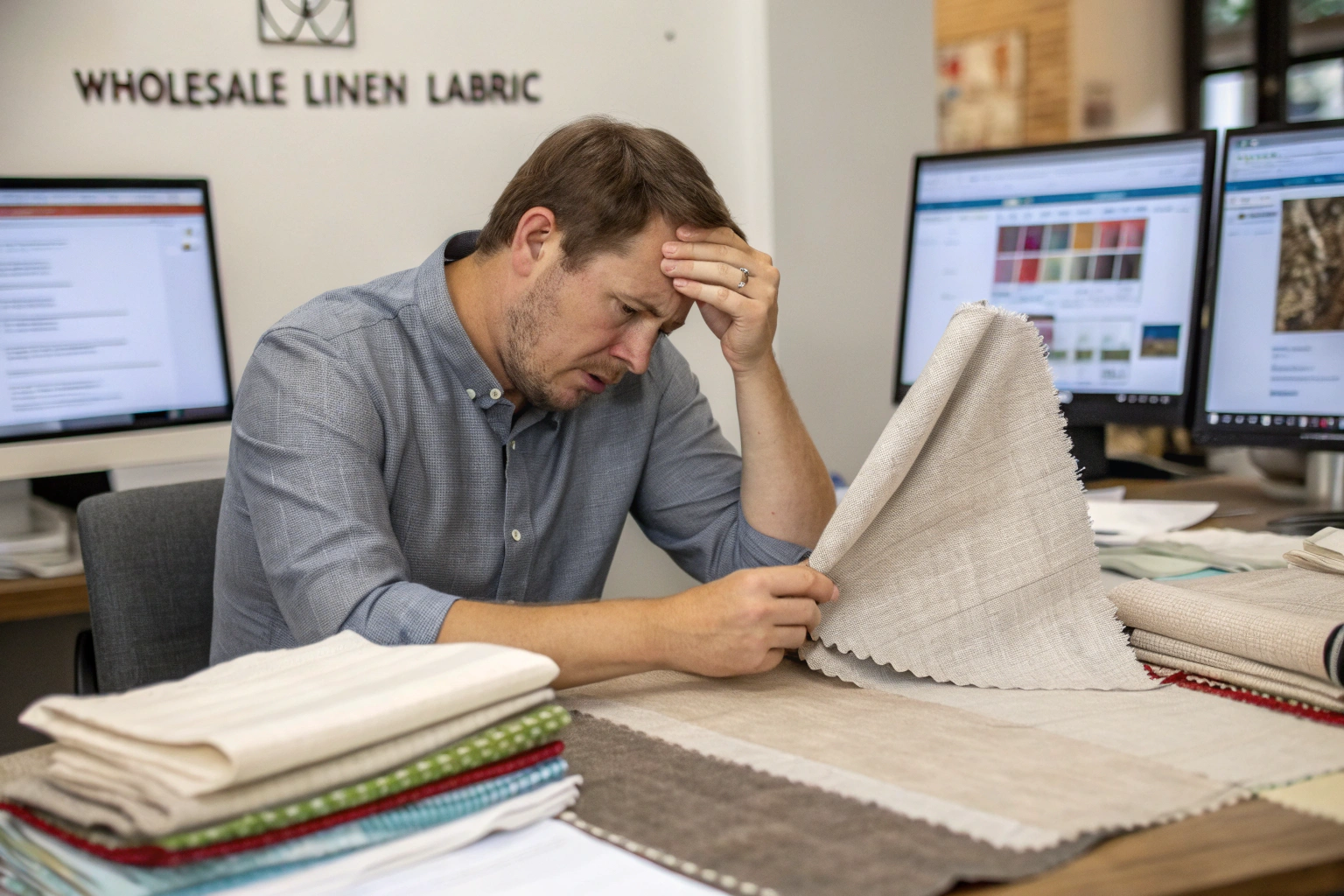
Finding a real premium cotton linen wholesaler feels like searching for a needle in a haystack that’s already on fire. You type "wholesale linen fabric" into Google, and you get flooded with dropshippers selling cheap, scratchy dish-towel material at inflated prices, or slick looking B2B portals that are just digital middlemen who have never stepped foot in a dye house. The frustration comes later, when the lab dip isn’t right, the hand feel is sandpaper, and the bulk order arrives smelling of chemicals. You are a designer, a brand owner, an entrepreneur; you can’t afford a container of garbage that you can’t sell. You need the visual softness and the crisp drape that signals luxury, not the stiff boardiness of a cheap tablecloth.
The real source for premium cotton linen fabric isn’t a generic marketplace—it’s a direct pipeline into China’s specialized textile cluster in Keqiao, operated by manufacturers like us at Shanghai Fumao. Buying "premium" wholesale means you are not just purchasing a piece of cloth; you are contracting a vertical supply chain that starts with a long-staple fiber bale and ends with an AQL-inspected roll, wrapped in export-standard packaging. The difference between the market-stall linen and ours lies in the "micronaire" of the cotton and the "lea" number of the flax. We deal strictly with wet-spun long-line linen and high-count combed cotton, blending them not just by weight, but by a specific twist multiplier. When you buy from us, you buy direct access to our CNAS-certified testing lab that verifies the shrinkage is below 2% and the color fastness is Grade 4 before it hits your cutting table. That’s the difference between wholesale and real wholesale.
But how do you navigate this world without getting burned? How do you verify if that "direct from mill" seller is legit? This isn’t about finding a website; it’s about recognizing the physical infrastructure of quality and asking the right technical questions. I’m going to walk you through exactly what to demand, how to spot a trader pretending to be a factory, and the specific logistics of shipping these heavy natural fibers to your warehouse door.
How to Verify a "Direct From Mill" Premium Linen Supplier?
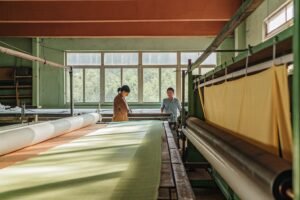
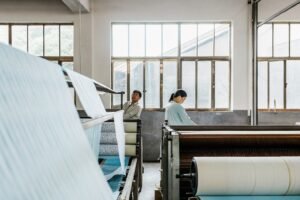
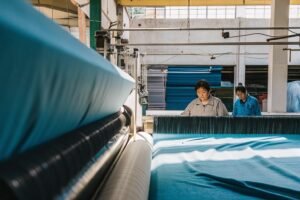
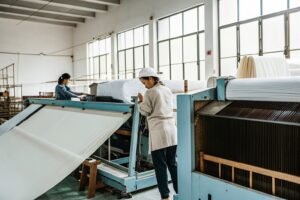
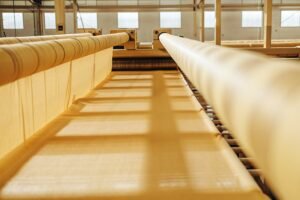
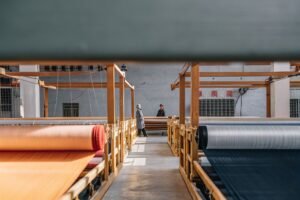
Anybody can rent a virtual office and call themselves a manufacturer. Verifying a linen supplier requires a hardware checklist, not a trust check. You need to look for the physical presence of specific machines. A genuine premium linen mill runs a wet-spinning line or owns specific Sanforizing compressive shrinkage equipment. You should ask to video call and walk the floor, not the showroom. When I talk to a new buyer, I take them directly into the weaving shed via video so they can hear the rapier looms running. If the seller makes an excuse about "proprietary secrets," they are hiding the fact that they are buying semi-finished greige from a market and reselling it with a markup.

What Questions Should You Ask About Flax Sourcing and Spinning?
Don’t ask "Is it good linen?" Ask about the "scutching" and "hackling" process. True premium flax comes from specific regions—Normandy, Belgium, or the silt-soil regions of Northern China. You should ask for the fiber analysis certificate. I encourage buyers to ask me: "What was the retting method for this batch?" Field retting (dew retting) gives a beautiful silver-gray rustic look but has a higher risk of inconsistent fiber strength. Tank retting (water retting) under controlled anaerobic bacteria gives the cleanest, finest spinnable flax for high-count fabrics. If a supplier can’t tell you if the flax was pulled by machine or hand-pulled, they didn’t source it. We buy specific lots of scutched flax where the wooden core is fully removed. Cheap linen often has "shives"—tiny splinters of the flax stalk—embedded in the yarn, which prickle the skin. We use a high-speed pin drafter during our preparation process specifically to eject shives. Ask your supplier to measure the "shive content" per square meter. Our internal standard is less than 0.05%. You can’t fake that metric.
How Do You Spot a Trading Agent Masquerading as a Manufacturer?
The dead giveaway is the sample room. A real manufacturer has a chaotic sample room, or a very efficient one built into the production flow. A trader has a neat, curated showroom with swatches cut from books. Ask them to send you a "loom state" swatch directly off the take-up roller, not a finished sample. A trader can’t get that because they don’t physically walk the weaving shed. Also, ask about the "weft insertion rate." I can tell you that our rapier looms run at 650 rpm for cotton-linen blends. Ask a potential vendor what their PPM (picks per minute) is. A blank stare is your signal to walk. (Here’s a pro tip: ask to see the "reed marks" or "start-up marks" on a batch. A mill has these occasional imperfections; a trader’s samples are always suspiciously perfect because they are hand-picked). This scrutiny is similar to the deep dives you see on industry platforms where brands share tips on how to verify a textile supplier is not a middleman through on-site audit photos.
What Are the Price-Determining Factors for Wholesale Cotton Blends?
Cotton pricing isn’t a mystery; it’s a futures market plus a process engineering cost. When you buy a cotton-linen blend from us, the price per meter is dictated by three levers: the staple length of the cotton (longer fibers mean fewer breaks and a softer feel, but cost 30% more), the linen blend ratio (linen is generally pricier than standard upland cotton), and the dyeing method. A yarn-dyed stripe will cost you significantly more than a piece-dyed solid because the yarn dyeing loss rate is higher and the warping process is longer. If you’re comparing quotes, make sure you’re matching the "yarn count" identically. A 40s yarn is fine, a 60s is premium, and an 80s is luxury. Mixing up the counts makes a quote look cheap, but the fabric will be heavier and coarser.

Why Does Yarn Count (Ne) Dictate the Final Fabric Luxury?
Count (Ne) is the length of yarn in hanks per pound. A higher Ne number means a finer, lighter yarn. A 40s cotton-linen is great for a structured jacket; it has rustic body. An 80s blend is a luxury shirt fabric—silky, drapey, and almost transparent. But weaving high-count yarn requires a massive drop in loom speed. When we weave an 80/1 linen blend, we have to slow the loom down from 650 rpm to 420 rpm. We also have to condition the warp with a special sizing agent (we use a PVA/starch blend) to protect those fine threads from abrasion against the reed. That adds cost. The spinning process also generates more waste. If a factory offers you an "80s linen blend" at the same price as a "40s linen blend," they are either lying about the count or they are using a "short-fiber" cotton that will pill instantly. To ensure you aren’t being scammed, you need to physically look at the fabric. For more information on fiber quality, it helps to read about understanding staple length and micronaire and how they determine cotton yarn quality.
How Does Piece Dyeing Compare to Yarn Dyeing in Linen Pricing?
This is a cash-flow question. Piece dyeing is taking the woven greige fabric and throwing it into a dye vat. It’s fast, cheap, and flexible. You can hold greige stock and dye it "just in time" for a trend. But piece-dyed linen has a "flat" uniformity. Yarn dyeing is the opposite: we dye the individual yarn bobbins before weaving. This locks in the color deep inside the twist, giving you a richer, three-dimensional look and a "washed back" effect. But it’s expensive. The dyeing loss rate for linen yarn is high because the fiber is stiff and breaks in the dye bath if not handled gently. You also need to buy the raw yarn in color batches upfront, which requires a bigger deposit and a longer lead time. For a recent UK brand launch, we ran a 100% linen yarn-dyed gingham. The raw material waste was 12% compared to just 3% for a piece-dyed solid. That waste is factored into the wholesale price. Yarn dyeing is for brand identity; piece dyeing is for market speed.
How Do You Navigate Logistics and Customs for Heavy Natural Fibers?
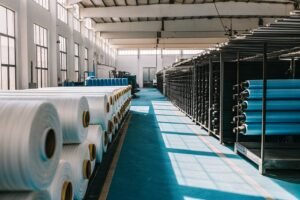
Shipping linen is like shipping lead ingots. These are heavy fabrics. If you aren’t careful, the freight cost eats all your margin. Linen has a high specific density, and when you roll it, you trap a lot of air. We use vacuum packaging machines to compress the rolls, often reducing the cubic volume by 20%. But you have to be careful; compressing a pure linen too hard can crack the fibers and leave a permanent crease mark if the fabric isn’t fully settled. For cotton-linen blends, we standardize the roll diameter at 45cm, with a maximum length of 120 meters per roll. This ensures one worker can handle the roll, and it fits perfectly on a standard pallet without overhang.

What Is the Best Freight Method for Small-to-Medium Fabric Orders?
For orders under 200 kilograms (maybe 10-15 rolls), putting them on a boat (LCL – Less Container Load) is slow and risky because the roll goods get crushed and shifted by heavier pallets. I always recommend air express couriers, but you have to use the right volumetric calculation. We use a "half-width" fold for air freight; instead of a full 150cm wide roll, we fold the fabric in half lengthwise before rolling. This converts a "volume weight" nightmare into a manageable cylinder. For a 50-kilo shipment of premium suit linen we sent to a tailor in Melbourne last month, using the half-width fold cut the air freight bill by 30% compared to shipping full-width rolls. For sea freight, we use a "shrink-wrap and cardboard core" reinforcement method to prevent the rolls from telescoping (sliding sideways) if the container hits rough seas. It’s all about preventing "chafing" on the fabric edges.
How Do Tariff Codes Affect the Total Landed Cost of Linen?
The Harmonized System (HS) code is the difference between paying a 3% duty and an 8% duty. Cotton and linen blends fall into tricky categories. If your fabric is 52% cotton and 48% linen, it might logically feel like linen, but customs law says the cotton content gives it the "essential character," so it ships under the cotton code (Chapter 52). This can attract a higher or lower tariff depending on your country’s trade policy. We pre-classify our top-selling blends and provide the binding ruling data to your broker. We deal with this daily, especially with the shifting de minimis rules for U.S. imports. We provide a "fabric weight per square meter" certificate specifically for customs, showing the precise grams per square meter (GSM) to validate the code. It’s dry paperwork, but it saves hundreds of dollars per shipment. Always confirm the exact breakpoint of the blend before you ship to avoid a re-classification penalty; you can read more about the rules by understanding how to classify woven fabrics of cotton and flax mixtures under U.S. customs tariff schedules.
What After-Sales Support Distinguishes a True Premium Wholesaler?
The transaction doesn’t close when the container door seals. True premium wholesalers offer "greige latitude" and "claims responsiveness." Natural fibers are unpredictable; a batch of "natural undyed" linen might vary in shade from lot to lot because the flax was harvested under different sun conditions. A lousy wholesaler says, "It’s a natural feature, deal with it." A premium partner like us predicts the variance and ships a "shade band card" with the specific roll sequence so your cutting table can plan around it. After-sales means technical consulting. If your sewing room in Portugal calls saying the needle is cutting the yarn on a seam, we don’t just apologize; we log in remotely and ask for a video of the needle point type and the sewing speed.

What Documentation Should Accompany a Wholesale Fabric Roll?
Every roll from our factory leaves with a "passport." This is a QR-coded hang tag that links to the digital lab report for that specific roll. This isn’t just a summary; it’s the raw data. It shows the actual tested weight (e.g., 187 GSM, not just "approx 190"), the shrinkage test result under the AATCC 135 protocol, the wet and dry crocking fastness rating, and the tear strength in Newtons. For a premium boutique brand, this is your legal safety net. If a customer sues you because a dye transferred onto their white leather sofa, you pull up the crocking test result showing a Grade 4.5 (excellent). Without this paper trail, you are liable for everything. We keep these records live on our cloud server for three years for every single roll. You can scan a roll you bought 18 months ago and see its original testing stats. This level of data transparency is what defines a digital traceability passport for circular textile logistics.
How Does the Claims Process Work for Fabric Defects?
Even a 98% pass rate means 2% can have an issue. The nightmare is a supplier who fights you on a claim. The professional standard is the "4-Point System" (ASTM D5430). If a roll has a continuous defect longer than 9 inches, or a hole, it’s 4 penalty points. If a roll accumulates more than 40 points per 100 yards, it is a "second." We allow a 3-day window upon receipt for you to unroll and inspect. If you find a major weaving defect—like a missing warp end "stitcher" line—you send us a photo with the defect circled and a ruler next to it showing the yardage. We credit your next order or re-roll it immediately. However, we never credit "cut table loss" (claims after cutting), because we can’t verify if the cutting master just placed the pattern incorrectly. That’s an industry standard. A good wholesaler replaces the roll; a bad one blames the sewing machine. You should know the basic arbitration rules, so checking out the standard textile claims resolution procedures based on the 4-point fabric inspection system before you order is smart.
Conclusion
Buying wholesale premium cotton linen isn’t about clicking "Add to Cart" on a generic B2B platform; it’s about forging a supply chain alliance with a manufacturer who knows the difference between field retting and tank retting, who owns the compressive shrinkage machine, and who will give you a 4-point inspection report without being asked. From verifying the loom floor via video call to decoding the HS tariff codes and securing your post-sales shade cards, you’re not just buying fabric—you’re buying the assurance that your brand won’t be let down by a split selvedge or a scratchy finish.
At Shanghai Fumao, that’s the only way we operate. We weave premium cotton and linen every single day, and we stand behind every meter of it. You don’t need to cross your fingers when you place a bulk order; you just need to call the right office.
If you’re ready to stock the kind of cotton-linen that moves off the rack at full retail price, let’s talk specs. Contact our Business Director, Elaine, to discuss your customized blend ratio, request a physical shade card for our open-stock luxury linens, and negotiate your wholesale tier pricing. Her email is elaine@fumaoclothing.com.