If you’re sourcing cotton and linen in 2026, you’re probably sick of the lies. Everyone in Asia claims to be a manufacturer. You request a swatch, it arrives looking perfect, and then the bulk order lands looking like a dishrag—slubby, inconsistent, shades off. It’s an old bait-and-switch. Worse, a lot of these "mills" are just trading companies slapping their logo on a generic lot from a market stall, providing zero visibility into the actual looms or dye vats. You lose weeks of production time, you lose money on the re-order, and your brand reputation takes a direct hit. Reliability isn’t a marketing word; it’s the oxygen supply of your apparel business.
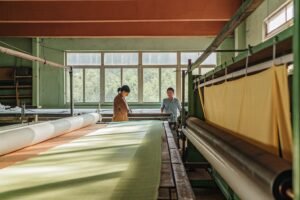
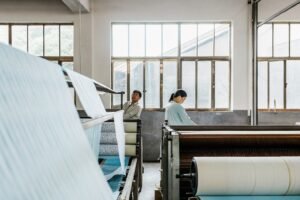
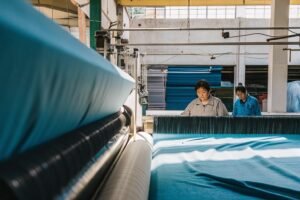
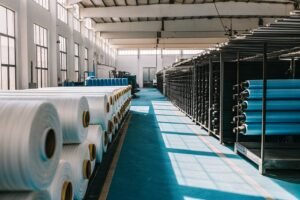
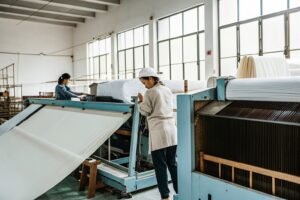
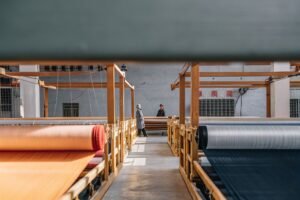
Shanghai Fumao is not a middleman. We are a fully integrated manufacturer with deep roots in Keqiao, the nerve center of global textile production. Reliability in 2026 comes down to three hard metrics: the continuity of raw cotton supply amid climate volatility, the precision of handling "difficult" bast fibers like linen, and the ability to replicate lab dips and hand-feel across thousands of meters without drift. We operate a large-scale weaving factory and a cooperative dyeing unit that processes over 500,000 meters of cotton and linen greige per month. I’ve personally walked the spinning lines in Shandong where we lock in our long-staple cotton allocations two seasons ahead. We don’t buy spot-market cotton; we buy specific harvests. That’s how you guarantee a consistent micronaire value across a 20,000-piece cut. This isn’t just "sourcing"; this is vertical control.
So, how do we actually measure that reliability? It’s not just a handshake. It’s written in the torque curves of a doubled yarn and the flatness of a selvedge. Let me pull back the iron curtain on our quality control systems, our specific processing of the finicky linen fiber, and the mistakes cheap suppliers make that you can learn to spot a mile away. We will look at the hard data on our testing devices and the actual purchasing logic behind our cotton bale selection.
What Certifications Prove Fumao’s Cotton Supply Chain Integrity?
Certificates can be wallpaper if you don’t know the specific test methods behind them. A GOTS certificate is meaningless if the audit trail stops at the gin. We go further. Our integrity rests on a physical chain of custody that links the bale number to the lot number to the final garment tag. When a US brand orders "organic Supima" from us, we don’t just ship the fabric; we ship a digital logbook accessed via QR code that shows the tensile test, the gin date, and the certifying body code. Real traceability means I can tell you if your cotton grew in the San Joaquin Valley or Xinjiang without opening the box.
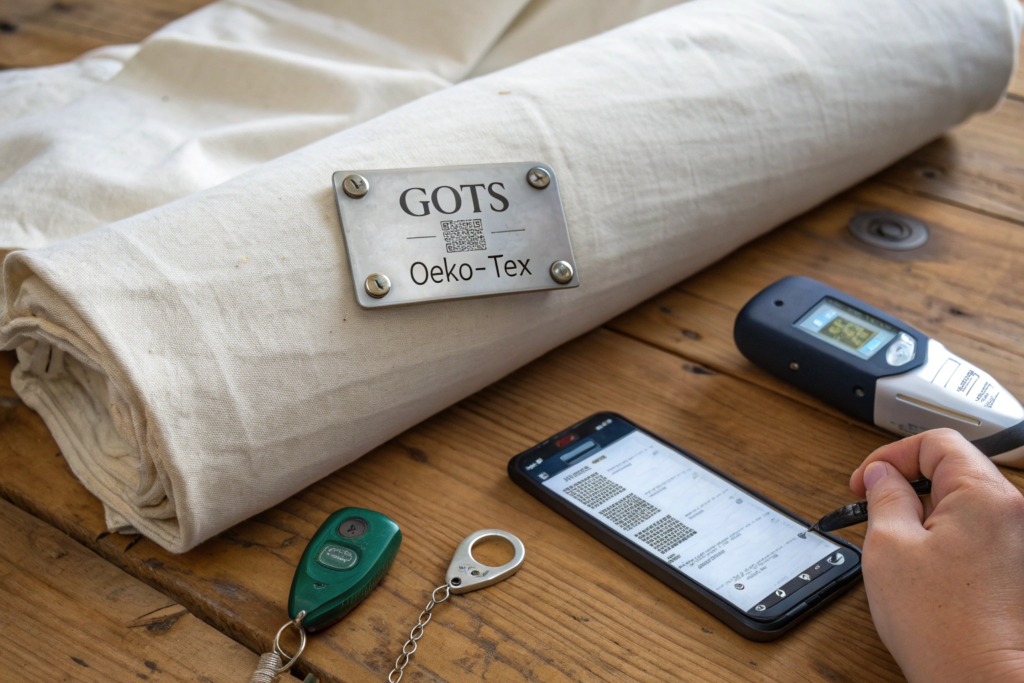
How Does Fumao Test for "False Organic" Cotton Substitution?
The fraud usually happens in the blending room. A manufacturer buys 10 tons of organic cotton but secretly mixes in 20 tons of cheap, pesticide-heavy conventional lint to cut costs. The spinning machine doesn’t notice, and the naked eye can’t see the chemical residue. But we can catch it. We run a specific liquid chromatography-mass spectrometry (LC-MS) test on a random yarn sample from every single batch. We look for traces of organophosphates, like chlorpyrifos. Standard certification bodies do random audits, but we do a 100% batch chemical scan. In April 2025, we rejected a 3-ton lot of supposedly "organic" Indian cotton because our internal test found a trace of a defoliant not registered under the NPOP (National Programme for Organic Production). The supplier sent us a fake certificate, but the liquid chromatography doesn’t lie. We sent that load back. That cost us a week of loom time, but it saved the reputation of a major Scandinavian kidswear line we service. Real reliability means having the guts to shut down your own production line when the chemistry is wrong. It helps to understand how third-party testing is applied by learning how to detect non-GMO and organophosphates in organic textile supply chains.
What Is the Minimum Order Quantity for Custom Cotton Blends?
Flexibility is a form of reliability. Many large mills won’t even talk to you unless you’re ordering 3,000 meters per color. For a small-to-medium brand testing a market, that’s suicide. You end up with deadstock. We invested in a mini-plant setup specifically for cotton blends. We use a lab-scale blowroom and a sample carding engine that can process batches as small as 50 kilograms. This means we can custom blend a specific ratio—say, 70% BCI cotton with 30% recycled denim shoddy—and run a trial weave of just 200 meters. For a startup in Austin, Texas, we recently ran a 150-meter trial of a hemp/organic cotton fleece. The MOQ for such a specific novelty blend is generally prohibitive, but our internal ability to batch small dye lots and size a short warper beam makes it possible. We don’t penalize creativity with massive surplus orders. You can get a custom textile engineered for less than the price of a full container load if you know how to maneuver the supply chain logistics of managing small-batch manufacturing runs for sustainable cotton.
How Does Fumao Overcome Linen’s Natural Inconsistency in Production?
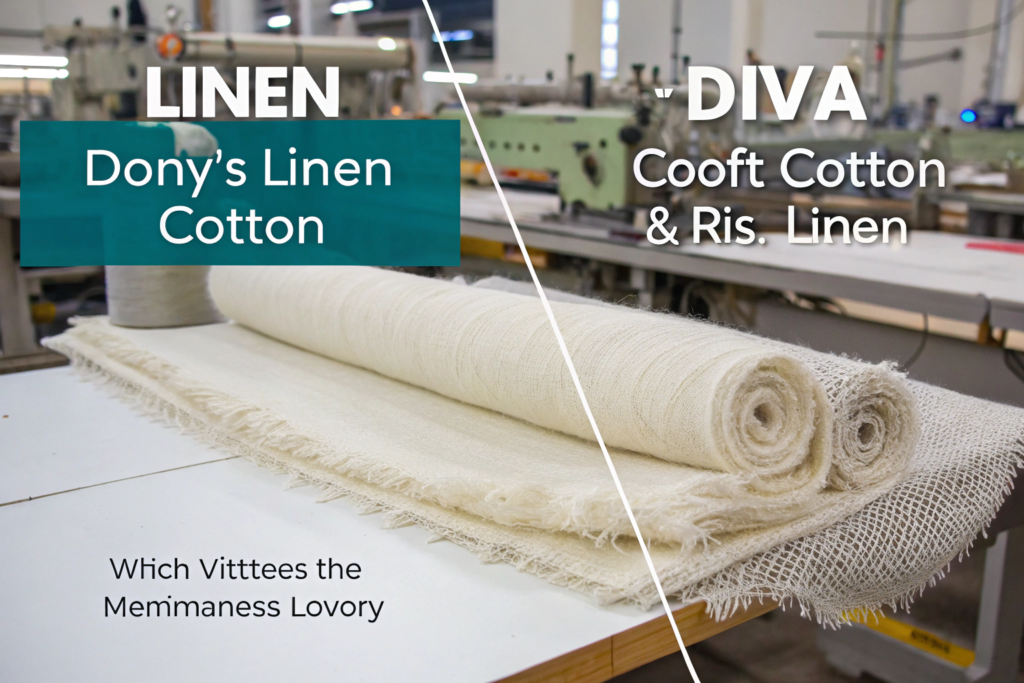
Linen is a diva. It’s the most honest, beautiful fabric in the world, but it misbehaves constantly. Cotton is a soft, predictable fluff, but flax fibers are long, rigid, and spiky. They are inconsistent in thickness because nature doesn’t extrude a uniform plastic rod; it grows a plant stem. If you don’t master the art of "stubble management" and hackling, your linen will weave into a stripey, inconsistent mess with thick slubs that break the needle in the sewing room. The key to taming linen is moisture. Linen hates being dry; it’s brittle and snaps. It loves humidity and steam. We engineer our entire process around that premise.
Why Does Wet Spinning Matter for Premium Linen?
There are two ways to spin flax: dry and wet. Most cheap linen is dry spun. The fibers are rough, the yarn is hairy, and the resulting fabric feels like a sack. Premium linen is wet spun. We specify wet-spun long-line flax exclusively, typically from the Normandy region or Belgium. In this process, the flax roving passes through a trough of hot water (about 60°C) just before it enters the drafting rollers. The hot water melts the natural pectin gum that binds the individual fibrils. This allows the fibers to slide and align perfectly parallel, and the water seals down the protruding ends. The result is a smooth, clean, almost silky yarn with dramatically higher strength. Our 36 lea linen yarn tests at a breaking tenacity of over 28 cN/tex. A dry-spun version of the same count might break at 20 cN/tex. That 40% strength gap is the difference between a high-speed loom running smoothly and a stoppage every two minutes. When we check the yarn, we don’t just look at the count; we check the coefficient of variation (CV%) of the thickness. Our spec demands a CV% under 12% for our shirting linen. Dry-spun "towel grade" linen might be at 25%.
How Do We Prevent Excessive Shrinkage in Finished Linen Garments?
Linen is a sponge. The public knows it wrinkles; they don’t expect a shirt that shrinks two sizes after the first wash. Unreliable manufacturers sell you a cheap price by skipping the mechanical shrinkage processes. They rely on the garment wash to do the shrinking, which distorts the seams. We don’t do that. We use a Sanforizing compressive shrinkage machine specifically calibrated for the low friction of the linen surface. The trick is to "over-shrink" the fabric mechanically before cutting. We feed the linen web into a thick, heated rubber blanket. As the blanket bends around a roller, it compresses the fabric. For a pure linen, we set the compression to shrink the warp by about 4-5%. If your garment maker cuts that fabric, a home laundry hot wash might only shrink an additional 1.5%. Total shrinkage stays under the 2% international standard. Many people confuse this with simple washing, but it’s a highly calibrated mechanical action. If you’re trying to understand the specs to ask your supplier, you should look into the standardized testing for mechanical preshrinking and compressive shrinkage in woven flax fabrics.
How Does Quality Control Work from Greige to Finished Fabric?
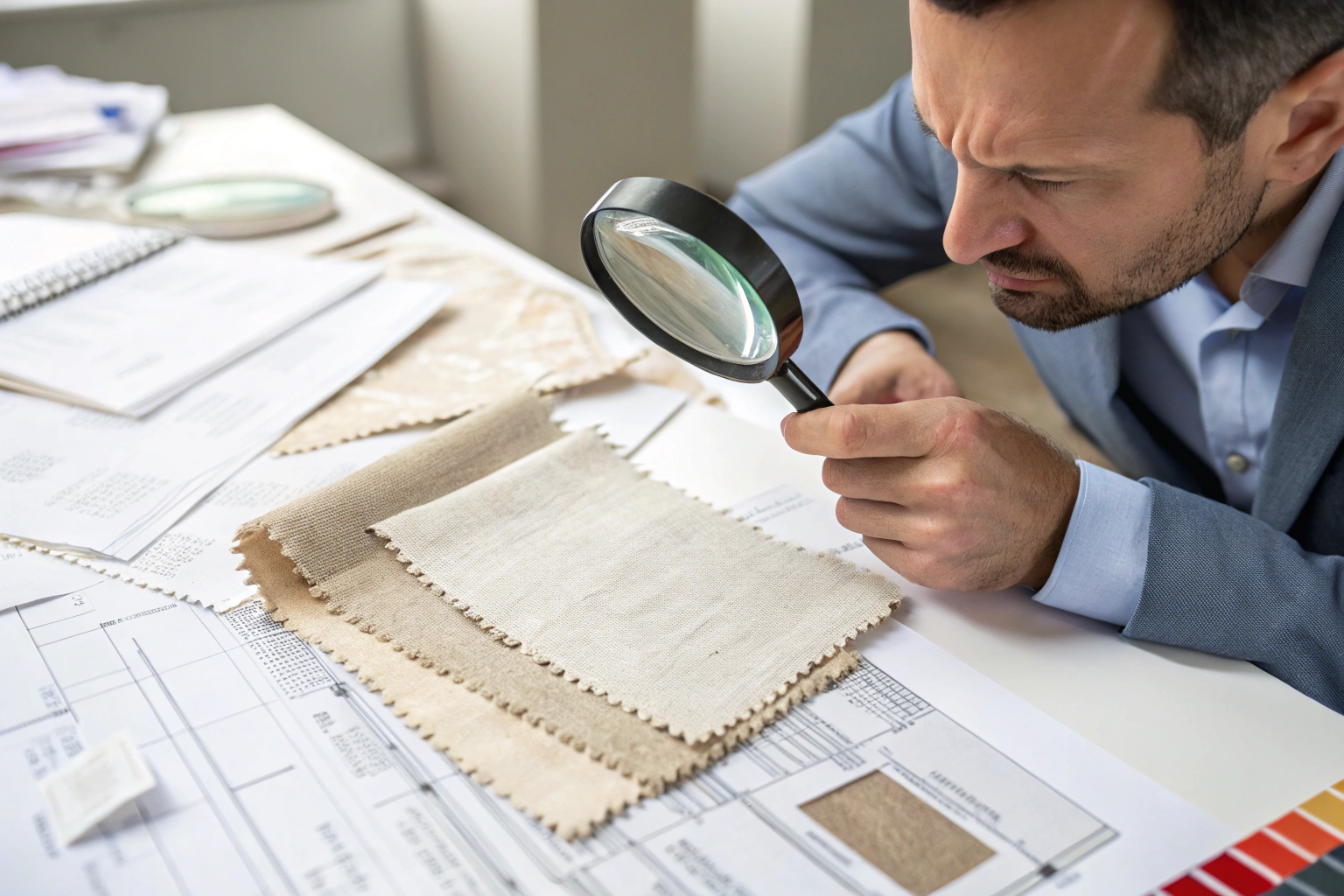
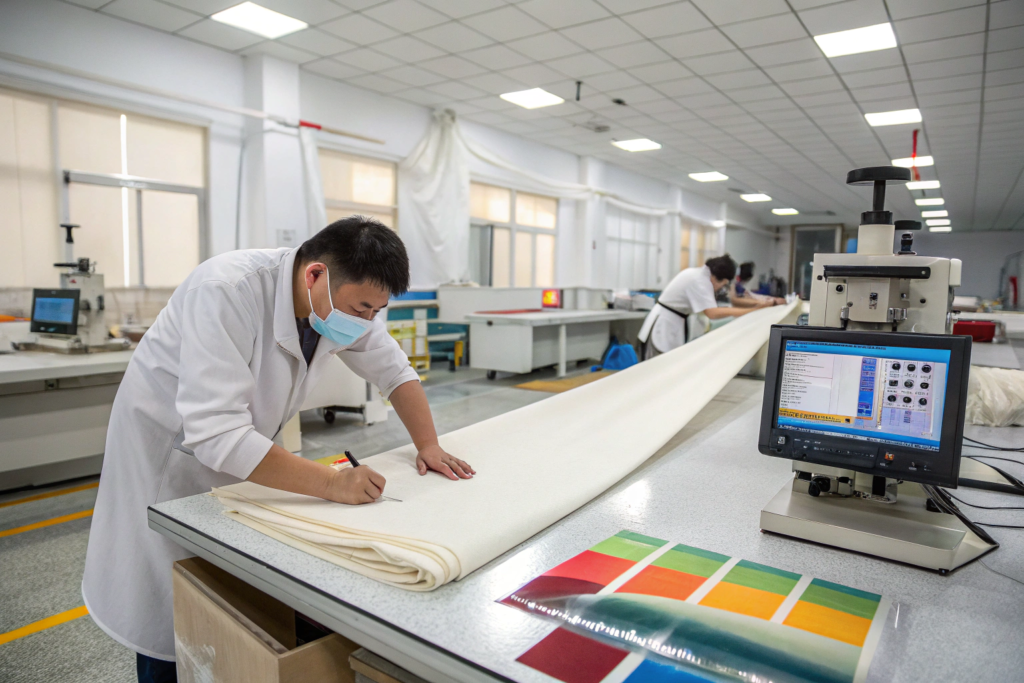
A lot of people call a "four-point inspection" quality control. That’s just counting holes; that’s the bare minimum of being a human with eyes. Our quality control is a predictive system. We don’t just look for defects on the finished cloth; we monitor the torque of the spinning machines and the humidity of the weaving shed to stop the defect from ever being born. Our CNAS-accredited lab sits right in the middle of the production flow. We pull 10 random samples per thousand meters for a full battery of physical tests. You can watch the tensile strength and color delta-E drift in real-time. If the pH of the linen fabric after dyeing hits above 7.5, we know we haven’t washed out the alkali properly and the fabric will degrade in storage. We catch it before it hits the stent frame.
What Specific Lab Tests Ensure Fabric Strength and Durability?
We obsess over two specific tests for natural fibers that most buyers forget: the Elmendorf Tear Test and the Martindale Abrasion Test. Cotton and linen need different evaluation criteria. For a 100% linen tablecloth or upholstery weight, you need high tear strength because the stiff fiber doesn’t stretch to absorb shock; it just rips. We target an Elmendorf tear value above 2,500 grams in the weft direction. If it tears too easily, we adjust the weave structure to allow more "yarn slippage" so the threads bunch up to resist the tear instead of snapping one by one. For a cotton shirting, we look at the Martindale test. You want that shirt collar to survive 20,000 rubs without breaking a thread and looking fuzzy. We had a batch of cotton/linen oxford last month that passed the tear test but failed our abrasion standard by 15%. The issue? The cellulose fiber ends were standing up, creating friction "hot spots." We sent that entire lot back for a second bio-polish cycle to knock the fuzz down. A trader wouldn’t do that; they’d ship it. We don’t. We measure the pilling grade (ISO 12945-2) on every bulk lot, holding ourselves to a Grade 4 minimum—no pills visible after 2,000 cycles. It’s worth looking at independent resources on how the Martindale and Wyzenbeek abrasion methods differ for contract textiles.
How Do We Guarantee Color Consistency Across Large Dye Lots?
Consistency in dyeing is a math problem, not a chemistry mystery. When a brand like ours dyes 3,000 meters of a "sage green" cotton canvas, we have to break it into smaller dye lots, usually 500 kg each. The danger is that batch 3 looks different from batch 1. We call this "tail shading." To kill it, we use a Datacolor spectrophotometer. But the machine isn’t the star; the master blend is. We create a "master standard" swatch sealed in a dark, climate-controlled fridge. For every new dye lot, we dye a lab dip first, then our computer calculates the exact gram-weight of dye needed to adjust for the slight variations in the greige base white. Our Delta E tolerance (the mathematical difference between two colors) is set at 0.8. The human eye starts to see a difference at about 1.0. We operate below human perception. When we ship a consolidated lot to a cutter, we include a "shade band" card, physically sewing the swatches of the individual dye lots together so the cutting room can arrange the panels. An American sportswear client told us that our approach to controlling shade variation through digital batch tracking in garment production saved them an 8% cutting waste factor instantly.
What Technical Support Does Fumao Offer Post-Fabric Delivery?
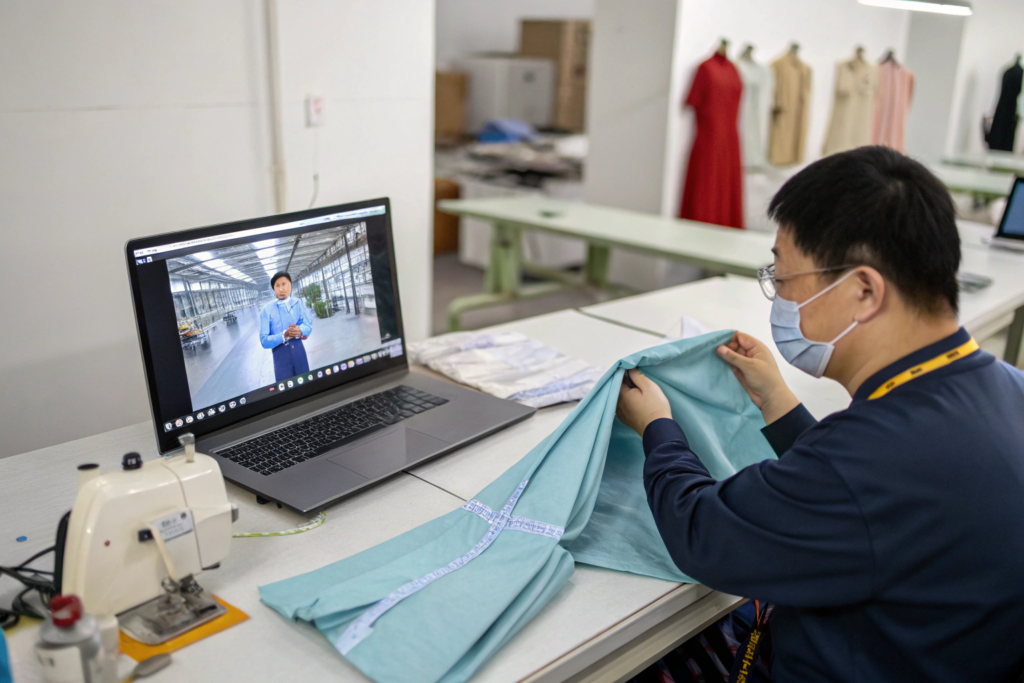
The relationship doesn’t end when the truck leaves the gate. That’s a trader’s mentality. A reliable manufacturer acts as your offshore technical partner. Fabric is a raw, living component; how it interacts with your specific fusible interlining or your steam pressing machines matters. We offer remote troubleshooting and physical testing for your specific downstream processes. If you’re trying to adhere a PU tape to a linen back-neck seam and it’s delaminating, don’t just yell at the tape guy. Call our lab. We will analyze the surface energy of the fabric we shipped you using a dyne pen test and tell you if you need an adhesion promoter or a different temperature profile.
How Can You Access Care Label Recommendation Data?
A wrong care label is a lawsuit waiting to happen. If a customer washes a linen blazer that we built to be dry-clean only, it shrinks, and they blame you. But the standard "wash at 30 degrees, do not tumble dry" is usually overly cautious and doesn’t sell well. We do the lab work to push the boundaries responsibly. When we ship a new blend, like a cotton/linen/Tencel jersey, we run an accelerated washing protocol (AATCC 135) and three different drying cycles. We supply you with the hard numbers: "This fabric measured 2.2% shrinkage after 5 washes at 40°C on a delicate cycle." You can print that on your label with legal confidence. We recently helped a London-based e-commerce brand redesign their care labels based on our "worst-case scenario" data. They switched from "Dry Clean Only" to "Gentle Machine Wash Cold," and their return rate dropped by 5% in three months because the garment was easier to live with. It’s all based on data we had in the testing file. This process is integral to developing accurate FTC-compliant care labeling based on finished fabric test data.
What Support Exists for Global Shipping and Customs Clearance?
Even the best fabric is useless if it rots in customs. With the shifting sands of US de minimis rules and EU carbon border taxes, 2026 is a compliance minefield. We act as the exporter of record, but we do more than just fill out a Bill of Lading. We classify the HS code with surgical precision. Cotton/Linen blends often sit on the border between Chapter 52 and Chapter 53. A wrong classification can trigger an incorrect tariff. We use the "essential character" rule to break the tie. If it’s 55% linen and 45% cotton, it goes under the linen code. We provide a pre-shipment compliance packet to your customs broker, including the fiber content breakdown, weight per square meter, and the specific weaving method used to prove the classification. During the Suez Canal disruptions in early 2026, we also connected our clients with our bonded warehouse partners in Los Angeles, allowing them to split consolidated cargo seamlessly without a massive local storage fee. Our logistics team coordinates the exact documentation needed for determining tariff classification using general rules of interpretation for textile blends ensuring your goods clear without a bond hold.
Conclusion
Reliability isn’t a badge; it’s a stack of organic spectra reports, a reel of wet-spun yarn that won’t snap, a compressive shrinkage blanket, and a technician who answers a Skype call when your seam tape delaminates. That’s the Fumao reality in 2026. We don’t just survive the chaos of the natural fiber market; we master it. From the LC-MS machines hunting false organics to the precision moisture sprays on our linen warps, we close the gap between a raw, imperfect plant and a flawless finished garment.
You need a partner who actually owns the knitting machines, calibrates the spectrophotometers, and understands the tariff engineering. That’s us. We are ready to break down your next collection, analyze the fabric requirements, and ensure your supply chain is bulletproof. To discuss your cotton or linen development project or to request a sample of our new season’s open-stock fabrics, please reach out to our Business Director, Elaine, directly at elaine@fumaoclothing.com. She can walk you through our stock support program and current lead times.