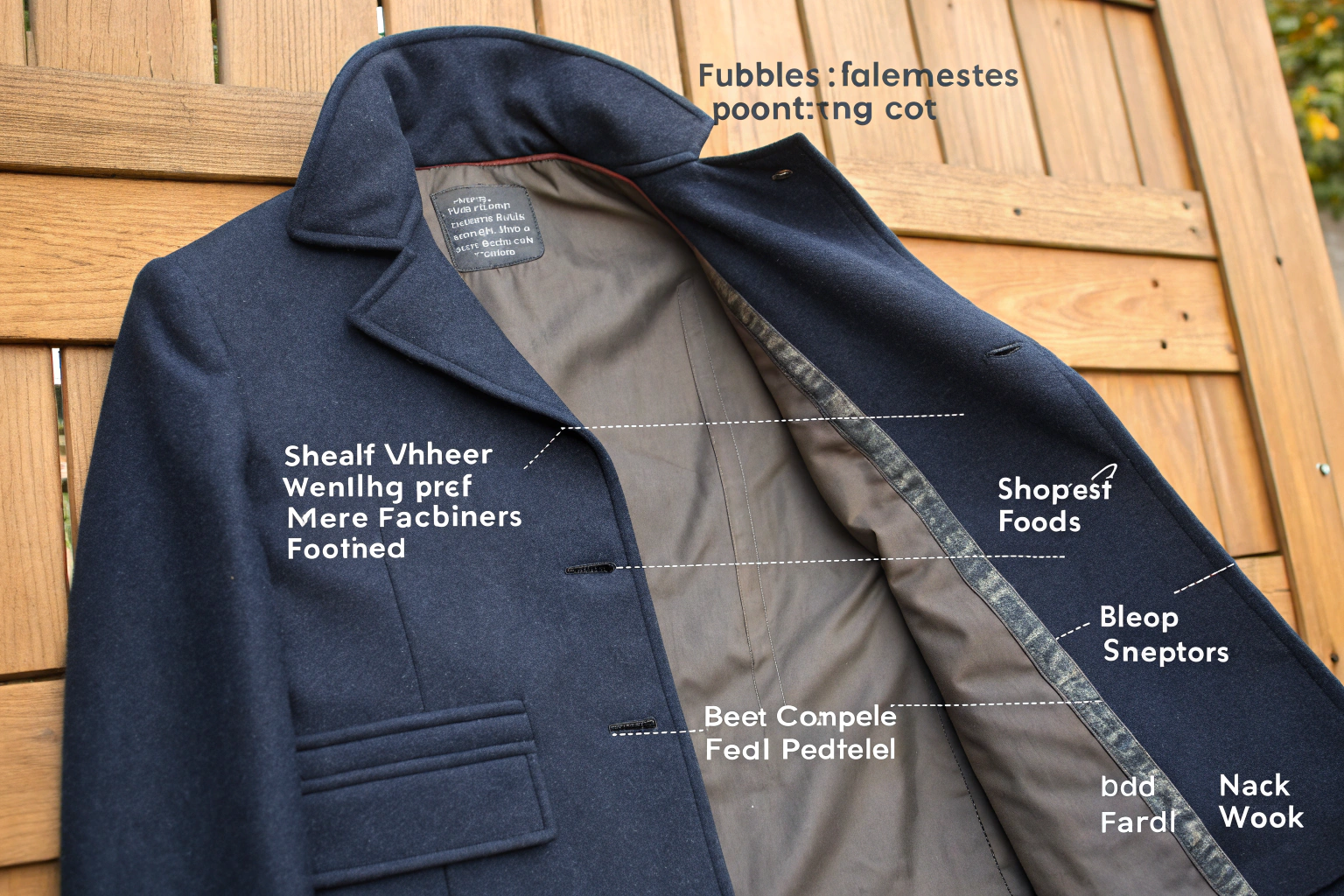
Last November, a mid-size outerwear brand from Montreal came to our Keqiao showroom with a problem I’ve seen a hundred times. They had designed a beautiful, oversized double-faced wool trench coat. The sample they made in their Montreal atelier looked incredible—sharp shoulders, a collar that stood up like armor, a hem that swung with authority. Then they sent the tech pack to their production factory in Bangladesh. The bulk production coats arrived looking like bathrobes. The shoulders slumped. The collar collapsed into a sad, floppy mess. The hem clung to the body instead of swinging. The factory had substituted the specified interlining for a cheaper, lighter version without telling anyone. The brand lost two wholesale accounts and had to sell the coats at a 40% markdown. The fabric shell was identical to the sample. But the invisible architecture underneath—the interlining, the canvas, the shoulder pad—was wrong, and the silhouette died.
Silhouette-supporting fabrics for tailored outerwear are not the face fabrics that the customer sees. They are the hidden, internal materials—fusible and sew-in interlinings, chest canvas, shoulder pads, sleeve heads, back stays, and pocketing—that create the garment’s structural architecture. The shell fabric provides the visual identity and the weather protection. The support fabrics provide the engineering. They determine whether a shoulder stands proud or slopes weakly, whether a collar rolls beautifully or flattens into a crease, whether a lapel springs back after being worn open or stays sad and lifeless against the chest. In a well-tailored coat, the support fabrics can account for 15-25% of the total bill of materials cost, but they account for about 80% of the garment’s perceived quality when a customer tries it on. You can put a $50 per meter Italian wool on a cheap fusible and it will look like a $150 coat. You can put a $15 per meter generic wool on a proper canvas and haircloth construction and it will look like a $500 coat.
At Shanghai Fumao, our Outerwear Support System program supplies the full package of structural fabrics to brands and manufacturers across a dozen countries. We source interlining, canvas, and shoulder components from specialist producers in Wenzhou, Ningbo, and beyond, and we consolidate them with our own shell fabrics into ready-to-cut kits. I’ve spent twenty years learning which support fabrics work for which silhouettes, and I’ve made every mistake at least once. This article is my guide to the materials that give a tailored coat its bones.
What Is the Difference Between Fusible Interlining and Sew-In Canvas?
I need to settle a debate that has been running in the apparel industry for about forty years. Fusible interlining is not inherently bad. Sew-in canvas is not inherently good. They are different tools for different jobs, and a smart outerwear developer knows when to use each one—and when to combine them. The absolutists on both sides of this debate have cost their brands money and quality.
A fusible interlining is a base textile—usually a woven, knit, or non-woven polyester or polyamide—coated on one side with a thermoplastic adhesive resin. When the interlining is placed against the shell fabric and subjected to heat and pressure in a fusing press, the resin melts, flows into the interstices of the shell fabric, and upon cooling, creates a mechanical and sometimes chemical bond. The result is a composite material: the shell and the interlining become one. Fusibles are fast, they’re consistent, they require relatively low operator skill, and they’re ideal for the large, flat panels of a coat where you want uniform stiffness and smoothness—the front panels, the side body, the lower collar stand. A sew-in canvas, also called a "floating canvas," is a woven textile—traditionally a blend of wool, goat hair, and cotton or viscose—that is cut to shape and hand- or machine-pad-stitched to the shell fabric along the edges and at strategic internal points. The canvas is not bonded to the shell across its entire surface. It floats between the shell and the lining, attached but independent. This floating construction allows the canvas to move slightly relative to the shell, creating a three-dimensional shape memory that a fused composite cannot match. The canvas molds to the wearer’s body over time. The lapel roll develops a permanent curve. The chest piece conforms to the chest wall. A sew-in canvas is a living structure. A fusible is an engineered solution.

When Should a Brand Choose a "Hybrid" Half-Canvas Construction?
A hybrid half-canvas construction is the sweet spot for the contemporary tailored outerwear market—coats and jackets that retail between $300 and $800. In this construction, the upper chest, lapels, and collar are built with a traditional sew-in canvas, while the lower front panels and the back are fused with a high-quality woven fusible. The customer feels the canvas where it matters most—in the lapel roll, the chest, the collar stand—and the brand saves cost and production time on the lower panels where the canvas would add little perceived value.
The cost difference between a full-canvas and a half-canvas construction on a wool coat is about $12-18 per unit in labor and materials. For a brand producing 5,000 coats per season, that’s $60,000-90,000 in savings. The perceived quality difference between half-canvas and full-canvas is, in my experience, almost zero for the typical consumer. What they notice is the lapel roll and the chest feel—and both of those are canvas in a half-canvas garment. I worked with a Scandinavian brand in 2023 that was considering a full-canvas upgrade for their mid-tier wool coat. I recommended they test half-canvas instead. They ran a blind consumer study with 200 participants. The half-canvas coat was rated equal to the full-canvas on "perceived quality" and slightly higher on "comfort" because it was lighter. They adopted half-canvas across the line and improved their gross margin by 6 points. For a deeper dive into these construction economics, this tailored garment manufacturing guide on half-canvas versus full-canvas cost and quality trade-offs provides a detailed bill-of-materials comparison that will help you make the case to your finance team.
How Do You Prevent "Strike-Back" and Bubbling in a Fused Wool Coat?
Strike-back and bubbling are the two ways a fused wool coat announces to the world that it was cheaply made. Strike-back happens when the adhesive resin penetrates too deeply through the shell fabric and becomes visible on the face side—usually as a shiny, slightly darker patch or a grid pattern that matches the interlining’s weave. Bubbling happens when the bond between the shell and the interlining fails in small, localized areas, creating raised blisters on the fabric surface. Both defects are catastrophic. They’re irreversible once the garment is finished, and they’re the most common reason wholesale buyers reject a fused coat shipment.
Preventing strike-back requires precise control of three fusing parameters: temperature, pressure, and dwell time. For a medium-weight wool coating—say, a 400 GSM wool-polyester blend—the ideal fusing conditions on a continuous flatbed press are 130-135°C, 2.5-3.0 bar of pressure, and 12-15 seconds of dwell time. If the temperature exceeds 140°C, the adhesive’s viscosity drops too low, and it flows too freely into the wool fibers. If the pressure exceeds 3.5 bar, the mechanical force pushes the molten adhesive through the fabric thickness. Strike-back is almost always a sign that the factory was running the fusing press too hot or too fast. Bubbling has different causes. The most common is moisture—either the shell fabric or the interlining absorbed humidity before fusing, and the steam generated during heating created pockets of pressure that pushed the layers apart. Good factories condition their fabrics at 20°C and 65% relative humidity for 24 hours before fusing, and they pre-shrink both the shell and the interlining with a steam treatment. The second cause of bubbling is adhesive incompatibility. Not all fusible resins bond well to all wool finishes. A wool with a heavy fluorocarbon water-repellent finish may need a fusible with a higher-tack adhesive—typically a polyamide rather than a polyester resin. At Shanghai Fumao, we test every new shell-interlining combination with a wash-and-dry cycle before approving it for production. If it bubbles after three commercial dry clean cycles, we find a different interlining. For technical specifications, this textile bonding resource on solving fusing defects in wool tailoring provides a troubleshooting matrix that covers strike-back, bubbling, strike-through, and delamination with corrective actions.
What Are the Essential "Hidden" Fabrics Inside a Tailored Coat?
When a customer tries on a tailored coat and says, "This feels amazing," they’re not feeling the wool. They’re feeling the five or six layers of hidden fabric that are sandwiched between the wool shell and the viscose lining. These internal components are the coat’s skeleton, its muscles, and its connective tissue. A coat without them is just a wool blanket with sleeves. A coat with the right internal construction is armor. The essential hidden fabrics in a tailored coat are chest canvas, shoulder pads, sleeve heads, back stays, pocketing, and lining. Each has a specific engineering function, and cheaping out on any one of them degrades the silhouette.
The chest canvas shapes the entire upper front of the coat. It gives the chest its convex, three-dimensional curve and provides the foundation for the lapel roll. A quality chest canvas is not a single piece of fabric. It’s a composite of three to five layers, each shaped and pad-stitched together, with the layers cut on different grain angles to create controlled tension. The traditional fiber is goat hair, which has natural resilience and spring-back. Goat hair canvas recovers its shape after being crushed, which is why a well-made coat looks fresh after being packed in a suitcase. The shoulder pad sets the pitch and angle of the shoulder line. It’s typically a molded shape of cotton wadding, foam, or needle-punched polyester, covered with a woven cotton or linen shell. The thickness and shape of the pad determine whether the shoulder reads as "natural," "roped," or "pagoda." The sleeve head is a small strip of felt, canvas, or wadding inserted into the sleeve cap seam, helping the sleeve cap stand up smoothly without collapsing into ripples. The back stay is a piece of tightly woven linen or cotton fused to the inside of the back panel, limiting the stretch of the wool shell and preventing the back from bagging out with wear. The pocketing is a durable cotton or poly-cotton twill that holds the weight of a phone, keys, and wallet without tearing. And the lining—typically cupro, viscose, or acetate—provides a smooth, low-friction surface that lets the coat slide over whatever the customer is wearing underneath.

Why Does Goat Hair Canvas Outperform Synthetic Alternatives for Chest Pieces?
Goat hair canvas is one of those rare materials where the traditional, more expensive option is objectively, measurably better than the modern synthetic alternatives. The performance difference comes down to three properties: resilience, hygroscopicity, and moldability. Resilience is the material’s ability to recover its original shape after being deformed. Goat hair has a natural crimp structure—microscopic waves along the fiber length—that acts like tiny springs. When you crush a goat hair canvas, those springs compress. When you release it, they spring back. A synthetic polyester canvas, even a texturized one, has a lower resilience because polyester fibers are smooth rods without the natural crimp. The synthetic canvas will eventually develop permanent creases and lose its shape memory.
Hygroscopicity—the ability to absorb and release moisture—sounds irrelevant for a chest piece, but it’s critical for comfort. Goat hair absorbs up to 30% of its weight in moisture without feeling damp. When a customer wears a coat and their body heat builds up, the goat hair canvas absorbs the perspiration vapor and releases it slowly to the outside environment. A polyester canvas absorbs virtually zero moisture, trapping heat and humidity against the chest. The customer feels clammy. They can’t articulate why the coat feels less comfortable, but the data is clear. The third advantage, moldability, is what makes a tailored coat conform to an individual body. During the tailoring process, the canvas can be stretched and shrunk with an iron to create a three-dimensional shape that matches the wearer’s posture. Goat hair responds beautifully to this manipulation. Polyester canvas resists it. For brands targeting the premium and luxury segment, a genuine goat hair canvas chest piece is a specification worth investing in. The material cost difference is about $2-3 per unit. The perceived quality difference, in a blind wear test, is unmistakable. For a technical specification guide, this tailoring supply resource on wool and goat hair canvas grades for tailored outerwear provides GSM, blend ratios, and recommended applications for different coat weights.
How Do You Spec the Correct Sleeve Head for a "Rolled" vs. a "Roped" Shoulder?
The sleeve head is a detail that most consumers have never heard of, but every tailor obsesses over it. It’s a strip of material—typically felt, wool wadding, or a layered cotton—that is inserted into the seam allowance of the sleeve cap, between the sleeve and the shoulder. Its job is to fill the hollow space where the sleeve meets the shoulder, creating a smooth, rounded transition rather than a sharp, collapsed angle. The thickness, width, and material of the sleeve head change the shoulder expression entirely.
A "roped" shoulder—the kind you see on British military tailoring or a Tom Ford suit—uses a thick, dense sleeve head, often 6-8mm in thickness and made of firm wool felt or multiple layers of cotton flannel. This pushes the sleeve cap up and outward, creating a defined, raised ridge along the shoulder seam. The roped shoulder reads as formal, authoritative, and structured. A "rolled" shoulder—the kind you see on Neapolitan tailoring or soft, unstructured coats—uses a thin, soft sleeve head, often 2-3mm of lightweight cotton wadding or even just a single layer of bias-cut canvas. This allows the sleeve cap to fall naturally, following the curve of the deltoid muscle without any visible ridge. The rolled shoulder reads as relaxed, casual, and comfortable. The spec for a roped sleeve head might read: "100% wool felt, 7mm thickness, 25mm width, cut on straight grain, inserted with 6mm ease into sleeve cap." The spec for a rolled sleeve head might read: "Cotton wadding, 2.5mm thickness, 20mm width, cut on bias, inserted with 3mm ease." At Shanghai Fumao, we stock five standard sleeve head types and can source custom profiles for brands with specific shoulder expressions. For a visual guide to these options, this tailoring resource on sleeve head specifications and shoulder expressions includes cross-sectional diagrams showing how different sleeve head constructions affect the shoulder silhouette.
Which Specialty Weaves Provide Natural Structure Without Added Weight?
The pursuit of lighter-weight tailored outerwear has been one of the defining trends of the last five years, and the pandemic accelerated it. Customers still want a coat that looks structured and sharp, but they’re no longer willing to carry five pounds of fabric on their shoulders. The challenge for outerwear developers is maintaining silhouette support while reducing fabric weight, and the solution is often found not in the interlining or the canvas, but in the weave structure of the shell fabric itself. Certain weave constructions provide inherent stiffness, body, and spring without requiring heavyweight yarns.
The three specialty weaves that I spec most frequently for lightweight structured outerwear are double cloth, Panama weave, and jacquard-wave structures. Double cloth is two separate layers of fabric woven simultaneously on a special loom, connected at regular intervals by binder yarns. The two layers create an internal air pocket that provides insulation and structural thickness without a corresponding increase in weight. A well-constructed double cloth can have the body and drape of a 400 GSM fabric while actually weighing only 280 GSM. Panama weave is a plain-weave variant using multiple yarns woven as one in both warp and weft, creating a wide, flat rib that resists bending. The structure is simple—it’s literally a basket weave—but it produces a fabric with surprising rigidity and a clean, modern surface. Panama weaves are especially effective for unlined or partially-lined coats because the weave structure itself holds the garment’s shape. Jacquard-wave structures use a Jacquard loom head to create raised, undulating patterns that act like corrugation—the three-dimensional surface geometry increases the fabric’s bending stiffness in specific directions without adding yarn weight. Think of it like corrugated cardboard versus flat paper. The material is the same, but the shape makes it stronger.

How Does a "Double Cloth" Construction Eliminate the Need for Heavy Interlining?
Double cloth eliminates the need for a separate interlining by building the structure directly into the shell fabric. In a conventional wool coating construction, you have the wool shell (350-450 GSM) and a fusible interlining (60-80 GSM). Together, they provide the weight, drape, and opacity required for a tailored coat. In a double cloth construction, the two woven layers together might weigh 280-320 GSM, but because they’re joined by internal binder yarns and separated by a thin air gap, they provide the same structural body and opacity as the heavier shell-plus-interlining combination. The weight saving is 80-150 GSM, which on a full-length coat translates to roughly 200-350 grams less total weight.
The key to specifying double cloth for outerwear is the binder yarn density and the layer composition. For a tailored wool coat face with a soft, brushed interior that eliminates the need for a separate lining, a typical construction might be: face layer: 21-micron merino wool, 2/60 Nm yarn, plain weave at 36 ends/cm, back layer: 1.5-denier modal, 1/40 Nm yarn, plain weave at 28 ends/cm, binder yarns: 30-denier polyester monofilament at 5 binders/cm. The wool face provides the visual hand and weather resistance. The modal back provides a soft, comfortable interior against the body or over a shirt. The polyester binder yarns are invisible from both sides and provide the structural connection between layers. The fabric is completely reversible in practical terms, though the wool side is the design face. A European brand we supply uses a double cloth construction for their bestselling "unstructured tailored coat"—a garment with no interlining, no canvas, and no shoulder pads, that nevertheless holds a sharp silhouette because the fabric itself provides the architecture. The coat weighs 1.1 kg, compared to 1.6 kg for a conventionally constructed equivalent, and the brand markets it as a "travel coat" that can be folded into a carry-on. For a deeper dive into this construction, this textile engineering guide on specifying double cloth for self-lined tailored outerwear provides weave diagrams and performance data.
Why Is a "Panama Weave" Suddenly Popular for Unlined Transitional Coats?
Panama weave has exploded in popularity for unlined transitional outerwear because it solves a specific problem: how do you make a coat that is unlined but not shapeless? An unlined coat has no internal structure—no interlining, no back stay, no lining. The shell fabric is the whole garment. If the shell is a standard plain-weave wool or cotton, the coat will drape like a shirt. It will follow every curve of the body, and not in a flattering way. It will wrinkle deeply at the elbows and collapse into a heap when taken off. The Panama weave, with its wide, flat ribs created by weaving multiple yarns as one, provides enough inherent bending stiffness to hold a silhouette without any internal support.
The optimal Panama construction for an unlined coat is a 2/2 basket weave using a 2/30 Nm worsted wool in both warp and weft, at a density of about 22-24 ends/cm. This gives a fabric weight of roughly 220-260 GSM, which is light enough for a spring or autumn coat but with enough body to hold a collar shape and a shoulder line. The wide ribs create a subtle, masculine surface texture that photographs well and hides light creasing. The open basket structure also provides natural ventilation, making the coat comfortable across a wider temperature range. A New York-based contemporary brand launched an unlined Panama-weave wool coat in their spring 2025 collection. The coat had no interlining, no canvas, no shoulder pads, no lining. It hung on the rack like a conventional tailored coat. The brand sold through 85% of the buy within six weeks, and the coat was their highest-margin product of the season because the simplified construction reduced their CMT cost by 30%. The Panama weave did the structural work that internal components would normally do. For more on this weave, this textile guide on Panama and basket-weave fabrics for lightweight outerwear provides construction details and sourcing notes for mills that specialize in these structures.
How Do You Match Support Fabrics to the Weight of Your Shell Fabric?
The most common mistake in outerwear development—and I see it from brands of all sizes—is a mismatch between the weight of the shell fabric and the weight of the support materials. A heavy, 500 GSM wool melton paired with a lightweight, 40 GSM fusible will overwhelm the interlining. The wool will move independently of the fused layer, causing delamination and a shapeless, baggy silhouette. Conversely, a lightweight, 180 GSM tropical wool paired with a heavy, 120 GSM chest canvas will turn the coat into cardboard. The canvas will dictate the drape, and the wool will just be along for the ride, puckering and wrinkling around the stiff internal structure.
The principle is simple: the support materials should be proportional to the shell. My rule of thumb, developed over two decades of trial and error, is that the combined weight of the fusible or canvas plus the shoulder pad should equal approximately 30-40% of the shell fabric’s GSM. For a heavy 500 GSM wool coating, that means a support system totaling 150-200 GSM. This could be a 100 GSM woven fusible plus a 60 GSM shoulder pad, or a 160 GSM chest canvas with a 40 GSM lightweight pad. For a midweight 300 GSM wool, the support system should total 90-120 GSM—perhaps a 60 GSM fusible and a 30 GSM pad. For a lightweight 200 GSM tropical wool, the support system should be 60-80 GSM—a 40 GSM lightweight fusible or a very light floating canvas with no pad at all, or a 20 GSM self-fabric shoulder reinforcement.

What Is the "GSM Ratio" Rule for Balancing Canvas and Shell Weight?
The GSM ratio rule is a more refined version of the proportional support principle. I developed it after measuring the support-to-shell weight ratios of about fifty commercial tailored coats, from high-street brands to Savile Row. The ratio is simply the GSM of the chest canvas (or chest area fusible, for fused coats) divided by the GSM of the shell fabric. For full-canvas tailored coats in the luxury segment, the ratio consistently falls between 0.35 and 0.45. A 450 GSM wool coating typically has a 160-180 GSM canvas. A 350 GSM coating has a 120-140 GSM canvas. For fused coats in the mid-market, the ratio is lower: 0.20 to 0.30. A 400 GSM wool has an 80-100 GSM fusible. A 300 GSM wool has a 60-70 GSM fusible. Below 0.20, the support is insufficient, and the coat loses its tailored structure. Above 0.50, the support dominates the shell, and the coat feels stiff and board-like.
In practical terms, if your mill sends you a beautiful 380 GSM wool coating, and you’re building a half-canvas coat, your chest canvas should be approximately 130-150 GSM, and your fusible for the lower panels should be about 60-70 GSM. If your canvas supplier offers you an 80 GSM canvas because it’s cheaper, the ratio drops to 0.21, and your coat will underperform. The numbers are not theoretical. They’re empirical. I’ve tested this ratio across wool, wool-cashmere, wool-alpaca, and wool-polyester blends, and it holds remarkably consistently. For a data-driven validation, this tailoring research paper on the relationship between shell fabric and interlining mass in tailored garment performance provides mechanical testing results that support the 0.35-0.45 ratio for full-canvas work.
How Do You Test the "Spring-Back" of a Fused Fabric Panel Before Cutting?
Spring-back is the ability of a fused fabric panel to recover its flat shape after being crushed or folded. It’s the physical property that makes a lapel roll back into position and a front panel hang smooth rather than puckered. Testing spring-back before cutting is a simple, five-minute bench test that any QC inspector can perform, and it will catch fusion problems before they become garments.
The test is called the "Crush Recovery Test," and here is how I teach it. Cut a 20cm x 20cm sample of the fused panel. The fusing should be fully cured—at least 24 hours after pressing, because the adhesive continues to cross-link as it cools and ages. Fold the sample in half, face side in, and place a 1 kg weight on it for 60 seconds. Remove the weight, unfold the sample, and lay it flat on a table. Measure the angle of the fold crease immediately, after 30 seconds, and after 5 minutes. A properly fused wool panel should show a crease angle of less than 15 degrees immediately after removing the weight, and the crease should be completely gone—flat to the table—within 5 minutes. If the crease is still visible after 5 minutes, the interlining is too stiff, the adhesive is too heavy, or the fusing temperature was too low for proper bonding. Any of these problems will produce a coat that looks tired after a few hours of wear. At Shanghai Fumao, we run the Crush Recovery Test on every new shell-interlining combination before approving it for bulk production, and we archive the samples. When a brand tells us their production coats don’t have the same spring-back as their samples, the first thing we check is whether the factory used the specified interlining. About 70% of the time, they substituted a cheaper alternative. The test doesn’t lie. For a standardized test method you can share with your factory, this garment QC resource on crush recovery testing for fused tailored panels provides a detailed protocol with acceptance criteria based on fabric weight categories.
Conclusion
The key silhouette-supporting fabrics for tailored outerwear are not the ones the customer admires in the mirror. They are the ones the customer never sees: the chest canvas, the fusible interlining, the shoulder pad, the sleeve head, and the back stay. These hidden materials determine whether a coat looks like a $500 investment or a $50 compromise. Get them right—match the canvas to the shell, choose the appropriate fusing conditions, spec the correct sleeve head for your shoulder expression—and the coat will perform for years. Get them wrong, and no amount of expensive Italian wool will save the silhouette.
The outerwear brands that I see succeeding in this market are the ones that treat support fabrics as a core design specification, not an afterthought. They write interlining and canvas specs into their tech packs with the same detail they use for the shell fabric. They test fusing compatibility before approving bulk. They audit their factories’ interlining inventories to make sure the specified materials are actually being used. And they partner with suppliers like Shanghai Fumao who can provide the complete outerwear support package—shell fabric, interlining, canvas, shoulder components—as a tested, compatible system, not a collection of unrelated parts.
If you’re developing a tailored outerwear collection and you want to make sure your coats stand up the way your samples do, reach out to Elaine, our Business Director, at elaine@fumaoclothing.com. Tell her what silhouettes you’re working on and what shell fabrics you’re considering. She can send you our Outerwear Support System sample kit—a set of interlinings, canvases, and shoulder components matched to different coat weights—and help you spec the internal architecture of your collection. The customer won’t know why your coat feels better. They’ll just know it does.