I used to dread my phone buzzing after 9 PM. That late-night call or email usually meant one thing: a client’s container was stuck somewhere it shouldn’t be. Maybe it was a customs exam at Long Beach that nobody expected. Maybe the forwarder added a surprise "chassis split fee" because the container landed at the wrong rail ramp. Maybe the client just got a $900 invoice for demurrage charges that started accruing before anyone told them the container was ready for pickup. Every single one of those calls meant my client was experiencing the opposite of what they paid for—they had bought fabric, but they were receiving stress. Around 2020, after one too many of these conversations, I looked at my team and said, "We have to stop selling freight and start selling certainty."
That shift is what led us to make DDP—Delivered Duty Paid—not just a shipping option we offer, but the core of our export service. DDP from Shanghai Fumao is a promise. You get a single landed cost for your anti-static lining, your recycled suiting, or your custom jacquard fabric. That price includes everything: the fabric, the ocean freight, the insurance, the US customs duties and Section 301 tariffs, the Merchandise Processing Fee, the customs bond, the broker’s fee, the terminal handling, the trucking to your door, and every surcharge that would normally appear as a nasty surprise on a separate invoice three weeks after delivery. When we say "this is the price," we mean it. If a port gets congested and demurrage kicks in, we pay it. If CBP decides to examine the container and the exam fee lands on the entry, we pay it. If the carrier slaps a peak season surcharge on the sailing two days after you confirm the order, we absorb it. You pay what we quoted, and you receive the fabric at your door. Period.
This isn’t just about money—it’s about mental bandwidth. The true cost of FOB sourcing isn’t the fabric price plus the freight estimate. It’s the hours you spend coordinating between the supplier, the forwarder, the customs broker, and the trucker. It’s the moment you realize you’ve been copied on an email thread about a terminal appointment system outage and you don’t know what it means but you know it’s going to cost you. Our DDP clients don’t have those moments. They place the order, they receive the proforma invoice with one number on it, and they go back to designing and selling garments. The logistics headache stays on our side of the ocean, where we’ve spent 20 years building the infrastructure to handle it.
What Does the "All-In" DDP Price Actually Cover from Shanghai to Your Door?
The phrase "all-in" gets thrown around loosely in this industry. I’ve seen quotes labeled "all-in" that excluded the destination terminal handling charge, or the customs bond, or the trucking fuel surcharge. The invoice that arrived later was $400 to $800 higher than the quote, and the forwarder said those charges were "standard exclusions." That’s not all-in. That’s a marketing label on an incomplete quote.
A genuine all-in DDP price from Shanghai Fumao to your US door covers the following line items, and we list them transparently on every proforma invoice so you can see exactly what you’re getting. The FOB fabric cost is the base. The ocean freight is the spot or contract rate on the day of booking, locked in. The marine insurance covers the cargo value at 110% against all-risk per the Institute Cargo Clauses. The US customs duties include the standard MFN tariff and the Section 301 additional duty at the applicable rate for your HTS classification. The Merchandise Processing Fee is 0.3464% of the entered value, capped at the current maximum. The Harbor Maintenance Fee is 0.125% of the entered value. The customs bond covers the single-entry or the allocation from our continuous bond. The broker’s fee covers the entry filing and the Importer of Record service. The destination terminal handling charge covers the container discharge and movement within the terminal. The trucking covers the last-mile delivery from the port or rail ramp to your warehouse door, including any fuel surcharge or chassis fee. And the buffer covers the unexpected—the customs exam, the demurrage day, the peak season surcharge. We price the buffer conservatively based on our historical loss experience, and if the buffer isn’t consumed by surcharges on your shipment, it stays in our margin rather than being refunded—that’s the insurance premium you pay for the guarantee.
One number. One invoice. No surprises. That’s the definition of all-in, and that’s the only definition we accept.
The price you see on the proforma invoice is the price you pay. There is no second invoice from a forwarder you’ve never heard of. There is no terminal operator demanding payment before they’ll release your container. There is no customs broker asking for your tax ID because the entry summary needs to be filed and the clock is ticking. We handle all of that, and the single price you paid covers all of it. For an in-depth look at how DDP incoterms protect importers from destination charges, you can read about the current ICC Incoterms 2020 rules and case studies of textile-specific DDP transactions on international trade law resources.

How Are Surprise Exam Fees and Demurrage Handled Under Your DDP Guarantee?
Customs exams are the most unpredictable cost in importing, and under FOB terms, they hit the buyer like a bolt from the blue. CBP decides to inspect your container. The exam type could be a simple document review, a tailgate exam where they open the doors, or an intensive exam where they unload the entire container. Each type takes time and costs money. The exam fee itself is billed by the Centralized Examination Station, plus the labor to unload and reload the container. If the exam takes three days, you’re also looking at three days of demurrage because the container isn’t available for pickup while it’s being examined. Under FOB, all of this lands on the buyer’s invoice.
Under our DDP guarantee at Shanghai Fumao, exam fees and exam-related demurrage are our problem. We’ve built the exam probability into our DDP pricing buffer. If your container gets pulled for an intensive exam—and we have shipments that get flagged, just like everyone else—we pay the CES fee, we pay the labor, and we pay the demurrage days that the exam consumes. You may not even know the exam happened unless we mention it in a status update. The demurrage that results from terminal congestion, not from an exam, is also our exposure. We’ve negotiated extended free time in our carrier contracts—typically 7 to 10 days of free demurrage instead of the standard 4—which gives us a buffer to get the container out before charges accrue. If the terminal is so congested that even with extended free time, demurrage kicks in, we absorb it. The DDP price you paid already anticipated some level of demurrage exposure across our entire shipment portfolio, and we manage that exposure as a business cost, not as a pass-through to the client.
What Happens If the Container Gets "Rolled" to a Later Vessel?
Container rolling is the carrier practice of bumping a booked container from its scheduled vessel because the vessel is overbooked or the carrier prioritizes higher-paying cargo. The container sits at the origin port waiting for the next available vessel, which might be a week or two later. Under FOB terms where the buyer controls the freight, the rolled container is the buyer’s problem. The buyer’s production schedule just slipped by two weeks, and there’s no compensation from the carrier.
Under our DDP program, a rolled container is our logistical problem to solve, and your delivery timeline is our commitment to protect. When we book cargo with our contracted carriers, our volume commitment and our relationship with the carrier’s allocation desk gives us priority over spot-market bookings. This reduces the probability of getting rolled, but it doesn’t eliminate it—nobody is immune to rolling in a tight market. If one of our containers does get rolled, our logistics team immediately works to get it on the next available vessel, including switching to a different carrier if that will get the container moving faster. We update the client on the revised delivery timeline. If the delay pushes the delivery beyond our committed window, we absorb any additional costs—storage at the origin port, rebooking fees, or the increased freight rate on the replacement vessel. The client’s production schedule is disrupted, which is unfortunate, but their per-meter fabric cost hasn’t changed, and they haven’t spent a minute on the phone with the carrier’s customer service line. That time savings alone is worth the DDP premium.
How Does Your US Customs Bond and Broker Network Prevent Clearance Delays?
Customs clearance is the choke point where many FOB shipments get stuck. The buyer’s broker files the entry, but there’s a discrepancy between the commercial invoice and the packing list. Or the HTS code the supplier provided doesn’t match the fabric description. Or the textile declaration is missing. The broker emails the buyer for clarification. The buyer emails the supplier. The supplier is asleep because it’s midnight in China. The entry sits in "hold" status. The free demurrage clock is ticking. This is the clearance delay spiral, and it’s entirely preventable with the right broker relationship and the right documentation process.
At Shanghai Fumao, our US customs clearance infrastructure is built on three integrated components. First, we hold our own continuous US customs bond with a major surety company. This means we act as the Importer of Record on our DDP shipments, and the entry is filed under our bond, not the buyer’s. The legal responsibility for the accuracy of the entry rests with us, which aligns our incentives perfectly—we need the entry to be correct, or we face the penalty exposure. Second, we work with a dedicated customs broker who specializes in textile imports and knows our product range intimately. They don’t need to ask what an anti-static woven lining is or whether it goes under Chapter 54 or 59. They’ve cleared hundreds of our shipments. They know the classifications, they know the documentation requirements, and they know the CBP officers at the major ports of entry. Third, our export documentation package is designed to be customs-ready from the moment it leaves our factory. The commercial invoice, the packing list, the mill test report, the fiber content certification, and the textile declaration are all prepared in the exact format our broker needs to file the entry, with no discrepancies and no missing information.
A good broker clears your entry. A great broker, backed by complete documentation, clears your entry before the vessel arrives.
The result of this infrastructure is that our DDP shipments typically clear customs within 24 hours of vessel arrival, often before the container is even discharged. The entry is filed while the vessel is still at sea, using the advance electronic filing process. By the time the container hits the terminal, the entry is already in "released" status, and the container can move directly to the trucker’s chassis without a customs hold. This eliminates the clearance delay spiral and its associated demurrage costs. For more technical details on the customs bond process and Importer of Record responsibilities, CBP’s official informed compliance publications provide the definitive guidance on entry requirements for textile imports.

Why Is Having a Continuous Bond Critical for Uninterrupted Flow?
A single-entry customs bond covers one import transaction. If you import one container a year, a single-entry bond is fine. If you import regularly, a continuous bond is the operational backbone that keeps your shipments moving without administrative friction. A continuous bond covers all of the importer’s entries for a one-year period, up to the bond amount, which is set at 10% of the estimated annual duties and fees with a minimum of $50,000. The bond is renewed annually, and it means the importer never has to arrange a separate bond for each shipment.
The operational advantage of our continuous bond at Shanghai Fumao is that our broker can file entries instantly without waiting for bond approval from a surety. The bond is already in place. The entry is transmitted to CBP and accepted within minutes. For a busy import schedule with multiple containers arriving at different ports in the same week, this is the difference between a synchronized clearance operation and a series of administrative bottlenecks. The continuous bond also signals to CBP that the importer is a professional, established entity with a compliance track record. CBP’s risk assessment algorithms consider the importer’s bond type and history when determining exam targeting. A continuous bond with a clean compliance history is one of several factors that can reduce the probability of a random customs exam. It’s not a guarantee of no exams, but it’s a positive signal in the automated targeting system.
How Does Having a Dedicated Textile Broker Prevent HS Code Reclassification Delays?
Textile classification is specialized knowledge. The HTS chapters covering textiles—50 through 63—are among the most complex in the tariff schedule, with thousands of subheadings defined by fiber content, yarn type, weave construction, weight, width, and finishing processes. A generalist customs broker who clears everything from electronics to furniture to textiles may not have the depth of textile knowledge to classify a carbon-woven anti-static lining correctly on the first attempt. If CBP questions the classification, the entry goes on hold, and the container sits while the broker researches the issue and prepares a response.
Our dedicated textile broker has been handling fabric classifications for decades. They know that an anti-static woven polyester lining with a visible carbon stripe pattern goes under 5407.61, and they know what documentation CBP expects to see to support that classification—the ASTM D257 test report, the cross-sectional microscopy image, and the manufacturer’s specification sheet. They know that a recycled polyester performance fabric qualifies for the current Section 301 exclusion under 5512.19.0090, and they know how to claim it on the entry summary. They’ve handled CBP requests for information on these classifications before, and they have template responses with the technical citations already prepared. When a CF-28 arrives questioning our classification, our broker responds within days with a complete package of supporting documentation, and the inquiry is resolved without the container ever going on hold. This level of specialized knowledge eliminates the reclassification delay risk that generic brokerage introduces into the clearance process.
What Logistics Infrastructure in Keqiao Speeds Up the Export Process?
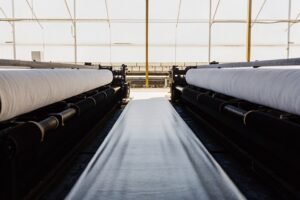
Speed at the destination starts with speed at the origin. A DDP delivery guarantee is only as good as the supplier’s ability to get the fabric out of the factory, through the origin logistics, and onto the vessel on schedule. In Keqiao, we sit at the center of the world’s densest textile logistics network, and that location advantage translates directly into faster, more reliable export processing.
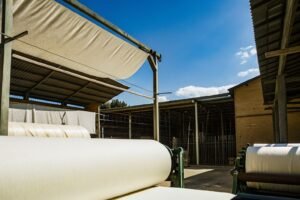
Our factory in Keqiao is less than two hours by truck from the Port of Ningbo and about three hours from the Port of Shanghai, the two largest container ports in the world. The short trucking distance means lower domestic transportation cost and more scheduling flexibility. If a container booking at Ningbo gets rolled, we can pivot to Shanghai on the same day and catch a different vessel. The Keqiao region also hosts a dense network of container freight stations, customs brokers, and export documentation services that specialize in textile cargo. The trucking companies that serve our factory move fabric containers every day—they know the loading dock, they know the weight distribution requirements for fabric rolls, and they know the documentation handoff process. The customs broker at the port of exit clears our export declarations quickly because they process textile shipments constantly and have the commodity codes and the export license requirements pre-configured in their systems.
Geographic advantage is real. Being two hours from the port instead of two days from the port means our lead times are shorter and our response to disruptions is faster.
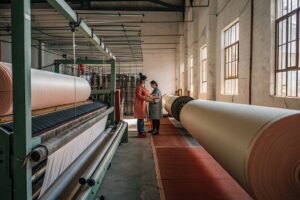
Beyond the geographic advantage, our internal export logistics process is standardized to minimize the time from finished fabric to loaded container. Our packing team follows a documented container loading procedure that maximizes space utilization while respecting weight limits and preventing cargo damage. The export documentation—the commercial invoice, the packing list, the bill of lading instructions, the certificate of origin—is prepared during the production process, not after the fabric is packed. The documents are ready when the container is ready, so there’s no documentation delay between container loading and export customs filing. The entire origin process, from the fabric clearing final inspection to the container departing the port, typically takes 4 to 6 days, compared to 7 to 10 days for suppliers without integrated export logistics.

How Does the Inland Trucking Network from Keqiao to Ningbo/Shanghai Reduce Origin Delays?
The Keqiao to Ningbo/Shanghai trucking corridor is one of the busiest container trucking routes in the world. Hundreds of trucks make this run daily, carrying textiles, electronics, machinery parts, and every other product manufactured in Zhejiang province. The sheer volume means that trucking capacity is abundant and competitive. We can book a truck for container loading with 24 hours notice, and the truck arrives on time because the trucking companies have a deep pool of drivers and chassis dedicated to this route.
The short distance also means that if a truck breaks down—which happens—a replacement truck can be dispatched from the nearby depot and arrive at our factory within two hours. If the container loading takes longer than expected and the truck misses the port cutoff time, we can reschedule for the next morning’s cutoff without incurring a full day of delay. The proximity gives us operational flexibility that a factory in a remote location simply doesn’t have. For fabric buyers, this translates into more reliable vessel loading and fewer missed sailings due to origin logistics failures. The Keqiao trucking advantage is one of the invisible reasons our DDP delivery timelines are consistently met—the origin leg of the journey is short, simple, and hard to screw up.
What Role Does Your In-House Packing and Container Loading Team Play in Preventing Transit Damage?
Transit damage is a quality failure that happens after the fabric has already passed inspection. A roll shifts inside the container during ocean transit because it wasn’t properly braced. The corner of one roll rubs against another and abrades the fabric surface. Water drips from a container ceiling condensation point onto the top layer of rolls because the waterproof liner wasn’t installed correctly. These are packing failures, not fabric failures, and they’re just as damaging to the client’s production as a weaving defect.
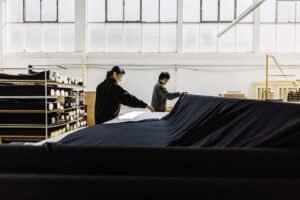
Our in-house packing team at Shanghai Fumao is trained specifically on fabric container loading. They follow a documented loading diagram for each container configuration. Rolls are stacked in alternating layers to distribute weight and prevent shifting. Void spaces between the cargo and the container walls are filled with dunnage air bags that are inflated after the container is loaded to lock the cargo in place. The container ceiling liner is installed before loading begins, draped over the cargo after loading is complete, and secured to channel condensation to the container floor. Desiccant bags are placed at the ceiling level and floor level. The container floor is inspected for moisture and debris before the first roll is loaded. Every container is photographed during the loading process—the empty container, the partially loaded container, the fully loaded container with the liner and dunnage in place—and the photos are saved with the shipment record. If transit damage occurs despite these precautions, the photo record lets us identify where the process failed and correct it. This level of attention to packing detail is rare among suppliers who outsource their packing to a third-party warehouse.
Why Does the Keqiao Textile Cluster Create a "One-Stop-Shop" for Post-Production Services?
The DDP promise includes not just the transportation, but all the post-production services that prepare the fabric for export. Inspection, testing, packaging, labeling, and documentation—these are separate steps handled by separate vendors in a fragmented supply chain. In Keqiao, they happen within a few kilometers of our factory, coordinated as an integrated workflow rather than a series of independent transactions.
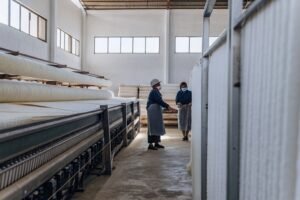
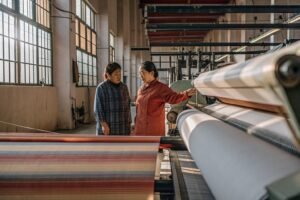
When a roll of anti-static lining finishes its final finishing process at our facility, the post-production sequence begins immediately. The fabric inspection is handled by our in-house QC team using our CNAS-certified lab equipment and our standardized AQL inspection protocol. The roll labeling—with the QR code that links to the full batch test data, the fiber content, the care instructions, and the country of origin—is printed and applied in our own packing area. The packaging—the vapor-barrier bag, the desiccant, the humidity indicator card—is done by our own packing team using materials we stock in inventory. The export documentation—the commercial invoice, the packing list, the certificate of origin, the mill test report—is prepared by our documentation team while the packing is in progress. The entire post-production sequence, from finishing to container-ready, happens under our control in a continuous workflow that takes 3 to 5 days. A supplier who outsources each of these steps to a different vendor in a different location takes 7 to 14 days for the same sequence, with quality control gaps at each handoff.
In Keqiao, the entire post-production supply chain fits within a 15-minute drive. That density is our speed advantage.
The Keqiao cluster also provides backup capacity for post-production services. If our in-house inspection team is at capacity, there are five professional fabric inspection companies within walking distance that we’ve worked with for years. If our packing materials inventory runs low, the packaging supplier delivers within hours. If we need a specialized test that our in-house lab doesn’t perform—say, a specific chemical compliance test for a European buyer—the SGS and Intertek offices in Keqiao can perform it with same-day sample submission. The density of the textile services ecosystem in Keqiao makes our DDP operation resilient to capacity spikes and unexpected demands in a way that isolated suppliers cannot match.

How Does Integrated QC Documentation Digitally Connect Your Fabric Roll to the DDP Paperwork?
The QR code on every roll we ship is the digital thread that connects the physical fabric to the entire documentary record of its production and export. When a client receives a DDP shipment from Shanghai Fumao, they can scan any roll’s QR code with a smartphone and access the full quality control data for that specific batch. The data includes the weaving date, the dye lot number, the finishing parameters, the lab test results (surface resistivity for anti-static fabrics, shrinkage, colorfastness, tensile strength), the inspection report with the AQL sampling results, and the export documentation package.
This digital integration serves two purposes for our DDP clients. First, it provides immediate quality assurance without the need to unseal the roll and send a sample to an external lab. The client knows the fabric meets the specification because the test data is right there, linked to the specific roll in their hand. Second, it provides customs compliance documentation on demand. If CBP audits the entry and asks for evidence of fiber content or country of origin, the client can produce the mill test report and the production records from the QR code link. The documentation that supports the DDP import entry is physically attached to the goods in digital form, accessible at any point in the supply chain from the receiving dock to the cutting table. This level of documentation integration is a significant advantage over suppliers who ship fabric with a paper hang tag and a separate email attachment that may or may not match the physical rolls.
What Local Resources Ensure Your Fabric Meets EU REACH Standards Before It Leaves China?
European fabric buyers face regulatory requirements that go beyond the standard quality parameters. The EU REACH regulation restricts the use of certain chemical substances in textile products sold in the European market. Compliance is the importer’s legal responsibility, and non-compliant goods can be detained at the EU border, fined, or forced into costly re-export or destruction.
Keqiao hosts a concentration of textile testing laboratories with REACH compliance expertise that is unmatched outside of Europe. The SGS, Bureau Veritas, and Intertek offices in Keqiao and nearby Shaoxing perform the full suite of REACH restricted substance testing—the SVHC screening, the Annex XVII restricted substances analysis, the total heavy metals testing—with turnaround times of 3 to 5 working days. The proximity of these labs to our factory means we can submit samples for REACH testing as part of our standard pre-shipment QC process, receive the results before the container departs, and include the REACH compliance certificate in the export documentation package. For our European DDP clients, this means the fabric arrives at their door with the REACH compliance evidence already in hand, ready for their own compliance file or for presentation to their customer. The Keqiao testing infrastructure transforms a potentially painful regulatory hurdle into a routine pre-shipment quality check. For a detailed explanation of REACH requirements for textiles and the specific test protocols, the European Chemicals Agency website and textile compliance resources provide the authoritative regulatory guidance.
Conclusion
DDP from Shanghai Fumao isn’t a shipping method. It’s a promise that the price you see is the price you pay, the delivery date you’re given is the delivery date you get, and the fabric that arrives at your door is exactly the fabric you approved. We built this promise on infrastructure, not on marketing. Our continuous US customs bond and our dedicated textile broker eliminate the clearance delays that trap FOB shipments at the port. Our negotiated carrier contracts with extended free time and our port optimization analysis for every shipment minimize the exposure to demurrage and congestion surcharges. Our location in the Keqiao textile cluster gives us the geographic density to manage the entire post-production sequence—inspection, testing, packaging, and export documentation—as an integrated workflow under our control. And our QR code traceability system connects the physical fabric roll to its complete documentary record, so our clients have the quality assurance data and the customs compliance evidence at their fingertips from the moment they receive the shipment.
The anxiety that DDP eliminates is not just financial. It’s the cognitive load of managing a multi-party international logistics transaction while also running a fashion brand. It’s the late-night email from the forwarder about a problem you don’t understand and didn’t cause. It’s the realization that the container that was supposed to arrive last week is still sitting at the port, and you don’t know why, and you don’t know who to call. Our DDP clients don’t experience those moments. They place the order, they receive our proforma invoice with a single landed cost, and they receive the fabric at their door on the date we committed to. The logistics—all of it, from the factory loading dock in Keqiao to the receiving dock at their warehouse in Chicago, Miami, or Los Angeles—is our problem.
If you’re ready to stop managing freight and start receiving fabric, reach out to our Business Director, Elaine, at elaine@fumaoclothing.com. She can provide a current DDP landed cost quote for your specific fabric specification and delivery address, walk you through our port optimization analysis for your location, and explain exactly what’s included in the all-in price. One number. One invoice. Zero surprises. That’s the DDP standard we’ve delivered to brands in over 40 countries, and it’s the standard we’ll deliver for your next order.