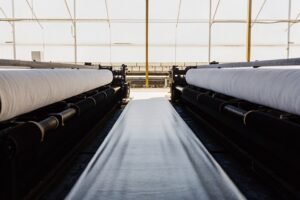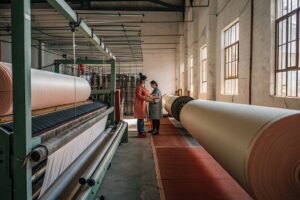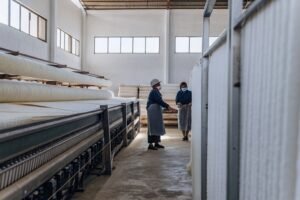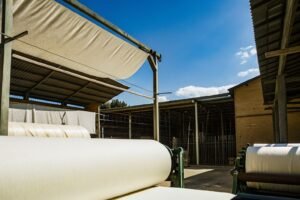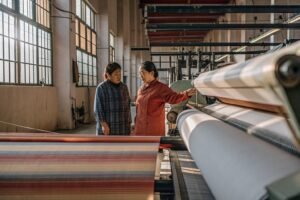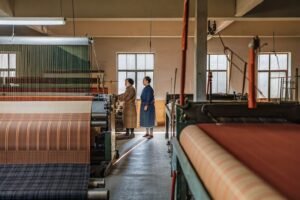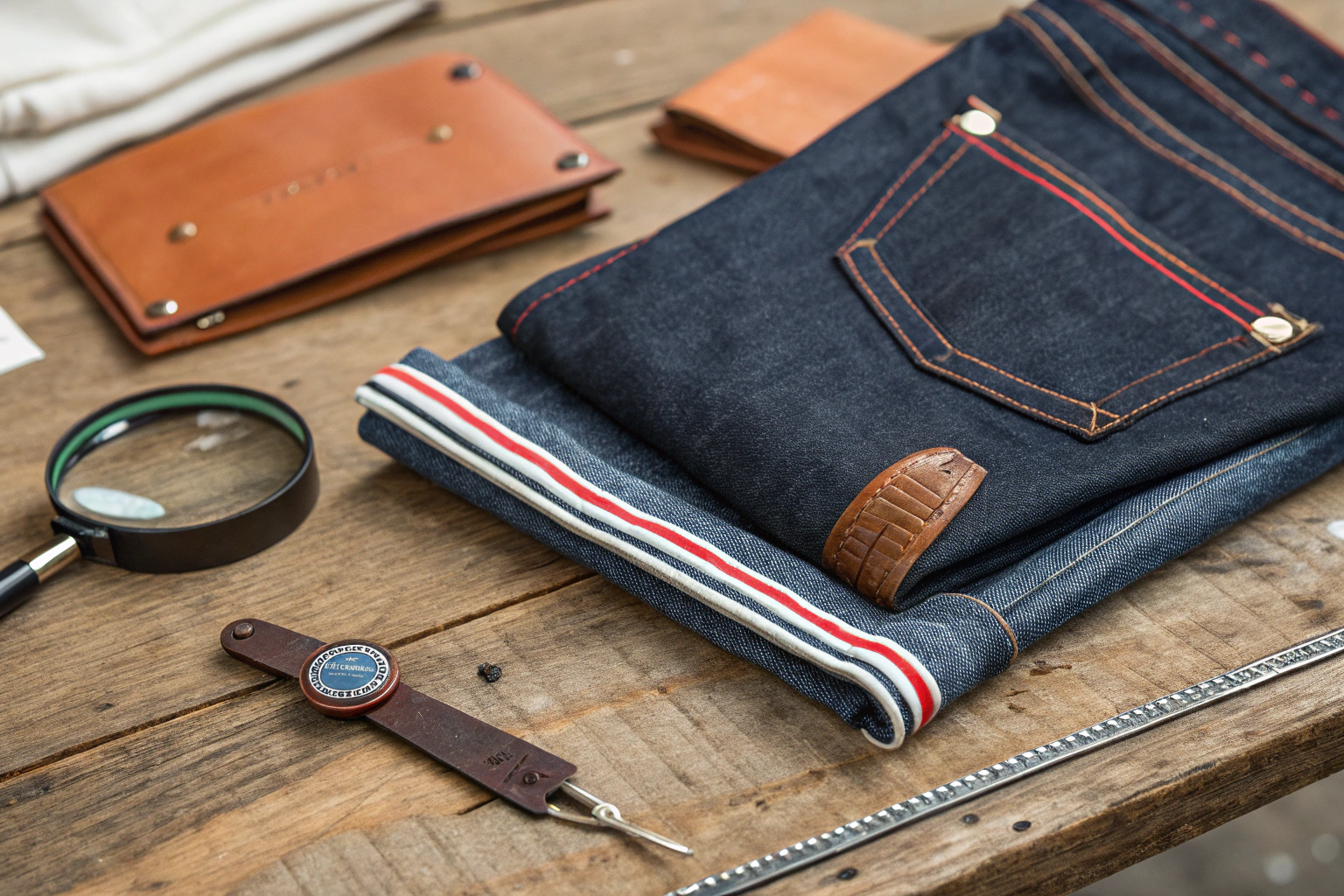
A buyer from a heritage menswear brand once told me he would never source selvedge denim from China. His customers expected Japanese, maybe Italian. Chinese denim, in his mind, was mass-market stretch jeans for mall brands. I asked him to visit our weaving shed in Keqiao. He walked in expecting to see commodity air-jet looms running generic denim. He saw forty vintage shuttle looms—Toyoda and Picanol machines from the 1970s and 80s, meticulously maintained—producing narrow-width selvedge denim with the same mechanical rhythm that the famous Japanese mills use. The denim on the looms was a 14-ounce rope-dyed indigo with a red-line selvedge. He handled the fabric. He checked the selvedge. He left with a development order.
High-quality selvedge denim from China exists, and in 2026, it’s competing with the best mills in Okayama and Cone Mills on quality while offering advantages in flexibility, minimums, and development speed. But it exists alongside a lot of denim that has the selvedge ID but not the substance. The selvedge edge—that clean, self-finished strip on both sides of the fabric woven on a shuttle loom—is the visible sign, but it’s the invisible choices in cotton origin, yarn spinning, dyeing method, weaving tension, and finishing that separate authentic premium selvedge from a commodity fabric with a selvedge gimmick. At Shanghai Fumao, our selvedge denim program sources long-staple Xinjiang and imported cotton, rope-dyes with pure indigo, weaves on vintage shuttle looms, and finishes minimally to preserve the denim’s character. I’ll walk you through what to look for—and what to look out for—when evaluating Chinese selvedge denim.
How Can I Tell If the Selvedge Is Actually Shuttle-Loom Woven?
A genuine selvedge is not a decorative stripe. It’s a structural feature of the weaving process. On a shuttle loom, the weft yarn is carried across the warp on a shuttle that travels back and forth, laying a continuous weft yarn from one edge of the fabric to the other. At each edge, the weft yarn turns and loops back into the fabric, creating a self-finished, clean edge that will not unravel. The selvedge ID—the colored yarn that identifies the mill or the denim line—is woven into this self-finished edge. This process produces a fabric that is typically 30 to 34 inches wide, significantly narrower than modern projectile or rapier loom denim at 60 inches or wider. The narrow width and the continuous weft are the signatures of shuttle-loom weaving.
A fake selvedge, or "false selvedge," is a strip of selvedge-look fabric attached to the outseam of a jean cut from wide-width projectile-loom denim. The manufacturer cuts a strip from the edge of a shuttle-loom fabric and sews it into the outseam to create the appearance of selvedge. You can identify a fake selvedge by examining the inside of the outseam. A genuine selvedge is continuous with the fabric—the weft yarns run uninterrupted from the fabric body into the selvedge edge. A fake selvedge has a seam or a fold where the selvedge strip is attached. Look for a visible stitch line or a folded edge. Run your finger along the transition from the denim body to the selvedge edge. On a genuine selvedge, the transition is smooth and continuous. On a fake, there’s a ridge, a seam, or a glued edge. Also check the width of the fabric. If the denim is wider than about 36 inches, it wasn’t woven on a shuttle loom. Genuine shuttle-loom selvedge denim comes off the loom at 30 to 34 inches. At Shanghai Fumao, our shuttle looms produce a consistent 32-inch width with a clean, tight selvedge edge that our QC team inspects for any breaks or loose yarns before the fabric is released. The genuine shuttle-loom selvedge denim identification and authentication guide including weft continuity test and width specifications provides the detailed visual identification methods.

What Is the Weft Continuity Test and How Does It Work?
The weft continuity test is the definitive forensic method for distinguishing genuine shuttle-loom selvedge from false selvedge. Pull a weft yarn from the body of the denim fabric. A single weft yarn should run continuously from one selvedge edge, across the full width of the fabric, to the opposite selvedge edge. On a shuttle-loom fabric, this is always true because the shuttle carries a single continuous weft yarn back and forth, and each pick of weft is a single yarn. On a projectile-loom or rapier-loom fabric, each pick of weft is a separate length of yarn inserted from one side only, and the fabric edge is a cut edge or a tucked-in fringe, not a continuous loop.
To perform the test, use a needle or a pin to gently extract a single weft yarn from the fabric body near the selvedge edge. Pull carefully. If the yarn can be withdrawn continuously from one selvedge to the other without breaking, the fabric is genuine shuttle-loom selvedge. If the yarn stops after a short distance—the length of one weft insertion, typically a few inches—the fabric is not shuttle-loom woven, and the selvedge edge is either a false selvedge or a different type of edge finish. This test is simple, requires no equipment, and is definitive. A mill that produces genuine shuttle-loom selvedge will be proud to demonstrate the weft continuity test on their fabric. At Shanghai Fumao, we show every buyer who visits our selvedge program how to perform this test on our production samples. The weft continuity test procedure for authenticating shuttle-loom woven selvedge denim and distinguishing from projectile or rapier loom denim with false selvedge provides the step-by-step procedure with photographic guidance.
Why Does Shuttle Loom Weaving Produce a Different Denim Character?
The shuttle loom doesn’t just produce a selvedge edge. It produces a different fabric character than high-speed projectile or rapier looms because of the weaving tension, the weft insertion speed, and the beat-up force. A shuttle loom operates at a lower speed—typically 120 to 180 picks per minute compared to 500 to 1,000 ppm on a projectile loom—and the weft insertion is gentler. The shuttle carries the weft yarn across the warp in a smooth, consistent motion without the sudden acceleration that projectile looms impart. This gentler weaving produces a fabric with a slightly irregular, organic surface character that denim enthusiasts describe as "loom chatter"—subtle, irregular vertical and horizontal texture variations that give shuttle-loom denim its distinctive, alive surface.
The shuttle loom also typically weaves with lower warp tension than high-speed looms, which results in a fabric with more yarn crimp and more surface texture. The lower beat-up force produces a slightly less dense fabric at the same yarn count, which ages differently—the fabric molds to the wearer’s body more readily and develops wear patterns that reflect the individual’s movement. High-speed looms produce a more uniform, more consistent fabric, which is desirable for mass-market denim but lacks the character that heritage denim brands and their customers seek. The difference is subtle to the untrained eye but immediately apparent to anyone who has worn and handled shuttle-loom denim. The mechanical weaving characteristics of shuttle looms versus projectile and rapier looms and their effect on selvedge denim fabric character, surface texture, and wear behavior provides the comparative analysis of fabric properties by loom type.
What Cotton Quality Indicators Should I Look for in Chinese Selvedge Denim?
The cotton fiber is the DNA of the denim, and premium selvedge starts with premium cotton. The cotton quality indicators that predict superior denim performance are staple length, fiber strength, micronaire, and origin traceability. Staple length—the average length of the individual cotton fibers—determines how smoothly the fibers can be spun, how many fiber ends are exposed on the yarn surface, and ultimately how the denim wears and ages. For premium selvedge denim, the minimum acceptable staple length is 28mm, which is the threshold for long-staple cotton. Fibers shorter than 28mm produce yarns with more surface hairiness, more pilling tendency, and lower strength. Premium Japanese selvedge is typically spun from 30mm to 35mm staple length cotton. Chinese premium selvedge from mills like ours uses Xinjiang long-staple cotton at 28mm to 32mm, or imported Supima or Egyptian cotton at 35mm to 38mm for the highest-tier products.
Fiber strength, measured in grams per tex, determines the yarn’s tensile strength and the fabric’s resistance to tearing and abrasion. Premium selvedge should be spun from cotton with a minimum fiber strength of 28 g/tex, and preferably above 30 g/tex. Micronaire, a measure of fiber fineness and maturity, affects how the cotton absorbs indigo dye and how the fabric feels against the skin. A micronaire value between 3.8 and 4.2 is ideal for denim—fibers that are too fine produce weak yarn, fibers that are too coarse produce a rough, uncomfortable hand feel. Origin traceability matters both for quality consistency and for brand storytelling. A mill that can identify the specific cotton growing region, harvest year, and gin lot for their premium selvedge is a mill that controls their raw material supply chain, not one that buys generic cotton bales from the cheapest available source. At Shanghai Fumao, our premium selvedge line uses single-origin Xinjiang long-staple cotton with documented staple length, strength, and micronaire values for each yarn lot. The cotton fiber quality parameters for premium selvedge denim production including staple length, strength, micronaire, and origin traceability requirements provides the detailed selection criteria.

Why Does Xinjiang Cotton Produce Excellent Selvedge Denim?
Xinjiang cotton, grown in the Tarim Basin region of China’s far west, has specific agronomic advantages that produce fiber well-suited to premium denim. The region has long sunshine hours—over 3,000 hours annually—low humidity during the harvest season, and significant day-night temperature differentials. These conditions promote slow, even cotton boll maturation, which produces fibers with good length uniformity, consistent micronaire, and fewer immature fibers that create neps and dyeing irregularities. The hand-harvesting practice still used for premium Xinjiang long-staple cotton reduces contamination from leaf and seed fragments compared to machine-harvested cotton, resulting in a cleaner fiber that requires less aggressive cleaning before spinning.
The fiber properties of Xinjiang long-staple cotton are directly comparable to mid-grade American Upland and Australian cotton, with staple lengths of 28mm to 32mm, strength values of 28 to 32 g/tex, and micronaire of 3.8 to 4.5. For selvedge denim, Xinjiang cotton’s combination of good length and high strength produces a yarn that can withstand the relatively high tension and abrasive beat-up of shuttle-loom weaving without excessive breaks. The yarn’s surface properties accept rope-dyed indigo well, producing a deep, even indigo penetration with the characteristic white core that creates attractive fading patterns with wear. Many premium Chinese selvedge mills, including our operation, have built their denim programs on Xinjiang long-staple cotton as the core fiber. The Xinjiang cotton fiber properties and their suitability for premium ring-spun selvedge denim yarn production compared to other global cotton origins provides the comparative fiber data and yarn quality outcomes.
How Does Ring-Spun Yarn Affect the Selvedge Denim Surface?
Ring-spun yarn is non-negotiable for premium selvedge denim. Open-end yarn, which is cheaper and faster to produce, creates a denim with a more uniform but flatter, less characterful surface. Ring-spun yarn, with its helical fiber arrangement, produces a yarn with natural surface irregularities—subtle variations in thickness, random slubs, a slightly hairy surface—that give ring-spun denim its distinctive, organic appearance. When this ring-spun yarn is rope-dyed with indigo and woven on a shuttle loom, the surface character is amplified. The slight irregularities in the yarn create micro-variations in how the indigo dye sits on the fiber surface, producing a depth of color and a complexity of surface texture that open-end denim simply cannot replicate.
The twist level of the ring-spun yarn also affects the denim’s hand feel and wear behavior. A lower-twist ring-spun yarn produces a softer initial hand feel but more surface hairiness and potentially more indigo loss during washing. A higher-twist yarn produces a firmer, crisper hand feel and better indigo retention. Premium selvedge typically uses a medium-twist ring-spun yarn with a twist multiple around 3.6 to 4.0, which balances softness, surface character, and durability. At Shanghai Fumao, our premium selvedge denim yarns are all ring-spun with controlled twist levels specified for each denim weight and intended wear character. The ring-spun versus open-end yarn surface characteristics and their effect on selvedge denim appearance, hand feel, and indigo dye retention provides the comparative surface analysis and wear test data.
What Dyeing Method Creates the Best Selvedge Denim Character?
The method used to dye the yarn determines how the denim fades over its lifetime, which for selvedge enthusiasts is the entire point of the fabric. Rope dyeing is the traditional method for premium selvedge denim and produces the most desirable fade characteristics. In rope dyeing, 300 to 400 individual warp yarns are gathered into a rope, and multiple ropes are fed through a sequence of indigo dye baths—typically six to eight dips—with oxidation periods in the air between each dip. The indigo dye penetrates only the outer layers of the cotton yarn, leaving the core of the yarn undyed white. This ring-dyeing effect is what creates the characteristic fade pattern of selvedge denim: as the fabric wears, the indigo-rich surface layers gradually abrade away, revealing the white core beneath. The result is a high-contrast fade that traces the wearer’s body and movements.
The alternative method, slasher dyeing, is faster and cheaper but produces a different fade character. In slasher dyeing, the warp yarns are laid out as a flat sheet and passed through the dye baths. The dye penetration is more uniform, and the resulting denim fades more evenly and with less contrast. Slasher-dyed denim is common in mass-market jeans and is perfectly acceptable for uniform fade aesthetics, but it doesn’t produce the dramatic, high-contrast "whiskering" and "honeycomb" fade patterns that selvedge enthusiasts prize. Premium selvedge denim is almost universally rope-dyed with pure indigo. At Shanghai Fumao, our selvedge denim is rope-dyed using a six-dip, six-skying process with natural indigo for our premium line and pre-reduced indigo for our standard line. The number of dips, the concentration of indigo in each bath, and the duration of oxidation between dips are controlled parameters that determine the depth of shade and the fade character. The rope-dyeing versus slasher-dyeing method comparison for indigo denim and the effect of dye penetration on selvedge denim fade character and wear pattern development provides the detailed process comparison and fade analysis.

What Is the Difference Between Natural Indigo and Synthetic Indigo in Selvedge Denim?
Natural indigo and synthetic indigo are chemically identical—both are indigotin, the molecule that creates the characteristic blue color. The difference is the source and the purity. Natural indigo is extracted from indigo-producing plants, primarily Indigofera tinctoria, through a fermentation and oxidation process. The resulting indigo paste contains indigotin plus other plant compounds—indirubin, indigo brown, and various flavonoids—that create a slightly warmer, more complex blue with subtle red and brown undertones. Synthetic indigo is manufactured from aniline and other petrochemical feedstocks and is essentially pure indigotin, producing a cleaner, more neutral blue. To the untrained eye, the difference is subtle. To the selvedge enthusiast who has handled both, the natural indigo has a depth and warmth that synthetic indigo lacks.
The fading behavior also differs. Natural indigo tends to fade to a greener, more varied cast because the plant impurities in the dye age and oxidize at different rates than the indigotin itself. Synthetic indigo fades to a cleaner, more uniform white-blue. Which is "better" is a matter of aesthetic preference and brand positioning. Natural indigo carries a heritage story and a higher price—the dye cost is roughly three to five times higher than synthetic indigo—and it appeals to the purist segment of the selvedge market. Synthetic indigo is more consistent batch to batch and produces the classic, clean fade that most consumers associate with premium denim. At Shanghai Fumao, we offer both natural indigo and synthetic indigo rope-dyed selvedge, and we guide brands toward the choice that matches their price point, brand story, and target consumer’s aesthetic expectations. The natural indigo versus synthetic indigo dye composition, color characteristics, and fading behavior in premium selvedge denim applications provides the comparative spectrophotometric color data and fade analysis.
How Many Indigo Dips Should Premium Selvedge Denim Have?
The number of indigo dips determines the depth of shade and the thickness of the indigo ring on the yarn surface. More dips mean darker denim and, counterintuitively, the potential for more dramatic fading because there is more indigo to wear away before the white core is revealed. The industry standard for premium rope-dyed selvedge is six to eight dips. Below six dips, the indigo layer is thin, the denim color is light to medium, and the fade potential is limited because there isn’t enough indigo depth to create high contrast when it wears off. Six dips produce a deep, saturated indigo with good fade potential. Eight dips produce an extremely deep, almost black-blue indigo with very high fade potential—the denim starts almost ink-dark and fades dramatically over time.
The number of dips is not the only variable. The concentration of indigo in each dip bath, the duration of immersion, and the duration of oxidation between dips all affect the final shade depth and the dye penetration profile. A well-processed six-dip rope-dyed indigo can achieve a deeper, more stable shade than a poorly processed eight-dip with low indigo concentration and rushed oxidation. The specification should be for the final shade depth—measured on a spectrophotometer as an L value, with premium deep indigo typically targeting an L value of 14 to 18—rather than simply the number of dips. The mill should be able to provide the spectrophotometric shade data along with the dip process parameters. At Shanghai Fumao, our standard premium selvedge uses a six-dip rope-dye process targeting an L value of 16 to 18, and our deep indigo uses an eight-dip process targeting an L value of 13 to 15. The rope-dyeing indigo dip count, concentration, and oxidation parameters and their effect on selvedge denim shade depth, dye penetration profile, and fade potential provides the process-to-property mapping.
How Does the Finishing Process Affect Selvedge Denim Quality?
Finishing is where mass-market denim and premium selvedge denim diverge most dramatically. Mass-market denim goes through aggressive finishing: singeing to burn off surface fuzz, mercerizing to increase luster and strength, heavy calendering to flatten the surface, and often a resin treatment or a pre-wash to create a worn-in look at the factory. These processes produce a consistent, clean, uniform fabric that meets the quality expectations of a mall-brand consumer. Premium selvedge denim is finished as minimally as possible because every finishing process that improves uniformity and consistency also removes some of the character and personality of the shuttle-loom fabric.
The signature premium selvedge finish is loomstate or minimally sanforized. Loomstate denim, also called unsanforized or shrink-to-fit, is denim that leaves the loom and is simply inspected, rolled, and shipped without any stabilizing treatment. It’s stiff, raw, and will shrink 7% to 10% when first washed. The consumer must size up and do the initial soak to shrink the denim to their body. Loomstate denim is the purist’s choice—it preserves every irregularity of the shuttle-loom weaving, it molds to the wearer’s body with complete fidelity, and it produces the most dramatic fade patterns. Sanforized denim goes through a controlled compressive shrinkage process that pre-shrinks the fabric to reduce residual shrinkage to below 3%, making the jeans true to size and eliminating the guesswork of sizing up. Sanforized selvedge is more accessible to the mainstream consumer while still preserving much of the fabric character. At Shanghai Fumao, we offer both loomstate and sanforized selvedge, and we control the sanforizing process to preserve maximum surface character—no singeing, no mercerizing, no calendering, only the compressive shrinkage treatment. The premium selvedge denim finishing options including loomstate, sanforized, and the effect of minimal versus aggressive finishing on fabric character, shrinkage behavior, and fade potential provides the comparative analysis of finishing approaches.

What Is Sanforization and Why Does It Matter for Selvedge?
Sanforization is a controlled compressive shrinkage process that pre-shrinks cotton fabric before the garment is cut and sewn. The fabric passes between a thick rubber belt and a heated steel cylinder. The rubber belt is stretched before it contacts the fabric; as it relaxes, it compresses the fabric lengthwise, mechanically shrinking the cotton fibers. The process reduces the residual shrinkage of the fabric from 7% to 10% down to 1% to 3%, depending on the sanforizing parameters. A sanforized selvedge jean in size 32 will remain approximately size 32 after washing. An unsanforized loomstate jean in size 32 will shrink to approximately size 30 or 31 after the first wash, and the consumer must account for this by purchasing a larger size.
For brands selling selvedge denim to consumers who are not hardcore denim enthusiasts, sanforization is a practical necessity. The sizing confusion, the return rate, and the customer service burden of unsanforized denim are significant. For brands selling to the purist market, unsanforized is a badge of authenticity and a valued part of the denim experience. The sanforization process, when done correctly, does not significantly reduce the fabric’s surface character. At Shanghai Fumao, our sanforized selvedge retains a surface texture and stiffness very close to loomstate, with the practical benefit of predictable sizing. The key is to avoid the additional finishing processes—singeing, mercerizing, resin treatment—that often accompany sanforization in mass-market denim production. The sanforization process mechanics and its effect on selvedge denim residual shrinkage, surface character, and consumer sizing experience provides the process parameters and the quality control metrics.
What Surface Defects Are Acceptable in Premium Selvedge Denim?
Premium selvedge denim is not defect-free. It’s character-rich. The shuttle-loom weaving process naturally produces small irregularities—slight yarn slubs, minor weft insertion variations, subtle loom chatter texture—that mass-market denim finishing would eliminate but that selvedge enthusiasts value as evidence of authentic shuttle-loom production. The key is distinguishing between acceptable character marks and unacceptable defects.
Acceptable character marks include small slubs—thicker sections of yarn that create a slightly irregular surface texture; minor weft barre—subtle horizontal bands caused by slight weft yarn tension variations; loom chatter—the overall slightly irregular surface texture produced by the lower beat-up force of the shuttle loom; and minor nep content—small fiber tangles that appear as tiny dark or light spots on the fabric surface. These are all natural consequences of shuttle-loom weaving with ring-spun yarn and are generally accepted or even valued by the premium selvedge market. Unacceptable defects include broken warp or weft yarns creating holes or thin spots, continuous or severe weft barre that creates a striped appearance, large stains or oil spots from the loom, selvedge edge breaks or fraying, and inconsistent width or skewing. At Shanghai Fumao, our selvedge inspection protocol uses a modified 4-point system that categorizes the characteristic shuttle-loom irregularities as acceptable character marks and standard textile defects as unacceptable. The premium selvedge denim defect classification and inspection standards distinguishing acceptable character marks from unacceptable quality defects provides the detailed inspection framework.
Conclusion
High-quality selvedge denim from China exists, and it’s identifiable by a set of objective, verifiable characteristics. The selvedge edge is genuine shuttle-loom woven, verifiable by the weft continuity test. The cotton is long-staple with documented fiber properties and origin. The yarn is ring-spun with controlled twist levels. The dyeing is rope-dyed indigo with a specified dip count and shade depth. The finishing is minimal—loomstate or sanforized only, without singeing, mercerizing, or chemical treatments that strip the fabric of its character. These characteristics are not opinions or marketing claims; they are measurable, verifiable production choices that produce a specific consumer experience.
The Chinese selvedge denim that meets these standards is competing on quality with the heritage mills of Okayama and the legacy of Cone Mills. It offers something those sources increasingly struggle to provide: flexibility in minimums, responsiveness in development, and a price point that makes premium selvedge accessible to mid-tier and emerging brands without compromising on the authentic shuttle-loom character that defines the category. The shuttle looms in Keqiao are the same machines that built the denim industry. The cotton in Xinjiang is long-staple and strong. The indigo rope-dyeing ranges are modern and precisely controlled. The craft knowledge is deep and growing. The product is real.
If you’re developing a selvedge denim program, or if you’ve been sourcing selvedge from Japan and you’re curious about what a quality-focused Chinese mill can deliver, reach out to us. At Shanghai Fumao, our selvedge denim development program offers standard and custom weights, natural and synthetic indigo, loomstate and sanforized finishes, and low minimums for development and trial orders. Our Business Director, Elaine, can send you our selvedge denim swatch kit with full technical specifications and arrange a video walkthrough of our shuttle-loom weaving floor and rope-dyeing range. She’s at elaine@fumaofabric.com. Let’s put a selvedge jean on the market that your customers will wear for ten years.