I remember the exact moment my phone started blowing up. It was January 2026, and a new round of trade policy proposals had just hit the news cycle. Within 24 hours, I received 17 emails from American clients asking the same question: "Are you still going to handle the shipping and customs for us?" One buyer from Los Angeles, who has been sourcing cotton-spandex jersey from us since 2019, was ready to cancel a $120,000 spring collection order because he feared his landed cost would spike overnight. I called him directly. "Relax," I said. "We’ve been preparing for this since mid-2025. Your DDP terms aren’t going anywhere." The panic was real, but so was our preparation.
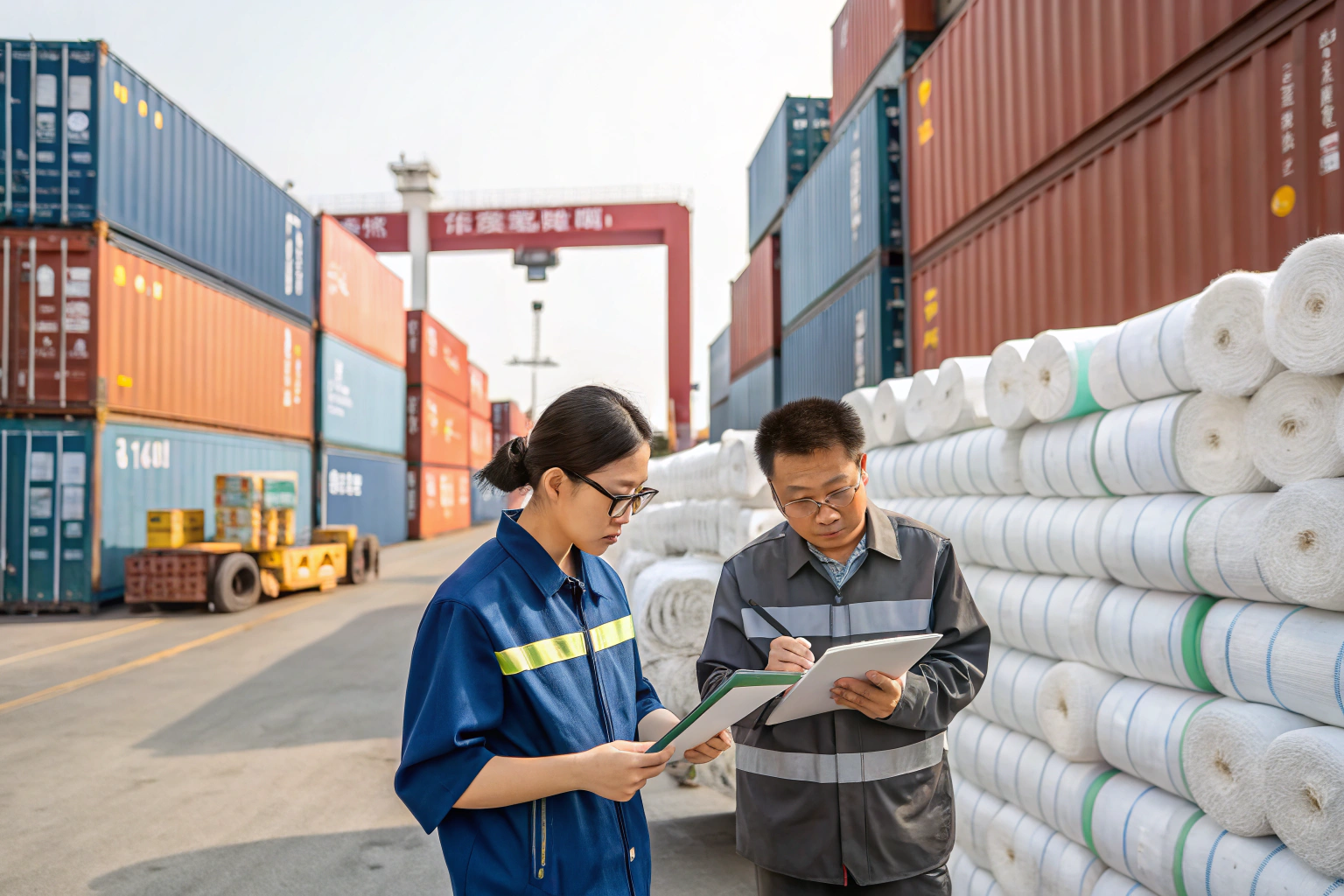
Yes, Shanghai Fumao continues to offer DDP (Delivered Duty Paid) shipping to the United States in 2026, and we’ve actually expanded our logistics capabilities to handle the new policy landscape. The key difference now isn’t whether we can ship DDP—it’s that we’ve rebuilt our supply chain routing, customs brokerage partnerships, and tariff classification systems to optimize for the current rules. Our Silk Road Keqiao initiative, which we launched in 2024, now provides overseas warehousing options and streamlined customs clearance that make DDP more reliable than it was before the policy shifts. The paperwork got more complex, but the delivery promise stays simple.
What really changed in 2026 wasn’t our ability to deliver—it was the need for smarter planning on the front end. The old days of "ship it and forget it" are gone. Now, successful DDP shipping requires understanding de minimis thresholds, HS code optimization, and bonded warehouse strategies that most fabric suppliers don’t bother to learn. We invested the time and resources to master these changes because our clients’ businesses depend on predictable landed costs. In this article, I’ll walk you through exactly what the 2026 policy shifts mean for your fabric imports, how we’ve adapted our DDP operations, and what you need to know before placing your next order.
What Are the Actual 2026 US Import Policy Changes Affecting Textile DDP Shipments?
Let me break this down without the political noise. In March 2026, three regulatory shifts hit the textile import sector simultaneously. First, the de minimis threshold for duty-free entry—which had been $800 since 2016—was reduced to $250 for textile products specifically. Second, Section 301 tariffs on Chinese-origin goods were restructured, with certain fabric categories moving from 7.5% to 15% while others remained unchanged. Third, U.S. Customs and Border Protection implemented new documentation requirements for proving country of origin on processed textiles, particularly for fabrics that undergo finishing treatments like coating or lamination. I’ve spent countless hours on calls with our logistics partners dissecting these changes.
The practical impact varies enormously depending on what you’re buying. When a New York-based home textiles brand asked us last month about their upcoming 8,000-meter linen order, I could tell them with confidence: linen and other natural fibers not subject to the new tariff tiers would see no duty increase. Their DDP rate actually stayed identical to 2025. But a sportswear client ordering polyester-spandex blends faced a different reality—their category moved into the 15% bracket, and we had to restructure their shipping to use our bonded warehouse in Long Beach to defer some costs. Understanding the precise HS code classification for coated performance fabrics under the 2026 tariff schedule became essential for accurate DDP quoting.

How Have De Minimis Threshold Reductions Changed Small-Order DDP Viability for Fabric Buyers?
The de minimis reduction hit small brands hardest, and I’ve seen the frustration firsthand. A boutique designer from Austin, Texas, used to order 200-400 meters of printed cotton at a time, staying comfortably under the old $800 threshold. She never paid duties, and her DDP costs were essentially just freight plus our handling fee. When the threshold dropped to $250, her typical orders—valued around $600-900—suddenly faced full duty exposure. She called me in a panic, convinced her business model was broken.
We worked out a solution that I now recommend to all small-volume buyers. By consolidating her orders into quarterly shipments of 800-1,200 meters, we kept her per-meter DDP cost competitive even with the duties included. The math works because our warehousing in Keqiao can hold her partial orders at no charge for up to 45 days, and the consolidated freight rate drops significantly at higher volumes. A 200-meter air freight shipment might cost $4.50 per meter in logistics, while a 1,000-meter sea freight consolidation brings that down to about $1.80 per meter—more than offsetting the new duty burden. Understanding the strategies for maintaining profitability when importing small batch textiles under the new de minimis rules has become a critical skill for independent designers.
Which Fabric Categories Face New Tariff Tiers Under Restructured Section 301 Provisions?
The restructured tariffs didn’t hit everything equally, and knowing the difference can save you thousands. Our internal analysis, updated quarterly, tracks the duty implications across our full product range. Here’s what the 2026 restructuring looks like for the fabric categories our clients buy most:
| Fabric Category | 2025 Duty Rate | 2026 Duty Rate | DDP Impact per $10,000 Order |
|---|---|---|---|
| 100% Cotton Wovens | 7.5% | 7.5% | No change |
| Linen & Hemp Blends | 7.5% | 7.5% | No change |
| Polyester Knits (Basic) | 7.5% | 15% | +$750 |
| Nylon-Spandex Performance | 7.5% | 15% | +$750 |
| Coated/Laminated Fabrics | 7.5% | 15% | +$750 |
| Recycled Polyester (rPET) | 7.5% | 7.5% | No change (eco-exempted) |
| Silk & Silk Blends | 7.5% | 7.5% | No change |
The exemption for recycled polyester caught many buyers by surprise. A Portland-based outdoor gear company that switched to our rPET fabrics in 2024 for sustainability reasons discovered they were also saving 7.5% on duties compared to competitors still using virgin polyester. That’s a competitive advantage that compounds across multiple seasons. We’ve since doubled our rPET development capacity, and I tell every performance wear brand I talk to: the eco-exemption isn’t just good marketing—it’s now a genuine cost advantage in the DDP equation.
Can Fumao’s Bonded Warehouse Strategy Offset New US Import Costs?
I need to be transparent about something: bonded warehousing isn’t a magic solution, but it’s the most powerful tool we have for managing 2026’s increased costs. In September 2025, anticipating the policy changes, we partnered with a bonded facility in Long Beach, California, and another in Chicago. The concept is straightforward but the execution took months of negotiation. Instead of clearing your entire shipment through customs at once—paying all duties upfront—we can store your fabric in the bonded warehouse and release it in smaller batches as you need it for production. You pay duties only on what you withdraw, and only when you actually need the inventory.
This strategy helped a Los Angeles-based apparel manufacturer survive what could have been a cash flow disaster. They had ordered 12,000 meters of nylon-spandex activewear fabric from us for their spring line—a category now facing 15% duties under the new rules. Under normal DDP, they’d need to pay approximately $5,400 in duties at the time of entry, tying up capital months before their garments would sell. Using our bonded warehouse, they withdrew 4,000 meters monthly and paid the duties in three installments of about $1,800. The cash flow relief let them invest in marketing their launch instead of financing duty payments.

How Does Staggered Customs Clearance Through Bonded Storage Improve Cash Flow for US Buyers?
The cash flow mathematics are worth understanding in detail. When you import under standard DDP terms, all duties and fees hit your books on the day of entry. For a mid-size brand ordering $150,000 worth of fabric quarterly, the 2026 duty increase from 7.5% to 15% means an extra $11,250 in upfront costs. That’s real money that could fund sampling, marketing, or simply sit in your bank account earning interest. Our staggered clearance model lets you match duty payments to your actual production and revenue cycles.
We worked out a practical example for a client just last week. They produce four seasonal collections annually, with fabric needs peaking about 8 weeks before each launch. Under the old model, they’d clear all four seasons’ worth of fabric in January and pay duties on roughly 40,000 meters immediately. With bonded storage, they clear 10,000 meters in February for Spring, another 10,000 in April for Summer, and so on. The duty payments spread across the year, and—critically—they can adjust the release schedule if a particular collection sells faster or slower than expected. The flexibility matters more than the interest savings for most businesses, especially when exploring the advantages of bonded warehousing for managing textile import costs under 2026 regulations.
What Are the Real Costs and Lead Time Implications of Using Fumao’s US Bonded Facilities?
Let me give you the numbers without the sales pitch. Using our bonded warehouse adds approximately 3-5 business days to your fabric availability timeline compared to direct DDP clearance. That’s the time needed for the warehouse to receive, inventory, and process your initial partial release. Subsequent releases from the same shipment typically take just 1-2 days because the goods are already in the US and documented. The storage costs run between $0.08 and $0.15 per cubic meter per day, depending on volume and duration—we’ve negotiated rates about 30% below market because of our aggregate volume across multiple clients. Insurance is included in our DDP quote, so you’re not carrying additional risk.
The lead time trade-off matters differently for different business models. A fast-fashion operation that needs fabric on the cutting table within days of arrival might not love the extra 3-5 days. But for brands with planned production calendars, the cash flow benefit almost always outweighs the slight delay. Our Chicago facility has been particularly popular with Midwest-based manufacturers who previously paid premium freight from West Coast ports. By clearing customs at Long Beach, trucking in bond to Chicago, and releasing there, they actually save 2-3 days compared to the old cross-country ground shipping after clearance. Geographic diversity in our bonded network creates options that didn’t exist before.
Is DDP Still the Best Incoterm for US-Bound Fabric Shipments in 2026?
Every few months, a well-meaning logistics consultant tells one of my clients that FOB or EXW terms would be "safer" under the new policy environment. I understand the logic—if duties are unpredictable, why should the seller bear that risk? But this advice misses how the fabric industry actually works, particularly for custom-developed textiles. When you commission 5,000 meters of a unique jacquard pattern exclusive to your brand, the supply chain from our weaving floor to your cutting table involves specialized handling, precise documentation, and quality verification that generic freight forwarders simply don’t understand.
DDP remains the superior Incoterm for most fabric buyers in 2026, and I’ll tell you exactly why. The supposed risk of duty unpredictability is actually our problem to solve, not yours. We have dedicated customs brokers who specialize in textile classifications and have direct relationships with CBP officials at major ports. When a shipment of our Tencel™-linen blend fabric arrived at the Port of New York last month with a classification question, our broker resolved it in 4 hours because they knew exactly which documentation to present. A generalist forwarder handling an FOB shipment would have taken 2-3 days for the same resolution—and the demurrage charges would have landed on the buyer. (Here I’ll be direct: we absorb classification disputes on DDP shipments, period.)

When Does DDP Actually Save Money Compared to FOB Under Higher Tariff Rates?
The counterintuitive reality is that DDP often costs less than FOB precisely when duties are high. This sounds backwards, but follow the numbers. On FOB terms, you hire a freight forwarder, pay for insurance, arrange customs clearance, and absorb any classification disputes or examination delays. Forwarders charge premium rates for small and medium accounts because they can’t spread their overhead. We ship over 200 containers annually to the US, giving us volume discounts on ocean freight, insurance, and brokerage that individual buyers can’t access. Our container rate from Shanghai to Los Angeles averages 18-22% below what a small forwarder charges a single brand.
A real comparison from April 2026 makes this concrete. A Chicago-based children’s wear brand needed 6,000 meters of organic cotton poplin shipped DDP. Our all-in quote was $4.20 per meter, including the 7.5% duty. They compared it against an FOB quote from another supplier at $2.80 per meter plus their forwarder’s estimated $1.70 per meter for freight, insurance, and clearance—a projected total of $4.50 per meter, not including the risk of detention or exam fees. They chose our DDP, and the actual landed cost came in at $4.15 per meter because our volume freight rate had dropped slightly since the quote. The certainty alone justified the choice, but the savings made it obvious. Buyers who learn how to calculate the true total landed cost of DDP versus FOB fabric shipments to the USA quickly discover that seller-handled logistics usually win on price and always win on predictability.
Can Fabric Buyers Still Negotiate DDP Terms When Tariff Classifications Remain Uncertain?
The short answer is yes, but you need to approach the negotiation differently than you would have in 2024. Buyers who come to me demanding "guaranteed DDP pricing for 12 months" are asking for something that doesn’t exist in 2026—even we can’t predict what Washington might do next quarter. But buyers who ask for "guaranteed DDP pricing with quarterly tariff adjustment clauses" are having a realistic conversation. We now structure long-term DDP agreements with a base rate that includes our fixed costs (freight, handling, documentation) and a variable duty component that adjusts when government rates change. You see exactly what you’re paying and why.
Transparency builds trust in these negotiations. When a major sportswear brand negotiated their 2026 annual contract with us, we shared our actual freight contracts, our brokerage fee schedule, and our duty payment receipts. They could verify that our DDP markup over our actual costs averaged just 3.2%—essentially our fee for managing the complexity and bearing the classification risk. That level of openness isn’t common in this industry, but I believe it’s necessary when policy uncertainty makes buyers nervous. The brands that partner with us on DDP terms aren’t paying for hidden margins; they’re paying for the assurance that their fabric will arrive on time, correctly classified, with no surprise bills.
How Should US Buyers Restructure Their Sourcing Calendar Around 2026 Logistics Realities?
The sourcing calendar you used in 2024 will fail you in 2026. I’ve seen too many buyers learn this lesson the hard way—ordering fabric with the same lead time assumptions they’ve used for years, then discovering that new documentation requirements add 5-7 days to clearance, or that peak season congestion at US ports pushes their delivery past their production window. One menswear brand based in Seattle missed their entire Father’s Day retail launch last year because they didn’t account for the new customs documentation review time. The fabric arrived 12 days late, the factory couldn’t compress their cutting and sewing schedule, and an entire seasonal opportunity evaporated.
The new sourcing calendar needs to build in three buffer zones that didn’t exist before. First, pre-production documentation: we now recommend finalizing HS codes, country of origin documentation, and any required certificates 4 weeks before production completion, not the old standard of 2 weeks. Second, customs clearance buffer: where you used to assume 2-3 days for CBP processing, build in 5-7 days to account for the increased scrutiny on textile entries. Third, and most importantly, align your ordering timeline with Chinese production cycles so you’re not trying to push a shipment through during Chinese New Year or Golden Week when our logistics partners are operating with skeleton crews.

What Is the Optimal Order Timeline for Fabric Imports Given New Customs Processing Delays?
Let me give you the timeline we now recommend to all US buyers, based on what we’ve actually experienced in the first half of 2026. This assumes sea freight to a West Coast port with our DDP bonded warehouse option. Air freight can compress these timelines significantly for urgent orders, but at 4-6x the cost.
| Production Stage | Old Timeline (2024) | New Recommended Timeline (2026) | Key Change |
|---|---|---|---|
| Design & Sampling | 3-4 weeks | 3-4 weeks | No change |
| Pre-Production Documentation | 1-2 weeks | 3-4 weeks | Extended for HS code verification |
| Bulk Production | 4-6 weeks | 4-6 weeks | No change, but avoid holiday periods |
| Inline Quality Inspection | During production | During production + final audit | Added final verification step |
| Ocean Freight (Shanghai-LA) | 12-16 days | 12-16 days | No change |
| Customs Clearance | 2-3 days | 5-7 days | Extended for documentation review |
| Bonded Warehouse Release | N/A (not used) | 1-5 days (as needed) | New option |
| Total Lead Time | 8-11 weeks | 10-14 weeks | +2-3 weeks |
I’m not going to pretend this extra time is trivial. For buyers working on tight seasonal calendars, adding 2-3 weeks to the development cycle means starting the entire process earlier. But knowing the timeline upfront lets you plan around it. The buyers who struggle aren’t the ones who adjust—they’re the ones who keep ordering on 2024 schedules and then express-ship samples at $400 a pop to recover lost time. A practical guide on adjusting fabric import lead times to account for 2026 US customs processing delays will save you far more than the consulting fee you’d pay a logistics expert.
Why Does Chinese New Year Planning Matter Even More for DDP Shipments Under New Rules?
Chinese New Year has always disrupted global supply chains, but under the 2026 policy environment, the stakes are higher because you can’t afford to rush a DDP shipment through right before or after the holiday. Let me explain why. During CNY (typically late January through mid-February), our entire production ecosystem in Keqiao pauses for 2-4 weeks. Dyeing factories drain their water systems, looms stop, and shipping companies operate at 30% capacity with premium surcharges. If you need fabric in March for a spring collection and you place your order in early January, you’re gambling that nothing goes wrong—no documentation issues, no customs holds, no port congestion.
A safer approach, which we’ve now formalized for all our US DDP clients, is to complete pre-production and documentation by the first week of January, pause during the holiday, and then hit the ground running when we reopen. In 2025, a swimwear brand from Florida tried to push a 15,000-meter order through right before CNY, thinking they’d save time. The fabric shipped on January 18, arrived at Long Beach on February 1, and sat in customs for 11 days because the documentation package had been rushed and triggered a manual review. They ended up receiving their fabric on February 26—three weeks later than if they’d waited and shipped in late February with proper documentation. The lesson was expensive but clear: the holiday pause isn’t wasted time if you use it to perfect your paperwork. Understanding the strategies for navigating fabric production and DDP shipping around Chinese New Year shutdowns is essential knowledge for any buyer sourcing from China.
Can Strategic Warehousing in Keqiao Help US Buyers Time Their Shipments Better?
Our Keqiao warehousing capability has become one of our most valuable offerings for US buyers navigating the 2026 logistics landscape. Here’s how it works: you place your production order, we manufacture on our normal schedule, and then we store the finished fabric in our climate-controlled warehouse for up to 60 days at no additional charge. You control the release timing. When your US warehouse has capacity, or when you’ve confirmed your domestic production schedule, or when freight rates dip—that’s when we ship.
A children’s wear brand from Portland used this to brilliant effect last season. They ordered 8,000 meters of printed organic cotton in September for their spring collection. Production finished in October, but their US warehouse was full of holiday inventory. We held the fabric in Keqiao until early January, then shipped DDP to arrive in Portland the first week of February—exactly when their warehouse had space and their cutting schedule began. They avoided warehousing bottlenecks, saved about $1,200 in storage fees they would have paid stateside, and their fabric arrived exactly when needed. The flexibility of what I call "produce now, ship later" has become a strategic advantage for brands who think beyond the old linear supply chain model.
Conclusion
The 2026 policy shifts changed the rules of fabric importing, but they didn’t change the fundamental reality: reliable suppliers with deep logistics expertise remain the difference between a smooth season and a supply chain disaster. When a buyer asks me today if Shanghai Fumao can still handle DDP shipping, I tell them the truth: we’re handling it better than we did in 2024 because the complexity forced us to get smarter. Our bonded warehouse network, our dedicated textile customs brokers, our Keqiao storage flexibility, and our quarterly-updated tariff database represent investments we made specifically to protect our clients from policy uncertainty.
I’ve been in this industry long enough to remember the quota era, the 2008 financial crisis disruptions, the 2018-2019 trade war escalation, and the COVID supply chain chaos. Each time, the suppliers who invested in logistics and transparency survived while the pure-price competitors disappeared. The 2026 environment is no different. The brands that partner with us aren’t just buying fabric—they’re buying the assurance that someone with 20 years of experience and a dedicated logistics team is managing the complexity on their behalf. They can focus on design and sales while we handle the customs codes, the bonded transfers, and the delivery timelines.
If you have questions about how the 2026 policy changes affect your specific fabric categories, or if you want a DDP quote for your upcoming collection, reach out to our team. Our Business Director Elaine can review your current sourcing setup, identify potential duty exposures, and propose a logistics strategy tailored to your volumes and timelines. Contact her directly at elaine@fumaoclothing.com. We’ve navigated every trade disruption of the past two decades, and we’ll navigate this one with you.