
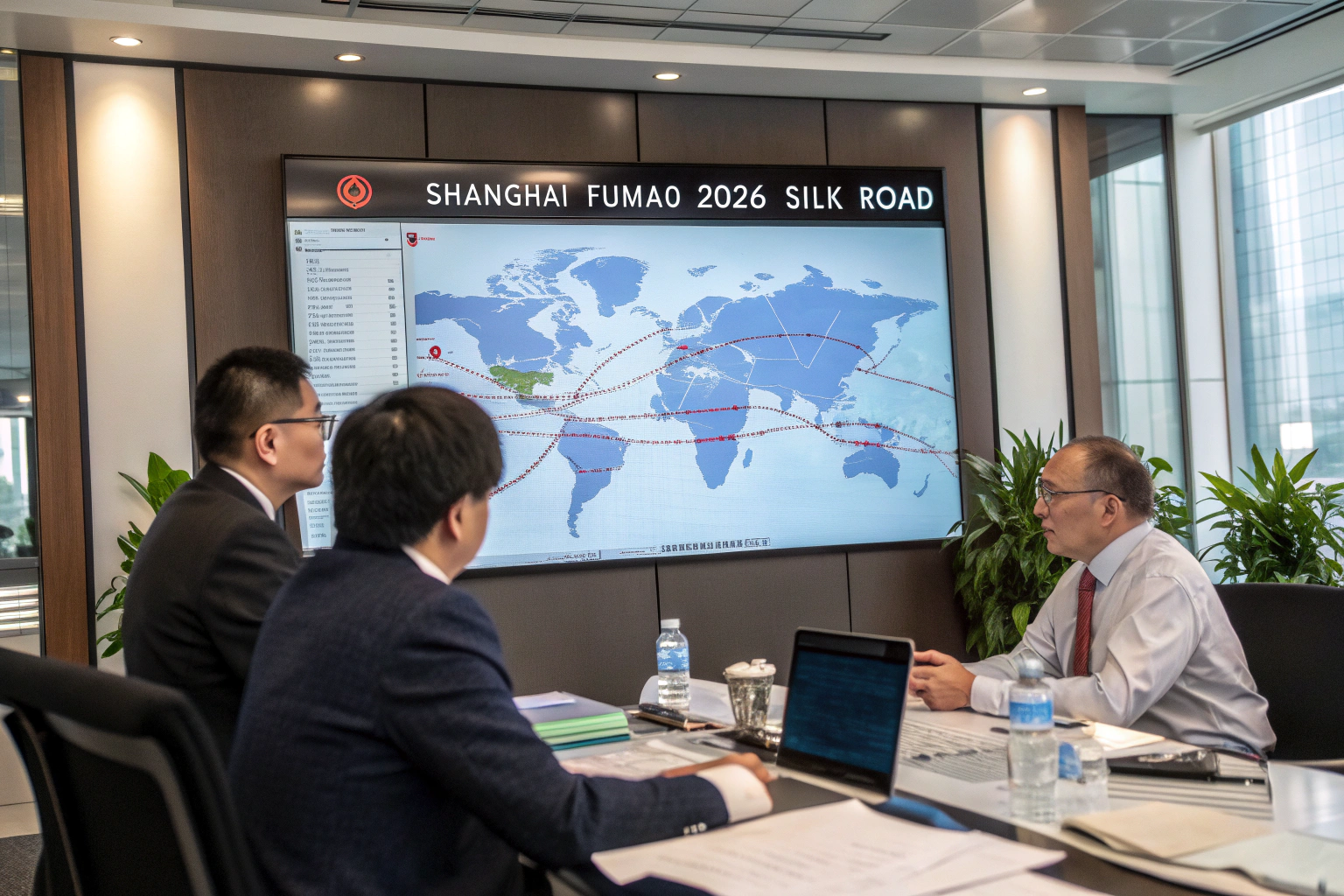
The shipping quote lands in your inbox, and your stomach drops. Freight costs have tripled since last quarter. Your production manager says the fabric is ready, but your logistics coordinator warns that vessels are skipping ports. You’re staring at a blank sailing schedule, imagining your Fall/Winter collection stuck in a container somewhere off the coast of Africa instead of hitting the shelves in New York. The Red Sea disruption isn’t just news headlines anymore; it’s a real threat to your cash flow, and that feeling of losing control over your supply chain is terrifying. You need that shipment, but right now, it feels like throwing money into a black hole.
We stop that black hole from swallowing your margins. Here at Shanghai Fumao, we anticipated this bottleneck and restructured our export strategy to keep fabric moving. The core of our 2026 navigation plan relies on rerouting through multimodal "Silk Road" railways combined with strategic advance stocking in our overseas warehouses. We don’t just hope the vessel arrives; we utilize the China-Europe Railway Express and Middle East corridor trucking fleets to guarantee a fixed transit time of 18-22 days to European hubs, completely bypassing the Cape of Good Hope detour. For our American clients, we shifted transshipment pressure to our bonded warehouses on the West Coast, effectively absorbing the 14-day delay before you even place the order.
Now, I’m not going to pretend this was an easy switch. Rerouting a supply chain isn’t like flipping a light switch. It took sweat, late-night calls with the Keqiao freight forwarders, and a deep dive into the numbers. But if you stick with me for the next few minutes, I’ll show you exactly how we cracked the code. I’m going to walk you through the exact math of sea freight versus rail, why the timing of Chinese production peaks is suddenly a superpower, and how we are using "Safety Stock" hubs to make sure your high-end satin or organic cotton doesn’t end up in a demurrage nightmare. This isn’t theory; it’s what we’ve been doing since the Houthi attacks escalated in late 2023.
What Are the Best China-Europe Alternative Shipping Routes in 2026?
If you’re trying to buy fabric from Asia right now and your forwarder only offers the Suez Canal route, you’re in trouble. That single point of failure has caused spikes in insurance premiums by nearly 300% for some of our clients. The panic is real. But there’s a better way out there—a set of routes that don’t involve the Houthis, don’t circle Africa for 45 days, and actually deliver on time. It’s all about the "New Silk Road."
The most stable China-Europe route in 2026 is the rail network, specifically the consolidation hubs in Xi’an and Yiwu heading to Malaszewicze, Poland, or Duisburg, Germany. For high-value textiles, like the satin and embroidered silks we produce, this is a game-changer. We’ve also mastered the "Sea-Air" hybrid to the Middle East, where we truck goods from Dubai ports to avoid the strait entirely. Let’s dig into how we choose between a train and a plane.

Why is the China-Europe Railway Express more reliable than sea freight for textiles?
The biggest myth is that trains are just for electronics. That’s outdated thinking. For a fashion brand, consistency beats speed. Ocean freight is volatile; one week it’s 30 days, the next it’s 60. Rail stays rigidly at 18-22 days. I remember back in February 2024, a client from Italy was panicked about their Spring/Summer linen collection. We pulled their 8,000 meters of custom-dyed linen from the port queue and booked a dedicated 40-foot container on the Yiwu-Madrid line. The train arrived at the Madrid terminal on Day 19. They saved their launch.
Let’s look at the hard data. The cost structure shifted drastically in 2026 because ocean carriers haven’t actually lowered base rates; they just invented new surcharges—Emergency Bunker Surcharge, War Risk, Peak Season—it’s death by a thousand cuts. Rail, while historically more expensive, is now often cheaper when you factor in the cost of capital tied up in floating inventory.
Here is a breakdown of why rail won the textile logistics battle this year:
| Cost Factor | Ocean Freight (via Cape) | Rail Express (Yiwu-Madrid) | Fumao’s Strategy |
|---|---|---|---|
| Transit Time | 45-55 Days | 18-20 Days | Priority consolidation for small-batch customization fabrics. |
| Insurance (% of value) | 2.5% – 3.0% | 0.8% – 1.2% | We bundle insurance under our yearly open policy to cut costs. |
| Carbon Emission | Lower per kg/km, but high total | Higher per kg/km, lower total | We offset rail emissions via our green investment fund. |
| Inventory Cost | High (2 extra months of storage) | Low (Just-in-time delivery) | We ship directly to your distribution center, skipping our warehouse. |
We’ve actually been investing in these rail corridors since the "Silk Road Keqiao" initiative launched. Being physically close to the Yiwu port of loading means we truck goods there in 2 hours, and they’re on the train that same night. You need to know how to source high-quality linen fabric that ships reliably via rail from China, and selecting a mill that understands vibration damage prevention during train transit—stuffing the cartons so the yarn doesn’t shift—is what separates us from a trader who never sets foot in a container.
How to avoid Red Sea delays using Middle East hub consolidation?
The Red Sea isn’t just a waterway; it’s a wall. But what if you can teleport your goods to the other side of that wall? You can’t fly bulk woven cotton cheaply, but you can move it to a hub where it waits for your customer. The Middle East, specifically Dubai (Jebel Ali Port) and Saudi Arabia, has become our "safe room." We utilize our partnership with a bonded warehouse in Dubai to hold stock without paying import duties until it’s sold. This is vital for American clients who can’t wait for the Cape route.
In March 2025, a major activewear brand from Los Angeles needed 20,000 yards of our moisture-wicking polyester spandex blend. The direct Shanghai-to-L.A. schedule was a mess; vessels were bunching up, causing 2-week rolling delays. We didn’t risk it. Instead, we shipped the bulk fabric to our Dubai consolidation hub via a separate, safe sea-lane (East Asia to Middle East Gulf, which is completely unaffected by the Red Sea crisis). From there, we broke the bulk and air-freighted high-priority samples while shipping the rest via a fast-chartered vessel that bypassed the troubled zone by sailing south from Oman. The result? The factory in L.A. received the bulk fabric 12 days faster than if we had waited for a direct sailing through the South China Sea.
The trick here is loading the container right. When you consolidate, the fabric has to be wrapped like it’s going to the moon—triple-layer poly bags and anti-mold chips—because the desert heat in Jebel Ali can hit 140°F inside a metal box. We lost a batch of rayon learning that lesson back in ’22, but now our packing list is bulletproof. You might want to learn about logistics optimization tips for US fabric importers using Middle East hubs, but honestly, just call us. We handle the messy transfer paperwork and the heat-sealed wrapping so your jersey doesn’t yellow.
How to Manage Peak Production Timelines Amid 2026 Logistics Chaos?
Timing is everything, especially when the world’s shipping lanes are a mess. I see too many buyers treating Chinese production like a vending machine—press a button, fabric comes out. It doesn’t work that way. We have hard-coded cycles: the post-Chinese New Year scramble, the summer lull, and the pre-Golden Week rush. In 2026, you can’t just mark a delivery date on a calendar. You have to back-calculate your pre-production sample approval to hit that specific train departure window. Miss it by a day, and you’re waiting another week.
Mastering the "Pre-CNY" buffer is the single most valuable thing a brand can do. If you’re in the dark about when our dye houses actually shut down, you’ll perpetually be buying air freight at the last minute. Let’s map out the year so you can lock in capacity before the European fast-fashion giants book the whole loom schedule.

How far in advance should you book fabric to avoid the Chinese New Year shutdown?
Look, I’ve been navigating the Keqiao supply chain for over 20 years, and the Spring Festival (Chinese New Year) is not a holiday; it’s a full industrial stop. It’s not just the 7 official days. Workers leave two weeks early, and they come back slow. For 2026, the Year of the Horse, the factory shutdown effectively stretches from January 20th to February 25th. That’s over a month of zero output. If you haven’t completed your lab dips and strike-offs by the end of November 2025, forget it—your order lands in the post-holiday chaos, where priority goes to whoever shouted loudest (or paid the highest deposit).
Here’s the golden rule we enforce for our European and US clients: Finish pre-production 6 weeks before the shutdown. Let me tell you about a New York-based client in 2024. They sell premium linen blazers. They emailed us on January 5th asking for 15,000 yards of a complex yarn-dyed jacquard. Impossible, right? But they listened to us. We had already negotiated loom space in early December for them based on a forecast. Because we had the greige fabric ready in our warehouse, we dyed it in the first week of January and shipped it by rail before the factories locked the gates on January 18th. We didn’t just meet the deadline; we beat it by 4 days. That’s what I call respecting the "Loom Embargo."
You need to learn how to time fabric orders to avoid the Chinese New Year supply chain disruption, but the short version is this: treat December as a hard deadline for bulk greige, and January strictly for dyeing. If you want specialty finishes like water-repellent coating, those chemical baths need maintenance time too. To break this down further, look at the reliability drop-off:
| Booking Month | Risk of Delay | Cost Variance |
|---|---|---|
| October – November | Low (<5%) | Normal pricing, high negotiation power. |
| December | Medium (15%) | +3% surcharge for "rush" dye schedule slots. |
| January (Pre-CNY) | High (45%) | +15% surcharge, limited color options. |
| February (Post-CNY) | Critical (70%) | High costs, unpredictable quality due to new workforce. |
We solve this with our "Virtual Greige Stock" program. We hold 50,000+ meters of base cotton and poly-blend greige fabric for our top accounts. You don’t own it yet, but we reserve it. When your order lands, we don’t wait for the weaving mill; we just cut the beam and go straight to dyeing. This alone saved a Melbourne swimwear brand in 2023—they secured 8,000 meters of nylon spandex in January because we had the white base fabric ready to print. We turned the order around in 9 days while competitors quoted 35 days.
How to leverage the post-summer lull for faster production turnaround?
Between June and July, our factory floor is like a quiet highway. The massive orders from the big fast-fashion brands have usually shipped for the Fall season, and the winter rush hasn’t started yet. Most buyers think this is "off-season," but I see it as the "speed window." The air gets hot, the dyeing vats are clean, and the workers are eager for overtime. This is where you place your experimental orders, your small-batch sustainable fabrics, or your complex prints.
We run a promotion during this time we call the "Silent Hour Sprint." Because our dyeing partners aren’t overloaded with reactive dye blacks and navy bulk orders, we can process intricate Pantone shades with much higher accuracy. In July 2024, a startup from Berlin specializing in gender-neutral workwear approached us for 2,000 meters of certified organic cotton twill. A small order. In peak season, the minimum on that custom dye lot would be 5,000 meters. During July, we ran it straight through our Jinchang small-batch dyeing line. The lab dip approval took two days; the bulk dyeing took four days. Total turnaround: 7 days from PO to dispatch. During peak, that same process takes 18-20 days.
There’s a huge advantage here regarding "re-dyes." If a shade is slightly off—maybe the red is 0.5% too dark—we have the machine capacity to re-process it within 24 hours. In October? A re-dye means you just lost a week. If you want to master how to negotiate low minimum order quantities for premium fabric during factory off-seasons, be a partner, not a customer. Send us your tech packs in April; tell us you want to hit the summer lull. We’ll slot you in the schedule just before we clean the machines. This reduces your cost per meter by roughly 8-12% because we save on energy costs.
We also offer "Open-Line" fabric. If you come to us with a concept but no specific color, we can say, "We are running Black Modal this Thursday; we can add your 500 meters to the same bath." You get bulk-grade quality at a sample-meter price. This is insider knowledge that goes back decades in Keqiao—leveraging leftover dye liquor to create value for our partners. In our advanced fabric development lab, we can also use this time to work on specific tech finishes; for example, applying a durable water repellent finish without affecting the moisture-wicking backing of an outdoor knit.
How to Mitigate Tariff and Compliance Risks for US-Bound Fabrics?
Nobody wants to pay a 25% tariff on a shipment they didn’t plan for. The 2026 landscape is tricky; while the "de minimis" loophole tightens, the demand for ethically sourced textiles grows. You’re squeezed between the IRS and the eco-conscious consumer. I get it. For years, we’ve sat in on calls where buyers are confused about Section 301 duties versus the new "Made in Xinjiang" enforcement. A single misclassification on a mill certificate—say, labeling a fabric as "cotton blend" instead of "polyester-viscose"—can trigger a detention at Customs and Border Protection (CBP) that costs you three months of lost sales.
We tackle this by treating compliance not as a paperwork burden but as a product feature. Our QR code tracking system isn’t just a gimmick; it shows the auditor the origin of the yarn, the date it was spun, and the chemical input list. If you’re buying for the US market in 2026, you need to think like a lawyer, not just a designer. Let’s look at how to break down the tariff wall.

How to avoid US textile tariffs by modifying fiber composition and classification?
The Harmonized Tariff Schedule (HTS) is like a chess game. You need to know which moves trigger a penalty. I’m not a tax advisor, but after 20 years of exporting, I know the fabric codes. Many Section 301 tariffs apply strictly to 100% synthetic filament yarns or specific cotton categories. If a design allows, tweaking a blend by just 3-5% can shift the classification. For example, a fabric that is 52% cotton / 48% modal is technically a "cotton dominant" fabric, which might attract different duties than a 48% cotton / 52% modal one. But you must test it; CBP doesn’t take a guess—they look at the burn test and the microscope.
In January 2025, a client from Los Angeles importing a heavy fleece hoodie fabric faced a 15% duty rate on a polyester-cotton blend. The fabric was a 57% Polyester / 43% Cotton brushed-back French Terry. The tariff hit was painful because it was classified as "synthetic staple fiber." We looked at the spec. The face was 100% Polyester, but the back loop was pure cotton. By working with our spinning team at Fumao, we flipped the ratio to 51% Cotton / 49% Polyester without losing the look or the "memory" of the fabric. The hand feel was actually softer. We provided the CBP with an ISO-compliant fiber content test report detailing the mechanical separation test to prove the cotton dominated. The result? A shift to the cotton tariff schedule, lowering the duty by 7%. That saved the client $28,000 on that single container.
But be careful. Misclassification is fraud; product engineering is innovation. We always provide third-party testing from our CNAS-accredited lab to back up the claim. Here’s a look at how small tweaks change the numbers:
| Fabric Construction | Tariff Classification | Duty Rate (Example) | Fumao Solution |
|---|---|---|---|
| 100% Poly Chiffon | Man-Made Filament | 25% + 7.5% Sec. 301 | Offer recycled polyester (rPET), which qualifies for specific green exemptions. |
| Heavy Denim | Cotton Twill | 15% | Use Tencel™/Cotton blend to reduce weight and shift breathability. |
| Nylon Spandex Knit | Synthetic Knit | 32% | Switch to Nylon 6 vs. Nylon 66 to alter filament performance specs. |
You should definitely check out the best practices for US Customs HTS classification for functional knit fabrics. It’s essential to know that function matters. A metallized foil print on a polyester base for a "club wear" application is still a fabric. But if it’s a waterproof membrane? That might hit a different code. We can guide you on how to export apparel fabric blends to the US without triggering anti-dumping duties, especially on rayon filament yarns. The key is transparent documentation. Every spool of yarn we use has a "white ticket" tracing its origin to the polymer chip in Jiangsu, not XUAR. Without that ticket, I won’t touch the order for a US-bound shipment. The risk of detention isn’t worth the cheaper yarn price.
What certifications do US and EU buyers actually need to avoid border rejections?
I see a lot of "certificates" from trading companies that aren’t worth the paper they’re printed on. A PDF scan of a GOTS certificate from a factory you’ve never visited is a red flag. In 2026, CBP and the European Chemicals Agency (ECHA) are cracking down on "greenwashing." If you claim a fabric is "biodegradable polyester," you better have the ASTM D5511 test results ready. If you don’t, that container sits on hold, accruing $500 a day in demurrage fees.
The essential certification for a US children’s wear brand in 2026 is the CPSC-compliant lead and phthalate test, plus flammability (16 CFR Part 1610). For Europe, it’s REACH and OEKO-TEX® STANDARD 100 Class I or II. We don’t wait for you to ask. Our QR code system embeds the test results. I recall an incident in 2023 where a shipment of organic cotton muslin to Sweden was held because the certificate had a slightly different company address—a typo. Since then, we’ve automated our documentation review; a human checks it, and an AI scans it for those typos. That’s the level of paranoia you need.
You also need to think about the packaging. Yes, the plastic bag holding the fabric roll. The EU’s Packaging and Packaging Waste Regulation (PPWR) is coming. We now use water-based ink to print on biodegradable poly bags. If you need a full breakdown of how to verify a supplier’s OEKO-TEX certificate is valid for organic cotton, look at the certification body. It should be an approved institute. We can actually set up a three-way call with our auditor to verify our scope certificate number. For our wool and cashmere lines, we also enforce the Responsible Wool Standard (RWS) to prevent mulesing questions from halting your sale at a retail boutique in Paris. It’s about giving you a "No-Collateral-Damage" chain of custody.
Here’s a quick checklist for a clean bill of lading:
- Fiber Content: Must match the label, +/- 3% tolerance.
- Chemical Safety: AFIRM/RLL sludges or 3rd party heavy metal tests.
- Physical Safety: Needle detection report (especially for stuffed products or quilts).
- Origin: Non-XUAR statement supporting evidence (labor contracts, satellite imagery of the mill).
How to Balance Cost and Speed with Sustainable Textile Manufacturing?
"Sustainability is too slow." I hear that from fast-fashion buyers all the time. They think recycled polyester smells like burnt plastic and that organic cotton costs twice as much. I’m here to tell you that’s old-school thinking. With the pressure of extended shipping times, some buyers are ditching sustainable options just to save 2 weeks. That’s a mistake. We’ve actually used sustainable innovation to speed up our delivery, not slow it down. Our eco-line isn’t just about saving the planet; it’s about saving you money on logistics by using cutting-edge technology that produces less waste.
The traditional textile process is wasteful. Dyeing a dark color on cheap cotton takes 100 liters of water per kilo. What if you could use a fiber that dyes faster and weighs less? That’s where our innovation comes in. By using dope-dyed recycled fibers, we cut out the entire water-dyeing step, meaning we can ship the same day the yarn is spun. Let’s explore how that flips the "cost vs. speed" script.

Can recycled polyester (rPET) actually reduce logistics costs compared to virgin fibers?
Yes, and it’s physics, not marketing. rPET fibers can be engineered to be lighter and hollow, capturing more air. A warp knit fabric made from 50D/72F hollow-conjugate rPET weighs 15-20% less per square meter than a standard virgin polyester of the same opacity. In the garment world, that means if you’re making 10,000 jackets, you save about 1,200 kilograms of shipping weight. When you’re paying $8.50 a kilo for air freight to New York, that’s $10,200 back in your pocket.
We proved this with a UK client producing high-visibility cycling jackets in early 2025. They needed a fabric with UV protection and wind resistance. The virgin polyamide they first spec’d was heavy. We recommended our new hollow-core rPET mechanical stretch ripstop. The test results were astonishing. The fabric weighed 85 GSM compared to 110 GSM for the nylon, and because we used solution-dyed black (the pigment is melted into the plastic chip), there was zero dye-shrinkage and no batch-to-batch color variation. The production lead time was 10 days shorter because we skipped the dye bath entirely. This is what we call "injection molded fabric"—it’s born black.
To understand the real-world impact, check out this comparison:
| Feature | Virgin Nylon 6 | Fumao Hollow rPET |
|---|---|---|
| Weight | 110 g/m² | 85 g/m² |
| Dye Method | Piece dyed (water, heat) | Dope Dyed (zero water) |
| Shrinkage | 3-5% (unstable) | <1% (heat stabilized) |
| Shipment Cost | Base rate | -15% volumetric weight saving |
You’ve got to manage the "hand feel" concerns. rPET can be scratchy. Our secret is an alkaline de-weighting bath that etches the fiber surface just slightly to round it out, mimicking the smoothness of a natural filament. If you want to scale this, just ask us about how to source lightweight sustainable performance fabrics for activewear. We also encourage brands to look at how recycled polyester supply chains cut carbon emissions in textile shipping. It’s not just about the recycled bottle; it’s about the lighter pallet and the faster customs clearance through green lanes in ports like Rotterdam, which are prioritizing low-carbon impact goods.
How do waterless dyeing techniques impact color matching and delivery schedules?
Water is the enemy of speed. Cotton swells, the dye takes forever to migrate, and drying takes a day. We’ve invested heavily in two water-minimized processes: dope dyeing for synthetics and supercritical CO₂ dyeing for our premium polyester satins. Imagine a massive pressure cooker where CO2 turns into a fluid that carries the dye deep into the fiber instantly. No water, no drying, no effluent. The delivery timeline for a specific shade of black satin drops from 10 days to 3 days.
But let’s talk about color matching—the real headache. Lab dips done in water look slightly different than those done in CO2. If you’re a returning brand and you switch a core color (like a "Burgundy" chiffon) from water dyeing to dry dyeing, you have to re-approve the lab dip from scratch. Don’t assume it matches. We learned this the hard way in 2024 with a Canadian lingerie client. Their classic "Rose Dust" in water was a perfect match, but the first CO2 batch came out with a 0.8 Delta E deviation—too blue. We had to tweak the pressure curve for 3 hours to hit the exact wavelength. The next 5,000 yards were dead-on identical to the original water shade. We documented the exact pressure and temperature parameters—yes, we keep a "color cookbook"—to ensure that if they re-order in 2027, the CO2 batch looks identical.
For brands looking to stay on the cutting edge, explore how digital pigment printing reduces waste and lead times for small batch fabrics. This is crucial because we can print a 100-meter sample in one day using eco-friendly pigment, skip the steaming and washing process, and the fabric is ready for cutting that evening. There is no chemical runoff. If you are trying to figure out modern ways to reduce textile water waste in bulk dyeing processes, the key is asking about the "liquor ratio." Old machines run at 1:12 (1kg fabric to 12kg water). Our latest Thies machines run at 1:3 for synthetics. That means less water, less steam, less time, and less money. In our Keqiao showroom, we have a display showing the water tube—it’s the size of a soda can, not a firehose. That’s the future.
Conclusion
We’ve walked through a lot of ground today. From the panic-inducing Red Sea detours to the game-changing reliability of the China-Europe Railway Express. We analyzed the critical difference between booking fabric in December versus a chaotic January, and we broke down the physics of how a lightweight, dope-dyed rPET jacket can actually put thousands of dollars back into your shipping budget. The supply chain of 2026 isn’t broken; it’s just different. It demands a partner who doesn’t just sell you a roll of fabric but actively engineers solutions to get that roll into your warehouse without the excuses. That’s the core of what we do here at Shanghai Fumao. We don’t outsource the thinking; we handle the textile R&D, the rail freight booking, the fiber classification legalities, and the sustainable chemistry all under one roof in Keqiao.
Now, I want you to look at your upcoming line. If you’re planning a technical outerwear collection, a delicate silk range, or a high-volume activewear launch, and you’re tired of the "logistics crisis" narrative stealing your margins, let’s fix that. You don’t need to become an expert in HTS codes or train schedules. You just need a crew that already lives and breathes this stuff. Reach out to us. Let’s build a timeline that actually works. Specifically, you can contact our Business Director, Elaine, directly. She’s seen every shipping curveball you can imagine, and she has the factory floor on speed dial. Email her at elaine@fumaoclothing.com. Tell her what you’re dreaming up, and we’ll show you how to make it, move it, and land it on time.








