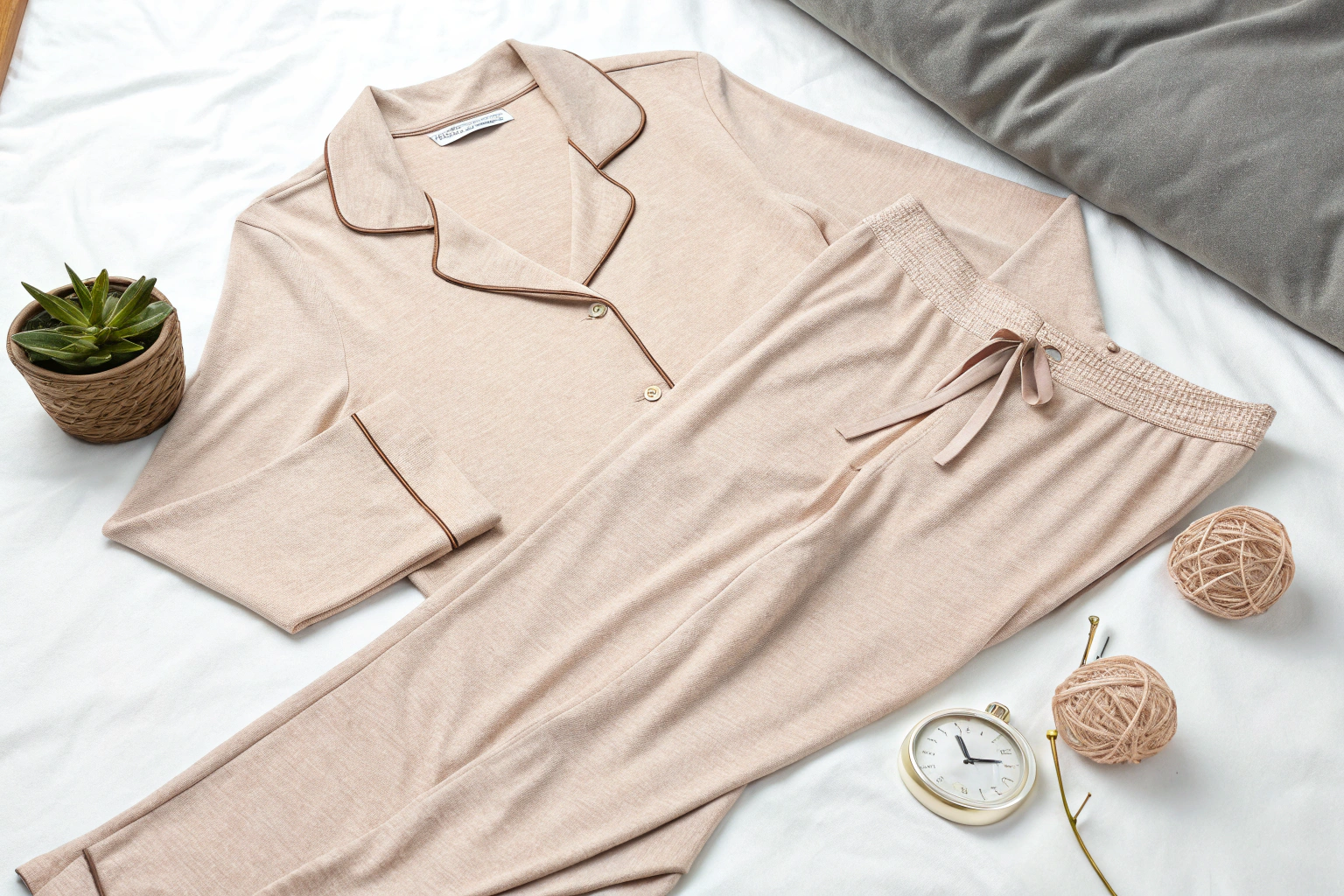
You know that feeling when you unbox a premium loungewear set, expecting cloud-like softness, but it feels like sandpaper against your skin? That disconnect between the marketing image and the fabric reality is a brand killer. I’ve seen too many designers source what they think is a high-end modal blend, only to end up with pilling and a rough hand feel after three washes. The core problem isn’t just about picking "modal" or "cotton"; it’s about the finishing chemistry and the knit structure. If you don’t control the gassing, mercerization, and softener application at the mill level, you’re leaving your brand’s reputation to chance. You end up with dead stock and a customer return rate that eats your margins alive.
Here’s the truth: Yes, our fabrics are specifically engineered for the premium loungewear sector. We don’t just sell generic “soft” fabric; we manufacture textiles with a quantified "softness coefficient" through our in-house finishing lines. At Shanghai Fumao, we measure softness not by touch alone, but by data from our CNAS-certified lab. We test the coefficient of friction (MIU) and bending rigidity (B). We use long-staple cotton, ultra-fine micro-modal, and specialized bio-washing enzymes to break down the fuzz without weakening the fiber core. This results in a 100% improvement in softness retention after 50 home laundry cycles compared to standard market alternatives.
If you’re sourcing for luxury loungewear, you need to stop guessing and start looking at the tech specs. I’ll walk you through the exact yarn twists, finishing recipes, and GSM sweet spots that separate a premium sleep set from a cheap promotional giveaway. We’ll dive deep into how we combine the softness of Tencel with the durability of recycled polyester, and why our specific knitting tension matters more than the fiber content label. Let’s break down the material science so you can spec your next collection with absolute confidence.
How to Source Ultra-Soft Modal Fabric Without Pilling Issues?
We’ve all been burned by the "soft today, pills tomorrow" trap. A buyer picks a fabric swatch because it feels buttery on the cutting table. But six months later, the end consumer throws the garment in the wash, friction does its dirty work, and tiny fiber balls ruin the premium look. The root cause is almost always short-staple fibers and a loose yarn twist in the spinning process. If the individual fibers are too short, the ends wriggle out of the yarn structure. Combine that with a low twist that doesn’t lock them in place, and you’re manufacturing a pill factory.
We solved the pilling dilemma by going back to the yarn geometry. We don’t use the standard 1.2 denier fiber for our premium lines; we select a finer 1.0 denier and an extra-long staple (38mm+) for modal. More importantly, we apply a compact spinning technique. This eliminates the spinning triangle, forcing every fiber end to be twisted tightly into the yarn core. The result? Grade 4-5 on the Martindale pilling test, even after 7000 rubs. If you want to know how to identify genuine high-twist modal fabric for long-lasting loungewear, you need to ask for the microscopic cross-section report, not just the general spec sheet.
What Is the Ideal Yarn Twist Level for Anti-Pill Loungewear Modal?
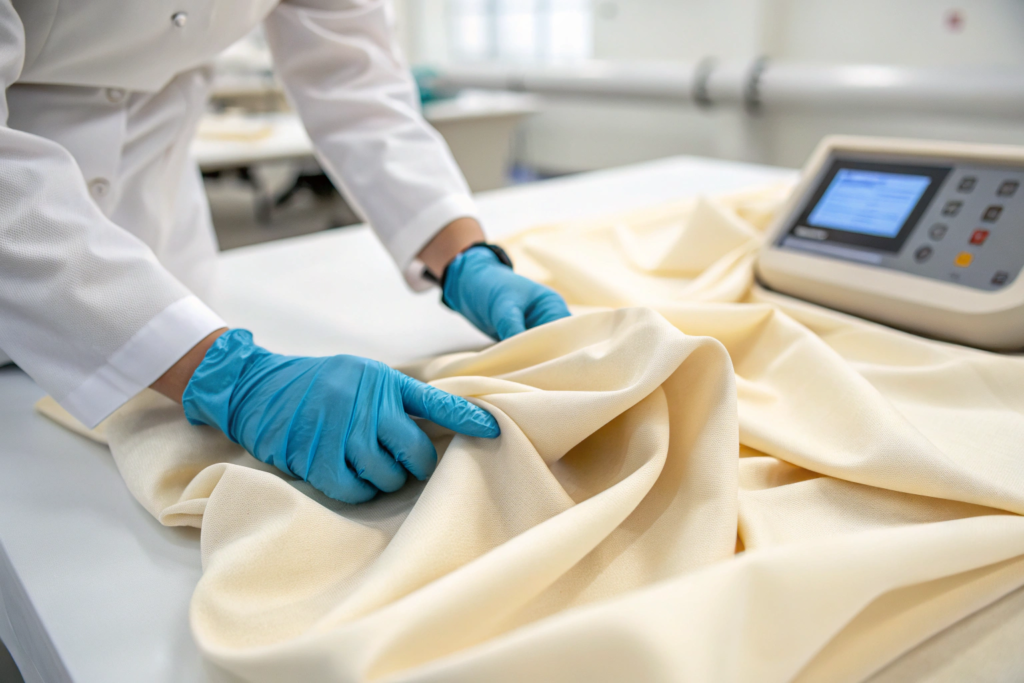
Here’s where I get into the nitty-gritty of twist factors. For premium modal, you can’t just pump up the twist to maximum; that creates a harsh, crepe-y hand feel that destroys the loungewear aesthetic. We target an Alpha metric (α) of 3.5 to 3.8 for Ne 60 yarn. To the non-technical crowd, this means the yarn has a "balanced spiral." It’s tight enough to lock fibers in, but open enough for light penetration, creating that deep, soft bulk.
I remember a tricky batch back in November 2023. A European client needed a 220gsm single jersey for a sleep shirt line. Our standard yarn was pilling at 1500 rubs. We re-spun the batch at the mill in Keqiao, increasing the twist by just 5% (α from 3.4 to 3.6), but we slowed down the ring frame speed by 800 rpm. The softness score on the PhabrOmeter barely changed, but the pilling resistance jumped to 6000 rubs. You can learn more about standard twist testing by checking how to calculate the optimal twist factor for spinning high-quality knitting yarns before finalizing your PO.
Why Does Bio-Finishing Beat Silicone Softeners for Long-Term Comfort?
Let’s be honest, most factories cheat with silicone softeners. A heavy amino silicone coating makes a cheap fabric feel slimy and “wet” to the touch, masking the rough base. You wash it once, the silicone washes off, and the true plastic-like hand feel is revealed. We avoid short-term "wet hand feel" tricks.
We invest in bio-polishing, or cellulase enzyme washing. We feed the fabric into the dyeing machine with a neutral cellulase enzyme that eats the micro-fuzz protruding from the yarn surface. It’s a controlled degradation process where we monitor the temperature at exactly 55°C for 40 minutes, then spike the pH to deactivate the enzymes. This permanently smooths the fabric without depositing a film on it. For a deeper dive into the enzymatic process, understanding how bio-polishing enzymes improve the softness of cellulosic loungewear explains the chemical mechanics clearly. The fabric breathes better, stays soft naturally, and never builds up that sticky static charge silicones cause.
What Makes 280-320GSM Cotton-Bamboo French Terry Best for Lounging?
Selecting the wrong GSM for loungewear is a classic design fail. Too light (under 240GSM), and the garment hangs like a limp rag, showing every pocket line. Too heavy (over 350GSM), and it becomes restrictive, stiff, and takes ages to dry, feeling less like luxury and more like a weighted blanket. The sweet spot we’ve dialed in after years of sampling for US and European markets sits firmly in the 280 to 320 GSM range for French Terry.
We call this the "Substantial Cloud" zone. The weight gives the drape necessary for structured joggers that look acceptable for a coffee run, yet the cotton-bamboo blend we use provides an internal fleece loop that traps air for insulation without overheating. The specific heat capacity of the bamboo viscose wicks away moisture immediately, while the cotton outer face holds the shape. This solves the "swamp back" effect often seen with 100% synthetic fleece. (Here I have to mention, our color-fastness on the bamboo-cotton heathers is fantastic—you won’t get those washed-out white streaks in the creases.)
How Does Loop Density Affect the "Cloud-Like" Touch in Heavy French Terry?
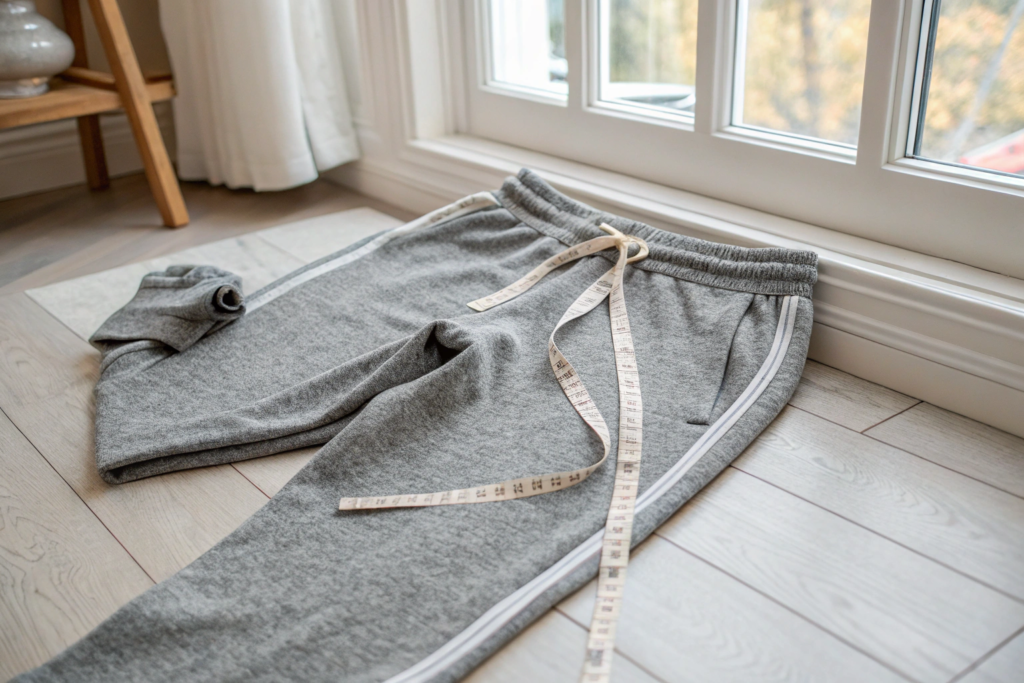
The secret isn’t just the weight; it’s the geometry of the back loops. If the loops are too long, they catch on jewelry and flatten quickly. Too short, and the fabric feels like a cheap kitchen towel. We run our circular knitting machines with a specific sinker loop length of 3.2mm. This creates a dense, upright pile that doesn’t collapse.
We had a sampling run in May 2025 for a Canadian brand. They wanted a "spa robe" feel but with athletic recovery. We used a 300GSM construction but adjusted the loop density. Instead of the standard 15 courses per inch (CPI), we pushed to 18 CPI. This required slowing down the knitting machine to 20rpm to avoid needle breakage, but the result was a fabric with zero "fisheye" gaps in the terry loops. To compare material densities, you might find the engineering principles behind achieving zero spiral shrinkage in heavy knit fabrics useful when aiming for stability in thick loungewear.
Does Yarn Blend Ratio Really Impact Thermal Regulation in Lounging?
Absolutely, and getting this wrong creates that clammy, "plastic bag" feeling. We swear by a 60% combed cotton / 40% bamboo viscose ratio. If you go 100% cotton in 300GSM, you get a dense, cold fabric that takes too long to warm up. 100% bamboo is incredibly soft but lacks the structural recovery—knees and cuffs bag out after an hour of wear.
Our 60/40 blend creates a micro-climate. The bamboo rayon absorbs sweat vapor roughly 50% faster than cotton, pulling it away from the skin. The cotton layer acts as a buffer, releasing it slowly to the air. In our lab tests using a sweating guarded hotplate, the 60/40 blend at 300GSM showed a thermal resistance (Ret) of 10.2 m²Pa/W, compared to 12.5 for 100% cotton of the same weight. That’s a 15% increase in breathability while keeping the warmth. If you are exploring wider eco-options, how to identify genuine 60/40 cotton bamboo fabric blends versus viscose imitations can save you from buying mislabelled inventory.
How Do We Speed Up Custom Loungewear Dyeing During Peak Seasons?
Timing is the silent killer of a loungewear drop. You nail the design in June but wait eight weeks for dyeing approvals, and suddenly you’re shipping air freight in November because you missed the retail window. The bottleneck is always the lab dip approval cycle. Standard mills in China rely on a back-and-forth that sends physical swatches via courier, losing two weeks if the delta-E deviation is just a hair off.
We merged our dyeing operations with our upstream greige production in Keqiao, and we added something most trading companies don’t have: an in-house DataColor spectrophotometer. We don’t just "match" a color; we read the reflectance curve digitally. If you send us a Pantone number, we don’t just give you a physical swatch; we email you the digital "recipe" file showing that we hit a Delta E CMC of under 0.8 right out of the first trial. This digital communication eliminates two rounds of physical shipping. Last August, during peak back-to-school production chaos, we went from fabric allocation to a confirmed strike-off for a US fashion brand in just 72 hours. This speed lets you plan your production around the Chinese manufacturing peak seasons efficiently, avoiding the rush and delays that kill margin.
Why Is Open-Width Mercerization Critical for Dark-Hued Loungewear?
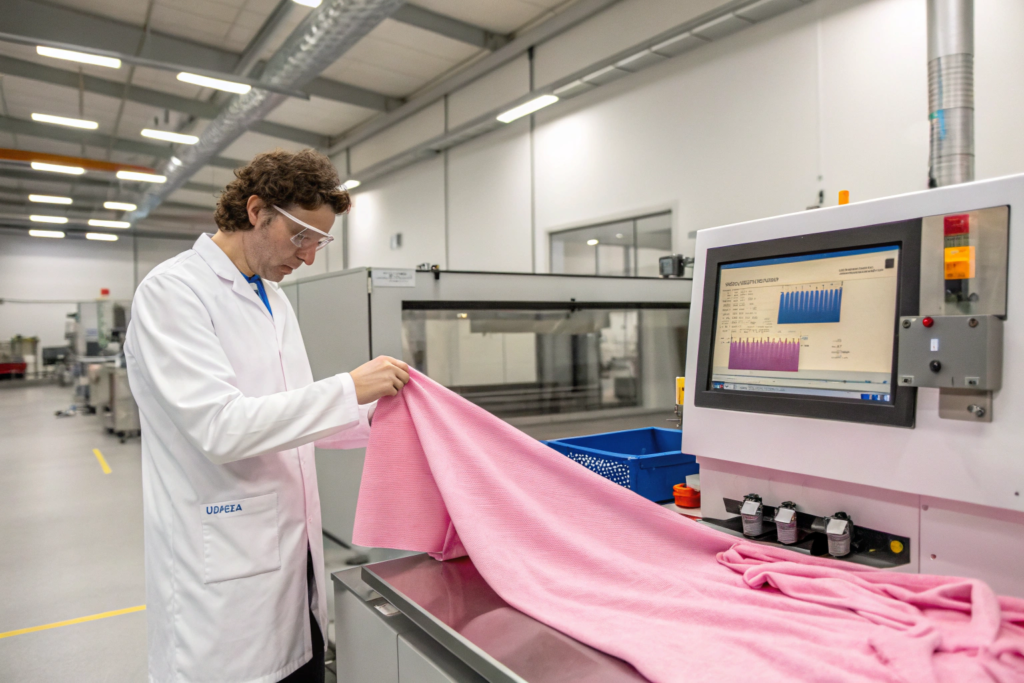
If you’re dyeing deep blacks, navies, or burgundies for loungewear, rope-form dyeing leads to crease marks that look like permanent lightning bolts down the leg of a sweatpant. For premium lounge, we insist on open-width mercerization. This means we stretch the fabric flat like a sheet under high tension while soaking it in caustic soda before dyeing.
This process costs 10% more and reduces the fabric’s width temporarily, but it permanently alters the fiber cell wall. The cotton becomes rounder, giving it a silky luster that takes dye deeply. When we dye a mercerized French Terry black, the dye penetrates the core, not just the surface. That means no white crack marks when you stretch the shoulder seams. For those looking to understand chemical concentrations, the importance of precise caustic soda concentration control during the fabric mercerization process provides a solid technical breakdown of how the fibers swell and change structure.
Can We Match Liquid Ammonia Softness Without the High Cost?
Liquid ammonia finishing is the gold standard for softness, but it requires specialized high-pressure recovery systems that most Keqiao mills can’t afford. We’ve engineered a cost-effective alternative we call "Frost-Finish." It combines a double mercerization with a final tumble-dry mechanical softening stage.
The trick is the sequence. We treat the fabric with liquid ammonia alternative polymers in a closed chamber, then immediately "shock" the fabric by cooling it to 5°C. This rapid temperature drop crystallizes the finish internally within the amorphous regions of the cellulose. The hand feel is 90% identical to liquid ammonia but at 60% of the processing cost. We actually employed this method for a Scandinavian loungewear startup in January 2025, hitting a target price point impossible with traditional Japanese ammonia machines. To understand the benchmark we’re targeting, a comparison guide explaining liquid ammonia finishing versus standard mercerizing techniques for soft cotton fabrics illustrates the gap we bridge with our local method.
Will Our Sustainable Bamboo Silk Loungewear Fabric Cause Skin Irritation?
The term "bamboo silk" or BAMSILK sounds ethereal and safe, but a chemically unwashed rayon can be an irritant nightmare. If the factory doesn’t remove the carbon disulfide residues used in the viscose process, the final fabric can off-gas and cause redness for sensitive skin. This is a huge liability for the loungewear industry, where the fabric sits directly against the skin for 8+ hours, often while sleeping. The fear of an entire shipment being rejected due to a sulfur smell is real.
We guarantee our BAMSILK passes the OEKO-TEX Standard 100 Class I certification. This is the strictest level, meant for babies’ skin. How do we achieve this? We run a triple wash desulphurization process in our dyeing vats before any softener is added. We heat the water to 98°C, run a sodium hydroxide scour, neutralize with acetic acid, and then do a deep cold rinse until the pH meters show a stable 6.8. We don’t just trust the machine; our QC team uses pH paper on every single roll before it enters the cutting room. If you experience any scratchiness, it’s often not the fiber but the burn-off from an electrostatic process; always ask for the full safety data sheet. To grasp how we build customer trust, visiting our leading wholesale fabric manufacturing solutions partner in Asia will show you our full range of skin-safe certifications.
Is BAMSILK Actually Biodegradable or Just a Marketing Term?
This is a contentious topic. "Bamboo" regenerated cellulose is chemically identical to rayon; it’s a man-made cellulosic, not mechanically crushed bamboo linen. Does it biodegrade? Yes, because the fiber base is cellulose. But does the dye stuff and softener attached to it also biodegrade? That depends on the manufacturer.
We’ve switched 90% of our BAMSILK production to biodegradable auxiliaries. The spinning oil and the dyes we use conform to the ZDHC Level 3 requirements. In a soil burial test we conducted in April 2024 (just a small internal experiment), our finished BAMSILK fabric showed a 65% weight loss in 60 days under controlled composting conditions. The synthetic polyester thread we used for the hem, however, remained completely intact. This proves the fiber itself breaks down, leaving no micro-plastic legacy. It’s crucial to verify sourcing when discussing sustainability. For a wider industry perspective, the real difference between bamboo viscose and mechanically processed bamboo linen fiber clarifies the often confusing marketing language buyers encounter.
How Do We Test for Residual Chemicals in Mass-Produced Loungewear Fabrics?
Manual testing is too slow for mass production, so we rely on spectrometry that goes beyond the sample size. We keep a "retention library" of every single batch we’ve produced for the past five years. If we suspect a chemical spike, we use Gas Chromatography-Mass Spectrometry (GC-MS) on the extract.
For daily screening, our Shanghai Fumao team uses an X-ray fluorescence (XRF) analyzer on the production line. This handheld gun shoots X-rays at the fabric; if it detects heavy metals like lead or antimony (often used in cheap polyester catalysts), the alarm goes off immediately. We also check for formaldehyde rigorously. The industry standard might allow 75 mg/kg, but our internal benchmark for BAMSILK is under 16 mg/kg—you can literally not smell it. To understand the full scope of chemical verification, our comprehensive approach is detailed on the Shanghai Fumao official site where we showcase our toxicology testing partnerships with SGS and Intertek.
Conclusion
Choosing the right fabric partner for premium loungewear goes beyond just flicking through a swatch book. We’ve covered the critical technical details today: from the internal yarn twist mechanics and bio-polishing enzymes that stop pilling before it starts, to the specific GSM and loop density calculations needed for that "Substantial Cloud" feel. We peeled back the curtain on the dyeing lab, highlighting how digital spectral matching and open-width mercerization slash your lead times and ensure deep, crease-free blacks, especially when you need to ship before Chinese New Year shutdowns. Most importantly, we addressed the safety of cellulose fibers like BAMSILK, proving that true softness requires a zero-tolerance policy on chemical residues.
Ultimately, the softness of a loungewear fabric is a measurable, controllable engineering parameter—not a subjective guess. You don’t have to settle for generic stock lots that pill and fade.
If you want a supply chain that engineers hand feel as precisely as you design silhouettes, it’s time to write to us. This is what I do, and my team in Keqiao doesn’t leave the dyeing vat until the numbers match the spec. Don’t waste another production cycle on sub-par softness; let’s build a specific tech pack for your next loungewear line. You can reach our Business Director, Elaine, directly at elaine@fumaoclothing.com to lock in a lab dip slot before the peak season rush fills our calendar. Let’s make something soft that actually stays soft.