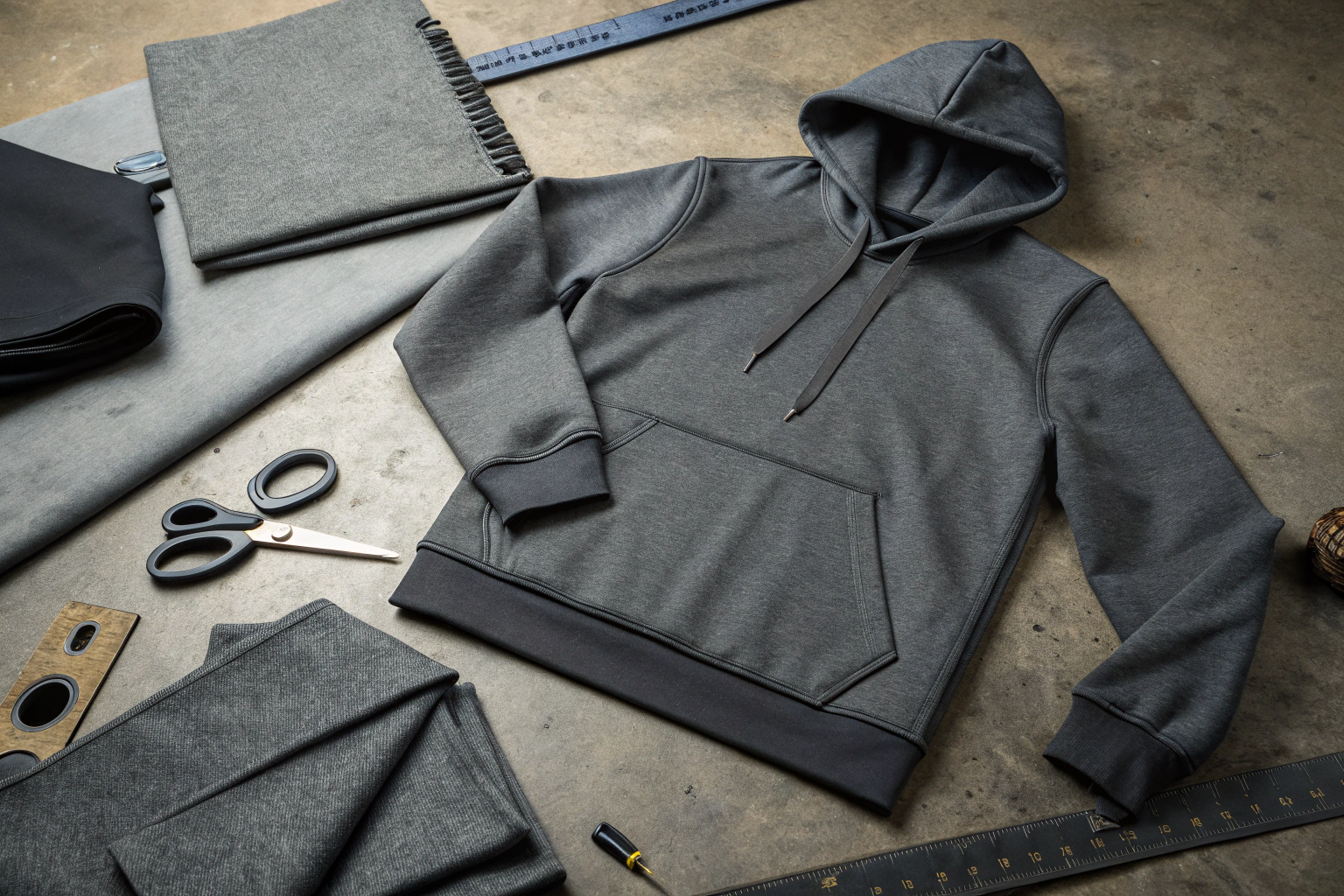
I remember the exact moment heavyweight hoodies stopped being a commodity and became an obsession. It was spring 2022, and a young streetwear designer from Chicago sent me a grainy photo of a washed black hoodie with the message: "Can you make this? Not like this. Better than this." The reference was a heavily structured, almost stiff cotton fleece that held its shape like a sculptural garment, not a limp sweatshirt. I cut a swatch from our standard 360gsm fleece and sent it to him. His reply was polite but devastating: "Too soft. No structure. Feels like pajamas, not architecture."
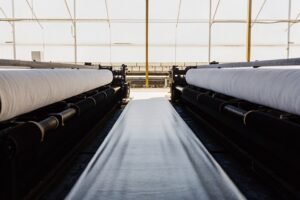
That critique sent me down a rabbit hole of fleece engineering that lasted 18 months. We deconstructed fabric from a Yeezy Gap hoodie, a vintage 1990s Champion reverse-weave, and a Japanese loopwheeled sweatshirt. We measured the yarn twist, the loop density, the washing techniques, and the cross-sectional geometry of every single fiber. What we learned is that a truly great heavyweight hoodie fabric is a precise balance of contradictory forces: heavy but breathable, stiff but pliable, dense but not suffocating. At Shanghai Fumao, we have now engineered that balance into a family of heavyweight fleeces that serve the architectural streetwear aesthetic without sacrificing wearability.
What Exactly Makes a Fleece "Heavyweight" in the Yeezy Gap Context?
The term "heavyweight" has been stretched so thin by fast fashion marketing that it barely means anything anymore. I have seen brands label a 300gsm cotton fleece as "heavyweight" because it feels slightly thicker than their tissue-weight summer hoodies. In the Yeezy Gap universe, heavyweight is not a relative term. It is an absolute, structural commitment to fabric mass.
A true heavyweight hoodie fleece starts at 420gsm and goes up from there. The Yeezy Gap mainline hoodie was famously cut from a 450-480gsm cotton-polyester fleece. That weight class creates a garment that weighs nearly two kilograms in size large. It hangs from the shoulders like a weighted blanket. The hood stands up on its own without interfacing. The cuffs hold their cylindrical shape rather than collapsing into wrinkles. This is not about warmth. It is about silhouette, about how the garment occupies space even when the wearer is standing still.
How Does GSM Differ from Fabric Density, and Which One Determines Drape?
GSM, or grams per square meter, is the industry standard for fabric weight. But weight alone does not dictate how a hoodie hangs. A 500gsm fabric can drape like a wet towel or stand like armor, depending on its density. Density is about how tightly the yarns and loops are packed into that given weight.
Think of it like bread. A dense sourdough and a fluffy brioche can weigh the same per slice, but the sourdough is compact and chewy, while the brioche is airy and collapsible. The difference is the void space inside the structure. A fleece with a high GSM but a low loop density will feel heavy but collapse under its own weight because the loops are tall and sparsely anchored. A fleece with a high GSM and a high loop density will feel substantial and hold its shape because the loops are shorter, thicker, and packed tightly against each other.
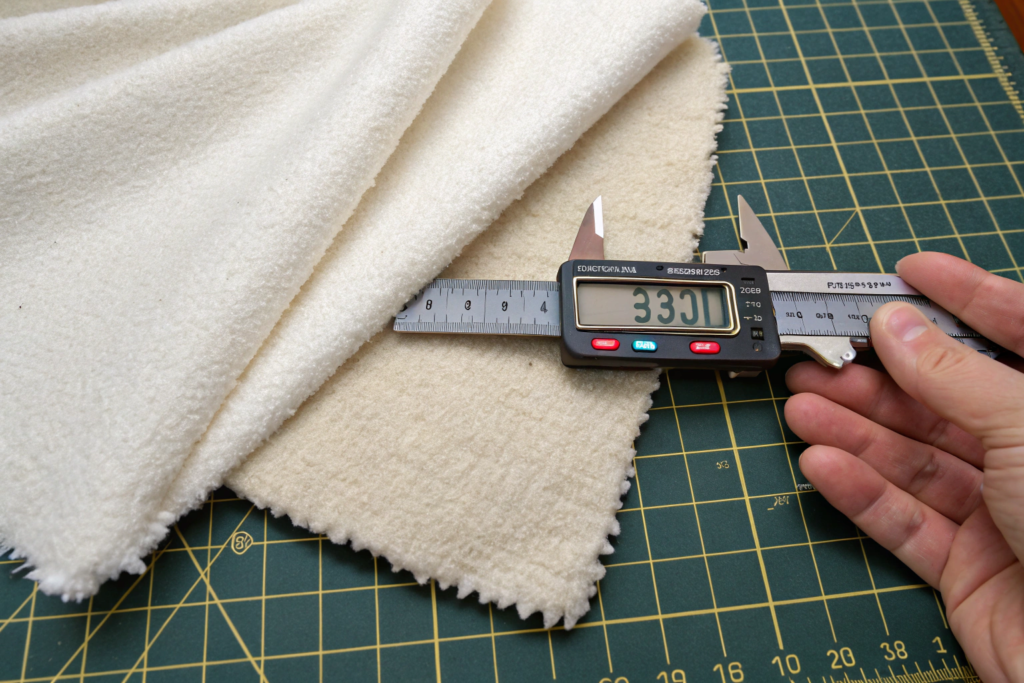
We measure this as "loop density" in loops per square centimeter. A standard cozy hoodie fleece might have a loop density of 40 loops per square centimeter on the interior face. Our architectural heavyweight fleece targets 65 loops per square centimeter. Every single loop is a tiny structural column supporting the face fabric. More columns per square centimeter mean less sag, less stretch, and a crisper silhouette. I have seen hoodies made from 500gsm low-density fleece that look formless after three washes. A 450gsm high-density fleece holds its architecture for years. This guide on understanding the relationship between fabric GSM and yarn count in knitted textiles explains the physics in more detail.
What Role Does Yarn Twist Play in the Structured "Architectural" Feel of the Fabric?
If loop density is the skeleton of the fabric, yarn twist is the muscle. Twist is the number of turns per inch imparted to the cotton fibers as they are spun into yarn. A low-twist yarn is soft, fuzzy, and compressible. A high-twist yarn is hard, smooth, and springy.
For a structured heavyweight hoodie, we use a high-twist yarn for the face side. We are talking about a twist multiplier of 4.2 or higher, which in plain English means the fibers are locked together under significant torsional tension. This does three things. First, it increases the yarn’s resistance to bending, which translates directly into fabric stiffness. Second, it reduces the hairiness of the yarn surface, giving the face fabric a cleaner, more architectural appearance. Third, and most importantly, it creates a memory effect. A high-twist yarn wants to return to its original shape when deformed. A hoodie made from high-twist face yarns resists wrinkling and recovers its structure after being folded or sat on.
The trade-off is comfort against the skin. A pure high-twist face can feel almost abrasive. That is why we pair it with a low-twist, open-end yarn for the interior loopback surface. The skin-side loops are soft, bulky, and air-trapping. The face is crisp and structural. The two yarn systems are knitted simultaneously on a fleece knitting machine, creating a fabric that is soft where it touches the body and rigid where it defines the silhouette. This split personality is the technical heart of a genuinely premium heavyweight hoodie fabric.
Can a 500gsm Cotton Fleece Still Be Breathable Enough for Daily Wear?
The number one objection I hear from buyers considering heavyweight fleece is: "Our customers will overheat. It is too heavy to wear indoors." This concern makes sense on the surface. More fabric mass should mean less air permeability. But the reality of fleece physics is more interesting.
Breathability in a knitted fleece is not primarily determined by weight. It is determined by the structure of the interior loopback and the air permeability of the face knit. A properly engineered heavyweight fleece actually has a higher potential for convective airflow than a cheap, tightly knitted midweight jersey. The loops create an internal air channel system. If the face knit is not over-calendered or coated, air can move through the thickness of the fabric relatively freely. The insulation comes from trapped still air in the loops, not from a physical barrier to airflow.
How Does the Loopback Structure Create an Internal Air Channel System?
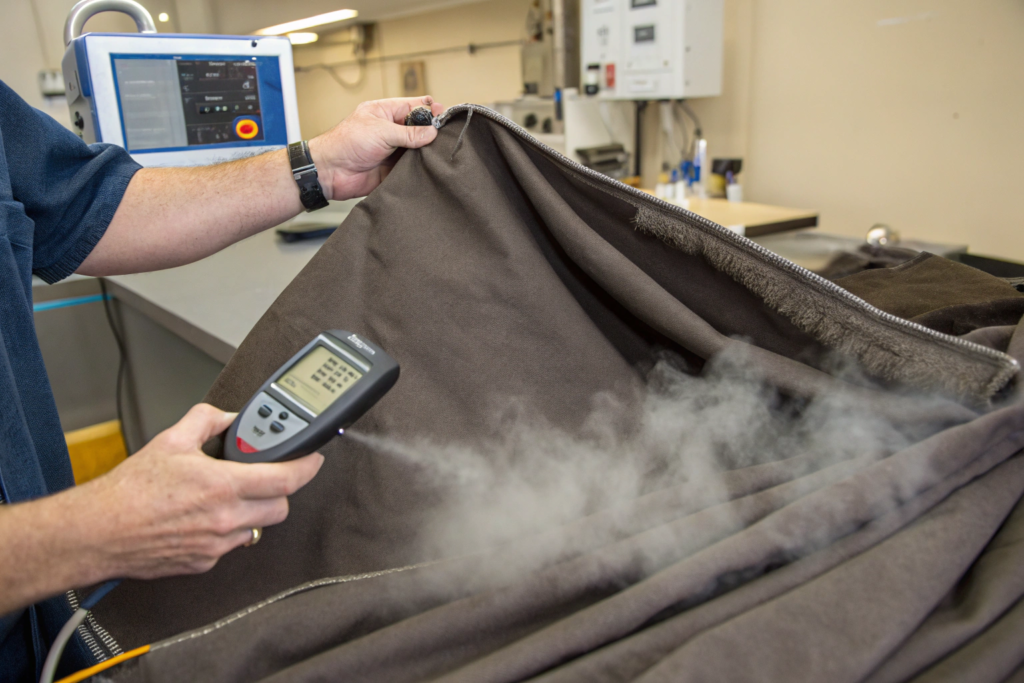
Look at the inside of a quality heavyweight hoodie under a magnifying glass. The loops are not random fuzz. They are organized rows of small, standing arches. Each arch creates a tiny air pocket between the skin and the fabric face. These pockets trap air, and trapped air is the world’s best insulator per unit weight.
But the loops also create continuous channels running parallel to the skin. When the wearer moves, these channels pump air. Arm movement compresses some loops and expands others, forcing air to circulate through the fabric structure. This is called the bellows effect. It is the same principle that makes a down jacket breathe: the insulation is not a solid block; it is a porous, mechanically active structure.
The key engineering variable is loop height. Taller loops trap more air and provide more insulation but are more prone to collapse under pressure. Shorter loops are denser and more stable but trap less air. For our heavyweight hoodie fleece, we target a loop height of 2.5 to 3.0 millimeters. This is tall enough to create significant air volume, but short enough that the loops support each other laterally and do not mat down completely under body weight or backpack straps. We measure loop resilience by compressing the fabric under a 5kPa load for one hour, then measuring how much of the original loft recovers after the load is removed. Our target is 85% loft recovery or higher. A fabric that falls below 70% will feel flat and clammy after an hour of sitting in a chair.
Does the Cotton-Polyester Blend Ratio Affect Thermal Regulation More Than Weight?
A 100% cotton 500gsm hoodie and a 80/20 cotton-polyester 500gsm hoodie can weigh the same on a scale and feel completely different on a body. The polyester is the wildcard.
Cotton is hydrophilic. It absorbs moisture vapor from the body and holds it inside the fiber structure. This is great for comfort in dry conditions. The cotton fibers swell as they absorb moisture, which tightens the fabric structure and reduces air permeability. This is why a wet cotton hoodie feels cold and clammy. The airflow has been choked off. Polyester is hydrophobic. It absorbs almost zero moisture. The fibers do not swell when wet. The fabric retains its air permeability even when the wearer is sweating.
The optimal blend for a heavyweight hoodie that needs to work both indoors and outdoors is 80% cotton, 20% polyester. The cotton provides the weight, the hand feel, and the natural fiber aesthetic. The polyester acts as a structural skeleton that prevents the fabric from collapsing when it gets damp. It also improves drying speed and reduces the overall garment weight when wet. A 100% cotton heavyweight hoodie can gain 30% of its dry weight in absorbed water. That turns a 1.8kg hoodie into a 2.3kg wet blanket. The 20% polyester cuts that water absorption by roughly a quarter.
For a more detailed exploration of this topic, I recommend reading about how fiber blend ratios impact the thermal comfort of heavyweight knitwear. It breaks down the physics of moisture management in terms that matter for real-world wearability.
| Performance Attribute | 100% Cotton 500gsm | 80/20 Cotton/Poly 500gsm | Resulting Wear Difference |
|---|---|---|---|
| Wet Weight Gain | ~30% increase | ~22% increase | Lighter feel when sweating |
| Loft Recovery | ~75% after compression | ~88% after compression | Less flatting over time |
| Drying Speed | Slow, retains moisture | Moderate, wicks moisture | Less cold-clammy feel |
| Aesthetic Aging | Soft, vintage fade | Holds structure, less fade | Polyester stabilizes shape |
What Washing and Dyeing Techniques Replicate That "Vintage" Washed Black Look?
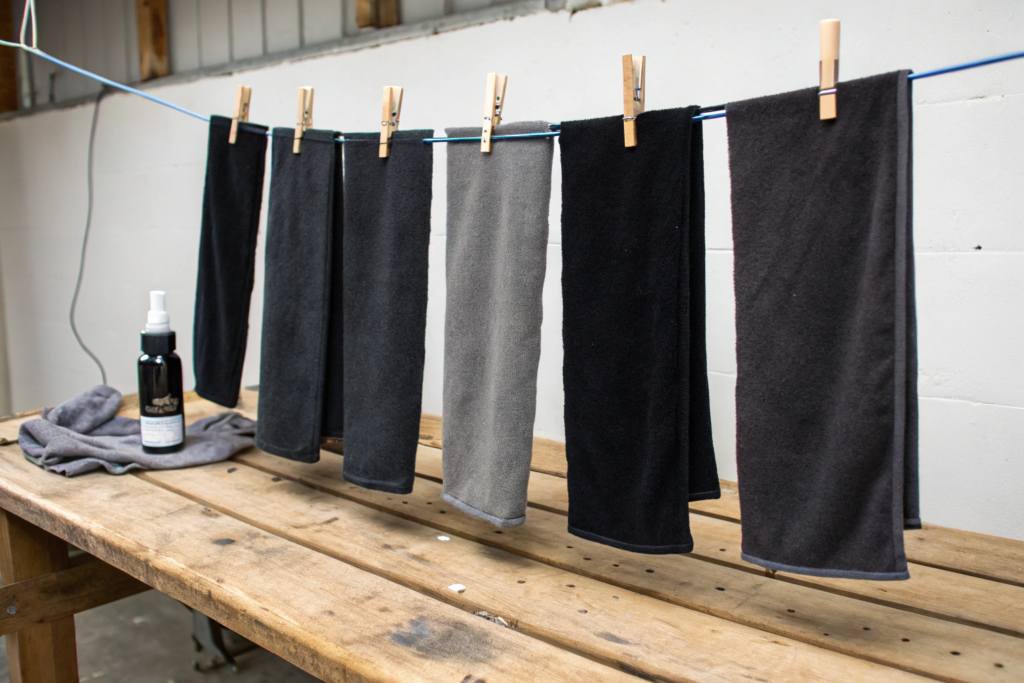
That perfect washed black—the one that looks like a hoodie that has been loved for a decade but was actually made last month—is one of the hardest colors to achieve consistently in textile production. It is not a single dye process. It is a sequence of dyeing, washing, and mechanical finishing steps that must be choreographed precisely.
The fast fashion version of "washed black" is a pigment-dyed fabric that sits on the surface of the yarns and fades to a ugly gray-brown after three washes. The premium streetwear version is a garment-dyed, enzyme-washed reactive black that achieves its character through controlled, intentional color removal from the high points of the fabric structure. This is the difference between looking "faded" and looking "distressed." Faded is accidental. Distressed is engineered.
What Is Garment Dyeing and Why Does It Create More Natural Fading Than Piece Dyeing?
There are two ways to color a hoodie. Piece dyeing means we dye the fabric in roll form before it is cut and sewn. The color is perfectly uniform from edge to edge. Every seam, every pocket, every panel is the exact same shade. This is efficient and consistent. It is also visually flat. A piece-dyed black hoodie looks new until it looks old. There is no in-between character.
Garment dyeing means we cut and sew the entire hoodie from greige (undyed) fabric, then dye the finished garment in a large rotary dyeing machine. This process creates inherent, beautiful color variation. The seams absorb dye differently than the flat panels because the fabric is doubled over and stitched tightly. The ribbed cuffs and waistband absorb dye differently than the jersey-lined hood. The thread used for stitching is usually polyester, which takes dye differently than the cotton body, creating a subtle tonal contrast at every seam line.
But the real magic of garment dyeing is what happens during the washing stage. Because the garment is dyed as a three-dimensional object, the abrasion from the dyeing machine’s rotation hits the raised surfaces—the seam edges, the pocket corners, the hood opening—harder than the recessed surfaces. This creates a natural, three-dimensional wear pattern before the hoodie has ever been worn by a customer. It is the textile equivalent of a sculptor adding patina to a bronze. You can learn more about this technique in this detailed walkthrough of the garment dyeing process and its effect on cotton fabric appearance.
How Do Bio-Enzyme Washes Create a Soft Hand Without Chemically Damaging the Fleece?
A heavyweight hoodie fresh off the knitting machine can feel like a board. The cotton fibers still have their natural waxes and pectins. The yarn twist is tight. The fabric surface is covered in tiny, projecting fiber ends that create a rough, scratchy hand. The traditional way to soften this is a silicone softener bath. Silicone works, but it coats the fibers in a synthetic film that can feel greasy and reduces the fabric’s natural moisture absorbency.
We use a bio-enzyme wash instead. Enzymes are biological catalysts—proteins that speed up specific chemical reactions. In textile finishing, we use cellulase enzymes that selectively digest the projecting microfibrils on the surface of the cotton fibers. The enzyme acts like a microscopic pair of scissors, snipping off the tiny fiber ends that cause scratchiness without attacking the main fiber body that provides strength.
The result is a surface that is genuinely soft because the irritant fibers have been removed, not just coated over. The process also enhances the washed vintage appearance because the enzyme action is more aggressive on the raised loop tips and seam edges, creating a subtle, natural-looking fade pattern that mirrors years of mechanical wear. Our standard enzyme wash cycle runs for 45 minutes at 55°C with a precisely controlled pH of 5.5. We monitor the fabric strength before and after the enzyme treatment using a grab tensile test. Our internal standard is a maximum 8% strength loss after enzyme washing. If the strength loss exceeds 8%, we reduce the enzyme concentration for the next batch. This ensures that softness is not bought at the expense of durability.
How Does Cross-Weave Stability Prevent the Dreaded "Hoodie Twist" After Washing?
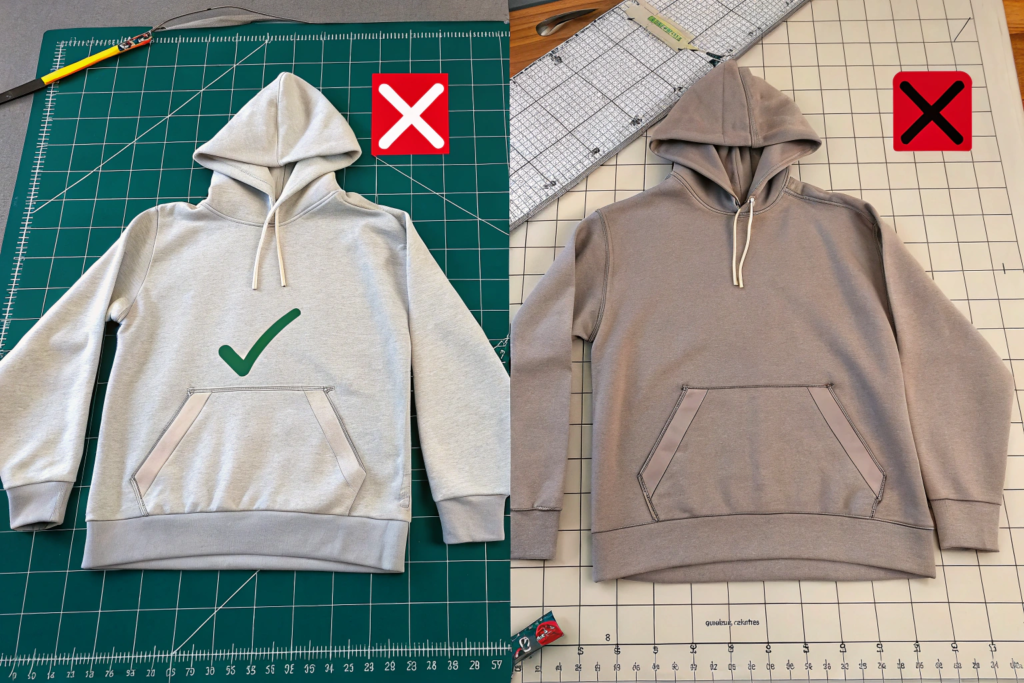
There is a specific heartbreak that only heavyweight hoodie enthusiasts understand. You buy the perfect hoodie. The weight is right, the color is perfect, the fit is exactly what you wanted. You wash it once, following the care label instructions precisely. You lay it flat to dry. And when you pick it up, the side seams have spiraled around the body. The hoodie now twists to the left. It will never hang straight again.
This is called torque or spirality, and it is the single most common structural failure in heavyweight knit garments. It is caused by residual twist energy in the yarns. When cotton yarns are spun with a high twist, they want to untwist. During knitting, this torsional energy is locked into the loop structure. When the fabric gets wet and the cotton fibers swell, the locked-in energy releases, and the entire fabric panel rotates. A hoodie that was cut straight on the cutting table becomes a parallelogram after its first wash.
What Is Spirality in Knitted Fleece and How Does Yarn Ply Balance Affect It?
Spirality is the tendency of a knitted fabric to skew or twist after washing. It happens because single-jersey knit structures are inherently asymmetric. The loops on the face of the fabric lean slightly in one direction. If the yarn used to knit those loops carries its own residual twist in the same direction, the two rotational forces add together, and the fabric torques.
The solution is yarn ply balance. A singles yarn—one strand twisted in one direction—will always have residual torque. A two-ply yarn—two singles yarns twisted together in the opposite direction—can be engineered to have near-zero residual torque because the two opposing twists cancel each other out. For our heavyweight hoodie face yarn, we use a two-ply construction with balanced twist. The singles are spun with a Z-twist. The two singles are plied together with an S-twist. The S-twist and Z-twist offset each other, creating a yarn that is structurally stable and does not fight itself when it gets wet.
But two-ply yarn is more expensive. It requires an extra spinning step. Many budget hoodie manufacturers skip it and use a cheaper singles yarn, then try to fix the spirality problem with a chemical setting process called cross-linking. Cross-linking can stabilize the fabric, but it is a temporary fix. The chemical bonds break down with repeated washing. By the tenth wash, the hoodie is twisting again. A two-ply balanced yarn is a permanent solution. The stability is built into the molecular architecture of the yarn itself, and it lasts for the life of the garment.
Does Pre-Shrinking and Compacting the Fabric Before Cutting Eliminate Post-Wash Distortion?
Mechanical finishing is the second line of defense against spirality and shrinkage. Even a balanced two-ply yarn can produce a fabric that shrinks if the knitted structure is not properly relaxed before cutting.
When fabric comes off a circular knitting machine, it is under tension. The loops are elongated and stressed. If you cut and sew this fabric immediately, the first time the garment hits water, those stressed loops will relax and contract. The garment shrinks, and the spirality forces are magnified. The solution is a mechanical finishing process called compacting or compressive shrinkage. The fabric is passed through a compactor machine that uses a system of rollers and a heated felt blanket to deliberately overfeed the fabric and push the loops closer together. This forces the shrinkage to happen at the fabric stage, before cutting.
We run every roll of heavyweight fleece through our compactor with a target shrinkage rate of 5% in length and 3% in width. After compacting, we cut a test square from the roll, wash it at 40°C, tumble dry it, and measure the residual shrinkage. Our pass standard is less than 2% residual shrinkage in either direction. If the test square exceeds that, the entire roll is re-compacted. This is tedious, time-consuming quality control, but it is the only way to guarantee that a hoodie will fit the same on its 50th wash as it did on day one.
For more technical detail on this, this article on how to prevent spirality and torque in single jersey knit fabrics provides an excellent engineering-level explanation with practical solutions.
| Distortion Cause | Budget Solution | Fumao Premium Solution | Longevity of Fix |
|---|---|---|---|
| Yarn Torque | Chemical cross-linking | 2-ply balanced twist yarn | Permanent |
| Fabric Stress | Skip compacting step | Compressive shrinkage pre-cutting | Permanent |
| Wash Energy Release | Label "dry clean only" | Pre-wash greige fabric before dyeing | Permanent |
| Sewing Bias | Ignore cutting direction | All panels cut along wale line | Permanent |
Conclusion
A truly great heavyweight hoodie is not a simple garment. It is a carefully engineered system of yarn selection, knitting tension, dyeing method, enzyme finishing, and mechanical stabilization. Every single step leaves a fingerprint on the final product. The weight of the fabric creates the silhouette. The loop density sustains the architecture. The garment dyeing builds authentic vintage character. The enzyme wash delivers a soft hand without chemical compromise. And the balanced-ply yarn with compressive shrinkage ensures the hoodie stays straight and true for years of wear and washing.
At Shanghai Fumao, we did not just source a heavy fleece and call it premium. We reverse-engineered what makes the world’s most coveted heavyweight hoodies feel the way they feel, and we built a production system that delivers that feeling consistently, roll after roll. We control the yarn spinning, the knitting gauge, the dye bath chemistry, and the mechanical finishing in one integrated facility in Keqiao. That vertical control is what allows us to promise a fabric that meets the exacting standards of the architectural streetwear market.
If you are developing a heavyweight hoodie collection and need a fabric partner who understands the difference between heavy and architectural, between faded and authentically washed, between soft and structurally sound, we are ready to collaborate. We can send you a Heavyweight Fleece Development Kit with physical swatches of our 420, 460, and 500gsm constructions, each in raw, garment-dyed, and enzyme-washed states, plus our full technical data sheets on shrinkage, spirality, and pilling resistance. Contact our Business Director, Elaine, at elaine@fumaoclothing.com to request your kit. Let us build the hoodie that your customers will measure every future hoodie against.