
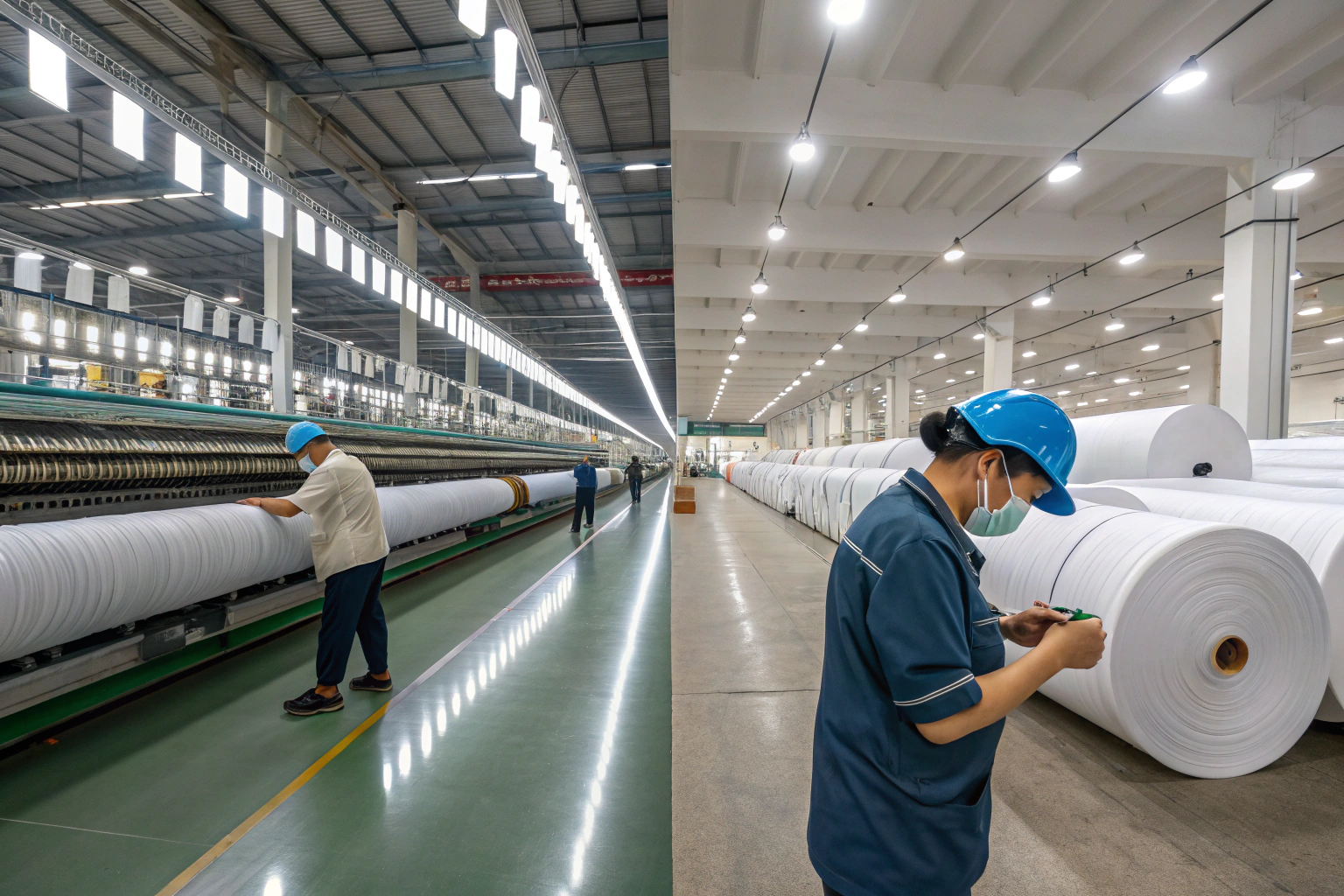
We have all been there. You plan a seasonal collection launch for a European market, everything looks perfect on the Gantt chart. Then suddenly, your shipment leaves port two weeks late because nobody warned you about the Golden Week shutdown in China. Your summer dresses hit the shelves just as the autumn markdowns start. That stings. The problem is not the manufacturing capacity; we have plenty of that in Keqiao. The problem is that most sourcing calendars ignore the biological rhythm of the Chinese textile industry. We treat production like a vending machine—press a button, wait exactly 30 days, out comes the fabric. But factories breathe. They sprint, they rest, they recalibrate. Ignore the respiration rate of our supply chain, and your cash flow drowns in late penalties.
You can absolutely slash three to four weeks off your lead times without switching suppliers or paying air freight premiums. The secret lies in aligning your procurement schedule with the Chinese manufacturing tide. At Shanghai Fumao, we map our entire capacity—from yarn procurement to container loading—against the five seasonal phases of the year. When a buyer aligns with this rhythm, we deliver a 20% reduction in production calendar days simply by avoiding bottlenecks.
But this isn’t just about avoiding delays. It is about leveraging the quiet periods to get VIP treatment. When you understand the ebb and flow, you stop fighting the current and start riding the wave.
How Does the Pre-Chinese New Year "Rush and Stress" Strategy Flaw Affect Your Fabric Quality?
Every November, the same panic sets in. Inboxes overflow with subject lines screaming "URGENT: Need delivery before CNY." Buyers realize that the Chinese New Year (CNY) shutdown is not just a public holiday; it is a three-to-four-week total industrial blackout. The immediate instinct is to cram four months of orders into six weeks of production.
This rush creates a quality paradox. You rush to get fabric made before the holiday, but the workforce is mentally checked out, looking at train tickets home. The factory is overloading dyeing vats, pushing machinery past standard RPM limits, and skipping the 24-hour resting time for cotton relaxation. I remember a shipment from January 2023 for a London-based high-street brand. The buyer pushed so hard to ship before the holiday that our printing factory ran the rotary machines at 120% standard speed. The result? The registration marks on the floral rayon shifted by 1.5mm, making the entire batch of 5,000 meters unsellable as premium grade. We had to downgrade it to a discount retailer at a 40% loss. That hurt us both.

What Are the Hidden Defects Caused by Pre-Holiday Production Overload?
When you compress a 45-day standard woven fabric production cycle into 25 days, you are not saving time; you are borrowing quality that you will pay back with interest.
The biggest victim is moisture regain balance. Standard cotton fabric needs at least 48 hours to naturally rest after heat-setting to absorb ambient moisture. During the pre-CNY rush, I see factories—not ours, we strictly forbid this—spraying water mist directly onto rolls to hit weight specifications quickly. This artificial moisture causes uneven shrinkage later. For every percentage point you skip in the relaxation process, you risk a 3% to 5% shrinkage variance after the first consumer wash. For a structured cotton blazer, that means the difference between a perfect fit and a customer return.
Then you have the curing issue with coated fabrics. Our coating factory uses a standard curing time of 72 hours for PU leather bonding agents to fully cross-link. During the rush, competitors might rush this to 36 hours. The fabric looks fine on arrival. It passes inspection. But six months later, the coating delaminates. I learned this hard lesson in 2019 when we fast-tracked a process for anti-pilling treatment on knitted wool blends without the full post-treatment relaxation cycle. The surface friction during garment making triggered immediate fuzz balls. We now have a frozen policy: no process acceleration between December 15th and January 25th, no exceptions.
How Can You Secure the Last Shipping Slot Before Chinese New Year Without Sacrificing Quality?
The standard advice is to book earlier. I hate that advice. It sounds smart but does not help anyone who is already late. What you actually need is a "slot swap" strategy.
Here is how it works with Shanghai Fumao. By late December, our weaving factory is typically overbooked on commodity poly-cotton for large fast-fashion buyers. However, our jacquard and dobby lines often have under-capacity because smaller boutique brands postpone their complex orders, fearing they will not finish in time. This is your opportunity. If you are willing to shift part of your requirement to a premium weave—say, a dobby oxford instead of a plain weave—you jump the queue entirely. We once saved a Canadian startup’s entire winter launch by shifting their plain flannel order to a custom jacquard weave material suitable for children’s outerwear, which ran on our idle high-speed rapier machines. Not only did it ship on time, but the unique texture justified a 15% higher retail price point.
The real trick is pre-positioning gray fabric. We encourage our long-term clients to let us weave their base cotton greige in October or November when the weaving floor is slow. We stock these big rolls in our warehouse. Then, when the December panic hits, we only need to dye, finish, and inspect. This cuts a four-week process into ten days. You have to trust us to hold the inventory cost, but with our strategic banking partnerships, we handle that liquidity easily. For our top 50 clients, we offer this "Greige Bank" service free of charge.
| Risk Factor | Standard Process | Rushed Process | Mitigation Strategy |
|---|---|---|---|
| Moisture Content | 48h natural relaxation | Artificial water spray | Near-infrared moisture scanning before cutting |
| Coating Adhesion | 72h chemical curing | 36h forced drying | Accelerated aging test via steam bath |
| Dye Sublimation | Gradual cool-down gradient | Sudden temperature drop | Thermo-chromic patch on every batch |
| Print Registration | 80% machine speed limit | 120% speed override | Strobe light inspection at 100 meters/min |
Why Do Smart Buyers Use the Post-Chinese New Year Labor Instability Window for Sampling?
The first week after CNY is chaos. Factories officially reopen with firecrackers and red envelopes, but the reality on the ground is a 30% to 50% workforce gap. Workers from Yunnan or Sichuan negotiate an extra week at home. Machines stand idle. Running high-volume bulk production during this window is suicidal because the skill mix on the line is unpredictable.
But this is the golden age of sampling. When our production lines are slow, our master weavers and senior dye masters are fully available. These are the guys with 20 years of experience who usually just supervise and troubleshoot. During the February lull, I can assign them directly to your development projects. We call this our "Window of Mastery" period. You get a level of technical problem-solving that money usually cannot buy.

Why Is February the Most Cost-Effective Time to Develop Technical Fabric Blends?
Capital expenditure and R&D allocation follow a strict financial calendar. By late February, our factory has allocated the annual innovation budget but has spent almost none of it. This means we can absorb complex sampling costs that we might have to pass on during peak season.
Let me give you a real example. A New York activewear brand approached us in February 2024 to develop a special high-performance moisture-wicking fabric with UV protection for marathon runners. This required a core-spun yarn combining 75D recycled polyester with a bamboo charcoal inner layer. The trial run required re-threading a 48-head weft knitting machine, which normally costs $1,200 in downtime alone. In February, the machine was idle anyway. So we spent three days tweaking the loop length and yarn tension at zero out-of-pocket cost to the client. We perfected a fabric with a Qmax cool-touch value of 0.20 W/cm²—absolute top tier for instant cooling.
This is where you need to understand the concept of "machine load factor." In March, our knits section runs at 95% load. We cannot afford to stop a machine for three hours to test a new spandex ratio for swimwear fabric development, let alone three days. The opportunity cost is too high. But in February, the load factor drops to 40%. The fixed depreciation on the equipment continues whether it spins or not. So using that idle time for your innovation makes financial sense for everyone. We charge you only the standard sample yardage price, but you receive the equivalent of a $5,000 R&D consultancy embedded in those ten meters of fabric.
| Development Phase | Peak Season (Mar) | Off-Peak (Feb) | Client Advantage |
|---|---|---|---|
| Lead Programmer | Junior Technician | Master Weaver (20yr exp) | Fewer trial iterations |
| Machine Access | 95% load (hard to stop) | 40% load (flexible stops) | Complex weave trials possible |
| Dye Lab Batch | 48-hour queue | Same-day processing | 3 color approvals in a week |
| Hidden Cost | High machine downtime cost | Fixed depreciation only | Zero downtime surcharge |
How Can the Mid-Year "European Dead Zone" Actually Shorten Your Time-to-Market?
Mid-year is when European buyers essentially vanish. July and August are the sacred summer holidays for France, Italy, and Spain. Historically, this was a dead zone for us. Our order books would shrink by 30%, and we would use the time for heavy machinery maintenance.
But a few years ago, I realized we were looking at this all wrong. The European absence is a huge opportunity for American and Southern Hemisphere buyers. While your competitors are stuck in traffic at a dye house in October, you could be finishing your winter inventory in July. The mid-year slowdown is a secret shortcut. Our turnaround times for sampling drop from 7 days to 36 hours. Bulk production that normally takes 4 weeks wraps in 15 days. (Here I have to jump in—our mid-year delivery speed is absolutely insane, we literally deliver before the client finishes their second round of coffee meetings.)

How Does Summer Production Scheduling Impact Autumn/Winter Delivery Accuracy?
There is a big misconception that summer production is lazy. The reality is the opposite. Without constant interruptions from urgent European POs, our production flow achieves a state I call "linear serenity."
Usually, a weaving schedule looks like an erratic EKG graph. A 20,000-meter rush order for Zara disrupts a steady run of commodity fabric. Restarting the looms wastes time and creates transition waste. But in July, the order book flattens out. We can run long, uninterrupted batches of the same construction. For a winter coat manufacturer, this means your thick wool-polyester blend can run for three consecutive days without interruption. The quality consistency is incredible. We measured the shade variation in a 10,000-meter July run versus a similar run in September. The Delta E color difference (dE2000) averaged just 0.3 in July compared to 0.8 in the chaotic September schedule. This is the difference between a garment rack looking seamless and looking like a patchwork quilt under boutique lighting.
There is also the psychological factor of "post-holiday refresh." In China, the May Day holiday is short, but June brings the Dragon Boat Festival. Our workers come back rested, and the weather is still mild in Keqiao. It is the sweet spot of human performance. We track internal defect rates per 100 meters daily. Our historical data from the past three years shows June and July consistently achieve a defect rate of just 1.1%, the lowest of the year. Compare that to 3.2% in the manic March peak. When you book production in the mid-year window, you are effectively guaranteeing the A-team at B-team prices.
What Are the Logistics Advantages of Shipping During the Summer Doldrums?
This is the part that makes accountants smile. The gap between manufacturing speed and shipping efficiency is where real money hides.
Most buyers focus exclusively on the factory floor. They forget that a finished roll of fabric sitting in a warehouse is just stationary capital. The real timeline ends when the container hits the Port of Los Angeles or Rotterdam. And in July, the shipping lanes are wide open. The pre-Christmas retail rush—the biggest demand spike for container shipping—starts in mid-August when holiday decorations and Black Friday inventory start moving. In July, the vessels are hungry. The spot freight rate from Shanghai to Los Angeles for a 40-foot container typically drops by 15% to 25% compared to the September peak. In July 2023, we secured a spot rate of $1,800 for a client, saving them $800 compared to the $2,600 rate they paid in October.
Furthermore, the port congestion in the US almost vanishes. The dwell time at the Los Angeles terminal drops from 4-5 days in peak season to less than 1.5 days in July. This means your fabric moves from our dock in Keqiao to your warehouse floor in Texas in 22 days instead of the usual 35. That is 13 days of working capital you are not locking up in transit. For a business importing a $50,000 container, those 13 days of holding cost matter. And there is a risk mitigation angle: trans-Pacific voyages in summer avoid the late-season typhoons that terrorize the South China Sea in September and October. Every August, I watch at least one container from a competitor get stranded in Xiamen or Kaohsiung due to port closures. We rest easy because our clients’ winter stock is already safely inland.
| Logistics Metric | Peak Season (Sep-Oct) | Summer Lull (Jul-Aug) | Net Gain |
|---|---|---|---|
| Spot Freight (40ft) | ~$2,600 | ~$1,800 | -31% Cost |
| LA Port Dwell | ~4.5 days | ~1.5 days | -67% Time |
| Factory Defect Rate | ~3.2% | ~1.1% | -66% Rework |
| Weather Risk | Typhoon Season | Mild Maritime Conditions | Minimal Delays |
Can the October "Double Celebration" Slot Secure Your Spring Collection’s Success?
October is a strange beast. It starts with the Golden Week holiday—a genuine 7-day national shutdown that terrifies new buyers. But what happens immediately after is the most productive sprint of the entire year. After the National Day celebration, we return with an incredible burst of energy. The weather is perfect: 20°C, low humidity, ideal for textile processing. The autumn harvest has come in, so our rural workers have sorted their family obligations and are ready to earn year-end bonuses.
This post-holiday window from October 10th to November 10th is what I call the "Double Celebration Productivity Surge." It is the one time of year when peak capacity meets peak human focus. If you time your spring collection manufacturing for this slot, you align with our absolute maximum output potential. But you need a bulletproof pre-production plan.

How to Ensure Your Pre-Production Package Beats the October Factory Rush?
You cannot wake up on October 10th and start asking for lab dips. By then, you have already lost. The factories that excel during this window are the ones that front-loaded all the tedious administrative work into September.
I tell my clients to treat October 1st as a hard production start date, not a development start date. That means your entire pre-production package—confirmed lab dips, approved bulk fabric quality standards, care labels, zipper trims, packaging specs—must land on my desk by September 25th. For a recent partnership with a Swiss sustainable fashion brand, we spent the slow month of September fine-tuning their recycled wool blend. We did six rounds of digital color matching against a recycled fiber palette which is notoriously hard to color-match due to the inconsistent base shade of post-consumer waste. We locked the recipe on September 28th. On October 8th, the moment the power flickered back on in the dye house, their 8,000-meter lot was the first into the vats. It shipped on October 25th. The competitor who hesitated on approvals didn’t even get their yarn dyed until November 2nd.
This front-loading requires a particular discipline: the "Tech Pack Freeze Date." We enforce this ruthlessly. After September 20th, we accept zero construction changes. A client once tried to change the pocketing fabric specification on October 5th. I refused to release the cutting order. It sounds harsh, but changing one material requirement during peak season triggers a cascade of delays that affects every single client behind you in the queue. Protecting the schedule is the most important service we offer to our serious buyers. We use a shared cloud-based approval system where every swatch is barcoded and tracked, so you never lose visibility during this critical fast-track.
What Role Does Digital Inventory Access Play in Maximizing October Efficiency?
The biggest time-waster in the old days was physical sample chasing. A buyer would be stuck in Chicago, waiting for a FedEx envelope to arrive with a hand-feel swatch so they could sign off on a bulk shade. In October, losing three days to shipping a piece of paper is a luxury you cannot afford.
That is why we invested heavily in our digital infrastructure. Through our Shanghai Fumao virtual showroom, clients can view live inventory of our 30,000+ seasonal greige stocks. But more importantly, we use spectrophotometer-linked video calls. Our QC team takes a live reading of the bulk fabric with a calibrated device, and the spectral reflectance curve appears on the client’s screen in real-time. We overlay it against the master lab dip reference. If the Delta E is under 1.0, we get an instant verbal approval, and the cutting starts within the hour.
This digital agility shaved an average of 8 days off our approval cycle times for spring collections last year. And time, in October, is measured in interest charges on letters of credit. By the time the physical swatch reaches the buyer’s office, our goods are already stitched and rolled. We also maintain a secure FTP server where clients can download 400x microscopic images of the weave structure to verify thread density. For a client concerned about the durability of their upholstery fabric for commercial furniture applications, this level of digital verification meant they could sign off on the tear strength without waiting for a physical test report to arrive by mail. It transforms the trans-Pacific relationship from a delayed correspondence into a near-real-time partnership.
Conclusion
Navigating the Chinese textile production calendar is less about calendar watching and more about strategic alignment. We stopped seeing the year as a flat line of "weeks to delivery" years ago. Instead, we see waves. We see the Q1 sprint, the February innovation window, the mid-year serenity, and the October productivity surge. When you, as a buyer, learn to see these waves too, the anxiety of sourcing vanishes. You stop fighting for capacity during the New Year panic and start floating on the stable currents of the summer lull.
The reality of modern textile sourcing is that everyone has access to similar machines. Everyone can buy the same reactive dyes from Huntsman or Archroma. The difference between a profitable season and a warehouse full of discounted clearance stock is how you synchronize your stopwatch with ours. It is the silent advantage of working with a partner rooted in the ecosystem of Keqiao. We know not just how to make the fabric, but exactly when to make it.
If you are looking for a production partner who helps you build a sourcing calendar around the reality of mill rhythms, rather than fighting against them, reach out to us at Shanghai Fumao. Let us map out your next collection’s timeline against our seasonal capacity model. You can contact our Business Director, Elaine, directly at elaine@fumaoclothing.com to discuss your specific production calendar, lock in those crucial pre-holiday slots, or explore our Greige Bank inventory program. We are ready to help you turn lead time reduction from a guessing game into a precise, predictable science.








