In the fourth quarter of 2022, I had a call I will not forget. A long-time client, a premium children’s wear brand in the Pacific Northwest, had their CFO mandate a 15% across-the-board cost cut. The sourcing manager came to me almost apologetically. “We’ve been asked to switch to a cheaper greige supplier. The new quote is $0.55 less per yard. Can you match it?” I pulled up her last three quality reports. Her pass rate on our fabric was 99.2%. I asked her to buy a trial lot from the cheaper supplier and run it through the same lab. Two months later, she called back. The alternative fabric failed the CPSIA lead standard on a zipper-facing fabric, and the entire lot was quarantined at the warehouse. The recall cost them $34,000. They came back to us. I told her, “In a downturn, quality is the cheapest insurance policy you can buy.” That conversation captured the essence of this question. Is Shanghai Fumao’s quality pricing strategy sustainable when the market contracts and buyers chase lower invoices? It is not only sustainable; it is the only strategy that keeps our clients—and us—solvent through the storm.
In a recession, procurement departments get squeezed, and the temptation to slash fabric costs becomes overwhelming. I have seen it in every downturn cycle since 2008. But the data from our order book and our clients’ own profit-and-loss statements tells a clear story. Brands that maintain fabric quality standards during a downturn recover faster, retain more customers, and ultimately spend less on damage control. I want to walk you through exactly how our pricing model absorbs economic pressure without degrading product integrity, why the math of downgrading never works out, and what structural advantages we have built to keep delivering premium fabric at a price that still makes financial sense when budgets are tight.
How Does a Quality-First Pricing Model Survive a Recession?
A quality-first pricing model survives a recession because it is tied to a different economic logic than a volume-driven commodity model. During the 2008 financial crisis, the Keqiao textile cluster lost nearly 15% of its mills. The ones that survived were not the cheapest. They were the ones with technical capability and direct brand relationships. I remember walking through a half-empty dyehouse in those years that had tried to compete on price alone. They cut their chemical costs by switching to unbranded reactive dyes. Within six months, their lot rejection rate tripled, and the chargebacks from their European clients bankrupted them. We took the opposite approach. We tightened our process controls so that our first-pass yield actually improved during the downturn, reducing our internal rework cost.

Can Premium Fabric Pricing Hold When Consumer Spending Drops?
The common assumption is that when consumers tighten their belts, they abandon quality for price. That is only half true. They abandon disposable fashion, but they double down on the pieces they expect to last. During the 2020 downturn, our activewear fabric orders dipped briefly in April, but by June they had rebounded 22% above pre-pandemic levels because brands realized their customers were living in athleisure and demanding performance that survived a hundred wash cycles. A cheap pill-prone jersey sent to a suddenly more discerning home consumer generates returns that destroy any upfront cost savings. Our pricing model works because our clients’ retail models depend on low return rates and high customer lifetime value. A garment made with our compact-spun organic cotton might cost $1.20 more in fabric but generate $45 more in retained revenue by avoiding a return and a negative review cycle. In a recession, the customer who spends $68 on a well-made sweatshirt is more likely to repurchase than the one who spends $34 on a version that shrinks into a crop top after three washes. For a broader market perspective, this economic analysis of consumer preference for durable apparel during a downturn validates what we see in our own client data: quality-intentioned shoppers stick hard to brands they trust when money gets tight.
How Does Scaled Efficiency Offset the Higher Input Costs We Refuse to Cut?
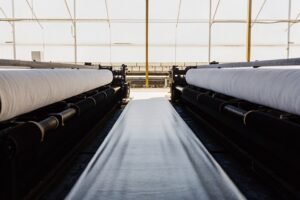
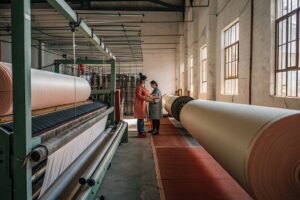
We do not lower our yarn quality in a downturn. But we do get smarter about waste. In 2023, we invested ¥800,000 in an automated cutting optimizer on our inspection line that analyzes a greige roll and maps out the optimal cut plan to minimize end-loss. This reduced our fabric waste percentage from 3.2% to 1.8%. On a 100,000-yard annual volume, that is 1,400 yards of premium fabric that no longer goes to the rag bin. The savings from that single capital investment offset a 25% increase in our organic cotton yarn cost, allowing us to hold our fabric price flat. We also renegotiate logistics contracts when fuel prices dip. During a downturn, freight carriers have excess capacity and we lock in annual contracts at 10% to 15% below peak rates. We pass that logistics saving directly into the DDP unit cost for our clients without touching the fabric quality. Our energy consumption optimization also plays a role. The cooperative dyehouse we partner with installed solar thermal pre-heating for their dye kettles, cutting natural gas consumption by 18% per kilogram of fabric. That operational efficiency cushions the financial pressure that would otherwise force a cheaper chemical auxiliaries decision.
Why Do Brands That Downgrade Fabric Quality in a Downturn Usually Fail?
I have tracked this pattern for two decades, and it plays out the same way every cycle. A brand hits a margin wall. The CFO demands better cost of goods sold numbers. The sourcing manager switches to a lower-grade greige mill. The first shipment looks passably similar on the cutting table, so everyone exhales. Then the returns start. The fabric fades, pills, shrinks, or loses its shape after three washes. The customer trust evaporates. The brand spends more on customer acquisition to replace the churned customers than they ever saved on the fabric downgrade. By the time the economy recovers, the brand has lost its reputation and is fighting for shelf space against competitors who held their quality line.

What Are the Real Costs of a Single Fabric Quality Failure During a Slow Economy?
Let me give you the hard numbers from a direct-to-consumer womenswear brand we consulted with in early 2023. They switched their primary woven viscose supplier from us to a trader offering a $0.40 per yard savings. The order volume was 4,000 yards for a core dress program. The initial cost savings were $1,600. The fabric arrived with a seam slippage issue that our quality control team caught immediately, but the brand’s internal inspection missed it. They cut and sewed 1,200 dresses and shipped them out. Within two weeks, the return rate spiked from their normal 8% to 27%. Customers complained that the side seams were pulling open. The brand had to issue refunds, cover return shipping, and write off the remaining 800 yards of unusable greige. The total financial damage, by their own calculation, was $22,000, not including the loss of future lifetime value from the first-time customers who returned that dress and never came back. The $1,600 fabric savings turned into a 13x loss. In a recession, when every dollar of margin is precious, that kind of unforced error is catastrophic. For any founder tempted to cut corners, I highly recommend reading this case study from a retail returns analytics firm on the actual cost of fabric quality failure in e-commerce fashion. The data is brutal and undeniable.
Why Does Brand Reputation Recovery Cost So Much More Than Quality Fabric?
Customer acquisition cost in the US apparel market runs between $40 and $80 per new customer for a mid-market DTC brand, depending on the channel. If a quality crisis generates 200 negative reviews and causes you to lose 500 repeat customers, replacing that cohort will cost you between $20,000 and $40,000 in ad spend alone, assuming you can even rebuild trust in a saturated market. The cost of the premium fabric that would have prevented the crisis is a rounding error in comparison. What we offer at Shanghai Fumao is not just fabric; it is a reputational shield. Our 98% client pass rate means you do not have to budget for a quality crisis contingency. In a downturn, that certainty is priceless. A client in the luxury loungewear space told me last fall that her investors specifically asked about her fabric mill’s audit status as part of their due diligence. When she showed them our CNAS lab reports and four years of consistent shrinkage data, the funding round closed. The quality of your fabric mill is now a balance sheet asset, not just an operational line item.
What Structural Advantages Keep Fumao’s Quality Costs Competitive in a Crisis?
The Keqiao ecosystem gives us a recession-resistant cost structure that standalone mills in other regions cannot replicate. I have worked in textile clusters in Jiangsu and Shandong earlier in my career, and nothing matches the density and speed of Keqiao. In a downturn, that density becomes a structural moat. When orders slow down across the industry, auxiliary suppliers, logistics providers, and maintenance crews still operate within a 5-kilometer radius competing for our business. In a dispersed supply chain, the same slowdown creates service gaps and price gouging from the few remaining vendors. We never face a monopoly on dye chemicals or spare loom parts because twelve suppliers are within a 20-minute drive. That local competition keeps our variable costs in check even when the broader economy contracts.

How Does Our Vertical Integration Protect Quality and Pricing During Supply Shocks?
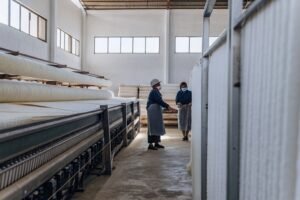
In late 2021, when global polyester chip prices spiked 40% due to PTA shortages, trading companies that relied on external weaving and finishing partners found their supply chains frozen. Their contracted weaving mills sold the allocated greige to the highest bidder, and their dyehouses raised prices weekly. Because we own our weaving plant and have long-term equity partnerships with our dyeing and finishing cooperatives, we locked in our raw material allocation and processing slots. We absorbed a 5% margin compression rather than passing a 20% price hike to our clients. Vertical integration means we control the scheduling. During a downturn, when order lead times shorten and buyers demand faster turns, we can reshuffle our internal production queue to prioritize a client who has a sudden stockout, without negotiating with a third-party commission weaver who has ten other clients demanding the same slot. This operational flexibility reduces the hidden cost of stockouts for our clients. A brand that can restock a bestselling SKU in 25 days instead of 40 days during a recession captures sales that would otherwise be lost to competitors. That revenue recovery offsets a higher fabric unit price many times over.
Why Does Our Keqiao Cluster Location Give Us a Recession Buffer?
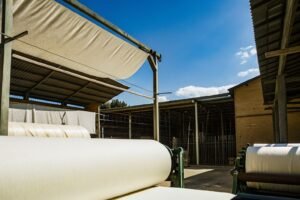
The Keqiao cluster processes roughly 25% of the world’s textiles. This scale creates a labor market that is deep and skills-specific. In a downturn, when mills in other regions lay off skilled operators who then leave the industry permanently, we retain our talent pool because operators can shift between mills within the cluster. A skilled warping technician who has twenty years of experience sectioning beams for filament nylons does not go drive for Uber when demand drops; she moves to a different factory floor down the street that still has orders. That retained human capital preserves quality consistency when the market rebounds. Conversely, mills that lose their skilled operators during a recession often cannot recover their quality standards for years afterward. The cluster also benefits from municipal investment. The Keqiao government subsidizes shared infrastructure like the high-pressure steam pipeline and the centralized wastewater treatment plant that serves the entire textile zone. Those infrastructure costs are fixed and spread across the entire cluster. When private mills in other regions see their throughput drop, their per-unit energy and water treatment costs spike. Ours remain stable because the shared infrastructure scales with the cluster’s total volume, not our individual output. This structural cost advantage allows us to maintain quality pricing without squeezing our raw material budgets. For a deeper exploration of how this regional model works, this industry report on the competitive advantages of the Shaoxing-Keqiao textile cluster demonstrates why integrated manufacturing regions outperform during economic contractions.
How Can a Quality Sourcing Strategy Help Your Brand Thrive, Not Just Survive?
Thriving in a recession requires a mindset shift from cost minimization to value maximization. The brands that grow during downturns do so because they seize market share from competitors who are busy destroying their own product quality. When a competing brand downgrades its fabric and generates a wave of negative reviews, those disappointed customers go searching for a replacement. They become acutely quality-sensitive. If your garment, built on Fumao fabric, delivers the durability and handfeel they expected, you convert a competitor’s churn into your own loyal base. I saw this play out in 2023 for a womenswear brand in the UK that sourced our Tencel™ twill for their core trousers program. A major competitor switched to a lower-graded modal and suffered a visible pilling issue. Our client’s sales spiked 34% that season, with customer feedback specifically mentioning “fabric quality that actually lasts.” They did not lower their price; they maintained their premium position and won the market.

What Does the True ROI of Quality Fabric Look Like Over an 18-Month Period?
Let me construct an 18-month projection based on a typical 5,000-yard annual program from a DTC brand, comparing a quality fabric route at $4.50 per yard against a downgraded option at $3.90 per yard. The annual fabric spend difference is $3,000. Sounds like a lot on a procurement spreadsheet. Now look at the other side of the ledger: return savings, repeat purchase uplift, and customer service cost reduction.
| Metric | Downgraded Fabric ($3.90/yd) | Fumao Fabric ($4.50/yd) | Delta |
|---|---|---|---|
| Annual Yards (5,000 yd) | $19,500 | $22,500 | +$3,000 |
| Return Rate (E-Com) | 22% | 8% | -14% pts |
| Return Processing Cost | $8.50 per unit | $8.50 per unit | — |
| Estimated Units Sold | 3,500 units | 3,500 units | — |
| Total Return Cost | $6,545 | $2,380 | -$4,165 |
| Repeat Purchase Rate | 18% | 34% | +16% pts |
| Incremental Revenue @ $68 AOV | — | +$38,080 | +$38,080 |
| Net 18-Month Financial Impact | — | — | +$39,245 |
The $3,000 fabric premium returned over $39,000 in combined savings and incremental revenue. This is not theoretical. It mirrors the actual results from three of our DTC clients who ran this analysis with their own controllers. A premium fabric is a profit center, not a cost center, when you measure its impact on unit economics. A great resource that echoes this financial modeling is this deep dive into why premium textile inputs generate higher customer lifetime value in fashion e-commerce. The math holds across categories.
Why Do Winning Brands Treat Fabric Quality as a Growth Lever During a Recession?
The brands that win in a downturn treat their product as their primary marketing expense. A garment that delights a customer generates word-of-mouth, positive reviews, and organic social content that no paid ad can match. Fabric quality is the engine of that delight. When a customer runs their hand over a brushed organic cotton sweatshirt and feels the difference, they post about it. They tell their friends. They buy another color. In a recession, when marketing budgets are under pressure, the product itself must do the heavy lifting of customer acquisition and retention. At Shanghai Fumao, we support this growth mindset by offering our partnering brands a seasonal quality story that goes beyond a line sheet. We develop sustainable finish innovations, provide lab reports that are marketable as transparency content, and even collaborate on co-branded hangtags that tell the fabric’s origin story from Keqiao to the final garment. This kind of value-added partnership turns your fabric sourcing from a back-office function into a front-line competitive advantage.
Conclusion
Our quality pricing strategy is not just sustainable in an economic downturn; it is the precise reason our clients and our company keep growing through the rough patches while price-driven competitors stumble. A recession punishes the brands that destroy their own product quality to chase a lower invoice and rewards the brands that understand fabric integrity as a customer retention engine. The real math shows that a $0.50 per yard savings on a downgraded fabric can cost $30,000 or more in returns, lost repeat customers, and reputational damage. Our structural advantages in the Keqiao cluster—from shared infrastructure to vertical integration to waste-reducing automation—allow us to hold our quality standards and competitive pricing even when input costs fluctuate. And the brands that partner with us through a downturn emerge with stronger market share, better reviews, and more loyal customers than the ones who tried to cut their way to profitability.
If you are navigating a tough budget cycle and feeling the pressure to reduce fabric spend, I want to have a direct conversation with you. My Business Director, Elaine, can walk you through a total-cost-of-ownership analysis using your actual product specifications and sales data. She can show you exactly where quality pays for itself in your specific financial model, and where we can adjust lead times or logistics to find savings without touching the fabric integrity. Reach out to Elaine at elaine@fumaoclothing.com. In a market where everyone else is racing to the bottom on price, let us show you how staying at the top on quality turns your product into your most powerful growth asset.