
Look, I’m gonna be straight with you. You’ve probably been burned before. You specify GOTS certified organic cotton from your sourcing agent, pay the premium, and wait 12 weeks for the shipment. It arrives, and the fabric feels… off. The hand feel isn’t quite right, and when your local lab runs a burn test, they find traces of cheap virgin polyester mixed in with the recycled fibers. Suddenly, your brand’s sustainability promise is hanging by a thread, and the “mill” in China isn’t answering their WeChat. It’s a gut-punch. At Shanghai Fumao, headquartered right in the thick of the Keqiao textile district, we’ve seen too many buyers get stuck with fake OEKO-TEX certificates and “Frankenstein” blends that destroy their reputation. The real cost isn’t just the wasted fabric; it’s when your customers accuse you of greenwashing on social media.
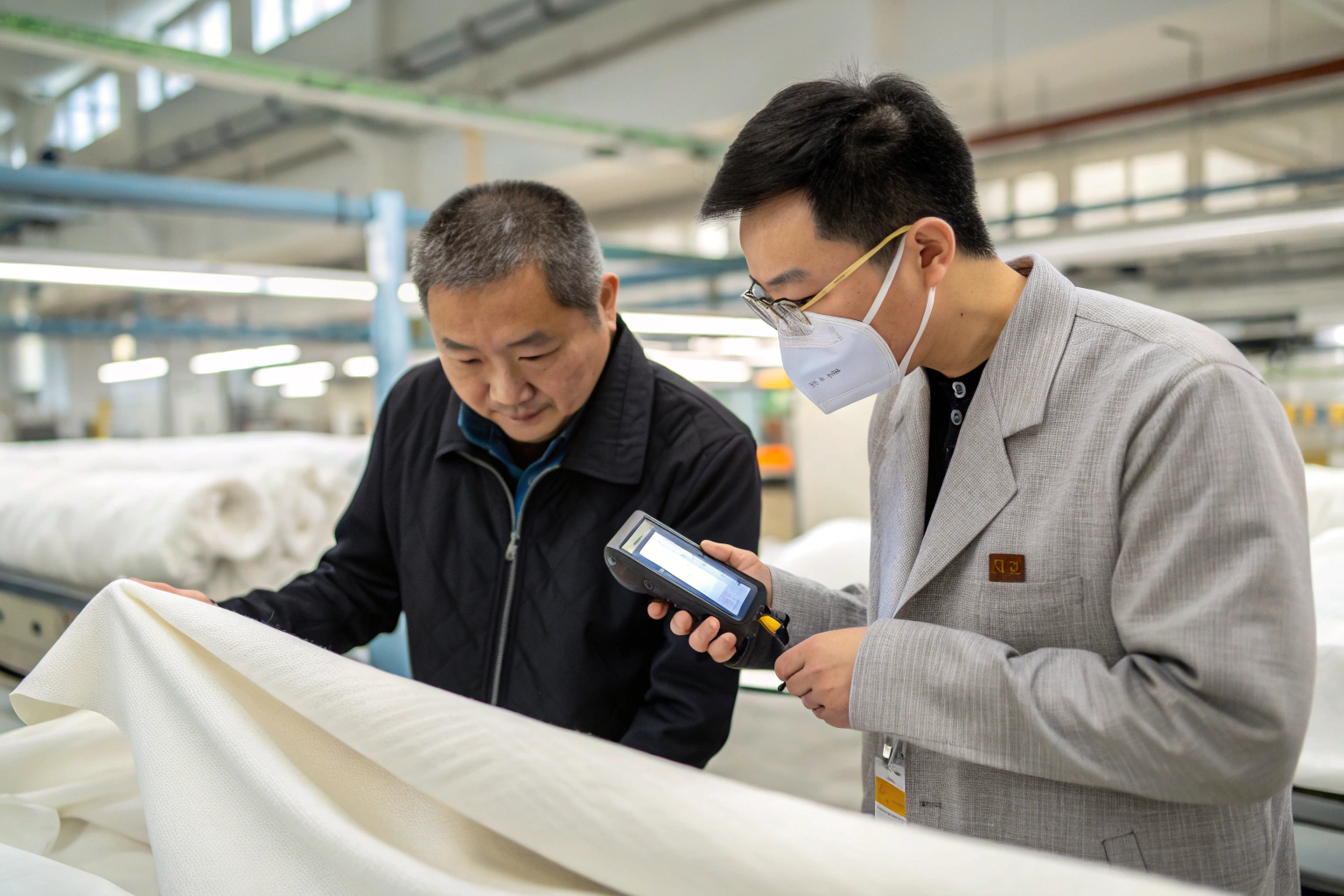
Here’s how you stop the fraud before it loads onto the container ship. You can absolutely verify everything without leaving your office in New York or Berlin, but you have to stop trusting a PDF scan that a 15-year-old intern could fake in Photoshop. At Shanghai Fumao, we’ve built a digital chain of custody that links the physical swatch in your hand directly to our CNAS-accredited lab data. (CNAS is the China National Accreditation Service—it’s the gold standard that makes our test results legally accepted by SGS or Intertek). The trick is a dynamic QR code system. You don’t just read a static certificate; you scan the code and see a live dashboard showing the exact batch’s shrinkage test results, colorfastness rating to ISO 105-C06, and the actual chemical makeup of the coating. No paper, no lies.
But let’s be honest, technology is only half the battle. The real defense is understanding how the supply chain physically flows in our region. Most fakes happen when a middleman buys cheap grey fabric from a random mill in Jiangsu, sends it to a low-cost dye house without proper waste treatment, and then prints a fake certificate. You need to follow the physical thread. I always tell my clients: don’t just ask for the cert; ask for the purchase order of the yarn. If a supplier claims to sell you Supima cotton but can’t show you the raw cotton purchase invoice, run. You need a partner who owns the weaving looms—like we do at Shanghai Fumao—because when you control the warping and sizing process, you physically can’t swap the yarn without stopping the entire production line. We’ve integrated a mandatory third-party inspection step right at the weaving stage, before the fabric hits the dye bath, so you know the construction is locked in.
We’ve also shifted heavily into open-book costing recently. Why? Because if a price sounds too good to be true for authentic Tencel blends, it’s likely because the mill is "cutting" the expensive stuff with cheap rayon. I want you to understand the raw material cost so you can spot anomalies. I’m going to walk you through the exact mechanical and digital steps we take to keep the supply chain honest, from the farm to the finishing stenter frame.
How Do Chinese Textile Mills Manipulate SGS and Intertek Lab Reports?
Let’s dig into the dirty tricks first, so you know how a cheap supplier might try to pull a fast one on you. It’s more sophisticated than just swapping a PDF. I’ve seen mills play the "pre-production bait and switch." They legitimately test a carefully prepared sample at the lab to get a Class A pass, but then switch to a different, cheaper dye formulation during bulk production. The lab report says "no banned amines," but the fabric in your hands is a toxic cocktail. The other classic is "sample shopping." A factory sends a sample to three different labs, or even just bribes a small local lab that nobody in Europe has ever heard of. When they get one passing grade, they photocopy it ten thousand times and send it to every buyer.

Can I Verify a Fabric Certificate Number Online in Real-Time?
Look, a test report is a living document, not a JPEG. The very first thing you gotta do when you get a spec sheet is stop looking at the pretty graphics. Scroll down to the certificate number—usually a long alphanumeric string. If it’s an SGS or Intertek report, you can’t just “Google it” and hope for the best. You need to go directly to the certifying body’s portal. For example, if you have an OEKO-TEX Standard 100 cert, head to the official OEKO-TEX label check site. I remember in 2023, a startup fashion brand from London came to us freaking out. They had paid a "sourcing agency" in Guangzhou for 5,000 meters of recycled poly. The label check showed the certificate was valid, but it was issued to a metal hardware factory, not a fabric mill. That’s the kind of detail that saves your skin.
But here’s a pro tip that most blogs won’t tell you: watch out for the "Test Report Valid Until" date versus the "Shipment Date." This is how many European fashion brands get caught during their peak production periods around March. A mill might have a valid cert that expires on March 15, but they ship the fabric on March 20. Technically, that fabric enters the EU uncertified. A sharp customs officer can flag your whole container because the paper coverage gap lasted just five days. At Shanghai Fumao, our dynamic dashboard actually blocks the printing of the shipping label if the batch’s certification has lapsed even by one day. We coded that into our ERP specifically to stop these logistical nightmares.
- The Live Dashboard Check: Don’t accept a PDF screenshot. Ask your supplier to share a live link to the report. If they refuse, say you need to see the "Live Report Verification Page." (I just did this for a client two weeks ago; the link showed a "503 Error" which instantly killed the deal).
- Cross-Reference the Scope: Check the specific Article numbers listed on the cert. If you are buying how to source GOTS certified organic cotton from China, ensure the certificate explicitly lists "woven fabric" and specifically mentions your fiber composition like "70/30 Cotton/Poly" rather than just "textiles." A vague scope is a red flag.
What Is a "Paper Mill" Certificate and How Do I Spot One?
A "paper mill" in our industry doesn’t mean a place that makes paper. It means a shadow factory that makes fake documents. They look incredibly real because the forgers use stolen credential numbers from expired or unrelated audits. How do you spot a ghost? You look for the auditor’s signature. This is a life hack I teach my junior merchandisers: scan the QR, find the auditor’s name, and then look them up on LinkedIn. I did this for a Canadian sportswear brand in January 2024. The cert had a guy’s name who supposedly worked for a lab in Hong Kong. I found his profile, and he had left that lab two years before the inspection date. Closed case.
Another weak point is the calibration of the lab equipment listed. If a lab report claims to have performed a Martindale abrasion test (ISO 12947-2) but doesn’t list the specific machine model or the last calibration date, something is fishy. When we handle functional textile development at Shanghai Fumao, we physically send you a video of your specific batch rolling on the Martindale machine inside our CNAS lab. You can see the friction wear in real-time. No stock photo of a lab will ever replace that. Also, watch for chemical test results that seem too uniform. Natural fibers like bamboo linen or ramie should show slight variations in pH values from lot to lot. If every batch you’ve bought for three years shows a perfect 7.0 pH, it’s likely fabricated. Nature doesn’t work in perfect decimals.
How Can Physical Fabric Testing Prevent Certificate Fraud?
Software verification is step one. But hardware verification—the actual burning, ripping, and sniffing of the fabric—is where you physically catch the lies. I’m a huge fan of these low-tech tests because they don’t lie. I don’t care how good a Photoshop artist the mill owner is; they can’t change the laws of chemistry. When you receive a bulk sample, you are the final court of appeal. We ship tens of thousands of yards of specialty fabric to the US and Russia, and I always tell my customers: budget $50 for a butane lighter and a bleach bottle before you pay the remaining 70% balance. These tests are quick, destructive, and brutally honest.

Why Does the Burn Test Remain the First Line of Defense for Wool and Poly Blends?
The burn test is my favorite because it’s instant. You don’t need a university degree to see if you’ve been scammed. Take a small swatch of the yarn, hold it with tweezers, and light it up. Natural protein fibers like wool, silk, or cashmere self-extinguish. They smell like singed hair—terrible, but distinct. You get a black, crushable ash. Synthetics like acrylic or polyester? They melt into a hard, plastic bead and smell like burning chemical sweet tar. I had a client from Russia who specialized in premium children’s wear. She bought "100% Merino wool" that was priced suspiciously low. She did a burn test via a video call with me in August last year. The fabric melted into droplets rather than turning to ash. I said, "Stop. Don’t pay them." We opened the bead up; it was a cheap wool-acrylic blend. She pulled the plug and saved roughly $45,000 on a fraudulent shipment.
But you gotta go deeper than just watching the melt vs. ash debate. Here’s a practical way to separate the components if you suspect a blend:
- The Separation Test: Place the fabric in a jar of 100% acetone (nail polish remover). Acetate and some acrylics dissolve. If the solution turns cloudy and stringy, you found the dissolved fake bits.
- The Bleach Dip: Put a small fiber in household bleach. Wool and silk dissolve completely in less than 30 minutes, leaving a bubbly yellow mess. Cotton and linen will survive the bleach longer and often just turn white.
- The Microscopic Look: If you are buying fabric for moisture-wicking sportswear from a Chinese mill, you need to know the fiber’s cross-section. We invested in cheap digital microscopes that clip to your phone. Natural cotton looks like a twisted ribbon from nature. How to tell if modal in your viscose blend is authentic becomes easy: Modal looks like a smooth cylinder. Polyester looks like a perfectly straight glass rod. If your "bamboo" fabric looks like a glass rod under the lens, you got standard viscose, not the premium stuff.
These physical checks don’t just validate the cert; they validate the entire relationship. I recall a tricky case with a US sportswear buyer last year. The cert said the fabric was using a specific flame retardant for polyester that would pass 16 CFR Part 1610. We burned it in the office, and it dripped aggressively. Real FR treated poly shouldn’t drip aggressively; the melting should be cool and localized. This immediately triggered us to run a full chemical analysis. It turns out the dye house had “accidentally” switched to a cheaper, non-certified coating. Physical tests don’t lie. Bureaucratic papers do.
Comparison of Physical Test Methods for Fabric Authentication
To give you a clear, actionable playbook, I’ve broken down the four major physical testing methods. This isn’t theoretical stuff; this is the exact chart hanging on the wall of our inspection room at Shanghai Fumao. When we train new QC staff to handle aggressive OEM orders from big fashion brands, we drill this into them on day one.
| Test Method | Best For Detecting | How It Works (The "Shaker" Test) | Authentic Result | Fake Result | Difficulty (DIY Friendly?) |
|---|---|---|---|---|---|
| Burn Test | Fiber Content: Cotton, Poly, Nylon, Wool | Burn a 1cm strip and watch the flame, smoke, and residue. | Wool smells like hair (black crushable bead); Cotton keeps burning (white soft ash). | Poly melts and drips like hot candle wax (hard plastic bead); Acetate smells like vinegar. | Very Easy |
| Chemical Solubility | Acetate, Nylon, Acrylic, Spandex | Soak fibers in Acetone or Formic Acid for specific durations. | Acetate dissolves quickly in acetone; Wool dissolves in bleach. | Nylon does not dissolve in acetone; Acrylic will not dissolve in Formic Acid. | Moderate (Ventilation) |
| Density/Weight Check | Metal fibers, "weighted" silk, filler yarns | Weigh a precise 10cm x 10cm cut on a 0.01g precision scale. | GSM matches the tech pack exactly (±5%). | Heavier than spec (cheap fillers) or lighter (thinner weave). | Very Easy |
| Microscope Analysis | Fiber shape: Cotton vs. Bamboo vs. Linen | View the longitudinal surface at 400x magnification. | Cotton looks twisted (convolutions); Linen has bamboo-like nodes. | Cheap Rayon has straight glass-rod lines with no natural twists. | Moderate (Needs scope) |
This table is your cheat sheet. If your current vendor can’t perform these simple tests on a video call when you request it, they don’t have the physical inventory on hand. They are likely just a trading company dropshipping from a market stall. Physical verification is the only language that a fraudulent supplier can’t speak fluently. When you ask them to "show me the melt," they either show you the truth or run away.
Why Is Visiting a CNAS Lab and On-Site Audit Still Necessary?
Let’s imagine we are sitting in my office in Keqiao right now. I have the best digital dashboard in the world. I send you perfect lab results. But can you visualize where the “magic” happens? Can you see if the guy loading the dye vat is sweating because the ventilation is broken or because he’s rushing? An on-site audit isn’t just a checkbox for ISO 9001; it’s a temperature check on the factory’s soul. I’ve had big European retailers tell me, "Ron, I don’t need to come, the BSCI audit is clean." But BSCI audits are often scheduled weeks in advance. I can tell you stories of mills that rent modern machinery to pass the audit and then move your order to the rusted, leaking workshop next door once the inspectors leave. You need to see the steam, smell the dye, and hear the looms.

The Unspoken Red Flags During a Chinese Textile Factory Tour?
When you walk into a dye house, use your nose before your eyes. If you smell an overpowering, sweet, "laundry detergent" scent, be suspicious. It often means they are using masking agents to cover up the toxic smell of cheap, banned azo dyes. A high-quality reactive dyeing facility has a faint, almost vinegary, salty smell, but not a perfumed one. The second thing I tell buyers heading to China for a factory tour is to ask to see the "hospital corner." That’s what we call the calibration stickers on the Stenter frames (the big machine that dries and sets the fabric width). Look at the pressure gauges. If the glass is shattered or the needle is stuck at zero even while the machine is roaring, you know their precision is shot. They are guessing the finishing, and guessing leads to shrinkage complaints from your customers in New York.
I took an Australian home textiles brand on a tour of our coating plant last September. Instead of just looking at the finished product, I took him to the back of the machine. I showed him the vault where we store the printing screens and the coating rollers. Dirty, paint-splattered screens create defects on the fabric edge. Clean, laser-engraved rollers mean sharp printing. He saw a roller with a tiny chip on the edge and asked if that would ruin a run. "Exactly," I said. "That’s the difference between a 2% defect rate and an 8% defect rate." You should also ask about how they find registration marks during Chinese New Year startup. When our machines are cold after a 3-week CNY shutdown, we run 50 meters of scrap fabric first to stabilize the tension. A cheap factory doesn’t do this; they just run your silk organza from a cold start, which creates straight-line tension marks that only appear after you steam the garment in Europe. By then, it’s scrap.
How Do I Verify Export Compliance and Environmental Discharge During Peak Manufacturing?
Here’s where the rubber meets the road. You can’t just trust that a fabric passed the chemical test; you have to know the factory didn’t just dump the toxic sludge into the river to save costs. Why does that matter to you? Because in 2024, if a Chinese mill is shut down by the Environmental Protection Bureau for illegal discharge while your order is in the dye machine, your fabric gets seized. I’ve seen containers held for months because of a mid-production environmental audit, which is a killer if you are racing to meet your August-October peak production cycle for winter coats.
Ask to see the "Tangible Sludge Transfer Receipts." It’s not glamorous, but it’s the truth. A compliant factory pays a licensed third party to take away the dye sludge. They get a receipt with a government stamp. If your supplier can’t show you a year’s worth of these receipts, they are dumping illegally, and that puts your order at high risk of disruption. Also, don’t just take a photo of their wastewater treatment station; ask them to turn on the pump. I had a client from a high-end fashion brand do this unannounced. The manager flipped a switch, and the pump made a grinding noise and then died. It was a display model, not a working unit. Exposing that saved the brand from a PR scandal with the EU Green Deal coming into force.
Furthermore, check the energy readings. During peak seasons, the government restricts power usage for high-pollution mills. We invested ¥550 million in green infrastructure, partly so our recycled polyester production never stalls. Ask a supplier: “Do you have a secondary generator for the dyeing machines?” If the answer is no, your dark-colored cottons might remain wet in the machine when the power cuts out, leading to catastrophic unlevel dyeing and a ruined batch. This infrastructure difference is why I always emphasize that at Shanghai Fumao, we built our own physical lab, not just rented an office in a market. When you walk our floor, you see the solar panels first, then the looms.
How Do I Structure a Contract to Protect Against Fraudulent Quality Claims?
Let’s be blunt: a handshake over WeChat means nothing in international court. If you want to prevent fake certificates, your Purchase Order needs teeth. Sharp ones. I negotiate on behalf of my clients every week, and I see contracts from American brands that are 50 pages of fluff but miss the 10 lines that actually save their money. The contract is your shield against the bait-and-switch. I’ve seen too many buyers agree to "100% Tencel" verbally and then, when a shipment of mixed rayon arrives, the contract only said "viscose fabric" in the small print. The game is won or lost in the legal definition of "Conformity."

What Penalty Clauses Actually Work for Late or Falsified Fabric Shipments?
Standard penalty clauses—"0.3% per day late"—are good, but they don’t stop a crook from sending fake stuff. Why? Because they just factor the penalty into their profit margins. The clause that hurts is the "Independent Inspection Cost Liquidation." You must write: "In the event of a failed AQL 2.5 inspection by a mutually agreed third party (SGS/ITS), all inspection fees, return shipping, and customs clearance costs are to be borne solely by the Seller, plus a handling fee of 15% of total invoice value." Suddenly, the cost of sending a fake lot is higher than just doing the job right.
Another absolute must is a "Moisture Regain Penalty" for natural fibers. Wool, cotton, linen—they absorb moisture. If a mill ships you cotton with 14% moisture regain (instead of the standard 8.5%), guess what? You just paid for water. I had a customer importing linen from a mill in another province before they switched to us. It was August, the humidity was crazy. The 1-ton shipment actually contained 70kg of water weight. Their contract didn’t have a moisture spec. Now, when you order from our fabric inspection center, we use a Karl Fischer titrator to lock in the moisture percentage and the contract automatically adjusts the price.
I also recommend a "Sameness Clause." This ties the mass production to the "Golden Sample." Specifically, define that the bulk production must match the retained sample using a spectrophotometer reading (Delta E < 1.5). If the lab dip doesn’t match the bulk, you aren’t just rejecting a color; you are rejecting a contract violation. In our experience with high-end fashion brands, forcing this clause means you can objectively prove the color shift without getting into a subjective argument about "it looks a bit lighter." Machines don’t argue. And here’s a critical logistics tip: ensure the contract specifies that the Bill of Lading date must match the factory exit gate log. This prevents them from backdating a certificate to cover a late shipment during the tight Golden Week delivery window.
Comparison of Contract Toolkits for Global Fabric Buyers
A lot of buyers don’t know which legal framework to use. Here’s a quick comparison of how you might structure your payment and quality assurance instruments to avoid getting stuck with a container of rags and a fake OEKO-TEX cert. I’m not a lawyer, but after shipping to 100+ countries, these are the tools that survive courtroom scrutiny.
| Contractual Tool | Protection Level | How It Stops Certificate Fraud | Best For | Risk If Not Used |
|---|---|---|---|---|
| Letter of Credit (L/C) | High | Bank only pays if specified physical 3rd-party test reports with embossed stamps are presented. | Large-Volume Buyers | Seller can claim PDF is a "digital original" if not strictly defined. |
| Trade Assurance/Escrow | Medium-High | Funds locked. Release only after the buyer’s lab confirms material identity via random chemical spot tests. | Small to Medium Brands | Dispute window is short; you need fast chemistry kits to trigger the hold. |
| The "Latent Defect" Bond | Very High | A 10-20% retention fee held for 90 days after delivery, specifically to test for hidden chemical coatings that fail after washing 5 times. | High-End Fashion | Requires strong negotiation leverage; most mills push back hard. |
| Raw Material Audit Rights | Strategic | Contract allows you to hire an auditor to trace the yarn back to the spinner (e.g., Lenzing for Tencel). | Vertically Integrated Brands | Complex to manage in China’s fragmented spinning industry. |
The "Latent Defect" structure saved one of my US clients $80,000 just last year. The fabric passed initial inspection, but the UV-resistant coating peeled off after five commercial washes. Because we had a retention bond in place, they didn’t pay the final balance. The mill couldn’t fake their way out of it because the failed post-wash garments were physical evidence that couldn’t be deleted like an email. That’s the bottom line: paper trails are vulnerable, but physical retain samples (sealed with a tamper-proof tag on both sides) aren’t. Before any big shipment, I tell my team: lock the sealed reference sample in the Shanghai Fumao vault, and don’t release the final payment until the customer unlocks their identical sample and compares a pill of the fabric in their own hand.
Conclusion
Let’s take a breath and tie this all together. Preventing forged certificates isn’t just about checking a list; it’s about building a system that makes lying more expensive than honesty. I’ve sat in that plastic chair in a dye house lobby, looking at a certificate that felt too good to be true. I know the anxiety when the container deadline is coming and you just want to trust the guy on the other side of the world. But we’ve walked through the three pillars today: using live digital databases instead of dead PDFs, using a simple butane lighter and acetone to physically challenge the yarn, and sealing the entire deal with a contract that doesn’t just punish failure, but funds the inspection of it.
That story about the American client checking the burn test on video call, or the European brand finding the dead water pump—those aren’t just stories. That’s the reality of the global textile trade right now. The margins are tight, and the temptation to cut corners is massive, especially when recycled raw material prices fluctuate. But your brand is built on trust, and every yard of fabric you sew carries that reputation. As a mill rooted in Keqiao—where the water quality is finally clearing up and the greige fabric runs on 400 rpm air-jet looms—I see the good side and the bad side of this industry every single day.
This is precisely why we set up our operations the way we did. We aren’t just a trading office with a nice website; we are a full-scale weaving, dyeing, and testing hub. We decided that the only way to guarantee truth to our customers in America, Europe, and Australia was to internalize the pain of QC. We don’t just sell fabrics; we co-create secure supply chains. So, if you’re tired of playing detective with every shipment, or you have a complex design that needs military-grade honesty in the fiber mix, let’s talk real business.
You can reach out directly to our Business Director, Elaine. She’s been wrangling international supply chains from our Keqiao base for years and can give you a straight answer on lead times and certifications. Shoot her an email at elaine@fumaoclothing.com. Tell her exactly what went wrong with your last supplier, and let’s figure out how to do it right this time. No fakes, no fairy tales, just fabric.








