
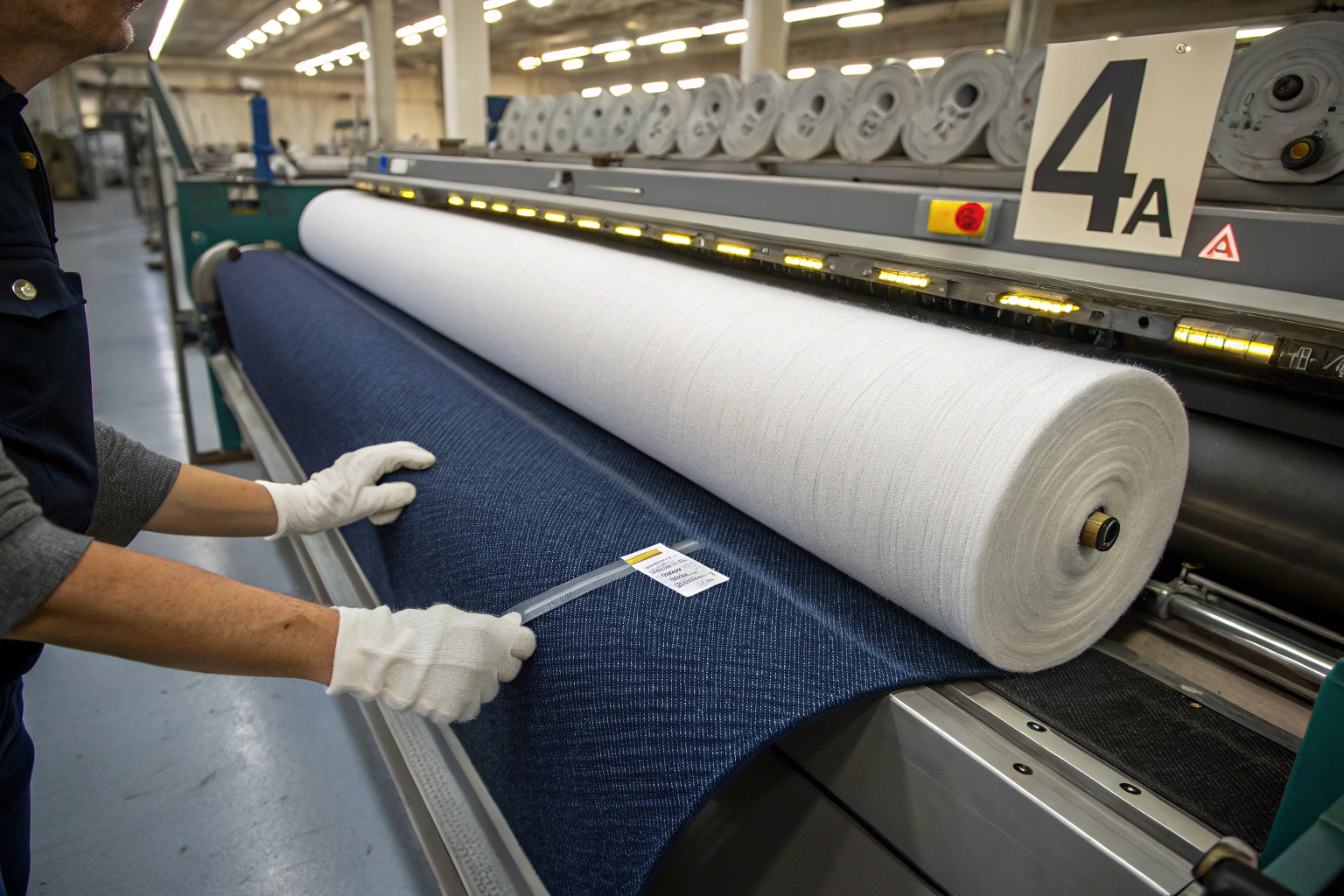
Let me be brutally honest with you. We turn away business. Not because we’re arrogant, but because we refuse to dilute the quality of the ecosystem we’ve spent twenty years building. A lot of people can’t understand why a mill with 40+ staff and 30,000 seasonal designs would say "no" to an easy retail order for a couple of bolts of cheap taffeta. The industry pain point is clear: brands are drowning in a sea of generic "bulk suppliers" who are good at shipping volume but terrible at shipping integrity. The real problem you face isn’t finding a factory that can make fabric; it’s finding one that scales without the wheels falling off.
We focus strictly on B2B wholesale quality because that’s where the technical gravity is. If you’re selling directly to a consumer on Etsy, your liability ends when the post office marks "Delivered." If you’re a B2B brand selling 5,000 units to a department store, your liability explodes. You face chargebacks for hanger appeal, forced markdowns for shade banding, and contractual penalties for fire safety compliance. Our entire infrastructure—from the CNAS lab to the Keqiao logistics web—is calibrated specifically to absorb that B2B liability. We build fabrics that need to survive a 150-page vendor manual, not just a sidewalk compliment. That’s the playground we dominate.
If you’re a brand owner or a large-scale garment factory, you need a partner whose quality doesn’t just "pass the eye test" but passes the SGS/ITS test with batch-level digital traceability. If you’re looking for a one-off cut-length for a craft project, I honestly recommend a great local shop because my minimum planning logic will lose you money. But if you need your next entire collection to arrive on time with zero QC penalties, you’re speaking our language. Stick around. I’ll show you exactly why our "quality only" B2B model is the most profitable decision you’ll make this fiscal year.
What Does True B2B Fabric Quality Actually Look Like?
Most people think "high quality" means the fabric feels nice in their hand at a trade show. That’s sensory marketing. True B2B quality is invisible to the naked consumer. It’s a warranty embedded in the molecular structure of the yarn. It’s the difference between a reactive dye that bonds with the cellulose fiber and a cheap pigment dye that just sits on top and rubs off onto a white handbag. The end consumer doesn’t know why the color still looks bright after 50 industrial washes, but the retail buyer who doesn’t get any returns absolutely does. That durability is what B2B quality is all about.
Real B2B fabric quality looks like a spec sheet that doesn’t lie. When I hand a factory manager or a big brand’s QA team a spec sheet from Shanghai Fumao, it has raw numbers that can be re-verified on their own spectrophotometer. We don’t just claim "minimal shrinkage." We state the dimensional change is within 2% on a 5A wash cycle, backed by our CNAS accreditation. That means when you cut a garment, it stays the size you intended, lot after lot, from Fall 2024 to Spring 2026. A guy on the street can’t test that; a quality engineering lab at a sportswear giant can. And they do. That’s the customer we want to serve.
Diving deeper, the texture of B2B quality is also about "make," not just material. "Make" refers to the engineering precision of the structural flaws or lack thereof. A consumer might forgive a slight bow in a drapery weave; a commercial furniture manufacturer facing a flammability and tensile strength regulation cannot. This is where our heavy industrial background in the weaving shed comes in. We manage picks per inch with the precision of a watchmaker. When we talk about quality, we’re discussing the trajectory of a needle on a computerized knitting machine and whether the stitch length variation in a 40-meter roll deviates by more than a quarter of a millimeter. This is the clinical level of precision required for B2B.

How Do Industrial AQL Standards Differ from Retail Hand-Feel?
If your quality control program is just someone swinging their arms around and saying "this feels soft," you’ve already lost tens of thousands of dollars in chargebacks. In the B2B space, "softness" is a massive liability if it’s achieved by chemically eating away the structural integrity of the yarn. You have to govern quality with a statistical sword: specifically, the Acceptable Quality Limit (AQL) system.
A retail hand-feel test is a subjective single-point failure. An industrial AQL 2.5 test is a randomized, statistically valid sample taken from a 50,000-yard lot. I train my QC team not just to see holes but to classify defects into "critical," "major," and "minor" based strictly on a pre-agreed client chart. Is a slightly raised slub a "major defect" if it’s on a fancy novelty boucle where slubs are the design, or is it a "critical defect" because your spec sheet strictly says "clean surface"? The AQL standard takes the emotion out of it. We don’t reject a lot because one inspector had a stomach ache and a bad mood that morning. We reject it because the random pull exceeded the maximum allowable major defect count. If you want to understand the foundation, look into how international AQL sampling guidelines save importers from catastrophic errors. Adopting this methodology is the first step toward a true partnership.
Why Is Batch-Level Traceability Non-Negotiable for Brands?
Brands are ultimately selling a promise of consistency. If your product varies by color from the left sleeve to the right sleeve, you look like a discount bin scam. Batch-level traceability is the spine of that consistency. It means we don’t just test the "golden sample" that we made special for you and then ship unsanctioned garbage. We test the actual greige batch, the actual dyed lot, and the actual finished roll that lands on your cutting table.
Here in our Keqiao facilities, the QR code on the roll is a custody chain. You scan it; you see the spinning batch number, the date it was knitted, the specific jet-dye machine number it was dyed in, and the operator’s initials. If, and I say if, a problem appears at the sewing stage, we don’t have to burn down the whole supply chain to find the root cause. We go right to the specific dye pot that ran on Tuesday at 3:00 PM and check its temperature pressure graph. We can then contain the recall to a specific 200-yard section.
I recall a European brand client who sourced a complex viscose-elastane rib from us. Another factory had switched the mixture of the elastane feeder without telling them, causing an erratic stitch recovery. Because our traceability lets you read the roller tension data of the knitting machine, they could instantly isolate the infected rolls and cut around the problem, saving 80% of the inventory. That’s the kind of control a DIY retailer can’t offer. For a deeper technical breakdown, you can review detailed guidance on how fabric traceability enhances garment risk management, which essentially mirrors our strict weave-room protocols.
How Does Skipping Retail Keep Our Wholesale Prices Sharp?
Let’s talk about the "B2C Tax." It’s the hidden 20-30% markup that gets baked into every yard of fabric when a mill tries to play shopkeeper. If you’re running a factory and a direct-to-consumer online store simultaneously, you’re paying for two radically different businesses. You’re paying for a return-by-piece policy, a tailoring table for one-off cuts, and customer service agents arguing about whether "midnight navy" is actually black. In our game, that distraction costs real money, and our wholesale clients are the ones who would ultimately foot the bill.
By refusing to sell fabric by the yard to the general public, Shanghai Fumao eliminates the dead weight of micro-fulfillment. We don’t have a team cutting 3-yard pieces and wrapping them in tissue paper. Our lines are designed for 500-yard minimum runs. This strict operating rhythm keeps our cost per meter down. The efficiency of handling 10 large roll dispatches versus 500 individual miniscule orders means the logistics cost per gram of fabric drops off a cliff. We pass that structural saving directly to our garment factory partners, which allows them to quote competitive CMT (Cut, Make, Trim) costs.
Diving deeper, focusing on wholesale prevents the "loss leader" contamination of the market. Imagine a mill sells a premium cotton voile at $2.80/yard wholesale, but has a retail site that is stuck with dead stock and dumps it at $1.50/yard to clear warehouse space. Suddenly, those $1.50 fabrics pop up on resale platforms. You, the brand that turned that fabric into a luxurious $120 dress, are now fundamentally undercut. Your wholesale partners put pressure on you. By staying pure B2B, we protect the value chain of the fabric as a component. The integrity of your finished garment price point is sacred to us, because if your brand looks cheap, our textile looks cheap by association. That is a long-run strategy that keeps us all in business.

What Hidden Inventory Costs Are Removed Without Retail?
Hidden inventory costs are the silent killer of textile margin. Retail stock requires "diversification of depth." You hold a little bit of 5,000 different SKUs in case someone orders a weird shade of orange organza. That inventory sits. And sits. And yellows. In a strictly B2B, make-to-order or feed-stock cluster model, our inventory is raw greige, not finished dyed stock.
Greige is fungible. If one client cancels an order for a 30s cotton jersey, we don’t panic-sell that greige on a clearance rack. We simply divert the raw white fabric to the next order in the queue, or we dye it black for a backup contract. The carrying cost of capital on greige is far lower than on a finished color that nobody else wants. Retailers always end up with odd lengths of "fashion risk" colors. Those odd scraps get written off, and that massive write-down inflates the price of the popular fabrics.
I’ve watched mid-size mills bleed cash holding onto "mood boards" instead of raw bales. By utilizing a keiretsu-like cluster where we can pipe in greige just-in-time from a nearby warping mill, we cut storage time down to days instead of months. There’s a fundamental economic reality explained by how Lean Inventory Management lowers fabric waste and cost, which illustrates exactly why we avoid stockpiling finished goods. Our floors are clear, which means our minds are clear, and your prices don’t have to cover last season’s bad fashion gamble.
Can a B2B-Only Model Offer Better Payment Terms and Stability?
Absolutely. Banks, the serious ones who underwrite letters of credit, hate chaotic, mixed-model businesses. A factory that sells to a cash-and-carry walk-in customer today and a Net-90 department store tomorrow is a financial audit nightmare. It’s a cash flow headache. Because Shanghai Fumao operates under a strict B2B ledger with strategic banking partnerships, our revenue cycle is predictable, auditable, and stable.
Predictability is what buys you better terms. Because the bank sees a clean flow of insured, export-documented transactions rather than a messy till of cash sales, our credit rating strengthens. This allows us to extend you better open account terms, or structure deferred LC drawdowns that a small hybrid shop can’t even dream of. We can essentially act as a non-interest-bearing bank for your growth phase.
This stability means I rarely have to call you to ask for "early payment" to meet a yarn supplier’s payroll. You’d be surprised how often China factories with a retail storefront get into liquidity crunches when their shop doesn’t sell winter coats fast enough and they can’t pay for the maintenance on the yarn twisting frames. Our stability comes from the sheer predictability of bulk B2B cash flow. It also ensures that when we lock in a raw material price for your six-month projection, there is zero risk of us defaulting on that hedge. You get price stability not because of a contract clause, but because our entire business model generates financial stability.
Why Are CNAS Labs Critical for Serious Wholesale Buyers?
If your supply chain doesn’t include a CNAS-accredited testing lab, every single shipment is a gamble. It doesn’t matter if the guy selling you the fabric is the nicest man in Shaoxing; if his "QC report" is just a handwritten note with a staple-through-a-switch, you’re flying blind. The China National Accreditation Service for Conformity Assessment (CNAS) is the gold standard that makes our internal testing legally equivalent to international heavyweights like SGS or Intertek under the ILAC mutual recognition agreement. That’s not a small detail; that’s the entire game.
For a serious wholesale buyer placing a 200,000-yard bulk order for performance outerwear, you need a "Fail" to happen inside our four walls, not yours. A CNAS lab has the calibrated machines—the ones that cost $50,000 a piece and sit on marble slabs to prevent vibration—to detect a color fastness drift on the third wash cycle. I get really passionate about this because I’ve seen a lack of lab rigor bankrupt great designers. Your retail partner in Chicago doesn’t care if the supplier lied to you. They fine you if the fabric fails their incoming inspection. Our open-door lab policy means you can send your own technicians to stand alongside our team as we test your specific lot’s tear resistance to the exact ASTM D1424 standard. That’s real confidence, and it lets you sleep like a baby while your goods cross the Pacific.
Diving deeper, the cost of external testing adds up terrifyingly fast. If you have to send a $1,000 rush submission to a third-party lab every time you change the base color of a panton, you’ve already killed your margin before you make the first cut. Because our lab passes the "one test, global validity" rule, we absorb that iterative cost. We test the lab dip, we test the bulk, we test the re-dip, and we don’t bill you for the amortization of our own spectrophotometer.
(I need to pause here and emphasize this: Our CNAS lab is run by chemists, not salespeople. When our chemical analyst tests a water-resistant finish and realizes the polymer wasn’t cured correctly on the stenter frame, she has the authority to yank the entire lot off the shipping dock without asking a manager. That’s how you stop a brand crisis—raw power given to a lady with a beaker and a safety goggle.)

Does In-House CNAS Testing Actually Match Third-Party Results?
This is the acid test. Every factory with a whiz-bang showroom claims their in-house numbers are good. The true test is a "round-robin" comparison. You prepare a couple of meters of a troubled fabric—maybe one with an intentionally tricky dark indigo dye on a modal blend that tends to crock. You cut it in half. You mail one half to us, and you mail the other half to your preferred third-party lab in the U.S.
If we’re legit, both reports will read within a statistical margin of error. When we do this with new clients, we usually hit a 98% correlation. Why? Because we calibrate our machines to the same certified blue wool references and standard adjoining fabrics as the external labs. The real value isn’t just matching the score; it’s the speed of correction. If the external lab result comes back seven days later saying the tear strength is 10 Newtons below target, your 50,000 yards have already been packed into cartons and shipped. If our internal CNAS machine detects that same 10-Newton weakness the minute the fabric comes off the stenter, I can stop the packing lines immediately. We don’t just match the news; we get the news way faster. I often refer my clients to the foundational knowledge in a recognized guide on CNAS accreditation for textile testing benefits, so they understand why our certificate isn’t just paper but a real-time process controller.
How Does On-Site Color Management Prevent Shade Banding?
Shade banding is a zig-zag variation of darkness across a roll, usually caused by inconsistent dye liquor temperature in the jet machine or uneven rolling pressure in the padding mangle. It’s an absolute nightmare for large panel cutting. On-site color management turns a dye house from a witch’s cauldron into a scientific reactor.
We don’t just take a reading from the edge of a roll. Our automated inspection frame with a visible-light spectrophotometer scans the entire width of the fabric, weaving left, center, and right in a triplicate reading every 50 meters. If the machine detects a "side-to-center" shade variation that exceeds a Delta E of 1.0, it flags it as non-conforming. This stops the fabric from ever getting into a lay. Once you understand the precision involved, you’ll never trust a visual inspection for navy blues again. The variables that cause banding are so subtle, but we control the pump flow rates and the fabric speed through the IR pre-dryer to the millimeter per second. You get a uniform roll, which means your cut panels all match under store lighting.
How Do Large-Scale Orders Actually Improve Consistency?
There’s a weird myth that "big orders mean cutting corners." That’s exactly backwards if you’re doing it right. The physics of textile machinery actually prefer stability over stop-and-go. Every time you stop a stenter frame to change a fabric design, it takes 20 minutes of running scrap fabric through to stabilize the heat again. Small artisan orders are a symphony of constant, loss-making recalibration. A huge, long-running wholesale order is the machine’s happy place; it purrs like a cruising diesel engine.
When we secure a large B2B order, we dedicate a specific set of machinery to that specific fabric chemistry. The dye vat gets seasoned with your specific reactive blue, eliminating subtle cross-contamination from a previous red lot. The knitting machine’s tension cams settle into your exact stitch length and never shift. This mechanical harmony produces a sheer uniformity that a small batch process can’t touch. Your 5,000th pair of trousers has the exact same dimensional stability as your first pair. This is why the giants like Lululemon-tier brands prefer consistent, high-volume partners. They know that process inertia is actually the highest form of quality assurance.
Going deeper, large-scale ordering allows for "layer buying" of raw materials. If you give me a PO for 100,000 meters of a specific supima blend, I can buy the entire top-grade cotton laydown from a single verified ginning batch in Xinjiang. The bales are consistent in micronaire and staple length. If I have ten small clients all ordering 500 meters of a similar white shirt fabric, the yarn comes from ten different supplier lots, which guarantees inconsistency. In a big batch, we can run advanced "continuous bleaching" ranges that expose every inch of the fabric to the exact same dwell time in hydrogen peroxide; in a small batch, you’re often dealing with batch-dip bleaching, which is horribly uneven. The cost per perfect yard goes down, and the perfection per yard goes up. That’s the paradox of scale.
Why Does Machine Calibration Love Long Runs?
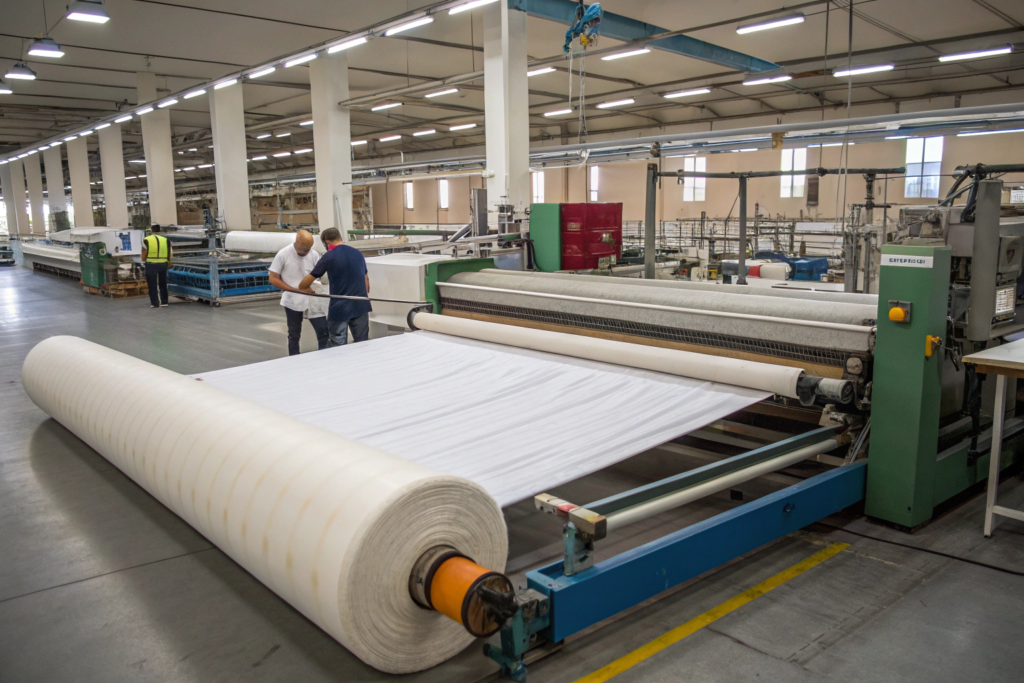
Think of a machine like a prize racehorse. You don’t gallop it out of the stable cold, do a ten-second sprint, and then put it back in the box. That’s how you break its legs. A weaving loom or a continuous dye range reaches "thermal equilibrium" and "dynamic tension balance" only after it has been running at a constant speed for two or three hours. During a long run, the oil viscosity in the bearings stabilizes, the humidity inside the weaving shed normalizes around the yarn, and the electronic yarn feeders maintain a constant feed rate.
The waste in short runs is astronomical. Every time you re-set a loom with a new warp beam, you lose about 5-10 yards of warp length just in knotting and threading losses. On a 500-yard order, that’s a 2% physical waste. On a 50,000-yard order, it’s negligible. Those tie-in bars where the old warp ended and the new one begins are always a bit distorted. Long runs mean fewer tie-ins, which means fewer random "thick-thin" lines running through your garments. It’s literally woven-in quality. If you ask an old technician how to get the cleanest surface on a polyester satin, he’ll tell you the same thing I do: let the loom eat. Don’t starve it with small bites. If you’re into the logistics of minimizing those changeover losses, looking at processes for optimizing long run textile dyeing demonstrates why volume is the ultimate QA tool.
How Do Bulk Yarn Purchases Reduce Fiber Variation?
Fiber variation is the root of all evil in textile quality. A cotton bale from one side of the field is not the same as a bale from the edge near the road. They vary in fineness and sugar content. When you’re labeling "100% Combed Cotton," the consumer expects a clean, nep-free surface every time. If I’m buying for a tiny order, I have to take generic market yarn that’s a blend of 20 different bales from 20 different gins—this is called a “laydown” in spinning.
With a large B2B order, the spinning mill can secure a "select laydown" where every bale falls within a precise micronaire range of, say, 3.8 to 4.2. This uniformity in the raw stock means the yarn spins evenly, absorbs dye evenly, and reflects light evenly. No ghost stripes. No white specks. That’s the difference between a fabric that looks "expensive" and one that looks "fair."
I remember a project with a large-scale uniform brand where we had to guarantee zero shade variation across 80,000 jackets. We bought a single lot of fiber-dyed black polyester staple, produced specifically for that purchase order, and locked it in a warehouse. It was expensive for the upfront raw material staging, but the consistency was flawless. We didn’t have "chip collectors" from mixed silo lots. That’s the kind of methodical meanness that only high-volume, B2B-focused capital expenditure can justify.
Conclusion
Let’s bring it home. We focus solely on B2B wholesale quality not because we think retail is beneath us, but because the precision required to survive your vendor compliance manual is the precision that gets our engineers out of bed in the morning. We are built for the reality of AQL 2.5 statistical sorting, the molecular bonding of reactive dyes, and the industrial rhythm of long runs that keep your California warehouse stocked and your brand reputation bulletproof. Every decision we make—from dumping the distraction of direct-to-consumer shipping to investing heavily in a CNAS lab that speaks the same data language as SGS—is a deliberate choice to protect your margin and your sleep schedule.
This approach has served the best in the business: the department store brands that can’t afford a recall, the athleisure giants that need zero seam slippage. They stay with us because they know the silent "B2C Tax" never inflates their fabric cost, and the machinery inside our Keqiao factory operates at a thermal equilibrium that simply cannot be matched by job-shop retail tailors. We solve the deep, boring, complex structural problems of the supply chain so you can focus on the beautiful, creative, surface-level problems of designing.
If you’re ready to stop settling for "feel nice" samples and step into a world where every batch comes with a real-time digital traceability map and a forensic spec sheet, let’s get on the whiteboard together. Whether you’re scaling a new label or you need a specialty performance composite that your current vendor is botching, at Shanghai Fumao, you get the engineers, not just the order takers. Our Business Director, Elaine, is the gatekeeper to this kind of precise industrial partnership. She cuts through the fluff and connects you directly with the technical solutions. You can reach her at elaine@fumaoclothing.com. Let’s stop talking about what cheap fabric looks like and start engineering what your profitable future feels like.








