
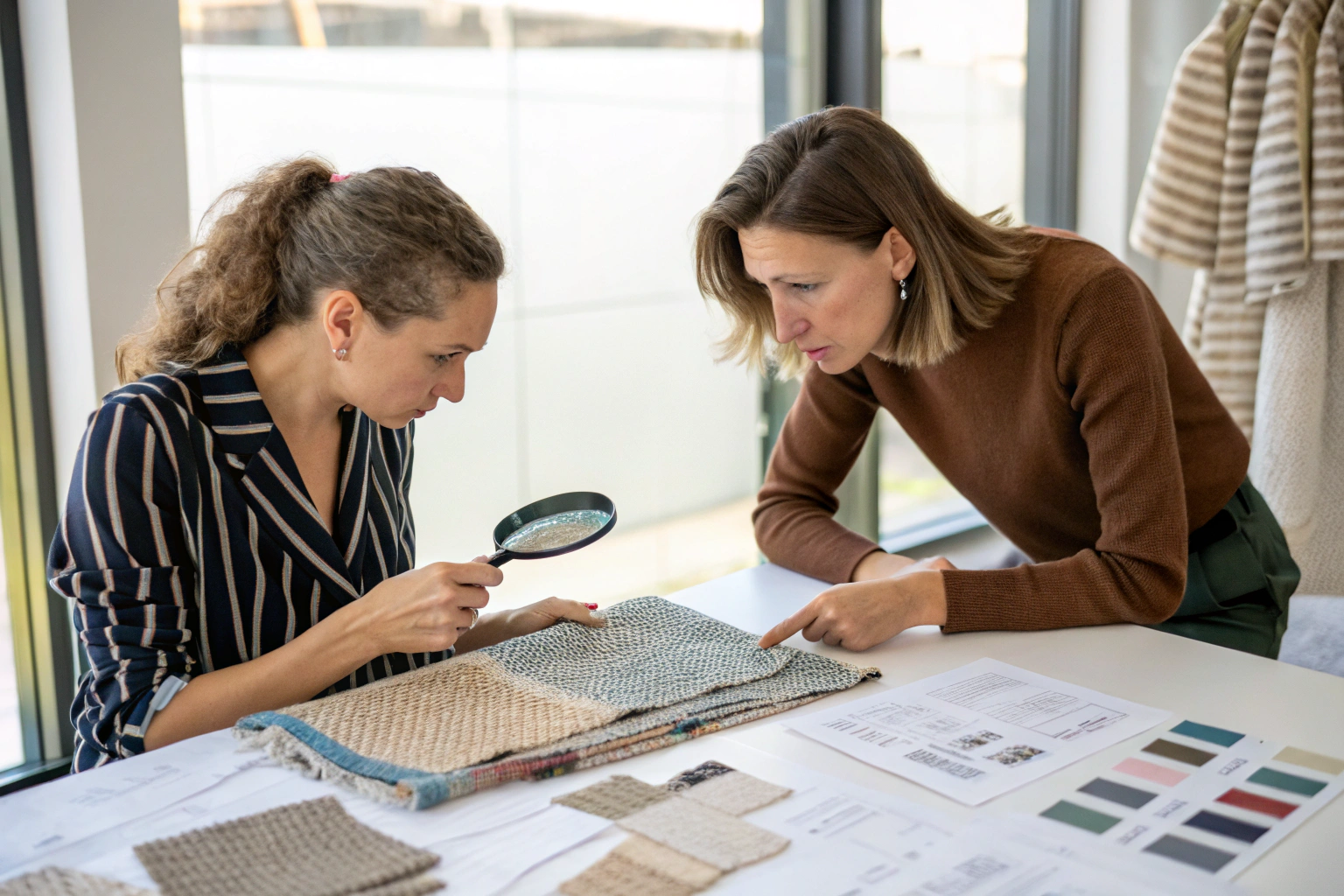
I have watched a single misunderstood word blow a $15,000 hole in a production budget. A startup founder emailed me "I want a heavy jersey, something with good drape." Heavy and drapey are enemies. Heavy fabric fights gravity; drapey fabric surrenders to it. He actually wanted a 300 GSM rayon slub knit. He ordered a 300 GSM stiff cotton jersey. The dresses arrived looking like cardboard boxes with armholes. He couldn’t sell them. He blamed me. I showed him the email where he wrote "heavy jersey." The mistake wasn’t the fabric. The mistake was the language. We were speaking different dialects of textile.
Speaking "Fabric Language" isn’t about memorizing fancy Italian words. It’s about using precise, measurable terms that lock a supplier into a specific physical outcome. When you say "soft," I hear a range from "tissue paper" to "cashmere." That range is a minefield. But when you say "I need a mechanical peach finish with a nap height under 0.1mm and a surface resistivity below 10⁹ Ohms," I know exactly which machine to use, which grit to load, and which conductive yarn to weave in. The language gap between designers and mills is the single largest cause of failed sampling, delayed bulk, and chargebacks in this industry. At Shanghai Fumao, I spend 30% of my sales calls just translating what a client says into what they actually need.
Today, I’m going to teach you the vocabulary that saves money. Not fluffy marketing jargon. Shop-floor language. The exact terms my QC team uses to pass or fail a roll. The specific phrases that make a dye master nod his head instead of shrugging his shoulders. Let’s stop ordering "nice fabric" and start ordering "22-micron merino single jersey with a 5% carbon grid, Delta E below 0.8."
What Are the Most Misunderstood Fabric Terminology Words in Textile Sourcing
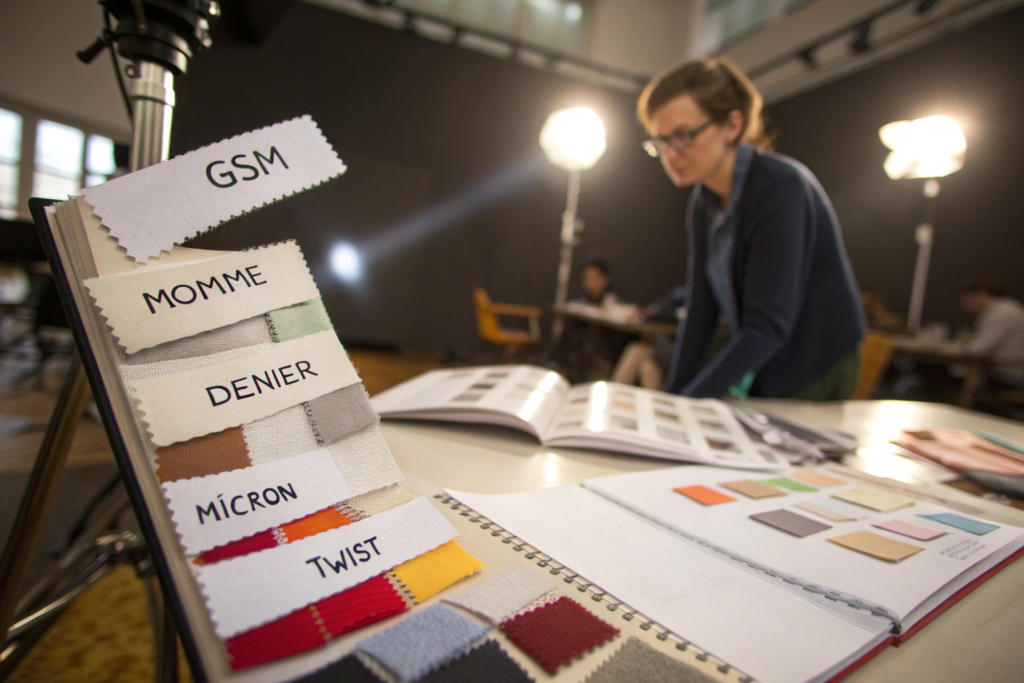
The textile industry speaks in ancient poetry and modern physics mashed together. We measure silk in "Momme," wool in "Microns," and thread in "Denier." A "Momme" is a Japanese weight unit for silk. 1 Momme equals 3.75 grams per square meter. A standard silk scarf is 12 Momme. A heavy charmeuse is 22 Momme. If you order "thick silk" and I send you 16 Momme instead of 22, you’ll be furious, but "thick" isn’t a number. Momme is. Then there’s "Denier." That’s the weight in grams of 9,000 meters of a single filament. A sheer pantyhose is 15 Denier. A rugged Cordura backpack is 1,000 Denier. Mistake these, and your "lightweight windbreaker" arrives as a bulletproof vest. I once had a client who loved the "hand-feel of a 40 Denier nylon." He accidentally wrote "40 Denier cotton." Cotton isn’t measured in Denier. That specification is biologically impossible. The email thread took a week to untangle.
This isn’t just vocabulary; it’s a testing protocol. You must ask for data, not descriptions. The three most abused words in sourcing are "heavy," "soft," and "strong." Replace "heavy" with GSM (Grams per Square Meter). A "heavy" T-shirt is 220 GSM. A "heavy" winter coat shell is 400 GSM. Replace "soft" with a specific finish method. Don’t say "soft"; say "bio-polished" or "emerized micro-peach." Replace "strong" with Tensile Strength in Newtons or Tear Strength in Pounds. (Warren Buffett once said, "Risk comes from not knowing what you’re doing." Risk in textiles comes from not knowing what you’re measuring.) I teach all my new clients a specific exercise. I send them a "Terminology Swatch Book." It has 20 swatches labeled only with a code like "A1, B2, C3." They have to match the code to the spec sheet. No marketing words allowed. This trains the tactile brain to seek out measurable physical properties. For anyone sourcing from Asian mills, I strongly suggest studying the exact definitions in a comprehensive guide to textile weight measurements GSM Momme Denier and yarn numbering systems for fashion buyers. It’s the difference between ordering a "strong coat" and ordering a "600D nylon oxford with 50N tear strength." The second one gets exactly what you picture.
What Is the Real Definition of Super 120s Wool vs. Standard Merino?
"Super" numbers are a marketing trap if you don’t know the math. "Super 120s" doesn’t mean "higher quality sheep living a better life." It strictly refers to the average fiber diameter in microns. The "Super" scale uses the formula: Average Fiber Diameter (in microns) = 18.5 minus (Super number / 10). So Super 120s is 18.5 – (120/10) = 6.5. Wait, that’s wrong. Let me correct that sleep-deprived math. The actual formula is (100 / Super number) = approximate micron. Super 100s is 18.5 microns. Super 120s is 17.5 microns. Super 150s is 16 microns. The higher the Super number, the thinner the individual wool fiber.
Here’s the trap: a Super 150s suit fabric feels like a cloud but wears like a cobweb. It pills if you look at it wrong. For a daily business suit, Super 110s or 120s is your sweet spot combining luxury with durability. A standard generic "Merino" without a Super number is usually around 20-22 microns. That’s a workhorse. It’s comfortable but not ethereal. I had a tailor client who insisted on Super 180s for a boardroom suit. It looked gorgeous for three wears. Then the elbows went shiny. Then the seat bagged out. He blamed the weaving. I showed him the micrometer graph of the 15.5-micron fibers snapped in half. The fabric wasn’t defective; it was simply too delicate for his application. If you want to nail this down, look at the objective difference between super wool grading scale and actual average fiber micron measurement for durability assessment. Don’t buy the Super number. Buy the specific micron range you need for the end-use.
How Do I Describe a Specific Drape Quality Without Saying ‘Soft’?
"Drape" is a ballet between stiffness and gravity. It’s measured by the "Drape Coefficient." This is the percentage of area a circular piece of fabric covers when draped over a disc. A stiff denim might have a drape coefficient of 80% (it sticks out wide). A liquid silk chiffon has a drape coefficient of 20% (it collapses into vertical folds). You can literally order fabric by specifying this number. But you can’t send me to a lab for every swatch, so you need observational language.
Instead of "soft drape," use these specific terms. "Dry Hand" means the fabric feels crisp, cool, and papery—like high-end linen or a heavily peached microfiber. Think architectural shapes. "Fluid Drape" means the fabric pours like water. It has a low bending modulus. Think viscose challis or modal jersey. "Buttery Hand" is a combination of extreme smoothness and compressibility, like a milled wool coating. "Scroop" is the rustling sound and crisp feel of silk taffeta. And "Memory" means the fabric holds a pressed crease or shape. A standard poly-viscose has memory; a rayon challis has zero memory. I teach my team to use "the pinch test." Pinch the fabric in the middle and lift it. If the edges hang straight down like a waterfall, it’s fluid. If the whole swatch lifts like a stiff pancake, it’s structured. Then say those words. Don’t say "soft flowy." Say "fluid drape with a dry hand." Your supplier will immediately upgrade your service level from "tourist" to "professional buyer." Understanding the exact terminology for describing textile drape coefficients fluid versus structured hand and bending modulus transforms your email from a wish into an instruction.
How to Specify Fabric Construction Details to Guarantee Bulk Matches the Sample
A physical sample is a promise. A spec sheet is the contract that backs it. If you only send me a 2×2-inch swatch and say "copy this," you’re playing roulette. Why? Because a swatch tells me what the fabric is. It doesn’t tell me what tolerances you’ll accept. Every fabric has variance. Yarn batches shift by 5% in thickness. Dye lots shift by a Delta E of 0.5. Loom tension drifts. If you don’t define your borders of acceptance, you approve an exact match, and then you inevitably reject a bulk roll that’s 2% different.
You must lock the "Big Four" on your sample approval form. Fiber Content (exact percentage, +/- 3%), Weight (GSM, +/- 5%), Construction (Ends per Inch x Picks per Inch, or Wales per Inch x Courses per Inch), and Width (cuttable width in inches, +/- 1 inch). If you just say "Cotton Twill," I will send you a cheap 68×68 pick-count twill. If the sample is a luxurious 130×70 pick-count twill, you must write "130×70" on the spec card. Otherwise, I’m just guessing your quality tolerance. I had a menswear trouser client who kept rejecting bulk because the "fabric was checkering." The sample was a 144×76 high-density poplin. The bulk was a 100×60 poplin from a different sub-contractor the trading company switched to save costs. The spec sheet must override the trading company’s discretion.
At Shanghai Fumao, we use a "Digital Lock" system. When we ship a sample you approve, we staple a QR code hangtag to it. Scanning it opens a PDF with the exact machine settings used to make that specific sample: the loom RPM, the dye bath code, the stenter temperature. When you reorder, we scan the code, and the machine reloads those exact historical parameters. It’s not a "similar" run; it’s a digital twin. This idea of locking construction data is so fundamental that I push all my clients to learn the basics of how to read and verify fabric specification sheets ends per inch picks per inch and weight tolerances for import quality control before they place an order. Your spec sheet isn’t paperwork; it’s your legal shield.
Is a Visual Hand-Feel Swatch Enough to Hold a Mill Legally Accountable?
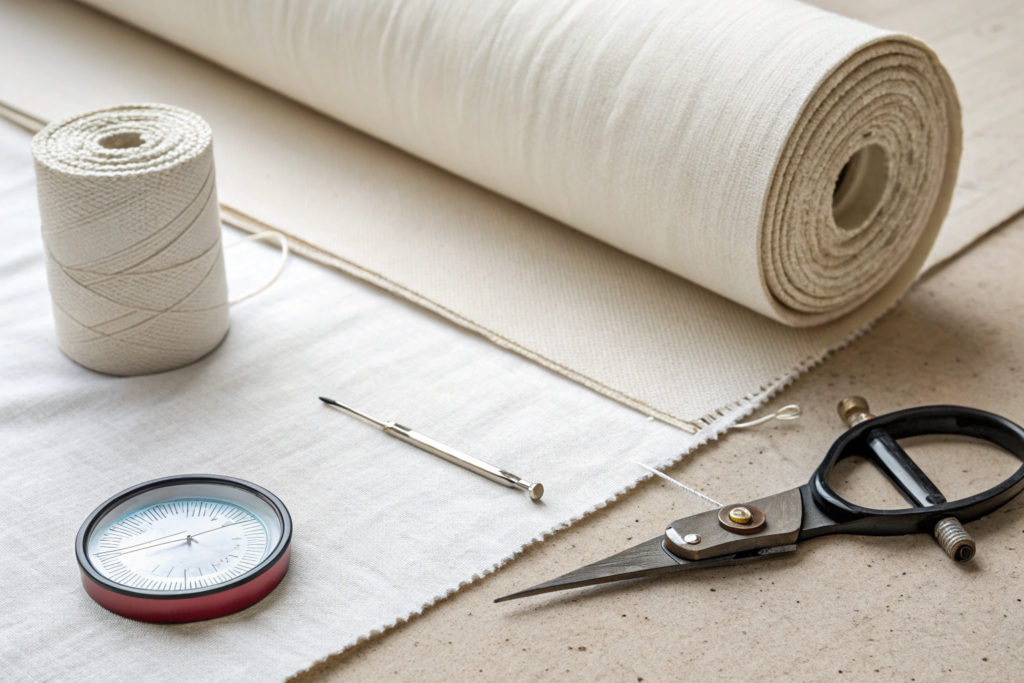
No. A swatch is evidence, not a contract. In international trade, if you go to arbitration, the arbitrator will look at the written spec, not your memory of how the swatch felt. A swatch can degrade. Cotton yellows. The silicone softener evaporates. The nap compresses. Six months after you approve it, the swatch is a ghost of the original tactile experience. So your legal accountability rests entirely on the documented physical parameters measured at the time of approval.
You need to attach a "Swatch Certification Document" to every submission. This document must include: the date of approval, the batch number of the sample fabric, a glued-down slice of the sample, and the measured test results for weight, fiber content flammability, and colorfastness from that exact sample. I advise buyers to sign the actual fabric swatch with a Sharpie across the face and take a photo. Yes, write on the fabric. This creates a "self-authenticating" piece of evidence. If I ship you a load of garbage that doesn’t match the bulk, you hold up the photo of your signature on the approved swatch. No lawyer can argue with that. It stops the "bait and switch" where a factory shows you a beautiful sample but ships cheaper cloth. For really high-stakes orders, always check the legal enforceability of physical sample swatches versus documented textile specification sheets in cross-border sourcing disputes. A photograph of a cut swatch with a signature is a legal document in some jurisdictions.
What Exact Weave Data Stops an Asian Mill From Switching to a Cheaper Sub?
Construction is your copyright. A specific weave density is mathematically unique. If your approved sample is a 130×80 plain weave broadcloth, a mill switching to a 110×76 is saving about 15% on raw yarn and weaving time. That’s a significant margin theft. You catch this with a "pick glass." It’s a folding linen tester magnifier. You lay it on the fabric, and you literally count the vertical threads (ends) and horizontal threads (picks) in a one-inch square. If the sample has 130 ends and the bulk has 110, that’s an objective mathematical failure. It has nothing to do with taste.
I also add a "Yarn Number" lock. This is the Ne (cotton count) or D (denier) of the yarn. If I use a 40s single-ply on the sample, and the mill secretly switches to a cheaper 30s single-ply, the bulk will feel coarser and heavier. To check without a lab, cut a 1-inch strip of fabric from both the sample and the bulk. Unravel 10 threads from each. Lay them side by side on a dark paper. If the bulk threads are visibly thicker than the sample threads, the yarn number has been switched. This is a physical reality you can see with the naked eye. You’re essentially doing you own microscopic pick glass inspection technique to verify yarn count ends per inch and weave pattern against approved textile sample. This simple five-minute check at your kitchen table can save a 20,000-yard container from becoming a liability. Count the threads. It’s the most empowering thing a fabric buyer can learn.
What Does ‘A-Grade Fabric’ Actually Guarantee in China vs. The US Retail Market
"A-Grade" is a handshake, not a universal law. When a US buyer says "A-Grade," they imagine a flawless roll ready for the cutting table. When a generic Chinese trading agent says "A-Grade," they often mean "export quality," which is a sliding scale based on price. I separate grading into two clear systems. The "Factory Grade" is what the loom produces before inspection. The "Client Grade" is what you actually define in your acceptance criteria. If you leave the definition blank, the mill defaults to the 4-Point System. That’s the American industry standard. One point for a defect under 3 inches, two points for a defect 3 to 6 inches, three points for 6 to 9 inches, four points for a hole or stain over 9 inches. The total points per 100 square yards must not exceed 40. That’s "A-Grade" in the USA.
Here’s the gap. A European "Premium Grade" might demand a total of 20 points per 100 square yards, which is twice as strict. If you tell me "A-Grade," I default to 40 points. If you actually needed 20 points, you just received a roll that I consider perfect but you consider a reject. This happens constantly with furniture upholstery clients. A furniture maker inspecting for a sofa front demands zero visual defects because the light catches everything. A shirt maker can cut around small dots. Same "A-Grade" label, two completely different expectations. I now force my clients to sign a "Grading Tolerance Agreement." It graphically shows photos of acceptable vs. unacceptable slubs, warp lines, and color bleeding. It’s not a document to read. It’s a photo album of "this is okay, this is not." If a supplier can’t provide a visual defect standard reference, they are grading subjectively. And subjective grading favors the factory, not you. You might find it useful to dive into the international 4-point system fabric inspection criteria compared to European premium textile grading tolerances for US importers to understand exactly where the cultural lines blur.
Why Do Some ‘First Quality’ Polyester Rolls Ship With a Wavy Selvedge?
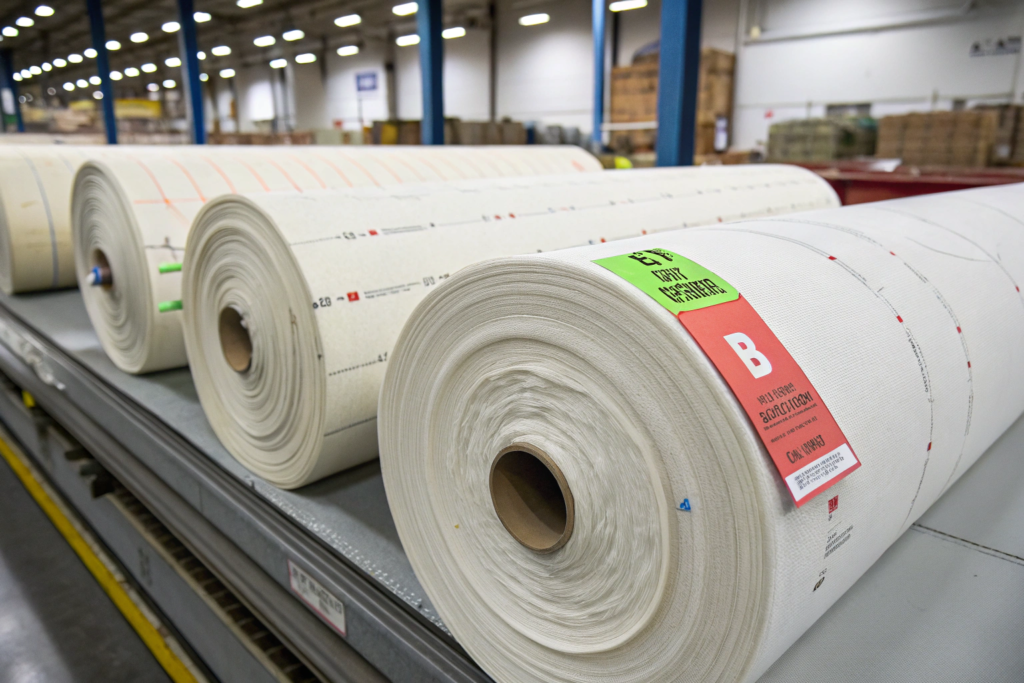
Wavy selvedge is a lie told by the tenter frame. It means the fabric was over-stretched sideways during heat-setting. The middle of the fabric dries flat. The edges, trapped by the pins, dry under maximum tension. They "memorize" a longer length than the center. After cooling, the edges relax and sag into a wave. In a fast production run, the operator might increase the stenter width to hit a yield target, pulling the fabric 2 inches wider than its relaxed state. It looks fine on the inspection table because we cut the wavy edge off before grading.
A roll with wavy selvedge can still be sold as "First Quality" if the wavy portion is within the non-usable margin (usually 1.5 inches from each edge). If the weave is distorted further into the body of the fabric, like ripples moving into the cutting zone, it’s a "Second Quality" defect. You spot this by simply unrolling a meter of fabric on the floor. If the edges curl and flutter like a lasagna noodle, reject the roll. It will slide around on your automatic spreader, making precise cuts impossible. Your cutting room efficiency will drop by 20%. The deeper technical issue is how the mill managed the causes of wavy selvedge during stenter frame heat setting and the grading standard for first quality versus second quality fabric export. A factory that consistently ships wavy edges is running their stenter too fast and too hot. They are chasing throughput, not quality.
What Is a ‘Standard Minute Value’ in Cutting and How an Imperfect Roll Costs Money?
Standard Minute Value (SMV) is the exact time a cutting operation should take. A perfect roll of fabric allows a spreader to layer ply after ply in smooth, flat sheets. A roll with a hidden "tight selvedge" or "baggy center" creates a wave in the spread. The cutter has to stop the machine, manually smooth the bump, maybe sprinkle talc, then re-align. That stop costs 45 seconds. Repeated over 200 plies, you lose half a production day.
An "A-Grade" fabric should not just be visually clean; it should be geometrically stable. If a roll has a bow or skew where the weft yarn is U-shaped or diagonal, the cutter has to manually straighten it. That’s called a "re-lay correction." It doubles the SMV. I had a US cut-and-sew contractor bill a brand $6,000 extra for "handling defective fabric rolls" because the mill had shipped "A-Grade" cotton twill with a 2% skew. The spec didn’t mention skew, so the mill said it wasn’t a defect. The cutting room said it was unusable without correction. The brand ate the $6,000. That’s why I include a "Skew/Bow below 3%" clause on every Shanghai Fumao invoice for woven apparel fabric. If your spec sheet doesn’t mention spirality or skew, you haven’t specified A-Grade; you’ve just specified a vague hope. You should absolutely standardize your approach to calculating standard minute value loss in cutting room due to fabric roll skew bow and tight selvedge defects so you can charge back the supplier legally. Fabric isn’t just a material cost; it’s a labor cost driver.
How Do You Cross-Check a Factory’s Shrinkage Test Data With Your Own Washing Machine
Never trust a mill’s shrinkage certificate unless you’ve verified it on your own turf. And I, as the mill owner, am telling you this. Lab tests are conducted under perfect conditions: an Electrolux front-loader, a specific phosphate-free detergent (ECE reference detergent), a precisely weighted 1kg ballast load, and a flat-dry on a mesh rack. Your customer uses a top-loader with an agitator, a heavy dose of Tide, and a scalding hot dryer on "Cotton Heavy." Those conditions achieve shrinkage 3% to 5% worse than the lab report.
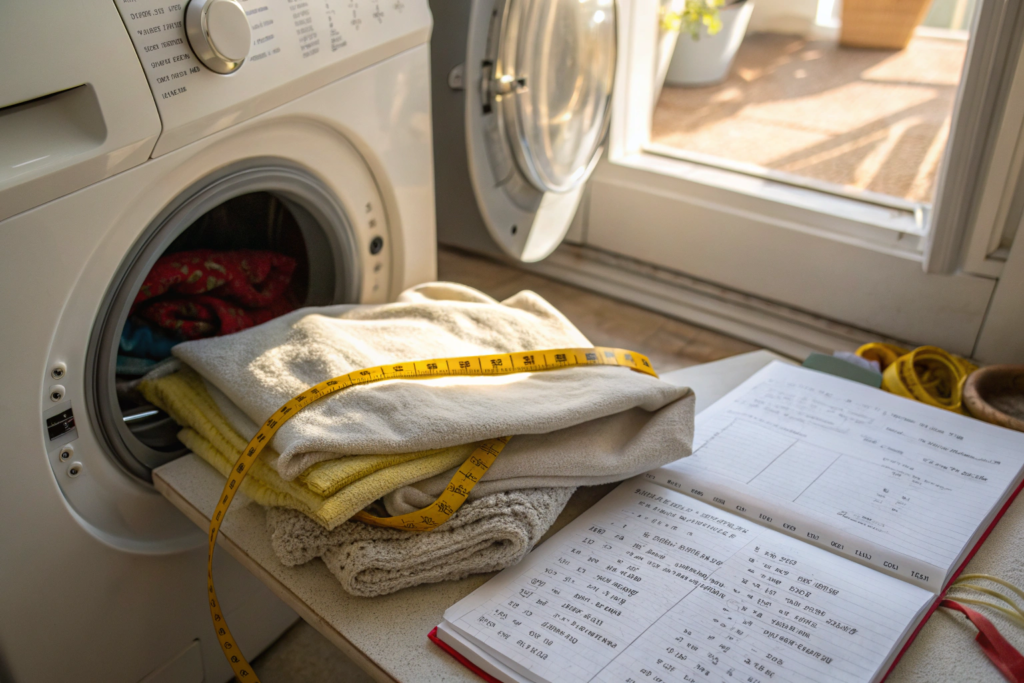
You need to run what I call a "Hot Fury Cycle." Take your approved sample swatch, cut a precisely measured 50cm x 50cm square, and mark a 30cm x 30cm internal box with an indelible pen. Take it home. Throw it in your actual washing machine with a full load of towels on the hottest temperature setting. Add your normal detergent. Run a full cycle. Then, dry it on the hottest setting until it’s bone dry. Lay it flat without stretching and measure the internal box. If my lab report says "shrinkage: 3%," and your home box now measures 28cm, that’s 6.6% shrinkage. You need to call me immediately. We have a sizing problem. The lab report isn’t wrong; it just doesn’t reflect your customer’s reality. I’ve had this specific conversation with a Chicago winter coat brand. Their $400 wool car coats were being returned because the sleeves shortened 2 inches after home wash. Our lab test said 2%. The Hot Fury home test said 5%. We had to over-compensate the fabric by 3% mechanically before cutting. That corrective action came from a swatch in a Maytag, not a Datacolor lab. I always encourage my clients to independently validate using the methods in a domestic home washing machine shrinkage verification protocol compared to ISO 6330 laboratory method textile testing. It’s the most empowering half-hour you’ll spend with a piece of fabric.
How Can I Instantly Spot a Fake Test Report on a Swatch Card?
The fake certificate industry is massive. A color-printed SGS logo on a PDF is meaningless. I can Photoshop one in five minutes. To spot a fake, you look for "live traceability." A real test report has a unique identification number. Go to the SGS, Intertek, or BV website portal. Enter that number. If it pulls up a report with a matching date, fabric description, and client name, it’s real. If the portal says "Report Number Not Found," it’s a forgery.
Also, check the PDF metadata. If the report claims to test "Silicone Peach Finish" but the PDF author is "HP ScanJet" and it’s a scanned document from 2016, it’s a recycled document. A genuine fresh report from a certified lab is a direct PDF export from a LIMS (Laboratory Information Management System), not a scan of a printout. I once received a vendor application from a startup mill. Their "Oeko-Tex" certificate looked great. I typed the number into the public database on Oeko-Tex.com. The number belonged to a zipper factory in Shenzhen. They had modified the company name field. That vendor was reported. You can do this check in less than two minutes. Always read up on how to authenticate online SGS Intertek and Oeko Tex certification report numbers to detect counterfeit textile compliance documents. Don’t be impressed by the logo. Be impressed by the live database ping.
Why Does Relaxed Dry Differ From Tumble Dry for Rayon Blend Dimensional Stability?
Rayon (viscose) is a wet noodle. When it gets wet in a washing machine, it swells up to 40% thicker. If you then tumble-dry it, the hot tumbling mechanically beats the swollen fiber into a shorter, thicker configuration. It shrinks aggressively. A typical "Line Dry" instruction tries to avoid this. But consumers ignore care labels. You must design for the tumble dryer.
"Relaxed Dry" in a lab test means they spray the fabric with water, lay it flat, and let it relax. That’s the best-case scenario. My policy is to always test rayon blends in a "3-cycle Tumble Dry." This is a real-world worst-case. I have a client who makes viscose/linen blend dresses. Our lab said 4% relaxation shrinkage. I sent her a swatch and told her: "Dry this on high with your towels." She did. It came out 8% smaller. She was about to launch a 4,000-piece production run. We stopped the cutting, over-fed the fabric by 4% during compacting, and re-cut it. That dress now survives the dryer. For any cellulosic blend, you simply cannot rely on relaxed dry numbers because your customer’s "normal" is a tumble dry mistake. Look into the tumble dry versus line dry shrinkage comparison tests for viscose modal and lyocell blended woven apparel fabrics to see exactly how aggressive the mechanical action is on wet cellulose. It’s night and day.
Conclusion
Speaking fabric isn’t a party trick. It’s a survival mechanism. Every time you say "soft" instead of "bio-polished," you’re handing your supplier a blank check to interpret your dream. Every time you say "heavy" instead of "300 GSM," you’re paying for a weight you might not want. The language I’ve walked you through—GSM and Denier, Drape Coefficient and Delta E, 4-Point System and SMV, Hot Fury Cycle and Pick Glass counting—these aren’t jargon. They are the sharp tools that separate professional buyers from hopeful gamblers. A spec sheet filled with these exact words is a legal contract that protects your cutting room budget. A spec sheet filled with "nice quality" and "good drape" is a wish list.
At Shanghai Fumao, I’ve built our client intake process around this language gap. We don’t ask "what kind of fabric do you want?" We ask "what is the end-use, what is the target GSM, and what is the required wash durability cycle count?" The conversation changes instantly. It shifts from a hope to a negotiation. And I genuinely prefer a negotiation. A hard negotiation based on measurable facts produces a reliable garment people buy twice. A soft conversation based on poetry produces a gamble that might end up on a clearance rack.
If you’re ready to translate your next design brief into a bulletproof technical spec sheet, let’s talk the real language of textiles. Send a photo of your reference swatch, your target price point, and your required drape coefficient or hand-feel description—use the "dry hand, fluid drape" vocabulary we built here—to our Business Director Elaine at elaine@fumaoclothing.com. She’ll send you back a terminology-matched swatch pack and a spec form that forces precision. Don’t order nice fabric. Order measurable fabric. We’ll make sure the bulk matches the language.








