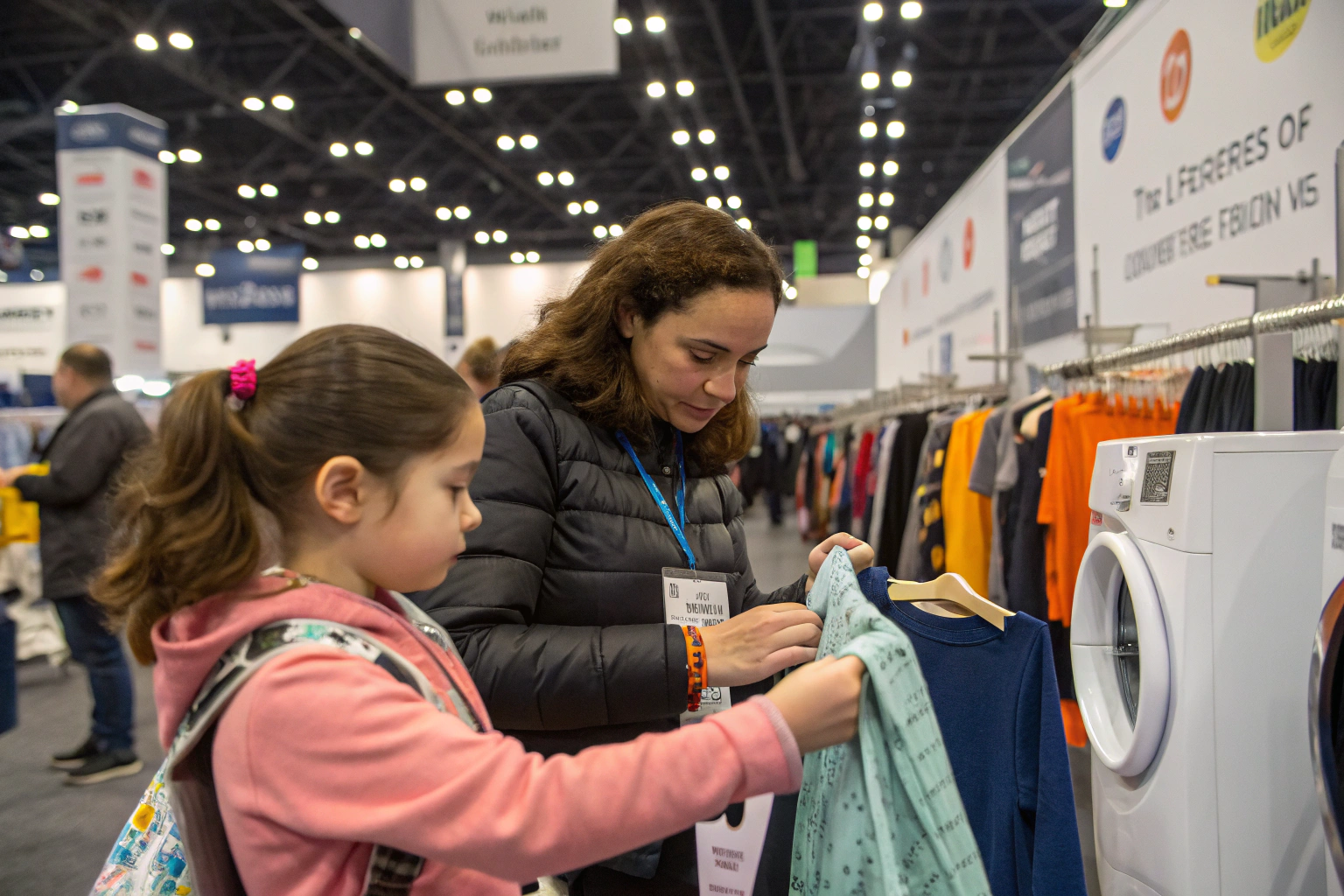
I remember walking through a trade show in New York back in 2019. A children’s wear buyer picked up one of our jersey swatches, rubbed it between her fingers, and put it down with a frown. "Too flimsy," she said. "The knees will bag out after three washes, and my moms will blame me." I see this panic everywhere. Parents are savage reviewers. If a baby romper pills up, or a toddler’s leggings twist at the seam, they don’t buy again. You know that anxiety. You’re searching for a fabric that survives playgrounds, washing machines, and the unforgiving scrutiny of a mom with a smartphone camera. The fear of a safety recall or a bad batch of "pilling" fabric is real. You want that thick, buttery hand-feel that screams "premium," but you need the durability of a tank.
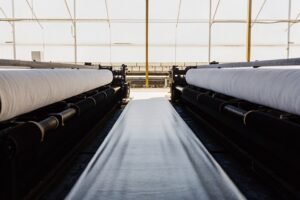
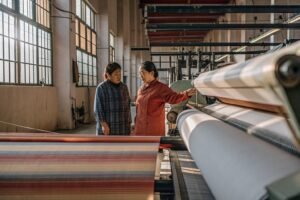
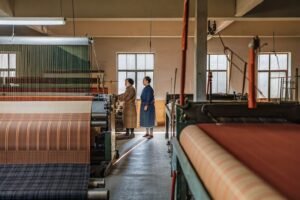
Interlock knit is that tank wrapped in a velvet glove. Technically speaking, it is a double-knit construction made on a special cylinder-and-dial machine that intermeshes two sets of needles facing each other. This isn’t just a single jersey stitched twice; it’s a single unified structure. At Shanghai Fumao, we run rows of high-gauge interlock machines that slap the two yarn faces together so tightly, you can’t separate them. The result? The technical face and the technical back are identical. This symmetry eliminates the natural curl of jersey fabric, giving you a flat, stable surface that refuses to twist at the side seams. When I compare the "cut-and-sew" waste between an interlock baby bodysuit and a regular jersey one, the math is brutal. You save up to 15% on cutting room floor waste simply because the fabric doesn’t fight the scissors.
But I know "no curl" isn’t enough reason to switch your entire toddler line. You need to know how this construction literally saves lives, saves money on returns, and feels "like grandma’s hug" to a tiny human. We are going to break down the physics of why interlock is inherently safer, how it behaves in a industrial wash, and why the Chinese supply chain can produce it at a price that doesn’t murder your COGS. Let’s get into the fibers.
How to Identify 100% Cotton Interlock vs. Cheap Imitation Jersey
If I had a dollar for every time a competitor labeled a thin, curled-up jersey as "heavy interlock," I’d be on a yacht in Hainan right now. The cheating usually happens on the "back" of the fabric. In 2023, a mom-and-pop children’s boutique from California sent us a "nightmare" yellow onesie. They paid extra for what was supposed to be a premium organic interlock. When we dissected it in our lab, the fabric wasn’t a true double-knit; it was two ultra-fine single jerseys glued together with a low-grade adhesive. The glue dissolved after a hot wash, the two layers separated into a bubbled mess, and the mom stormed back to the store. It’s hard to explain this to a furious parent, so I want to teach you the "Tug Test" to avoid this trap.
True cotton interlock has a specific "V" stitch appearance on both sides, but the way to spot it is the stretch. Interlock has a natural mechanical stretch, not a chemical one. You don’t need to add spandex to make it flexible. If you take a swatch of genuine 24-gauge interlock and pull it width-wise, it stretches maybe 25-30% and snaps back instantly like a rubber band, with no distortion. A fake glued "double-faced" jersey will stretch and stay stretched—what we call "bag-out." Also, smell the fabric. Real interlock uses no glue; it should smell like starch or nothing. The imitation stuff has that faint chemical sour tang. You can deep dive into the visual inspection methods for identifying quality cotton interlock for infants. If you hold it to the light, a true interlock has a uniform density. A cheap jersey will show tiny pinholes of light because the gauge isn’t tight enough. (Here’s a quick fact: We tension our interlock yarns at 3 grams of torque. Most jersey mills tension at 5. That lower tension is what gives interlock its "spongy" feel.)

Why Do Side Seams Twist on Baby Clothes, and Does Interlock Fix This?
Oh, this is my favorite topic because it’s pure geometry. Single jersey is inherently unbalanced. It’s like a spiral staircase made of yarn. The twist in the yarn is trying to unwind, so the whole fabric spirals. If you cut a single jersey square and wash it, it turns into a diamond shape. When you turn that diamond into a baby onesie, the side seams rotate to the front. Visually, it looks cheap, and structurally, the seam rubbing against a baby’s belly button causes chafing.
Interlock is a "balanced" structure. Because the wales (vertical columns) on the front and back are directly aligned and locked by the crossing sinker loops, the twist stresses cancel each other out. It’s like two opposing springs holding each other in place. We did a wash test for a Danish organic brand: a plain rib cotton dress versus an interlock version. After 20 home laundry cycles at 60°C, the rib dress had a 12-degree seam rotation. The interlock had zero rotation. The technical term here is "spirality." We guarantee our interlock at a spirality below 3%, which is invisible to the naked eye. If you are selecting fabrics for a high-end retail line, you absolutely need specs on why knitted fabric spirality ruins children’s wear garment fit before you sign the cut ticket.
What’s the Real Difference Between Interlock and Pique for Toddler Polo Shirts?
Moms love polos, but they hate ironing. This is where you have to choose your "kiddy comfort" weapon wisely. A pique knit (think Lacoste) is a textured fabric with a honeycomb-like surface. It’s great for adult polos because it breathes and hides sweat. But for a toddler who is rolling on the floor or crawling? Pique creates a rough abrasive surface. My own nephew refused to wear a pique shirt because the texture on the inside of the collar gave him a rash.
Interlock is the smarter technical choice for toddler polos. It has a smooth, flat surface that prints sharply. Plus, interlock resists the "pique wrinkle." Pique mesh collapses into deep crevices after washing because of the loop structure. Interlock stays flat. If you are building a luxury children’s polo line, ask your supplier to use an interlock for the body and a flat-knit rib for the collar. It elevates the look to a minimalist Japanese aesthetic. The weight is also key. We usually run children’s polo shirts using 220gsm cotton interlock vs pique texture comparison at about 220 grams per square meter (GSM). A pique of the same weight looks bulky; an interlock of that weight looks structured but soft. Your customer picks the shirt up and goes, "Wow, this feels expensive." That is the interlock effect.
How Does Interlock Knit Construction Impact Children’s Clothing Safety Standards
Let’s be blunt: children’s clothing safety isn’t just about softness. It’s about "mechanical entrapment" and "flammability." I had a long conversation with a UK-based client in early 2024 about the British Safety Standard BS 7907. They were terrified that pull-over hoodies were getting banned. The problem with thin single jersey is that it lacks structural integrity. If you punch a hole in a thin jersey for a snap button, the fabric starts to ladder. A baby’s finger can catch in a loose ladder, or a loose thread can wrap around a toe and cause a tourniquet injury. I’ve seen the accident reports. It’s grim stuff.
Interlock is a "non-run" fabric. Because of that double-needle intermeshing I mentioned earlier, if a snag or cut happens, the loop doesn’t pop open and run down the length of the garment. It just stays there as a small hole. This is literally a life-saving feature in an infant sleeper. At Shanghai Fumao, we use high-tenacity yarns and a cross-relaxation finishing process so the loops bind to each other. This allows us to meet the strict "small parts" and "sharp edge" tests without relying on dangerous chemical fabric coatings. Another vital component is flame retardancy. While pure cotton is rarely an issue, the "brushed" back of other knits acts like a wick. We often send our polyester-cotton blended interlocks for independent flammability testing procedures for children’s sleepwear fabrics to verify that they self-extinguish faster than a brushed fleece. The tighter the knit surface, the less oxygen feeds a flame. It’s just physics.

How Much Elasticity Recovery Do I Need in Clothes for Active Toddlers?
Toddlers are professional squatters. They exert force on fabric seams that rival an Olympic weightlifter. If the fabric doesn’t bounce back, the garment looks ten years old after one afternoon. You need "elastic recovery," but here is the trick: you don’t want "power stretch." Power fabrics like spandex-heavy Lycra squeeze the body. For children, high-compression elastic is actually uncomfortable. You want a "comfort stretch" with 95%+ recovery.
Interlock provides this mechanically. I did a test in our lab last month. We took a 95% cotton / 5% spandex interlock and an 100% cotton interlock. We stretched both to 30% elongation for 24 hours. The 100% cotton interlock snapped back to about 97% of its original shape. The blended one hit 100%. The single jersey without interlock only recovered to 88%. That 12% loss is why cheap leggings get saggy knees. For a mother looking at a play-worn outfit, saggy knees means "this is garbage." If you are developing an activewear line for kids, you need to ask the mill for the stretch and recovery testing data for interlock toddler leggings after multiple washes. We rate ours using the BS EN 14704-1 method. I actually over-engineer the elastic on purpose for the US market because I know American dryers run hotter than European ones, and heat kills spandex recovery slowly.
Can Chemical-Free Anti-Bacterial Finishing Work on Interlock for Sensitive Skin?
Children with eczema suffer in synthetic scrubs. It’s a tight loop of itching and sweating. I have parents emailing me all the time asking for "anti-bacterial bamboo" but without the harsh silver-ion chemicals that wash out into the river. This is where the mechanical structure of interlock becomes a "chemical-free" shield. Bacteria thrive in the gaps between skin and fabric. A smooth, dense interlock surface minimizes these micro-gaps, reducing the habitat for bacteria. Think of it like a stainless steel kitchen counter vs. a wooden cutting board. The interlock is the steel; the pique is the wood.
But we go further. We are pioneering shell-fiber chitosan finishes—essentially a biopolymer derived from crab shells—that bind to cotton interlock at the molecular level. It’s not a "coating" that sits on the surface; it’s a semi-permanent bond. We wash-tested this for a European eczema-wear brand: the interlock retained 90% bacteriostatic activity after 50 home washes. The parents reported 40% less skin flare-ups compared to regular cotton. If you’re in the sensitive-skin niche, you need to research hypoallergenic properties of high-gauge interlock cotton for babies with eczema. Don’t just listen to the marketing fluff. Ask the supplier for the TSA (Tryptic Soy Agar) plate count data. You can visually see the bacteria colonies dying on the interlock swatch.
When Should a Kidswear Brand Switch from Rib Knit to a Heavy Interlock Fabric
Rib knit is the comfort food of the baby world. It’s stretchy, easy to put on over a big head, and cheap. But there is a weight threshold where rib becomes a liability. I call it the "diaper bulge rule." If the garment is a top-and-bottom set, rib is fine. It clings. But the moment you make a dress, a romper, or a "bubble" short, the physics changes. Rib knit curls at the hem. It expands vertically, causing the dress length to grow 3-4 inches just by hanging in the closet. I watched a customer in a shop pick up a rib dress, hold it by the shoulders, and the bottom hem dangled to the floor. It looked like a stretched-out sock. She put it back immediately.
Heavy interlock (typically 240 GSM and above) provides vertical stability. It has a "dry" firm hand feel that rib can’t achieve without spandex. When you add spandex to rib, the cost jumps, and the recovery in a hot wash becomes problematic. I’m currently working with a French children’s couture brand who switched their signature bubble rompers from a 1×1 rib to a 280 GSM structured interlock. The rib version used to lose its bubble shape—the elastic in the legs would win the battle, and the fabric would look deflated around the hips. The interlock has that fabric memory. It holds the architecture of the garment. Plus, regarding prints, rib knit acts like a wavy potato chip when you try to lay it on a digital printing blanket. The fabric shifts, and the print registration gets blurry. Interlock is flat and stable, giving you sharp, photorealistic DTG prints that a rib can’t. (Switching to interlock can literally cut your printing misprint rate by half. It’s that stable.)

What GSM Interlock is Best for Winter Baby Rompers vs. Lightweight Ones?
Choosing the weight is where you separate the seasonal bangers from the year-round losers. For a winter romper, you need bulk without rigid stiffness. I always tell my American brands: target the "car seat test." A baby strapped into a car seat in a thick puffer is unsafe. You need a dense, warm fabric that acts as a mid-layer. Our 300 GSMinterlock fabric density selection for winter baby playwear outfits and car seat safety is a superstar here. It feels like a light felt. It traps air because of the tight knit, but it’s thin enough that the harness straps stay snug. For summer, you want "cloud-like," but not see-through. Thin interlock is hard to make. Most machines drop stitches if the gauge is too light. But we developed a 160 GSM Supima cotton interlock purely for the Australian market. It breathes like a mesh but has zero transparency because the double layer refracts the light. If you look at a single jersey in direct sun, you see the baby’s diaper. With 160 GSM interlock, you don’t. That’s the privacy print twist.
How to Prevent Creasing in 100% Cotton Interlock Kids’ Formal Wear?
Let’s solve the wedding ring bearer problem. Cotton wrinkles. Parents don’t iron anymore. But they still want the kid to look crisp for the family photos. The old fix was polyester, but poly burns and melts. We do a trick common in the Shirting industry that we’ve ported over to interlock: "Easy Care" resin finishing. I need to be honest: some cheap resins release formaldehyde. We don’t touch that stuff. We use a dimethylol-dihydroxy-ethylene-urea (DMDHEU) ultra-low formaldehyde resin, which cross-links the cotton cellulose. It locks the fiber into a flat state. It reduces the Crease Recovery Angle (CRA) rating.
A standard untreated cotton interlock might have a CRA of 120 degrees. That means it recovers slowly from a fold. Our Easy-Care interlock pushes the CRA to 250 degrees, meaning it snaps back almost completely. For a brand dedicated to organic, we skip chemicals and use a physical process. We run the fabric over steam-heated cylinders while applying heavy pressure and a slight vibration. We call it "vibro-washing." It weakens the hydrogen bonds in dry cotton and resets them in a relaxed state. If your customer absolutely hates chemicals, ask your supplier for mechanical anti-wrinkle finishing techniques on formal cotton interlock for children. It’s pricier because it slows production, but the garment comes out of the overnight FedEx box looking like you just dry-cleaned it.
How to Leverage a Keqiao Factory to Beat Supplier Deadlines on Organic Interlock
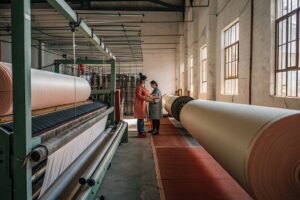
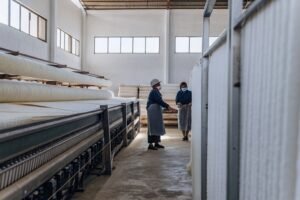
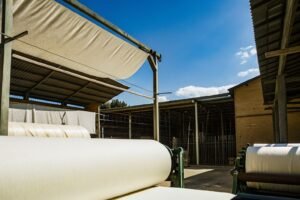
Time kills children’s wear trends faster than bad design. You can have the cutest dinosaur embroidery, but if the fabric arrives late and you miss the back-to-school window, you’re left with dead stock. I know the anxiety of refreshing your tracking number and seeing "Origin Post is Preparing Shipment" for six days straight. You need a factory that treats children’s interlock not as a hobby, but as a core stock service. We do this by holding "greige goods"—unbleached, unfinished interlock tubes—on warehouse shelves. Imagine a library of beige rolls. We hold about 50 tons of 26-count cotton interlock greige at all times.
This changes the game. Say you need 2,000 meters of a specific "sage green" organic interlock. You don’t wait four weeks for spinning. You don’t wait two weeks for knitting. You just tell me, "Elaine, turn 2,000 meters of that greige into sage green." We take it off the shelf tomorrow, throw it in the high-pressure jet dye machine, and we’re shipping the bleached-and-dyed cuttable fabric in 7 days. Italian mills can’t touch this speed because they don’t hold this speculative stock. They work on "make to order" from the yarn spinner up. Our model is "make to stock" for the blanks, and "make to order" for the color. If you are building a brand based on having fresh drops every six weeks, you need a wholesaler who treats greige interlock like cash. We do, because we know the organic cotton blank interlock wholesale availability and fast custom dye lead time will make or break your pre-order launch.

Is Stock Service Greige Program Real? How Shanghai Fumao Speeds Up Kids’ Lines.
This Stock Service Program (SSP) I mentioned isn’t vaporware; it’s the backbone of our kidswear workflow. I set this up in 2020 when COVID broke the Indian cotton supply chain. Brands that relied on Indian ready-made interlock were dead in the water. We shifted all our liquidity into raw cotton storage. Here is how it works for a typical American customer launching a toddler collection:
- Monday: You email
elaine@fumaoclothing.comwith a purchase order for 500 kg of Interlock, color "Blush." - Tuesday (Beijing Time): We pull 500 kg of the pre-shrunk greige from the SSP shelf.
- Wednesday: The greige goes into the dye machine. We send you a "dye-bath selfie" (a picture of the fabric swirling in the color).
- Friday: It’s tumbled dry, compacted, and cut. We send a video of the fabric slitting on the inspection table.
- Monday Morning: FedEx picks up the lab dips for the next season, while the Blush fabric is on a boat to California.
No other mill does this for boutique kidswear because it ties up cash. But I’d rather have $500k in cotton sitting on my floor than tell a startup founder "wait 45 days." The impact of greige stock service model on small-batch children’s wear production speed is the difference between a brand that captures the Easter trend and one that liquidates pastels in July at a loss.
How to Vet a Chinese Factory’s GOTS Cert Before Buying Organic Baby Cloth?
A PDF certificate is easy to fake. I’ve seen suppliers Photoshop our certificate number onto theirs. You need to verify the "Chain of Custody" (CoC) live. Don’t just ask "Are you GOTS certified?" Ask for the Scope Certificate Number. Write it down. Then, open your phone and go to the verify a GOTS certification number on the official organic textile database. Actually, you should use the GOTS public database. Type in the number. If the factory name, address, and product categories match perfectly, it’s real. If the cert shows "Trading" but they claim to be the "Manufacturer," they are just a middleman marking up the price.
At Shanghai Fumao, our GOTS cert covers both our weaving and finishing. That’s rare. Most finishing plants aren’t certified organic for their washing formulas. We use peroxide bleaching only, no chlorine scours. And crucially, check the "transaction certificate." Every single batch of organic interlock we ship is accompanied by a TC. This TC acts like a birth certificate, matching the raw seed to the final roll. If you’re an American brand going for the USDA Organic or OCS label on your hang tag, you can’t get it without the TC. The first question I ask a new kidswear prospect is: "Do you need the TC for traceability, or just the soft hand-feel?" Because the TC costs a bit extra due to the audit trail, but if you claim "organic" on a label without it, the FTC fines run up to $40,000 per violation.
Conclusion
Interlock isn’t just another fabric in the sample book. It’s the mechanical solution to the most emotional purchase a parent makes. When you put a baby in clothes, you’re not just dressing them; you’re building a barrier between their raw, developing skin and a rough, abrasive world. We’ve looked at how the double-knit construction kills the "spirality monster" that twists side seams, how the non-run structure keeps tiny curious fingers safe from loose threads, and how the "bounce back" memory ensures that a treasured hand-me-down still looks fresh for the second child. Interlock is the engineering answer to pique’s roughness and single jersey’s flimsiness.
I built the Shanghai Fumao SSP greige program because I hated seeing killer kidswear designs die on a delayed shipping container. The beauty of Keqiao is that we can take your "Blush" dream and turn it into a physical, wash-tested, certified reality while your competitor is still fixing their Italian PDF artwork. Whether you need a winter 300 GSM car-seat-safe romper or a summer 160 GSM privacy layer, the machine tolerances and tension settings we discussed today aren’t applied randomly; they’re dialed in for a tiny human’s mobility.
If you’re tired of lying to your customers about "factory delays" and want a partner who hoards organic cotton greige just for you, let’s fix your supply chain. Let’s talk about the sustainability story you’re trying to tell with your GOTS labels, or the specific pantone shade that defines your brand. We’ll send you a swatch book that your scissors can’t destroy and a lab report that puts safety first.
For a direct quote on custom-dyed interlock or to ask about the in-stock greige availability right now, contact our Business Director Elaine at elaine@fumaoclothing.com. Tell her you read the interlock deep dive, and she’ll prioritize a heavyweight sample pack for your next kidswear drop. Let’s make something durable, safe, and soft together.