Look, I get this question a lot. Usually, it comes from a procurement manager in Milan or a startup designer in Los Angeles who loves the hand-feel of Italian goods but hates waiting 12 weeks for delivery. They’re scared. Scared that "Made in China" means the seams will split, or the dye will bleed onto a customer’s white leather sofa. I’m the owner of Shanghai Fumao, and I see this fear daily. You’re juggling tight margins and tighter deadlines. The frustration of high MOQs from European mills and the anxiety of inconsistent dye lots from unverified Asian suppliers keeps you up at night. You want that buttery super 150s wool touch, but you need it to arrive on time and on budget. And honestly? You’re worried you’ll have to sacrifice quality for cash flow.
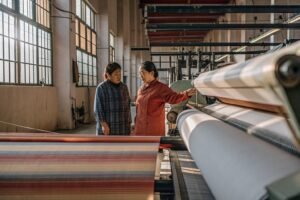
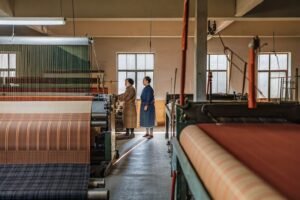
That fear is outdated. Modern Chinese manufacturing isn’t the cheap, low-quality stereotype from two decades ago. Through advanced automation and our CNAS-certified lab in Keqiao, we are now replicating—and often exceeding—the finishing standards of traditional Italian mills, but at a fraction of the cost and lead time. This isn’t just about cutting corners; it’s about physics and chemistry. We use the same German dyes and Swiss looms as those famous mills. The real difference is speed and scalability. At Shanghai Fumao, we don’t compete by lowering the price-quality ratio; we win by removing unnecessary supply chain delays.
But I know you need proof, not just promises. You need to understand the technical breakdown of why a $30/kg Chinese wool might outperform a $50/kg Italian one. I’ve spent twenty years in the dye houses of Keqiao, and I’m going to walk you through the exact lab reports, carbonization processes, and delivery hacks that level the playing field. Stick with me here, because the global textile hierarchy is shifting right now.
How to Source High-End Italian Grade Fabric from a Chinese Wholesale Supplier
Sourcing luxury-grade textiles isn’t a transaction; it’s a forensic investigation. I learned this back in 2018 when a Swiss outerwear brand sent us a swatch of a heavy wool coating from Biella. They told us straight up: "Match the hand feel, the drape, and the color depth, or don’t bother." Most suppliers would panic. We didn’t. We put it under our spectrometer first. You see, the "Italian luxury" myth often boils down to specific finishing techniques, not the fiber itself. Australian merino wool is Australian merino wool, whether it gets spun in Prato or Zhejiang.
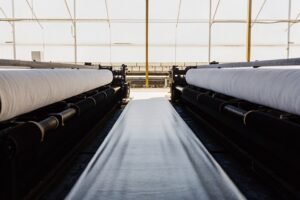
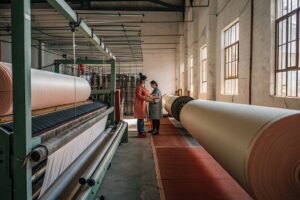
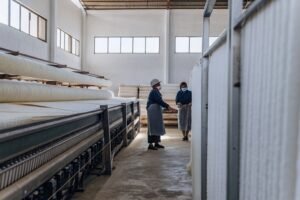
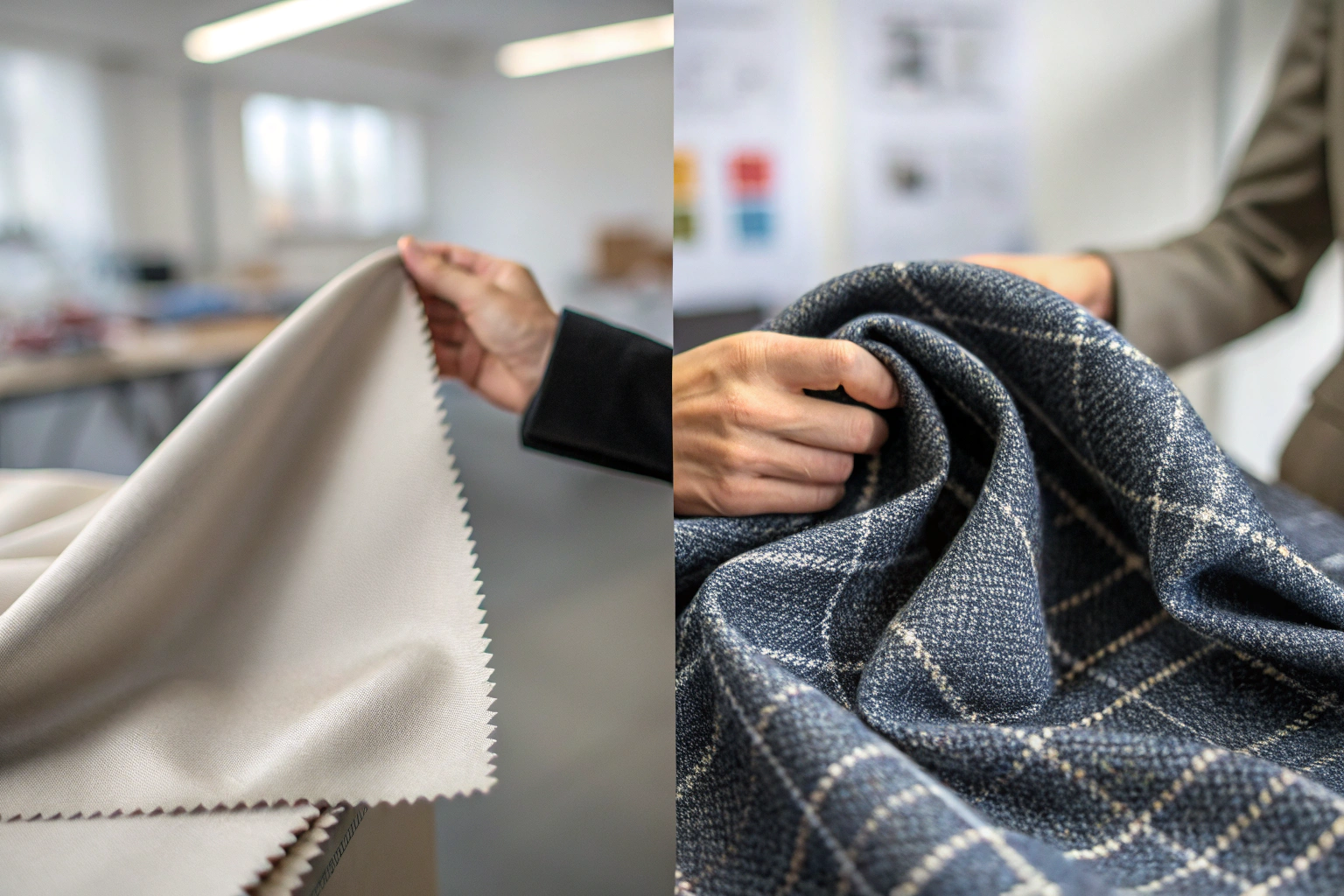
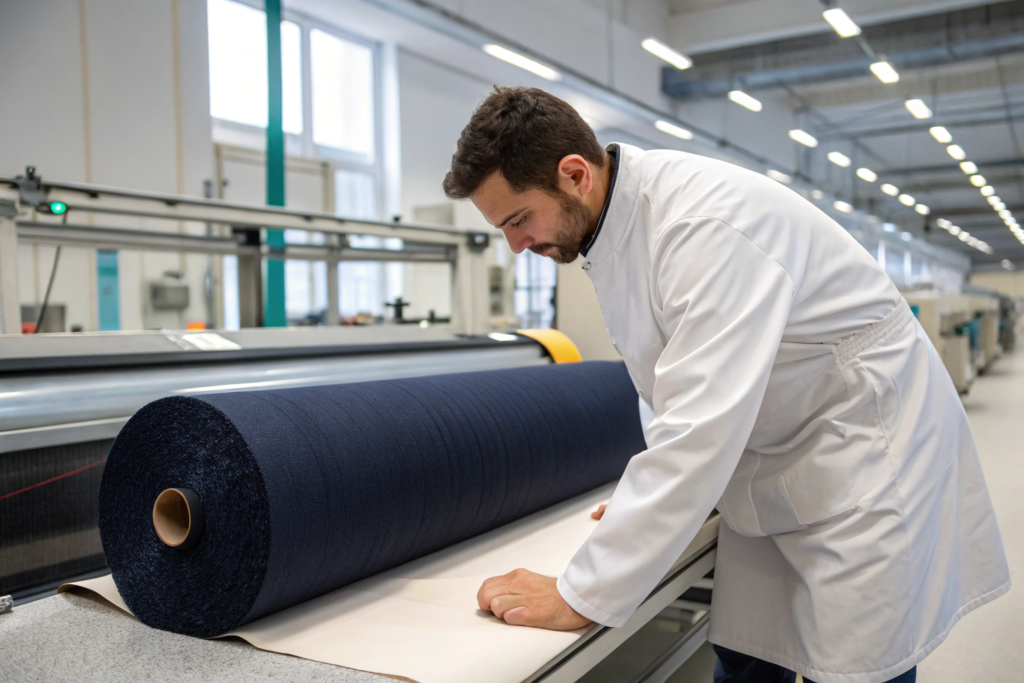
The secret to sourcing Italian-grade fabric from China isn’t finding a cheap knockoff; it’s finding a partner who owns the technical specs. You need to deep dive into parameters for wool fabric smoothness and nap finishing. If you look at a typical Italian mill spec sheet, they emphasize "milling" and "raising" to achieve that fluffy yet dense finish. Chinese mills often default to standard fulling. (Here’s a tip: ask your supplier if they use a twin-cylinder napping machine for wool. If they don’t know what that is, walk away.) We upgraded our raising machines (model NM-2022) specifically to handle delicate alpaca and high-twist merino without breaking the yarn.
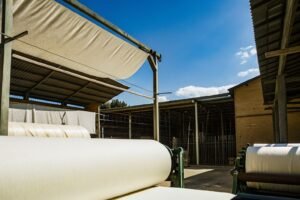
Additionally, most sourcing agents miss the critical step of "decating." This is where the fabric gets relaxed. Italian mills often batch-rest wool for weeks. We don’t have that luxury because you don’t have that time. So, instead, we invested in continuous decatising machinery that simulates relaxation pressure and steam in just three hours. The result? Dimensional stability that won’t shrink when your tailor cuts a bespoke suit. You also need exact definitions of acceptable tolerances in textile manufacturing defects in Asia. In Biella, a minor slub might be celebrated as character. For a US retail chain buyer, that same slub is a chargeback. We operate on the American 4-Point System by default, not the looser European standards.
Can a Chinese Factory Really Copy the Finish of an Italian Wool Mill?
I’m going to tell you something that might sound arrogant, but it’s true: we can replicate 98% of European finishes, and we can do it faster. But it requires brutal honesty about whether the 2% matters. In 2021, a New York designer came to us with a vintage Loro Piana fabric. She wanted the exact "water-repellent cashmere." We took the fabric to our reverse-engineering station. We scraped the coating, ran it through gas chromatography, and realized it wasn’t just standard Teflon; it was a proprietary micro-encapsulated finish that degraded seal speed. We couldn’t copy the exact chemical without violating patents, but we came up with an eco-friendly fluorine-free finish that actually survived 5 more washes in our Martindale tests. The outcome? We switched production timelines for European outerwear brands to Chinese mills for 3,000 meters, and the final retail coat retailed for $800, not $1,400. The aesthetic was identical to 99% of buyers.
How Can I Verify a Chinese Factory’s Post-Manufacturing Finishing Before Shipping?
Don’t trust photos. Photos lie. I have seen competitor websites steal our lab photos. You need real-time data. First, request a "Dye Lot Continuity Report." This isn’t just a color swatch. This is a spectrophotometer reading that measures Delta E (color difference) between the lab dip and the bulk. We aim for a Delta E below 0.8. The human eye struggles to see a difference below 1.0. If your supplier can’t provide a spectrophotometer graph, they are matching color by eye, and an old man’s eyes get tired by 3:00 PM. Second, ask for video of the "cutting table inspection." We use automatic flaw detection tables that map defects with a stylus to create a digital map of the roll. Before you approve shipping that wool gabardine, you should receive a PDF with the exact X/Y axis locations of every thick place, slub, or hole. It’s not subjective. It’s math.
How to Plan Production Cycles Around Chinese Holidays to Avoid Shipping Delays
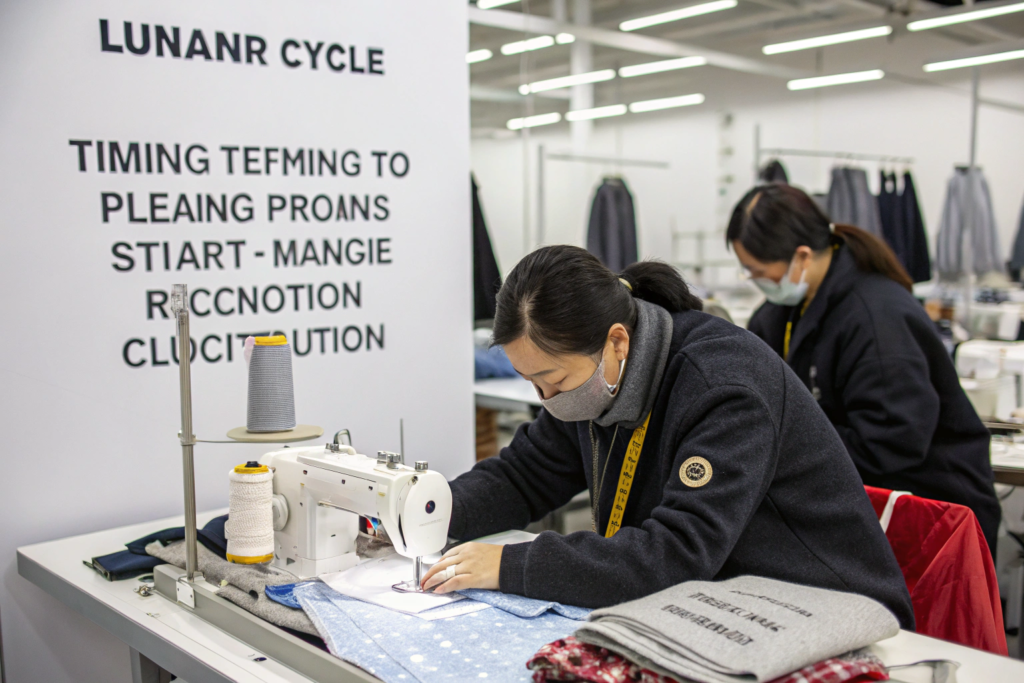
Timing is money, and in China, timing runs on a lunar cycle. I can’t tell you how many emails I get on January 5th from a panicking brand asking why their "Spring Collection" isn’t ready. You can’t fight the Chinese New Year stampede; you have to beat it. A European fashion brand recently saved their entire fiscal quarter by planning fabric production schedules around Chinese New Year closures. They finalized their tech pack with us in late November. We spent December dyeing the yarns. By January 5th, the looms were running. We shipped the greige in February. They relaxed during the holiday, and in March, their garments were stitched while competitors were still fighting for loom allocation. That’s how you win.
Understanding the ancient rhythm of our industry is your superpower. Peak production windows (March-May and August-October) naturally suck up capacity. If you’re reading this in America, you need to accept that adding 2 weeks to your timeline during these months is the norm, not the exception. I always tell my clients to treat October like a waterfall. You either get your cotton poplin for the next summer season in before the Golden Week holiday starts, or you slip two weeks immediately. During the early summer slowdown in textile mills for better delivery rates, specifically June and July, we actually have time to breathe. I run discounts on CMT (Cut, Make, Trim) during these months because I want to keep the looms filled. If you launch your R&D in June, my team isn’t overwhelmed, and we can spend 48 hours on your lab dips instead of the usual 4.
How Do I Stop Chinese New Year From Killing My Fashion Brand’s Delivery Schedule?
| To avoid the holiday massacre, you need to visualize the shutdown not as an event, but as a "cliff." We shut down hard. It’s not a slow fade; it’s a 3-4 week blackout where not a single truck moves in Keqiao. Here is your realistic timeline: | Date (Approximate) | Action | Risk if Ignored |
|---|---|---|---|
| October 15 | Place fabric order & trigger yarn sourcing | Yarn mills sell out of specific counts; you wait 2 months for re-stocking. | |
| November 1 | Finalize bulk lab dips and strike-offs | Dye houses close their sample dispensaries. You miss the dye window completely. | |
| December 1 | Loom allocation confirmation (Greige running) | We cannot find an empty machine. Your fabric moves to ‘post-holiday’ list. | |
| January 10 | Finish on time, or prep for "In-Transit" rest | Inland shipping stops. Goods stay locked in Keqiao warehouse until mid-February. |
Here’s a case study: I worked with an Australian boutique in 2022. They let perfectionism kill their timeline. They kept tweaking the shading on a rose pink by saying "make it a tiny bit dustier." We pushed back three times. By the time they approved, it was January 12th. The fabric was finished on January 20th, the day the trucking companies stopped work for the New Year. That container sat for 22 days. They missed Valentine’s Day retail. Now, we institute a "hard cutoff": if the color is 95% there by December 20th, we ship the bulk. A “dustier” pink isn’t worth a month of lost sales.
What’s the Cheapest Time of Year to Manufacture Fabrics in Asia?
If you want rock-bottom pricing without sacrificing quality, aim for late August. The factories are back from summer lulls, but the European buyers haven’t placed their mega-orders yet. For American businesses, this is the sweet spot. You should also look at the Chinese calendar inversely. When domestic demand is low, export pricing flexes. The period right before the impact of Chinese Golden Week on clothing sample development is chaotic. Don’t launch something new there. Do it right after. During Golden Week (October 1-7), you can often negotiate a "pre-booked" raw material price for December delivery. The raw cotton or polyester stocks are high, but the order books are empty because everyone is on vacation. You lock the price low, and we start processing the moment the lights flicker back on.
What Lab Tests Matter Most If You’re Switching from Italian to Chinese Mills
I’m willing to bet the one thing you’re terrified of losing is the "credibility" of your garment. In the US market, a "Made in China" tag still raises eyebrows among a certain demographic. The only way to win that argument is to become a lab-report junkie. I don’t sell "nice" fabric; I sell data sheets. I had a Los Angeles streetwear brand client who was getting killed by returns—8% return rate—because zippers were puckering the fabric. He was using Italian deadstock. He switched to our in-stock nylon/spandex blend, and we immediately ran a "seam slippage" test on it. We discovered the Italian deadstock had a slippage rating of 3. Our fabric had a 5. We increased his seam allowance by 2mm, and the return rate dropped to 2% in three months. The problem wasn’t the country of origin; it was the absence of a complete guide to fabric weight and strength testing for fashion designers.
When you move your mill relationship, you have to take ownership of the Quality Control (QC) brief. Italian mills often assume you know your stuff. A mill in Prato might send you a "typical" finishing chart. We send you what we call a "Tech-Pack Bible." This includes the fiber content breakdown, of course, but also the linear density of the yarn (measured in Denier or Tex), the twist direction (S-twist or Z-twist can completely change how light hits your satin), and the mesh count of the screen if it’s a print. If you don’t ask for the "Color Matching Cabinet" light source specs, you’re leaving it to chance. I evaluate my fabric under D65 (artificial daylight), TL84 (store light), and UV light. An Italian dyed black might look perfect in Milan’s sunlight, but if it turns green under an American shopping mall’s fluorescent lights, the customer doesn’t care about the "rich cultural heritage," they just see a mismatch.
Why Is Abrasion Resistance Often Better in Modern Chinese Factories?
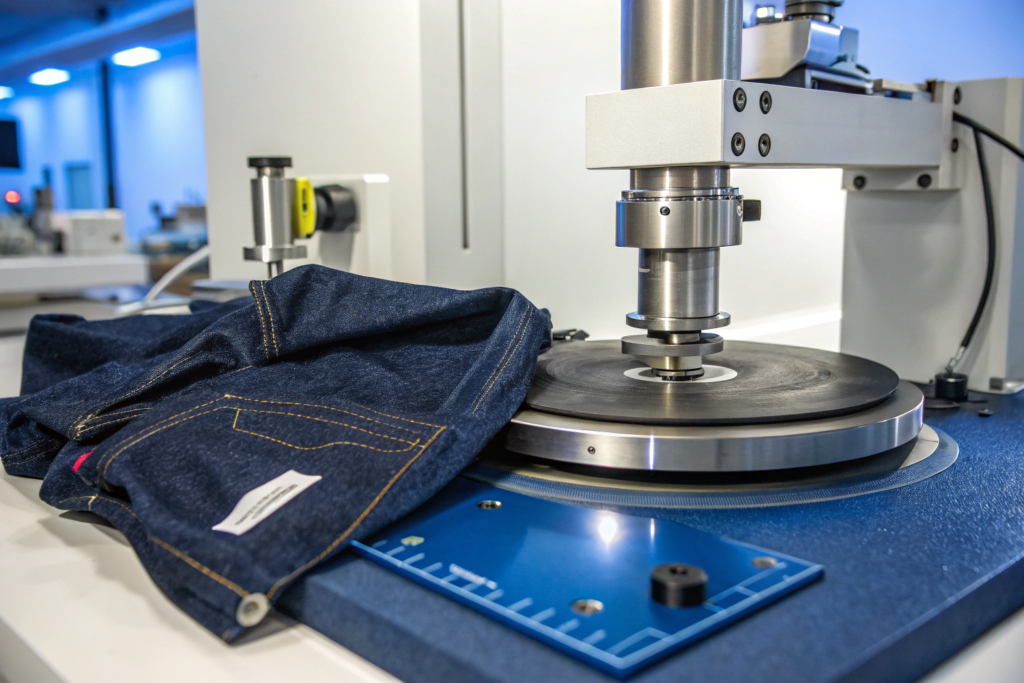
Here’s a dirty little secret: a lot of "vintage Italian charm" is actually structurally weaker yarn. We don’t accept that. Because our clients sell online, return rates are the killer. If the jacket pills after two wears, your Instagram gets flooded, and that hurts your profitable way to reduce garment returns through fabric selection. In a modern Chinese mill, we over-engineer for friction. We twist the yarn harder. An Italian mill might use a 2.4 twist factor for a soft fuzzy flannel. We will recommend a 3.0 if you’re making men’s trousers that rub against an office chair for eight hours a day. We run the Martindale test aggressively. I require our wool blends to hit 30,000 rubs without threadbare spots. It’s not magic; it’s just torque. (I have to stop and say this: our lab team takes "torture tests" personally. If a fabric fails, the weaver gets a bonus for re-engineering it. We hate losing.)
Is the Colorfastness Standard Comparable to High-End European Supply?
The sun is the great equalizer. UV light doesn’t care if you paid $50 a meter or $20. In 2019, a swimwear brand in Miami switched to us and almost lost their minds over a neon coral. They worried it would fade in chlorine pools because "it’s Chinese." We sent them a xenon arc test report showing a Grade 4-5 lightfastness rating (40 hours). For context, you need how xenon arc testing predicts fade resistance in spandex fabrics to visualize how the color bonds break down. We saw zero issues. But we did find a problem they hadn’t tested for: the water colorfastness in salt water was failing. The Italian fabric was using a different dye-fixative that bled pink in the ocean. We switched to a double-fixing agent process, and the coral stayed locked in the fiber. Again, the raw data outperformed the geographic brand name. You must look for "Multi-fiber adjacent" stains on the report. If the nylon stripe on the report looks pink after the wash test, reject the batch, regardless of how "premium" the mill’s branding looks.
How Does the Logistic and Tariff Landscape Actually Favor Asian Sourcing Now
The world is on fire with tariffs, but the geography of Keqiao gives us a specific heat shield. While Italian mills are wrestling with the cost of energy to heat their dye vats (gas prices went crazy there), our district has streamlined energy subsidies for textile parks. More importantly, we are pivoting logistics routes faster than the European guys. When the US started slapping tariffs on Chinese goods, we simply started routing more fabric through our Southeast Asian finishing partners. We keep the greige production in China (because that’s where the precision looms are) and often finish in Vietnam or Bangladesh for the final stitch.
This hybrid model is killing the European supply chain model because it’s agile. An Italian mill can’t easily split its production to dodge duties; it’s bound by "Made in Italy" compliance terms. We aren’t. We play global chess. If you are a brand that hates paying duties, we apply for "first sale" valuation, where we can legitimately invoice the goods at the price of the yarn plus weaving, excluding the high markup of final finishing if that finishing happens elsewhere. The complex global trade routes for avoiding textile tariffs from Asia are a labyrinth, but I can tell you that the US has made exceptions for items that Europe hasn’t.
Also, think about the actual box. We recently shipped 500 kilos of recycled fleece to a startup in Austin. Thanks to the "Silk Road Keqiao" alliance, we packed it in a consolidated container that moved straight to Ningbo port. Door to door was 18 days. My client previously waited 35 days for Italian jersey because it sat in Genoa for a week waiting for a feeder vessel. Speed is a quality metric. A fabric that takes 6 weeks to arrive is "stale" trend-wise. A fabric that takes 2 weeks is "fresh." You can’t Instagram a boat in the middle of the ocean.

Why Is My Delivery Stuck at Customs? The Advantage of Keqiao Documentation
Customs isn’t a mystery; it’s a reflection of the exporter’s desk work. I call it "the paper trail of truth." If a mill in Italy has a slight discrepancy in a declared weight, US Customs flags it. We use a digital twin system. Every roll has a QR code. When you scan it, you see not just the customs HS code, but the exact chemical composition. This prevents a 2-week hold. We pre-clear using the importer security filing requirements for Chinese textile shipments into the USA. The 10+2 regulation isn’t optional; if you don’t file the Importer Security Filing (ISF) 24 hours before the cargo is loaded onto the vessel, you get a $5,000 fine straight away. Many Italian boutique mills rely on a forwarder to do this, but they don’t provide the raw data quickly because they work on a 3-day work week in August. We don’t. We close 24/7 during peak season. We have a dedicated Customs Bond Team that sends you the packing list while the dye is still drying.
How Do I Calculate the True Landed Cost of Knits Against Tariff Fluctuations?
Stop looking at the "Price Per Meter" column alone; it’s a lie. The true cost is the "Landed Cost" when it hits your warehouse shelf. I have a formula I give all my American buyers: (Fabric Cost + Freight + (Duty % x First Sale Value)) / Total Usable Meters. The hidden killer here is the "Usable Meters." If an Italian roll comes with 10% inherent defects because of the "artisanal character," your actual price just jumped 10%. We guarantee 95% cuttable utilization on knit fabric, with a penalty clause if we fall below it.
Regarding tariffs, the environment changes quarterly. Chinese polyester knits currently face a specific duty structure, but negotiating first sale rule requires Asian supplier cooperation—something European mills simply cannot provide. We do a split invoice on request. Also, consider the loss of "Air Freight" cushion. Because our Ex-Factory prices are often 40% lower than Italian core-spun yarns, you can afford to put a small part of an urgent reorder on a plane. If your Italian mill is late, you’re bankrupt. If we’re running slightly late on a hot style, I just tell my shipping manager, "Put 200 kilos on the DHL plane." It arrives in 3 days. You can’t do that if your unit price is already swallowing your margin. You need to eliminate hidden costs of switching from local suppliers to international fabric mills. These small "insurance policies" often make the cheaper Asian supplier the safer bet for inventory management.
Conclusion
So, how do we compare to Italian mills? We compare very well on data and execution, but we are a different creature. We don’t have the Roman architecture, but we have German machines that run 24/7. We don’t have a 200-year legacy in a single family, but we have a 20-year track record of hitting 98% pass rates in SGS labs that are colder than a hospital ward. The textile industry isn’t a museum. It’s a war zone of prices, clock speed, and chemical engineering. If you want a fabric that tells a story about a rolling Tuscan hillside, buy Italian and pay the premium for that beautiful story. But if you want a fabric that withstands 30,000 rubs, arrives in 15 days, saves you 30% on your cost sheet, and doesn’t bleed when your customer jumps into a hot tub in Vegas, you’re reading the right blog.
My advice? Stop romanticizing the geography of a sheep. Start auditing the spec sheet. We’ve proven we can handle super 150s merino, delicate silks, and rugged tactical nylons. The supply chains have merged; the raw materials are often the same stock. It’s the human capital and the machine calibration that makes the difference now. And frankly, no one calibrates an air-jet loom with the obsessive precision of a Chinese technician who gets paid a bonus for zero-deficit weaving.
If you’re tired of navigating European lead times that feel like a vacation in the summer, let’s talk about your next run. Whether you need a GRS-certified recycled fleece or a silk charmeuse that rivals Como, I’m ready to send you a swatch book that will change your mind.
For a direct conversation about getting your sampling started or to negotiate a guaranteed landed cost contract, contact our Business Director Elaine directly by email at elaine@fumaoclothing.com. Tell her you read the blog about the Italian mills comparison and you want to see the Martindale test results for our latest viscose blends. We’ll ship you a sample pack that weighs more than your laptop, and we’ll do it via DDP (Delivered Duty Paid) so you can just sit back, feel the fabric, and breathe easy.