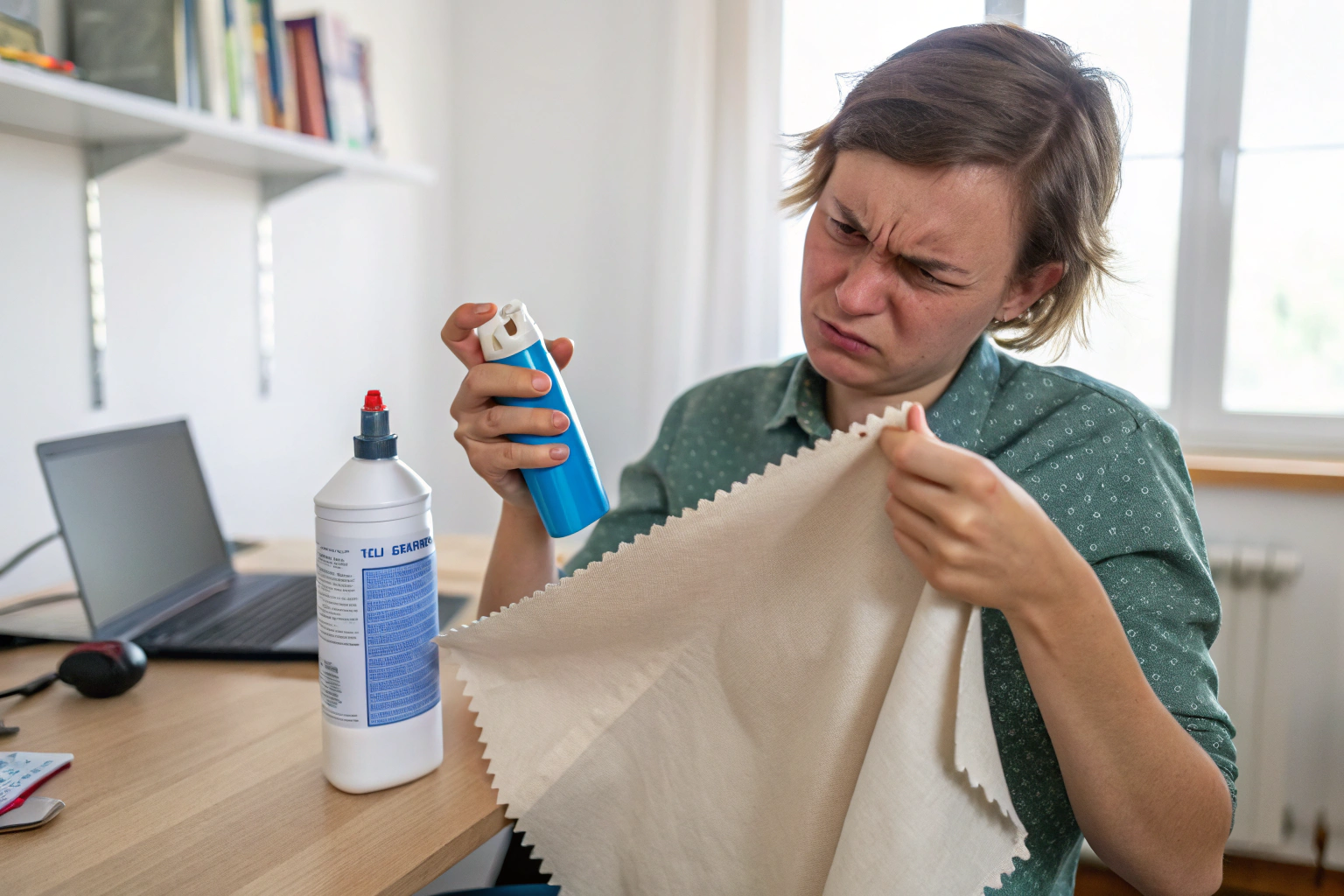
You have a swatch in your hand. The vendor told you it is 100% silk. It feels nice. But the price feels a little too nice. Or maybe you ordered 95% Cotton / 5% Spandex, but the fabric feels stiff and plasticky, like it has way more polyester than promised. You do not have a gas chromatograph in your office. You do not have a chemical lab. You just have a lighter, some bleach, and a healthy dose of skepticism. You think you are powerless to verify what you actually bought. You are wrong.
You can verify fabric composition without a lab test using a simple combination of The Burn Test, The Bleach Test, and The Feel Test. I have been doing this on the floor of textile mills for twenty years. It is not as precise as the fancy machine in our CNAS lab at Shanghai Fumao, but it will catch 90% of the liars and cheats in this industry. It will tell you if that "cashmere" is actually acrylic. It will tell you if that "linen" is actually ramie. And it will tell you if that "100% cotton" has a hidden polyester core that is going to pill like crazy and feel like a plastic bag after three washes. You need these skills to protect your brand and your cash.
I am going to walk you through the exact methods we use in the field when we are auditing a new supplier’s claim. These are not wives’ tales. They are based on the chemical and physical properties of fibers. But let me give you the lawyer’s disclaimer up front: These are destructive tests. Do not do this on the only swatch you have. And do it safely, near a sink, with ventilation. Now let’s light some fabric on fire.
What Is the Burn Test for Fabric Identification?
This is the single most powerful tool in your DIY verification kit. Every fiber type reacts to flame in a specific, predictable way. Cellulosic fibers (cotton, linen, rayon) burn like paper. Protein fibers (silk, wool) burn like hair. Synthetic fibers (polyester, nylon, acrylic) melt like plastic. If you learn these three categories, you can spot a fake blend in about ten seconds. I use this test on the loading dock when a truck shows up with fabric that feels "off." It has saved me from accepting bad batches more times than I can count.

How Does Cotton Burn Differently Than Polyester?
Let’s break down the two most common fibers you will encounter.
100% Cotton Burn Test:
- Approach to Flame: Does not shrink away. Catches fire easily.
- In Flame: Burns quickly with a bright yellow flame.
- Smell: Smells exactly like burning paper or dry leaves.
- After Flame: Removed from flame, it continues to glow red (afterglow) and burn slowly.
- Ash: Leaves behind a fine, soft, gray-black ash that crumbles to dust when you touch it.
100% Polyester Burn Test:
- Approach to Flame: Shrinks away from the flame immediately. Melts and curls up.
- In Flame: Burns slowly with a sputtering, black smoke.
- Smell: Smells like burning plastic or sweet chemical. It is unmistakable and unpleasant.
- After Flame: Usually self-extinguishes when removed from the flame. It does not glow.
- Residue: Leaves behind a hard, black bead of melted plastic. You cannot crush this bead into ash. It is solid.
Here is the trick for Cotton/Polyester Blends: Do the test. You will see it burn with a paper smell and a plastic smell. Most importantly, look at the residue. If it is supposed to be 100% cotton but leaves a hard black bead, there is polyester in there. Period. End of story. The vendor lied.
I caught a vendor substituting 65/35 poly-cotton for 100% cotton just last month (May 2026). The fabric felt okay to the hand, but the price was too low. I lit a thread. It shrank from the flame immediately and left a hard bead. I sent it to the lab for the official test to have documentation. Result? 67% Polyester. We rejected the shipment. The client avoided a disaster where their "breathable cotton summer dress" would have been a sweatbox. You can see a detailed video comparison of these burns in this resource on how to perform a fabric burn test to identify cotton versus polyester blends. It is a great visual guide.
Can the Burn Test Distinguish Silk from Viscose or Cupro?
Yes, but this is a bit more advanced because both Silk (protein) and Viscose/Cupro (cellulose) can feel similarly smooth. You need to pay close attention to the smell and the ash.
Silk (Real Protein Fiber):
- Smell: This is the dead giveaway. It smells exactly like burning human hair or feathers. It is a sharp, acrid, unpleasant smell.
- Flame: Burns slowly and self-extinguishes when pulled away from the flame.
- Ash: Forms a crushable, black bead that turns to powder. You can crush it between your fingers.
Viscose/Rayon/Cupro (Regenerated Cellulose):
- Smell: Smells like burning paper or wood. No hair smell at all.
- Flame: Burns fast and continues to glow (afterglow) like cotton.
- Ash: Leaves fluffy gray ash, no hard bead.
Cupro is a specific type of rayon made from cotton linter. It is often passed off as silk because it has a beautiful drape. But the burn test will expose it instantly. If it smells like a campfire and not a barbershop floor, it is cellulose, not protein.
I had a client in Paris who bought "Cupro" from a new vendor. He wanted that sustainable, luxurious Bemberg™ feel. The fabric burned with a plastic smell and melted into a bead. It was polyester. Not even Cupro. Just shiny poly. He had paid a premium price for plastic. I trained him on the burn test over a video call. Now he tests every swatch that comes into his studio. For a deeper dive into the specifics of regenerated fibers, this article on how to tell the difference between silk, cupro, and polyester using simple home tests has a great step-by-step guide.
How Can Household Bleach Confirm Natural vs Synthetic Fibers?
This test is less common but incredibly specific. It is based on a simple chemical fact: Sodium Hypochlorite (Chlorine Bleach) dissolves protein fibers like Wool and Silk. It does not dissolve cotton or polyester. This is the nuclear option for verifying if that "Cashmere" scarf actually has any animal hair in it at all. Do this test in a well-ventilated area and wear gloves. Do not breathe the fumes.

Does Wool Dissolve Completely in Chlorine Bleach?
Yes. 100% wool will completely disintegrate in undiluted household bleach within 30 minutes to a few hours. It will bubble, fizz, and turn into a yellow sludge. This is why you never ever use chlorine bleach on a wool sweater.
How to perform the Bleach Test:
- Take a small sample of yarn from the fabric.
- Place it in a clear glass jar.
- Cover it completely with regular Chlorine Bleach (not color-safe bleach).
- Wait 30-60 minutes.
Results:
- 100% Wool or Silk: The fiber dissolves almost entirely. The liquid is cloudy and the fiber is gone or just a tiny bit of residue remains.
- 100% Acrylic or Polyester: Nothing happens. The fiber sits there perfectly intact, looking exactly the same as when you put it in.
- Wool Blend: If it is a 50/50 Wool/Acrylic blend, part of the yarn will dissolve (the wool) and you will be left with a limp, ghost-like skeleton of the acrylic fibers still holding the shape of the yarn.
This is a fantastic way to verify "Recycled Wool" claims. A lot of cheap blankets say "50% Wool." You do the bleach test, and nothing dissolves. You just caught a fraudulent label.
I used this test in a dispute with a yarn spinner in 2024. They claimed the yarn was 30% Wool / 70% Acrylic. We did the bleach test. The weight loss after dissolving the wool should have been 30%. It was only 8%. We sent it to the lab for a Chemical Dissolution Test (AATCC 20A) . The lab confirmed: 8% Wool. The spinner had shorted the wool content. We got a credit for the difference. This is the kind of leverage you have when you know these tests. You can read about the chemistry behind this in a technical note on the reaction of protein fibers with sodium hypochlorite bleach. It explains why wool is so sensitive to bleach.
Can Acetate Be Identified with a Simple Nail Polish Remover Test?
Yes. This is a neat party trick specific to Acetate and Triacetate fibers. Acetate is a semi-synthetic made from wood pulp, but it is chemically treated with acetic acid. Because of this, it dissolves in Acetone (the main ingredient in most nail polish removers).
The Acetone Test:
- Put a few drops of pure acetone nail polish remover on the fabric swatch.
- Rub it between your fingers.
Result:
- Acetate or Triacetate: The fiber will become sticky, gummy, and will eventually dissolve completely into a sticky ball.
- Polyester, Nylon, Cotton, Silk: Nothing happens. The fiber is unaffected.
This is crucial because Acetate is often used as a cheap substitute for Silk in linings. You buy a beautiful jacket. The body is wool. The lining feels silky. You assume it is Viscose or Polyester. But if it is Acetate, you have a problem. Acetate is extremely weak when wet. If the customer sweats in that jacket, or if they dry clean it with a certain solvent, the lining will shred and split. It is a time bomb in a garment.
I always tell my tailoring clients: Test the lining with acetone. If it melts, do not use it. Use our Fumao Bemberg™ Cupro Lining instead. It breathes, it is strong, and it does not dissolve. If you want to see this test in action, check out this guide on how to identify acetate fabric using the acetone solubility test. It is a simple but effective trick.
What Does the Touch and Twist Test Reveal About Yarn Quality?
The lab tests tell you what the fiber is. The Touch and Twist tests tell you how the fiber was made. You can have two fabrics, both labeled "100% Cotton." One is a luxury item that lasts ten years. The other is a rag that pills after two washes. The difference is not the fiber type. It is the Yarn Construction. You can feel this difference if you know what to look for. This is the part of fabric sourcing that separates the professionals from the amateurs.

How Does Ring Spun Cotton Feel Different Than Open End Cotton?
I talked about this earlier in the context of stretch recovery, but it applies to all cotton fabrics. The touch test is your first line of defense.
Open End (OE) Yarn Touch Test:
- Feel: Feels rough, dry, and "papery." It lacks elasticity. If you rub the fabric against itself, it sounds scratchy.
- Visual: Look closely at the surface. You will see random fuzziness and slubs (thick and thin places). The yarn looks hairy.
Ring Spun Yarn Touch Test:
- Feel: Feels smoother, softer, and has a slight "bounce" or resilience. It feels more expensive.
- Visual: The surface is much cleaner. There is very little hairiness. The fabric looks uniform.
Here is the Twist Test to confirm what you are feeling. Unravel a single yarn from the fabric.
- Hold a 2-inch piece of yarn between your thumb and forefinger.
- Slowly untwist it (roll it in the opposite direction of the twist).
- Look at the individual fibers.
OE Yarn: The fibers will just fall apart into a random, fluffy cloud. There is no structure. The fibers are short and criss-crossed.
Ring Spun Yarn: You will see long, distinct fibers all aligned in the same direction (like a ponytail). They are parallel and tightly packed.
(Here I have to jump in—this is the easiest way to tell if you got premium Pima cotton or cheap upland cotton. Pima fibers are long and silky. Upland fibers are short and fuzzy.)
At Shanghai Fumao, we use Combed Ring Spun for our premium basics. The combing process removes the short fibers before spinning. When you untwist our yarn, it looks like a long, smooth rope of parallel silk threads. That is why our jersey feels cool to the touch and does not pill. You can learn more about this visual identification method in this article on how to visually identify ring spun versus open end yarn in finished fabric. It has great macro photos of the difference.
Can You Detect a Polyester Core in Cotton Yarn by Hand?
This is a specific scam in the stretch fabric market. The vendor sells you "Cotton Spandex." But instead of using bare spandex covered by cotton, they use a yarn that is Cotton wrapped around a Polyester core. The fabric looks like cotton on the outside. It feels heavier. But it is hot, it holds odors, and the cotton eventually wears off, leaving a shiny plastic core exposed. This is called Core-Spun Polyester disguised as Core-Spun Spandex.
The Detection Method (The Untwist and Stretch):
- Take a single yarn from the fabric.
- Hold it at both ends and untwist it aggressively until the fibers start to separate.
- You are looking for a thin, transparent or white filament in the center.
- Pull on the ends.
If it is Spandex Core: That center filament will stretch like a rubber band. It is elastic. It snaps back.
If it is Polyester Core: That center filament will not stretch. It is just a straight, strong, plastic thread. It is inert.
I discovered this trick in a batch of "Cotton Slub Jersey" from a new mill. The fabric had no stretch, so I was confused why there was a core. I untwisted the yarn and found a stiff, white filament in the middle. It was polyester. The mill was using polyester core yarn to increase the weight and strength of the fabric while using cheaper, shorter cotton on the outside. The fabric was heavy, but it was not breathable. It was a cheap imitation. I rejected the batch.
You can feel this in the finished garment, too. A poly-core cotton shirt feels heavy and damp when you sweat. A 100% cotton ring spun shirt feels light and airy even when wet. This test saves you from buying a "premium cotton" product that wears like a garbage bag. For more on this specific yarn type, this technical explanation on the differences between core spun polyester yarn and core spun spandex yarn is very clear.
How to Spot Blended Fabrics Using the Microscope on Your Phone?
You do not need a $10,000 lab microscope. You need a $15 Pocket Microscope (60x-100x magnification) that clips onto your smartphone camera. This is the ultimate cheat code for fabric sourcing. It turns your phone into a portable fiber analysis lab. I have one in my pocket every time I walk a trade show floor. It has exposed more fake "linen" and fake "wool" than any other tool I own. If you are serious about importing fabric, spend the twenty bucks and buy one of these gadgets. It will pay for itself on the first order.

What Do Wool and Acrylic Look Like Under 60x Magnification?
This is where the microscope becomes indisputable evidence. The surface structure of natural fibers is complex and irregular. The surface structure of synthetic fibers is smooth and uniform.
Wool Fiber (Under Microscope):
- Surface: Looks like a pine cone or a stack of overlapping scales. These are the Cuticle Scales. They are jagged and rough.
- Shape: Irregular thickness. It is not a perfect cylinder.
Acrylic Fiber (Under Microscope):
- Surface: Looks like a smooth, glass rod. It is perfectly uniform. There are no scales.
- Shape: Often has a dog-bone shape or is perfectly round. It is clearly man-made.
If you look at a "Wool Blend" sweater and see 80% smooth glass rods and 20% scaly fibers, you know the blend is 80% Acrylic, 20% Wool. You do not need to guess. You can see it with your own eyes.
I was at a sourcing fair in Shanghai last year. A booth was selling "100% Mongolian Cashmere" yarn for a suspiciously low price. I pulled out my phone microscope. Cashmere scales are even finer and more delicate than wool scales. Under the scope, this yarn had no scales at all. It was pure acrylic. Smooth as glass. I smiled, put the yarn down, and walked away. The vendor knew I knew. If you want to see what you are looking for, this resource on identifying textile fibers under a microscope with image gallery is an incredible reference. Bookmark it on your phone.
Can You Tell the Difference Between Linen and Ramie Using a Macro Lens?
Yes, and this is a huge one for the home textiles and summer apparel market. Ramie is a bast fiber (like linen) that comes from a nettle plant. It is often sold as "Linen" or "China Grass." It is cheaper than flax linen. It is also stiffer and more brittle. It wrinkles even more than linen and can be scratchy on the skin.
Linen (Flax) Under Microscope:
- Surface: Looks like a bamboo stalk. It has nodes or joints (cross-hatch markings) at regular intervals along the fiber. These are distinctive.
Ramie Under Microscope:
- Surface: Looks smooth with deep, irregular cracks or longitudinal striations. It does not have the neat bamboo nodes of flax. It looks more like a cracked dry riverbed.
If you order "Linen" fabric and you put it under the scope and see no nodes, just cracks, you have received Ramie. Ramie is fine for some applications (it is very strong), but it does not have the same soft drape or luxury cachet as European Flax Linen. If you paid a Linen price for a Ramie product, you got taken for a ride.
I worked with a client doing high-end table linens. They wanted 100% Belgian Flax. Their first shipment from a new vendor felt "crispier" than usual. We scoped it. It was 100% Ramie. The nodes were missing. We sent the scope photo to the vendor. They refunded the difference immediately. That pocket microscope just saved my client $4,500. You can see the difference clearly in this comparison guide on how to identify flax linen versus ramie fibers using microscopic analysis.
Conclusion
You do not need to be a textile chemist to protect yourself from bad fabric. You just need a lighter, some bleach, a pair of tweezers, and maybe a twenty-dollar pocket microscope. These are the field tools of the trade. They are the weapons you use to make sure that what you ordered is what actually lands on your cutting table.
The Burn Test tells you the truth about synthetics versus naturals. The Bleach Test exposes fake wool and silk. The Touch and Twist Test reveals the quality of the spinning. And the Pocket Microscope shows you the very soul of the fiber—the scales on the wool, the nodes on the linen, the glass-smooth lies of acrylic.
At Shanghai Fumao, we invest in the CNAS lab and the gas chromatograph so you do not have to do this with every shipment. We provide the certified test reports upfront. But I want you to have these skills in your back pocket for when you are shopping around, for when you are auditing a new vendor, or for when you just have a gut feeling that something is off. Knowledge is the best defense against the silent killers of cash flow.
If you want to work with a partner who welcomes this level of scrutiny and who can provide you with both the lab data and the transparent, honest communication about what is in your fabric, let’s talk.
Reach out to our Business Director, Elaine. She can send you a swatch pack and the corresponding test reports so you can practice these verification methods yourself on fabric you can trust. Email her at elaine@fumaoclothing.com.