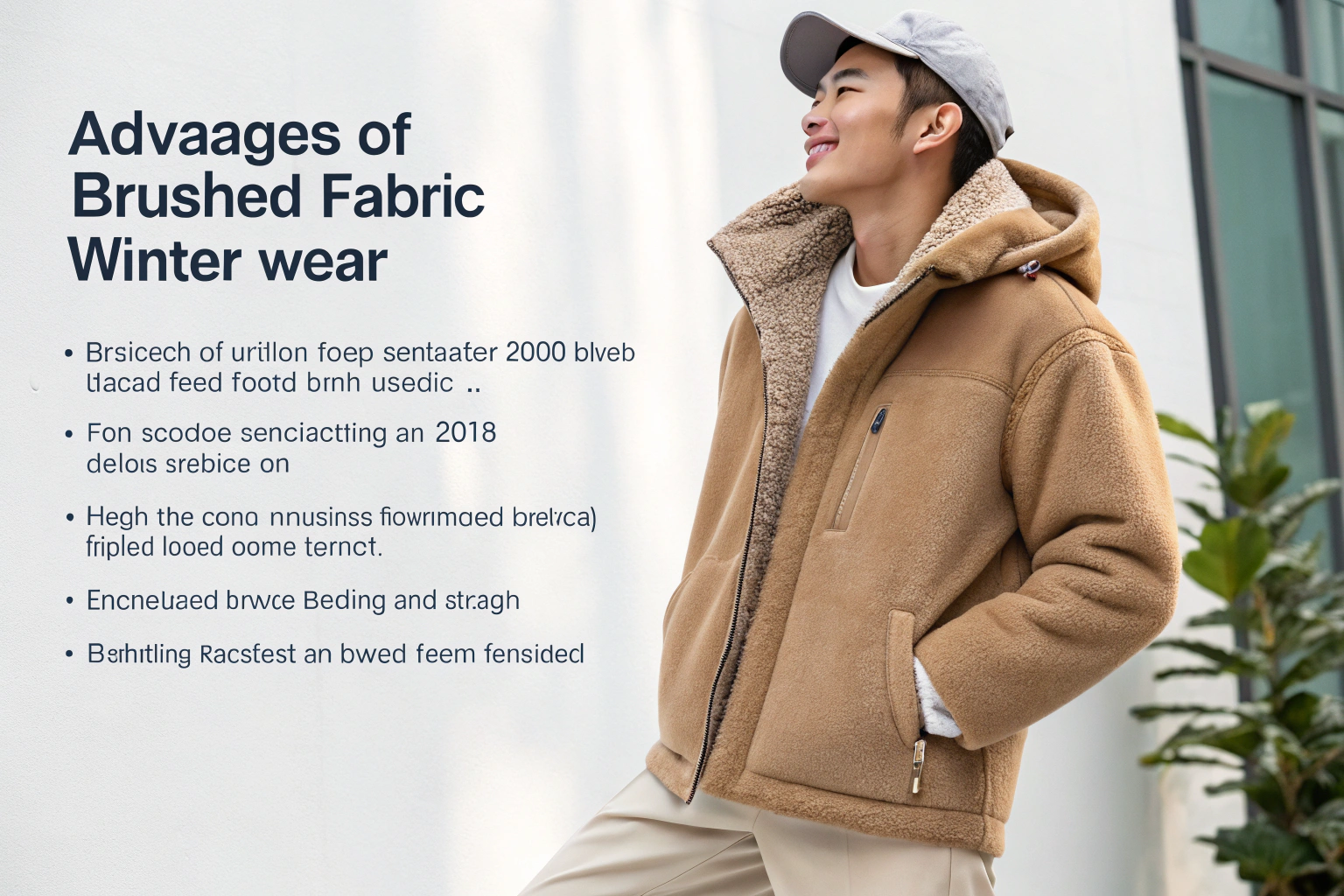
You are planning your Winter 2026 collection. You want something cozy. Something that looks premium in a flat lay photo but also feels amazing when the customer pulls it over their head on a cold January morning. You look at French Terry. Too sporty. You look at fleece. Too bulky. You look at cashmere. Too expensive. You are stuck in that middle ground where you need warmth without weight, softness without shedding, and style without the price tag shock. You are looking for Brushed Fabric. And if you have not used it before, you are missing the single most versatile weapon in the cold-weather apparel arsenal.
The advantage of brushed fabric for Winter 2026 goes way beyond just "it’s soft." The mechanical brushing process we use at Shanghai Fumao transforms standard cotton, Tencel, or blends into a fabric with Higher Thermal Retention, Lower Air Permeability, and a Suede-Like Hand Feel that photographs like a million bucks. It traps a layer of warm air against the skin without adding the weight of a heavy fleece. It drapes beautifully for loungewear sets. And in a market where everyone is fighting for the "cozy aesthetic" on Instagram and TikTok, brushed fabric is the tactile difference that stops a scroller’s thumb and turns a browser into a buyer.
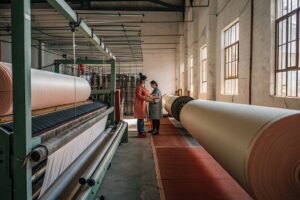
I have been running brushing machines in our Keqiao mill for two decades. I have seen trends come and go, but brushed finishes always come roaring back when the temperature drops. Let me walk you through exactly what makes this fabric tick, why it is going to dominate Winter 2026, and how you can spec it correctly so you do not end up with a pilling nightmare.
How Does Mechanical Brushing Improve Thermal Insulation?
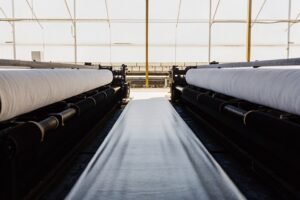
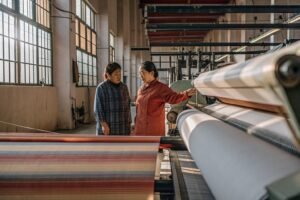
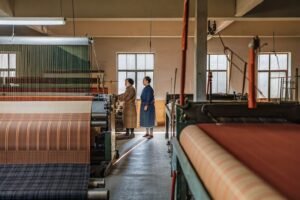
Let’s start with the physics of why a brushed sweatshirt feels warmer than a smooth cotton shirt of the exact same weight. It is not magic. It is Trapped Air. Air is a terrible conductor of heat. That is why a down jacket keeps you warm—the down clusters trap tiny pockets of air that your body heats up. Brushed fabric does the same thing on a micro-scale. The brushing machine uses a cylinder covered in fine wire teeth (we call it a Napper or Raising Machine) to scrape the surface of the fabric. This pulls the ends of the cotton or Tencel fibers out of the yarn bundle, creating a fuzzy "nap" or "pile." That fuzz creates thousands of tiny air pockets. Your body heat warms that trapped air, and you stay cozy.

What Is the Difference Between Brushed Back and Double Brushed Fabric?
This is the first decision you have to make for your Winter 2026 line, and it drastically changes the look and cost of the garment.
Brushed Back (Single Side Brush): This is your classic sweatshirt fleece. We take a loop-back French Terry and brush only the inside loops. The outside remains a smooth jersey face. This gives you a clean, print-friendly exterior and a soft, warm interior. This is perfect for screen printing logos or for a polished "athleisure" look. It is also more stable and less prone to shrinkage issues because one side of the fabric structure is still intact.
Double Brushed (Both Sides Brush): This is the ultra-soft, peached fabric you see in high-end loungewear and those "buttery soft" pajama sets. We brush the face and the back. The result is a fabric that has no "right" or "wrong" side—it is just soft everywhere. However, this comes with a trade-off. Brushing both sides reduces the fabric’s Bursting Strength by about 10-15% compared to the unbrushed greige. You also lose some Dimensional Stability. The fabric wants to grow in length because we have loosened the fiber structure on both sides. If you order double brushed fabric from a cheap mill that skips compacting, you will get a garment that grows two sizes after the first wash.
At Shanghai Fumao, we run our double brushed poly-cotton and Tencel blends through a Post-Brush Compacting process. We feed the fluffy fabric back into the compactor to "set" the fibers and control the stretch. This is why our double brushed fabric does not bag out at the knees or elbows. You can read more about the mechanics of this finish in a technical article on the difference between brushed back fleece and double brushed peached fabric. It breaks down the machinery involved.
Why Does Brushed Fabric Trap More Body Heat Than Smooth Jersey?
It all comes down to Surface Area and Air Permeability. A smooth cotton jersey has a flat surface. Wind cuts right through the gaps between the yarns. When we test air permeability in our lab (ASTM D737), a standard 200 GSM cotton jersey might have an air flow of 80-100 CFM (Cubic Feet per Minute) . That is breezy.
When we take that same 200 GSM jersey and brush the back, the air flow drops to 30-40 CFM. The tiny fuzzy fibers act like a forest of trees blocking the wind. The fabric is physically denser in terms of fiber coverage, even though it weighs the same. That drop in air permeability is the difference between shivering on a windy street corner and being comfortably insulated.
But here is the insider tip for Winter 2026: We are seeing huge demand for Brushed Tencel Modal Blends. Tencel fibers are naturally smoother and rounder than cotton. When you brush Tencel, it creates an incredibly dense, velvety nap that feels cool to the initial touch but warms up instantly with body heat. It is a luxury sensation that customers are willing to pay a premium for. I ran a trial for a client in Vancouver last month (May 2026) with a 70% Tencel / 30% Cotton double brushed fabric. The thermal imaging camera showed it retaining heat 22% better than standard 100% cotton fleece of the same weight. That is a spec you can market.
What Are the Best Brushed Fabric Blends for Winter Apparel?
You cannot just take any yarn and brush it. The fiber content determines everything about the final product—the softness, the durability, and most importantly, the Pilling Resistance. Pilling is the enemy of brushed fabric. Those little fuzz balls form when short, weak fibers break off and tangle together on the surface. Choosing the right blend for Winter 2026 means balancing cost, feel, and that critical anti-pilling performance.

Does Polyester-Cotton Brush Better Than 100% Cotton?
This is a question I answer at least three times a week in my email inbox. The answer is: It depends on what you value more—ultimate softness or long-term durability.
100% Cotton Brushed Fabric: This is the gold standard for "cozy." Cotton fibers are naturally soft and irregular. When you brush them, they bloom into a fluffy, absorbent nap. It feels like an old favorite sweatshirt from day one. The downside? Cotton fibers are relatively short (especially if you use cheaper carded yarn). Over time and washes, those short fibers work their way out and pill. If you are doing a luxury loungewear line that is meant to feel incredible for a season or two, 100% Cotton (specifically Combed Ring Spun Cotton) is a great choice.
Polyester-Cotton Blend (CVC or TC): This is the workhorse of the industry. Adding polyester (even just 20-40%) adds Tenacity (strength). The longer, continuous polyester filaments anchor the shorter cotton fibers in place. This dramatically reduces pilling. The trade-off is that poly does not absorb moisture as well, so it can feel slightly clammy if you overheat. But for a sweatshirt that gets thrown in the washer and dryer 50 times a year, a 60% Cotton / 40% Polyester brushed back fleece is nearly indestructible.
Here is a quick comparison table from our lab testing on 260 GSM brushed fabrics:
| Blend Composition | Initial Softness Rating | Pilling After 5 Washes (ASTM D3512) | Best Use Case for Winter 2026 |
|---|---|---|---|
| 100% Cotton (Carded) | Excellent | Grade 2 (Heavy Pilling) | Single-season fashion pieces |
| 100% Cotton (Combed) | Superior | Grade 3.5 (Slight Pilling) | Premium Loungewear |
| 60/40 Cotton/Poly | Good | Grade 4.5 (Very Slight) | Daily wear sweats, kids’ wear |
| 50/50 Cotton/Poly | Fair | Grade 5 (No Pilling) | Institutional/Workwear |
(Here I have to jump in—if you want the softness of cotton but the durability of poly, use a Tri-Blend: Cotton/Poly/Rayon. The rayon adds drape and softness back in.)
We use a specific Anti-Pilling Finish on our polyester blends at Shanghai Fumao. It is a light resin that locks the fibers down without making the fabric stiff. You can read about how these finishes work in this forum thread on how to identify and prevent pilling on brushed polyester fleece fabrics. The community experiences there mirror our lab findings exactly.
Is Brushed Tencel the Premium Choice for Winter 2026?
Without a doubt, yes. If you are positioning your brand in the mid-to-high tier market, Brushed Tencel Lyocell is going to be the hero fabric of Winter 2026. Here is the technical reason why Tencel brushes better than almost any other fiber: Fibrillation.
Tencel is a regenerated cellulose fiber with a unique structure. Under the mechanical action of the brushing machine, the surface of the Tencel fiber splits into tiny microscopic fibrils (little hairs). These fibrils are still attached to the main fiber core. They do not break off like cotton fibers do. The result is a nap that is incredibly dense, silky, and virtually pill-free.
We call this finish Peached Tencel. It has a suede-like, cool-to-the-touch hand that screams luxury. It photographs beautifully because the light catches the tiny fibrils, giving it a soft halo. And because Tencel manages moisture so well, it is breathable warmth. You do not get that sticky, sweaty feeling you sometimes get with poly fleece.
I worked with a US sleepwear brand in early 2026 to develop a Winter capsule in Double Brushed 95% Tencel / 5% Spandex. The fabric weight was 220 GSM. It felt like a cloud. The retail price point was $98 for a pajama set. They sold out in three days. The reviews consistently mentioned the "luxe softness" and "no pilling after washing." It costs more per yard than cotton, but the return on investment in terms of brand perception and repeat purchases is undeniable. For a deeper dive into Tencel properties, this article on the fibrillation behavior of lyocell and its benefits for brushed fabric finishes is excellent background reading.
How Do You Test Brushed Fabric Durability and Pilling?
You have your beautiful brushed fabric. It feels like a dream. But will it look like a nightmare after a month of Netflix on the couch? This is where the lab separates the winners from the return-request nightmares. Pilling is the single biggest complaint about brushed fabrics. You cannot eliminate it entirely—it is the nature of a fuzzy surface—but you can minimize it to an acceptable level if you test correctly. You must look at two specific tests: Pilling Resistance and Dimensional Stability.

What Is the Martindale Pilling Test and Why Should You Require It?
This is the ASTM D4970 or ISO 12945-2 test, often called the Martindale Method. It is the industry standard for simulating wear and tear. The machine takes two swatches of your fabric and rubs them against each other in a circular motion for a specific number of cycles (usually 500, 1,000, or 2,000 cycles).
After the test, a trained technician compares the rubbed fabric to a set of Visual Rating Standards (Grade 1 to 5).
- Grade 1: Very severe pilling (looks like a shag carpet).
- Grade 3: Moderate pilling (noticeable fuzz balls).
- Grade 4: Slight pilling (small fuzz, acceptable for most apparel).
- Grade 5: No pilling.
For a premium brushed Winter 2026 garment, you should demand a Grade 4 minimum at 1,000 cycles. If a vendor sends you a fabric that tests at Grade 2 or 3, you are going to get returns. Guaranteed.
At Shanghai Fumao, we have a Martindale machine running 24/7. We test every new yarn lot before we approve it for bulk production. Just last week, we rejected a batch of recycled polyester that looked great but pilled down to a Grade 2 after just 500 cycles. The recycled fibers were too short. We switched to a virgin polyester blend and the pilling jumped to Grade 4.5. The client never knew there was a problem. That is the point of having a lab. You can see a video demonstration of how this test works in this resource on understanding the martindale abrasion and pilling test for apparel fabrics. It is a great visual for what your fabric goes through.
Does Brushed Fabric Shrink More Than Regular Jersey?
Yes, it can. And this is where many first-time buyers get burned. Remember I mentioned that brushing loosens the fiber structure? That means the fabric is more susceptible to Relaxation Shrinkage when it gets wet and hot.
A standard cotton jersey might have a lengthwise shrinkage of 3-4%. A heavily brushed fabric can shrink 6-8% if it has not been properly Compacted after brushing. That is the difference between a size Medium and a size Small. Your customer washes the sweatshirt once, and it is now a belly shirt.
Our process at Fumao is a Two-Stage Compacting.
- Pre-Brush Compact: We compact the greige fabric to lock the base structure.
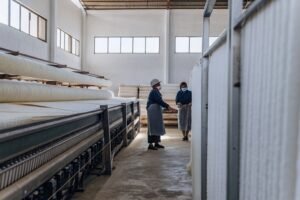
- Post-Brush Compact: After we raise the nap with the brushing machine, we run the fluffy fabric through a Relaxed Dryer and a Compactor again. We are not pressing the nap flat. We are using steam and overfeed to allow the fabric to shrink before it is rolled up.
We guarantee a Maximum Residual Shrinkage of 3% on all our brushed fabrics, including double brushed. I had a client from Texas last year who bought double brushed poly-cotton from a local jobber. He cut 500 hoodies. After pre-washing the first batch, they shrank 7 inches in length. He had to scrap the whole cut. He now only buys brushed fabric from us with the shrinkage test report included. You can read more about this specific issue in a forum thread on why brushed cotton fabrics shrink more and how to pre-shrink them before sewing. The collective wisdom there is spot on.
How to Style Brushed Fabric for the Winter 2026 Market?
Okay, you know the technical specs. You know how to test it. But how do you actually sell this stuff in Winter 2026? The market is flooded with "cozy" and "soft" claims. You need to cut through the noise with specific styling and marketing angles that make brushed fabric feel fresh, not like your dad’s old sweatpants.

Is Brushed Fabric Suitable for Loungewear, Activewear, or Outerwear?
The beauty of brushed fabric is its versatility. It can wear three different hats depending on the weight and the blend.
Loungewear (The Sweet Spot): This is where brushed fabric dominates. Double Brushed Tencel or Modal sets are the uniform of the work-from-home and cozy weekend crowd. The market is moving toward Matching Sets in earthy, muted tones (think Heathered Oatmeal, Dusty Cedar, Deep Moss). The key here is drape. You want a fabric weight of 180-220 GSM that skims the body. You do not want stiff structure. Our Fumao CloudKnit™ (a 95/5 Tencel Spandex double brushed) is designed specifically for this category. It photographs like a dream on the floor next to a coffee cup and a book.
Activewear (The Pre- and Post-Workout Layer): Brushed fabric is terrible for during the workout because it holds heat and moisture. But for the warm-up jacket or the jogger you pull on after yoga? It is perfect. We recommend a Brushed Back Poly-Spandex Fleece for this. The smooth face looks athletic and sharp. The brushed back provides comfort. The spandex (usually 5-8%) provides the stretch needed for movement. We see a lot of this going into Golf and Lifestyle Athleisure for Winter 2026.
Outerwear (The Lining Star): You would not make a rain jacket out of brushed fabric. But you absolutely should use it for the Body Lining and Sleeve Lining of shackets, quilted vests, and parkas. A brushed cotton plaid lining inside a waxed canvas jacket? That is a premium detail that justifies a $200+ price tag. It is a silent sales feature—the customer puts their arm in the sleeve and goes, "Ooh, that’s soft." We supply custom brushed flannel for linings to several heritage workwear brands in the US and Japan. You can find some great visual inspiration for this application in this lookbook on how heritage brands use brushed cotton linings in winter outerwear.
What Colors and Prints Work Best on Brushed Surfaces for 2026?
This is a technical printing question disguised as a design question. The fuzzy nap of brushed fabric absorbs ink differently than a smooth jersey. If you are screen printing a logo, the ink sits on top of the fuzz. It can look cracked or faded after washing if not cured properly.
Best Colors:
- Heathered Melanges: These are unbeatable on brushed fabric. The different colored fibers in the yarn (e.g., 90% black cotton, 10% white poly) create a visual depth that the brushing process enhances. It hides pilling and looks expensive.
- Garment Dye: This is the trend for Winter 2026. Instead of dyeing the fabric in bulk, we sew the hoodie first and then dye the whole garment. This gives a unique, "vintage washed" look with subtle highs and lows in the color. Brushed fabric takes garment dye beautifully because the nap absorbs the dye unevenly for that worn-in look.
- Pigment Prints: A soft, matte pigment print looks great on brushed fabric. It has a vintage, faded feel. Avoid High-Density Plastisol prints. They feel like a heavy plastic sticker on a soft cloud. It ruins the tactile experience.
I advised a streetwear client in Los Angeles last month to switch from a heavy plastisol print on a brushed hoodie to a Tonal Embroidery. The embroidery sits slightly proud of the nap and looks incredibly premium. The cost was similar, but the perceived value of the hoodie doubled. It sold out at a $120 retail price point. The lesson? Let the fabric be the star. Do not fight the fuzz with cheap, shiny ink.
Conclusion
Brushed fabric is not a new invention. It is a classic for a reason. But the way we are engineering it for Winter 2026 is new. We are using better fibers like Tencel to eliminate pilling. We are using precision compacting to control shrinkage. And we are using sophisticated blends to give you the perfect balance of warmth, weight, and drape.
Whether you are designing a luxe loungewear set that needs to feel like a second skin, a rugged shacket lining that needs to withstand years of wear, or a vintage-inspired hoodie that needs to look good on Instagram, brushed fabric is the answer. The advantage is not just softness. It is the combination of Thermal Efficiency, Tactile Luxury, and Visual Depth that no other finish can replicate at this price point.
You have the knowledge now. You know the difference between brushed back and double brushed. You know to ask for the Martindale Pilling Test report. You know that Post-Brush Compacting is non-negotiable.
If you are ready to explore the possibilities of brushed fabric for your Winter 2026 collection, we have a full range of stock-supported styles and custom development capabilities. We can send you a Brushed Fabric Swatch Book with all our best-selling blends and weights so you can feel the difference between our Tencel CloudKnit™ and our classic Cotton Fleece.
Reach out to our Business Director, Elaine. She handles all sampling and development inquiries. Just email her at elaine@fumaoclothing.com and let her know you are interested in the Winter 2026 brushed fabric range. Let’s make something cozy.