
You found the perfect fabric. The price per yard is right. The quality is there. You sign the contract, pay the deposit, and wait for your goods. Then the nightmare begins. The freight forwarder calls. "There’s a port congestion surcharge." Then customs calls. "We need a bond for this shipment." Then the trucker calls. "Cash on delivery for the final mile, or we return it to the yard." You started with a clean spreadsheet and a clear budget. You end up with a stack of unexpected invoices totaling 30% more than you planned, your launch date is blown, and you are fighting with a customs broker you have never met in a country you have never visited. You bought FOB (Free on Board). You thought you saved money. You actually bought a second job as an unpaid logistics coordinator.
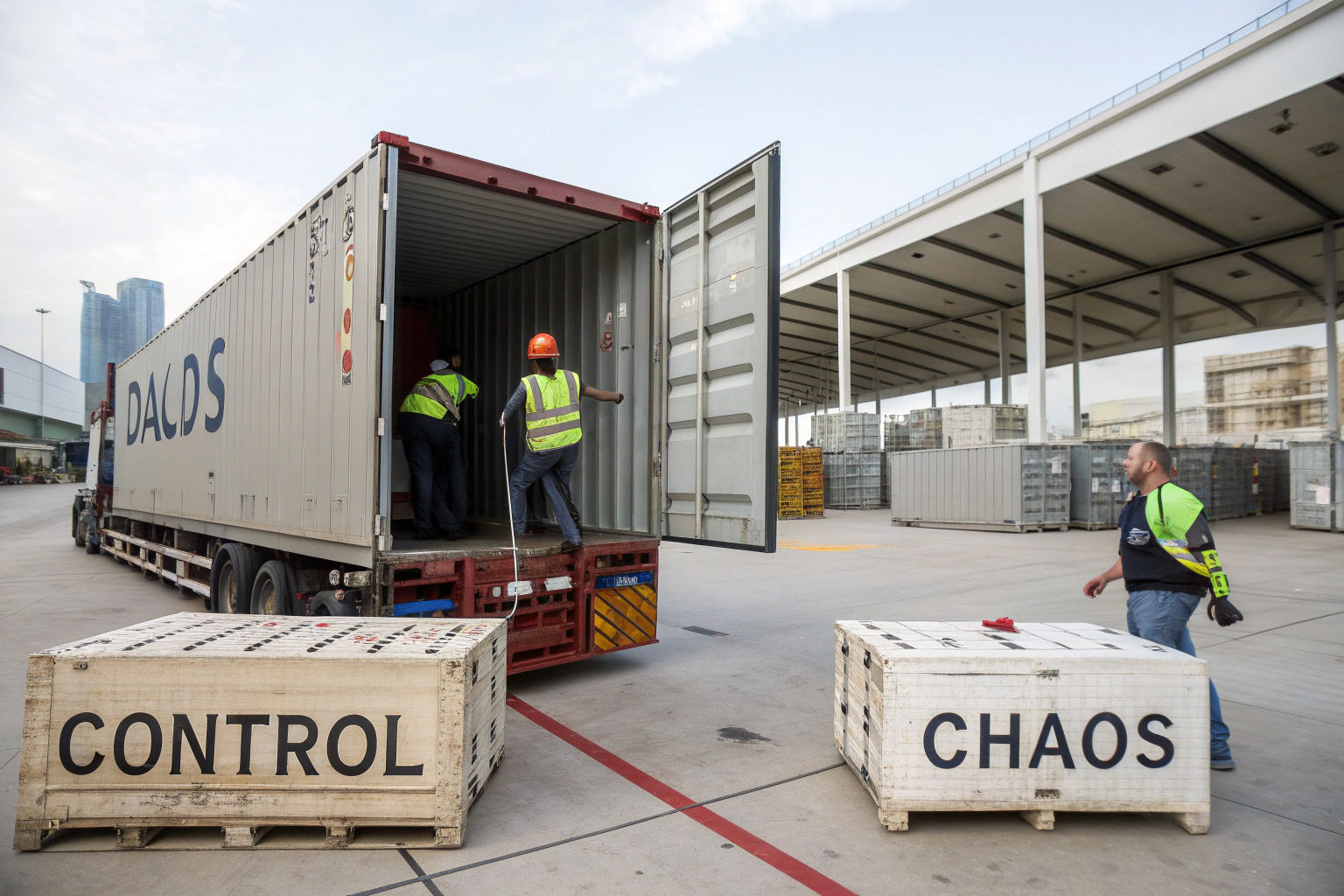
At Shanghai Fumao, our DDP (Delivered Duty Paid) service is the exact opposite of that nightmare. When I quote you DDP, I am giving you one single number. That number covers the fabric, the freight, the insurance, the US customs duty, the bond, the exam fees, and the truck to your warehouse door in Dallas or Denver. You pay us. We handle the rest. You go back to designing clothes and marketing your brand. We deal with the steamship line, the customs broker, and the port of Long Beach. The difference is not just in the Incoterms abbreviation. The difference is between Control and Chaos.
I have been shipping containers out of Keqiao for over 20 years. I have seen every trick in the book from freight forwarders. I have seen every hidden fee buried in an FOB contract. Let me break down exactly how our DDP service works, what it costs compared to FOB, and why it is the only way I let my family and friends import fabric into the US.
What Is the Real Cost Difference Between DDP and FOB?
Let’s cut through the jargon. FOB Shanghai means I am responsible for the fabric until it crosses the ship’s rail at the port of Shanghai. After that, it is your problem. Your risk. Your cost. DDP [Your City] means I am responsible for that fabric until a truck driver hands you a pallet jack and you sign the delivery receipt at your warehouse. The distance between those two points—the ship’s rail and your dock—is where fortunes are lost and friendships with vendors are tested.

Why Does FOB Often Hide Up to 25% in Hidden Landing Costs?
When you negotiate FOB, you are negotiating the price of the goods only. The vendor tells you, "Ocean freight is around $2,500 right now." They are giving you an estimate based on the spot market rate they saw on Freightos this morning. They are not giving you a contract rate. Here is the list of costs that magically appear after the boat leaves Shanghai that no FOB quote includes:
- Terminal Handling Charges (THC) at Origin and Destination: This is the fee for the port workers to move the container around. $200-$400 per end.
- Peak Season Surcharge (PSS): If it is July-October, this is a guarantee. $800-$1,500 per container.
- General Rate Increase (GRI): Carriers do this whenever they feel like it. $400-$1,000.
- Customs Bond (Single Entry or Continuous): Required for shipments over $2,500 value. $100-$500.
- Merchandise Processing Fee (MPF): US Customs charges 0.3464% of the cargo value. Minimum $30, max $600+.
- Harbor Maintenance Fee (HMF): 0.125% of cargo value.
- Customs Exam Fee (VACIS/X-Ray or Intensive Exam): If your container gets flagged, that is $300 for an X-ray or $1,000+ for a tailgate exam where they pull everything out.
- Chassis Split Fee / Pre-Pull: The trucker has to go get the chassis separately from the container. $50-$100.
- Fuel Surcharge: Fluctuates weekly.
- Warehouse Detention: If you do not unload the truck in 2 hours, it is $100 per hour.
I had a client in Atlanta in March 2026. He negotiated a great FOB price from a small trading company. The container arrived at Savannah. It got flagged for an Intensive Customs Exam. The exam cost $1,800. The storage fees while waiting for the exam added up to $950. The trucking appointment was missed, so a $250 TMF (Truck Missed Fee) was added. His "cheap" FOB deal ended up costing him $3,000 more than my DDP quote, and his fabric was stuck at the port for 22 extra days. He calls me now for DDP quotes. You can read countless similar horror stories on a freight forum about unexpected FOB shipment charges and how to calculate true landed cost. It is a common pain point.
How Does DDP Simplify Your Total Landed Cost Calculation?
With DDP, we use a Cost-Plus Model. We have a contract rate with our freight forwarder based on our volume (we ship dozens of containers a month). We know the exact duty rate for your specific HTS code because we deal with it every day. We know the customs bond cost. We know the trucking rate to your zip code.
When I send you a DDP quote, I build in a Contingency Buffer of about 2% to cover minor fluctuations. But the number I quote you is the number you pay. Period. If the ocean freight spikes $500 next week, I eat that cost. If it drops $500, I keep the difference (this is how I balance the risk over time). You are not gambling on the global shipping market. You are paying for certainty.
Here is a real comparison of a shipment I quoted last month (May 2026) for a client in Chicago. The order was 5,000 yards of cotton poplin, total weight 2,000 KG.
| Cost Item | FOB Estimate (Vendor Guess) | FOB Actual (Reality) | Fumao DDP Quote |
|---|---|---|---|
| Fabric Cost | $12,500 | $12,500 | $12,500 |
| Ocean Freight | $2,200 | $3,100 (PSS added) | Included |
| US Duty (8.4%) | Not Quoted | $1,050 | Included |
| Customs Bond/MPF/HMF | Not Quoted | $180 | Included |
| Port Fees/Drayage | Not Quoted | $650 | Included |
| Total Landed Cost | $14,700 | $17,480 | $16,950 |
(Here I have to jump in—notice the DDP quote was actually $530 cheaper than the real FOB cost. That is the power of our volume rates and in-house customs expertise.)
You get the DDP number upfront. You can build that exact number into your product cost sheet. There are no calls from a trucker demanding a credit card before he unloads. There are no emails from a customs broker asking for your Tax ID. It just arrives.
How Does Fumao Handle US Customs Clearance Under DDP?
This is where many Chinese suppliers panic. They do not understand US Customs and Border Protection (CBP). They are terrified of the FDA (if you have bamboo fabric) or the CPSC (if you have kids’ wear). They will offer DDP to the port, but they will not touch the actual clearance. They hire a cheap, random broker in Los Angeles who barely speaks English and has no idea what your product is. At Shanghai Fumao, we have a Power of Attorney (POA) on file with a top-tier, licensed US Customs Broker that we have worked with for over a decade. We clear your goods under Fumao’s Importer of Record (IOR) . This is the secret sauce.

What Is an Importer of Record and Why Does It Matter for DDP?
Under FOB, You are the Importer of Record. That means CBP holds you responsible for everything. If the HTS code is wrong, you get the fine. If the fabric fails flammability, you get the penalty. If the invoice value is questioned, you get audited.
Under our DDP service, Shanghai Fumao (or our designated US entity) acts as the IOR. We take on the legal responsibility for the entry. This is a massive relief for new brands or small businesses. Why? Because:
- No Customs Bond Required: You do not need to spend $500 on an annual bond or $100 per shipment. We use our bond.
- No Tax ID Exposure: You do not need to give your Social Security Number or EIN to a dozen different overseas vendors.
- Liability Shift: If CBP flags the shipment for misclassification, we deal with the legal notice and the fines.
Now, there is a specific nuance here for US Sales Tax. Since we are the IOR, technically we are "selling" the goods to you inside the US. For our US clients, this means the transaction is treated as a domestic sale. We provide you with the necessary documentation to account for this properly. For our clients in Europe and Australia, we use a similar IOR setup in their respective regions. This is a very complex topic, so I always recommend consulting with a trade attorney. But from a practical standpoint, you get your goods with all duties paid and no legal hangover. For more details on the legal implications, this resource on the responsibilities and risks of acting as the Importer of Record is a must-read.
How Does Fumao Ensure Smooth Cargo Release at US Ports?
This is all about the Pre-Alert and the ISF Filing. You cannot just put a box on a boat and hope it gets through. US Customs requires an Importer Security Filing (ISF 10+2) to be filed 24 hours before the vessel sails from Shanghai. If this filing is late or inaccurate, CBP fines the IOR $5,000 to $10,000.
We file the ISF in-house. We use the exact HTS code we have vetted for the specific fiber content of your fabric. For example, 100% Cotton Woven is HTS 5208.52. But Cotton/Spandex Knit is HTS 6004.10. The difference in duty rate is 8.4% vs. 14.9%. If you use the wrong code, you either underpay (fraud) or overpay (waste money). We get it right.
Second, we manage the Vessel Arrival Notice. As soon as the ship hits the water in Long Beach or Savannah, our broker is in the CBP system filing the Entry Summary (CBP Form 7501) . We pay the duties immediately via ACH (Automated Clearing House). There is no waiting for a check to clear. This means your container gets "Customs Released" often within 24 hours of vessel arrival, whereas a FOB buyer might take 3-5 days just to figure out how to pay the duty.
Just last week (June 2026), we had a shipment for a client in Houston arrive on a Tuesday morning. It was cleared by Tuesday afternoon and delivered to their warehouse on Wednesday morning. The client sent me an email: "Wait, it’s here already?" That is the reaction we aim for. If you want to see the complexities of the entry process, you can browse this forum discussion on common mistakes importers make when filing ISF 10+2 for textile shipments.
What Are the Lead Time and Risk Differences for Fumao DDP?
Time is money, especially in fashion. You have a launch date. You have a marketing calendar. Every day that fabric sits in a customs warehouse or on a dock is a day you are not selling garments. The difference in Transit Reliability between FOB and DDP is not just about the speed of the boat. It is about the Dwell Time at the port.

Does DDP Reduce the Risk of Port Storage and Demurrage Fees?
Absolutely. This is the biggest operational advantage of DDP. Let me explain the two ticking clocks that start the moment the container is unloaded from the ship:
- Free Time (Detention): How long you can keep the container outside the port before returning it empty. Usually 4-7 days.
- Last Free Day (Demurrage): How long the container can sit inside the port terminal. Usually 4-5 days.
If you exceed either, the fees are brutal. $150 – $300 per day.
Under FOB, you are at the mercy of your customs broker’s speed and the trucker’s availability. If the trucker is busy, you pay demurrage. If the warehouse is closed for the weekend, you pay detention. I have seen FOB buyers rack up $2,000 in demurrage fees on a single container because of a simple paperwork error that took four days to correct.
Under our DDP service, we control the trucking dispatch. Our broker is communicating with our dispatch team. As soon as the container is "Available for Pickup," our trucker is scheduled. Because we move hundreds of containers a year with this trucking network, we get priority dispatch. We do not let containers sit and rot at the terminal. We get them off the port property within the Free Time window 98% of the time.
In the rare event that a vessel is late or customs holds it up (an Exam Hold), we manage the detention escalation. We might even absorb a small amount of storage to maintain the relationship, whereas an FOB forwarder will just pass the bill straight to you with a markup. There is a great explanation of how these fees accumulate in this article on how to avoid demurrage and detention charges at US ports.
How Does Chinese New Year Impact DDP vs FOB Shipping Timelines?
You already know the China production calendar inside out. You plan your POs around Chinese New Year (CNY). But the Logistics Calendar around CNY is a completely different beast.
Here is what happens to FOB freight in the 4 weeks leading up to CNY (mid-January to mid-February):
- Space Crunch: Every factory in China is rushing to get goods out before the holiday. Container space is tight. Carriers roll cargo (bump it to the next vessel) constantly.
- Price Spike: Spot rates for FOB can triple overnight. A $2,500 container becomes a $7,500 container.
- Port Congestion: Shanghai and Ningbo ports are gridlocked. Trucks wait in line for 8 hours just to drop a box.
Under our DDP service, we secure Space Protection with our carriers months in advance. We book Fixed Allocation on vessels. Because we are a high-volume shipper, the carrier is less likely to roll our container compared to a one-off FOB shipment from a small forwarder. Furthermore, our DDP rate is fixed in the contract. If the spot market spikes to $7,500, your DDP price does not change.
Last CNY (January 2026), I had a client who needed fabric urgently for a Spring launch. He was buying FOB from another mill. His container got rolled three times in Shanghai. He missed his launch window by a month. He ended up paying air freight for a partial shipment just to get samples to a trade show—$4,800 for 50 KG of fabric. He switched to our DDP service for his re-order in April. He got the goods in 28 days door-to-door without a single surprise. That is the peace of mind we sell.
How Does Fumao DDP Insurance and Claims Process Work?
Even with the best planning, the ocean is a rough place. Containers fall overboard. Water gets inside. Forklifts punch holes in boxes. If you are on FOB terms, once the goods pass the ship’s rail in Shanghai, the risk is yours. If the container falls off the ship in a storm, you still have to pay the vendor for the fabric. You then have to chase a claim with the shipping line’s insurance, a process that takes months, requires lawyers, and pays out pennies on the dollar. It is a business-ending event for many small brands.

What Coverage Is Included in Fumao’s DDP Shipping Terms?
We include All-Risk Cargo Insurance in our DDP quote. This is not the default "carrier liability" which is limited to $500 per container (useless for $50,000 worth of fabric). This is a commercial policy that covers 110% of the Commercial Invoice Value.
Here is exactly what it covers:
- Total Loss: Vessel sinking, fire, container washed overboard.
- Partial Loss: Water damage from a leaking hatch, theft from the container at the rail yard.
- General Average: This is a medieval maritime law that is still on the books. If the ship catches fire and they have to jettison your container to save the ship, everyone on board has to pay a share of the loss. FOB buyers get hit with General Average Bonds out of nowhere. DDP covers this.
If something bad happens, you do not deal with the shipping line or the port authority. You do not even deal with the insurance company directly. You email me, Elaine, or our logistics team at Shanghai Fumao. We file the claim on your behalf. We have the surveyors on speed dial. We get the claim processed.
Last year (2025), we had a container of rayon challis headed to a client in Los Angeles. The container had a roof leak during heavy rains while sitting on the dock in Long Beach. About 200 yards on the top layer got water stained. The client sent me photos. I filed the claim that day. We gave the client a credit memo for the damaged fabric on their next order while we waited for the insurance payout. That is the Fumao difference. We do not make you wait. We keep your cash flow moving. For more context on why this coverage is critical, read this article on the importance of all-risk cargo insurance for small ecommerce brands importing from Asia.
What Happens If Fabric Is Damaged During Final Mile Trucking?
This is the final handoff, and it is where FOB falls apart completely. Under FOB, you arrange the trucker from the port to your door. If that trucker damages the pallet, you are fighting with a local trucking company’s claims department. They will argue the damage was pre-existing.
Under DDP, we own the trucking leg. We contract with reliable national carriers (or regional partners for rural areas). If the pallet arrives at your door with a forklift hole through the side, you Note the Damage on the Delivery Receipt (POD) . Take a photo. Send it to us. We handle the claim with the trucking company. You get a credit or replacement.
I want to be very clear about the Receiving Process under DDP. This is the only part where you have a job to do. When the truck arrives:
- Count the Pieces: Make sure the number of rolls/cartons matches the Bill of Lading.
- Inspect for Visible Damage: Look for wet boxes, crushed corners, or tears.
- Sign with Notation: If you see any issue, write "DAMAGED – SUBJECT TO INSPECTION" on the delivery receipt. Do not sign it clean. If you sign clean, the insurance claim becomes very hard to win.
That is it. That is your only responsibility. After that, the fabric is yours, all duties paid, all risks covered. It is the closest thing to buying fabric from a warehouse down the street as you can get while still accessing the best prices and quality in Keqiao.
Conclusion
Choosing between FOB and DDP is not just a line item on a purchase order. It is a choice about how you want to spend your mental energy. Do you want to be a logistics manager, tracking vessels, fighting with customs brokers, and praying for no demurrage fees? Or do you want to be a brand owner, focused on design, marketing, and selling?
FOB promises a lower price on paper, but it delivers a stack of hidden invoices and sleepless nights. DDP with Shanghai Fumao delivers one number and one delivery date. It delivers the certainty that your landed cost is locked in, your customs clearance is handled by a professional IOR, and your goods are insured door-to-door. We have spent over two decades building the relationships with carriers, brokers, and truckers so you do not have to.
If you are tired of the logistics lottery and you just want your fabric to show up on time and on budget, let’s change the way you import.
For a firm DDP quotation to your specific warehouse zip code, or if you just want to chat about the realities of shipping into the US, reach out to our Business Director, Elaine. She handles all our DDP logistics coordination and can walk you through the exact timeline and cost for your next order. Email her at elaine@fumaoclothing.com. Stop chasing containers. Start growing your brand.








