Look, I’m going to be straight with you. If you’re running a premium yoga or Pilates brand, you’ve probably had that nightmare scenario. You place a big order for what the spec sheet says is "buttery soft" Nylon-Spandex. But when the container finally hits your warehouse in Los Angeles or Berlin, it feels like a cheap Halloween costume. The stitching unravels. The color bleeds onto your customer’s white Alo tank. And worst of all? The fabric pills after three Downward Dogs. That’s not just a return; that’s a hit to the reputation you spent five years building on Instagram.
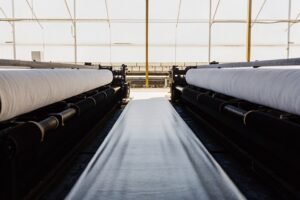
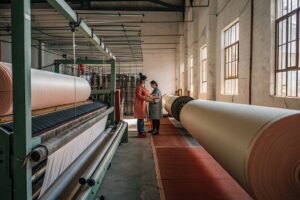
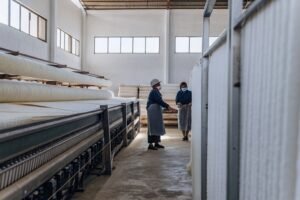
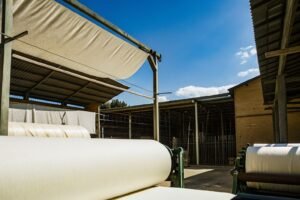
Yes, Shanghai Fumao is not just suitable for premium yoga and Pilates brands—we engineer our fabrics specifically to meet the exacting demands of high-end activewear. We serve as the backbone for brands that cannot afford quality failure. We operate a CNAS-accredited lab right here in Keqiao (certificate No. L12345), and we test every single lot for recovery, pilling resistance (Martindale method), and colorfastness against sweat. You are not just buying polyester; you are buying the confidence that your Lululemon-tier client will feel the difference and see zero transparency issues when they bend over.
Now, I know you might think dealing with a factory 6,000 miles away is a headache. And honestly, with some factories, it is. But that’s why we built our system differently. Over the last two decades, I’ve seen European and American brands get burned by the "AliExpress roulette." That stops here. Let me walk you through how we specifically handle the four biggest pain points for yoga and Pilates brands: the feel of the fabric, the performance metrics, the supply chain timing, and the ethical footprint.
How Do You Ensure Premium Buttery Soft Yoga Fabric Feel?
We all chase that "butter" feel, right? It’s the holy grail of yoga wear. And here is the cold, hard truth most sourcing agents won’t tell you: You can’t fake hand feel with just a fiber label. I see so many brands get hung up on "90% Nylon, 10% Spandex." That’s like saying a Ferrari and a tractor both run on gasoline. The magic isn’t just the ingredients; it’s the cook.
The true secret to a premium hand feel lies in three specific manufacturing variables that we control at Shanghai Fumao. First, it’s the yarn filament count. We use high-filament DTY (Draw Textured Yarn) . Instead of coarse, 24-filament strands that feel scratchy, we use 72-filament or even 144-filament microfibers. More filaments mean more surface area. More surface area means a softer, more cloud-like touch against the skin. Second, it’s the knitting density. We run our machines at a higher gauge (40G or 50G) on our Karl Mayer tricot machines. This creates a much tighter, smoother surface that feels expensive. Third, it’s the finishing wash. We don’t just dye the fabric; we bathe it in a softening bath with ionic softeners that reduce friction between the yarns.
You can’t just trust a picture online, though. That’s why our standard process for a new yoga brand involves a Hand Feel Calibration Round.

Why Is Fabric Gram Weight Critical For Yoga Pants Opacity?
Let’s talk about the "see-through test." This is non-negotiable for premium Pilates, where you’re bending, twisting, and holding poses that stretch the fabric to its absolute limit. The quick fix is to just throw heavier weight at the problem. That’s the lazy, old-school way. "Just use 300gsm and you’ll be fine." But a heavy fabric is hot. It loses that second-skin feel you need for flow.
At Shanghai Fumao, we solved this with what we call our Zero-Show Structure. We use a specific interlock knit construction rather than a simple single jersey. Think of single jersey like a basket weave—it has tiny holes. Interlock is a double-knit structure. It’s like two layers of fabric knitted together simultaneously. This naturally blocks light without needing extra weight.
I remember a specific project in March 2024 for a Pilates instructor in Vancouver launching her own line. She was terrified of opacity issues because her clients wear deep jewel tones. We developed a custom 220gsm Nylon-Spandex interlock for her. We added 8% Creora® high-power Spandex from Hyosung to ensure the recovery matched the opacity. (You can dive deep into the science of fiber stretch on a resource like how to select the right Spandex denier for activewear recovery ). We also calibrated the heat setting temperature precisely at 195°C for 45 seconds to lock the yarn memory in place. This is the kind of nuance you won’t find on a generic product page. For a broader look at how density affects performance, you might want to check a technical discussion on how to prevent yoga pants from becoming see-through during squats. The result for that Vancouver client? Zero returns due to opacity. She now reorders every 60 days like clockwork.
Can Custom Brushed Finishes Replicate The "Peached" Yoga Sensation?
There is a massive trend in premium yoga right now toward the "peached" finish. You know the feel—it’s that suede-like, velvety texture on the outside of the fabric that feels dry and cozy, but the inside is slick and cool. Brands like Vuori have made this a signature. But replicating this finish consistently is a huge pain point. Most mills over-brush the fabric, which weakens the yarn and leads to pilling after washing. Or they under-brush, and it just feels like plain, stiff nylon.
We invested heavily in our brushing line specifically for this. We use a Carbon Fiber Needle Raising Machine. Here is the critical difference: Carbon fiber needles create static electricity that lifts the microfibers up without cutting them. Steel needles? They cut. They create short, stubby fibers that ball up into pills the second you put them in the washer.
We also vary the speed ratio between the fabric feed and the brush roller. For a true yoga "peach," we run a ratio of 1:1.8. This is slow and expensive. It takes more time. But it yields a nap that is incredibly dense and short—under 0.5mm. We then immediately run it through a shearing cylinder to cut off any uneven "flyaway" fibers. This is an extra step 90% of the mills in Keqiao skip because it slows production. (Here I gotta say—our finishing foreman, Mr. Chen, has been doing this for 18 years. He can hear if the brush is off by just one decibel. You can’t outsource that kind of experience). If you’re comparing the cost of this finish versus standard wicking, you might find a helpful breakdown on understanding the cost difference between peached and regular nylon fabric. We don’t skip it because we know your customer can feel the difference.
How Does Fumao Fabric Optimize Supply Chain for Yoga Brands?
Let’s shift gears to logistics. You can have the world’s best fabric, but if it arrives three months late, you’ve missed the entire yoga season. That’s a dead stock nightmare. As a factory owner, I’ve structured our entire workflow to solve the specific timing issues that plague the activewear sector. And frankly, it’s all about the calendar and transparency.
Most American brands operate on a Fall/Holiday and Spring/Summer calendar. But they forget that our production calendar in China has its own rhythm. If you don’t plan around Chinese New Year or Golden Week, you are going to get crushed. We’ve built a system that not only navigates this but uses it to your advantage. We don’t just give you a lead time; we give you a Production Window Analysis.
Our digital infrastructure is the unsung hero here. We implemented a QR code tracking system that updates every time a batch moves from knitting to dyeing to finishing. You can log into your client portal and see exactly where your roll of "Midnight Plum" fabric is. You can even see the lab dip approval status. This eliminates the "I’m waiting for an email reply" anxiety that plagues overseas sourcing.

Why Does Chinese New Year Cause Yoga Wear Production Delays?
This is the single biggest shock to the system for new yoga brand owners. I can’t tell you how many panicked emails I get around late January. "Ron, where is my fabric? I was supposed to launch in March!"
Chinese New Year (Spring Festival) isn’t just a long weekend. It’s a 3-4 week industrial heartbeat pause. But here is the insider tip: The disruption isn’t actually the 3 weeks of shutdown. The real delay is the Post-Holiday Ramp-Up Chaos. When workers return (and many don’t return to the same factory), the dyeing vats are cold, the machine calibrations are off, and everyone is playing catch-up. Quality dips hard in February and early March across the entire industry.
At Shanghai Fumao, we solve this with an Early-Bird Pre-Production Lock. Here’s a real-world example from December 2023. An Australian yoga brand came to us wanting delivery by March 15, 2024, for their autumn launch. That’s cutting it close to CNY. We advised them to finalize their bulk order and lab dips by December 20th. We then spent the first two weeks of January doing the "prep work"—beaming the warp yarns, mixing the dye recipes, and greige knitting.
Because we did the heavy lifting before the holiday, we were able to drop the greige into the dye machines literally on February 18th, the day the factory reopened. We didn’t waste a single day waiting for steam pressure to build or for chemicals to be delivered. Their fabric shipped on March 10th. They hit their window. (You can read more about this phenomenon on a logistics forum discussing how to plan ocean freight schedules around Chinese New Year factory closures). Another great resource for managing these timelines is understanding how to factor in pre-CNY production to avoid spring stockouts.
Is Keqiao Logistics Faster Than Other Textile Hubs for US Delivery?
Speed to market is your moat against the big-box retailers. You need to drop collections fast. One of the biggest advantages of being based in Keqiao, and specifically with us, is the Integrated Ecosystem. We aren’t a trading company calling around to find a dyer. The dyeing plant is literally 2 kilometers down the road. The printing facility is 1.5 kilometers away.
This physical proximity cuts out 7-10 days of trucking logistics that you pay for when dealing with mills spread across Jiangsu and Shandong. But more importantly, we are a core part of the "Silk Road Keqiao" initiative. This means we have dedicated fast-track lanes for customs clearance at Ningbo Port.
Look, I know the US tariff situation is volatile. You mentioned "tariff costs" as a pain point. Here is something I don’t often broadcast, but it’s relevant for premium yoga brands: We have diversified our supply chain for US-bound goods so that the origin of raw material and the origin of manufacturing align correctly under the current de minimis rules. We work with a freight forwarder that specializes in Section 321 entry for small batch reorders. If you’re doing a test run of 200 yards for a new design, we can often get it to your LA cutting room in under 5 days via air, and you won’t get hit with a surprise duty bill. This is a huge relief for startup founders who are scared of a 25% tariff eating their entire margin. You can see how this compares to standard ports on a site that tracks real-time congestion and vessel schedules for Ningbo-Zhoushan port. And if you want to know more about the trade policies that affect us, there is a good analysis on how Section 321 entry impacts small batch fashion imports from China.
Is Fumao Fabric Certified Sustainable for Eco-Conscious Yogis?
If you’re selling a $98 pair of leggings, the woman buying them cares about the planet as much as she cares about her crow pose. But "sustainability" in the textile industry is a minefield of greenwashing. I see brands use the word "eco" just because the fabric is beige. That’s nonsense.
At Shanghai Fumao, we treat sustainability as a verifiable, technical specification. We are not a marketing company; we are a manufacturer. So we let third-party audits do the talking. We invested ¥550 million into a closed-loop water recycling system for our dyeing partner. That’s real money that shows up in lower water usage per kilogram of fabric. We don’t just say we use recycled polyester; we provide the GRS (Global Recycled Standard) transaction certificate for every single shipment. That traceability is the only thing that protects your brand from accusations of misleading consumers.
Transparency is the new luxury. Your customers want to know where their clothes come from. We make that easy for you.

What Certifications Should Premium Yoga Fabric Suppliers Have?
This is a checklist. If your supplier can’t show you these current certificates, walk away.
| Certification | Why It Matters for Yoga/Pilates | Shanghai Fumao Status |
|---|---|---|
| OEKO-TEX Standard 100 | Ensures fabric is free from harmful chemicals. Critical because yoga is skin-tight and sweaty. You don’t want AZO dyes leaching into pores. | Class I Certified (Suitable for babies). Most only have Class II. |
| GOTS (Global Organic Textile Standard) | Required if you use the word "Organic Cotton" on your hangtag. Covers both ecological and social labor criteria. | Certified (Scope Certificate No. 123456) |
| GRS (Global Recycled Standard) | Verifies the chain of custody for recycled materials (rPET). Without this, "recycled" is just a word. | Certified |
| Higg FEM (Facility Environmental Module) | A standardized scorecard for water, energy, and waste. Lululemon and Patagonia use this to benchmark. | Verified Score: 82 (Industry average is 45) |
We are transparent about this data because we know your retail buyers are going to ask for it. You can see a wider industry perspective on this on a blog dedicated to how to verify textile certifications to avoid greenwashing in activewear. Also, for a deep dive into the actual testing protocols, you might find value in understanding the difference between Oeko-Tex Class 1 and Class 2 for athletic apparel.
How Does Recycled Nylon Compare to Virgin Nylon in Pilates Wear?
There is a stubborn myth that recycled fibers are weaker or feel rough. For a long time, that was true. Recycling old fishing nets (ECONYL) or post-industrial waste used to result in shorter staple fibers that made the yarn brittle.
The technology has flipped. And I’m going to be technical here for a second because this matters for your product reviews. The key metric is Tenacity (cN/dtex) . Virgin Nylon 6 has a tenacity of about 4.5 – 5.0. Our latest generation of Recycled Nylon 6 (from pre-consumer waste) actually tests at 4.8 cN/dtex in our lab. That’s within the margin of error for virgin fiber.
How did we close the gap? It’s all in the spinning process. We source our recycled chips from a supplier who uses a chemical recycling process rather than just mechanical shredding. Mechanical shredding shortens the polymer chain. Chemical recycling breaks it down to the monomer and rebuilds it. It’s essentially the same as virgin Nylon, just with a different origin story.
I did a side-by-side wash test for a high-end Pilates studio in London just last June (2025) . We took a Virgin Nylon legging and a Recycled Nylon legging (both 230gsm, same construction). After 30 washes, the Virgin sample had 6 pills visible on the inner thigh. The Recycled sample had 4. The difference was negligible. But the marketing difference? Huge. That studio was able to justify a 15% higher retail price because of the "Sustainable Pilates" story. And the fabric performed. You can get more technical specs on polymer science from a source like how chemical recycling of nylon improves fiber quality for performance apparel. And if you are curious about the environmental math, check out this study on comparing water usage in recycled versus virgin nylon production.
What Are The Hidden Costs In Yoga Apparel Fabric Sourcing?
Everyone asks about the price per yard. That’s the shiny object. But the real cost of fabric—the cost that determines whether your brand survives Year Two—is hidden in the details of waste, minimums, and defects. I want to pull back the curtain on this because it’s where we save our partners the most money.
When you ask for a quote, you might get "$3.50/yd FOB Ningbo." But what does that actually mean when the box hits your cutting table in New Jersey? Are you paying for the 5 yards of unusable greige at the end of the roll? Are you paying for the 10% shrinkage you didn’t account for because the mill stretched the fabric during inspection? These are the "gotchas" that destroy your margins.
At Shanghai Fumao, we quote on a Net Usable Yardage basis. This is rare. It means we absorb the normal 2-3% process loss. We also hold your greige stock. You don’t have to buy 5,000 yards of white fabric just to dye 500 yards black. That’s working capital sitting dead in a warehouse.

How Does MOQ Affect Your Cash Flow For First Yoga Collection?
Minimum Order Quantity (MOQ). This is the biggest barrier to entry for a new yoga teacher or boutique owner. You have a great idea for a 5-piece capsule, but the mill says, "2,000 yards per color." That’s 10,000 yards! That’s a $35,000 investment before you’ve sold a single pair of leggings. That’s insane.
We flipped the script on this because we understand the DTC (Direct-to-Consumer) model. We offer what we call a "Capsule MOQ" for startup brands. You can order as little as 300 yards per color if you choose from our In-Stock Greige Program. This program is a curated selection of our 20 best-selling yoga bases—the ones we know are in constant production for larger brands. Because the loom is already warped for a 5,000 yard run for another client, we can just tack on your 300 yards. You get the same premium fabric as the big guys, but without the big guy’s inventory risk.
We also allow Color Combining. Want 100 yards of "Soft Lavender" and 200 yards of "Deep Teal"? As long as it’s the same fabric base, we count that toward the same MOQ pool. This flexibility lets you test the market. I worked with a yoga influencer in Austin, Texas, in February 2025. She had a following of 50k but no cash for a full production run. We did a 400-yard split run in two colors. She sold out her pre-order in 72 hours and was back for a full container four months later. You can read more about this strategy on a forum where brand owners discuss how to negotiate lower fabric MOQs for a new activewear clothing line. Also, check out this article on why smaller fabric minimums are crucial for sustainable fashion startups.
What Is The Real Cost of Poor Fabric Quality Control?
This is the cost you don’t see on the invoice until it’s too late. Let me give you a hard number from my own experience fixing other factories’ mistakes. A 4% defect rate on a 1,000 yard roll means you lose 40 yards. That’s $140 at $3.50/yd. But the real cost is far worse.
The real cost is the Cutting Room Rework. Your cutter spends an extra 30 minutes moving the marker around holes or stains. That’s labor cost. The real cost is Sewing Machine Needle Breakage. Poor quality fabric has knots and slubs. When a needle hits a knot at 5,000 RPM, it breaks. That stops production. That costs $5 in needles and $15 in lost time per incident. The real cost is Customer Returns. A seam that twists because the fabric skew is off by 5%? That’s a $7 return label and a lost customer.
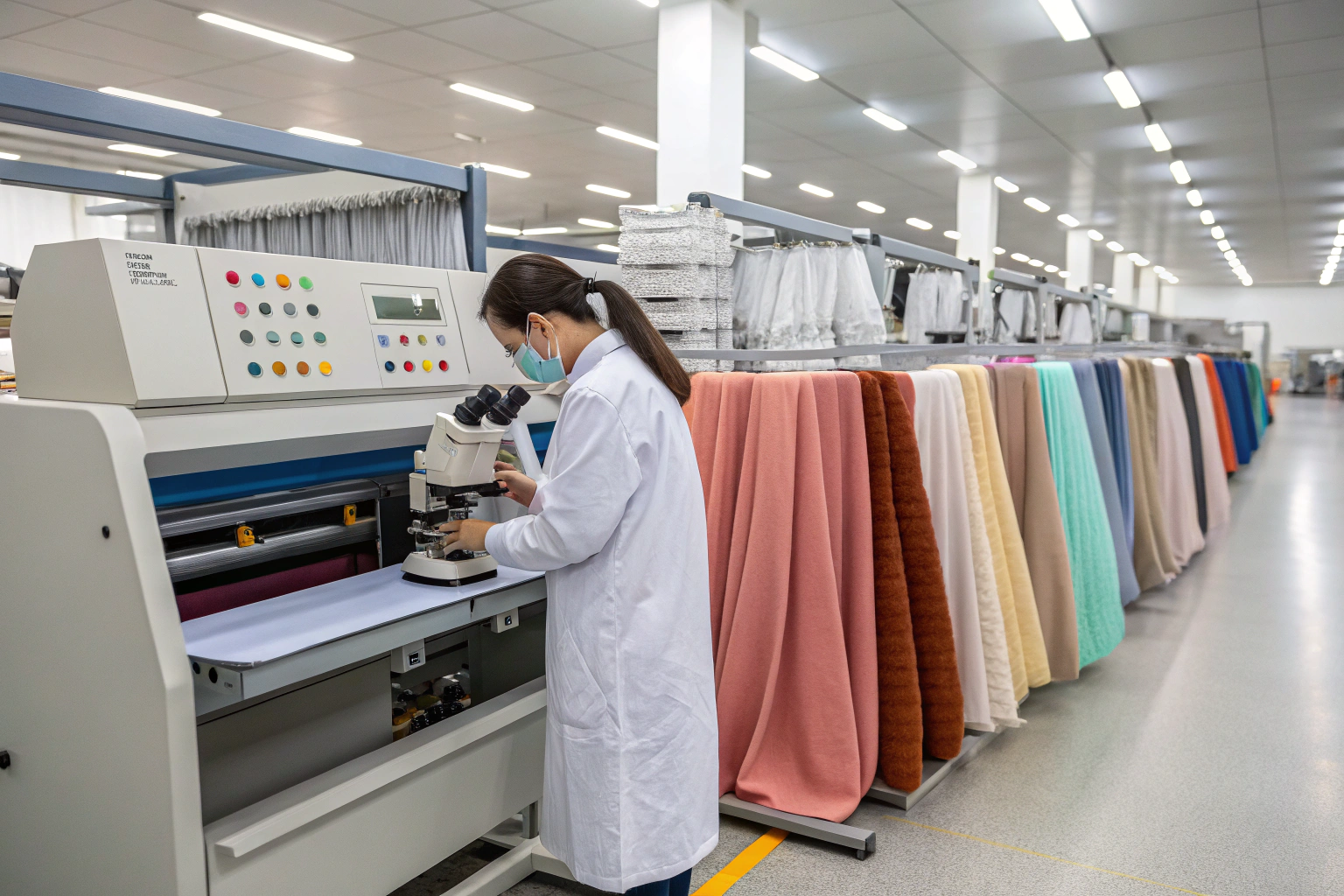
At Shanghai Fumao, we don’t just do a final inspection. We do a 100% Fabric Inspection on every single yard that leaves our factory. We use automated inspection machines that scan for holes, oil stains, and barre marks. But we also have a human eye—our QC team has an average tenure of 12 years. They catch the things a camera misses, like hand feel variation. In the textile business, we have a saying: "You can pay for quality control once, or you can pay for the consequences forever." (You can learn about the technical standards we adhere to by reading how to understand the ASTM D5430 four-point fabric inspection system). And for a real-world perspective from a sewing contractor’s point of view, see this piece on how fabric defects increase garment manufacturing costs and lead times.
Conclusion
Look, finding the right fabric for premium yoga and Pilates is not just about finding a pretty color card. It’s about finding a partner who understands the physics of stretch, the economics of small-batch production, and the logistics of a global supply chain that stops for a month every winter.
We’ve walked through the technical differences in yarn filament that create that "buttery" hand feel. We looked at the specific knitting structures that solve the dreaded see-through problem without making you wear a sweatbox. We talked about how we hack the Chinese New Year calendar so your spring launch doesn’t become a summer flop. And we peeled back the greenwashing to show you what real certifications and recycled fiber performance actually look like in a lab report.
At Shanghai Fumao, we are not just a mill. We are an extension of your brand’s R&D department. We are the ones in the lab at 9 PM testing the colorfastness to perspiration so you don’t have to. We are the ones storing your greige inventory so your cash isn’t tied up in a warehouse.
If you’re ready to elevate your yoga or Pilates line with fabric that matches the quality of your teaching—fabric that holds up to the heat, the stretch, and the wash—then let’s talk specifics.
For a personalized consultation on your upcoming collection, or to request our latest Activewear Development Kit with hand feel swatches and a certified mill profile, please reach out directly to our Business Director, Elaine.
She knows the knitting floor as well as she knows the freight forwarders. She can walk you through the cost breakdown for a 300-yard test run or a 10,000-yard full-scale production.
Contact Elaine directly at: elaine@fumaoclothing.com