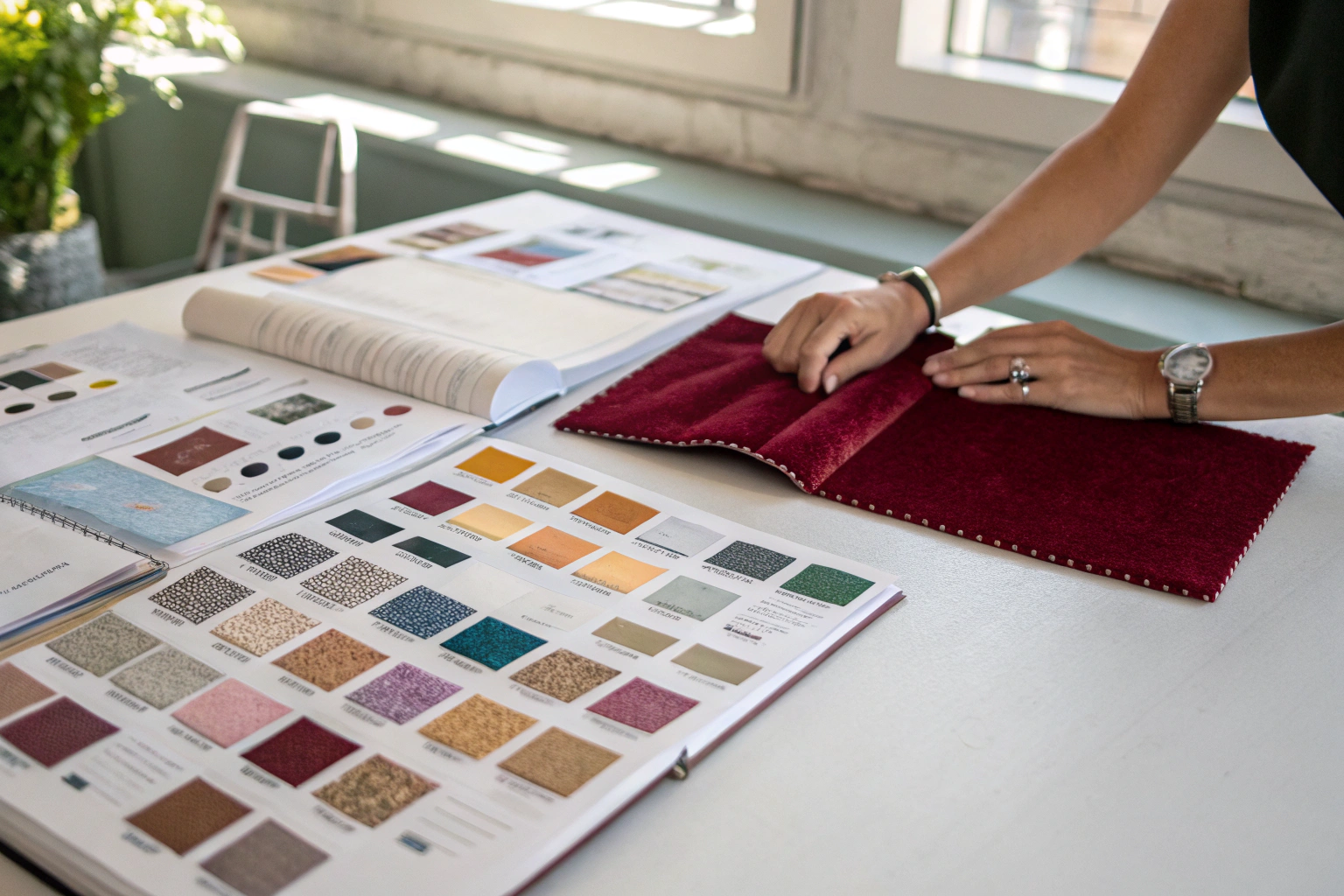
I want to address the elephant in the room right away. You have a great idea. Maybe it’s a line of sustainable bamboo activewear. Maybe it’s 500 yards of a specific shade of navy blue jacquard for a bridesmaid collection. You’ve done your homework. You found Shanghai Fumao. You like our website. You see we work with big names. And then the fear creeps in. You think, "I’m just a startup. I can’t order 10,000 yards. They won’t take me seriously. I’m going to get a reply that just says ‘MOQ 3000 yards per color’ and that will be the end of my dream."
I get it. I’ve heard this from hundreds of entrepreneurs and small designers over the last 20 years. The industry has a reputation for being brutal to small players. And honestly? A lot of factories are. They are set up for volume. They don’t want to change the warp on the loom for less than a full container load. But that rigid model is breaking down. The way we’ve structured our business in Keqiao is different. We have built our reputation on being the bridge between the giant textile cluster that is China and the independent brands that are the future of fashion.
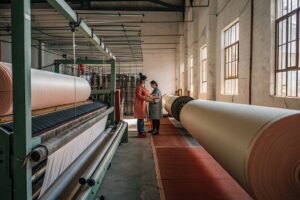
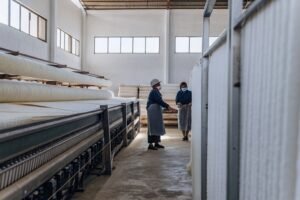
At Shanghai Fumao, Minimum Order Quantity is not a brick wall. It’s a conversation. It’s a sliding scale based on what you actually need. Let me pull back the curtain on how MOQ really works on the ground in our weaving factory, our dye house, and our printing floor. You might be surprised at what’s actually possible.
We built this flexibility because we understand how production calendars work. When a European brand finishes pre-production 6 weeks before Chinese New Year, they have time for large runs. But when a startup needs 200 yards for a sample sale during the June-July slow period, we can slot that in and take advantage of the timeline advantages those slower months offer. It’s about optimizing the schedule for everyone.
Why Do Textile Mills Enforce High MOQ for Custom Fabrics?
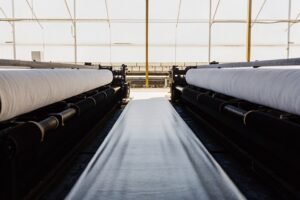
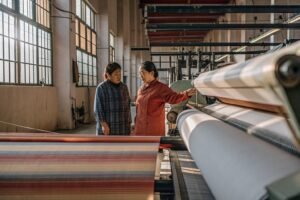
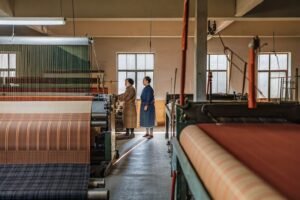
Before I tell you how we lower the MOQ, you need to understand why the MOQ exists in the first place. This isn’t about being mean to small buyers. It’s about the physics and economics of industrial textile machinery. A modern weaving loom is a beast. It costs as much as a luxury car—sometimes more. And the setup cost to change from one fabric style to another is substantial.
The biggest factor is the warp beam. This is the huge roller at the back of the loom that holds the lengthwise yarns. To make a custom fabric, we have to take empty beams to a warping machine. We have to take hundreds of individual cones of yarn and wind them side-by-side onto that beam under precise, even tension. This process, called warping, takes hours of labor and consumes a significant amount of yarn just to thread the machine and tie the knots. Then we have to draw-in each of those thousands of warp ends through the heddles and the reed of the loom. This can take a skilled technician an entire shift.
All of that labor and machine downtime happens before the first inch of fabric is woven. Whether you want 100 yards or 10,000 yards of that fabric, the setup cost is exactly the same. So if you only want 100 yards, the amortized cost of that setup per yard is astronomical. That’s why the standard MOQ for a custom woven fabric in most Chinese mills is 3,000 to 5,000 yards per design.

What Manufacturing Processes Create the Cost Barrier for Small Orders?
It’s not just the loom. The pain points exist all the way down the supply chain. Let me walk you through the steps for a typical custom order from a mill’s perspective:
- Yarn Sourcing: If you want a specific color or a special blend (like 60% Seawool 40% Tencel), we might have to special-order the yarn. Yarn spinners have their own MOQs. They might not spin less than 500 kg (about 1,100 lbs) of a custom color. That one constraint sets the floor for the whole project.
- Dyeing: Our cooperative dyeing factory uses large pressure vessels called jigs or jet dyeing machines. These machines are designed for efficiency with large batches. A typical dye machine has a minimum capacity of 200 kg per batch. If you try to dye just 50 kg, the liquor ratio (the amount of water to fabric) gets thrown off. You waste water, energy, and chemicals. The color also becomes harder to control precisely. Small dye lots often have more shade variation than large lots.
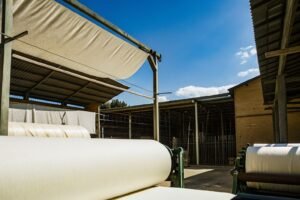
- Finishing: The stenter frame we use to dry and set the fabric width is a huge, gas-guzzling oven. Running it half-empty is like driving an empty 18-wheeler across the country. The fuel cost per pound of fabric is terrible.
I had a call with a buyer from the US in February 2026. Confident guy, used to leading. He wanted 150 yards of a custom heavy linen blend. I had to explain the yarn issue. The spinner in Jiangsu wouldn’t even turn on the blending machine for less than 800 lbs of fiber. We found a workaround—we used a stock yarn that was close to his blend but not exact. He accepted the 5% variation in content because the MOQ was too high otherwise. If you’re trying to understand how to navigate minimum order quantities for custom textile yarn blends, the first question you should ask is: "Do you have a stock yarn that is 90% similar to what I want?" That can cut your MOQ in half.
How Do Dye House Minimums Affect My Fabric Order Quantity?
The dye house is often the tightest bottleneck. If you want a custom print or a custom solid color, the dye house rules the roost. Here is a reality check from our own production log in October 2025. We had a European client who wanted a specific Pantone shade of sage green on a bamboo silk. It was a beautiful color. Not a stock shade.
- Dye House Minimum Per Color: 200 kg.
- Fabric Weight: 120 GSM.
- Calculation: 200 kg of 120 GSM fabric equals roughly 600 yards .
That meant the MOQ for that specific color was 600 yards. The client only needed 400 yards for their collection. They asked if we could just run 400 yards. The dye master said no. The dye uptake on the fabric would be different, the shade would be off-spec, and the risk of unlevel dyeing (blotchy patches) was too high. We didn’t want to send them bad fabric.
The solution? We offered to hold the remaining 200 yards as stock inventory for their next order. They paid for the 600 yards upfront, but we warehoused the extra 200 yards in our facility in Keqiao. Six months later, they re-ordered the same color and we shipped it immediately. They saved on lead time. If you are dealing with how to meet fabric dyeing minimums for small clothing brands, consider this: Can you use that color again next season? If yes, holding stock is cheaper than paying a surcharge for a small lot. We do this all the time for our long-term partners.
What Is Fumao’s Standard MOQ for Stock vs Custom Fabric?
Now let’s talk about the numbers that actually matter to you. At Shanghai Fumao, we separate our business into two distinct tracks: Stock Service and Custom Development. They have completely different rules, lead times, and cost structures. Confusing the two is the number one source of frustration for new buyers.
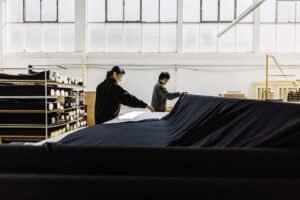
Our Stock Service is the secret weapon for small brands and startups. We keep over 30,000 designs and colorways in our warehouse in Keqiao. This is fabric that has already been woven, dyed, and finished. It’s sitting on the shelf, ready to cut and ship. Because the setup cost was paid for by a previous large production run (or by our own investment in inventory), we can sell this fabric with no minimum order quantity.
Yes, you read that right. MOQ for stock fabric: 1 yard. Or 1 meter. Whatever you need. You want 10 yards of a specific floral print chiffon for a sample dress? We’ll cut it and ship it. The price per yard is higher than if you bought 1,000 yards, but you get exactly what you need without the waste. This is how we help designers test the market before committing to bulk production.

Can I Order Less Than 100 Yards of Fumao’s In-Stock Fabric?
Absolutely. One hundred percent. Let me give you a specific, recent example from January 2026. A small Etsy shop owner from Canada contacted us. She makes bespoke silk pillowcases. She needed 45 yards of a specific 22 Momme Mulberry Silk in "Blush Pink." It was a stock color for us. Our warehouse team pulled the roll, cut off exactly 45 yards, checked it for defects under the light table, and packed it in a small FedEx box. It was on her doorstep in Toronto 5 days later.
She paid a premium per yard compared to a container order, but her total outlay was maybe $1,200 instead of $15,000. That allowed her to fulfill her customer orders and make a profit without taking on debt. That’s the power of stock service.
Here is the practical tip for navigating our stock inventory: Use our website and the digital lookbook. The inventory levels are mostly live. But for high-demand items like basic black spandex or white cotton poplin, the stock turns over fast. If you see a stock level below 200 yards on a core item, email us before you design your whole collection around it. I’ve had designers fall in love with a fabric, design six pieces, and then find out we only have 35 yards left. ( Cut and ship same day if we get the order by 11 AM China time.)
If you are searching for how to buy small quantities of wholesale fabric directly from China, the answer is: Find a supplier with a legitimate stock program. Don’t ask for custom development if you only need 50 yards. Ask: "What do you have on the shelf right now?"
What Are the Typical Lead Times for Custom vs Stock Fabric Orders?
This is where the trade-off becomes clear. You either pay with time or you pay with volume.
- Stock Fabric Lead Time: 1 to 3 Days to process and ship. Add transit time via DHL/FedEx (3-5 days) or Air Freight (7-10 days). You can have fabric in hand within a week.
- Custom Development Lead Time: 4 to 8 Weeks for standard custom (e.g., a new color on an existing weave). For fully new developments requiring new yarn sourcing, it can be 10 to 12 weeks.
Let me tell you about a project from September 2025. A US activewear brand needed a custom jacquard elastic waistband for yoga pants. This was a custom development. We had to make a new jacquard pattern disc, source the specific rubber thread, and run trials.
- Timeline: 7 weeks from approved lab dip to bulk delivery.
- MOQ: 3,000 yards.
Meanwhile, they also needed 200 yards of a solid black recycled polyester mesh for the pockets. That was a stock item. They got it in 4 days. They used the stock mesh to make sales samples while we developed the custom waistband. By the time the custom waistband arrived, they had already pre-sold 40% of the production run using the samples. That’s the hybrid model that works.
I want to be transparent about our current production peaks. If you place a custom order in March, April, September, or October, add 1 to 2 weeks to those lead times. Everyone is pushing for capacity. If you place a stock order during Chinese New Year (late Jan/Feb) or Golden Week (first week of October), add a week for the holiday shutdown. Planning around these dates is critical. If you need guidance on how to calculate fabric lead time from China for small business production schedules, always add a 2-week buffer to the mill’s estimate. Shipping delays happen. Customs holds happen. Better to have fabric early than a factory idle.
How Does Fumao Accommodate Startup and Low MOQ Projects?
Okay, so you’ve heard the bad news. Custom fabric development has a high barrier to entry. But you’re a startup. You need something unique. You can’t just use stock fabric forever. You need a custom print, a special coating, or a unique blend that defines your brand. How do we bridge that gap? How does Shanghai Fumao work with the entrepreneur who needs 200 yards of custom fabric?
We have built specific, low-volume pathways into our production system. We didn’t do this out of charity. We did it because we saw the market shifting. The big department store brands are consolidating orders. The growth is coming from direct-to-consumer brands, niche labels, and influencers launching merch lines. We want to be the engine for that new economy. So we invested in smaller-scale machinery and flexible processes that run parallel to our high-volume lines.
The key concept here is Surcharges. Instead of saying "No," we say "Yes, and here is the cost adjustment for a small batch." We pass on the actual inefficiency cost to you transparently. You decide if the uniqueness is worth the premium.

Can You Do Small Batch Custom Printing and Dyeing for Startups?
Yes. This is one of our fastest-growing service areas. We have two printing factories. One is optimized for high-volume rotary screen printing. The other is optimized for Digital Textile Printing. Digital printing is the great equalizer for small brands.
With rotary screen printing, we have to engrave a metal screen for each color in your design. Engraving a screen costs money. Washing it and setting it up on the machine costs money. That’s why rotary MOQs are usually 1,000 yards+ per design.
But with Digital Printing, there are no screens. The print head jets the ink directly onto the fabric, just like your desktop inkjet printer. The setup cost is essentially zero. You send a high-resolution TIFF file. We load the fabric. We press "Print."
Our Digital Printing MOQ for Startups: 100 Yards per design.
Surcharge for under 500 yards: Yes, there is a small surcharge per yard to cover the slower printing speed and ink costs. But it’s manageable.
I worked with a fashion student in London in June 2025. She had won a small grant to produce her graduate collection. She needed 60 yards of a custom abstract print on silk twill. A traditional mill laughed at her. We ran it on our digital printer. She got 60 yards of beautiful, color-fast printed silk. It wasn’t cheap per yard. But she had the fabric. She showed the collection. She got orders. Now she’s a regular client ordering 500 yards at a time on the rotary machine at a much lower price. You have to start somewhere. Digital printing is that somewhere. If you are looking for how to order small batch digital fabric printing from China for fashion startups, ask the supplier: "Do you have a digital printer with reactive inks for natural fibers or disperse inks for polyester?" The ink type matters for wash fastness. We have both.
What Is Fumao’s Approach to Custom Development Fees and Sampling?
This is the part where most small buyers get scared off by a "$500 development fee." And I understand why. It feels like a gamble. You pay money just to see if the fabric might work.
Here is our policy at Shanghai Fumao, and I’m going to be completely straight with you:
- Lab Dip Fee (Color Matching): We charge a nominal fee, usually $50 – $100 per color, depending on the complexity of the dye and the fiber. This covers the dyer’s time and the cost of the small batch of dye and chemicals. This fee is refunded from your bulk order invoice if you proceed with production.
- Strike-Off Fee (Print Sample): For a new custom print, we charge $100 – $150 for a digital strike-off (a small printed sample of the design). Again, this is credited back against the bulk order.
- Handloom/Sample Loom Fee: For a completely new woven structure, this is the expensive one. Setting up a small sample loom takes a skilled technician half a day. We charge $300 – $500 for this service. This fee is partially credited (usually 50%) against bulk production because the sample loom work doesn’t translate directly to the high-speed production looms.
Let me give you a concrete case from April 2026. A client wanted a custom shade of "Terracotta" on a recycled polyester twill. We charged $75 for the lab dip. We sent three versions: one slightly too red, one slightly too brown, one just right. She approved the just right one. She placed a 2,500 yard order. We deducted the $75 from her final invoice. The net cost of development was zero.
If a mill demands a non-refundable development fee that is not credited back, be cautious. That means they don’t expect you to actually order bulk. Or they are just running a sampling business on the side. We are not in the sampling business. We are in the bulk fabric business. Sampling is just the necessary first step. If you are researching how to negotiate custom fabric development fees with Chinese suppliers, the magic words are: "Is this fee credited against my bulk order?" If the answer is no, you might want to look elsewhere.
How to Calculate Your True MOQ for Blended and Coated Fabrics?
This is the advanced class. If you are sourcing a standard 100% cotton woven, the MOQ logic is straightforward: It’s about the warp setup. But what happens when you want a blend? Or a coated fabric? The MOQ math changes because you are combining two or more specialized processes, each with its own economic batch size.
Let me walk you through a scenario I handled in February 2026. A client wanted a waterproof breathable fabric for rain jackets. The spec was: 100% Nylon 6,6 plain weave, with a PU (Polyurethane) clear coating on the back.
- Base Fabric MOQ: The weaving factory required a minimum warp setup of 2,000 yards of the specific nylon taffeta.
- Coating MOQ: Our coating factory uses a knife-over-roll coating machine. To set up the machine with the specific PU resin and catalyst mixture, and to heat the curing ovens to the exact profile, the minimum run is 1,000 yards. Anything less than that, and you waste more resin cleaning the machine than you put on the fabric.
In this case, the Base Fabric MOQ (2,000 yds) was the limiting factor. That became the overall MOQ for the project. You always take the highest number in the chain.

Does Adding a PU Coating or Lamination Change the MOQ?
Yes. Significantly. Coating and lamination are chemical and thermal processes. They are not just about throughput. They are about batch chemistry.
Here is a real example from November 2025. A European client wanted a Flame Retardant (FR) coating on cotton canvas for theatrical drapes. The FR chemical is expensive. It has a pot life—meaning once you mix the two parts of the chemical together, you have a limited time (usually 4-6 hours) to use it before it cures and hardens in the machine.
- Mixing Tank Minimum: The mixing tank for the coating head holds 50 liters. You can’t mix just 10 liters accurately.
- Result: Even if the client only needed 500 yards of fabric, we had to mix a full 50-liter batch of FR chemical. The cost of that full batch of chemical had to be absorbed by the 500 yards of fabric. This effectively doubled the coating cost per yard compared to a 3,000 yard run.
We worked out a deal with the client. They paid for the full batch of chemical. We coated their 500 yards. Then we used the remaining chemical to coat a stock black canvas that we sold to another client a month later. We gave the original client a partial credit for the "shared" chemical cost. That kind of flexibility requires a supplier who is thinking about the whole ecosystem, not just one order. If you are dealing with how to manage small batch technical coating minimums for outdoor fabrics, ask about batch sharing. Is there another order running the same chemistry that week? If so, you might get a lower surcharge.
What Happens to MOQ When I Request a Multi-Fiber Blend?
Blends are tricky because you are marrying two different supply chains. Let’s take a popular blend: 70% Bamboo Viscose / 30% Organic Cotton.
- Yarn 1 (Bamboo): The spinner has an MOQ of 1,000 kg for this specific count and quality.
- Yarn 2 (Cotton): The spinner has an MOQ of 800 kg for the organic cotton.
But then comes the blending. You can blend fibers at the spinning stage (intimate blend) or you can twist two different yarns together (ply blend). For an intimate blend, the spinner has to clean out their entire blending line to prevent contamination from other fibers. That cleaning downtime is costly. So the Intimate Blend MOQ is usually 1,500 kg to 2,000 kg of the final blended yarn.
If you don’t need a perfect intimate blend, we can use a twisted ply yarn. We take one ply of 100% Bamboo yarn and one ply of 100% Cotton yarn and twist them together. This has a lower MOQ because we are just assembling existing yarns. The fabric looks slightly different (it might have a marled, heathered effect), but it satisfies the fiber content label requirement.
I had a client in July 2025 who wanted an intimate blend for a super soft baby blanket. MOQ was high. They switched to a ply twist blend for the first season. The fabric had a beautiful texture from the two different yarns. It became a signature feature of the blanket. Sometimes the limitation becomes the innovation. If you are trying to figure out how to source small batch blended yarn fabric from China, ask if a ply twist blend is an acceptable alternative to an intimate blend. It can save you thousands of dollars in upfront commitment.
Conclusion
We’ve covered a lot of ground. From the physics of the warp beam to the chemistry of the coating line. The key takeaway is this: Minimum Order Quantity is not a fixed number. It is a function of the specific processes required to make your unique fabric. There is no single "MOQ for Fumao." There is an MOQ for a stock printed chiffon (1 yard). There is an MOQ for a custom dyed solid twill (600 yards). And there is an MOQ for a custom developed, FR-coated, intimate blend jacquard (3,000 yards+).
The art of sourcing fabric well is matching your project’s budget and timeline to the right production pathway. If you are a startup, lean on our stock program and digital printing. If you are scaling up, use our custom dyeing with stock holding options. If you are an established brand, leverage our full vertical custom development for cost efficiency at volume.
At Shanghai Fumao, we don’t hide behind a rigid MOQ policy. We look at your tech pack and we map out the options. We tell you where the cost barriers are and how we can navigate around them together. Whether it’s planning your order to align with our peak production periods in March-May or taking advantage of slower months like June-July for better flexibility, we are here to make it work.
If you have a project in mind and you’re not sure where you fit on the MOQ spectrum, let’s talk specifics. Send us your specs. Tell us your target yardage. We’ll give you an honest assessment of what’s possible and what it costs. Reach out to our Business Director, Elaine. She handles these conversations every day and she knows exactly which production pipeline is right for your budget. You can email her directly at elaine@fumaoclothing.com. Don’t let a fear of high minimums stop you from making something great. Let’s figure it out together.