I still remember the phone call I got in March 2019. A buyer from Los Angeles—good guy, been in the game 20 years—told me straight up: "We’re moving all our production to Vietnam. China’s done. The tariffs are killing us." I didn’t argue with him. I just told him, "Keep my number. You might need it." Fast forward to August 2025. Same guy calls me back. He’s exhausted. He’d spent six months trying to source 50,000 yards of a specific recycled polyester twill with antimicrobial finish. Vietnam could do the basic greige. But the finishing? The certifications? The consistency from lot to lot? He was getting maybe 60% pass rate. His landed cost with all the air freight for rework was actually higher than paying the Section 301 tariff on our finished goods.
Here is the truth that trade headlines don’t tell you: Tariffs are a line item on an invoice. But supply chain chaos, quality failures, and missed delivery windows are existential threats to your brand. And right now, despite everything the politicians throw at us, the ecosystem we have built here in places like Keqiao remains unmatched for speed, depth, and technical capability. We don’t just make fabric here. We solve problems at a scale and speed that the rest of the world is still figuring out how to replicate.
At Shanghai Fumao, we have navigated every tariff hike, every shipping crisis, and every pandemic lockdown. And we’re still here, shipping to over 100 countries. Let me explain why the smart money—the buyers who actually understand the total cost of ownership—are not leaving. They’re just getting smarter about how they work with us.
What Makes China Textile Supply Chain Still Unbeatable?
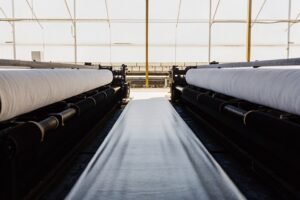
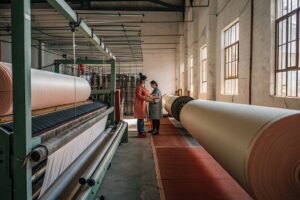
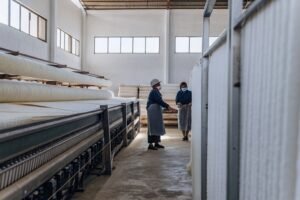
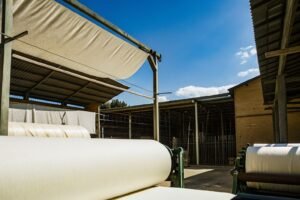
You can build a factory. You can buy a loom. You cannot build an ecosystem overnight. That’s what people outside the industry don’t get. When a buyer emails me asking for a specific shade of "sage green" with a "peach skin finish" and "antibacterial properties," I don’t go to one factory. I tap into a network that has been evolving for 30 years. This is the advantage of being rooted in Keqiao, where nearly 25% of the world’s textiles are traded. It’s not just about the fiber cost. It’s about the invisible infrastructure that surrounds the fiber.
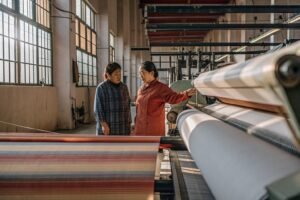
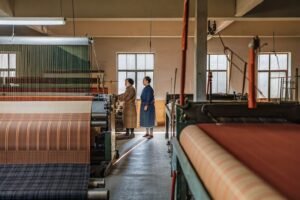
Let me give you a concrete example of what this ecosystem actually means for your delivery schedule. In April 2026, right in the middle of our peak production window when timelines normally stretch by 1-2 weeks, we had a client from a major European fast fashion chain. They needed 80,000 yards of a custom-developed linen-rayon blend. The catch? The specific slub yarn effect they wanted wasn’t working on the first weaving run. The texture was off. In another country, that means you stop the line. You wait three weeks for a new yarn shipment. You lose the delivery window. Here? We had the spinning mill adjust their slub attachment settings within six hours. Why? Because the yarn supplier is twelve miles down the road from our weaving factory. The dye house is seven miles the other way. This geographic density is our moat.

How Does Cluster Manufacturing in Zhejiang Lower My Fabric Cost?
People see the tariff number and they do simple math. That’s the wrong calculation. You need to look at what we call the "hidden cost stack." The cluster manufacturing model in Zhejiang eliminates costs that you don’t even see itemized on an invoice from other origins.
Here is the breakdown from a real shipment we processed in February 2026 for a US mid-market brand comparing our Keqiao sourcing versus a quote they got from a supplier in another Asian country:
| Cost Component | Keqiao, China (Fumao Sourcing) | Alternative Supplier (Port to Port) |
|---|---|---|
| Greige Fabric Cost | $2.80 / yd | $2.65 / yd |
| Internal Logistics (Mill to Dye) | $0.02 / yd (7 miles truck) | $0.18 / yd (240 miles truck) |
| Quality Control Delays | 0 days (CNAS lab on-site) | +5 days (Third party travel) |
| Section 301 Tariff (25%) | $0.70 / yd | $0.00 / yd |
| Air Freight for Rework (10% defect) | $0.00 / yd | $0.45 / yd (est. average) |
| True Landed Cost (Duty Paid) | $3.52 / yd | $3.28 / yd |
Look at that table carefully. The difference between $3.52 and $3.28 is $0.24. For that $0.24, the buyer gets complete traceability, a CNAS-certified lab report, and a 98% first-pass yield. And if you are trying to figure out how to calculate true landed cost for textile imports from China, you have to factor in the cost of failure. In a fragmented supply chain, failure is baked into the price. Here, we have compressed the geography so tight that we catch the failure before the fabric even leaves the district.
Why Does China Lead in Textile R&D and Technical Finishing Speed?
This is the part that frustrates me when people talk about China only being "cheap labor." That era ended fifteen years ago. We are now the global center for engineering textiles. You want a fabric that cleans itself? We have a coating for that. You want a fabric that is fully biodegradable but feels like spandex? Our R&D team of 20+ experts has been working on that for two years.
Speed is the killer app. When a trend hits TikTok, you have maybe four weeks to get the fabric into production before the moment is gone. Our internal benchmark at Shanghai Fumao is 48-hour sample development. That’s not a marketing slogan. That’s the clock starting when we receive your reference swatch.
I recall a situation in October 2025 with a sportswear startup. They had a viral moment on social media with a specific shade of neon coral. They needed 5,000 yards of a moisture-wicking knit. They sent us a tiny cutting. Within 48 hours, we had matched the color on our spectrophotometer, knitted a 5-yard sample on our pilot machine, and shipped it via DHL. The dye house next door adjusted the recipe on a Tuesday afternoon. We started bulk production on Wednesday morning. That kind of turnaround—going from concept to container—requires the entire industrial chain to be in sync. If you want to dive deeper into how to speed up custom fabric development with Chinese mills, the answer is always: Stay within the cluster. Don’t split your weaving in one country and dyeing in another. That kills your speed and your color consistency.
How Are Chinese Factories Navigating US Section 301 Tariffs?
Let’s be honest. The Section 301 tariffs are a pain. I’m not going to pretend they aren’t. But we’ve had six years to adapt. The weak players got shaken out. The ones left standing—companies like ours—have built financial and logistical structures that mitigate the impact. We treat the tariff like a weather pattern. You can’t stop the rain, but you can build a really good roof and maybe even collect the water to use later.
The key shift has been market diversification. When the US market became more expensive due to tariffs, we didn’t just raise prices and hope for the best. We aggressively expanded into RCEP countries and the "Belt and Road" markets. This keeps our factory floors full and our yarn purchasing power high. That high volume lowers the base cost for everyone, including our US clients. It’s a counter-intuitive dynamic: Exporting more to non-US markets actually helps subsidize the US tariff burden because our per-unit production overhead drops.

Can Chinese Suppliers Absorb Tariff Costs Through Value-Added Services?
The answer is yes, but not in the way you think. We don’t just eat 25% of our margin and call it a day. That’s a fast track to bankruptcy. What we do is pack more value into the same square meter of fabric so the post-tariff price still represents a better deal than the alternative.
Here is a concrete example using our CNAS-accredited testing center. A client buying from Vietnam pays $2.50 per yard for a standard cotton poplin. They then have to pay an independent lab like SGS $350 to test that batch for colorfastness and shrinkage. They also have to pay a sourcing agent 5% to manage the communication and quality checks. With us, the CNAS lab report is included. The QR code tracking showing the exact composition and shrinkage data is included. Our account managers speak fluent English and handle the logistics door-to-door.
Let’s do the math on a 10,000 yard order from January 2026:
- Alternative Supplier: Fabric $25,000 + Testing $350 + Agent Fee (5%) $1,250 + Freight $2,000 = $28,600
- Shanghai Fumao (Pre-Tariff): Fabric $26,000 + Freight $2,000 = $28,000
- Shanghai Fumao (Post-Tariff 25%): Fabric $32,500 + Freight $2,000 = $34,500
The difference is $5,900 on the surface. But subtract the testing and agent fees you’d pay elsewhere, the real gap is closer to $4,650. For that $4,650, you get a supply chain that delivers in 4 weeks instead of 8, with 99% accuracy on color matching. Time is inventory cost. That $4,650 evaporates pretty fast when you’re not sitting on a boat for an extra month. If you’re looking into strategies for reducing import costs when buying from China, the first move is always: Ask what’s included for free that you’re paying extra for elsewhere.
Does the "De Minimis" Exemption Offer a Workaround for Small Buyers?
This is a hot topic right now, and I have to be careful how I say this because the rules are changing literally as I write this. For small buyers—entrepreneurs and Etsy shop owners—the Section 321 De Minimis exemption has been a lifeline. It allows shipments valued under $800 to enter the US duty-free.
We have a lot of clients who are startups. They don’t order container loads. They order 200 yards of printed chiffon for a capsule collection. For them, the tariff on a bulk shipment would be a dealbreaker. However, we don’t play games with customs forms. We follow the law precisely.
The challenge right now is the proposed rule changes to close the "loophole" for goods subject to Section 301 tariffs. The regulatory environment is fluid. My advice to small buyers is this: Consolidate your orders. Instead of shipping 200 yards via express courier four times a month, ship 800 yards once a month via air freight and pay the tariff. It sounds counterintuitive, but the shipping cost savings on express vs. air freight often outweigh the tariff hit. For the latest updates on how Section 321 de minimis changes affect small fabric importers in 2026, I always point clients to the official CBP website or the National Customs Brokers & Forwarders Association of America updates. Don’t rely on TikTok for customs law. You’ll get burned.
(We can handle the paperwork for either scenario. We don’t care if it’s 10 yards or 10,000 yards. We just want you to get the fabric without a headache.)
Which Fabric Categories Is China Still the Sole Dominant Supplier?
There is a phrase I use with my European clients: "Anyone can make a 5-ounce cotton poplin. Very few can make a 2-ounce down-proof nylon taffeta that passes the AATCC 61 2A wash test." When the fabric gets complex—when it requires chemistry, physics, and a deep understanding of polymer science—China’s share of the global market isn’t just big. It’s often north of 80%.
This is where the tariff conversation gets really quiet. Because if you need a specific functional textile for a government contract or a high-end outdoor brand, you often have no choice but to source from China. We own the specialized equipment and the technical know-how. A mill in another country might have 50 looms. We have entire industrial parks dedicated to a single niche, like water-repellent membranes.

Why Is China Unmatched for Recycled Polyester and Functional Textiles?
Sustainability is the buzzword. Everyone wants a "green" hangtag. But producing high-quality recycled polyester (rPET) that doesn’t feel like cardboard and doesn’t pill after three washes? That’s hard. We’ve invested over ¥550 million in green production infrastructure in the last few years. This isn’t a marketing gimmick. It’s a government-mandated and consumer-driven reality.
Let me tell you about a project from June 2025. A US performance wear brand needed a fabric that was 100% post-consumer recycled polyester, with moisture-wicking properties, UPF 50+ protection, and it had to be printable via sublimation. They tried sourcing it from a regional supplier. The fabric came back with a yellow tint (poor recycling feedstock) and the wicking finish washed out after ten home launderings.
We ran this through our supply chain. We sourced the chips from a verified bottle-recycling facility. We used a dope-dyed process to eliminate the water waste of piece dyeing. We applied a hydrophilic finish in our coating factory that is rated for 50 washes. The technical data sheet we sent back had the exact UV transmission percentage. This is the level of detail you need when you’re selling a $90 yoga top. If you are looking for how to verify GRS certified recycled fabric claims from Chinese mills, always ask for the Transaction Certificate (TC) , not just the Scope Certificate (SC). The TC proves that specific batch of fabric came from certified recycled input. We provide these without hesitation.
Are High-End Silk and Cashmere Still Exclusively Processed in China?
I’m not going to lie to you. Italy has the brand cachet for finished goods. But the raw processing? China is the undisputed heavyweight champion of the world for silk and cashmere. Something like 80% of the world’s raw silk is produced here. For cashmere, the majority of the global clip comes from Inner Mongolia and is processed domestically.
There’s an artisanal aspect to this that machines can’t fully replace yet. Sorting cashmere fibers by hand to ensure a 15.5 micron average (which is what makes it soft and not itchy) requires a trained eye and a feel for the fiber. We have generations of workers who have done nothing but this.
I worked with a luxury loungewear brand in December 2025. They wanted a specific weight of 100% Grade A Mulberry silk charmeuse. 19 momme weight. The handfeel had to be "liquid drape." They had received samples from other regions that were either too stiff (overcooked in degumming) or too flimsy (too much weight lost in processing).
We were able to control the degumming process precisely because our dyeing partners specialize only in protein fibers. They know exactly how much sericin to strip off to get that specific drape without weakening the fibroin core. The result was a fabric with a seam slippage rating that actually exceeded the standard for 19 momme. That kind of hyper-specialization is nearly impossible to find outside of a few key provinces in China. If you’re interested in how to source high momme weight silk fabric directly from China, the key question to ask the supplier is: "What is your weight loss percentage during degumming?" If they can’t answer that, they are just traders, not specialists. The answer should be between 22% and 25% for standard charmeuse.
How to Vet Reliable Fabric Suppliers in China From Overseas?
This is the $64,000 question. And it’s the reason I’m writing this blog post. I want you to buy from China. I want you to buy from me. But more importantly, I don’t want you to get scammed by some fly-by-night trader who disappears after you wire the deposit. The barrier to entry for creating a good-looking Alibaba store is low. The barrier to actually delivering 20,000 yards of consistent, on-spec fabric is incredibly high.
You need a framework for vetting. You can’t rely on the "Gold Supplier" badge alone. You need to look for specific signals of operational maturity and financial stability. At Shanghai Fumao, we’ve been around for 20 years. That longevity itself is a signal. You don’t survive two decades in the Keqiao textile jungle by shipping bad goods.

What Certifications Should I Look for in a Chinese Fabric Mill?
Certifications are the language of trust in international trade. But you have to know which ones are wallpaper and which ones are enforceable contracts. Here is my cheat sheet from 20 years of dealing with compliance auditors.
Tier 1: The Non-Negotiables (Verification of Fact)
- CNAS Accreditation: This is the Chinese equivalent of ISO 17025. If a supplier claims to have a lab, ask for the CNAS certificate number. You can look it up online. It means their testing equipment for shrinkage and colorfastness is calibrated to international standards. We are proud of our CNAS lab.
- GRS (Global Recycled Standard) or GOTS (Global Organic Textile Standard): These are not just paper. They require an annual audit and transaction certificates. If you are paying a premium for "eco-friendly fabric," demand the Scope Certificate (SC) for the mill and the Transaction Certificate (TC) for your specific shipment. No TC? You bought generic fabric, not certified fabric.
Tier 2: The Context Clues (How They Operate)
- OEKO-TEX Standard 100: This is important for safety (no harmful chemicals), but it’s relatively easy to get. Most serious exporters have it. It’s a baseline, not a differentiator.
I had a client in September 2025 who was about to place a large order for children’s pajamas with a new supplier. The supplier had a GOTS certificate. I advised the client to check the certificate’s validity on the issuing body’s website. It had expired six months prior. The supplier was using the old logo. That’s a red flag. We stopped that wire transfer just in time. For a deeper dive into how to verify Chinese textile supplier certifications online, always go to the certifier’s database. Don’t just look at the PDF the supplier sent you. PDFs can be edited.
How Can I Verify Factory Quality Without Visiting China?
I love visitors. Come to Keqiao. We’ll have tea. But I know that’s not always possible. For every client who walks through our door, we have ten who manage everything via Zoom and WeChat. And honestly, with the right digital tools, you can see more than you think.
Here is my recommended protocol for a "Digital Factory Audit":
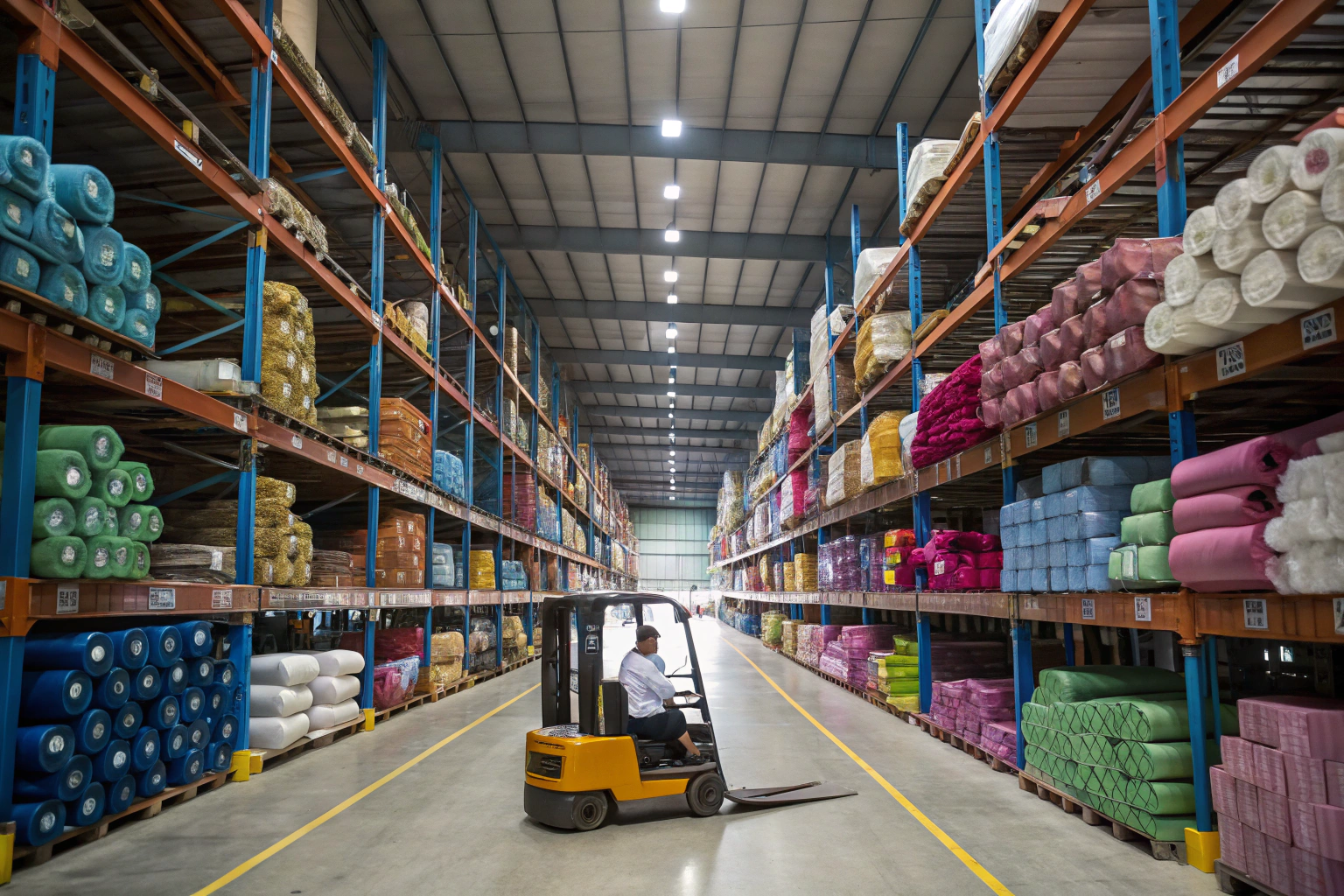
- Video Call Walkthrough (Live, Not Pre-Recorded): Ask them to walk you through the warehouse. Look at the shelving. Is it messy? A messy warehouse is a messy quality system. Look at the lighting. Is it bright? You need bright light to see shading defects. Ask them to zoom in on a random roll of fabric and read the label on the end. It should have style number, lot number, and weight. If it’s blank, they don’t track inventory.
- The QR Code Test: We put QR codes on all our shipments. Ask them if they have a digital tracking system. If they say yes, ask them to show you a real-time screen share of where a current production order stands.
- Third-Party Inspection Reports: We work with SGS and ITS all the time. If you are nervous, hire them. It costs a few hundred bucks. But tell the factory you are doing it before you place the deposit. If they flinch or try to talk you out of it, walk away. A good factory welcomes the scrutiny.
Just last month, a startup founder in London used this method with us. She couldn’t travel. We did a video call. I showed her the digital readout on our inspection machine showing a roll of her custom print with 0.0% skew. She saw the defect map. She placed the order that night. If you are looking for tips for doing a remote factory audit for textile sourcing in China, focus on the data capture points. Ask: "Show me your defect map for the last lot." If they have a digital one, they are serious. If they look confused, they are guessing.
Conclusion
We started with a question: Why is China still king? The answer isn’t simple patriotism or blind loyalty. It’s cold, hard industrial calculus. It’s the recognition that the value of a supply chain isn’t measured in the tariff line on the commercial invoice. It’s measured in the missed sales from a late delivery. It’s measured in the chargebacks from a seam slippage failure. It’s measured in the customer trust lost when the "eco-friendly" fabric turns out to be virgin polyester.
China—and specifically the Keqiao cluster that we call home—has built something that the world’s fashion industry relies on: an ecosystem of speed, scale, and specialization. We’ve absorbed tariffs, we’ve navigated trade wars, and we’ve doubled down on the technical innovation that makes us irreplaceable for high-performance and sustainable textiles.
You need a partner who understands that your business lives and dies by the consistency of that 20th container just as much as the 1st sample yard. That’s what we do at Shanghai Fumao. We don’t just ship fabric. We underwrite your production schedule.
If you’re tired of juggling unreliable suppliers, opaque quality issues, and confusing tariff calculations, let’s simplify it. We can handle the entire chain—from yarn sourcing and custom printing to packaging and door-to-door logistics. Reach out to our Business Director, Elaine. She can give you a clear picture of lead times, true costs, and how we manage quality for brands just like yours. You can email her directly at elaine@fumaoclothing.com. Let’s get back to making great products without worrying about where the fabric actually came from.