
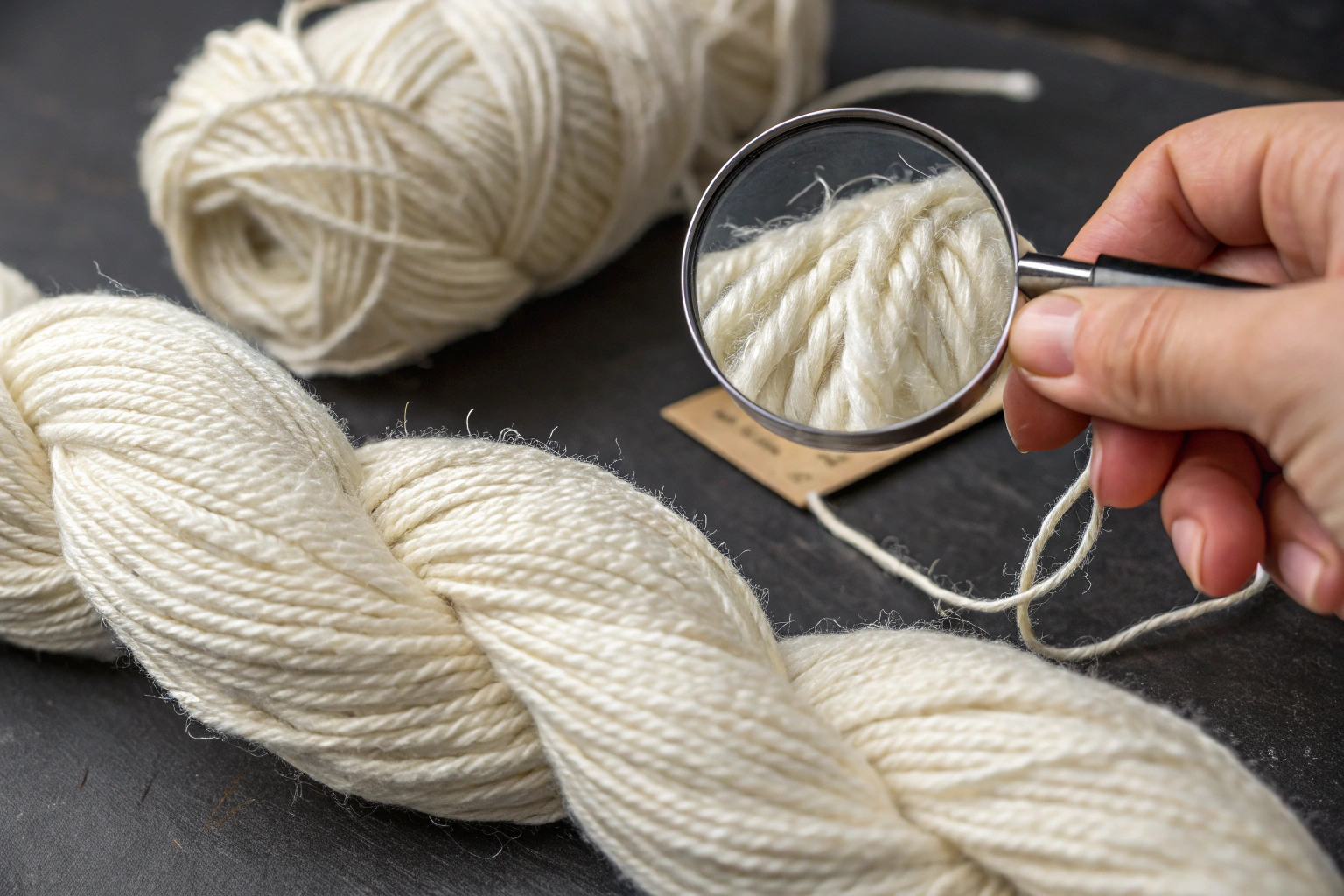
You pull a brand new T-shirt over your head. It feels like cardboard. Scratchy. Stiff. You check the label. It says 100% Cotton. You think to yourself: Shouldn’t this be soft? I paid good money for this. You wash it once. Still stiff. Twice. Maybe a little better. But by the time it actually feels good against your skin, the collar is bacon-necked and the hem is curling up like a potato chip. This is one of the most common frustrations in the apparel world. As the owner of a mill that produces millions of yards of jersey knit every year, I hear this from brands constantly. They spec a "100% Combed Cotton" fabric and assume softness is a guarantee. It is not. Softness is a science. And the biggest, most overlooked variable in that science is Yarn Twist.
The short answer is this: Lower twist equals softer hand feel. Higher twist equals durability and crispness. At Shanghai Fumao, we manipulate twist levels—measured in Twists Per Inch (TPI) or Twist Factor (Alpha) —to dial in the exact hand feel a T-shirt needs. If you want a vintage-soft, slubby tee that feels like you have owned it for ten years on day one, we drop the twist factor down to 3.2 – 3.4. If you want a crisp, clean dress shirt that holds its shape and doesn’t pill, we crank it up to 4.2 – 4.5. It is a trade-off. You can rarely have maximum softness and maximum durability in the same yarn. Understanding this balance is the key to designing a T-shirt that does not just look good on a website model, but feels incredible on the customer’s actual body.
But there is more to it than just a single number. The type of twist, the direction of the twist, and how that twist interacts with the knitting machine all play a role. I want to take you inside the spinning room and show you exactly how we adjust these tiny gears to change the way your shirt feels. Stick with me, because this is the kind of detail that separates a $12 tee from a $60 tee.
What Is the Difference Between Low Twist and High Twist Cotton?
Let me start with the absolute basics because if you get this wrong, everything else falls apart. Yarn twist is exactly what it sounds like: the number of times the cotton fibers are spun around each other to form a single strand. Think of it like wringing out a wet towel. If you wring it loosely, the towel stays fluffy and thick. If you wring it as hard as you can, the towel becomes a tight, hard rope. Cotton fibers work the exact same way.
Low Twist Yarn has fewer twists per inch. The fibers are more parallel and less tightly bound. This leaves Air Pockets between the fibers. Air is soft. Air feels good. It also allows the individual fiber ends to protrude slightly from the yarn surface, creating a Peach Fuzz effect. This is why a low-twist T-shirt feels cozy and broken-in from the first wear. The trade-off is durability. Because the fibers are not locked down tightly, they can pull loose during washing. That is Pilling. They can also snap more easily under tension. That is Poor Seam Strength.
High Twist Yarn has many twists per inch. The fibers are compressed and locked together in a tight helix. The yarn is smoother, denser, and has a Cool, Crisp Hand. It resists pilling because the fiber ends are tucked inside the yarn structure. It is stronger. It holds up to industrial laundering. But it is also stiffer. It lacks that immediate "worn-in" comfort. It takes time and many wash cycles to relax the twist and soften up.
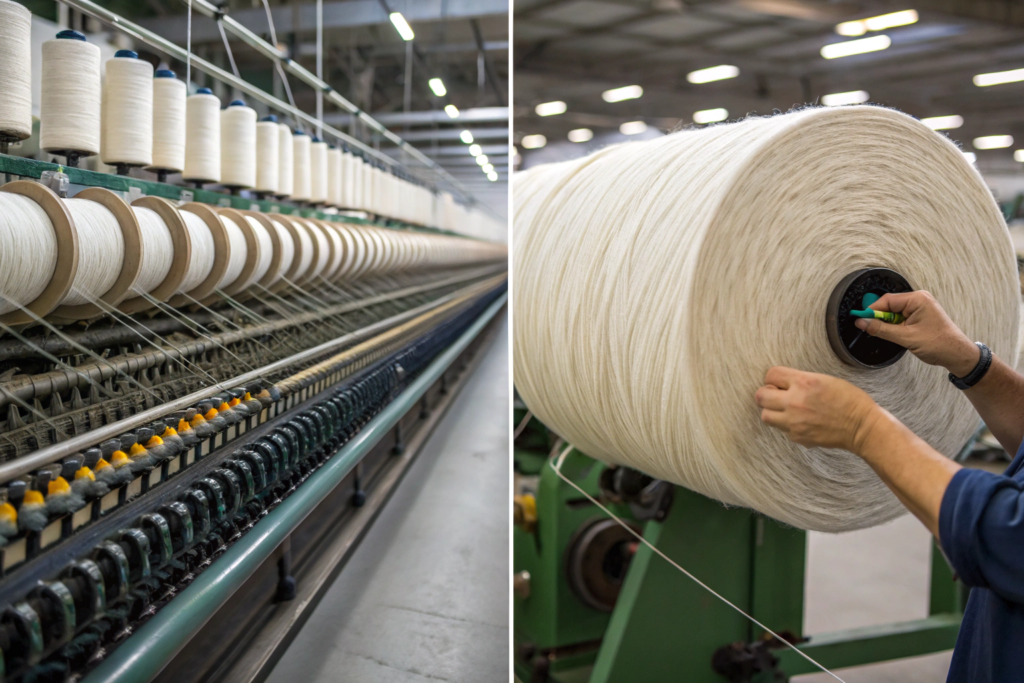
In our spinning partner mill in Keqiao, we use the Ring Spinning method for most premium T-shirt yarns. This is the traditional method that produces the highest quality yarn with true character. We set the Twist Multiplier (TM) based on the yarn count. For a standard 30/1 Ne (English Cotton Count) yarn—the workhorse of the T-shirt industry—here is how the twist levels play out in real life:
| Yarn Type | Twist Multiplier (TM) | Hand Feel Description | Best Application | Pilling Risk |
|---|---|---|---|---|
| Low Twist (Soft) | 3.2 – 3.4 | Fluffy, soft, slubby, vintage feel | Premium fashion tees, loungewear | Moderate |
| Average Twist | 3.6 – 3.8 | Balanced, smooth, standard jersey | Everyday basics, promotional tees | Low |
| High Twist (Crisp) | 4.0 – 4.4 | Smooth, dense, cool, dressy | Polo shirts, dress shirts, uniform tops | Very Low |
You can see the trade-off clearly. You pick the twist based on the lifestyle of the garment. A skate brand wants the vintage softness of low twist. A hotel uniform supplier wants the industrial durability of high twist.
How Does Twist Factor (Alpha) Compare to TPI?
This is where we get into the weeds a bit, but it is important for anyone who wants to read a spec sheet properly. You will see two different measurements for twist: TPI (Twists Per Inch) and Twist Factor (Alpha or TM) .
TPI is simple. It is just the physical count of how many spirals the yarn makes in one inch. A 30/1 yarn with 18 TPI is a different animal than a 30/1 yarn with 22 TPI.
The problem with TPI is that it does not account for the Yarn Thickness. A thick yarn (like a 10/1) with 18 TPI will be twisted much more tightly than a thin yarn (like a 50/1) with 18 TPI. The angle of the twist helix is steeper on the thick yarn.
That is where Twist Factor (Alpha) comes in. It is a mathematical formula that normalizes the twist based on the yarn count. It allows you to compare the intensity of twist across different yarn sizes. The formula for Alpha (metric) is:
Alpha = TPM (Twists Per Meter) * sqrt(Tex) / 1000
You do not need to memorize the formula. You just need to know that when we talk to our spinning technicians, we use Alpha, not TPI. We say, "Give me a 30/1 with an Alpha of 3.5 ." That guarantees a consistent soft hand regardless of whether we are running 26/1 or 36/1 on the same knitting machine. It is the secret code of the spinning room.
Why Does Low Twist Yarn Pill Faster?
You might be thinking, "Okay, I want the softest shirt possible. Give me the lowest twist you have got." I hear this from startup founders all the time. They want the ultimate soft T-shirt. And six months later, they email me asking why their five-star reviews turned into one-star rants about "fabric balls."
Pilling is the formation of tiny, tangled balls of fiber on the surface of the fabric. It happens because of Abrasion. Under your arms. Against a backpack strap. In the washing machine. Low twist yarn pills faster for a very simple reason: The fibers are not anchored.
Think of a low twist yarn like a bundle of dry spaghetti held together by a single loose rubber band. You can pull a piece of spaghetti out easily. When the T-shirt rubs against itself, those loose fiber ends get pulled out of the yarn. They tangle with other loose fibers. They form a little knot. That is a pill.
In a high twist yarn, the fibers are held together by multiple tight rubber bands. The friction of the twist itself locks them in place. They cannot escape to form pills.
We combat this in our Low Twist Premium Line by using Long-Staple Cotton. Remember the Xinjiang cotton I mentioned in the denim article? Same principle applies here. Longer fibers ( > 1.25 inches) have more contact area with each other. Even with a low twist, they hold together better than short, stubby fibers. We also apply a light Enzyme Wash at the fabric level. The enzymes eat the tiny, loose fiber ends that are already protruding. We remove the "fuzz" before the customer ever wears it. It reduces the pilling potential significantly. For a deeper look at the science, check this resource on how to prevent pilling on low twist cotton jersey fabrics for premium t-shirts.
How Does Yarn Twist Direction Change Fabric Drape?
This is the secret geometry of textiles that most people never see, but they definitely feel. You know that T-shirt where the side seam spirals around to the front of your body after one wash? Or that jersey dress that always twists to the left? That is not bad sewing. That is Twist Torque or Spirality. And it is caused by the direction of the yarn twist.
Cotton yarns are typically spun with either an S-Twist or a Z-Twist. This refers to the direction the fibers spiral. Hold a yarn up vertically. If the spirals angle downward from left to right (like the center stroke of the letter S), it is S-Twist. If they angle downward from right to left (like the stroke of a Z), it is Z-Twist.
The vast majority of single cotton yarns are Z-Twist. Why? Because most ring-spinning frames are built to spin clockwise. That is the industry default. The problem is that a Z-twist yarn has a natural tendency to untwist slightly when it gets wet and relaxed. When you knit that Z-twist yarn into a jersey fabric, that untwisting force creates a Torque. The fabric wants to rotate in the opposite direction of the twist. The result is a skewed garment.
At Shanghai Fumao, we manage this by using Plied Yarns for our premium, dimensionally stable T-shirts. Plied yarn means we take two single yarns (usually both Z-twist) and twist them together in the Opposite Direction (S-twist). The S-twist of the plying balances out the Z-twist of the singles. The internal torque cancels out. The yarn is Balanced. The fabric lies flat. The side seam stays exactly where the sewing operator put it.
This is why a cheap 2-ply T-shirt from a discount store can still twist. They used cheap singles yarn with excessive twist to try and make it stronger. They did not balance the ply twist properly. The torque is locked in, waiting for the first wash to explode.
What Is the Difference Between S-Twist and Z-Twist in Jersey?
Let me give you a practical example from our knitting floor. We run Single Jersey machines (the machines that make standard T-shirt fabric). These machines knit in a circle. The yarn feeds in continuously.
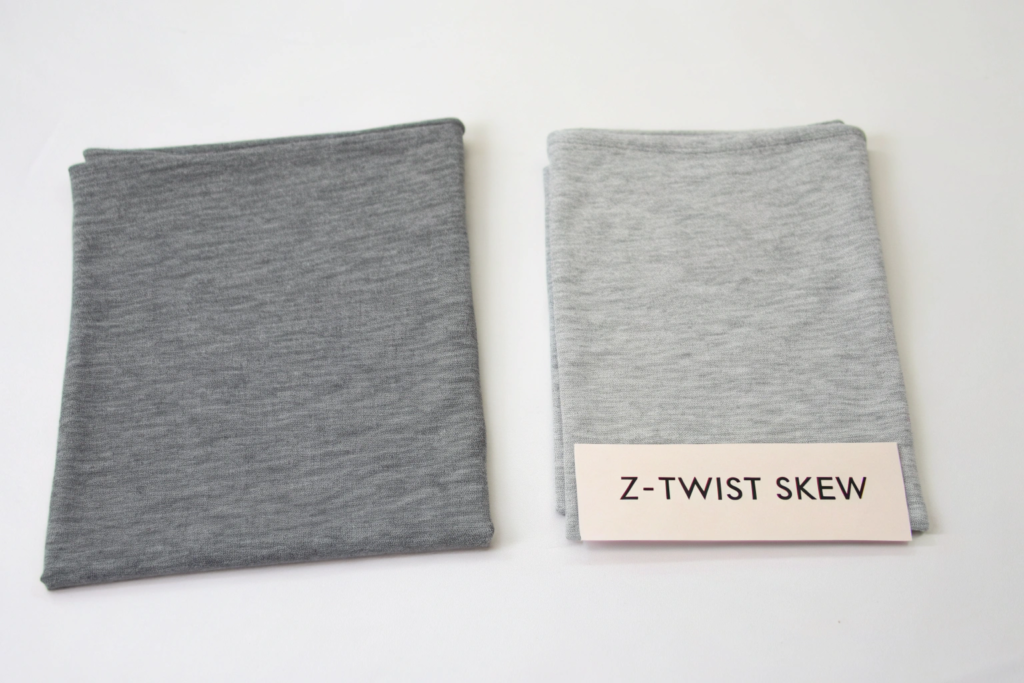
If we use a standard Z-Twist Singles Yarn, the fabric comes off the machine with a noticeable Spiral Angle. We measure this angle. The industry standard acceptable skew is < 5% . For a cheap T-shirt, 5% skew is noticeable. The hem looks crooked.
To fix this, we have two options:
- Compacting: We run the fabric through a Tube Compactor that uses steam and pressure to "set" the twist and reduce the skew. This works, but it is a band-aid. The torque is still in the yarn. It can come back after repeated home laundering.
- Alternate Feed Yarn: This is the pro move. We use a combination of S-Twist and Z-Twist yarns in alternating feeders on the knitting machine. Every other course of knitting has an opposite twist. The torque cancels out inside the fabric structure. This creates a fabric that is Torque-Free. It does not skew. It does not twist. It drapes perfectly straight.
This is non-negotiable for high-end women’s fashion or for any garment with engineered stripes. If you print a horizontal stripe on a fabric with 5% skew, the stripe looks like a drunken snake. It ruins the design. Using S/Z twist yarns is more expensive because S-twist yarn is a special order. But for the right application, it is worth every penny.
Why Do Some T-Shirts Twist After Washing?
This is the direct consequence of everything I just explained. The washing machine is the trigger. You take a dry, stable-looking T-shirt. You soak it in hot water. The water acts as a Lubricant. It allows the cotton fibers to swell and slide past each other. The latent torque in the unbalanced Z-twist yarn is released. The fibers want to return to their natural, relaxed state. They untwist microscopically. The cumulative effect of millions of fibers untwisting is a visible rotation of the entire garment.
You can see this effect in extreme form with Crepe Yarns. Crepe yarns have an Extreme Twist (sometimes up to 80 TPI). They are twisted so hard they kink up on themselves like a phone cord. When you weave or knit them into fabric and get them wet, they go crazy. They shrink and crinkle and create that pebbly texture. That is torque on steroids.
For a standard T-shirt, we want to avoid that. The best defense is a combination of Balanced Ply Yarn, Resin Finishing, and Pre-Shrinking. At our mill, we run all jersey fabric through a Relaxation Dryer after dyeing. We overfeed the fabric into the dryer. We let it shrink and twist in a controlled environment before we cut it. We stabilize the dimensions. That way, when the customer washes it at home, the "damage" is already done. The shirt holds its shape. For more technical guidance, see this article on how to test and control fabric spirality in single jersey knit t-shirts.
How Does Twist Affect Dye Absorption and Color Depth?
This is where the art of fabric development really comes into play. You can take the exact same dye recipe, the exact same dye bath, the exact same dye cycle time—and end up with two completely different shades of blue. The only variable? The twist level of the yarn.
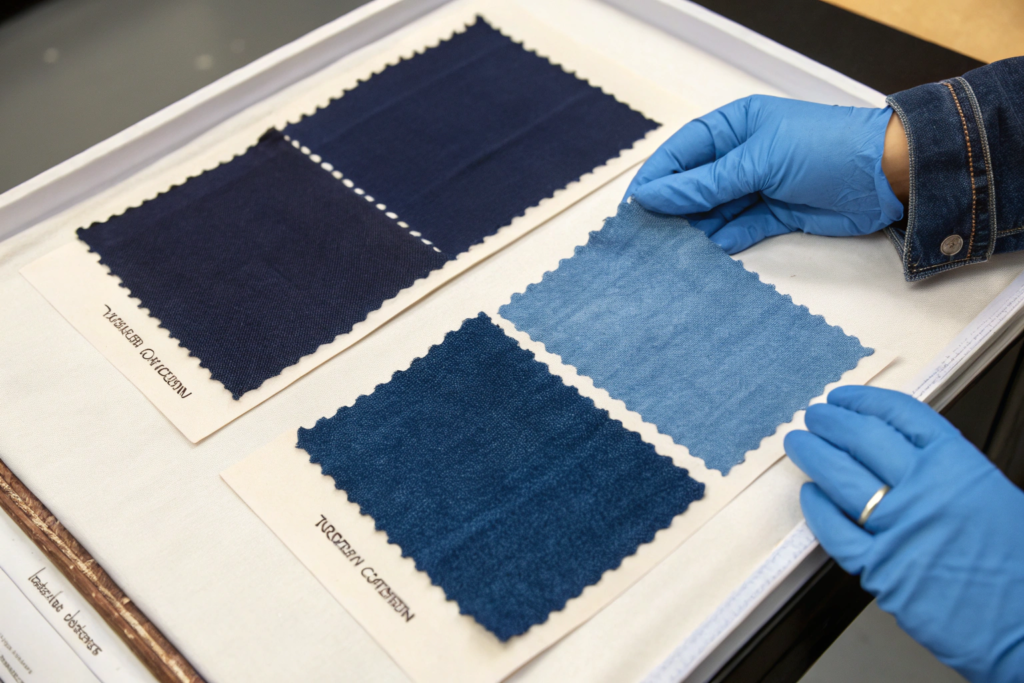
Low Twist Yarn absorbs more dye. Period. Why? Because it is bulkier and more open. The dye liquor can easily penetrate the loose structure of the yarn and reach the inner core of the fibers. The surface area available for dye uptake is larger. The result is a Deeper, Richer Color. The color looks saturated. It looks expensive. This is why those ultra-soft, vintage-feel tees often have a beautiful, velvety depth to their black or navy.
High Twist Yarn reflects more light. Because the fibers are compressed so tightly, the surface of the yarn is smoother and more compact. It acts like a mirror. The light hits the surface and bounces off before penetrating deep into the yarn. This makes the color appear Lighter and Brighter. It has a Crisp Luster but less depth. You might notice this on a high-twist polo shirt. The red looks almost fluorescent or chalky compared to the deep, wine-red of a low-twist tee.
This has huge implications for production matching. If we are making a T-shirt to match a woven collar or a printed label, we have to adjust the dye formula to account for the twist of the body fabric. If we use the woven recipe on the low-twist jersey, the shirt will come out too dark.
In our lab at Shanghai Fumao, we use a Spectrophotometer to measure Color Depth (K/S Value) . A low twist 30/1 jersey will typically have a K/S value 15-20% higher than a high twist 30/1 jersey dyed in the same bath. That is a massive, visible difference. We compensate by reducing the dye concentration or shortening the dye cycle for the low twist fabric. It is a delicate balancing act.
Why Do Heather Grey Fabrics Use Different Twist Levels?
Heather grey is the most popular T-shirt color in the world. It is also a unique case study in twist engineering. True heather grey is not dyed. It is made by blending White Cotton with Black (or Grey) Polyester or Viscose.
The visual effect of heather—that heathered, melange, salt-and-pepper look—is directly controlled by twist. If you use a High Twist yarn, you compress the white and black fibers tightly together. The black fibers get buried inside the yarn. The fabric looks more like a solid, muddy grey. You lose the distinct speckled contrast.
If you use a Low Twist yarn, the yarn is bulkier and more open. The black fibers are more likely to sit on the surface of the yarn. They pop visually. You get that crisp, high-contrast heather look that is so desirable.
We take this a step further with Injected Slub Yarns. We intentionally vary the twist during the spinning process to create thick and thin places. In the thick places (low twist), the black fibers bloom out. In the thin places (high twist), the black fibers recede. This creates a beautiful, irregular, vintage heather pattern that cannot be replicated with piece dyeing. For more on this topic, check out how to achieve high-contrast heather effects using low twist melange yarn spinning techniques.
How Does Mercerization Interact with Yarn Twist?
This is an advanced combination that creates the ultimate premium T-shirt. We have a whole other article on mercerization, but here is the specific intersection with twist.
Mercerization is the treatment of cotton with caustic soda under tension. It makes the fiber swell, increases luster, and improves dye uptake. But if you mercerize a Low Twist yarn, you run into a problem. The caustic soda makes the cotton fibers so slippery and swollen that the low twist is not strong enough to hold them together. The yarn can actually Untwist or Disintegrate under the tension of the mercerizing machine.
Therefore, Mercerized Cotton is almost always High Twist. You need that initial tight twist to survive the mercerization process. Once the yarn is mercerized and the fibers are permanently swollen and rounded, the yarn becomes incredibly smooth and strong.
So, what if you want the softness of low twist but the sheen of mercerization? We use a technique called Double Mercerization or we mercerize the Fabric instead of the yarn. We knit a low twist greige fabric. Then we run the whole roll through the mercerizing range. This locks the low-twist structure in place while giving the surface fibers that silky sheen. It is the best of both worlds: soft and fluffy on the inside, shiny and smooth on the outside. This is the secret behind those $80 "luxury slub" tees.
How Do You Test Yarn Twist Consistency in Bulk Production?
This is the unglamorous but absolutely essential part of making a great T-shirt. You can design the perfect fabric on paper. You can nail the lab dip. But if the spinning mill lets the twist level drift during bulk production, the entire order is compromised. One batch of 30/1 with an Alpha of 3.8 sewn next to a batch with an Alpha of 3.4 will have a different shrinkage rate and a different color uptake. You get Shade Variation across the same style. It is a quality control nightmare.
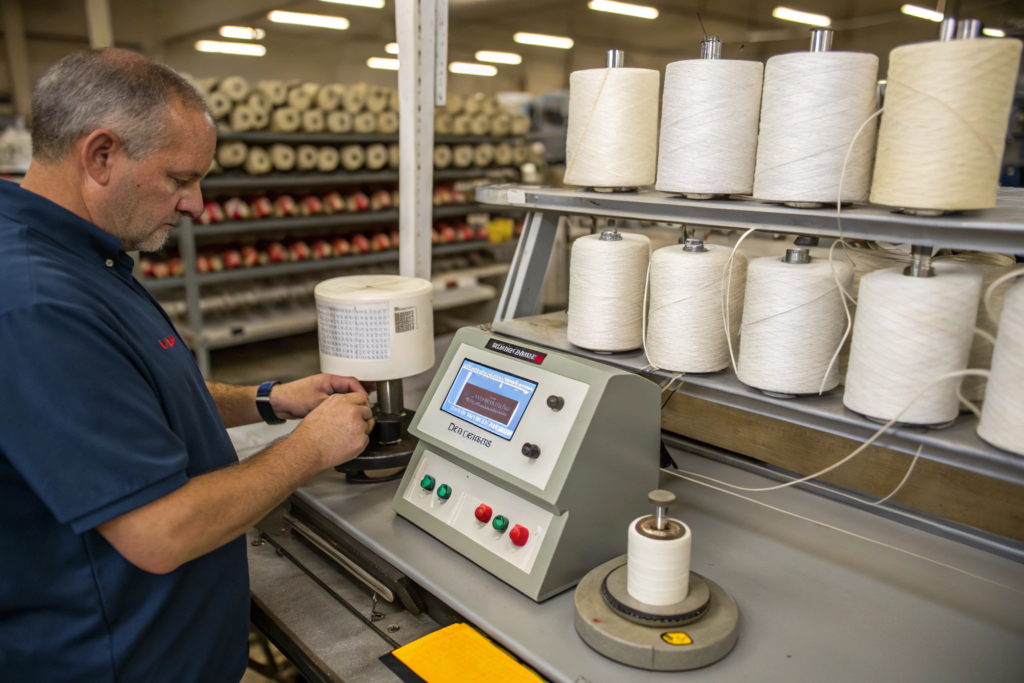
At Shanghai Fumao, we test every single lot of yarn that comes into our knitting mill. We do not trust the spinner’s certificate. We verify it ourselves. We use an Electronic Twist Tester that conforms to ASTM D1422.
The process is simple but rigorous. We take a sample from 10 different cones in the shipment. We clamp a length of yarn in the machine. The machine untwists it until the fibers are perfectly parallel. The digital counter tells us the exact number of twists.
But the type of test matters. There are two methods:
- Direct Counting Method: We untwist the yarn until the fibers are parallel. This is the most accurate. It takes about 60 seconds per test.
- Untwist-Retwist Method: We untwist the yarn and then twist it back up in the opposite direction. This is faster, but it can be less accurate for single yarns because of fiber slippage.
We use the Direct Count method. It is slower, but it gives us the true number. Our tolerance is tight. For a spec of Alpha 3.6, we accept a variation of +/- 0.1. If a batch comes in at Alpha 3.9, we reject it. That yarn will knit up too stiff. It will not match the approved hand feel sample. This strict incoming inspection prevents 90% of the downstream issues with shrinkage and dyeing.
What Is the ASTM Standard for Yarn Twist Measurement?
For buyers who want to include this in their quality manual, the relevant standard is ASTM D1422 – Standard Test Method for Twist in Single Spun Yarns by the Untwist-Retwist Method.
I recommend specifying the Direct Counting Method (Option 1 in the standard) for T-shirt yarns. It avoids the errors introduced by the "untwist-retwist" process on soft, low-twist cotton.
The key parameters in the test report you should look for are:
- Nominal Twist: What it is supposed to be.
- Average Twist (TPI): What we actually measured.
- Coefficient of Variation (CV%): This is the most important number. It tells you how consistent the twist is from cone to cone. A good mill will have a CV% < 3.5% . A bad mill will be > 6%. High CV% means the yarn varies wildly. Some parts of the shirt will be soft, some will be stiff. It is a mess.
We provide these test reports to any client who requests them. It is part of the transparency we offer. You do not have to take our word for it that the yarn is soft. You can see the data.
How Do You Measure Hairiness and Its Effect on Hand Feel?
Twist is not the only factor. Hairiness is the other side of the coin. Hairiness is a measure of how many fiber ends are sticking out of the yarn core. You measure it with a Uster Tester or a Zweigle Hairiness Tester. The unit is Hairs per Meter.
Low twist yarns are naturally hairier. That is the "peach fuzz" I mentioned. But there is Good Hairiness and Bad Hairiness.
- Good Hairiness: Short, fine fibers ( < 3mm) that create a soft, velvety hand feel. This is desirable.
- Bad Hairiness: Long, wild fibers ( > 5mm) that tangle and form pills instantly. This is a defect.
We control this by Combing the cotton. Combing removes the short fibers. You are left with long, uniform fibers. When you spin these with a low twist, you get a nice, even halo of short fuzz. You do not get the long, rogue fibers that cause pilling. It is like the difference between a well-groomed beard and a wild, tangled bush. Both are hairy, but one is controlled and soft. The other is a mess.
If you want to dive deep into the numbers, here is a reference on how to interpret Uster hairiness index values for ring-spun cotton yarn quality.
Conclusion
The softness of a T-shirt is not magic. It is not just "100% Cotton." It is a deliberate, measurable, and controllable engineering decision. We have traced the thread from the spinning frame to the finished garment. We have seen how a simple number—the Twist Factor—dictates whether a shirt feels like a cozy cloud or a stiff piece of cardboard. We explored the geometry of S-twist and Z-twist, and how it can make a shirt hang straight or twist into a spiral. We looked at the chemistry of dyeing and how a loose yarn drinks up color to create that rich, expensive depth. And we looked at the quality control measures that ensure every shirt in the batch feels exactly the same.
At the end of the day, the perfect T-shirt is a compromise. You balance Softness (Low Twist) against Durability (High Twist). You balance Rich Color (Low Twist) against Luster (High Twist). At Shanghai Fumao, we do not guess. We measure. We test. We dial in the Alpha to match the exact hand feel you want for your brand.
If you are tired of T-shirts that feel like sandpaper or twist into knots after one wash, let’s talk about the yarn behind the fabric. We can send you a hand feel matrix with different twist levels so you can feel the difference for yourself.
Reach out to our Business Director, Elaine, at elaine@fumaoclothing.com. Tell her what kind of T-shirt you are trying to build. Soft vintage? Crisp uniform? She will get the right yarn sample in your hands.








