
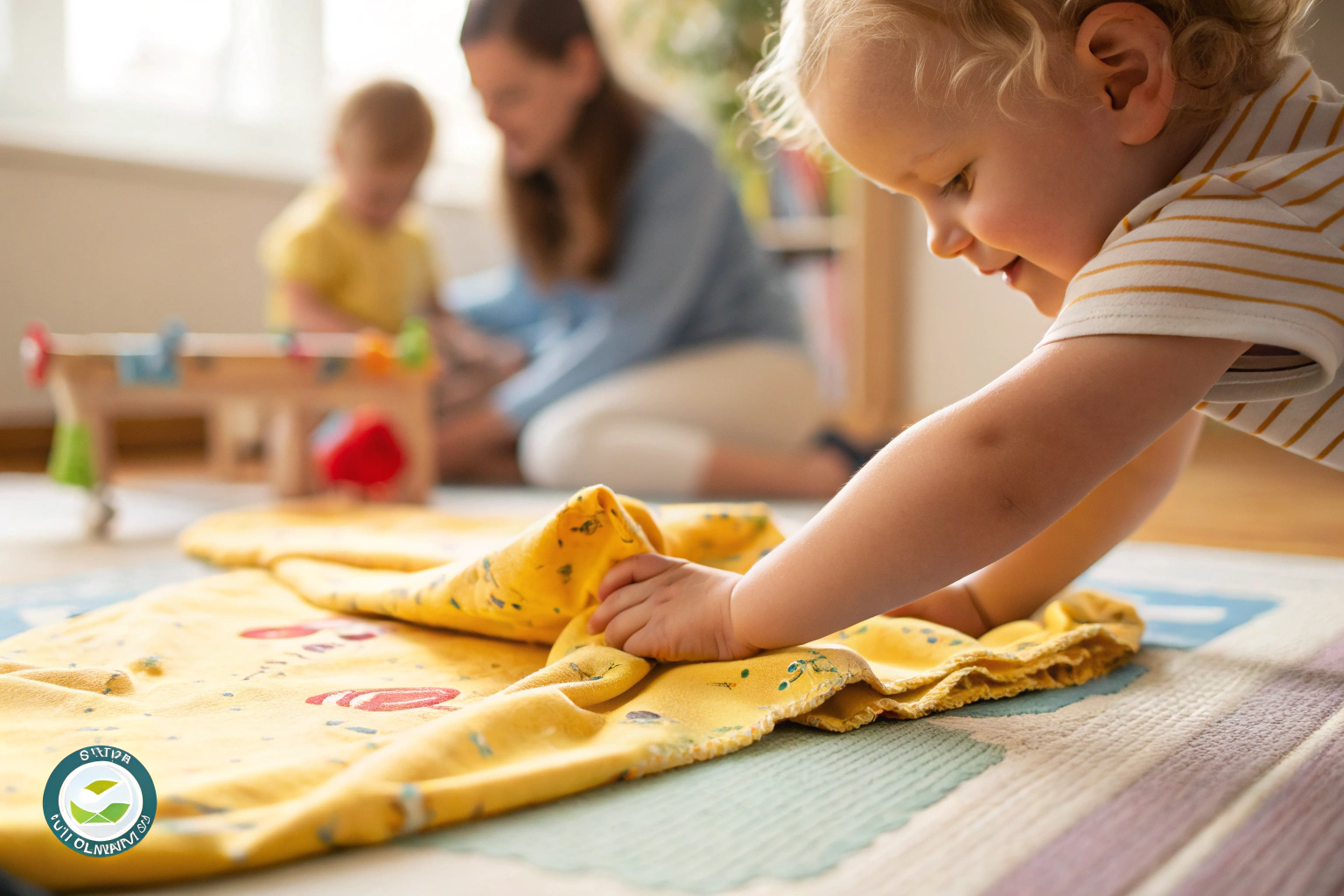
Let me tell you about a conversation that happens in my office at least once a month now. A US brand owner sits down, usually looking exhausted. They’ve just spent six months dealing with a kids’ wear collection that should have been their biggest success. The designs were adorable. The marketing was on point. But the fabric failed them. A toddler wore the leggings twice, and the knees pilled into a fuzzy mess. A baby’s sensitive skin reacted to the "100% cotton" onesie that apparently wasn’t as pure as advertised. A mom left a one-star review with a photo of a shrunken dress next to a brand new one, captioned "This was supposed to be a 3T." The brand owner is here because they can’t afford another season like that. They’ve heard through the grapevine—from other brand owners, from sourcing groups, from industry forums—that Shanghai Fumao has become the go-to for kids’ wear fabric. And they want to know why. The answer is simple, but it’s built on a mountain of unglamorous, meticulous work. We don’t just sell "kids’ fabric." We sell peace of mind for the most demanding, most vocal, and most litigious customer on earth: the American parent.
The reason US brands are switching to Shanghai Fumao for kids’ wear fabric boils down to one thing: we have aligned our entire production system with the non-negotiable requirements of the US children’s apparel market. That means rigorous, verifiable compliance with CPSIA (Consumer Product Safety Improvement Act) standards for lead and phthalates. It means OEKO-TEX Standard 100 certification at the strictest Class I level (baby articles). It means GOTS-certified organic cotton with full transaction traceability. It means fabric engineering specifically for the abuse that kids dish out—superior abrasion resistance for crawling knees, high colorfastness for endless washes, and dimensional stability so a 3T doesn’t become a 2T after one dry cycle. And it means a supply chain that understands the speed and predictability required for the back-to-school and holiday seasons. We’ve become the behind-the-scenes partner for brands that want to build a reputation for quality and safety, not just chase the next viral print.
I’m going to walk you through exactly what makes kids’ wear fabric different from adult apparel fabric—and why cutting corners here is ten times more dangerous than anywhere else in fashion. I’ll explain the specific testing we do that most adult fabric mills never even consider. I’ll show you the data on why our fabrics survive the "toddler test" when cheaper alternatives fail. And I’ll give you the checklist of what to demand from any supplier claiming to offer "kids’ safe" fabric. Because when you’re making clothes for the smallest humans, "good enough" isn’t good enough. It has to be perfect.
CPSIA Compliance and Safety Certifications That Matter
Let’s start with the legal reality. If you sell children’s apparel in the United States—specifically for kids 12 and under—you are legally required to comply with the Consumer Product Safety Improvement Act (CPSIA) . This is not a suggestion. It’s not a nice-to-have certification. It’s federal law, enforced by the Consumer Product Safety Commission (CPSC). Violations can result in massive fines, forced recalls, and even criminal penalties.
The two biggest CPSIA requirements for fabric are:
- Total Lead Content: Surface coatings and accessible substrate materials must contain no more than 90 parts per million (ppm) of lead. This is stricter than the adult standard.
- Phthalates: Children’s products and child care articles must not contain more than 0.1% of certain restricted phthalates (DEHP, DBP, BBP, DINP, DIDP, DnOP). Phthalates are plasticizers often found in soft plastics and some print pastes.
Many general adult fabric suppliers are completely unaware of these requirements. They’ll sell you a beautiful printed polyester fabric with a soft hand, and it will be loaded with phthalates from the printing process. You make it into a baby blanket. You sell it. A consumer advocacy group tests it. They find phthalates at 15%. The CPSC issues a recall. Your brand is now publicly associated with "toxic baby products." That is a brand death sentence.
At Shanghai Fumao, CPSIA compliance is not an afterthought. It’s built into our material sourcing. We use only phthalate-free plasticizers in our soft prints. We source dyes and auxiliaries that are certified lead-free. And we test every production batch through a CPSC-accepted third-party laboratory to generate the Children’s Product Certificate (CPC) that you, the brand owner, need to legally sell your products.

What Is the Difference Between OEKO-TEX Class I and Standard?
OEKO-TEX Standard 100 is a globally recognized certification for textile safety. But there’s a crucial distinction that many buyers miss: the product class.
- OEKO-TEX Standard 100, Class I: This is for baby articles. It applies to products intended for babies and toddlers up to 36 months old. The limit values for harmful substances are the strictest possible. This includes testing for formaldehyde, heavy metals, pesticides, and allergenic dyes at levels safe for a baby to put in their mouth. Saliva and perspiration resistance are tested.
- OEKO-TEX Standard 100, Class II: This is for products with direct skin contact. This covers most adult apparel (t-shirts, dresses, underwear). The limits are still rigorous but less strict than Class I.
- OEKO-TEX Standard 100, Class III: For products with no or minimal skin contact (jackets, coats).
- OEKO-TEX Standard 100, Class IV: For decoration materials (curtains, tablecloths).
A supplier might proudly say "We are OEKO-TEX certified!" But if their certification is only for Class II, that fabric is not certified safe for a baby to mouth. This distinction is critical for infant apparel, blankets, and anything that goes near a crib.
At Shanghai Fumao, our entire kids’ wear fabric range is certified to OEKO-TEX Standard 100, Appendix 6, Class I. Appendix 6 is the most recent, most comprehensive version, which includes stricter limits on substances like bisphenol A (BPA). This is the gold standard. When a US brand buys our baby rib knit or our organic cotton interlock, they can confidently state that the fabric meets the world’s strictest independent safety standard for infant products. This guide on understanding OEKO-TEX certification classes for baby products explains the limits in detail.
How Do You Verify a Supplier’s CPSIA Test Reports Aren’t Fake?
This is the question every kids’ wear brand needs to ask. Just like GOTS certificates, CPSIA test reports can be fabricated or misrepresented. A supplier might send you a test report from 2022 that is no longer valid, or a report for a different fabric that they claim "is similar."
Here is the verification checklist I recommend to my clients:
1. Check the Lab’s Accreditation
The CPSC maintains a list of CPSC-Accepted Testing Laboratories. The test report must come from a lab on this list. If the lab name is not on the CPSC list, the report is not valid for CPC generation. You can search the list here: CPSC Accepted Labs Search.
2. Verify the Test Date
CPSIA requires periodic testing. For children’s fabric, a reasonable testing frequency is annually for a continuing production program. A test report older than 12 months should be considered expired. A new test should be run on the current production.
3. Match the Fabric Description Exactly
The test report will list the tested material. It should say something like: "95% Cotton / 5% Spandex, 180GSM, Single Jersey, Printed with [Design Name]." If your order is for a solid color, and the report is for a print, it’s not the same. Printing introduces new chemicals (inks, binders) that must be tested.
4. Look for the Component Part Testing
CPSIA allows for component part testing. This means the fabric itself can be tested, and the certification can apply to multiple finished garments made from that fabric. The test report should clearly state that it’s for the textile material component.
5. Ask for a Screenshot of the Online Verification
Many accredited labs offer an online portal where you can enter the report number and view the official results. Ask the supplier for the report number and the lab name, and then independently verify it on the lab’s website. If the supplier hesitates or the number doesn’t work, walk away.
At Shanghai Fumao, we provide a Compliance Packet with every kids’ fabric order. It includes:
- Current OEKO-TEX Class I Certificate (with QR verification link).
- Current CPSIA Component Part Test Report (from a CPSC-accepted lab like SGS or Bureau Veritas).
- A template Children’s Product Certificate (CPC) that the brand can complete with their specific garment information.
This transparency is why brands trust us. We make compliance easy for them. This resource on how to verify CPSIA compliance for imported children’s products is essential reading for every kids’ brand owner.
Durability Engineering for Playground to Washing Machine
Kids’ wear doesn’t just need to be safe. It needs to be indestructible. Or as close to it as textile engineering can achieve. The wear and tear a toddler puts on a pair of leggings in a single day at daycare—crawling on carpet and concrete, sliding down plastic slides, pulling at the fabric with sticky fingers—is equivalent to weeks of wear for an adult garment. And then it gets washed. And dried. Hot. Over and over.
Fast fashion kids’ fabric fails this test spectacularly. The knees pill and thin out. The colors fade to a dull, sad version of themselves. The seams twist. The elastic in the waistband gives out. The fabric shrinks so much that the 3T pants now fit the 18-month-old sibling. Parents notice this. They remember which brands lasted and which brands didn’t. And they make their next purchase decisions accordingly.
At Shanghai Fumao, we engineer our kids’ wear fabrics for this exact lifecycle. We don’t just use "cotton." We use long-staple combed cotton with a higher twist factor to resist pilling. We don’t just "dye" the fabric. We use high-energy reactive dyes with double fixation to survive 50+ hot washes. We don’t just "knit" the fabric. We engineer the loop length and compact it properly so it doesn’t shrink into oblivion.

Why Do Kids’ Fabrics Need Higher Martindale Rub Scores?
I introduced the Martindale test in the durability article, but for kids’ wear, the required performance level is significantly higher.
Adult Apparel Standard (T-shirt): Pilling rating of Grade 3-4 after 2,000 rubs is often considered acceptable.
Kids’ Wear Premium Standard: We target a pilling rating of Grade 4-5 after 5,000 rubs.
Why the difference? Because of the knees and elbows. A crawling baby puts concentrated, high-pressure abrasion on the knee area of leggings and pants hundreds of times a day. The friction against carpet or wood flooring is intense. A fabric that passes a standard 2,000-rub Martindale test might pill badly after two weeks of crawling. A fabric that passes 5,000 rubs at Grade 4 will look nearly new for months.
We also test for abrasion resistance to endpoint (hole formation). For kids’ playwear, we want a fabric that can withstand at least 10,000 rubs before the first yarn breaks. This ensures that knees don’t blow out after one spirited game of tag.
Achieving these scores requires specific engineering choices:
- Plied Yarns: Using a yarn made by twisting two single yarns together creates a rounder, stronger yarn that resists flattening and abrasion better than a single yarn.
- Tighter Knit Construction: A higher stitch density (more yarn per square inch) provides more material to absorb abrasion before failing.
- Nylon Blends: Adding just 10-15% nylon to a cotton or viscose yarn dramatically increases abrasion resistance without significantly changing the hand feel.
(Here’s a real example: A client making toddler leggings was using a standard 95/5 cotton spandex jersey. They had a 12% return rate for "worn out knees." We switched them to a 48/48/4 cotton/nylon/spandex blend with a plied face yarn. The fabric cost increased by 8%. The "worn out knees" return rate dropped to under 2%. The slightly higher fabric cost was dwarfed by the savings in returns and the increase in positive reviews mentioning "these leggings actually last!" This guide on selecting durable fabrics for children’s playwear provides more technical context.)
How Do You Prevent Color Fading After 50 Washes?
Kids’ clothes get washed. A lot. Spit-up, food stains, mud, paint, and the mysterious sticky substance that toddlers seem to generate from thin air. Parents wash kids’ clothes after every single wear, often in hot water with strong detergent and a hot dryer cycle.
A fabric that fades after 10 washes looks old and sad. The beloved "fire truck red" t-shirt becomes a dingy, pinkish-gray. The parent stops reaching for it. It sits in the drawer. Another failed garment.
Preventing this requires high colorfastness to laundering. We target an AATCC 61-2A test score (equivalent to 5 home washes at 49°C) of Grade 4-5 for color change. But we don’t stop at 5 washes. We run extended testing, simulating 20 and 30 wash cycles, to ensure the color holds up for the usable life of the garment.
The engineering behind this is in the dye chemistry:
- Bi-Functional Reactive Dyes: For cotton, these dyes form two separate types of chemical bonds with the cellulose fiber, creating a much more durable attachment than single-function dyes. They are more expensive but essential for kids’ wear.
- Proper Washing-Off: After dyeing, the fabric must be thoroughly washed to remove any unfixed, loose dye from the surface. This is called reduction clearing for polyester and soaping for cotton. Fast fashion dye houses often skimp on this step to save water and time. The result is a fabric that bleeds color in the first few washes and fades quickly. We run multiple high-temperature wash-off cycles.
- Cationic Fixatives: For cotton, after dyeing, we apply a colorless fixative that acts like a "dye magnet," locking the reactive dye molecules even more securely to the fiber.
At Shanghai Fumao, we test the colorfastness of every kids’ fabric dye lot. We provide the test reports. A parent can wash our red fabric 50 times, and it will still be red. That’s the difference between a disposable garment and a hand-me-down. This resource on achieving high colorfastness in cotton children’s wear explains the chemistry in more depth.
The Shift to Organic and Sustainable Kids’ Textiles
The kids’ wear market is ground zero for the organic and sustainable textile movement. Parents are hyper-aware of what touches their children’s skin. They read labels. They research brands. They are willing to pay a premium for fabrics that are not only safe but also produced in an environmentally and socially responsible way.
This trend has accelerated dramatically in the US market. Terms like "GOTS Organic Cotton" and "OEKO-TEX" have moved from niche marketing claims to baseline expectations for any brand positioning itself as premium or conscious. A brand that cannot credibly speak to its sustainability credentials is increasingly shut out of key retail channels and consumer segments.
Shanghai Fumao has invested heavily in this space—¥550 million across our partnerships—because we saw this wave coming a decade ago. We maintain GOTS and GRS certifications that require annual, on-site audits of our entire production chain. We can provide full Transaction Certificate (TC) traceability for every organic order, tracing the fiber back to the certified farm. This isn’t greenwashing. It’s verified, audited, documented sustainable production.

What Does GOTS Certification Mean for a Child’s Garment?
GOTS (Global Organic Textile Standard) is the world’s leading processing standard for organic fibers. For a child’s garment, GOTS certification provides a comprehensive guarantee that covers the entire supply chain.
1. Organic Fiber Content: The garment must contain a minimum of 70% certified organic fibers. For a "GOTS Organic" label, it’s 95% minimum. The organic status of the cotton is tracked from the farm to the finished product.
2. Environmental Criteria: The entire wet processing chain (dyeing, printing, finishing) must meet strict environmental standards. This includes:
- All chemical inputs (dyes, auxiliaries) must be pre-approved by GOTS and meet rigorous toxicity and biodegradability requirements. This bans a wide range of harmful chemicals commonly used in conventional textile processing.
- Wastewater from all processing units must be treated in a functional wastewater treatment plant. The treated effluent is tested regularly.
- Energy and water consumption must be monitored and reduction targets set.
3. Social Criteria: GOTS includes strong social compliance requirements based on International Labour Organization (ILO) conventions. Certified facilities must ensure:
- No forced or child labor.
- Freedom of association and collective bargaining.
- Safe and hygienic working conditions.
- No discrimination.
- Living wages are a stated goal, with regular progress assessments.
4. Product Safety: GOTS-certified products must also meet strict limits for harmful residues, similar to (and in some cases stricter than) OEKO-TEX Class I.
For a parent buying a GOTS-certified baby onesie, this means the garment is organic from field to finished product, was made in a factory that treats its workers and the environment responsibly, and is safe for their baby’s sensitive skin. It’s the most comprehensive and trusted certification in the textile sustainability space.
At Shanghai Fumao, our GOTS-certified kids’ fabrics meet all these criteria. We provide the Scope Certificate (SC) and the Transaction Certificate (TC) for every order. This allows our brand clients to label their finished garments with the GOTS logo, a powerful trust signal for consumers. For more, here’s the official GOTS standard and certification requirements overview.
Are Recycled Polyester Fabrics Safe and Soft Enough for Kids?
This is a common question. Recycled polyester (rPET) has a reputation—sometimes deserved—of being rough, scratchy, and suitable only for outerwear or bags. But the technology has advanced significantly.
Modern, high-quality rPET made through chemical recycling or advanced mechanical recycling with specialized finishing can be incredibly soft and is absolutely safe for kids’ wear when properly certified.
Safety: GRS (Global Recycled Standard) certified rPET meets strict limits for harmful chemicals. It is also often OEKO-TEX certified. The key safety concern with any polyester, recycled or virgin, is ensuring it doesn’t contain harmful levels of antimony (a catalyst used in polyester production). Premium rPET suppliers control antimony levels tightly, and OEKO-TEX testing verifies compliance.
Softness: The hand feel of rPET is determined by the yarn cross-section and finishing.
- Yarn Cross-Section: Standard round polyester can feel clammy. Advanced rPET uses trilobal or multi-channel cross-sections that wick moisture and create a larger surface area for a softer touch.
- Brushing and Sueding: Mechanical finishing can raise a fine nap on the fabric surface, giving it a "peach skin" or brushed fleece feel that is incredibly soft against the skin.
- Blending: Blending rPET with organic cotton, Tencel, or a small amount of spandex dramatically improves hand feel, breathability, and comfort.
We produce a line of kids’ fleece made from a blend of GRS-certified rPET and GOTS-certified organic cotton. The face is brushed for softness. The back is a cozy looped terry. It’s warm, durable, easy to care for, and has a significantly lower environmental footprint than virgin polyester fleece. It’s proof that sustainable can also mean soft, safe, and kid-approved. This resource on the safety and performance of recycled polyester in children’s apparel provides further context.
Navigating the US Regulatory Landscape for Kids’ Wear
Beyond CPSIA, the US has a patchwork of state-level regulations and retailer-specific requirements that make sourcing kids’ fabric a compliance minefield. Ignorance of these rules is not a defense. A product that is legal under federal law might be illegal to sell in California or to a major retailer like Target or Walmart.
This complexity is a major reason why US brands switch to Shanghai Fumao. We’ve already done the homework. We understand the landscape. We proactively ensure our fabrics meet or exceed the strictest applicable standards, so our clients don’t have to become regulatory experts themselves.
The key additional layers beyond CPSIA include:
- California Proposition 65: This requires warnings for products containing chemicals known to the state of California to cause cancer, birth defects, or reproductive harm. The list is extensive and includes many chemicals that might be present in conventional textile processing (certain dyes, flame retardants, phthalates). Our fabrics are engineered to avoid Prop 65 listed chemicals.
- Retailer Restricted Substance Lists (RSLs) : Major US retailers (Target RSL, Walmart RSL, Nike RSL) have their own lists of restricted chemicals that go above and beyond federal law. To sell to these retailers, your product must comply with their specific RSL. Our compliance team stays current on these evolving lists and ensures our kids’ fabrics meet the most common RSL requirements.

What Are the Hidden State-Level Requirements Like Prop 65?
California Proposition 65 (the Safe Drinking Water and Toxic Enforcement Act of 1986) is the most famous and far-reaching state-level regulation. It requires businesses to provide a "clear and reasonable warning" before knowingly exposing individuals in California to any of over 900 listed chemicals.
For kids’ apparel, the most relevant Prop 65 chemicals are:
- Lead: The federal CPSIA limit for lead in accessible substrate materials is 90 ppm. Prop 65 requires a warning if the exposure level exceeds 0.5 micrograms per day, which is a more complex exposure calculation. The practical effect is that kids’ products must have extremely low lead levels.
- Phthalates: Several phthalates (DEHP, DBP, BBP, DINP, DIDP, DnOP) are on the Prop 65 list. CPSIA bans them in children’s products above 0.1%. Prop 65 adds the warning requirement.
- Formaldehyde: A common component in some fabric finishes (anti-wrinkle resins). Prop 65 lists formaldehyde as a carcinogen. OEKO-TEX Class I has very low limits for formaldehyde.
- Azo Dyes (Certain Types) : Some azo dyes can break down to release aromatic amines that are on the Prop 65 list. Our dye selection avoids these entirely.
The risk for a brand is not just a potential fine from the California Attorney General. It’s the "bounty hunter" lawsuits. Private citizens and law firms can sue businesses for alleged Prop 65 violations and collect a portion of the penalties. These lawsuits are common and can cost tens of thousands of dollars to settle, even if the actual risk is minimal.
Our approach at Shanghai Fumao is simple: we formulate our kids’ fabrics to avoid all Prop 65 listed chemicals that are relevant to textiles. We provide documentation to support this. This allows our clients to confidently sell in California without Prop 65 warnings. This resource on California Proposition 65 compliance for apparel and textiles is essential reading.
How Do Retailer RSLs Differ from Federal Standards?
If you aspire to sell your kids’ brand to Nordstrom, Target, or even a larger boutique chain, you will encounter a Restricted Substance List (RSL) . An RSL is a document published by a retailer that lists all the chemicals they prohibit or restrict in the products they sell, along with the specific test methods and limit values.
RSLs are almost always stricter than federal CPSIA standards. They cover more chemicals and often have lower allowable limits. For example:
- CPSIA regulates a handful of phthalates. A retailer RSL might regulate a dozen additional phthalates.
- CPSIA focuses on lead and phthalates. An RSL will also cover formaldehyde, heavy metals (like cadmium, mercury, chromium VI), chlorinated phenols, flame retardants, and a wide range of dye-related chemicals.
- An RSL will specify exactly which test methods (e.g., AATCC, ISO) must be used and which accredited labs are acceptable.
Navigating an RSL requires a supplier with a sophisticated understanding of textile chemistry and a robust testing program. At Shanghai Fumao, we can provide the specific test reports required by major US retailer RSLs. We know which tests to run and which labs are approved. This removes a massive barrier to entry for brands looking to scale into wholesale channels.
Conclusion
US brands are switching to Shanghai Fumao for kids’ wear fabric because we have solved the three-headed monster that haunts this category: safety compliance, extreme durability, and supply chain predictability.
We’ve taken the guesswork out of CPSIA and OEKO-TEX compliance by building it into our sourcing and testing protocols, providing a complete compliance packet with every order. We’ve engineered our fabrics to survive the unique abuse of playgrounds and washing machines, using longer fibers, tighter constructions, and superior dyes so that garments become hand-me-downs, not throwaways. And we’ve backed it all with the logistical certainty of DDP shipping and the transparency of full transaction traceability for organic orders.
The children’s apparel market is not for the faint of heart. The customers are discerning. The regulations are unforgiving. The margin for error is zero. But for brands that get it right, the rewards are immense: fierce customer loyalty, premium pricing power, and the deep satisfaction of making clothes that parents trust and kids love to wear.
If you’re ready to stop worrying about fabric failures and start building a kids’ brand known for quality and safety, we should talk. Bring us your designs. Bring us your compliance requirements. We’ll show you how we can be the fabric partner that helps you grow.
For inquiries about our kids’ wear fabric range, CPSIA compliance documentation, or to request sample yardage, contact our Business Director, Elaine.
Contact Elaine: elaine@fumaoclothing.com
Make kids’ clothes that last. Make them safe. Make them with Fumao.








