
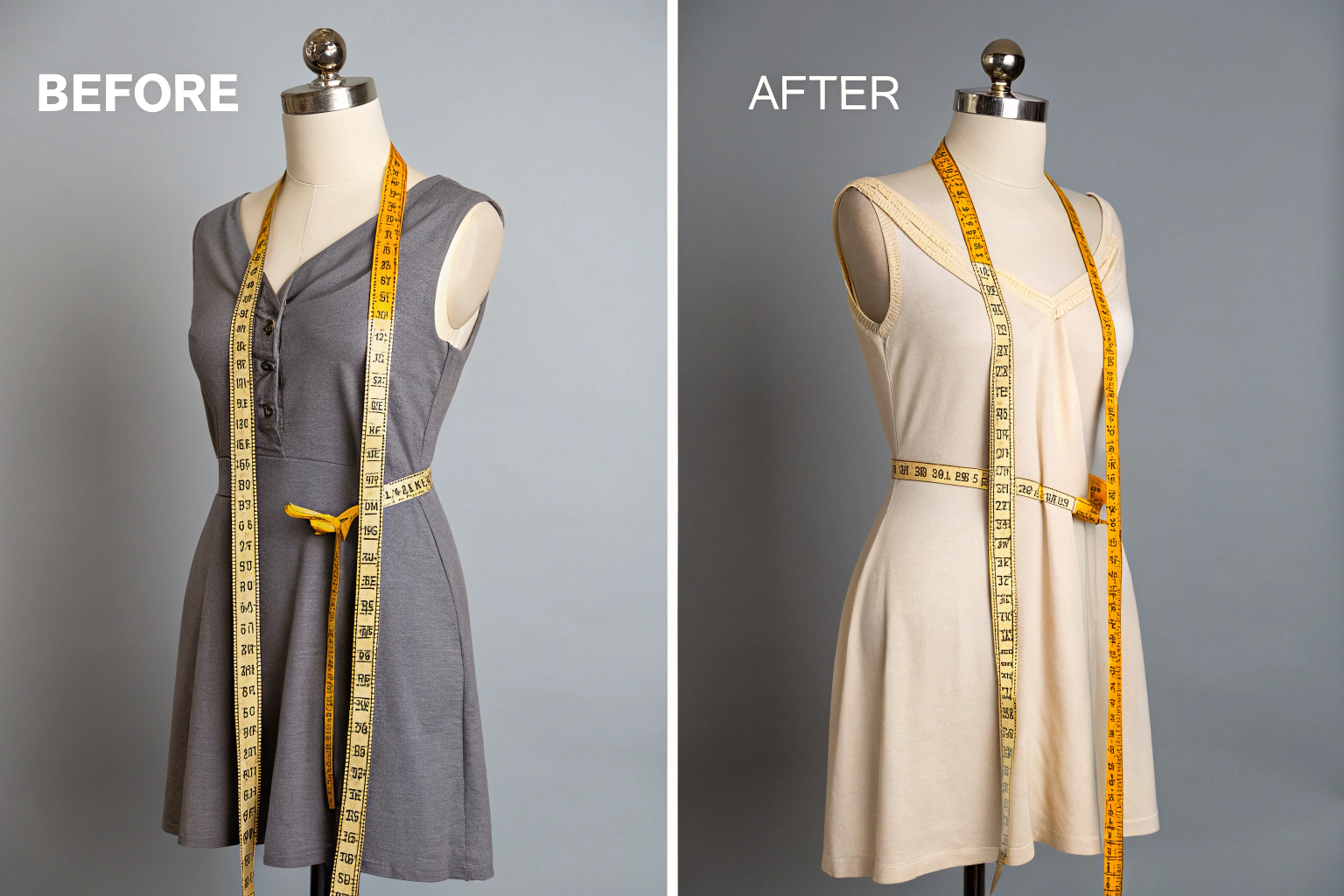
Let me paint you a picture I’ve seen destroy more brands than any tariff or shipping delay ever could. You launch a new collection. The designs are beautiful. The marketing is on point. The first batch of customer reviews starts rolling in. Five stars. Five stars. Five stars. Then you see it. A two-star review. "Loved this hoodie until I washed it once. Now it’s a crop top. Complete waste of money." Your stomach drops. You check the return requests. Twelve more customers reporting the same issue. Shrinkage. You followed the care label. You tested the sample. What happened? What happened is that the sample you approved was made from a small batch of carefully produced fabric, and the bulk order was made from fabric that was rushed through finishing, or knit with the wrong tension, or never properly compacted. The fabric betrayed you. And now your brand is paying the price.
The short answer is that wholesale apparel shrinks for one of three root causes. Either the fabric was never properly pre-shrunk at the mill, the garment construction itself is fighting against the fabric’s natural movement, or the care label instructions are wrong. The good news is that all three of these problems are fixable—but only if you catch them before bulk production, or at worst, before the garments reach your customers. Once the shrunken garment is in the consumer’s closet, it’s too late. The damage is done. At Shanghai Fumao, we’ve spent two decades helping brands diagnose and prevent shrinkage issues. We’ve seen the same patterns repeat over and over. A brand switches to a cheaper supplier to save $0.50 per yard. The new supplier skips the compaction step. Six months later, the brand is sitting on $80,000 worth of returned, unsellable inventory. The $0.50 savings just cost them $80,000. That’s the real math of shrinkage.
I’m going to walk you through exactly why your wholesale apparel is shrinking, how to diagnose the specific cause, and most importantly, how to fix it going forward. I’ll explain the difference between relaxation shrinkage and progressive shrinkage. I’ll show you how to audit your current suppliers to see if they’re actually doing the pre-shrinking they claim. And I’ll give you a practical action plan for handling a batch of already-produced garments that are showing shrinkage issues. Because sometimes you’re already in the hole and you need to know how to stop digging. Let’s get into the diagnosis and the cure.
This matters because shrinkage is a silent, delayed-action quality bomb. The fabric looks fine when it arrives. It sews fine. The finished garments look beautiful in the warehouse and in the product photos. The bomb doesn’t go off until the customer does laundry. By then, you’ve already paid for the fabric, the cutting, the sewing, the trims, the shipping, and the marketing. The only thing left is the chargeback and the bad review. Preventing shrinkage isn’t just a quality issue. It’s a business survival issue.
The Three Types of Fabric Shrinkage Explained
Most people think "shrinkage" is one thing. Fabric gets smaller. Simple. But it’s not simple. There are actually three distinct types of shrinkage, each with different causes and different solutions. If you misdiagnose the type, you’ll apply the wrong fix and the problem will persist.
Relaxation Shrinkage is the most common. This happens when fibers that were stretched and tensioned during yarn spinning, knitting, weaving, and finishing finally get a chance to relax. The energy we put into the fabric during manufacturing is released when the fabric gets wet and agitated. The fibers return to their natural, unstressed state. This is what proper compacting and Sanforizing are designed to prevent. It happens primarily in the first one or two washes.
Progressive Shrinkage is more insidious. This is when fabric continues to shrink, little by little, over many wash cycles. It doesn’t stop after the first wash. It keeps going. This is usually caused by a combination of fiber type and poor yarn/fabric construction. Certain fibers, like viscose and low-quality wool, are prone to progressive shrinkage. A loose knit structure that allows fibers to migrate and entangle over time also contributes.
Thermal Shrinkage affects synthetic fibers and blends. Polyester, nylon, and spandex shrink when exposed to heat above a certain threshold. If the fabric wasn’t properly heat-set at the mill, the consumer’s hot dryer will cause it to contract. This is why activewear and performance fabrics need precise heat-setting during finishing.
Understanding which type you’re dealing with is the first step to fixing it. A fabric that shrinks 5% in the first wash and then stabilizes (relaxation shrinkage) is a finishing problem. A fabric that shrinks 1% every wash for ten washes (progressive shrinkage) is a fiber and construction problem.

What Is Relaxation Shrinkage and Why Is It Common?
Relaxation shrinkage is the one I deal with every single day at Shanghai Fumao. It’s the default state of unfinished fabric. Let me explain why.
From the moment cotton fibers are harvested, they’re put under tension. The baling press compresses them. The carding machine straightens and aligns them. The drawing frame pulls them into a thin ribbon. The roving frame twists them slightly. The spinning frame twists them hard and winds them onto a bobbin under high tension. The knitting machine pulls that yarn and forms it into loops, again under tension. The dyeing machine agitates and stretches the fabric. The drying machine pulls it widthwise and lengthwise to remove wrinkles.
At every single step, the fibers are being stretched and stressed. They never get a chance to fully relax. By the time the fabric is rolled up and ready to ship, it’s like a coiled spring. It’s holding a tremendous amount of latent energy.
When that fabric finally gets wet—really wet, submerged in water with detergent and agitation—the hydrogen bonds that hold the cellulose chains in their stretched position break. The fibers swell. The yarns untwist slightly. The loops in the knit rearrange. The spring releases. The fabric gets smaller.
This is normal. It’s the natural behavior of textile fibers. The question is not "will it shrink?" The question is "how much will it shrink, and when?" Proper finishing—compacting, Sanforizing, heat-setting—forces this relaxation to happen in the mill, under controlled conditions. It releases the spring before the fabric is cut and sewn. A fabric that hasn’t been properly finished will release that spring in the consumer’s washing machine. That’s when you get the one-star review.
(Here’s a real example: We had a client who ordered a cotton-modal blend jersey from us. Our standard compaction process reduces relaxation shrinkage to under 3%. They decided to save $0.18 per yard by ordering the same fabric from a smaller mill that "guaranteed" quality. The fabric arrived. It felt soft. It sewed well. The first batch of customer reviews reported 8-10% shrinkage. The smaller mill had skipped compaction entirely. They just dried it on a stenter and called it done. The client came back to us for the re-order. This guide on understanding relaxation shrinkage in knitted fabrics explains the mechanics in detail.)
Can Progressive Shrinkage Be Stopped After Production?
This is a painful question because the honest answer is usually "no." Progressive shrinkage is baked into the fiber and fabric structure. Once the fabric is woven or knitted, and especially once it’s cut and sewn into a garment, your options are limited.
Progressive shrinkage happens because of a phenomenon called felting in wool and fiber entanglement in cellulosic fibers like viscose. In wool, the fibers have microscopic scales. When agitated in warm water, these scales interlock and pull the fibers closer together. This is literally how felt fabric is made—by intentionally causing wool fibers to entangle. A poorly stabilized wool sweater will continue to felt and shrink with every wash.
In viscose and rayon, the fibers are weak, especially when wet. Wet viscose loses up to 50% of its strength. The mechanical action of washing causes the fibers to break and then re-entangle in a more compact configuration. This is progressive shrinkage.
Can it be stopped after garment production? There are limited interventions:
- Re-blocking (for wool): A skilled dry cleaner can sometimes stretch a shrunken wool garment back to size using steam and tension. But this is temporary. The next wash will likely shrink it again.
- Garment washing (for cellulosics) : Some brands intentionally garment-wash their entire production run before shipping. This forces the maximum shrinkage to occur before the customer receives it. The garment is then re-labeled with the new, smaller size. This is a salvage operation, not a fix. It also changes the hand feel and appearance of the garment.
- Chemical treatment: There are industrial processes to apply shrink-resistant resins to finished garments, but this is expensive, alters hand feel, and is rarely practical for an entire wholesale order.
The real fix for progressive shrinkage is prevention at the fabric stage. Use fibers that have been treated for shrink resistance (like Superwash wool). Use tighter knit constructions that limit fiber movement. Use fiber blends that add stability (like adding polyester to viscose). Once the fabric is made, the die is cast. For more on this, here’s a resource on why some fabrics continue to shrink over time.
Diagnosing Whether Your Supplier Skipped Pre-Shrinking
You suspect your supplier cut corners. The shrinkage numbers from your last order were way out of spec. But how do you prove it? And how do you prevent it on the next order?
The key is to understand what "pre-shrunk" actually means in a mill context. It’s not a single machine you can point to. It’s a process flow. A properly pre-shrunk fabric has passed through either a compactor (for knits) or a Sanforizer (for wovens), and that process has been verified by a wash test.
A supplier who skipped pre-shrinking will have certain tell-tale signs in their documentation and in the physical fabric itself. They may not have the right equipment. They may not have test reports. The fabric itself may show visual clues that it was dried under tension rather than properly relaxed.
I’m going to give you a checklist of questions to ask and things to look for. This is the same checklist I use when I audit a new yarn supplier or finishing partner. It separates the mills that invest in quality from the mills that talk about quality.

What Questions Reveal If a Mill Actually Uses a Compactor?
Don’t ask "Do you compact your fabric?" Every mill will say yes. Ask questions that require specific, technical answers that only a mill with a real compaction process can provide.
Question 1: "What brand and model of compactor do you use?"
A real answer sounds like: "We have a Ferraro Tube Compactor, model TS-2, and a Santex Santaspread for open-width compaction." A fake answer sounds like: "We have good machines" or "We work with partner factories for this."
Question 2: "What is your standard overfeed percentage for 180GSM single jersey in 30/1 cotton?"
This is a killer question. A mill that actually runs a compactor knows their overfeed settings by fabric type. A standard answer for 180GSM cotton jersey is 8-12% overfeed. If they can’t give you a number, they’re not setting the machine. They’re guessing.
Question 3: "Can you send me a photo of the compactor control panel showing the overfeed setting for my fabric?"
This is a simple request. The control panel has a digital readout showing the current overfeed percentage. A mill with a compactor can snap a photo in 30 seconds. A mill without one will make excuses. "The machine is down for maintenance." "The operator is not available." "We don’t share internal production photos."
Question 4: "What is the residual shrinkage you guarantee after compaction, and what test method do you use?"
A real answer: "We guarantee <3% length and <3% width shrinkage after 3 cycles of AATCC 135, warm wash, tumble dry. We test every lot and can provide the report." A fake answer: "Quality is good, no shrinkage problem."
Question 5: "Do you measure the fabric width and weight before and after compaction?"
Compaction increases fabric weight (GSM) and changes width. The fabric gets shorter, thicker, and usually slightly wider. A mill that tracks "before and after" measurements is controlling the process. A mill that doesn’t is just running fabric through a machine without verifying the result.
At Shanghai Fumao, we welcome these questions. They show the buyer is knowledgeable and serious about quality. We can answer every one of them in under a minute. For more on this, here’s a resource on how to verify if your knit fabric has been properly compacted.
How Can You Test Fabric Yourself for Latent Shrinkage Risk?
You don’t need a lab. You need a washing machine, a dryer, a ruler, and a fabric marker. Here’s the exact protocol I recommend to every client before they approve bulk production.
Step 1: Get a Proper Sample
Don’t test a small 4-inch swatch from a sample book. Get at least one yard of the exact fabric that will be used for bulk production. If possible, get it from the actual bulk production run, not a separate sample run. Sample runs are often made more carefully than bulk.
Step 2: Mark Your Benchmarks
Cut a square approximately 50cm x 50cm (20" x 20"). Lay it flat on a table. Do not stretch it. Using a fabric marker or permanent pen, draw a precise 40cm x 40cm (16" x 16") square in the center. Mark the corners clearly. Measure and record the exact length and width of the square in three places. Average the three measurements. This is your "before" measurement.
Step 3: Wash Aggressively
This is critical. Do not baby the fabric. Wash it according to the worst-case scenario that a consumer might do. If the care label says "Machine wash cold, tumble dry low," test it at "Machine wash warm, tumble dry medium." You want to see what happens when a customer ignores the care label, because some of them will. Use a standard detergent. Wash with a full load of similar items to provide realistic agitation.
Step 4: Dry Completely
Tumble dry on the selected setting until the fabric is fully dry. Do not line dry unless that is the only drying method on the care label.
Step 5: Repeat
Do this wash-dry cycle three times. Shrinkage is often cumulative. A fabric might shrink 2% in the first wash, 1% in the second, and 0.5% in the third. Testing only one cycle underestimates the total consumer experience.
Step 6: Measure Again
Lay the dried fabric flat on a table. Do not stretch or steam it. Measure the marked square in the same three places. Average. Calculate the percentage change.
Length Shrinkage % = [(Before – After) / Before] x 100
Width Shrinkage % = [(Before – After) / Before] x 100
If the shrinkage is under 3% in both directions after three aggressive cycles, the fabric is stable. If it’s 3-5%, it’s borderline. Discuss with the supplier. If it’s over 5%, the fabric is unstable. Do not proceed with bulk until the issue is resolved. This simple test is your best defense against shrinkage disasters. Here’s a visual guide to performing an at-home fabric shrinkage test.
The Role of Garment Construction in Shrinkage
Here’s a truth that surprises a lot of brands. You can buy perfectly stable, pre-shrunk fabric and still end up with garments that shrink and distort. Why? Because the way the garment is cut and sewn interacts with the fabric’s internal structure.
Fabric has a "memory" of how it was made. Knitted fabric has a direction of loops (the wales and courses). Woven fabric has a grainline (the warp and weft). When you cut a pattern piece, the angle at which you cut relative to that grainline determines how the finished garment will behave when washed.
If you cut a t-shirt body slightly off-grain, the side seams will twist after washing. This is called torque or spirality. The fabric isn’t shrinking evenly. It’s untwisting to relieve the tension that was locked in during knitting. A well-made garment has the pattern pieces aligned precisely with the fabric grain. The seams are sewn with the correct thread tension. The hem is stabilized. These construction details don’t prevent fabric shrinkage, but they prevent distortion that makes shrinkage look even worse.

Why Do Side Seams Twist After Washing?
Side seam twist is one of the most common complaints in knit apparel. You buy a t-shirt. It looks straight on the hanger. You wash it once. The left side seam is now running down the front of your body. The right side seam is somewhere near your shoulder blade. The shirt is ruined.
This is not the fabric shrinking. This is spirality. It’s caused by the twist in the yarns and the structure of the knit.
Here’s what’s happening. Single jersey knit fabric is inherently unbalanced. The yarn was twisted in one direction during spinning. When the yarn is knitted into loops, that twist energy is still there. It wants to untwist. In a perfect world, the knitting machine would alternate the direction of yarn twist to balance the fabric. But that’s more expensive and complicated. So most single jersey is made with yarn all twisted in the same direction.
When the fabric gets wet and agitated, that twist energy releases. The loops rotate slightly. The entire fabric panel skews. If the t-shirt body was cut perfectly on-grain, the skew is uniform and the garment just looks slightly "relaxed." But if the pattern was cut even slightly off-grain, the skew is amplified. The side seams twist dramatically.
How do you prevent this?
- Use plied yarns: Yarns made by twisting two single yarns together in the opposite direction. This balances the twist and reduces spirality.
- Use a tighter knit construction: A tighter knit has less room for the loops to rotate.
- Proper finishing: Compaction and heat-setting can reduce (but not eliminate) residual torque.
- Cutting on-grain: This is on the garment factory, not the fabric mill. The cutter must align the pattern with the wales (vertical lines of loops). Even a 5-degree off-grain cut will cause severe twisting after washing.
- Garment washing: Some brands garment-wash the finished t-shirt before selling it. This allows the fabric to relax and skew before the customer buys it. The consumer gets a pre-twisted shirt, but at least it’s stable and won’t twist further.
At Shanghai Fumao, we test our jersey fabrics for spirality using AATCC Test Method 179. We can provide the torque measurement (in degrees of skew per meter) to garment factories so they can adjust their cutting accordingly. This level of understanding fabric spirality and how to prevent twisted side seams is what separates premium production from fast fashion.
Does Thread Type and Seam Construction Affect Shrinkage?
Thread itself doesn’t shrink much (polyester core thread is very stable). But thread tension and seam type interact with fabric shrinkage to create problems.
The Problem: Seam Puckering
You’ve seen this. A beautiful dress with puckered, gathered seams after one wash. The fabric shrank. The thread did not. The seam is now longer than the fabric it’s sewn to, so it bunches up. This is especially common in cotton fabrics sewn with polyester thread.
The Fix: Use the Right Seam Construction
For woven fabrics prone to shrinkage (like cotton poplin or linen), use a felled seam or French seam. These seams enclose the raw edge and distribute the tension across multiple layers of fabric. They’re more stable and less prone to puckering than a simple single-needle seam.
The Problem: Seam Slippage
In loosely woven fabrics, the yarns can slide apart at the seam under stress. When the fabric shrinks, it pulls against the stitches. If the seam allowance is too small or the stitch density is too low, the yarns just slide out. You get a hole along the seam line.
The Fix: Increase Seam Allowance and Stitch Density
A standard 3/8" (1cm) seam allowance might be fine for stable fabric. For a loose, shifty fabric, use 5/8" (1.5cm). Increase the stitches per inch (SPI) from 10 to 12 or 14. This locks the yarns in place.
The Problem: Hem Fluting
The hem of a knit dress or t-shirt develops a wavy, rippled edge after washing. This is usually because the hem was sewn with too much tension on the coverstitch machine, or because the fabric shrank but the hem thread didn’t.
The Fix: Differential Feed on Hemming Machines
A skilled sewing operator uses the differential feed setting to slightly gather or stretch the fabric as it’s hemmed, compensating for the fabric’s known behavior. If the fabric is known to shrink 3% in length, the operator can set the machine to gather the fabric slightly so that after shrinkage, the hem lies flat.
The key takeaway is that the fabric mill and the garment factory need to communicate. If I know my fabric has a 3% relaxation shrinkage, I can tell the garment factory. They can adjust their patterns and machine settings accordingly. If they don’t know, they sew it like any other fabric. And that’s when the problems emerge after the first wash. This resource on how seam construction affects garment durability and appearance covers the technical details.
Salvaging a Production Run That Already Shrinks
So the worst has happened. You have 2,000 units of a beautiful dress sitting in your warehouse, and you’ve discovered they shrink two sizes after one wash. What now? You have limited options, and none of them are good. But you’re not completely without recourse.
The first step is brutal honesty with yourself. How bad is the shrinkage? Is it 5% (a half-size) or 15% (two full sizes)? How many units are affected? What’s the retail price point? What’s your brand’s tolerance for returns? The answers to these questions determine which salvage path you take.
Option 1: Re-label and Sell As-Is (If Shrinkage Is Minor)
If the shrinkage is 3-5%, you might get away with simply changing the size label. A "Medium" that fits like a "Small" is now a "Small." You eat the cost of new labels and re-tagging labor. You adjust your size chart online to reflect the "runs small" fit. This is ethically gray if you don’t disclose it, but it’s a common industry practice for minor sizing issues.
Option 2: Garment Wash the Entire Batch
If the shrinkage is significant but stable (it shrinks once and then stops), you can garment-wash the entire production run. This forces the shrinkage to happen before the customer receives it. You then re-label the garments with their new, smaller sizes. This is expensive—$1.50 to $3.00 per garment for washing, drying, and re-pressing—but it salvages the inventory. The garments will have a "worn-in" look and feel, which can be marketed as a feature ("vintage washed").
Option 3: Liquidate at a Deep Discount
Sell the batch to an off-price retailer (TJ Maxx, Ross, Nordstrom Rack) or a liquidator. You’ll recover maybe 20-30% of your cost. But you protect your core brand from the bad reviews. This is often the least bad option for severe shrinkage.
Option 4: Donate for a Tax Write-Off
If the shrinkage makes the garments truly unwearable, donate them to a charity and take the tax deduction. This is a clean break. You lose the inventory cost, but you avoid the customer service nightmare.

Can Industrial Garment Washing Rescue a Shrunken Batch?
Garment washing doesn’t "rescue" the batch in the sense of returning it to its original size. It accelerates the inevitable. It forces the shrinkage to happen in a controlled industrial setting instead of in the consumer’s home.
Here’s how it works. The finished garments are loaded into large industrial washing machines—the same kind used for denim finishing. They’re washed with water and sometimes enzymes or softeners. They’re then tumble-dried or line-dried, depending on the desired effect. Finally, they’re pressed or steamed back into shape and re-packaged.
The result is a garment that is now permanently smaller. A Medium becomes a Small. But it’s a stable Small. It won’t shrink further when the customer washes it.
This is a viable salvage strategy IF:
- The shrinkage is relaxation shrinkage, not progressive. If the fabric continues to shrink with every wash, garment washing once won’t solve the problem.
- The garment construction is compatible with washing. Delicate trims, structured shoulders, or fusible interfacings can be damaged by industrial washing.
- You have the margin to absorb the cost. Garment washing a batch of 2,000 units costs real money.
- You can re-label efficiently. You need new size labels and the labor to sew or stamp them in.
I’ve seen brands successfully pivot a shrinkage disaster into a "vintage washed" limited edition. The key is transparency and marketing spin. "We loved this fabric so much, but it had a mind of its own. So we washed it for you. It’s now perfectly broken-in and will never shrink again." It’s not ideal, but it’s better than a warehouse full of unsellable inventory and a destroyed reputation. This resource on industrial garment washing processes and their effects on fabric explains the technical options.
How to Communicate Shrinkage Issues to Wholesale Buyers?
This is the conversation nobody wants to have. You have to tell your wholesale accounts—the boutiques and retailers who bought your line—that the product they ordered has a problem. Your approach to this conversation determines whether you keep those accounts or lose them forever.
Step 1: Be Proactive, Not Reactive
Do NOT wait for the retailers to discover the problem through their own customer returns. That’s how you lose trust permanently. Once you’ve confirmed the shrinkage issue internally, reach out to your accounts before they receive returns.
Step 2: Be Specific and Factual
Don’t say "There might be a slight sizing issue." Say "We’ve identified that this style experiences approximately 6-8% shrinkage in length after three home launderings. This is outside our quality standard of <3%. We are taking the following corrective action."
Step 3: Present a Solution, Not Just an Apology
Give the buyer a clear menu of options. For example:
- "Option A: We will provide a 15% discount on your invoice for this style to offset potential customer accommodations."
- "Option B: We will accept returns of unsold inventory for full credit."
- "Option C: We have garment-washed the remaining inventory. The new size scale is [X]. We can ship you replacement units from this washed batch at no cost."
Step 4: Explain the Preventive Measure
Tell the buyer what you’re doing to ensure this never happens again. "We have changed our fabric sourcing to Shanghai Fumao, who provides third-party shrinkage test reports with every lot. We have implemented a pre-production wash test protocol. Future seasons will not have this issue."
Step 5: Follow Through
Whatever you promise, do it. Issue the credits promptly. Ship the replacements quickly. Check in with the buyer a month later to ensure they’re satisfied with the resolution.
A shrinkage issue is a test of your business integrity. How you handle it defines your brand more than the problem itself. I’ve seen small brands survive major quality crises because they handled the communication with honesty and generosity. I’ve seen larger brands implode because they blamed the customer or went silent. Own the problem. Fix it. Move forward with better systems.
Conclusion
Shrinkage in wholesale apparel is not a mystery. It’s a predictable, preventable outcome of specific failures in the supply chain. Either the fabric wasn’t properly finished at the mill, the garment wasn’t properly constructed at the factory, or the care instructions weren’t accurate.
The fix starts with understanding which type of shrinkage you’re dealing with. Relaxation shrinkage is a finishing problem, solved by compacting and Sanforizing. Progressive shrinkage is a fiber and construction problem, solved by better material selection and tighter knits. Thermal shrinkage is a heat-setting problem, solved by proper stenter processing.
It continues with verification. Ask your fabric suppliers the technical questions that separate the compactors from the corner-cutters. Do your own three-cycle wash test before approving bulk. Inspect the test reports. A supplier who can’t provide shrinkage data is a supplier who isn’t measuring it. And if they’re not measuring it, they’re not controlling it.
It extends to garment construction. Even perfect fabric can produce distorted garments if patterns are cut off-grain or seams are sewn with the wrong tension. The mill and the factory need to communicate about the fabric’s expected behavior.
And if the worst happens—if you’re already sitting on a shrunken batch—you have salvage options. Garment washing, re-labeling, liquidation. None of them are painless, but all of them are better than shipping defective product to customers and hoping for the best.
At Shanghai Fumao, we’ve built our reputation on dimensional stability. We compact every knit. We Sanforize every woven. We heat-set every synthetic blend. We test every dye lot to AATCC 135. We provide the test reports. We do this not because shrinkage is a "nice to have" quality feature. We do it because shrinkage is the number one reason brands lose customers. And our business depends on your customers being happy.
If you’re dealing with shrinkage issues in your current supply chain, or if you want to ensure your next production run is stable and predictable, let’s talk. We can review your current fabric specs, recommend stability improvements, and provide sample yardage with full shrinkage test data.
Contact our Business Director, Elaine, for a technical consultation and to see our shrinkage test protocols in action.
Contact Elaine: elaine@fumaoclothing.com
Shrinkage is a choice. Choose a supplier who chooses to prevent it.








