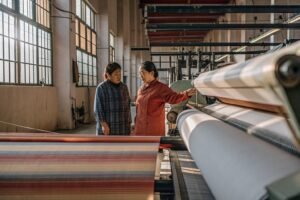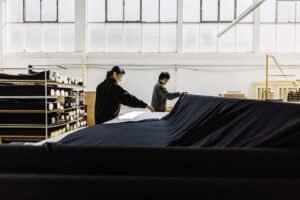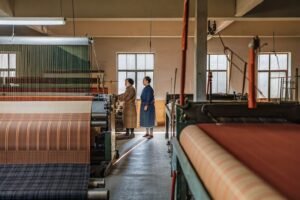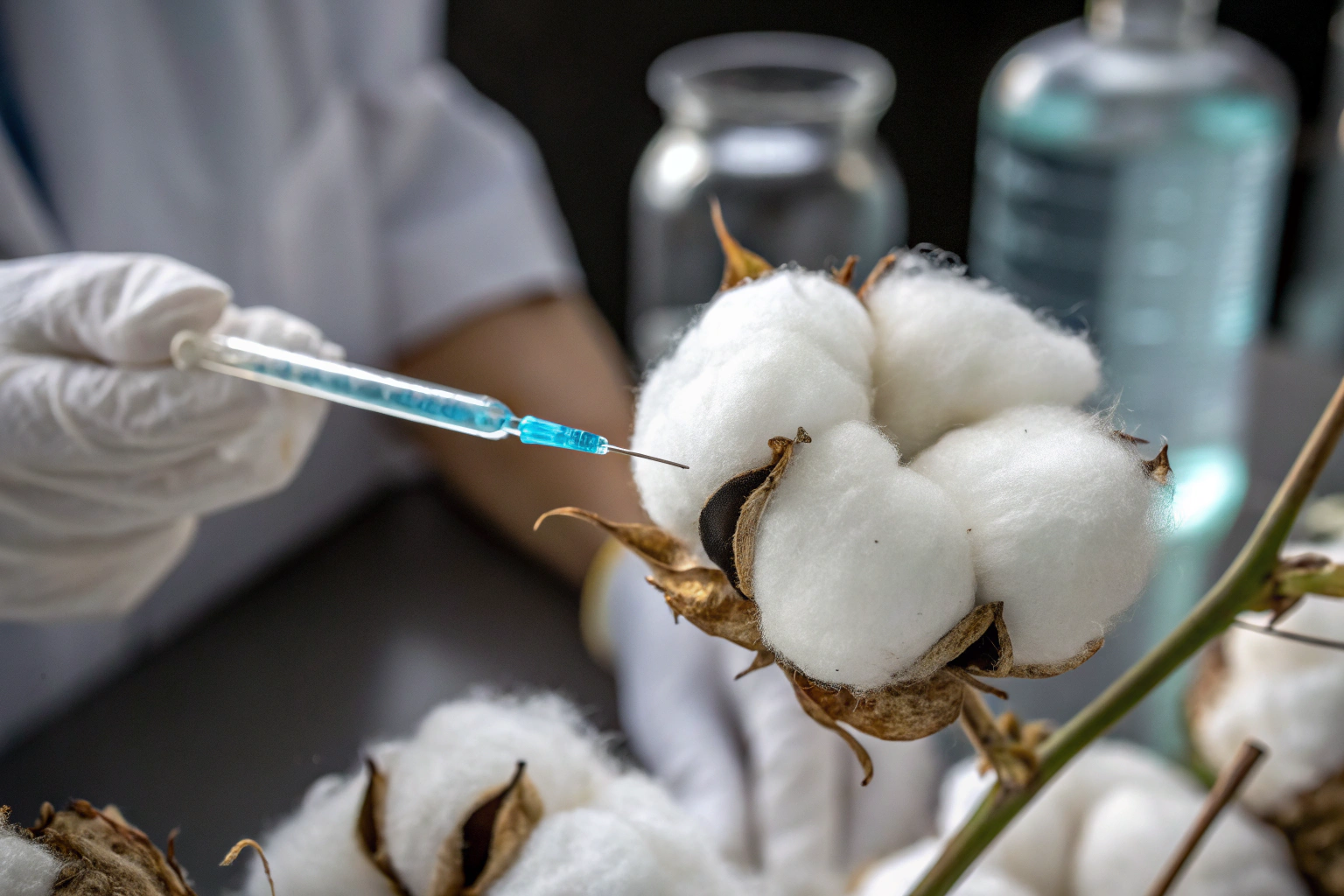
Let me tell you about a conversation I had with a buyer from Texas last month. Texas. Cotton country. And he was in my office in Keqiao, looking at Chinese cotton. I asked him, "Does it feel strange, buying cotton from China when you’ve got fields an hour from your office?" He laughed and said, "I don’t care where it grows. I care if it performs." And he’s right. The country of origin is a data point. It’s not a quality guarantee. I’ve seen beautiful cotton from Xinjiang. I’ve seen beautiful cotton from West Africa. I’ve seen terrible cotton from both places too. The sign of high-quality cotton isn’t a flag on a map. It’s a set of measurable, verifiable characteristics that determine how that fiber will spin, knit, dye, and wear over time. And here’s the thing most buyers don’t realize: China has some of the most advanced cotton processing and testing infrastructure in the world. We have the machinery to take average cotton and make it perform like premium cotton. We also have the capability to take premium cotton and ruin it if the mill cuts corners. The quality isn’t about the dirt the seed grew in. It’s about the hands and machines that touch the fiber after harvest.
The short answer is that high-quality cotton from China reveals itself through four key indicators: staple length and uniformity, fiber maturity and strength, trash content and contamination control, and finishing precision. You can’t judge these by rubbing a swatch between your fingers in a showroom. You judge them with data. Micronaire values. Uster evenness reports. Strength in grams per tex. These numbers tell the truth when a sales pitch lies. At Shanghai Fumao, we source cotton yarn from a select group of spinners who meet our internal specifications. We don’t just ask for "combed cotton." We specify a minimum staple length of 28.5mm for our premium jersey. We require Uster evenness testing on every incoming yarn lot. We reject yarn that doesn’t meet our twist multiple specifications. This is the unglamorous, technical work that separates mills that consistently deliver quality from mills that are gambling with every order. The cotton plant doesn’t care about your launch date. It produces what it produces. The skill is in selecting, blending, and processing that raw fiber to create a fabric that meets your spec, batch after batch.
I’m going to break down exactly what to look for—and what to ask for—when you’re sourcing cotton fabric from China. I’ll explain the tests that matter and the numbers that should raise red flags. I’ll show you the difference between a fabric that will pill after three washes and one that will look new after thirty. I’ll tell you why "100% Cotton" on a label tells you almost nothing useful. Because a $2/yard cotton and a $6/yard cotton can both legally say "100% Cotton." The difference is in the microns, the grams, and the twists that you can’t see but your customer will definitely feel. Let’s get into the details that actually matter.
This matters especially now because China is the world’s largest cotton producer and the world’s largest cotton importer. We process cotton from Xinjiang, from Brazil, from the US, from Australia. The diversity of supply means a skilled mill can blend fibers to achieve specific performance characteristics at specific price points. An unskilled mill just buys the cheapest bale on the spot market and hopes for the best. Knowing the signs of quality helps you find the skilled mills and avoid the gamblers.
Staple Length and Fiber Uniformity Why It Matters
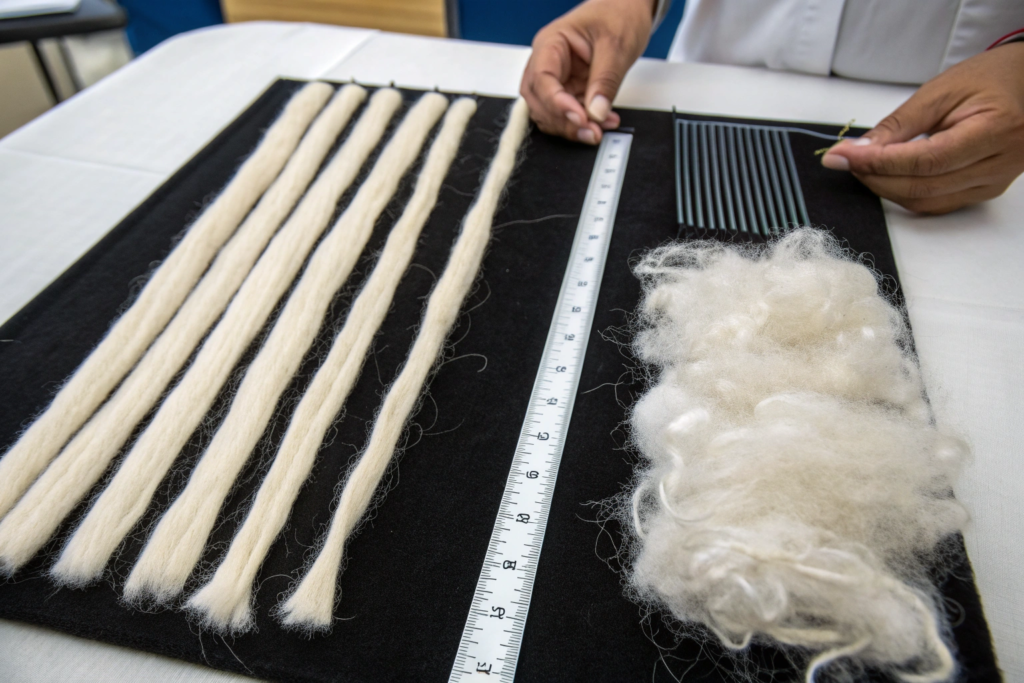
Staple length is the single most important predictor of cotton fabric quality. It’s the average length of the individual cotton fibers. Longer fibers can be spun into finer, stronger, smoother yarns. Short fibers create weak spots, fuzzy surfaces, and pills.
Think of it like this. Imagine you’re making a rope. If you use long, continuous strands, the rope is strong and smooth. If you use short, chopped-up pieces, you need more twists to hold it together, and the surface is rough with little ends sticking out everywhere. Cotton yarn is the same principle. Long-staple cotton (like Egyptian Giza or Chinese Xinjiang long-staple varieties) produces yarn that’s stronger, smoother, and less prone to pilling. Short-staple cotton (like Upland varieties) produces yarn that’s weaker, rougher, and pills more easily.
But staple length alone isn’t enough. Uniformity is equally important. A bale of cotton contains fibers of varying lengths. The uniformity index measures how consistent the fiber lengths are. A high uniformity index (above 83%) means most fibers are close to the average length. A low uniformity index means there’s a wide spread—some long fibers, lots of short fibers. Those short fibers are called "short fiber content" (SFC). High SFC is a quality killer. Short fibers don’t get twisted into the yarn properly. They work their way to the surface and form pills. They create weak spots that break during knitting or weaving. They cause uneven dye uptake.
How Can You Verify Staple Length Without a Lab?
You can’t measure staple length precisely without instruments. But you can get a strong qualitative indication with two simple field tests.
The Pull Test
Take a fabric swatch and unravel a yarn from the edge. Gently untwist it with your fingers or a needle. Pull out individual fibers. Lay them against a dark background (a black shirt or notebook works). Are the fibers long and relatively uniform? Or are they a mix of long strands and short, fluffy bits? You’re looking for length and consistency. Long-staple cotton fibers are typically 28mm to 35mm or longer. Short-staple fibers are under 25mm.
The Surface Inspection
Look at the surface of the fabric under good light, ideally with a magnifying glass or a loupe. A fabric made from long-staple, high-uniformity cotton has a smooth, clean surface. You see the yarn structure clearly. A fabric made from short-staple, low-uniformity cotton has a fuzzy, hairy surface. You see tiny fiber ends sticking up everywhere. That fuzziness is a preview of pilling.
But here’s the professional approach: Ask for the yarn specifications. A serious mill knows the specifications of the yarn they’re using. They should be able to tell you:
- Staple Length: "28.5mm Xinjiang long-staple" or "32mm Australian cotton"
- Combing: Is the yarn combed or carded? Combing is an extra mechanical process that removes short fibers and aligns the long fibers parallel. Combed cotton is smoother, stronger, and more expensive. It’s worth it for premium fabrics. Carded cotton is cheaper but rougher and more prone to pilling.
- Yarn Count: Expressed as Ne (English cotton count) or Nm (metric). Higher numbers mean finer yarn. A 40/1 Ne yarn is finer than a 20/1 Ne yarn. Fine yarns require long-staple cotton.
If the supplier can’t tell you the staple length and combing status of the yarn, they’re not a mill. They’re a reseller who doesn’t know what’s in the fabric. For more on this topic, here’s a detailed guide on how staple length affects cotton fabric quality and durability.
What Is the Ideal Micronaire Range for Premium Apparel?
Micronaire is a measure of fiber fineness and maturity. It’s determined by blowing air through a known mass of cotton fibers. The resistance to airflow gives a micronaire value. The ideal range for most apparel fabrics is 3.7 to 4.2.
- Below 3.7: The fibers are very fine and/or immature. Immature fibers don’t take dye well. They create white specks or "neppy" surfaces. The fabric will have poor color yield and may develop a frosty appearance after washing.
- 3.7 to 4.2: The sweet spot. Fibers are mature, fine enough for softness, strong enough for durability. Dye uptake is excellent. This is the range you want for premium T-shirts, dresses, and shirting.
- Above 4.2: The fibers are coarser and thicker. The fabric will feel rougher and stiffer. This is fine for denim, canvas, or heavy workwear. It’s not what you want for next-to-skin apparel.
Again, you can’t measure micronaire without a lab instrument. But you can ask for the yarn test report. A reputable spinner provides a test report for each lot of yarn, including micronaire, strength, elongation, and evenness. At Shanghai Fumao, we require these reports from our yarn suppliers and we archive them by lot number. When a client questions the hand feel of a fabric, we can pull the yarn test report and show them the micronaire value. "This batch is 4.0. It’s within our premium spec." That’s data-driven quality control.
For a deeper technical understanding, here’s a resource from the cotton industry on understanding micronaire and its impact on textile processing.
Color Consistency and Dyeing Quality Indicators
Here’s a scenario I see constantly. A brand approves a lab dip for a beautiful "Dusty Rose" cotton jersey. The lab dip is perfect. The bulk order arrives, and the color is… off. It’s not wrong exactly. It’s just not right. It’s a little more brown, a little less pink. The brand rejects the fabric. The supplier says, "This is within industry tolerance." And the fight begins.
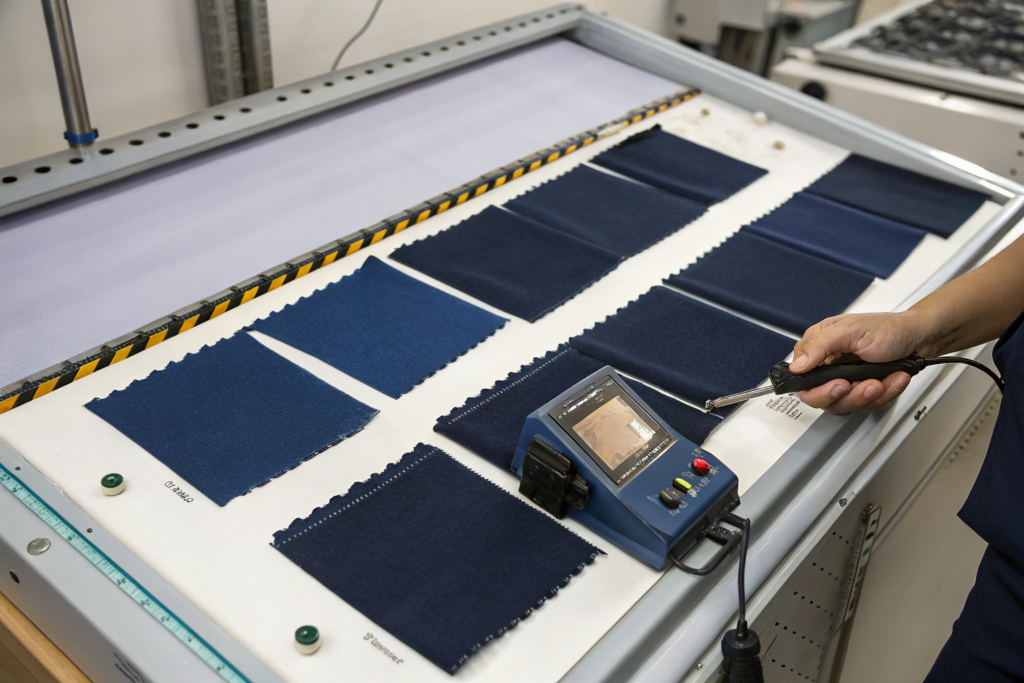
The problem is that "industry tolerance" is a vague term unless you define it with a number. That number is Delta E (dE) . dE is the mathematical distance between two colors in a three-dimensional color space. The human eye can generally perceive a difference when dE is greater than 1.0. A trained eye can see differences as low as 0.5.
A high-quality cotton dye house works to a dE tolerance of < 0.8 for solid colors. A mediocre dye house works to < 1.5. A bad dye house doesn’t measure dE at all; they just eyeball it.
Cotton is particularly challenging to dye consistently because it’s a natural fiber with inherent variability. Two bales of cotton from the same field can take dye slightly differently. A skilled dye master adjusts the recipe for each batch based on the specific fiber characteristics. An unskilled dye master uses the same recipe every time and hopes for the best.
How Should a Cotton Fabric Look Under Different Light Sources?
This is the metamerism test. Metamerism is when two colors match under one light source but look different under another. You approve a navy lab dip under the fluorescent lights of your office. It looks perfect. You receive the bulk fabric and look at it under sunlight. It has a purple undertone you never saw before.
High-quality cotton dyeing minimizes metamerism. The dye master selects dyes that have similar spectral reflectance curves. They check the match under multiple light sources: D65 (artificial daylight), TL84 (store lighting), and UV (outdoor/blacklight) .
You can do a basic metamerism check yourself. Take your approved lab dip and a bulk fabric swatch. Look at them together under:
- Natural daylight (near a window).
- Fluorescent office/store light.
- Incandescent/warm home light.
Do they match under all three conditions? If the match holds, the dyer did their job. If the color shifts significantly, the dyer used a cheap, metameric dye combination to hit the target under one light source. This is a sign of a cost-cutting, low-quality operation.
At Shanghai Fumao, our standard operating procedure includes a multi-light source evaluation for every lab dip approval and every bulk dye lot. We provide the spectral data to clients who request it. This is how we achieve consistent color matching for cotton fabrics across different dye lots. It’s not magic. It’s measurement.
What Causes White Specks in Dyed Cotton Fabric?
White specks in dyed fabric are one of the most common and frustrating defects in cotton. They’re called "white nep" or "undyed fiber." And they have several causes, all of which point to quality failures upstream.
1. Immature Fibers (Dead Cotton)
This is the most common cause. Cotton bolls contain a mix of mature and immature fibers. Immature fibers have thin cell walls. They don’t absorb dye the same way mature fibers do. They stay white or light-colored while the mature fibers take the dye. High-quality cotton has a low percentage of immature fibers. Low-quality cotton has a high percentage. This is why micronaire matters.
2. Seed Coat Fragments
During ginning (separating fiber from seed), small fragments of the cottonseed can break off and remain embedded in the fiber. These fragments are dark brown or black in raw cotton. They should be removed during carding and combing. If they’re not, they appear as dark specks in undyed fabric and often as white or light specks in dyed fabric because they don’t absorb dye.
3. Neps from Poor Processing
Neps are small tangles of fiber. They can be created during harvesting, ginning, or spinning. Carding and combing are designed to remove neps. If the mill skimps on these processes, neps remain in the yarn. They appear as small, fuzzy white dots on the dyed fabric surface.
4. Foreign Fiber Contamination
This is a huge issue in some cotton-growing regions. Polypropylene twine from bale wrapping, human hair, or other synthetic fibers can get mixed into the cotton during harvesting or handling. These synthetic contaminants don’t absorb cotton dyes and appear as bright white or translucent fibers in the finished fabric.
A high-quality mill inspects for these defects at multiple stages. We inspect incoming yarn for neps and contamination. We inspect greige fabric before dyeing. And we inspect finished fabric under bright lights to catch any white specks that made it through. If a fabric has noticeable white specks, it’s a sign that the mill either used low-grade cotton or skipped important quality control steps. For more on this defect, here’s a technical article on identifying and preventing white specks in dyed cotton fabrics.
Hand Feel and Mechanical Finishing Techniques
"Hand feel" is the most subjective quality indicator, but it’s also the one your customer notices immediately. They don’t have a spectrophotometer. They don’t know the micronaire value. They know how the fabric feels against their skin.
The frustrating thing about hand feel is that it’s largely determined by finishing, not just the raw cotton quality. You can take beautiful, long-staple cotton and make it feel like sandpaper with bad finishing. You can take average cotton and make it feel luxurious with expert finishing.
Finishing is a series of mechanical and chemical processes applied to fabric after dyeing. The goal is to modify the surface, improve dimensional stability, and enhance the tactile experience. For cotton, the key finishing processes are:
1. Singeing
The fabric is passed rapidly over a gas flame or a heated copper plate. This burns off the tiny fiber ends protruding from the surface, reducing fuzziness and pilling. High-quality shirting and dress fabrics are always singed. Cheap fabrics skip this step.
2. Mercerizing
The fabric is treated with a caustic soda solution under tension, then neutralized with acid. This causes the cotton fibers to swell, becoming rounder and more lustrous. Mercerized cotton is stronger, takes dye better, and has a subtle sheen. It’s the difference between a dull, flat cotton and a vibrant, silky cotton.
3. Sanforizing (Compressive Shrinkage)
The fabric is passed between a rubber belt and a heated cylinder, compressing it lengthwise. This pre-shrinks the fabric so it won’t shrink excessively when the consumer washes it. High-quality cotton fabrics are Sanforized to a residual shrinkage of less than 3%.
4. Softening
Chemical softeners (silicone, fatty acid amides, polyethylene) are applied to the fabric surface. This is what gives the "buttery" or "peachy" hand feel. The type and amount of softener dramatically affect the final touch.
Why Does Some Cotton Feel "Crisp" While Other Feels "Buttery"?
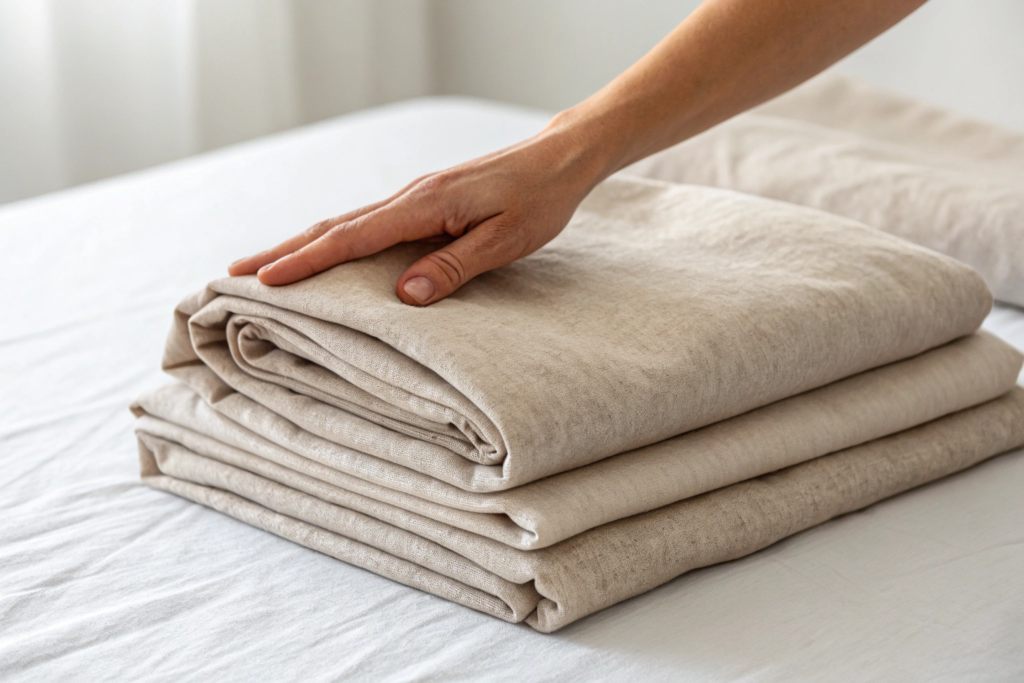
This is entirely about finishing chemistry and mechanical treatment.
"Crisp" Cotton (Like a Dress Shirt)
- Typically has been singed and mercerized.
- Has minimal softener applied, or uses a "boardy" finish that washes out.
- Has a tight weave construction that holds its shape.
- Feels clean, cool, and structured.
"Buttery" Cotton (Like a Premium T-Shirt)
- Has been treated with a silicone softener, often a macro-silicone that coats the fiber surface.
- May have been enzyme washed. Enzymes "eat" the surface fuzz and soften the fiber naturally without chemicals.
- May have been brushed or peached. The fabric surface is mechanically abraded with fine brushes to raise a soft nap. This is what gives a "peach skin" finish.
You can specify the hand feel you want in your tech pack. Don’t just say "soft." Say "silicone softener, enzyme washed for a worn-in feel." Or "crisp mercerized finish with minimal softener." A good mill can dial in the hand feel like a chef adjusts seasoning.
(Here I must add a practical note: The durability of the hand feel matters. Cheap silicone softeners wash out in 3-5 home launderings. High-quality softeners, properly cured in the stenter frame, last for 20+ washes. Ask the supplier about wash durability of the finish. This resource on how textile finishing affects cotton fabric hand feel and performance covers the chemistry in detail.)
What Is the "Peach Skin" Finish and Is It a Sign of Quality?
A "peach skin" finish is a mechanical surface treatment. The fabric (usually a woven, sometimes a knit) is passed over rollers covered with fine abrasive material or wire brushes. This abrades the surface fibers, creating a very fine, short nap. The result is a fabric that feels incredibly soft and sueded, similar to the skin of a peach.
Is it a sign of quality? It depends on the execution. A good peach skin finish requires:
- Even abrasion: The brushing must be perfectly uniform. If it’s uneven, you get light and dark streaks or thin spots.
- Proper fiber selection: Long-staple cotton peaches beautifully because the fibers are long enough to withstand the abrasion without breaking off. Short-staple cotton can be damaged by aggressive brushing, leading to excessive pilling later.
- Controlled pressure: Too much pressure creates a weak, thin fabric. Too little pressure doesn’t create the desired effect.
A well-executed peach skin finish on a quality cotton base fabric is a premium feature. It’s labor-intensive and requires skill. It adds significant value. A poorly executed peach skin finish on cheap cotton is a disaster. It pills immediately and develops holes after a few washes.
At Shanghai Fumao, we do a lot of peach skin finishing for our premium shirting and bedding clients. We use precise CNC-controlled brushing machines and we test the finished fabric for tensile strength loss to ensure we haven’t compromised durability. This is the kind of detail that separates how to identify high-quality peach skin finish on cotton fabric from a cheap imitation.
Shrinkage Control and Dimensional Stability Testing
Shrinkage is the silent killer of customer satisfaction. A customer buys a beautiful cotton dress. They wash it according to the care label. It shrinks two inches in length. The dress is now unwearable. They leave a one-star review. They never buy from your brand again.
Cotton shrinks. It’s a natural fiber. The hydrogen bonds that hold the cellulose chains together break when wet and reform in new positions when dried, pulling the fibers closer together. You cannot eliminate shrinkage entirely. You can only control it within acceptable limits.
The industry standard for acceptable shrinkage in cotton apparel is maximum 3% in length and 3% in width after three home launderings, per AATCC Test Method 135. Premium brands often specify tighter tolerances: maximum 2%.
Achieving low shrinkage requires two things:
- Proper fabric construction: The yarn twist, knit/weave structure, and fabric weight must be engineered to minimize shrinkage potential.
- Proper finishing: The fabric must be compacted (for knits) or Sanforized (for wovens). These are mechanical processes that pre-shrink the fabric before cutting.
How Can You Test Shrinkage at Home Before Bulk Production?
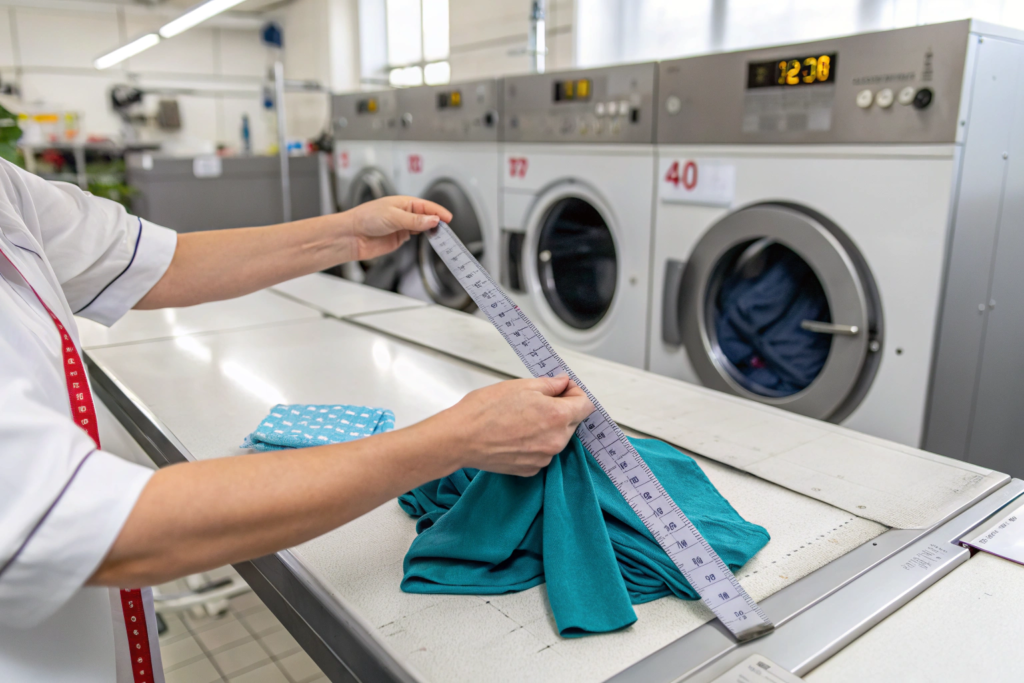
You can’t do a full AATCC 135 test at home. But you can do a simple wash test that will reveal major shrinkage problems before you commit to bulk.
Materials Needed:
- A 50cm x 50cm (20" x 20") swatch of the bulk fabric.
- A fabric marker or permanent pen.
- A ruler or measuring tape.
- Your home washing machine and dryer.
Procedure:
- Mark the Swatch: Using the ruler and marker, draw a precise 40cm x 40cm (16" x 16") square in the center of the swatch. Mark the corners clearly.
- Measure Pre-Wash: Measure the length and width of the square in three places (top/middle/bottom for length, left/middle/right for width). Record the average. This is your "before" measurement.
- Wash and Dry: Wash the swatch according to the care label instructions. Use the warmest water temperature allowed on the label. Dry it using the hottest dryer setting allowed on the label. This is a "worst-case" consumer scenario.
- Measure Post-Wash: Lay the dried swatch flat on a table. Do not stretch it. Measure the square again in the same three places. Record the average. This is your "after" measurement.
- Calculate Shrinkage:
- Length Shrinkage % = [(Before Length – After Length) / Before Length] x 100
- Width Shrinkage % = [(Before Width – After Width) / Before Width] x 100
If the shrinkage is under 3% in both directions, the fabric is within industry standard. If it’s 5% or higher, the fabric has a serious shrinkage problem. Reject it or demand that the supplier re-finish it with proper compaction.
This simple test takes 90 minutes and can save you from a catastrophic quality failure. At Shanghai Fumao, we do this test on every new fabric development and on samples from every bulk production run. It’s not optional. It’s essential. For a visual guide, here’s a resource on how to perform a home wash test for fabric shrinkage.
What Does "Sanforized" Mean and Does It Still Matter?
"Sanforized" is a trademarked term for a specific compressive shrinkage process. It was invented by Sanford Cluett in the 1930s and has become the generic term for mechanical pre-shrinking of woven fabrics.
How it works: The fabric is moistened with steam and passed between a thick rubber belt and a heated cylinder. The rubber belt is stretched as it approaches the cylinder, then allowed to contract as it passes over the cylinder. The fabric, sandwiched between the belt and the cylinder, is forced to contract along with the belt. This compresses the warp yarns, pre-shrinking the fabric.
Does it still matter? Absolutely yes. Sanforizing is the most effective way to control shrinkage in woven cotton fabrics. A properly Sanforized cotton shirting or poplin will have residual shrinkage of 1-2% instead of 5-8%.
But here’s the catch: Sanforizing can be done poorly. If the machine speed is too fast, the belt is worn, or the moisture content is wrong, the process doesn’t fully compress the fabric. You get "partial" Sanforizing. The fabric looks good off the machine, but it still shrinks 4-5% in the consumer’s wash.
How do you verify proper Sanforizing? Ask for the shrinkage test report from the mill’s lab. A serious mill tests every lot and keeps records. Also, do your own home wash test as described above. The proof is in the wash.
For knitted fabrics, the equivalent process is called compacting. The fabric tube is passed through a machine that compresses it lengthwise using heated rollers and a shoe mechanism. Compacting is essential for controlling shrinkage in cotton jersey and interlock. A non-compacted cotton knit can shrink 8-10% in length. A properly compacted knit should shrink less than 3%. This resource on the Sanforizing process and its importance in cotton fabric finishing explains the technical details.
Conclusion
High-quality cotton from China reveals itself not through a single test, but through a pattern of evidence. It’s the combination of long, uniform fibers (28.5mm+ staple, combed). It’s the consistent color across dye lots, with dE values under 0.8 and no metamerism under different lights. It’s the absence of white specks and surface fuzz, achieved through proper fiber selection, combing, and singeing. It’s the intentional hand feel—whether crisp and mercerized or buttery and enzyme-washed—engineered through precise finishing. And it’s the dimensional stability proven by a shrinkage test showing less than 3% change after washing.
The country of origin is a starting point, not a conclusion. China has the infrastructure to produce world-class cotton fabrics. The massive spinning mills in Shandong and Zhejiang. The advanced dye houses in Keqiao. The skilled finishing plants that understand silicone chemistry and compressive shrinkage. But China also has countless small, undercapitalized mills that cut every corner. The difference isn’t the flag. It’s the systems, the testing equipment, and the technical expertise.
At Shanghai Fumao, we’ve invested in the systems that deliver consistent quality. We specify our yarn parameters down to the staple length and micronaire. We test incoming yarn for evenness and strength. We verify every dye lot with a spectrophotometer. We run wash tests on every production batch. We document everything. This isn’t because we love paperwork. It’s because we’ve learned that the only way to guarantee quality is to measure it, record it, and stand behind it.
If you’re sourcing cotton fabric from China, don’t just ask for "100% Cotton." Ask for the yarn specs. Ask for the test reports. Ask for the shrinkage data. Ask to see the Transaction Certificate if it’s organic. The suppliers who can answer those questions quickly and transparently are the ones you can trust. The ones who say "don’t worry, quality is good" are the ones you should worry about.
For a detailed discussion about your specific cotton fabric requirements—whether you need a crisp poplin for shirting, a buttery jersey for premium tees, or a peach skin twill for dresses—let’s talk specifics. We can provide sample yardage with full test reports and walk you through our quality documentation.
Contact our Business Director, Elaine, for technical inquiries and sample requests.
Contact Elaine: elaine@fumaoclothing.com
Quality cotton isn’t a secret. It’s a set of measurable facts. Let’s find the facts together.