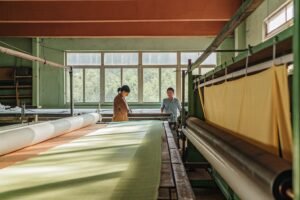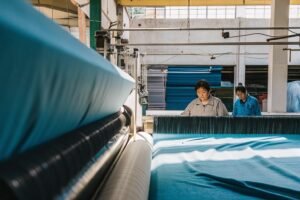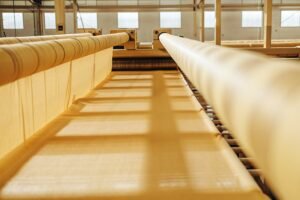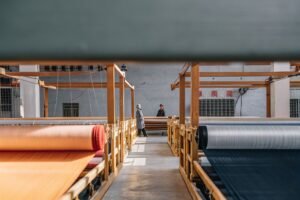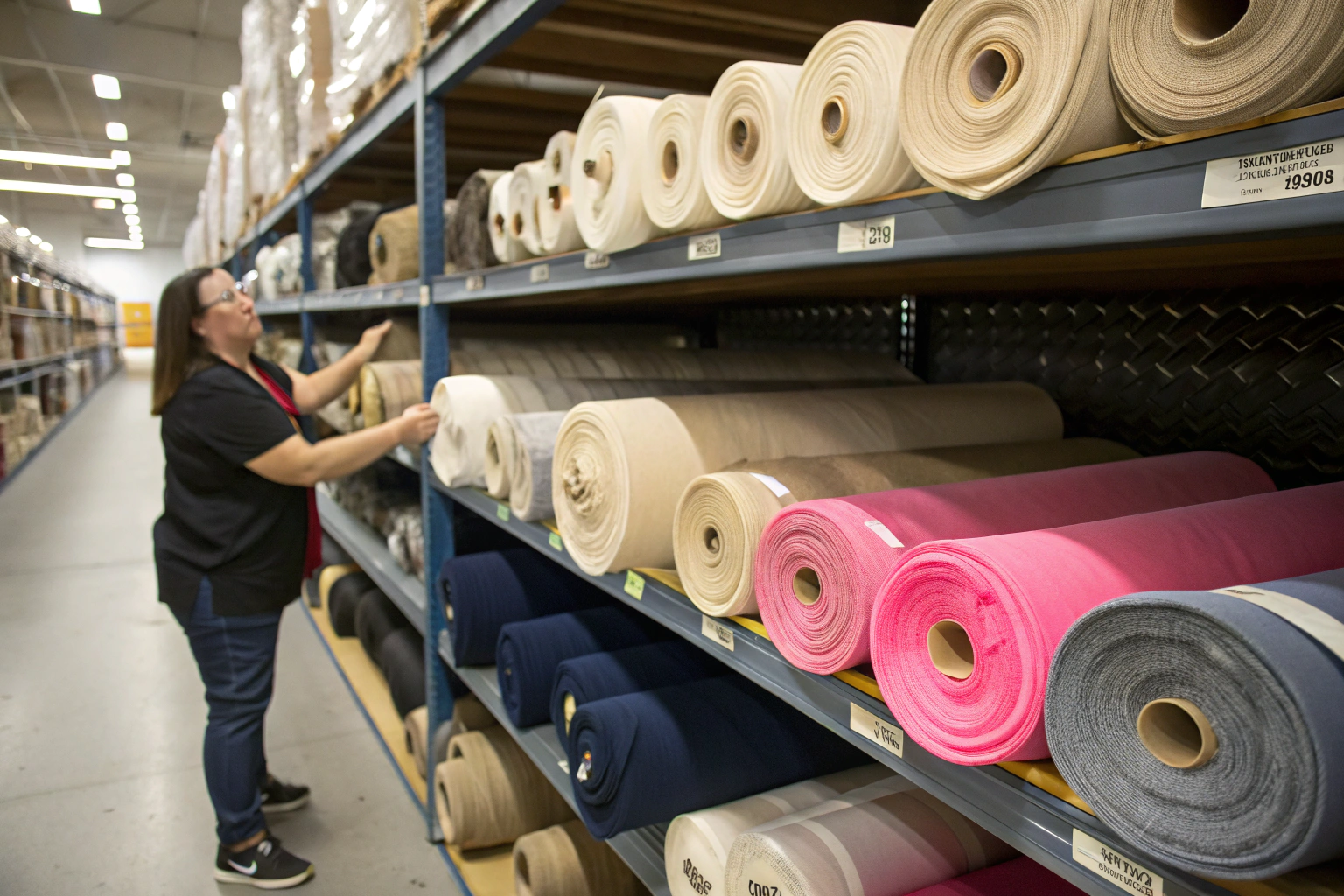
Let me show you the graveyard of the textile industry. It’s not a landfill. It’s the back corner of a brand’s warehouse where Deadstock Inventory goes to die. I’ve walked through these aisles. I see the ghosts of trends past. Rolls of "Millennial Pink" polyester from 2017. Bolts of neon lime green mesh from some Y2K revival that didn’t quite land. Tweed with metallic Lurex threads that looked great on the runway but terrible in a shopping cart.
This is the financial cancer of the fashion business. Stagnant Inventory . It’s cash that has been converted into cloth that no one wants to buy. It sits there accruing storage fees losing value and eventually being sold to a jobber for 10 cents on the dollar just to clear the space.
The brands that avoid this graveyard are not the ones with the best designers. They are the ones with the Best Fabric Discipline . They understand that while a garment’s silhouette might change the Fabric Foundation can be timeless. They build their collections on a bedrock of Core Basics and then sprinkle in the trend-driven novelty items in small controlled batches.
At Shanghai Fumao we’ve been supplying both ends of the spectrum for two decades. We make the crazy jacquards for the runway show and we make the plain white cotton shirting that sells year after year after year. And I can tell you which one keeps our clients in business for the long haul. It’s the boring stuff. The stuff you think you don’t need to worry about.
In this article I’m going to give you a mill owner’s perspective on inventory management. I’ll show you how to identify "Forever Fabrics" how to structure your buys to minimize risk and how to build a supply chain that allows you to chase trends without ending up with a warehouse full of deadstock.
What Fabric Qualities Define a Timeless Textile Choice
Timelessness in fabric is not just about color. It’s about Inherent Quality . It’s about the molecular structure of the fiber and the integrity of the weave. A cheap fabric made in a trendy color is still a cheap fabric. It will pill fade and stretch out. It will look "sad" after three washes even if the color is "Millennial Lilac."
Here are the four pillars of a timeless fabric according to my 20 years on the mill floor.
Pillar 1: Natural Fiber Dominance. Cotton Linen Wool Silk. These fibers have been worn for thousands of years. Our brains are wired to recognize them as "quality." They breathe. They age gracefully. A 100% Cotton Oxford shirt is never "out of style." A 100% Polyester Oxford shirt from Shein is garbage in six months.
Pillar 2: Mid-Weight Substance. Extremes are dangerous. Ultra-Lightweight fabrics (like 60gsm voile) are delicate and prone to damage. They are "seasonal." Ultra-Heavyweight fabrics (like 16oz denim) are niche and uncomfortable for most people. The timeless zone is Mid-Weight .
- Shirting: 100-130 GSM
- Bottom Weight: 180-220 GSM
- Fleece: 280-320 GSM
These weights drape well wear well and transcend seasons.
Pillar 3: Tight Weave Structure. Look for High Thread Count and Compact Spinning . A fabric with a tight weave resists pilling and holds its shape. A loose open weave snags bags out and looks sloppy. Compare a Broadcloth to a Gauze . Gauze is trendy for summer. Broadcloth is forever.
Pillar 4: Matte Finish. Shine dates fabric. High Luster Satin and Wet-Look Cire are peaks and valleys of trend cycles. A Matte or Semi-Dull finish is universally flattering and never looks cheap or dated.

Why Does Mid-Weight Cotton Twill Outlast Trendy Lightweight Gauze
Let’s use a specific example. You need a fabric for a casual pant.
You could buy Double Gauze . It’s soft crinkly and breathable. It’s huge on Instagram for "coastal grandmother" aesthetic. It sells like crazy for two summers. But it Wrinkles like a napkin . It Shrinks unevenly . It Pills . Customers wear it once look in the mirror at lunchtime and feel like a crumpled mess. They don’t re-buy.
You could buy Cotton Twill . It’s smooth durable and has a subtle diagonal texture. It resists wrinkles. It holds a cuff. It looks sharp with sneakers and okay with loafers. It’s been a staple of menswear and womenswear for over a century. A customer who buys a well-fitting twill pant will come back next year and buy it in Navy and Khaki .
The twill is Timeless . The gauze is Trendy . Buy twill for your core inventory. Buy gauze for a Limited Edition Summer Capsule that you cut to order or produce in very small quantities.
How Does Color Fastness Impact Long-Term Wearability
This is a technical point that has massive commercial implications. A timeless fabric must Fade Gracefully .
Reactive Dyed Cotton : The dye bonds to the fiber. It fades very slowly and evenly over dozens of washes. It develops a beautiful Patina . Think of a vintage pair of Levi’s. That’s reactive dye.
Pigment Dyed Cotton : The color sits on the surface. It fades Rapidly and Unevenly especially at the seams and cuffs. It looks "old" after five washes.
If you’re making a garment that you want customers to keep for five years you need Reactive Dyes . They cost more per yard but they generate Customer Loyalty . A cheap pigment-dyed black t-shirt that turns grey after a month generates a Bad Review and a Lost Customer .
How to Build a Core Collection of Seasonless Fabric Bases
The smartest brands I work with don’t start their design process with a theme. They start with a Fabric Matrix .
They have a grid of 5-7 Core Fabrics that they buy Every Single Season regardless of what the trend forecast says. These fabrics are the Backbone of the collection. They are the styles that the wholesale accounts re-order and the e-commerce customers buy year-round.
Here is the exact Core Matrix I recommend for a contemporary apparel brand.
- 1. Cotton Jersey (180 GSM) : The perfect t-shirt weight. Heavy enough not to be see-through light enough to drape. Stock in White Black Navy Heather Grey .
- 2. Cotton Twill (220 GSM) : The perfect pant and light jacket weight. Stock in Khaki Beige Navy Black .
- 3. Cotton Poplin (120 GSM) : The perfect shirt weight. Stock in White Light Blue .
- 4. French Terry (300 GSM) : The perfect hoodie/sweatshirt weight. Stock in Grey Marl Navy Black .
- 5. Linen Blend (55% Linen / 45% Cotton) : The perfect warm-weather woven. Stock in Natural Flax .
These five fabrics account for 60-70% of most brands’ annual sales volume. By standardizing these bases you achieve massive Supply Chain Efficiency . You can buy larger quantities of greige goods and get better pricing. You can dye to order quickly because you know the base cloth intimately.
At Shanghai Fumao we offer Stock Service Programs on exactly these core bases. We keep the greige fabric on our shelf. You send us a Pantone color. We dye a small batch (300-500 yards) and ship it in 3-4 weeks. You never have to hold inventory of "core fabrics" in your own warehouse. We hold it for you.

What Are the 5 Essential Neutral Colors for Wholesale Fabric
This is a hill I will die on. If you are building a brand for longevity you do not need 47 colors. You need 5 Neutrals executed perfectly.
- Optic White : Not cream. Not natural. Optic White . It’s the brightest cleanest canvas. It makes other colors pop. It’s the number one selling color in every category.
- True Black : Not faded charcoal. True Black . This requires high-quality dyeing to achieve depth without redness or greenness.
- Navy Blue : The universal alternative to black. It’s softer on the face and pairs beautifully with denim.
- Heather Grey : The most forgiving color. It hides lint and wear better than any other shade. It’s the backbone of athleisure.
- Khaki / Beige : The essential neutral for bottom weights. It anchors the entire earth-tone palette.
If you stock these five colors in your core fabrics you can build a cohesive collection that sells through year after year.
How to Use Stock Service Programs to Reduce Inventory Risk
This is the operational secret to avoiding stagnant inventory. Don’t Buy Finished Fabric Upfront. Buy Greige Capacity.
A Stock Service Program (SSP) is an agreement between you and the mill. We agree to keep X Yards of Greige Fabric in a specific width and weight on our shelf reserved for you.
When you need fabric you issue a Release Order . You specify the color and the yardage. We dye it and ship it.
Benefits for You:
- Zero Inventory of Core Basics: You don’t have a warehouse full of white jersey. We do.
- Agile Response to Sales Data: If Navy is selling out fast you can re-order a fresh dye lot of Navy in 3 weeks instead of 12 weeks.
- Cash Flow: You only pay for fabric when you Need It .
This model requires trust and partnership with your mill but it is the single most effective way to prevent deadstock accumulation.
Why Is Stocking Greige Fabric a Smarter Long-Term Investment
Let me let you in on a little piece of mill math. Finished Fabric Depreciates Faster Than Unfinished Fabric .
Think about it. A roll of Greige Cotton Twill is a blank canvas. It can become a Khaki Chino for a resort collection. It can become a Navy Work Pant for a utility collection. It can become a Sage Green Trouser if that color blows up on TikTok. It has Optionality .
The moment you dye that roll Millennial Pink you have stripped away all optionality. It is now One Thing . If that one thing is not in demand you own a liability.
Savvy brands especially in the workwear and uniform space buy Greige Fabric in Bulk . They get a great price because the mill doesn’t have to worry about dyeing consistency or color matching. They store the rolls in their own warehouse or pay the mill a small fee to store it.
Then based on Weekly Sell-Through Data they issue dye orders for Small Batches . "We need 200 yards of Navy and 150 yards of Olive for next month’s restock."
This is Just-in-Time Manufacturing applied to textiles. It requires a bit more planning and a strong relationship with a commission dye house but the reduction in deadstock risk is massive. At Shanghai Fumao we help our clients manage this entire process. We buy the greige we store it and we dye it to order.

How Does Just-in-Time Dyeing Reduce Deadstock Liability
Let’s compare two scenarios for a brand launching a Fall collection with a new color "Rust."
Scenario A (Traditional): Buyer forecasts 5,000 units in Rust. Orders 5,000 yards of dyed fabric. The color is a miss. It only sells 2,000 units. 3,000 yards of Rust Fabric go to the deadstock graveyard. Loss: $15,000 – $20,000.
Scenario B (JIT Dyeing): Buyer orders 1,000 yards of Rust for the initial drop. The greige is on standby. The drop sells out in 48 hours. Buyer issues a new dye order for 1,000 yards. Repeats this cycle 4 times. Sells 4,000 units. Zero Deadstock Fabric . Slightly higher per-yard cost for small batch dyeing but total profitability is Higher because there is no write-off.
This is the future of responsible fashion production. It’s not just about sustainability for the planet. It’s about Financial Sustainability for your brand.
What Is the Shelf Life of Unfinished Greige Cotton Goods
If you’re going to invest in greige inventory you need to know it won’t rot on the shelf.
Good News: Properly stored greige cotton fabric has an Indefinite Shelf Life . Cotton is a natural fiber but if kept Dry and Dark it will not degrade.
Bad News: There are three enemies of stored greige.
- Moisture: Leads to Mildew . The fabric will smell musty and develop black spots.
- UV Light: Sunlight will Yellow the cotton over time. This is why we wrap rolls in black or opaque plastic.
- Pests: Silverfish and moths like cotton. Proper warehouse hygiene is essential.
At Shanghai Fumao our greige storage warehouse is climate-controlled. We keep humidity below 60% and we rotate stock regularly. Fabric we store for a client for two years comes out looking exactly the same as the day it was woven.
How to Identify and Phase Out Trend-Driven Novelty Fabrics
I am not anti-trend. Trends are fun. Trends generate excitement and press coverage. But you must treat trend fabrics like Fresh Produce not Canned Goods . They have a short shelf life and you must sell them before they spoil.
The key is Segmentation . You must classify every fabric SKU in your line as either Core or Novelty .
Core Fabrics : Buy deep. Re-order frequently. Invest in greige storage. These are your cash cows.
Novelty Fabrics : Buy shallow. Order exactly what you need for the initial production run plus maybe a 5% buffer. DO NOT RE-ORDER . No matter how well it sells. This is the discipline. The moment you re-order a novelty fabric you are playing a game of chicken with the trend cycle. You might win. You might get stuck with 2,000 yards of Sequin Zebra Stripe .
Here is a simple framework for identifying a Novelty Fabric.
- Question 1: Would my grandmother recognize this fabric? If the answer is No (e.g., Holographic Foil) it’s a Novelty.
- Question 2: Is the pattern extremely specific? A classic stripe is Core. A Checkerboard of Cherries is Novelty.
- Question 3: Is the handfeel extreme? Ultra-stiff or ultra-slimy is Novelty.
If a fabric checks two of these boxes produce it in One Batch Only . Sell out. Create scarcity. Move on to the next trend. This is how Zara operates and they don’t have a deadstock problem.

How to Use Small Batch Production to Test Market Response
This is the safest way to play with trends. Don’t Commit to Bulk Until You Have Data .
Use our Sample Yardage Program . Buy 50 yards of that cool new Textured Boucle . Make 20 jackets. Put them online as a "Limited Edition Drop."
Watch the data. Does it sell out in 24 hours with a waitlist of 200 people? Okay you have a Hit . Go back and order another 200 yards (if the mill still has it). Does it sit on the site for three weeks with only two sales? You have a Miss . You only lost 50 yards of fabric not 2,000.
This Test and Learn approach is only possible with a flexible supply chain partner. Big mills with 5,000-yard minimums won’t let you test. We will.
What Are the Warning Signs of a Dying Fabric Trend
As a mill owner I see trends die before they hit the retail floor. Here are the signals I watch.
- Knock-Off Saturation: When the cheap polyester version of your premium fabric appears on Shein and Alibaba for $2.50 a yard the trend has 6 months to live. Get out.
- Trade Show Ubiquity: If you walk Magic or Première Vision and see the same "Cloud Print" or "Velvet Burnout" in 80% of the booths the market is about to be flooded. Demand will crash.
- Influencer Silence: Watch what the macro-influencers stop wearing. They are paid to be ahead of the curve. When they drop a look that’s the canary in the coal mine.
Conclusion
Avoiding stagnant inventory by choosing timeless fabrics is a discipline that separates enduring brands from flash-in-the-pan labels. It requires a shift in mindset from "What’s cool this season?" to "What is beautiful and functional for years to come?" It means investing in mid-weight natural fibers in classic neutral colors and building a supply chain that allows for agile just-in-time dyeing rather than speculative bulk buying.
The goal is not to eliminate creativity or trend participation. It’s to create a solid financial foundation that enables that creativity. When you know your core fabric program is profitable and low-risk you can afford to take chances on that wild jacquard or that neon mesh. You can play without betting the farm.
At Shanghai Fumao we help brands build that foundation. We offer stock service programs on core bases we provide greige storage solutions and we support small batch testing for new developments. We believe that the most sustainable fabric is the one that actually gets sold and worn not the one that sits in a warehouse.
If you’re ready to review your fabric assortment and identify opportunities to reduce inventory risk I invite you to reach out to our Business Director Elaine. She can walk you through our core fabric matrix and explain how our stock service program can improve your cash flow and reduce deadstock.
Contact Elaine at: elaine@fumaoclothing.com