Let me tell you about a conversation I have at least once a month. A designer calls me up excited about a block print collection. They’ve seen the beautiful handmade textiles from Jaipur or Bagru on Pinterest. They want that organic imperfect "human touch" in their line. They ask me for fabric recommendations. And almost always their first suggestion is "I was thinking a nice smooth Silk Charmeuse."
And I have to gently break their heart.
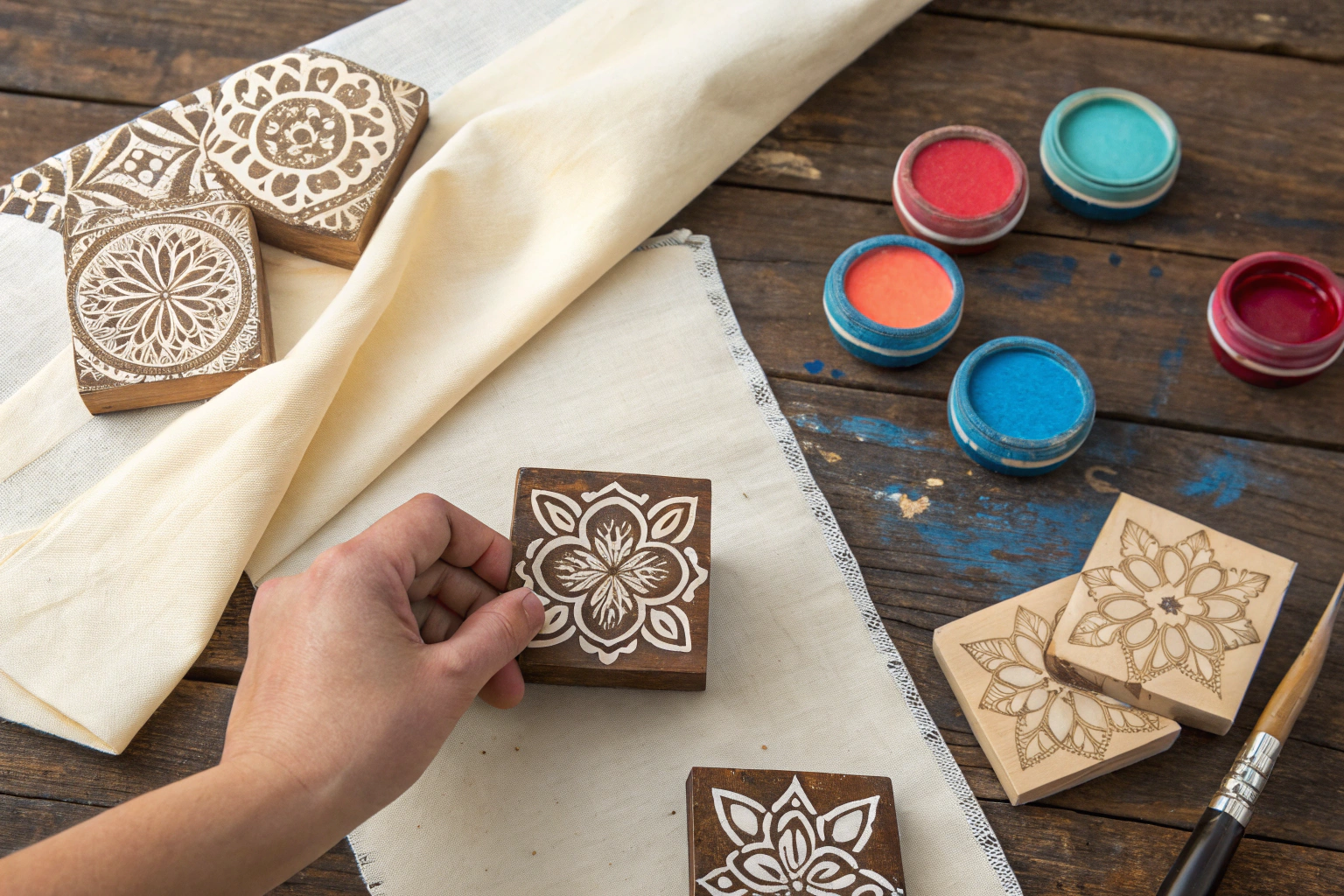
Block printing is not like digital printing. It’s a physical mechanical process. You are literally smacking a carved piece of wood onto cloth. The fabric needs to be a willing partner in this dance. It needs to Grab the ink. It needs to Lie Flat without shifting. It needs to have a surface that accepts the Pressure without bruising.
Choose the wrong fabric and you’ll end up with a blurry smeared mess that looks like a toddler’s art project. Choose the right fabric and you get that crisp beautiful imperfect line that makes block print so special.
At Shanghai Fumao we supply fabric to a number of block printing studios both in the US and in India. We’ve learned through trial and error exactly which base cloths work and which ones are a waste of time. In this article I’m going to share that hard-won knowledge. I’ll break down the specific fiber content the weave structure and the finishing that makes a fabric block-print ready.
Why Are Natural Fibers Preferred for Hand Block Printing
The answer is simple chemistry and physics. Natural Fibers (Cotton Linen Silk) are Hydrophilic . They love water. Synthetic Fibers (Polyester Nylon) are Hydrophobic . They hate water.
Block printing inks are Water-Based . When you press the block onto cotton voile the water in the ink wicks into the fiber instantly. The pigment is pulled into the fabric structure and Bonds with the cellulose. The print becomes part of the fabric.
When you press that same block onto polyester the water-based ink sits on top of the surface. It Beads Up . It doesn’t penetrate. The block slides on the slick surface causing Blurring . Even if you manage to get a clean impression the ink will Flake Off after a few washes because it never bonded.
There is an exception: Dye-Sublimation Block Printing . You can use a special dye paste on polyester and then heat press it. The heat turns the dye into a gas that penetrates the polyester. This is a specialized industrial process. But for traditional hand block printing with air-dried inks Stick to Natural Fibers .
The other reason natural fibers win is Tooth . Cotton and linen have a slight natural roughness or "Tooth" . This microscopic texture grips the wooden block and prevents it from sliding. Polyester is like printing on glass. Cotton is like printing on fine art paper.

How Does Cotton Voile Compare to Cotton Poplin for Print Clarity
This is the choice that defines the aesthetic of your collection.
Cotton Voile : This is a lightweight plain weave fabric with a Crisp Handfeel and a slightly Sheer Quality . It has a very Smooth Tight Surface . Because the yarns are fine and highly twisted the surface is almost paper-like. This makes it the Gold Standard for Block Printing . The block leaves a Crisp Sharp Edge . The ink sits beautifully on the surface without bleeding into the weave. It’s perfect for detailed intricate floral motifs.
Cotton Poplin : This is a medium-weight plain weave. It has a Softer Drape and more Body than voile. It’s less sheer. The surface is smooth but has a slightly more visible Weave Texture . Block prints on poplin have a slightly Softer Edge . It looks more Vintage and Worn-In . This is great for a casual bohemian look but not ideal for hyper-detailed geometric patterns.
Cotton Sheeting : This is a coarser heavier weave. The surface is Textured . The block will not make full contact with all the fibers. You will get a Distressed Mottled Print . This is a specific aesthetic choice but it’s not for crisp clean designs.
Here is a comparison of the most common block printing bases.
| Fabric Type | Surface Smoothness | Ink Absorption | Print Crispness | Best For |
|---|---|---|---|---|
| Cotton Voile | Excellent | Good | Excellent | Detailed Floral / Paisley |
| Cotton Poplin | Good | Good | Good | Casual / Vintage Look |
| Cotton Sheeting | Fair | High | Distressed | Textured / Abstract |
| Silk Habotai | Excellent | Medium | Excellent | Luxury Scarves |
| Linen | Textured | High | Mottled | Rustic / Home Decor |
Why Does Fabric Finish Matter More Than Weave for Block Printing
This is the inside scoop that most designers miss. You can buy a beautiful roll of Greige Cotton Voile and it will print terribly.
Why? Starch and Sizing .
When fabric comes off the loom it’s coated in a substance called Sizing . This is a protective starch or PVA coating that helps the yarns survive the high-speed weaving process. Sizing is Water-Repellent . It seals the fiber and prevents ink absorption.
If you try to block print on fabric that still has the sizing in it the ink will sit on top of the starch. It will Bead Up and Smear . Then when you wash the fabric the starch washes out and the ink washes out with it.
The fabric MUST be Scoured and Desized before printing.
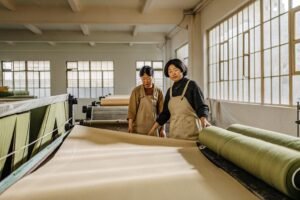
At Shanghai Fumao we offer Prepared for Print (PFP) fabric. This means we run the fabric through a Continuous Washing Range to remove all sizing. We also apply a light Optical Brightener if you want a bright white base. This fabric is Ready to Print straight off the roll. It absorbs ink like a sponge.
If you’re sourcing fabric from a general market ask specifically for "Desized" or "PFP" fabric. If the seller looks confused walk away. They are selling greige goods that will ruin your print run.
How to Prepare Silk and Silk Blends for Block Printing
Silk is the prima donna of block printing. It’s absolutely gorgeous when done right. The colors glow. The fabric drapes like water. But it is Temperamental .
The biggest challenge with silk is Static Electricity . Silk generates a tremendous static charge when you handle it. The fabric will Cling to the Block . You’ll press the block down and when you lift it the silk comes with it. This smears the print instantly.
The solution is Humidity Control . Professional block printers work in studios with 60-70% Humidity . They also lightly Mist the silk with water using a fine spray bottle before printing. The moisture kills the static and helps the silk lie flat.
The second challenge is Sericin . Raw silk (Silk Noil) has a natural gum called sericin. This gum repels water-based ink just like sizing does on cotton. You must use Degummed Silk (Habotai Crepe de Chine).
The third challenge is Weight . Block printing requires pressure. If the silk is too thin (under 8mm) the block will Cut Through the fabric. You need a minimum of 10mm to 12mm Silk Habotai for successful block printing. This is heavier than the 8mm silk used for scarves.

What Is the Best Silk Weight for Crisp Block Impressions
Let’s be specific about Momme Weight .
- 8 Momme : Too light. The block tears it. The ink bleeds through.
- 10-12 Momme : The Sweet Spot . Light enough for a scarf but sturdy enough to take the pressure.
- 16 Momme and Up : Excellent for apparel but more expensive. Takes ink beautifully.
At Shanghai Fumao we recommend 12 Momme Sandwashed Habotai for block printing. The sandwashing process gives the silk a Matte Peach-Skin Finish that grips the ink better than glossy charmeuse.
How Do Silk Cotton Blends Perform with Water Based Inks
This is a fantastic option for brands that want the luster of silk with the ease of cotton.
A 70% Cotton / 30% Silk Blend is a dream to print on. The cotton provides Absorbency and Tooth . The silk provides Luster and Drape . It’s less static-y than 100% silk.
The ink bonds primarily with the cotton fibers but the silk fibers reflect light through the print giving it a beautiful Depth and Glow . It’s a more forgiving fabric for beginners and a more affordable option for production.
What Are the Best Vegan Alternatives to Silk for Printing
The demand for vegan silk alternatives has exploded. And thankfully there are some excellent options that block print beautifully.
Tencel (Lyocell) is my top recommendation. It’s a regenerated cellulose fiber made from wood pulp. It’s Smooth Absorbent and has a beautiful Fluid Drape . It takes water-based ink incredibly well. The colors are vibrant and the wash fastness is excellent.
The best Tencel weave for block printing is Tencel Twill or Tencel Satin . The smooth surface provides a good base for the block. Avoid Tencel Jersey (knit) as it stretches and distorts the print.
Cupro is another excellent option. As I’ve written about before it’s made from cotton linter and has a silk-like handfeel. It’s Anti-Static which is a huge advantage over real silk. It lies flat on the table with no fuss. The print quality is crisp and detailed.
Bamboo Viscose is the budget-friendly vegan option. It’s soft and absorbent. However it can be Weak When Wet . If you use too much water in your ink or if you wash it aggressively the fabric can tear. Use a light touch.

How Does Tencel Compare to Cupro for Detail Retention
Both are excellent but there is a subtle difference in hand.
Tencel has a tendency to Fibrillate . This means tiny micro-fibrils peel up from the surface when it’s wet and rubbed. This gives Tencel a Soft Peach Fuzz over time. For block printing this means the Edges of the Print will Soften after a few washes. It looks beautifully vintage.
Cupro does Not Fibrillate . It stays Smooth and Slick . The print edge stays Crisp and Sharp wash after wash.
If your design has very fine lines or tiny text choose Cupro . If you want that soft lived-in look choose Tencel .
Why Is Modal a Good Entry Point for Block Printing Beginners
If you are just starting out and learning the craft Modal is your best friend.
Modal is a type of rayon made from beechwood trees. It’s Inexpensive . It’s Incredibly Soft . And most importantly it is Very Forgiving .
Modal has a high Wet Strength . It won’t fall apart when you saturate it with ink. It has a smooth surface with just enough tooth to grip the block. The ink absorption is rapid and even.
I recommend Modal Satin for practice and for first production runs. It gives you a premium look without the premium price tag or the handling difficulties of silk.
How to Care for Block Printed Fabrics to Prevent Fading
You’ve created a beautiful block printed piece. Now you have to teach your customer how to not ruin it. Because the number one complaint about block print is Fading . And 90% of the time it’s due to Improper Washing and Drying .
The pigments used in traditional block printing are Surface Pigments . They sit on top of the fiber bonded by a binder. They are not Fiber Reactive Dyes that penetrate the cellulose molecule. This means they are More Delicate .
Rule Number 1: Wash in Cold Water with Mild Detergent. Hot water softens the binder and releases the pigment. Harsh detergents (like Tide) strip the color.
Rule Number 2: NEVER Soak. Do not let the garment sit in a bucket of water overnight. The pigment will Bleed into the water and stain the white areas of the fabric. Wash quickly and rinse immediately.
Rule Number 3: Dry in the Shade. UV radiation from the sun is the enemy of natural pigments. It Fades the color rapidly. Always line dry in the shade or tumble dry on Air Fluff (No Heat) .
Rule Number 4: Iron on the Reverse Side. Ironing directly on the print can cause the pigment to Melt and Stick to the iron especially if it’s a synthetic pigment. Always iron on the back side of the fabric or use a Press Cloth .
At Shanghai Fumao we provide a Care Instruction Card Template for our block printing clients. It’s a small thing that dramatically reduces returns.

What Is the Difference Between Pigment and Reactive Printing Durability
This is the technical distinction that determines wash fastness.
Pigment Prints : The color sits On Top of the fiber. Think of it like painting a wall. It’s vibrant and opaque. But it will eventually Crack and Fade with abrasion and washing. This is 95% of block printing.
Reactive Prints : The dye forms a Covalent Bond with the fiber. It becomes Part of the Fabric . It will never wash out or fade appreciably. This is what we do in our industrial screen printing.
Traditional block printing is almost always Pigment . You can do Reactive Block Printing using a special seaweed-based thickener but it’s a much more complex chemical process involving steaming and washing. It’s rarely done in small artisan studios.
Set customer expectations appropriately. Block print is a Living Finish . It evolves over time. It fades gently. That’s the beauty of it. It’s not a defect.
How to Set Block Printing Ink with a Heat Press
If you want to increase the wash fastness of your block prints you can Heat Set them.
After the ink has air-dried for 24-48 hours you can use a Heat Press at 320°F (160°C) for 30-45 seconds .
This melts the acrylic binder in the pigment and fuses it to the fabric. This Significantly Improves Wash Fastness .
You must use a Teflon Sheet between the press and the fabric to prevent scorching. This is a step that separates professional production from hobbyist printing. If you’re making garments for sale you should be heat setting your prints.
Conclusion
Choosing the best fabric for block printing customization is about understanding the relationship between the fiber the weave and the ink. Natural fibers with a smooth surface and a hydrophilic nature are non-negotiable. Cotton voile and silk habotai are the gold standards for crisp detail while Tencel and Cupro offer beautiful vegan alternatives. And perhaps most importantly the fabric must be properly prepared desized and free of finishes that repel water-based inks.
Block printing is a conversation between the artisan and the material. When you provide the right fabric you give the artisan the best possible canvas for their skill. The result is a product that carries the unmistakable mark of human hands a warmth and irregularity that no digital printer can replicate.
At Shanghai Fumao we understand the unique requirements of the block printing community. We stock a range of Prepared for Print (PFP) fabrics specifically chosen for their compatibility with hand printing techniques. Whether you need a lightweight cotton voile for a summer dress or a sandwashed silk for a luxury scarf we have the base cloth ready to go.
If you’re developing a block print collection and need a reliable source for high-quality printing bases please reach out to our Business Director Elaine. She can send you swatch packs of our PFP fabrics and advise on the best weights and weaves for your specific designs.
Contact Elaine at: elaine@fumaoclothing.com