I’ll be honest with you. This question drives me a little crazy. Not because it’s a bad question. It’s a great question. It drives me crazy because the answer is not a single number. It’s a math equation. And if you just Google "woven label MOQ" you’ll get a bunch of trading companies telling you "1,000 pieces minimum" because they want to make a quick buck on a stock service. But that number means nothing without context.
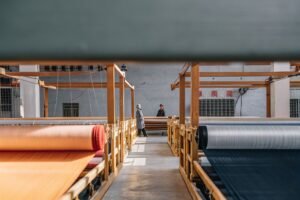
Let me tell you what an MOQ actually represents in a weaving mill. It represents the Cost of Setting Up the Loom. A label loom is a tiny precision machine. It has hundreds of warp threads. Someone has to draw those threads through the heddles based on your specific design. That setup time called Warping and Drawing-In takes a skilled technician about 2-4 hours depending on the complexity of your logo. That time is fixed. Whether you order 100 labels or 10,000 labels that setup cost is the same.
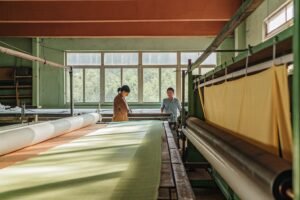
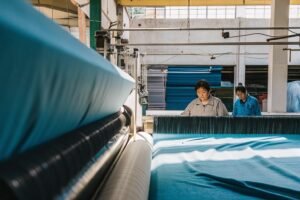
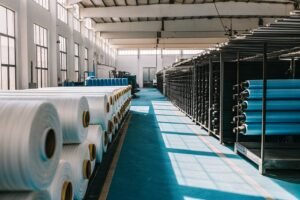
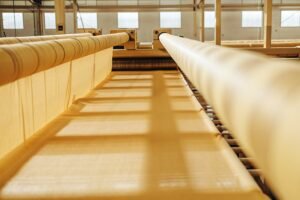
At Shanghai Fumao we don’t just print labels. We manufacture the fabric for the labels and then weave the labels themselves. Because we control the upstream process we can be much more flexible on MOQs than a standalone label converter. We understand that a small brand launching a Kickstarter campaign doesn’t need 5,000 labels. They need 300. And we can do that profitably if we understand the economics of the loom.
My goal in this article is to pull back the curtain on the woven label supply chain. I’m going to show you exactly what drives the minimum order quantity what the trade-offs are and how you can get a premium custom label even if you’re only making 50 units of your first collection. This is the inside baseball of trim sourcing.
Why Do Woven Label MOQs Vary So Much Between Suppliers
You’ve probably noticed the wild price and MOQ swings. One supplier says MOQ 300 pieces at $0.80 each. Another says MOQ 5,000 pieces at $0.15 each. They’re both telling the truth. But they are running Different Business Models.
The supplier with the 5,000 MOQ is running a High-Speed Shuttle Loom . These looms are designed for Mass Production. They run at 600 picks per minute. But they take a long time to set up. They also require a minimum amount of Warp Yarn on the beam. You can’t put just 50 yards of warp on a big industrial beam. You need at least 500 yards. That 500 yards of warp will make roughly 5,000 to 10,000 labels depending on the label height. That’s where that MOQ comes from. It’s a Physical Minimum of the Machine .
The supplier with the 300 MOQ is running a Sample Loom or a Needle Loom . These are smaller slower machines. They are designed for Flexibility . The setup time is faster. They can run a very short warp length. The cost per label is higher because the machine runs slower and the operator’s time is a bigger portion of the cost. But they can serve the small brand market.
At Shanghai Fumao we operate both types of machines. We have the high-speed looms for our large garment factory clients who need millions of labels a year. And we have the needle looms specifically for our designer and startup clients. This allows us to offer a Sliding Scale MOQ . We don’t have just one answer. We have the right answer for your specific stage of business.

How Does Label Design Complexity Impact the Minimum Order
This is the part that surprises most first-time label buyers. The Shape and Color Count of your label change the MOQ.
A Straight Cut Label (a simple rectangle folded in half) is the cheapest and lowest MOQ option. The weaving is straightforward and the cutting is done by a high-speed laser or hot knife.
A Die Cut Label (a custom shape like a shield a circle or a jagged edge) requires a Metal Die . That die costs money. We have to amortize the cost of that die over the production run. If you order 200 pieces the die cost might be $50. That adds $0.25 per label. If you order 2,000 pieces that same $50 die cost adds only $0.02 per label. This is why die-cut labels often have a higher Effective MOQ . It’s not that we can’t make 200 pieces. It’s that the unit price becomes so high it doesn’t make economic sense for you.
Color Count is the other big factor. A label with 2 colors is simple. A label with 8 colors requires a loom with 8 Weft Feeders . These are more complex machines to set up. The Waste Factor is also higher. Every time the loom changes color there is a small tail of yarn that gets trimmed off. With 8 colors you have more waste. This increases the minimum warp length needed to be efficient.
Here is a quick reference table for how design specs change the commercial terms.
| Design Complexity | Machine Type | Typical MOQ | Price Impact | Best For |
|---|---|---|---|---|
| 1-2 Colors / Straight Cut | Needle Loom | 300 pcs | $0.60 – $0.90 | Startups / Samples |
| 3-4 Colors / Straight Cut | Shuttle Loom | 1,000 pcs | $0.30 – $0.50 | Mid-Size Brands |
| Custom Die Cut / 6+ Colors | Jacquard Shuttle | 2,000 pcs | $0.20 – $0.40 | Established Brands |
| Metallic Thread / Merrowed Edge | Specialty Loom | 500 pcs | $0.80 – $1.20 | Premium Denim |
What Is the Cost Breakdown of a Woven Label Production Run
Let’s get transparent about where your money goes. This will help you understand why we can’t just "run a few more."
- Artwork & Film (One-Time) : $30 – $80. We have to create a Loom File . This is a digital file that tells the Jacquard head which hook to lift. It’s a skilled digital job.
- Warping & Setup (Per Run) : $50 – $150. This is the labor to thread the loom. This is the biggest chunk of the MOQ barrier.
- Yarn Cost (Per 1,000 pcs) : $5 – $20. The actual raw material. Damask yarn (fine polyester) is cheap. Metallic thread or organic cotton is expensive.
- Weaving Time (Per 1,000 pcs) : $10 – $30. Machine depreciation and electricity.
- Cutting & Folding (Per 1,000 pcs) : $15 – $40. This is the finishing labor. Manual folding for centerfold labels is surprisingly time-consuming.
When you order a small quantity the Warping & Setup cost dominates the price. When you order a large quantity the Cutting & Folding cost dominates. That’s the economy of scale in a nutshell.
How Can Small Brands Order Less Than the Standard MOQ
I remember when I first started in this business I had a small brand come to me. They needed 150 labels for a capsule collection of hand-sewn bags. They had a beautiful logo but they were getting laughed at by the big label factories. They were desperate.
I told them what I tell every small brand now. You have options but you have to be smart about the specs.
The first option is Go Simple on the Design . If you can live with a 1-Color Woven Label on a white or black background we can often fit your order into a Piggyback Run . This means we combine your label order with another client’s order on the same warp beam. We just change the weft color. This reduces your setup cost share significantly. The MOQ can drop to 100-200 pieces .
The second option is Accept a Stock Size . If you design your logo to fit within a standard 40mm x 20mm or 60mm x 25mm rectangle we can use a Pre-Threaded Loom . We keep a few looms set up with the most common label widths in black and white warp. This eliminates the setup cost entirely. You just pay for the weaving time. This is the Fastest and Cheapest way to get a small batch of custom labels.
The third option is Pay the Setup Fee . This is the honest conversation. "The MOQ is 1,000 pieces but if you pay the $100 setup fee I will make you 200 pieces." The per-label price will be high maybe $1.50 each. But your total cash outlay is $300 instead of $800. For a brand that only needs 200 labels $300 is better than $800 even if the unit cost is higher. It’s a Cash Flow decision.
At Shanghai Fumao we walk through all three of these options with every small brand client. We don’t just say "No MOQ 1000." We say "Here are the three ways we can make this work for your budget."

What Are Piggyback or Shared Warp Programs for Labels
This is the industry secret for low MOQs. It’s how we help brands get started.
A Shared Warp is a warp beam that is set up with a Neutral Color (usually White Black or Natural Cotton) and a Standard Width (e.g. 50mm). This warp is left on the loom for weeks at a time.
When you place an order we don’t have to re-thread the loom. We just load your specific Weft Yarns (the colors of your logo). We weave your labels using the shared warp. Because the warp is white the background of your label will be white. If your brand logo works on a white background you’re golden.
This reduces the MOQ to as low as 100 pieces . The catch is you are limited to that specific warp color. You can’t get a Navy Blue background label through a Shared Warp program unless we happen to have a Navy warp running that week (which does happen in Fall/Winter when denim brands are ordering).
This is a fantastic option for Care Labels and Size Labels where the background is almost always white and the text is black.
How to Use Stock Woven Labels for Your First Production Run
I know this article is about Custom labels. But I have to mention the smartest move for a True First Run. Use a Stock Woven Label .
We have a library of hundreds of generic but beautiful labels. "Handmade." "Established 2024." "Designed in California." A simple floral motif. You can buy these in packs of 50 pieces off the shelf.
You combine this stock label with a Custom Hang Tag . The hang tag carries your brand name and logo. The woven label adds a premium touch to the garment without the huge setup cost. This is how you get a "branded" feel on a shoestring budget.
Once you sell out that first run you take the profit and invest it in a Full Custom Woven Label program with a proper MOQ. It’s a stair-step approach to building a brand. I’ve seen this work beautifully for dozens of brands.
What Are the Most Cost-Effective Label Materials for Startups
The material you choose for your label has a massive impact on both the price and the Perceived Value of your garment. But more expensive doesn’t always mean better for your specific product.
The workhorse of the industry is Damask . Damask is a tight weave using fine polyester yarns. It’s Smooth Detailed and Durable . It holds fine text and intricate logos beautifully. It’s the standard for most menswear and womenswear. It’s also Washable and holds up well to industrial laundering. If you’re not sure what to pick pick Damask. It’s the safe premium choice.
The budget-friendly option is Taffeta . Taffeta has a Crisp handfeel and a slight Sheen . It’s thinner than damask. The detail is slightly less sharp. But it’s Significantly Cheaper . For a high-volume basic t-shirt line where you’re watching every penny Taffeta is perfectly acceptable. The consumer won’t notice the difference unless they are a textile nerd.
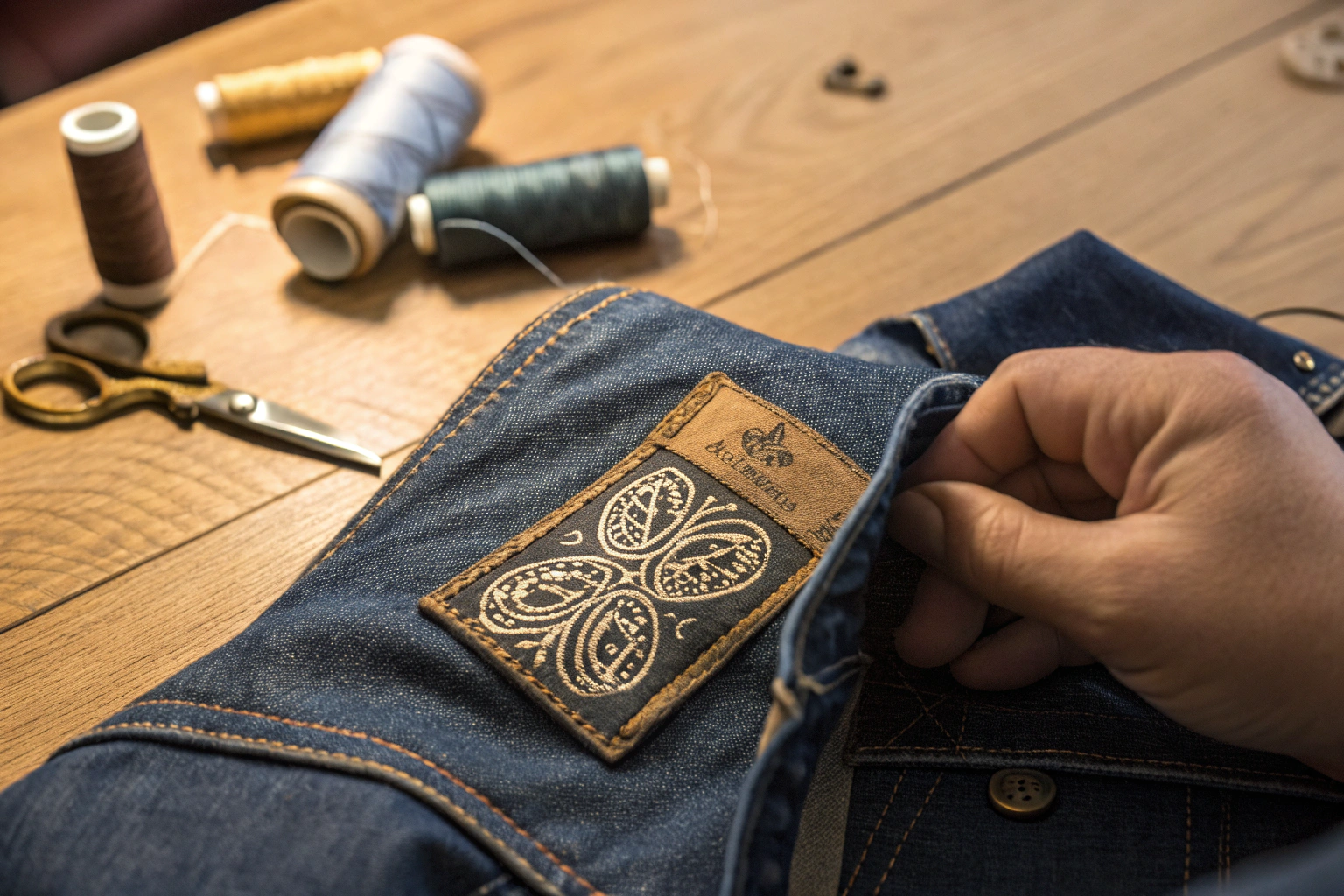
The premium natural option is Cotton Twill . This is a soft textured label with a Matte Finish . It looks beautiful on denim workwear and heritage brands. It gives a vintage artisanal feel. However it Frays at the edges unless you use a Laser Cut or a Merrowed Edge . This adds cost. Also the detail on cotton twill is not as crisp as damask. Small serif fonts can fill in and become illegible.

How Does Damask Weave Compare to Taffeta for Detail and Durability
Let’s get technical about the weave structure.
Damask is a Jacquard Weave . It uses a Satin Weave structure for the background and a Twill Weave for the lettering. This creates a subtle contrast in luster. The high thread count (often 50-60 threads per centimeter) allows for Extreme Detail . You can weave a tiny 4-point font and it will be readable.
Taffeta is a Plain Weave . It’s a simple over-under structure. The thread count is lower (around 30-40 threads per centimeter). The surface is flatter and less dimensional. Fine details will "stair-step" or look jagged.
For durability Damask wins hands down. The tight weave resists abrasion. Taffeta labels can get Snagged more easily because the yarns are looser.
Here is a quick comparison of the common label face materials.
| Material | Handfeel | Detail Sharpness | Durability | Relative Cost |
|---|---|---|---|---|
| Damask | Smooth / Silky | Excellent | Excellent | $$$ |
| Taffeta | Crisp / Sheen | Good | Good | $ |
| Cotton Twill | Soft / Matte | Fair | Good (Frays) | $$ |
| Satin | Lustrous / Slick | Very Good | Good | $$ |
Why Is Polyester Thread Preferred Over Cotton for Washability
I love the idea of an all-cotton garment with an all-cotton label. It’s poetic. But it’s a practical nightmare.
Cotton Thread Shrinks . When you sew a cotton label onto a cotton t-shirt and then wash it in hot water the label shrinks at a different rate than the t-shirt fabric. This causes Puckering . The back of the neck looks wrinkled and distorted. It screams "cheap."
Polyester Thread is Dimensionally Stable . It does not shrink. It does not stretch. It lays flat wash after wash.
Also Polyester Yarn accepts Dye more vibrantly than cotton. That crisp white background on your damask label? That’s optical white polyester. Cotton always has a slightly creamy yellow undertone.
For the Edge Finish we also prefer polyester Merrowing Thread . It melts slightly when cut with a hot knife sealing the edge and preventing fraying. Cotton merrowing just burns and turns brown.
How to Design Artwork That Minimizes Setup Costs and Waste
The best way to lower your MOQ and your price per label is to submit Clean Artwork . A bad file costs us time and time is money.
We need Vector Files . .AI .EPS .PDF or .CDR . Do not send a .JPG or .PNG from Canva. We cannot weave a pixel. We weave a thread. We need a Path that the loom software can trace.
The most common mistake that increases cost is Too Many Colors . Every color requires a separate weft insertion. If you design a logo with a gradient (e.g., blue fading to light blue) we cannot weave that as a smooth gradient. We have to use Dithering which looks dotty or we have to add extra colors. Reduce your design to Solid Spot Colors . Provide Pantone TPX Numbers for textile matching not Pantone C (Coated) which is for paper.
The second biggest cost driver is Tiny Text . If your font size is below 6 points it will likely Fill In with ink and become a blob. We have a minimum Positive Stroke Width of 0.3mm and a minimum Negative Space of 0.2mm . If your design is finer than that we will have to redraw it and charge an Artwork Modification Fee .
At Shanghai Fumao we provide a Pre-Production Proof . This is a digital simulation of how your label will weave. You Must Approve This Proof . Look at the text closely. Zoom in. If it looks blurry on the screen it will be blurry in the thread.

What File Formats and Color Specifications Do Weaving Mills Require
Let’s be specific. Here is the exact spec sheet I send to designers.
- File Format: Vector
.AIor.PDF(Outlined fonts). - Color Space: Spot Colors only. Provide Pantone TPX codes. (Example: 19-4052 Classic Blue TPX).
- Resolution: Minimum detail size 0.3mm.
- Label Dimensions: Indicate Cut Width and Fold Width clearly.
If you are using Metallic Thread (Gold Silver Copper) you need to designate that as a specific spot color. Note that metallic threads Tarnish slightly over time due to oxidation. This is normal. It’s a feature of real metal thread not a defect.
For a deep dive into the technical specifications of label weaving I recommend reading industry resources on the specific requirements for preparing digital artwork for Jacquard woven label production including dot gain and weave simulation. It’s a niche skill set.
How Does Label Folding Type Affect the Garment Sewing Process
This is a detail that impacts the Cut and Sew Factory more than it impacts you but it affects your bottom line.
Centerfold (Endfold) : The label is folded in half. There is a crease in the middle. The sewer inserts both raw edges into the collar seam. This is the Fastest and Cheapest sewing method. It’s standard for t-shirts.
Flat (Straight Cut) : The label is a single layer. The sewer must fold the raw edges under manually. This takes More Time and More Skill . It creates a cleaner look with no crease across the logo. It’s used for high-end denim and jackets.
Manhattan Fold (Bookfold) : The label is folded with a 6mm lip on both sides. The sewer stitches through the lips. The label sits Proud of the garment. It’s used for Hang Tags and Bag Labels .
You must specify the fold type when ordering. It changes the Cut Width of the label. A centerfold label needs to be twice as wide as a flat label.
What Is the Typical Turnaround Time for Custom Label Production
Time is the other currency in fashion. You can have the lowest MOQ in the world but if it takes 8 weeks to get the labels you’ve missed your delivery window.
The standard turnaround time for custom woven labels in our industry is 2-4 Weeks from artwork approval. This includes:
- Warping (1-2 days) : Threading the loom.
- Weaving (2-5 days) : Running the production.
- Cutting & Folding (3-5 days) : Manual or automated finishing.
- Shipping (3-7 days) : Express or Standard Courier.
If you are in a true time crunch we offer Rush Service . This means we bump your order to the front of the queue. The weaving step remains the same (you can’t rush the loom speed). But we can eliminate the Queue Time . A 4-week order becomes a 10-Day Order . There is a Rush Fee of about $75 – $150 . It’s expensive but it’s cheaper than air-freighting empty garments because you didn’t have labels.
At Shanghai Fumao we keep a Production Calendar shared with our clients. You can see exactly when your label run is scheduled. This transparency eliminates the "Where is my order?" emails.

How Does the Chinese New Year Holiday Affect Label Lead Times
This is the single most important date on the calendar for anyone sourcing from China.
For roughly 3-4 Weeks in late January and February the entire label industry Shuts Down . The workers go home to their villages. The looms are silent.
This means the 4 Weeks Before CNY are the busiest time of the year. Every brand is trying to squeeze in their orders before the break. Lead times Double during this period. A 2-week order becomes a 4-week order. Quality control can also suffer as factories rush to clear the floor.
My advice is simple. Plan Backwards from CNY . If you need labels in March you must place the order in Early January . Do not wait until February 1st. The factory gates will be locked and your email will go unanswered for three weeks.
What Are the Shipping Options for Small Batch Label Orders
For small brands shipping cost can be a dealbreaker. You don’t want to pay $40 to ship $50 worth of labels.
- Standard Airmail (ePacket / China Post) : $5 – $15. Takes 2-4 weeks. Tracking is unreliable. Fine for samples not for production deadlines.
- Express Courier (DHL / FedEx / UPS) : $25 – $50. Takes 3-5 days. Door-to-door tracking. This is the only option I recommend for production orders. The cost is justified by the peace of mind.
- Sea Freight Consolidation : If you are shipping a large order of fabric from us we can just Throw the Labels in the Box for free. This is the biggest advantage of sourcing labels from your fabric mill. We combine shipments. You save the courier fee entirely.
Conclusion
The MOQ for custom woven labels is not a fixed number. It’s a conversation. It’s a negotiation between your brand’s needs and the physical realities of a weaving loom. While the industry standard might be 1,000 pieces for a fully custom jacquard label there are numerous pathways for smaller brands to access premium branding through shared warp programs simplified designs and stock sizes.
Understanding the cost drivers setup time yarn type and finishing complexity empowers you to make smarter decisions. You don’t have to order 5,000 labels you’ll never use. You can start with 200 labels for your first collection and scale up as your brand grows. The key is working with a supplier who has the flexibility and the range of machinery to accommodate both ends of the spectrum.
At Shanghai Fumao we view labels as the final signature on our fabric. It’s the detail that tells the customer "This garment was made with care." We offer a full-service label program that integrates seamlessly with our fabric production. Whether you need a simple size tab or an intricate damask brand label we have the loom the thread and the expertise to bring your logo to life.
If you’re ready to discuss a label project or you just want to get a realistic quote based on your specific artwork I invite you to reach out to our Business Director Elaine. She can review your logo file advise on the most cost-effective materials and provide a clear timeline for delivery.
Contact Elaine at: elaine@fumaoclothing.com