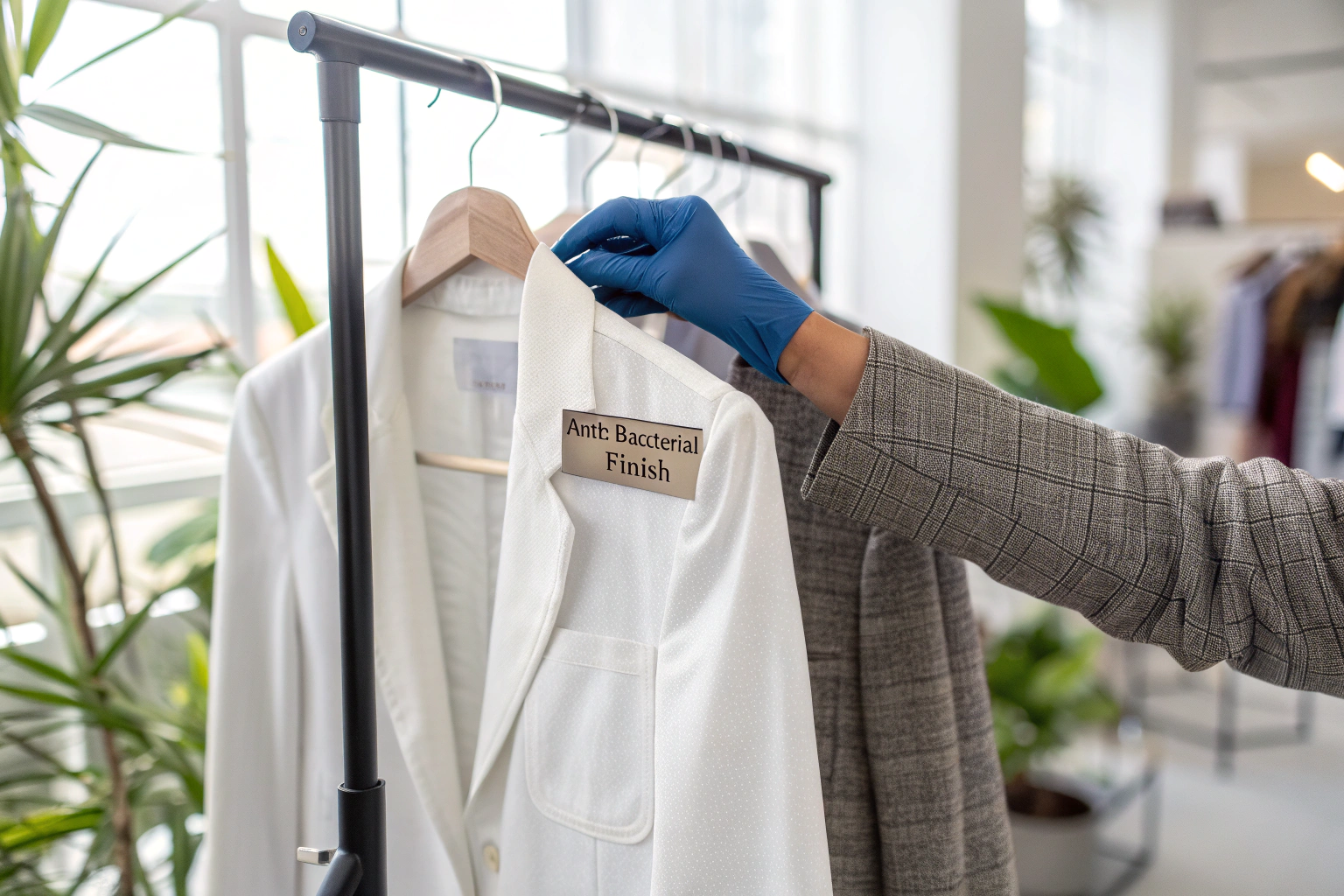
I’m going to say something that might surprise you coming from a textile guy. I think the word "Anti-Bacterial" is one of the most overused and misunderstood terms in fashion right now. Since 2020 every brand and their brother has wanted "anti-bacterial fabric" for their new line. It makes sense. Consumers are hyper-aware of hygiene and wellness. But here’s the problem. Most of what’s being sold as "anti-bacterial" is either marketing fluff that washes out in three cycles or worse it’s treated with chemistry that you really don’t want against your skin for eight hours a day.
The risk of getting this wrong is higher than just a customer complaint about pilling. If you claim your fabric is anti-bacterial and it’s not you’re looking at a potential FTC violation for false advertising. If you use a cheap heavy-metal treatment like some unregulated triclosan alternatives you could face a Class Action Lawsuit for skin irritation. The stakes are real.
At Shanghai Fumao we’ve been working with functional finishes for over a decade long before they were trendy. We supply fabric to healthcare hospitality and now increasingly to fashion brands who want to incorporate Wellness Technology into their everyday wear. My goal in this article is to cut through the hype. I’m going to explain exactly what technologies actually work how to verify them and how to source them without falling into the trap of expensive greenwashing.
This isn’t about making a mask or a medical gown. This is about making a travel blazer a yoga top or a work shirt that stays fresher longer and gives the wearer a little extra peace of mind. That’s the sweet spot for post-pandemic apparel.
What Is the Difference Between Antimicrobial and Antibacterial
Let’s start with the vocabulary because if you use the wrong word on your hang tag you are asking for legal trouble. These terms are regulated by the EPA in the US and the BPR in the EU. They are not synonyms.
Antibacterial is the narrow term. It means the fabric kills or inhibits Bacteria specifically. Think Staphylococcus aureus or Klebsiella pneumoniae . It doesn’t do anything to fungus or viruses.
Antimicrobial is the broad term. It means the fabric kills or inhibits a wider range of Microorganisms . This includes Bacteria Fungi (Mold/Mildew) and sometimes even Viruses (though the term for viruses is usually Antiviral ).
For post-pandemic apparel the conversation is shifting from Antibacterial to Antiviral . Consumers want to know if the fabric can stop the flu or a cold virus. However proving antiviral efficacy is much harder and more expensive than proving antibacterial efficacy. Most "Anti-Bacterial" fabrics on the market have zero tested effect on viruses.
At Shanghai Fumao we always clarify this with clients. "Do you want odor control (antibacterial)? Or do you want viral protection (antiviral)?" Because the chemistry and the cost are completely different. Odor control is relatively easy and durable. Viral protection is often based on Silver or Copper technology and requires rigorous ISO 18184 testing.
The other critical distinction is between Leaching and Non-Leaching technologies. A Leaching finish (like old-school triclosan) releases chemicals that kill microbes. This means it washes out over time and the chemicals can absorb into your skin. It’s largely banned or restricted now. A Non-Leaching finish (like Silane Quaternary Ammonium or Bound Silver ) stays attached to the fabric. It punctures the cell wall of the microbe on contact but doesn’t come off on your skin. This is the only type of finish acceptable for premium apparel.

How Does Bound Silver Technology Compare to Organic Finishes
This is the battle royale of functional fabric chemistry. Silver vs. Organic .
Silver Ions (Ag+) are the gold standard for durability. Silver has been used for centuries for its oligodynamic effect. The silver ion disrupts the bacteria’s cell membrane and interferes with its DNA replication. The key is that silver is Thermally Stable. You can wash a silver-treated fabric 50 times and it still works. The downside is Cost. Silver is a precious metal. A high-quality silver finish adds about $1.00 to $2.00 per yard to the fabric cost. Also silver can sometimes cause Discoloration if exposed to sulfur in the air (though modern formulations have mostly solved this).
Organic Finishes like Chitosan (from shrimp shells) or Essential Oils (like peppermint or tea tree) are the "natural" alternative. They are Biodegradable and Renewable. They appeal strongly to the eco-conscious consumer. The problem is Durability. These organic compounds are often not wash-fast. They degrade with heat and detergent. An organic finish might last 5-10 home washes. A silver finish lasts 50-100 washes.
Here is a comparison table based on our internal wash testing data.
| Technology Type | Active Ingredient | Durability (Washes) | Cost Impact | Sustainability Profile |
|---|---|---|---|---|
| Bound Silver | Silver Chloride / Zeolite | 50 – 100 | High | Mining impact / Recyclable |
| Copper Infusion | Copper Oxide | 50+ | Medium | Mining impact / Antimicrobial |
| Silane Quaternary | Ammonium Salt Polymer | 30 – 50 | Medium | Synthetic / Non-Leaching |
| Chitosan (Organic) | Shellfish Derivative | 5 – 15 | Low | Renewable / Biodegradable |
Why Is Odor Control a More Marketable Benefit Than Germ Killing
Here’s a piece of marketing advice based on actual sales data. Nobody wants to buy a "germ-killing shirt." It sounds clinical and scary. It implies the world is dirty. It’s a negative frame.
Everybody wants to buy a "Fresh Shirt." It sounds clean confident and convenient. It’s a positive frame.
The primary consumer benefit of antibacterial fabric is Odor Control . Body odor is caused by bacteria on the skin breaking down sweat into smelly fatty acids. If you stop the bacteria from growing you stop the smell. It’s that simple.
This means you can position a travel blazer as "Wear it three times between washes." You can position a work shirt as "Stays fresh from the morning commute to the evening dinner." This is a tangible lifestyle benefit. It saves time it saves water and it keeps the garment looking new longer because you wash it less often.
I tell my clients to lead with "Odor-Resistant" or "Fresh Tech" on the hang tag. Put the technical "Antibacterial" claim in the fine print for the compliance geeks. Sell the benefit not the mechanism. For more insight into this consumer psychology I recommend reading market research on the growing consumer demand for odor-control and easy-care apparel features in the post-pandemic work-from-home and travel sectors. The data supports the "Fresh" narrative over the "Germ" narrative.
How to Verify Antimicrobial Claims from Fabric Mills
This is the part where you have to put on your detective hat. Because the textile industry is full of "paper mills" that will sell you a fake certificate for $50. You cannot trust a PDF that just says "Anti-Bacterial Finish Applied."
You need to see the Third-Party Lab Test Report . Not a letter from the supplier. A report from a lab like SGS Intertek or Bureau Veritas .
The specific test method you want to see for antibacterial claims is AATCC 100 (Assessment of Antibacterial Finishes on Textile Materials). This is the quantitative standard. It measures the Percentage Reduction of specific bacteria after 24 hours of contact.
Look for two key pieces of data on the report. First Test Organisms. It should list Staphylococcus aureus (Gram-positive) and Klebsiella pneumoniae (Gram-negative). These are the industry standard surrogates for skin bacteria. Second Reduction Rate. A legitimate functional finish should show a reduction of >99% for both organisms. If the report shows only 90% or 95% reduction that’s a weak finish.
Also check the Wash Durability . A good report will test the fabric After 25 or 50 Home Launderings . It should still show >90% Reduction after washing. If the report only tests the fabric "As Received" (unwashed) the finish is probably just a topical spray that will vanish the first time the customer sweats in it.
At Shanghai Fumao we include a copy of the AATCC 100 Report with the Scope Certificate for every shipment of functional fabric. We don’t hide behind a marketing brochure. We show you the data.

What Is the Difference Between AATCC 100 and ISO 20743 Testing
These are the two main global standards for antibacterial textile testing. They are similar but not identical.
AATCC 100 is the American Standard. It’s a Quantitative test. It uses a Suspension Method . You put a known amount of bacteria onto the fabric seal it in a jar and incubate it for 24 hours. Then you count how many bacteria survived. This is the gold standard for apparel claims.
ISO 20743 is the International Standard. It has several methods but the most common is the Absorption Method . It’s very similar to AATCC 100. A reduction of >99.9% (Log 3 reduction) is considered "Strong" efficacy.
The key thing to check is that the Control Fabric used in the test is Identical in Construction to the test fabric minus the active ingredient. Some shady labs use a different control fabric to make the reduction rate look higher. The report should state "100% Cotton Control" vs "100% Cotton Treated."
For more detailed reading on the technical nuances of these tests I recommend resources that explain the comparative analysis of AATCC 100 and ISO 20743 test methods for determining antibacterial activity of treated textiles. Knowing the difference protects you from accepting an invalid report.
How to Spot a Fake or Misleading Antimicrobial Certificate
I’ve seen some creative fraud in my day. Here are the red flags that tell you the certificate is worthless.
Red Flag 1: The "Antibacterial Yarn" Claim with No Finish. Some suppliers claim the polyester yarn itself is antibacterial. This is 99% nonsense. Polyester is plastic. It does not kill bacteria unless it has been co-extruded with a Masterbatch Additive like silver-glass. You need to see a Certificate of Analysis (COA) for the yarn specifically showing the active ingredient loading.
Red Flag 2: The Expired or Vague Report. Check the date. A report from 2018 is too old. Formulations change. Check the Sample Description. Does it exactly match the fabric you are buying? "Blue Knitted Fabric" is not specific enough. It should state the fiber content and GSM.
Red Flag 3: The "E. coli" Trick. E. coli is easy to kill. It’s a weak gram-negative bacteria. If the report only shows results for E. coli and not S. aureus the finish is weak. S. aureus is a tough gram-positive bacteria with a thick cell wall. If it kills S. aureus it kills almost everything.
Here is a quick checklist for validating a functional finish report.
| Verification Step | What to Look For | What to Avoid |
|---|---|---|
| Lab Accreditation | SGS Intertek BV (ISO 17025) | Unknown lab name / No logo |
| Test Standard | AATCC 100 or ISO 20743 | "Internal Method" or "Visual Inspection" |
| Test Organisms | S. aureus AND K. pneumoniae | Only E. coli or only one organism |
| Reduction Rate | >99.9% (Log 3) | 90-95% (Weak efficacy) |
| Wash Durability | Tested after 25+ washes | "As Received" only |
What Are the Most Durable Anti-Odor Treatments for Apparel
Let’s talk about the elephant in the room. Laundry. Consumers wash their clothes. They use hot water. They use harsh detergent. They use fabric softener (which is the enemy of functional finishes). If your antibacterial finish doesn’t survive this it’s a waste of money.
The most durable technology for apparel that we have found is Zeolitic Silver or Silver Chloride applied via Pad-Dry-Cure in the finishing process. This is different from a simple spray-on finish.
The fabric is immersed in a bath containing the silver compound and a Binder . It’s squeezed through heavy rollers to force the chemistry into the fiber structure. Then it’s dried and cured at high heat (160-170°C). The heat Cross-Links the binder to the fabric and encapsulates the silver. This creates a Matrix that locks the active ingredient in place.
This type of finish easily survives 50+ Home Launderings . We test this regularly. We take the fabric wash it in a standard home machine with Tide detergent and dry it on medium heat 50 times. Then we send it back to the lab for AATCC 100 testing. It still shows >99% Reduction . That’s true durability.
The alternative for synthetic fibers like Polyester is Masterbatch Technology . Instead of finishing the fabric the silver is mixed into the liquid polymer before the fiber is extruded. This means the silver is Embedded Inside the Fiber . It is Permanent. It cannot wash off. It cannot wear off. This is the ultimate solution for high-performance activewear that gets washed after every single wear.

How Does Chitosan from Shellfish Provide a Natural Alternative
For brands that reject silver due to its mining impact or chemical concerns Chitosan is the leading natural alternative.
Chitosan is derived from Chitin which is found in the exoskeletons of Crustaceans (shrimp crab lobster). It’s a waste product of the seafood industry. It has a natural positive charge that attracts and disrupts the negatively charged cell walls of bacteria.
The feel of chitosan-treated fabric is lovely. It adds a slight Silky Handfeel and improves Moisture Management . It’s also Hypoallergenic .
The limitation as I mentioned is Wash Fastness. Because it’s a natural polysaccharide it breaks down over time. To improve durability we often combine Chitosan with a Bio-Based Crosslinker like Citric Acid . This creates ester bonds that help the chitosan stick to the cellulose in cotton fibers.
A Chitosan-treated cotton t-shirt will maintain good odor control for about 15-20 washes . That’s plenty for a fashion garment that isn’t washed after every wear. It’s a great story for a sustainable casual brand.
Why Is Copper Infusion Gaining Popularity in Athleisure Wear
Copper is the dark horse in this race. It’s been used in compression sleeves for arthritis for years. Now it’s moving into mainstream athleisure.
Copper has two advantages over Silver. First it’s Cheaper. It’s an industrial metal not a precious metal. Second it has Anti-Inflammatory Properties (alleged). The science on this is mixed but the consumer perception is strong.
From a textile perspective Copper Oxide is easy to incorporate into Viscose and Lyocell fibers. It’s often added to the spinning dope. The resulting fabric has a distinct Earthy Tone (slightly brownish or greenish) which works well for the muted natural palettes popular in wellness brands.
The durability of Copper infusion is excellent similar to silver because the metal is embedded in the fiber. It doesn’t wash out.
Here is a summary of the three main durable options.
| Durable Technology | Application Method | Wash Durability | Best Fiber Match |
|---|---|---|---|
| Silver (Masterbatch) | In-fiber extrusion | Permanent | Polyester Nylon |
| Silver (Pad-Dry-Cure) | Post-weave finishing | 50+ Washes | Cotton Blends |
| Copper (Infusion) | In-fiber dope | Permanent | Viscose Lyocell |
How to Market Wellness Fabrics Without Medical Claims
This is the tightrope every brand in this space has to walk. You want to sell the benefit of "staying fresh" without triggering the FDA or EPA . Because the moment you say "Kills Bacteria" or "Prevents Infection" you have made a Pesticide Claim or a Medical Device Claim . Your fabric is now regulated like a drug. You will need EPA registration. You cannot do this casually.
The safe harbor language is "Odor Control" or "Freshness Protection." These are Performance Claims not health claims. You can say "Built-in technology helps control odors to keep you feeling fresh." You cannot say "Kills 99.9% of germs that cause odor." That specific number triggers regulatory scrutiny.
At Shanghai Fumao we provide our clients with a Marketing Compliance Guide . We show them the exact language that is legally defensible based on the lab reports we provide. We also provide the Bluesign or OEKO-TEX certificates to prove the chemistry is safe for human contact.
The other smart marketing angle is Sustainability Through Longevity . Frame the anti-bacterial feature as a way to Wash Less . "This shirt stays fresh longer so you can wash it less often. Save water. Save energy. Save the garment." This turns a clinical feature into an environmental benefit. It’s a much more powerful and defensible narrative for the modern consumer.

What Language Should You Avoid to Prevent FDA Scrutiny
I have a list of Forbidden Words taped to my monitor. Never use these in marketing copy for apparel unless you have a legal team and an EPA registration number.
- Kills (as in "Kills bacteria")
- Eliminates (as in "Eliminates germs")
- Antiseptic
- Protects Against (as in "Protects against viruses")
- Prevents (as in "Prevents infection")
- Anti-Viral (This is a specific EPA claim. Do not use it casually.)
Stick to these Safe Words :
- Resists (as in "Resists odor")
- Inhibits (as in "Inhibits bacterial growth")
- Controls (as in "Controls odor-causing microbes")
- Fresh
- Clean
The difference between "Kills Bacteria" and "Inhibits Odor-Causing Microbes" is the difference between a successful marketing campaign and a cease-and-desist letter from the FTC.
How to Use the "Wash Less" Angle as a Sustainability Story
This is the narrative that resonates most deeply with the post-pandemic consumer. They are aware of Microplastic Pollution from washing synthetics. They are aware of Water Scarcity .
If your fabric allows the wearer to wash their garment after every 3-4 wears instead of every 1 wear you have reduced the environmental impact of that garment by 60-75% over its lifetime. That’s a massive number.
You can quantify this on a hang tag. "Wear More. Wash Less. This shirt uses FreshTech to stay odor-free saving an average of 20 gallons of water per month."
This is not a medical claim. It’s a lifecycle assessment claim. It’s based on the functional performance of the fabric. It’s a win-win. The consumer gets convenience. The planet gets a break. The brand gets a premium price point.
For more data on this specific messaging strategy I recommend looking at case studies from outdoor and travel apparel brands successfully marketing odor-control technology as a key component of their sustainability and product longevity initiatives. The "Wash Less" campaign is a proven winner.
What Are the Future Trends in Functional Wellness Textiles
Anti-bacterial is just the opening act. The future of post-pandemic textiles is about Active Wellness and Biometric Integration . We’re moving from "killing germs" to "enhancing the wearer."
The first trend we’re seeing in the mill is Probiotic Textiles . This sounds counter-intuitive. Instead of killing all bacteria you actually Seed the fabric with Beneficial Bacteria . These good bacteria out-compete the bad odor-causing bacteria for resources. It’s the same science as gut health applied to your skin’s microbiome. This is a completely different approach and it’s Regenerative rather than destructive. The finish needs to be refreshed occasionally but it’s a fascinating area of development.
The second trend is Mineral Infusion . We’re not just using silver for germs. We’re embedding Zinc Oxide for UV Protection and Skin Soothing . We’re embedding Tourmaline for Negative Ion Generation (alleged to improve mood and energy). The science on negative ions is soft but the consumer demand for "Energy Fabrics" is real.
The third trend is Conductive Yarns for Sensor Integration . We can now knit silver-coated nylon yarns into the fabric to create Electrodes . These electrodes can monitor heart rate hydration levels and even stress markers. The fabric becomes a Wearable Device .
At Shanghai Fumao we have a development lab specifically for these Next-Gen Functional Textiles . We’re not just following trends we’re helping create them.

How Are Probiotic Textiles Changing the Hygiene Conversation
This is the most disruptive trend. It flips the "War on Germs" narrative on its head.
Probiotic textiles use Encapsulated Spores of Bacillus bacteria. These spores are dormant until they come into contact with moisture (sweat). Then they activate and consume the ammonia and fatty acids in sweat. They literally Eat the Odor at the source.
The benefit is that it’s 100% Natural and Self-Replenishing . You don’t need to reapply a chemical finish. The probiotic colony lives on the fabric as long as you provide it with "food" (sweat).
The challenge is Wash Durability . The spores can be washed away over time. The technology requires the consumer to "feed" the probiotics occasionally. It’s a different kind of garment care relationship.
What Is the Potential of Graphene-Enhanced Fibers for Apparel
Graphene is the miracle material that might actually live up to the hype. It’s a single layer of carbon atoms arranged in a honeycomb lattice. It’s incredibly strong conductive and has natural Antimicrobial Properties .
When you incorporate graphene into textile fibers (usually as a coating on polyester or cotton) it does several things. It kills bacteria on contact via a Physical Mechanism (the sharp edges of the graphene sheets puncture the cell wall). This means bacteria cannot develop resistance to it.
It also Conducts Heat . A graphene-enhanced jacket can actually distribute your body heat evenly keeping you warmer with less bulk. It also Dissipates Static .
The limitation is Cost and Color . Graphene is expensive to produce at scale. And it’s Black . You can only make dark-colored graphene fabrics. But for activewear and outerwear black is the most popular color anyway. This technology is moving from the lab to the factory floor right now.
Conclusion
Sourcing anti-bacterial fabrics for post-pandemic lines requires a shift in mindset from marketing buzzwords to verified performance data. You need to understand the difference between a durable bound-silver finish and a temporary topical spray. You need to demand AATCC 100 test reports and wash durability data. And you need to navigate the marketing minefield of making wellness claims without triggering regulatory red flags.
The opportunity is huge. Consumers are willing to pay a premium for clothing that makes their lives easier cleaner and more comfortable. The key is to position this technology not as a medical intervention but as a lifestyle enhancement. "Stay Fresh. Wash Less. Feel Confident."
At Shanghai Fumao we bridge the gap between fashion design and functional chemistry. We help brands select the right technology for their specific product category whether it’s a travel blazer needing durable silver or a sustainable t-shirt needing natural chitosan. We provide the lab reports the certifications and the marketing guidance to launch a successful wellness-oriented line.
If you’re ready to explore the world of functional wellness fabrics for your next collection I invite you to reach out to our Business Director Elaine. She can walk you through our library of certified anti-odor bases explain the cost implications of different technologies and provide sample yardage with full technical documentation.
Contact Elaine at: elaine@fumaoclothing.com