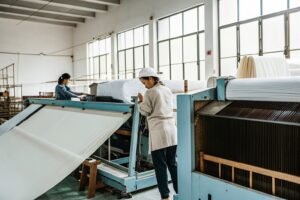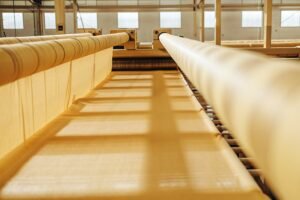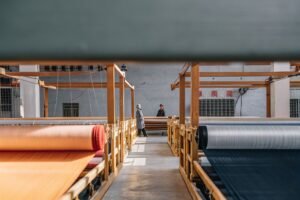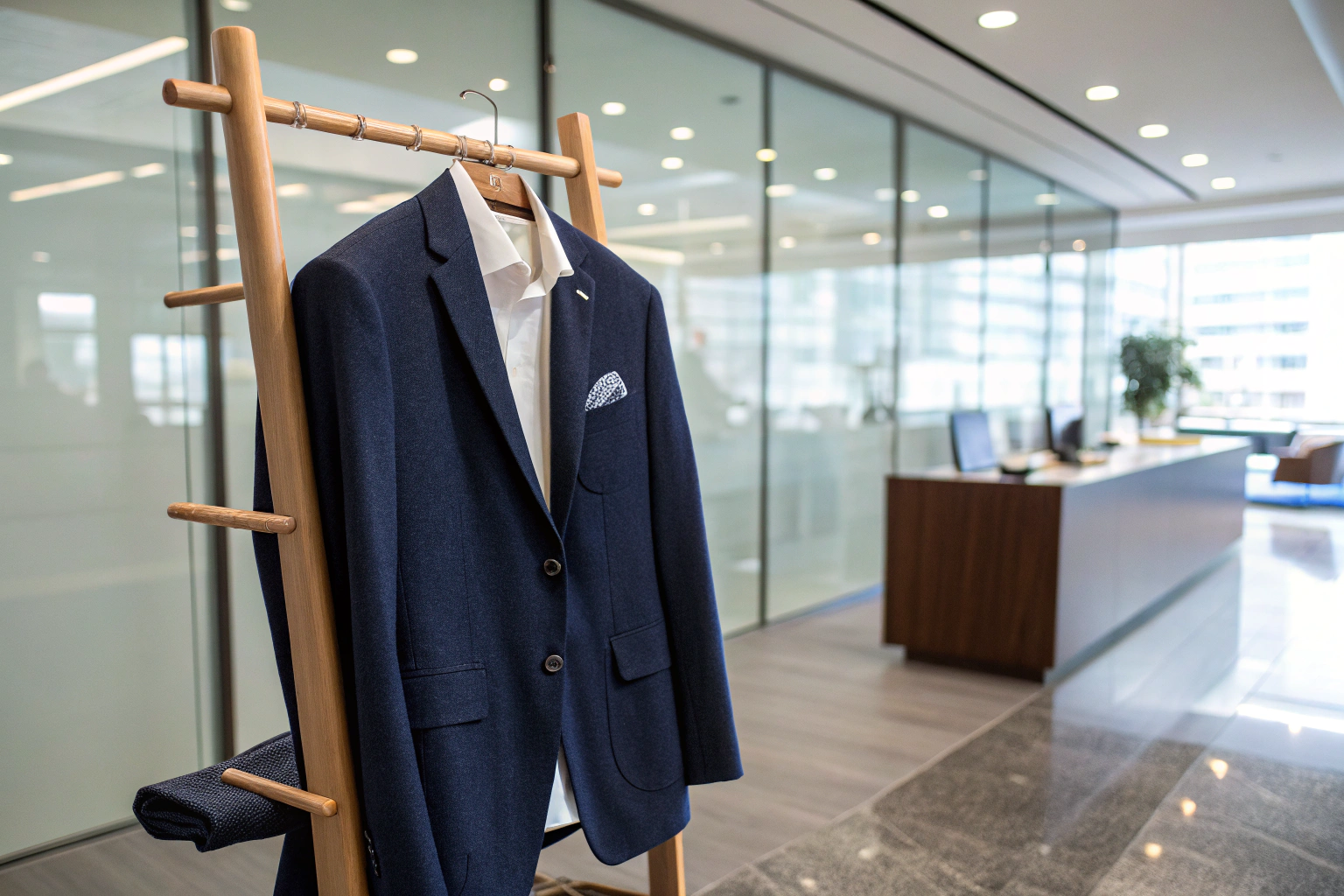
I’ve dressed everyone from bank tellers to five-star hotel concierges. And I can tell you with absolute certainty that the fabric you choose for a corporate uniform program is the single most important decision you’ll make. More important than the logo placement. More important than the button color. The fabric is the uniform. It’s what the employee feels against their skin for eight ten twelve hours a day. It’s what the customer sees when they walk through the door. It’s what determines whether that $400 blazer looks sharp after 50 dry clean cycles or looks like a sad dishrag.
The pain of getting this wrong is immense. I’ve seen corporations issue uniforms made from cheap polyester suiting. The employees hated it. They complained about sweating. They complained about static cling. They didn’t wear the pieces properly because they were uncomfortable. The brand image suffered. The HR department got flooded with grievances. And then the company had to scrap the entire program and start over at double the cost. The waste of time and money was staggering.
Getting it right however creates a silent army of brand ambassadors. A comfortable confident employee projects competence. A sharp wrinkle-free uniform projects attention to detail. The fabric is the invisible foundation of that entire experience. At Shanghai Fumao we approach corporate uniform fabric with a different lens than fashion fabric. We’re looking at Longevity Easy Care and Consistent Color Matching across multiple production runs over many years. It’s a completely different set of performance criteria.
In this article I’m going to break down the specific fabric constructions that actually work for high-end corporate environments. Not the cheap stuff. The fabrics that look like luxury suiting but perform like workwear. The blends that hotel housekeeping staff can wash 100 times without fading. The wools that airline pilots can wear on a 14-hour flight and still look pressed. Let’s get into the details.
What Fabric Blends Offer the Best Durability and Comfort
The holy grail of corporate uniform fabric is not a single fiber. It’s a Strategic Blend. Pure fibers have weaknesses. Pure wool is luxurious but it wears out at the elbows and requires delicate care. Pure polyester is indestructible but it doesn’t breathe and it looks cheap. The magic happens when you combine them intelligently.
The industry standard for high-end corporate suiting is the Wool/Polyester Blend. The most common and effective ratio is 70% Wool / 30% Polyester or 60% Wool / 40% Polyester. Let me explain the chemistry of why this works.
The Wool provides the Handfeel the Drape and the Breathability. It’s the premium face of the fabric. It takes dye beautifully giving you that deep rich navy or charcoal that looks expensive. The Polyester provides the Durability and Crease Resistance. Polyester fibers are incredibly strong. They reinforce the wool fibers at stress points like the elbows and the seat. They also have a Thermoplastic Memory. This means when you heat-set a crease into a wool/poly blend it stays there. That’s why these uniforms come out of the industrial dryer looking almost pressed.
At Shanghai Fumao we also introduce a small percentage of Elastane usually 2-3% into the weave for Comfort Stretch. This is a game-changer for uniforms. It allows the wearer to reach for a file on a high shelf or bend down to help a customer without the jacket pulling tight across the back. It eliminates that restrictive "straitjacket" feeling of traditional rigid suiting.
The other blend we’re seeing huge demand for is Polyester / Viscose / Elastane for Front-of-House Hospitality. This is often a 65% Polyester / 33% Viscose / 2% Elastane blend. The Viscose adds a luxurious drape and moisture absorbency that pure poly lacks while the high poly content keeps the garment looking sharp after a 12-hour shift.
How Does High-Twist Yarn Technology Improve Uniform Longevity
This is a detail that never makes it onto the marketing brochure but it’s the reason one uniform fabric lasts three years and another lasts three months.
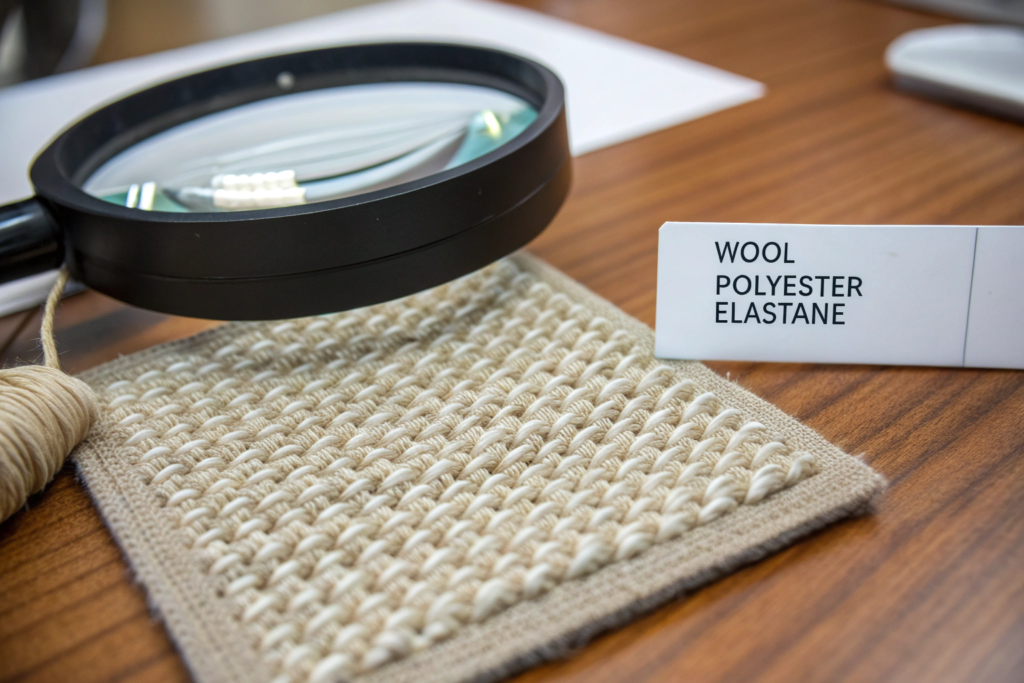
In a standard yarn the fibers are twisted together loosely. This creates a soft fuzzy handfeel which is great for a cozy sweater. But in a uniform that fuzz pills up and wears away. The fabric thins out quickly.
High-Twist Yarn technology involves twisting the fibers much more tightly during spinning. This compresses the fibers and locks them in place. The resulting fabric is Denser Smoother and incredibly Resistant to Abrasion. It’s like comparing a loosely braided rope to a tightly wound steel cable.
We use high-twist yarns specifically for the Warp of our uniform fabrics. The warp takes the most tension during weaving and the most stress during wear. By using a high-twist wool/poly warp we create a fabric that resists pilling and maintains its structure for years. The surface stays smooth which is critical for a professional appearance.
Here is a comparison of fabric performance based on yarn twist level based on our internal Martindale Abrasion Testing.
| Yarn Twist Level | Martindale Rubs (End Point) | Pilling Rating (After 5000 Rubs) | Best Application |
|---|---|---|---|
| Low Twist | 15,000 – 20,000 | Grade 1-2 (Severe Pilling) | Fashion garments (low wear) |
| Medium Twist | 25,000 – 35,000 | Grade 3 (Moderate Pilling) | Light corporate wear |
| High Twist | 50,000+ | Grade 4-5 (No Pilling) | Heavy Duty Uniforms |
Why Is Crease Resistance Critical for Front-of-House Staff
Imagine walking into a luxury hotel lobby. The concierge stands up to greet you. Their blazer is a crumpled mess of wrinkles across the stomach from sitting at the desk. Does that convey luxury? Absolutely not. It conveys sloppiness.
Crease resistance is not just about looking good at 9:00 AM. It’s about looking good at 4:00 PM after a long lunch rush. This is where the Polyester Component and the Finishing Process work together.
Polyester is naturally Hydrophobic. It doesn’t absorb moisture. Wool absorbs moisture and swells which causes wrinkles. By blending poly with wool we reduce the overall moisture absorption of the fabric. Less moisture equals fewer wrinkles.
But the real secret weapon is the Stenter Frame Finish. We apply a light Resin Finish to the fabric specifically a low-formaldehyde cross-linking agent. This creates microscopic "bridges" between the cellulose molecules in the viscose or the protein molecules in the wool. These bridges hold the fibers in place and prevent them from shifting and forming creases. For high-end uniforms we use a Nano-Silicone Softener in combination with the resin to ensure the handfeel stays soft and natural not stiff and boardy.
For more technical reading on this specific chemical process I often direct textile students to resources explaining the chemistry of durable press finishes and cross-linking agents for cellulosic and protein fiber blends in industrial textile applications. It’s complex chemistry but the result is a blazer that looks fresh off the hanger all day.
How to Source Wrinkle-Free Suiting for Corporate Programs
Sourcing fabric for a one-off fashion collection is fun. Sourcing fabric for a corporate uniform program that needs to be re-ordered consistently for five years is a different beast entirely. You need a Supply Chain Partner not just a supplier.
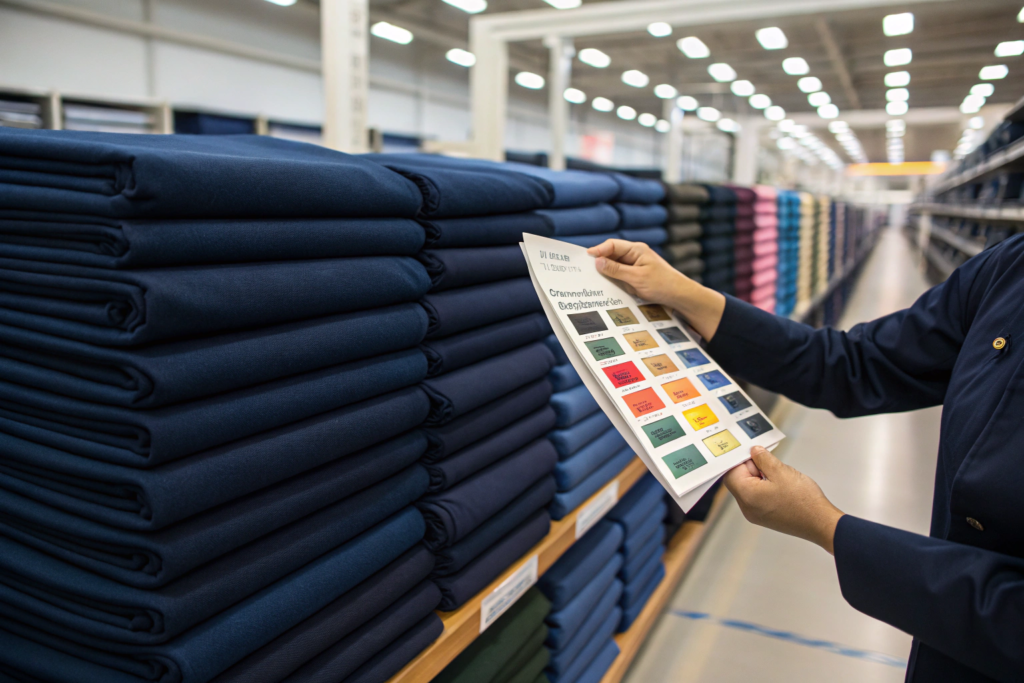
The first thing you need to lock down is Color Consistency. When you issue 500 blazers in "Corporate Navy" you better be able to match that exact shade of navy when you re-order for the 50 new hires next year. This is called Color Blanket Approval. At Shanghai Fumao we keep a Master Dye Lot Standard for every corporate client. We lock a physical swatch in a dark climate-controlled cabinet. Every new production run is matched via spectrophotometer against that master standard. We don’t just "eyeball it." We use a Delta E tolerance of less than 1.0. That’s a scientific guarantee that the color won’t drift over time.
The second thing is Minimum Order Quantity (MOQ) and Stock Service. A corporate program needs fabric on demand. You can’t wait 8 weeks for a custom dye run when the new regional manager needs a jacket for a conference next week. We offer Greige Stock Programs for our core uniform fabrics. We keep the undyed fabric on the shelf. When you need 200 yards of a specific color we dye it in 2-3 weeks instead of 8. For core colors like Black and Navy we keep Finished Stock ready to ship in 48 hours.
The third thing is Compliance Documentation. Corporate procurement departments are sticklers for paperwork. They want OEKO-TEX Certification to ensure the fabric is safe for employees. They want Abrasion Test Reports to validate the 3-year warranty. They want Flammability Certificates (16 CFR Part 1610) for insurance purposes. You need a mill that can produce this documentation instantly not a trader who has to chase down the factory in China for a PDF.
What Is the Minimum Yardage for Custom Corporate Suiting Colors
This is the question that stops a lot of small uniform programs in their tracks. They want a unique shade of "Burgundy" or "Forest Green" to match their brand guidelines. But they only need 300 yards.
Most large suiting mills have an MOQ of 1,500 to 3,000 yards per color for custom dyeing. That’s a dealbreaker for a regional bank or a boutique hotel chain.
This is where the Stock Dye Service model is the solution. We have relationships with specialized commission dye houses in Keqiao that run small batch machines. They can dye as little as 300 yards of greige fabric to a custom color match. Yes there is a Surcharge for the small batch. It’s usually around $1.50 to $3.00 per yard depending on the color complexity. But that surcharge is far cheaper than buying 1,500 yards of deadstock fabric you’ll never use.
We guide our clients through this process. You send us a Pantone number. We run a Lab Dip on a small swatch (usually 5 days). You approve the lab dip. We dye the 300 yards. The total lead time is about 4 weeks. It’s a bespoke service at a near-stock price. This is the kind of agile manufacturing that makes high-end corporate programs viable for smaller businesses.
How to Validate Fabric Performance for Industrial Laundry Cycles
This is the ultimate test for corporate uniforms. They don’t get hand-washed in delicate detergent. They get thrown into a massive industrial washing machine with harsh chemicals and then baked in a tunnel dryer at 80°C (176°F). It’s a torture test for textiles.
If you choose the wrong fabric it will be destroyed in 10 washes. The seams will pucker. The color will fade to a sickly pastel. The fabric will thin out.
You must request AATCC 135 Dimensional Stability Test results specifically for Industrial Laundering (5 washes at 60°C) . We test our uniform fabrics for Shrinkage . Our tolerance is less than 2% after 5 industrial washes. Any more than that and the sleeves shrink up noticeably.
You also need AATCC 61 Colorfastness to Laundering results. This tests for Color Change and Staining. For corporate colors especially dark navies and blacks we aim for a Grade 4 or higher . This ensures the uniform stays dark and doesn’t turn the white shirt collar blue.
Here is a checklist of the specific test reports I recommend requesting from any uniform fabric supplier.
| Test Standard | Property Tested | Target for High-End Uniforms | Failure Consequence |
|---|---|---|---|
| AATCC 135 (5A) | Dimensional Stability | < 2% Shrinkage | Sleeves/Inseam shorten |
| AATCC 61 (2A) | Colorfastness to Laundering | Grade 4 | Fading / Cross-staining |
| ASTM D4966 | Martindale Abrasion | > 40,000 Rubs | Holes at elbows / cuffs |
| ASTM D5034 | Seam Slippage | < 1mm at 10lbs | Seams pulling apart |
| 16 CFR 1610 | Flammability | Class 1 | Safety compliance failure |
What Are the Best Performance Fabrics for Hotel Staff Uniforms
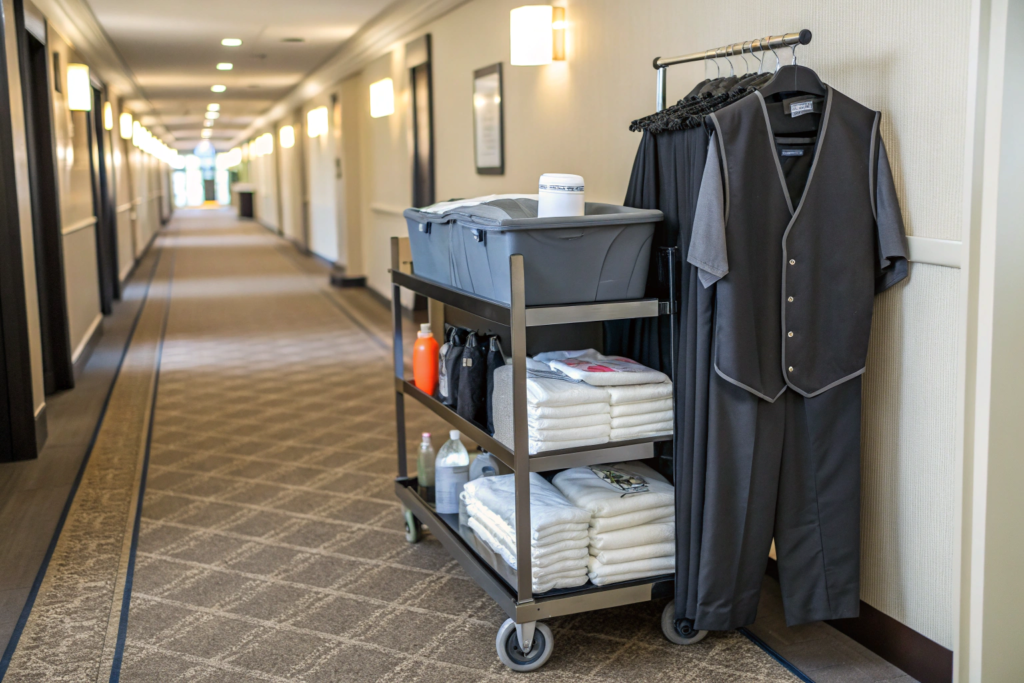
Hotel staff uniforms are the most demanding category in the corporate apparel world. These garments are worn hard. Housekeeping staff are bending lifting and sweating. Front desk staff are sitting and standing constantly. Restaurant staff are navigating tight spaces with hot plates. The fabric has to do more than just look good. It has to Work.
The fabric that has revolutionized this sector is Polyester / Rayon / Spandex Twill often in a 65/33/2 blend ratio. Let me break down why this specific combination is the gold standard for hotel groups.
The Polyester provides Strength and Wrinkle Resistance. It’s the backbone of the fabric. The Rayon (Viscose) provides Moisture Absorbency and Drape. This is crucial for comfort. Pure polyester feels like wearing a plastic bag. It traps sweat. Rayon is a cellulosic fiber that breathes like cotton. It wicks moisture away from the skin and allows it to evaporate. The Spandex provides Mechanical Stretch. This is not about making a "skinny" uniform. It’s about Range of Motion. A housekeeper reaching up to make a high bed needs that 2% stretch to prevent the shoulder seam from ripping out.
At Shanghai Fumao we apply a Soil Release Finish to this fabric. This is a fluorocarbon-free treatment that prevents oil and dirt from penetrating the fiber. In a restaurant environment this is a lifesaver. A splash of salad dressing beads up on the surface and can be wiped off rather than leaving a permanent grease stain.
We also offer a Mechanical Stretch Version using Sorona Fibers instead of traditional spandex. Sorona is a bio-based polyester with a natural crimp. It provides stretch without the use of petrochemical elastane. It also has exceptional Chlorine Resistance. This is important because hotel laundry services often use bleach as a disinfectant. Spandex degrades rapidly in bleach. Sorona doesn’t. The uniform lasts twice as long.
How Does Moisture Wicking Technology Apply to Woven Uniforms
Most people associate "moisture wicking" with cheap polyester gym t-shirts. But the technology has evolved and it’s essential for premium woven uniforms.
There are two ways to achieve wicking in a woven fabric. The first is Fiber Modification. We use Coolmax or Profile Polyester yarns. These yarns are not round. They are extruded with Deep Grooves or Channels along the surface. These channels create capillary action. They pull moisture along the surface of the yarn spreading it out over a larger area so it evaporates faster. It’s like the difference between a dry creek bed and a smooth paved road. The rough surface dries faster.
The second is a Hydrophilic Finish. This is a chemical treatment applied to the fabric in finishing. It makes the surface of the fabric "water-loving." Instead of repelling water it attracts it and spreads it out. This is often used on the Back of the Fabric the side that touches the skin. It pulls sweat away from the body instantly.
For hotel front desk staff wearing a polyester blazer all day this technology makes a massive difference in comfort. They stay cooler and drier. It’s an invisible performance feature that directly impacts employee satisfaction and retention. Happy staff equals happy guests.
What Are the Advantages of Stretch Wovens for Hospitality Roles
Let’s talk about the Waiter’s Lunge. You know the move. Reaching across a large table to pour wine without touching the tablecloth. It puts immense strain on the back yoke and shoulder seams of a jacket.
A traditional rigid woven fabric restricts this movement. The waiter either can’t reach properly (bad service) or they rip the jacket (bad look).
Stretch Wovens solve this. We’re not talking about a knit. It’s still a crisp professional woven twill. But the weft yarn contains that hidden spandex core. The fabric has 15-25% Stretch in the Weft Direction (widthwise). This allows the jacket to expand across the back just enough to allow full range of motion and then Snap Back to its original shape.
The key specification here is Stretch and Recovery. You want Growth of less than 4% after extension. This ensures the jacket doesn’t "bag out" and look sloppy after a few hours of wear. The recovery must be instant.
Here is a quick comparison of fabric types for different hotel roles based on our client feedback.
| Hotel Role | Recommended Fabric | Key Property | Why It Matters |
|---|---|---|---|
| Front Desk | Wool/Poly Suiting | Crease Resistance | Looks sharp under bright lobby lights |
| Housekeeping | Poly/Rayon/Spandex Twill | Durability & Stretch | Withstands bending and industrial wash |
| Restaurant Server | Stretch Woven Twill | Range of Motion | Prevents seam rips during service |
| Concierge / Bellman | Heavyweight Wool Coating | Warmth & Prestige | Handles outdoor elements in style |
| Spa Staff | Tencel / Cotton Blend | Softness & Breathability | Conveys relaxation and natural wellness |
How to Ensure Color Consistency Across Global Uniform Programs
This is the nightmare scenario for a global brand. You have a flagship store in New York a branch in London and a hotel in Tokyo. All staff wear the same "Signature Red" blazer. But the red blazer in New York is slightly orange. The one in London is slightly burgundy. The one in Tokyo is faded pink after six months. The brand identity is fractured. The customer perceives a lack of quality control.
Color consistency across multiple production runs and multiple years is the hardest thing to achieve in textile manufacturing. It’s not like mixing paint. Fabric absorbs dye differently based on humidity water quality and even the specific bale of cotton used.
The solution is Digital Color Management. At Shanghai Fumao we don’t just rely on a Pantone book. Pantone is for graphic design. Fabric needs Spectral Data. We use a Datacolor Spectrophotometer to read the color of the master standard and convert it into a Digital Fingerprint a spectral reflectance curve. This digital file is sent to the dye house. The dye house uses a Computer Color Matching (CCM) system to formulate the dye recipe.
But that’s just the first step. The real magic is Color Communication under Different Lighting. A fabric that matches perfectly under store fluorescent light might look completely different in daylight. This is called Metamerism. We test all corporate colors under three light sources: D65 (Daylight) TL84 (Store Light) and A (Incandescent Home Light) . The color must match under all three conditions. If it doesn’t the dye formula is rejected.
How to Create a Corporate Color Blanket for Future Reorders
A Color Blanket is not just a swatch. It’s a Physical Contract.
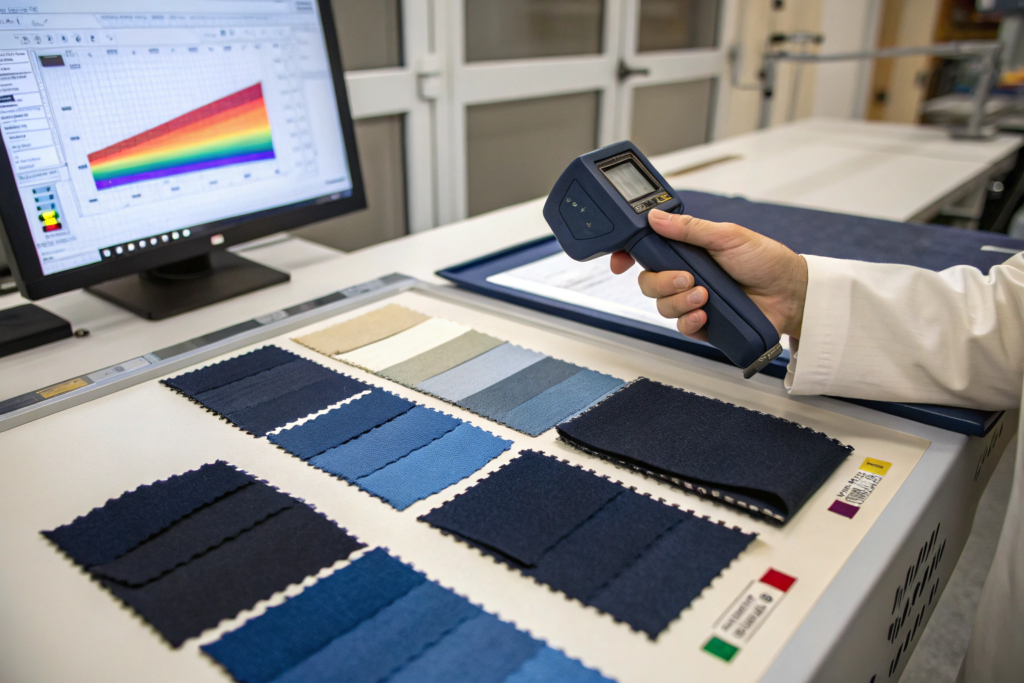
When we finalize a color for a corporate client we don’t just send one swatch. We create a Spectrophotometer Reading and a Sealed Master Swatch. This master swatch is stored in a blackout envelope away from light and humidity. It’s the Gold Standard.
We then create Production Standards which are a range of acceptable variation. This is called Delta E Tolerance. The human eye can perceive a difference at about Delta E 1.0. Our tolerance for corporate uniform reorders is Delta E < 0.8. That’s a very tight tolerance. It requires a skilled dye master and a modern lab.
If a reorder falls within that tolerance we ship it. If it falls outside we Re-Dye or Shade Adjust the batch until it matches. This process takes time and costs money but it’s non-negotiable for a global program.
I always advise clients to order enough fabric for 18-24 months of projected needs if budget allows. Dyeing one large batch is always more consistent than dyeing four small batches over two years. The cost of warehousing the fabric is often less than the cost of managing color drift across multiple runs.
What Is the Role of Spectrophotometers in Uniform Fabric QC
A spectrophotometer is a fancy word for a "Color Robot." It’s a device that shines a controlled beam of light onto the fabric and measures exactly how much light is reflected back at each wavelength.
This eliminates Subjective Opinion. I can’t tell you how many arguments I’ve seen between a buyer and a factory over whether a color is "too green" or "too blue." One person’s "Navy" is another person’s "Midnight." The spectrophotometer ends the argument. It provides a Numerical Value.
In our fabric inspection process every roll of dyed corporate fabric is checked with a Handheld Spectro. We check the Center of the roll and the Selvage (edge). This checks for Side-to-Center Shading. If there is a difference we flag the roll. We also check the Beginning Middle and End of the roll. This checks for Listing (color drift along the length). This level of scrutiny is what separates a high-end uniform supplier from a commodity fabric trader.
For a deeper dive into the industrial application of this technology I recommend resources that cover the practical application of CIE LAB color space and spectrophotometry in textile quality assurance and supply chain management. It’s the language of modern color science.
How to Balance Luxury Aesthetics with Functional Requirements
This is the central tension in high-end corporate uniform design. You want the Luxury Handfeel of an Italian suiting. But you need the Durability of a military-grade textile. These two desires are often in direct conflict.
A pure Super 150s Wool is incredibly soft and fine. It’s a dream to touch. But the fibers are so thin that they abrade quickly. An office chair with a mesh back will pill the seat of those pants in under six months. It’s too delicate for daily wear.
The art of balancing this is in Fabric Engineering. We use a Two-Ply Yarn construction. This means we twist two single yarns together to make a stronger composite yarn. This adds strength without adding bulk. We also use a Finer Micron Wool for the surface but a Coarser Stronger Wool or a Polyester Core for the interior of the yarn. The surface feels luxurious. The core provides the backbone.
We also play with Weave Structure. A Twill Weave is more durable than a Plain Weave of the same weight. A Panama Weave has a beautiful subtle texture but it’s prone to snagging. For high-traffic roles we recommend a Cavalry Twill or a Whipcord. These are steep double twills that are incredibly abrasion resistant. They were originally developed for military riding breeches. They look sharp and they wear like iron.
For more context on these classic durable weaves I often suggest looking at historical resources that document the development and characteristics of traditional British military and outerwear fabrics like whipcord cavalry twill and covert cloth. These fabrics have stood the test of time for a reason.
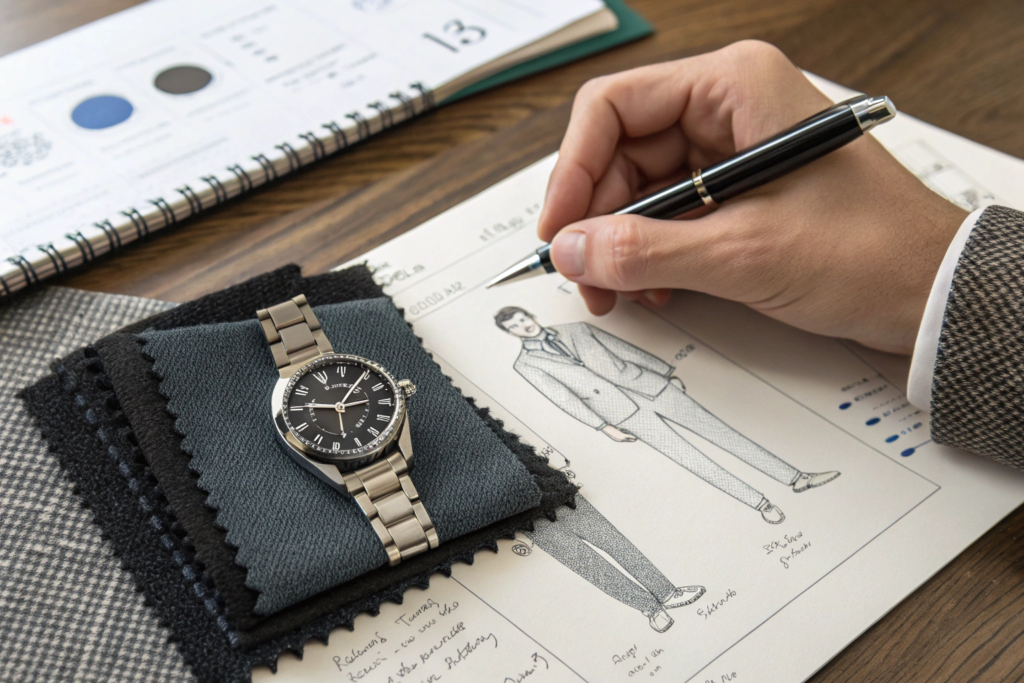
How to Choose Between Worsted and Woolen Flannel for Blazers
This is a specific choice that defines the look of the uniform.
Worsted Wool is made from long-staple fibers that are combed to be parallel. The yarn is smooth and fine. The fabric is Crisp Lightweight and has a Slight Sheen. It holds a crease perfectly. It’s the classic "business suit" fabric. It’s great for corporate office blazers.
Woolen Flannel is made from shorter fibers that are carded in a random arrangement. The fabric is then Brushed to raise a soft fuzzy surface. It’s Matte Warm and has a Luxurious Soft Handfeel. It’s incredibly comfortable. But it’s Less Durable. The brushed surface pills more easily. It also Holds Odors more than worsted.
For a high-end uniform that needs to look pristine after years of wear I usually recommend a Lightweight Worsted or a Tropical Weight Wool . It’s easier to maintain and looks sharper for longer. Flannel is beautiful but it’s better suited for a premium retail associate who handles delicate merchandise rather than a busy hotel manager who is constantly on the move.
What Finishing Treatments Enhance Uniform Fabric Longevity
The fabric comes off the loom looking like burlap. The finishing process is where it becomes a uniform fabric.
Sanforizing is a compressive shrinkage process. It’s mandatory. It prevents the garment from shrinking in the first wash.
Decating is a steam treatment that sets the luster and handfeel of wool. It’s what makes the fabric look expensive.
Anti-Microbial Finish: For high-contact roles we apply a finish based on Silver Ions or Zeolite. This inhibits the growth of odor-causing bacteria. It means the uniform can be worn a few times between washes without smelling. This extends the life of the garment by reducing the frequency of harsh industrial laundering.
Stain Repellency: As mentioned earlier a Fluorocarbon-Free DWR (Durable Water Repellent) is standard on our hospitality fabrics. It’s not just for water. It repels oil and dirt.
Here is a summary of the finishing package we recommend for a premium corporate uniform fabric.
| Finishing Process | Purpose | Benefit for Uniform Program |
|---|---|---|
| Sanforizing | Compressive Shrinkage | Eliminates consumer shrinkage complaints |
| Decating / Setting | Heat Setting & Luster | Maintains crisp appearance |
| Anti-Microbial | Odor Control | Extends wear between washes |
| Soil Release / DWR | Repels Liquids & Dirt | Easier stain removal in laundry |
| Anti-Static | Reduces Cling | Improves comfort in dry climates |
Conclusion
Selecting the best fabric for high-end corporate uniforms is a decision that impacts brand perception employee morale and the bottom line for years to come. It requires moving beyond the surface-level handfeel of a swatch and digging into the technical specifications the blend ratios and the finishing chemistry. The right fabric is an invisible asset. It works quietly in the background keeping staff comfortable and looking sharp while withstanding the brutal realities of industrial laundering and daily wear.
The key is to find a partner who understands this specific intersection of luxury and performance. You need a mill that can guarantee color consistency over multiple years provide the necessary compliance documentation and offer flexible MOQs through stock service programs. You need a partner who thinks like a procurement manager but dreams like a textile designer.
At Shanghai Fumao we’ve spent decades refining our uniform fabric program to meet these exacting standards. We work with corporate clients across the hospitality finance and aviation sectors to develop custom fabric solutions that align with their brand identity and performance requirements. We manage the complexity of the supply chain so you can focus on your core business.
If you are developing or refreshing a corporate uniform program and you need a reliable high-quality fabric partner I invite you to reach out to our Business Director Elaine. She can guide you through our range of stock-supported uniform fabrics discuss custom color development and provide the technical data pack your procurement team will require.
Contact Elaine directly at: elaine@fumaoclothing.com