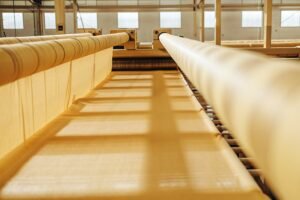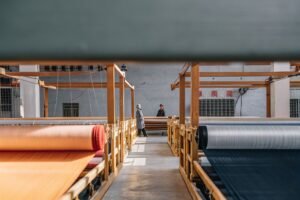
I’ve been on both sides of this table. Literally. For twenty years, I’ve sat where you sit—a buyer from the West, nervous about wiring a 30% deposit to a company 7,000 miles away, wondering if the fabric will look like the sample, wondering if the ship date is real, wondering if I’m about to get scammed. And now, for the last fifteen years, I’ve sat on this side of the table—running Shanghai Fumao in Keqiao, hosting buyers from New York, London, and Sydney, pouring them tea and trying to convince them that we’re not just another faceless supplier on Alibaba.
Here’s the hard truth that most sourcing guides won’t tell you: The Chinese textile industry is built on relationships, not contracts. You can have the tightest legal agreement drafted by the best lawyer in Manhattan. It means almost nothing in a dispute in Shaoxing. What matters is Guanxi (relationship) . It’s the unwritten ledger of trust, obligation, and mutual benefit. It’s why one buyer gets their 2,000 meters of fabric pushed to the front of the dye queue during peak season without paying a rush fee, and another buyer gets told "Sorry, machine broken" for three weeks straight.
Building a long-term relationship with a Chinese factory isn’t about being "friends" in the Western sense of grabbing a beer after work. It’s about demonstrating that you are a Low-Risk, High-Value Partner. It’s about understanding the pressures we face on this side of the ocean and aligning your behavior to make our life easier. When you do that, something magical happens. Your emails get answered in 5 minutes instead of 5 days. Your quality issues get fixed before they leave the mill. And your pricing starts to reflect a true partnership, not just a transaction.
Let’s talk about how to move from being a "Customer" to being a "Partner." This is the playbook we wish every one of our clients would follow.
How to Move Beyond Transactional Pricing with Fabric Suppliers?
This is the biggest mental hurdle for Western buyers. You are trained to negotiate. You are trained to get three quotes and take the lowest one. You are trained to squeeze the supplier for every last penny. And if you’re dealing with a commodity product like plastic pellets or steel beams, that works. But fabric is not a commodity. Fabric is a Custom-Engineered Material. And if you treat us like a commodity supplier, we will treat you like a commodity buyer. That means you get Commodity Quality and Commodity Service.

Why Is Consistent Order Volume More Valuable Than Lowest Price?
I’m going to share some internal math that most factory owners don’t share publicly. It’s the Cost of Switching vs. Cost of Keeping.
Scenario A: The Price Shopper
You place one order of 2,000 meters. You beat us down on price. Our margin is 5%. We make maybe $300 profit on the whole deal.
Next season, you go to another factory who undercut us by $0.10/m. We never hear from you again.
Our Calculation: We spent 4 hours on email, 2 hours on sampling, and 2 hours on quality control for a one-time $300 profit. Not worth the headache. Next time a price shopper comes along, we quote a high price to make them go away, or we deprioritize their samples.
Scenario B: The Consistent Partner
You place 4 orders a year of 2,000 meters each. You don’t haggle over $0.05. You pay on time.
Our Calculation: That’s $1,200 in reliable profit per year. More importantly, we can plan production. We know you’ll need Polyester Lining in March and Cotton Shirting in August. We can buy yarn in bulk for you. We can reserve loom capacity for you.
The Benefit to You: When there’s a yarn shortage in October, you still get your fabric. The price shopper? They get told "No stock."
At Shanghai Fumao , we have a mental list (and honestly, an actual spreadsheet) of "Core Partners." These are the 20% of clients who provide 80% of our stable revenue. When a Core Partner emails with a problem, I stop what I’m doing and fix it. When a Price Shopper emails, it goes to the back of the queue.
If you want to be a Core Partner, show stability. Even small, regular orders build trust. A monthly order of 500 meters of basic lining is more attractive to us than a one-time order of 10,000 meters of a complex jacquard because the 500-meter order keeps the machines warm and the workers paid between big projects.
How Does Sharing Sales Forecasts Improve Factory Scheduling?
This is the single most powerful, and most underutilized, tool in the buyer-factory relationship. You have a business plan. You have a sales forecast. Share a version of it with us.
Most buyers operate in a cloak-and-dagger secrecy. They email on March 1st: "Need 2,000m of Red Poplin. ASAP."
We scramble. We buy yarn on the spot market (expensive). We squeeze it into the dye schedule (overtime pay). We deliver. You’re happy.
Then on April 1st: "Need another 2,000m of Red Poplin. ASAP."
We scramble again. But this time, the yarn supplier is out of stock. You’re delayed.
The Alternative Reality:
In January, you tell us: "We’re planning a Red Poplin program for Spring/Summer. We forecast needing 6,000 meters total, broken into 3 deliveries of 2,000m in March, April, and May. "
What we do with that information:
- Yarn Reservation: We immediately reserve 1.5 tons of the specific red yarn from the spinner. We lock in the price before the seasonal cotton price spike.
- Capacity Booking: We block out 3 production slots on the loom schedule.
- Dye Lot Consistency: We dye the yarn in ONE large batch. This means the Red Poplin you get in May is a perfect color match to the Red Poplin you got in March. No shade variation.
I had a US corporate apparel client do this with us for a Navy Blue Twill program in 2024. Because they shared the 12-month forecast, we bought the yarn in bulk and stored it. Their cost per meter was 8% lower than if they had ordered piecemeal, and the color was flawless across 15,000 meters. This is the tangible benefit of partnership.
How to Handle Quality Issues Without Damaging the Relationship?
This is the moment of truth. This is where 90% of factory relationships either strengthen or die. You’ve received the bulk shipment. You’re cutting it on your table in Los Angeles or London. You find a flaw. A stain. A barre mark. A shade variation. Your blood pressure spikes. Your first instinct is to fire off an ALL CAPS EMAIL with words like "UNACCEPTABLE" and "COMPENSATION NOW."
Resist that instinct. Deep breath. Let’s talk about how to turn a quality issue into a trust-building exercise.

What Is the Correct Way to Document a Fabric Defect for a Mill?
Chinese factories are visual. We are engineers and mechanics. We respond to Data and Images, not Emotions. An email that says "The fabric is terrible, full of holes" is useless to me. It tells me you’re angry, but it doesn’t help me fix the machine that made the hole.
The "One-Page Defect Report" Method:
To get a fair and fast resolution, send this within 48 hours of inspection:
- The Photo: A clear, well-lit, high-res photo of the defect. Crucial: Place a RULER or a COIN next to the defect. Is the stain 1cm or 10cm? Is the hole on the selvage (edge) or in the middle of the fabric? Without scale, I can’t tell if this is a minor blemish or a major fault.
- The Mapping: Lay the fabric roll out. Take a photo of the whole roll from above. Use a marker or tape to indicate WHERE the defect is located. Is it in the first 5 meters? The last 5 meters? Every 20 meters repeating? A repeating defect tells me it’s a Loom Problem (broken needle or dirty roller). A random defect tells me it’s a Handling Problem (dirty floor or careless packing).
- The Standard: Reference the industry standard. We use the 4-Point System (ASTM D5430). You can say: "This roll has 12 defect points per 100 yards. Our agreement allows for a maximum of 20 points per 100 yards, so technically this roll is within tolerance, but we flagged this specific stain because it’s in a high-visibility area for our pattern pieces." This language shows you are a professional, not a complainer.
In June 2024, a Canadian workwear brand found a crease mark running down 500 meters of fabric. Instead of yelling, they sent a video of the fabric going through their spreading machine. The video showed the crease causing the fabric to bunch up and stop the automated cutter. I watched the video. I saw the problem. It wasn’t a "defect" on our inspection table (the crease was invisible when flat), but it was a Finishing Issue (calender pressure too high). We re-ran the fabric through our steamers at our cost and shipped it back. The client was so impressed with the fix that they doubled their order for the next season.
When Should You Request a Credit vs. a Re-Run for Faulty Fabric?
This is a negotiation, but it needs to be grounded in the Cost of Remaking vs. Cost of Using.
-
Scenario A: The Fault is Catastrophic. The fabric is the wrong color completely. The width is 54" instead of 58". The shade varies so much you can’t cut a single garment.
- Your Ask: Re-Run the order. (We make new fabric).
- Our Expectation: You return the faulty fabric to us (or destroy it with proof). We bear the cost of remaking.
-
Scenario B: The Fault is Manageable. The fabric has minor defects that you can cut around. The hand feel is slightly stiffer than the sample. The yield is 2% lower than expected.
- Your Ask: Credit Note (Discount on next order).
- Why this is better for the relationship: A re-run costs us a fortune. It ties up a machine for a week that we could be using for a new, profitable order. We hate re-runs. If you accept the fabric with a minor discount, we see you as a Problem Solver. You saved us from a logistical nightmare. We will remember that. Next time you need a rush order, we will move heaven and earth for you.
For a deeper dive into industry norms, there’s a helpful overview of standard textile quality tolerances and the 4-point fabric inspection system on the Apparel Search website that explains what is considered a "major" vs. "minor" defect.
Why Does Visiting the Factory Once Change the Entire Dynamic?
I know travel budgets are tight. I know Keqiao isn’t exactly a tourist hotspot like Shanghai or Beijing. But if you are serious about building a brand that relies on a consistent fabric supply, you must get on a plane at least once. The dynamic shift that happens when you walk through the factory gate is worth more than 1,000 video calls.

How Does Seeing the Production Line Improve Trust and Empathy?
It’s about Seeing the Constraints. Remember earlier when I talked about the Warping Creel and why MOQs exist? It’s one thing for me to tell you about it. It’s another thing entirely for you to stand next to it.
When you visit Shanghai Fumao , I don’t just show you the nice showroom with the leather sofa and the espresso machine. I take you to the Dye House Floor. It’s hot. It’s humid. It smells like steam and chemicals. I show you the worker in rubber boots pulling a 100kg roll of wet fabric out of the jet dye machine. You see the physical effort.
The Result: Next time I tell you, "The dye machine is down for maintenance," you don’t think I’m lying to cover a delay. You remember the heat and the water and the heavy machinery. You have Empathy for the process.
I take you to the Inspection Room. I show you the lady with the glasses who has been checking fabric for 25 years. She can spot a missing thread from 10 feet away. You see her concentration.
The Result: Next time I say, "We caught a flaw in the greige and stopped production," you trust our QC. You met the person who does it.
This face-to-face interaction is the foundation of Guanxi. It’s not about a fancy dinner (though we do that too). It’s about Shared Hardship. Standing on that hot, noisy floor together. Once you’ve done that, you’re not just a name on a PO. You’re "Tom from California who came to see the mill."
What Are the Unspoken Rules of a Chinese Factory Tour and Dinner?
Okay, you’re coming to visit. Great. Here’s a quick cultural primer to make sure you don’t accidentally offend your hosts and undo all that good relationship building.
1. The Business Card Ceremony (Name Cards):
- Bring cards. Lots of them.
- Receive with Two Hands. This is non-negotiable. Hold the card by the corners. Take a moment to read it. Look at the title. Nod. Do not just shove it in your back pocket. That is a huge insult. It says, "I don’t care who you are."
2. The Factory Tour Pace:
- Wear comfortable, closed-toe shoes. You will walk a lot.
- Let them lead. Don’t wander off to take photos of a "cool machine" without asking. There are proprietary techniques and, frankly, safety hazards everywhere. Ask: "May I take photo here?" If they say no, respect it.
3. The Dinner (The Real Meeting):
- The business meeting happens during the factory tour. The relationship building happens at dinner.
- Seating Arrangement: Wait to be seated. The seat facing the door is usually for the host (the factory owner).
- Toasting: If they toast you, it is extremely polite to clink glasses and then try to touch the rim of your glass to the table before drinking (a sign of equality/humility). And for the love of all that is holy, if you don’t drink alcohol, establish this FIRMLY at the beginning. Say "I have allergy" or "Doctor’s orders." Don’t just sip a little to be polite, because they will refill your glass and you’ll be in trouble.
- Paying the Bill: They will insist on paying. You must fight for the bill. Make a show of grabbing the check. Say, "Please, you are my guest, I invited you." They will win. You will lose the fight for the bill. That is the correct outcome. You say, "Okay, next time in America, I pay!" This is the ritual.
I remember a UK client in 2023 who came for a visit. At dinner, he tried the Baijiu (Chinese white spirit) to be polite. Big mistake. He turned bright red. The factory owner laughed, called him a "real friend" for trying, and they’ve had an unbreakable bond ever since. (Don’t try this at home. Baijiu is jet fuel.)
How to Maintain Communication During Chinese Holidays and Slow Seasons?
This is the final piece of the puzzle. You’ve built the relationship. You’ve placed the orders. Now you have to Maintain It. And the biggest test of a relationship is Silence. How do you handle the 2-3 week communication blackout during Chinese New Year? How do you handle the slow summer months when there are no orders?

What Is the Best Way to Handle Chinese New Year Shutdowns?
Do not panic. Do not send 15 emails asking "Any update??" on February 10th. The factory is a ghost town. The only person checking email is the security guard’s dog.
The Proactive Move (January):
Send an email or WeChat message in mid-January that says:
"Hi [Name], Wishing you and your family a prosperous New Year. I’ve attached our forecast for March/April so it’s ready for you when you return. We won’t bother you during the holiday. Safe travels home."
This message does three things:
- It shows Respect for their only real vacation of the year.
- It puts your Forecast at the top of their inbox for February 15th (Day 1 back in office).
- It relieves their anxiety. They know you won’t blow up their phone while they’re trying to enjoy dumplings with their 90-year-old grandmother.
The Day They Return (Late February):
Send ONE message. Just one.
"Welcome back! Hope you had a great rest. No rush on a reply, just checking in when you have a moment."
This is the High-Context Communication that builds deep trust. It says, "I understand your life, not just your output."
Why Do Small Gestures Like Holiday Greetings Matter in WeChat Culture?
WeChat is the operating system of Chinese business life. It’s not just a messaging app. It’s a social credit score.
The Unwritten Rule: Holiday Greetings = Relationship Maintenance.
You don’t need to send a gift. You just need to Remember the Date.
- Mid-Autumn Festival (September/October): Send a sticker of a mooncake or a rabbit. That’s it.
- Dragon Boat Festival (June): Send a sticker of a Zongzi (rice dumpling).
This takes 5 seconds. It costs $0. It signals to the factory manager: "This buyer sees me as a human being, not a fabric vending machine."
In the West, business and personal are separate. In China, they are intertwined on WeChat Moments (the social feed). If a factory manager posts a photo of his kid’s graduation, "Like" it. Even better, leave a comment: "Congrats!" (Use the translate button).
I’ve seen a US buyer get a 3-week lead time reduction in peak season simply because they had a friendly WeChat relationship with the scheduling manager. The manager saw their PO come in and said, "Oh, this is my friend Mike. I’ll squeeze him in before the big corporate order."
For more on navigating the cultural calendar, reading up on Chinese New Year traditions and business etiquette for foreign companies can provide valuable context on why this holiday is so sacrosanct and why pushing for work during it damages your standing.
Conclusion
Building a long-term relationship with a Chinese fabric factory is a long game. It’s not about finding the cheapest price on a single container. It’s about building a Supply Chain Moat around your brand. It’s about cultivating a partner who will answer your 9 PM panic call, who will catch the shade variation before it ships, and who will prioritize your 500-meter reorder over a 10,000-meter one-off because they know you’ll be back next season.
This relationship is built on four pillars: Consistency (regular orders, even small ones), Communication (video calls over email chains), Empathy (visiting the mill, respecting the holidays), and Professionalism (documenting defects with data, not anger). When you combine these, you stop being a "buyer" and start being a "Client Partner."
And that’s when the magic happens. That’s when the real savings kick in—not in cents per meter, but in avoided delays, flawless quality, and the peace of mind that comes from knowing someone in Keqiao has your back.
At Shanghai Fumao , we’re always looking for partners, not just customers. We’ve been here for 20 years, and we plan to be here for 20 more. We’re playing the long game too.
If you’re ready to move beyond transactional sourcing and build a reliable supply chain foundation, let’s start the conversation. Reach out to our Business Director, Elaine. She can help you navigate the first steps of becoming a Core Partner.
Email Elaine at: elaine@fumaoclothing.com
Let’s build something that lasts.