You’ve exchanged a dozen emails. The price is right. The swatches look good. You’re ready to pull the trigger on a 5,000-yard order. But a little voice in your head whispers, "What if the bulk doesn’t match the sample? What if they’re just a trading company with a nice website? What if they’re showing me photos of someone else’s factory?" You’re about to wire a 30% deposit to a company 7,000 miles away based on a few photos and a price quote. That’s not due diligence. That’s a leap of faith.
The only way to turn that leap of faith into a calculated risk is to ask the Right Questions about their Production Line. Not generic questions like "What is your quality control?" but specific, technical questions that only a real factory manager can answer. Questions that reveal their bottlenecks, their maintenance culture, and their actual capacity versus their claimed capacity. A trading company will stumble over these questions. They’ll give you vague, salesy answers. A real production partner will light up. They’ll want to talk about their machines.
I’m Jack, and I run Shanghai Fumao. I’ve been on both sides of this conversation thousands of times. I’ve seen buyers ask questions that get them nowhere, and I’ve seen buyers ask one question that uncovers a massive red flag. I’m going to give you the exact script—the deep-dive technical questions you should be asking about weaving, dyeing, finishing, and maintenance. These are the questions that separate the tourists from the pros and ensure that the factory you’re talking to can actually deliver the fabric you’re paying for.
How Many Looms and What Types Are Dedicated to My Fabric Category?
This is the first question that separates the serious buyer from the amateur. Most buyers ask: "How many looms do you have?" That’s a vanity metric. A factory can have 500 looms, but if 450 of them are water-jet looms optimized for cheap polyester, and you need heavy linen twill, those 450 looms are useless to you. You’re competing for space on the 50 rapier looms that can actually handle your yarn.
You need to ask about Dedicated Capacity. The question is not "How many?" but "What percentage of your floor is running my specific fiber and weave type right now, and what is the typical lead time for a new warp setup?"
At Shanghai Fumao, we run a mixed floor of over 150 looms precisely for this reason. We have water-jet for high-speed poly, air-jet for sheeting, and rapier for fashion fabrics. When a client asks this question, I can pull up our production schedule and show them exactly which machines are allocated to their category. Transparency on this point builds trust immediately.
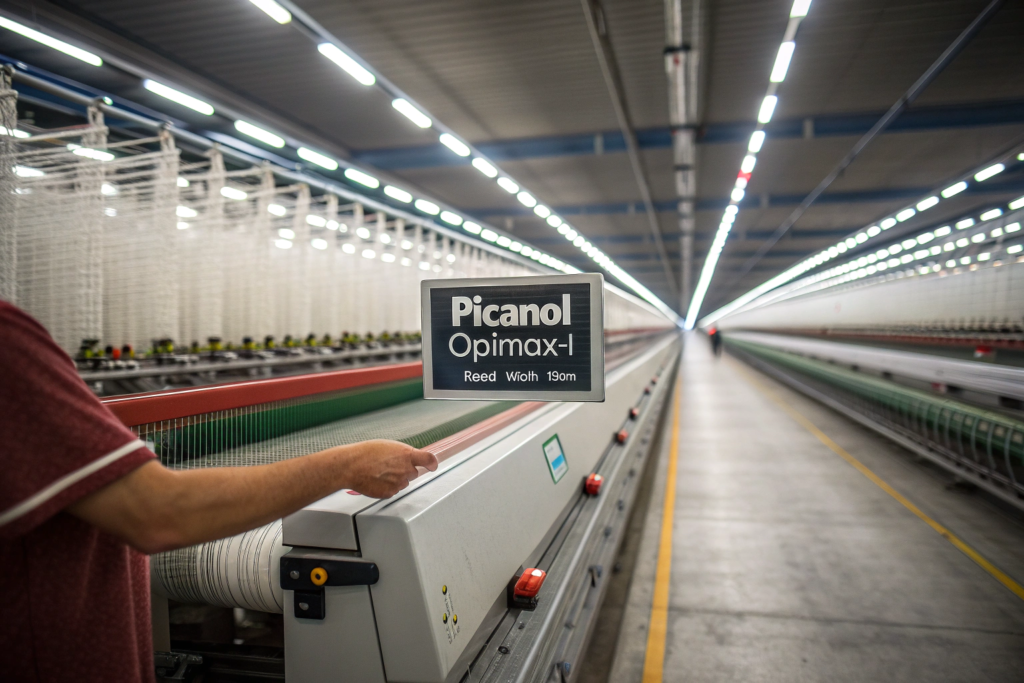
Why Does Loom Age and Maintenance Schedule Matter More Than Count?
A brand new, state-of-the-art loom with electronic take-up and automatic weft repair will produce fabric with Zero Defects at high speed. A 20-year-old loom with worn bearings and mechanical dobby will produce fabric with Barre Marks (streaky lines) and inconsistent pick density. They both count as "one loom." They are not equal.
You need to ask the follow-up question: "What is the average age of the looms running my fabric category, and can you show me the maintenance log for one of them?"
This is the question that makes trading companies sweat. They don’t have access to maintenance logs. A real factory does. In a well-run mill, every loom has a Preventative Maintenance (PM) Schedule attached to it. It shows when the oil was changed, when the gripper bands were replaced, and when the reed was last inspected.
At Shanghai Fumao, we keep digital maintenance logs for every machine. We can show a client that Loom #47 had its warp beam bearings replaced 3 weeks ago. That’s not just a detail. It’s a guarantee that the machine will run true and not create Selvage Defects (loose edges) that ruin the cutting efficiency. You can learn more about what to look for by reading a guide to textile loom types and their specific fabric applications and best practices for textile machinery maintenance and reliability.
What Is the Maximum Reed Width and How Does It Affect My Yield?
This is a technical detail with massive financial implications. The Reed Width is the maximum width of fabric the loom can weave. Standard widths are 150cm, 190cm, 210cm, 230cm, and 340cm (for sheeting).
If you are making shirts and your pattern requires a Cuttable Width of 58 inches (147cm), you ideally want a loom with a 190cm Reed Width. This allows the fabric to be finished to about 150-155cm wide, giving you a comfortable margin for shrinkage and edge trimming.
If a factory only has 150cm Reed Width Looms, they can just barely make your fabric. The finished width might be 142cm. That’s too narrow for your pattern. You’ll have to adjust your marker, which increases fabric consumption (waste) by 5-8%. That 5-8% waste wipes out any savings you got on the price per yard.
At Shanghai Fumao, we always ask clients for their Required Cuttable Width before quoting a loom assignment. We match the fabric to the right machine width to maximize Yield. This is the kind of detail that shows a supplier is thinking about your cutting room, not just their weaving shed. You can read more about this in resources explaining how fabric width affects garment cutting yield and marker efficiency.
How Do You Manage Dye Lot Consistency Across Multiple Production Runs?
This is the nightmare scenario for any brand. Your first production run sells out. You place a re-order for the exact same fabric, same spec, same supplier. The new shipment arrives. You cut it and sew it next to the leftover inventory from the first run. The color is Off. It’s a shade lighter. Or a shade redder. You can’t mix the old and new inventory. You have a logistics and fulfillment disaster on your hands.
This happens because Dye Lot Consistency is one of the hardest things to achieve in textile manufacturing. Dye stuffs vary slightly from batch to batch. Water quality changes with the seasons. Even the humidity in the air affects how cotton takes the dye.
You need to ask the supplier: "What is your internal tolerance for Delta E (color difference) between bulk lots, and do you archive a ‘Master Standard’ for my specific color?"
At Shanghai Fumao, we use a Digital Color Management System. For every custom color we develop for a client, we create a Master Digital Fingerprint stored in our spectrophotometer. When a re-order comes in, we don’t just match the new dye lot to the old bulk fabric (which may have aged or yellowed). We match it to the Original Master Standard. This ensures that Lot #10 looks exactly like Lot #1. We also physically archive a sealed swatch of the approved bulk in a dark, climate-controlled room to protect against fading.
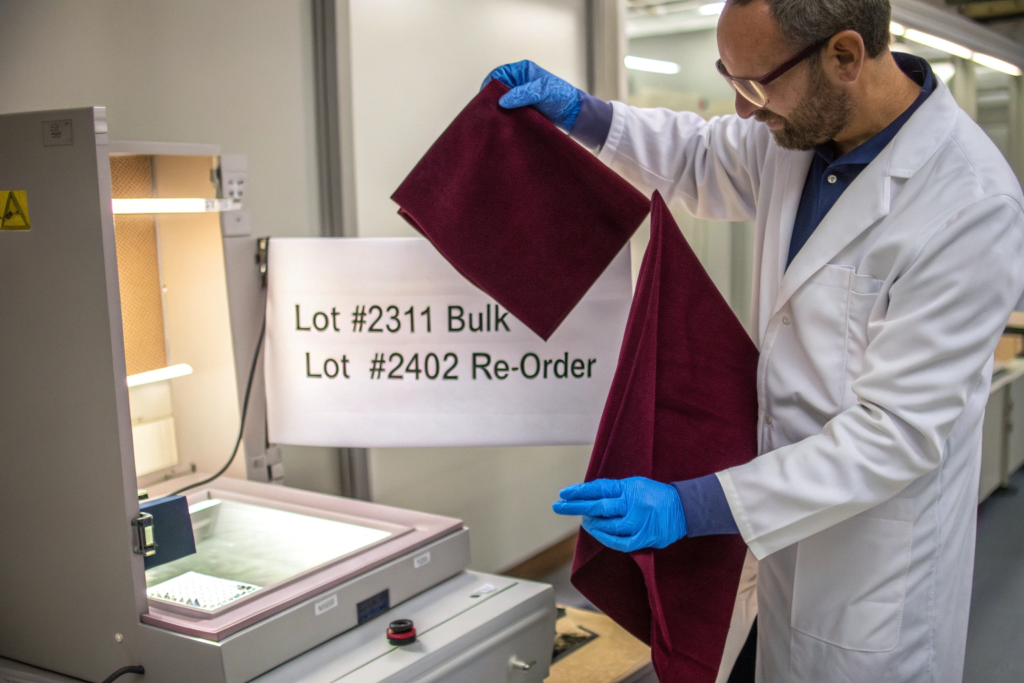
How Do You Handle "Tail Ends" and "Shade Grouping"?
In any dye run, the fabric at the very beginning and very end of the roll can have a slightly different shade (called Tail Ends or Listing). This is normal physics. The question is: How does the factory manage it?
A cheap supplier will roll the entire lot together, mixing the slight shade variations randomly. You’ll cut a sleeve from one layer and a body from another, and under certain lights, the garment looks like a patchwork quilt. A professional supplier will Shade Group.
Shade grouping involves cutting small swatches from the beginning, middle, and end of every single roll and visually sorting the rolls into "A" group, "B" group, "C" group, based on the subtle shade variation. The factory then ships the rolls with Shade Tags (e.g., "Blue A," "Blue B").
You need to ask: "Do you shade group all rolls before packing, and do you mark the shade code on the roll ticket?"
At Shanghai Fumao, this is a non-negotiable step in our packing process. We train our inspectors to identify subtle Side-to-Center Shading and End-to-End Shading. We separate the groups so that your cutting room can cut all the fronts from "Roll A" and all the backs from "Roll A," ensuring a perfect match. This adds labor to our process, but it saves you from a cutting room catastrophe. You can dive deeper into this by reading how to manage shade grouping and color consistency in apparel production and the technical causes of tailing and listing in textile dyeing.
Can You Provide the Dyestuff Lot Numbers for Traceability?
This is an advanced question for brands with high compliance requirements. If you are selling to a retailer like Patagonia or REI, they will want to know exactly which chemicals touched the fabric. This is part of the Manufacturing Restricted Substances List (MRSL) compliance.
Asking for Dyestuff Lot Numbers shows the supplier that you understand the chemical supply chain. A professional dye house keeps a Batch Ticket for every dye run. That ticket lists the exact brand, product code, and lot number of every dye and auxiliary chemical used.
At Shanghai Fumao, our CNAS-certified lab maintains these records for a minimum of 3 years. If a question ever arises about a restricted substance, we can trace it back to the specific container of dye. This level of traceability is not free. It requires a robust ERP (Enterprise Resource Planning) system and disciplined operators. But it’s the standard for any supplier serious about compliance. You can learn more about this by reading the ZDHC Manufacturing Restricted Substances List and chemical traceability requirements.
What Is Your Protocol for Machine Calibration and Preventative Maintenance?
You can have the best yarn and the best dyes in the world, but if the machines are out of calibration, the fabric will be defective. This is the Invisible Variable in quality control. You can’t see calibration. You can only see the results of bad calibration: uneven width, inconsistent shrinkage, and crooked prints.
You need to ask a question that reveals the factory’s Operational Discipline: "How often are your stenter frame width sensors and temperature probes calibrated, and can I see the calibration log for the last month?"
A stenter frame is the giant oven that dries and sets the final width of the fabric. If its width sensor is off by even 2%, your "60-inch" fabric is actually 58.8 inches. That’s a 2% yield loss on every single garment. If the temperature probe is off, the fabric isn’t properly heat-set. It will shrink excessively when your customer washes it.
At Shanghai Fumao, we calibrate our critical sensors Weekly using traceable standards. We keep a Calibration Logbook that is audited by our CNAS lab manager. We can show a client the graph of the stenter temperature over the last 48 hours. It should be a flat line. If it looks like a mountain range, there’s a problem with the heating elements. This level of transparency is what builds confidence in the Repeatability of the product.
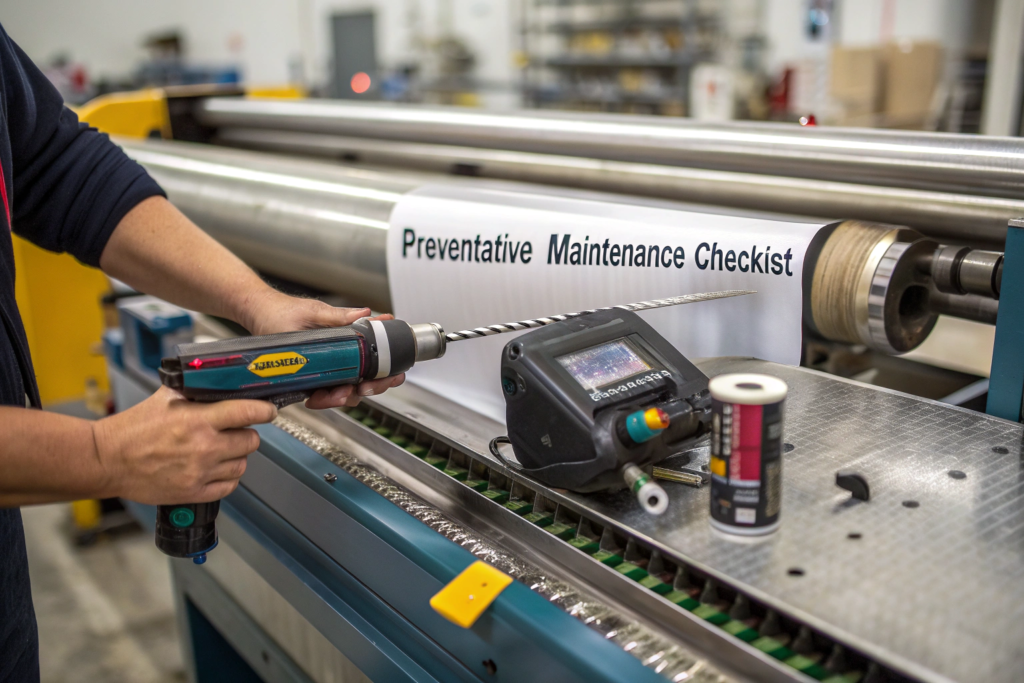
How Do You Prevent Oil Stains from Overhead Equipment?
This is a "walk the floor" question. If you visit a factory, look up. Look at the ceiling above the looms or knitting machines. Do you see Grease Fittings and Overhead Shafts? If you do, and if there are no Drip Pans underneath them, that factory is dropping tiny spots of oil and grease onto the fabric passing below.
These oil spots are often invisible on greige fabric. But when the fabric is dyed, especially in light colors, the oil spot resists the dye and shows up as a White Speck. That’s a permanent defect. The roll is downgraded. You lose money.
The right question to ask is: "What is your protocol for preventing overhead lubrication contamination on light-colored goods?"
The right answer involves Sealed Bearings (no grease needed), Drip Pans (metal trays catching any drips), and a Cleaning Schedule (wiping down overhead beams weekly).
At Shanghai Fumao, we use a specific Food-Grade White Grease for any overhead lubrication on lines running white or light pastel fabrics. Why? Because if a drop does fall, it will wash out in the scour. Standard brown grease will not. It’s a small detail that costs us a bit more, but it prevents a huge problem for the client. You can read more about common textile defects by looking at a visual guide to identifying common fabric defects and their root causes.
What Is the Frequency of Needle and Sinker Replacement in Knitting?
If you are sourcing jersey, rib, or any knit fabric, this question is crucial. The Needles and Sinkers in a circular knitting machine are tiny, precision metal parts that form the loops. They wear down over time. A worn needle creates a Needle Line—a vertical stripe running the length of the fabric. It’s a subtle defect that becomes glaringly obvious after dyeing.
A cheap factory will run needles until they break. A good factory has a Preventative Replacement Schedule. They replace all needles in a machine after a certain number of revolutions, whether they look worn or not.
Ask: "What is your needle replacement interval for a 28-gauge jersey machine, and do you use OEM (Original Equipment Manufacturer) needles or generic?"
At Shanghai Fumao, we use only Grooved Needles from top-tier suppliers and replace them based on a strict Kilogram-Based Schedule. After 10,000 kg of fabric, the needles are changed. This prevents the sudden appearance of needle lines in the middle of a large production run. It’s a cost we bear to ensure fabric quality. A supplier who can’t answer this question doesn’t control their knitting floor.
How Do You Handle Wastewater and Chemical Compliance?
This is the question that determines whether your supply chain is sustainable or a liability. In China today, environmental regulations are enforced with an iron fist. A factory that cuts corners on wastewater treatment will eventually be Shut Down. And if they are shut down in the middle of your production run, your fabric is trapped. You have no recourse. You miss your season.
This is not just about "being green." It’s about Supply Chain Security. A factory with a compliant, on-site wastewater treatment plant is a factory that will still be open next year to make your re-orders.
You need to ask: "Do you treat wastewater on-site, and what is your current discharge permit status? Can you show me the last 3 months of third-party test reports for COD and BOD?"
At Shanghai Fumao, we partner exclusively with dye houses that have Closed-Loop Water Systems and on-site Reverse Osmosis (RO) treatment. We have a dedicated compliance officer who monitors the daily discharge logs. We can provide our clients with a Wastewater Test Report showing that the water leaving the plant meets the strict GB (Guobiao) National Standards. This is the "insurance policy" that protects your order from regulatory disruption.
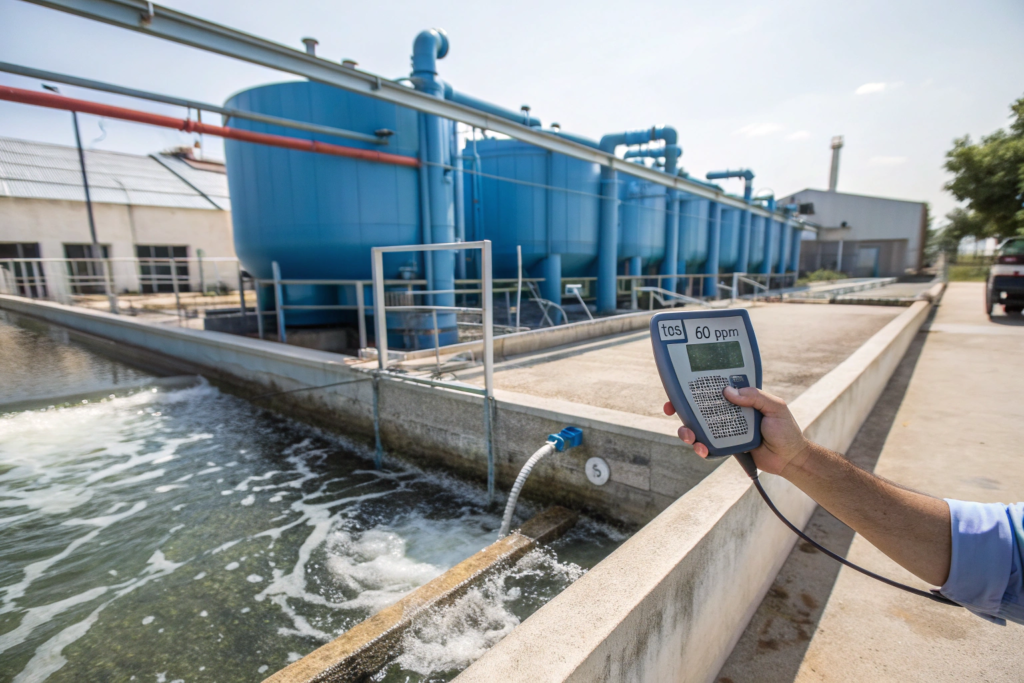
Are You ZDHC Compliant for Chemical Inputs?
ZDHC stands for Zero Discharge of Hazardous Chemicals. It’s the gold standard for chemical management in the textile industry, driven by the world’s largest brands. If you want to sell to Nike, Adidas, or H&M, your fabric must come from a ZDHC-compliant facility.
But even if you are a small brand, ZDHC compliance matters. It means the factory is using Safer Chemistry. The fabric won’t smell like kerosene. It won’t give the wearer a rash. It will pass customs inspection in the EU and US without being flagged for banned Azo dyes.
Ask the supplier: "Is your dye house registered on the ZDHC Gateway, and do you have a positive InCheck report?"
At Shanghai Fumao, we are on the ZDHC Gateway. We use OEKO-TEX Eco Passport certified chemicals. This is a significant investment for us, but it means our clients’ goods clear customs faster and with fewer headaches. It’s a competitive advantage for them. You can verify a supplier’s ZDHC status by searching the ZDHC Gateway database of compliant suppliers and chemical formulations and reading about the impact of ZDHC compliance on global textile supply chains.
How Do You Manage Sludge Disposal from Dyeing?
This is the ultimate "stump the chump" question. Dyeing fabric creates Sludge—the solid waste filtered out of the wastewater. This sludge is classified as Hazardous Industrial Waste in China. It cannot just be dumped in a landfill. It must be disposed of by a Licensed Hazardous Waste Contractor.
A factory that doesn’t have a proper sludge management plan is either polluting illegally (risking shutdown) or they are paying someone to take it away who is dumping it illegally (creating a massive liability).
Ask: "Who is your licensed hazardous waste disposal contractor, and can you provide a copy of the waste manifest for the last shipment of sludge?"
At Shanghai Fumao, we maintain a Chain of Custody for all solid waste. We have a contract with a government-licensed facility that incinerates the sludge at high temperature. We provide the manifest to any client who asks. It’s a small piece of paper that represents a huge commitment to operating legally and responsibly. This is the level of detail that defines a true production partner.
Conclusion
Asking the right questions about a production line is not about being difficult or distrustful. It’s about Risk Mitigation and Partnership Alignment. You are not just buying fabric. You are buying the Process that created the fabric. The loom type, the dye lot protocol, the calibration schedule, and the wastewater treatment plant are all part of that process.
A supplier who welcomes these questions, who can pull up a maintenance log or a dye lot ticket without hesitation, is a supplier you can build a business with. They have nothing to hide. They are proud of their operational discipline. A supplier who deflects, gives vague answers, or seems annoyed by the questions is a red flag. They are likely hiding a messy, unreliable, or non-compliant operation.
At Shanghai Fumao, we believe that an educated buyer is our best partner. When you understand the complexity of what we do, you appreciate the value we bring. You stop looking for the cheapest price and start looking for the Most Reliable Process. That’s how we build relationships that last for decades, not seasons.
If you have a list of questions like these and you want to put a potential supplier to the test, we invite you to put us to the test. Reach out to our Business Director, Elaine. She can schedule a video walkthrough of the specific production lines relevant to your project, and we can answer every single one of these questions in real-time. You can email her at elaine@fumaoclothing.com. Let’s make sure your next supplier is the real deal.