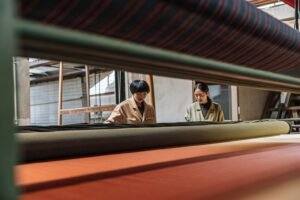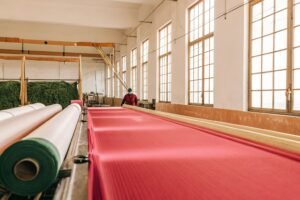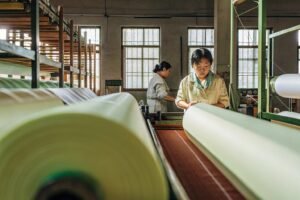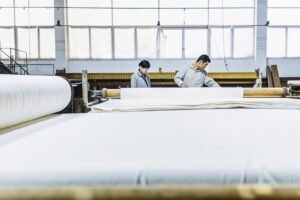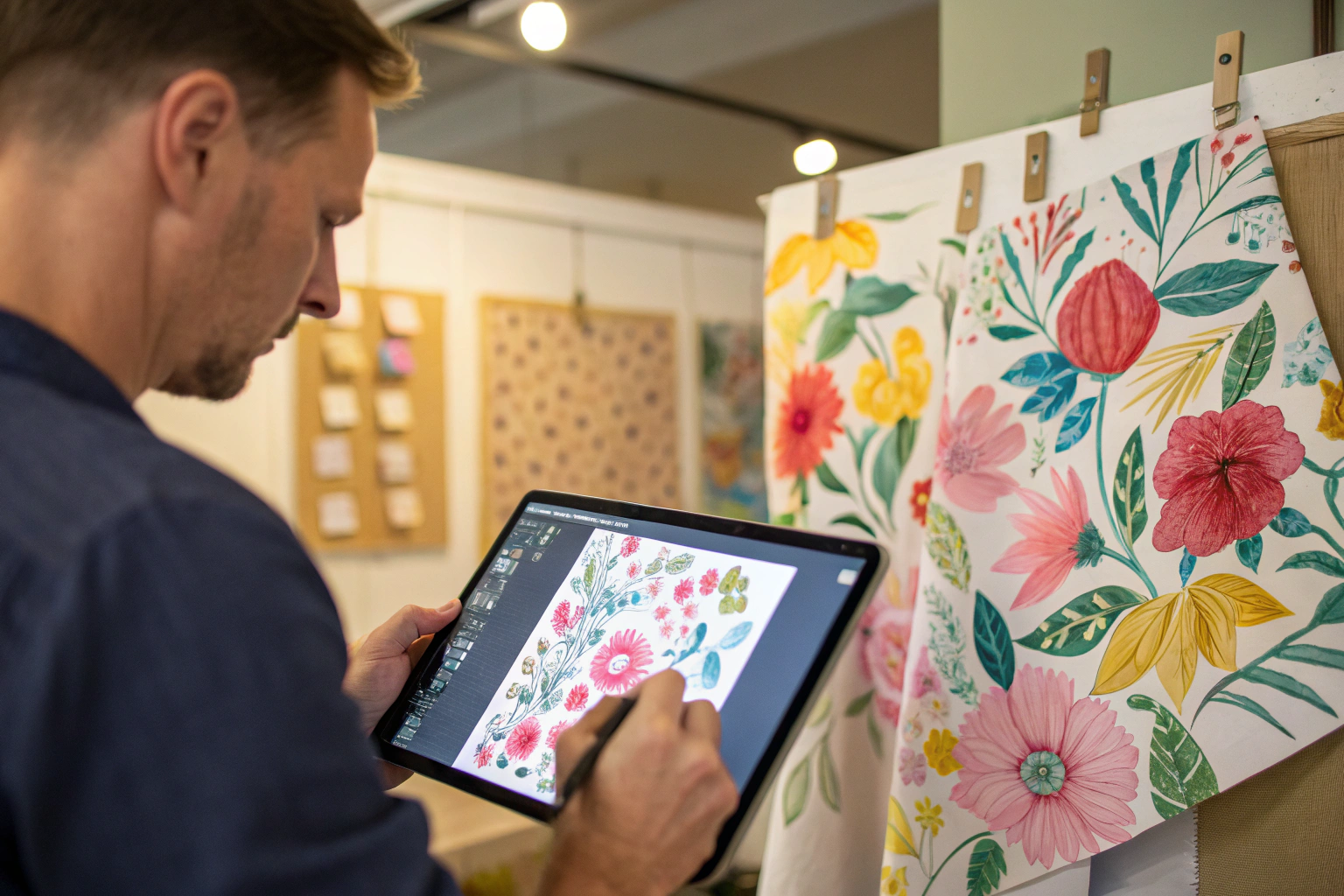
You spent six months developing it. The watercolor floral that your customers went crazy for on Instagram. The geometric jacquard that defines your brand’s new "Architectural" look. You sourced a factory in China, sent them your digital files, and paid for strike-offs. The fabric is beautiful. Three months later, you’re scrolling Alibaba and you see it. Your print. Your exact colorway. Being sold as "New Fashion Floral Design" for $2.50 a yard less than what you paid. Your stomach drops. You realize you just funded your own competition’s R&D, and there’s nothing you can do about it. The exclusivity of your brand just evaporated.
Protecting custom textile designs in the global supply chain is not a legal problem. It’s a Process Control problem. The law is slow, expensive, and nearly impossible to enforce across borders against a factory you’ve never visited. Your real protection comes from how you manage the flow of information and the structure of the relationship. You can’t stop a determined thief, but you can make it so inconvenient and unprofitable to steal from you that they move on to an easier target.
At Shanghai Fumao, we’ve been developing custom fabrics for international brands for twenty years. We’ve seen the tricks that trading companies use to "borrow" designs. We’ve also built a system that gives our clients Operational Security without needing a team of lawyers in Shanghai. I’m going to walk you through the practical, non-legal steps you can take—from file handling to dye recipe control—that create a moat around your intellectual property. This isn’t about paranoia; it’s about professional hygiene.
How to Create a Secure Digital Workflow for Textile Art Files?
The moment you hit "Send" on that WeTransfer link or attach a high-res TIFF file to an email, you’ve lost control. You have no idea where that file goes. Does the factory owner download it to his personal laptop that his teenage son uses for gaming? Does the sales rep forward it to five other mills to "get a quote" for you? Does it sit on an unsecured server in a shared office space? Digital hygiene is your first line of defense, and it’s the one most designers ignore because it’s "tech stuff."
At Shanghai Fumao, we treat client design files like medical records—strict Access Control and Chain of Custody. This isn’t just for the big brands like ZARA or H&M who have vendor manuals 100 pages thick. Even for a small indie brand with a 500-yard order, the principle is the same: Limit the number of human beings who see the full, production-ready file.
The most effective, low-tech solution is File Decomposition. Never send a single file that contains both the design artwork and the color separation data/Pantone references. Send them separately, or better yet, have the design sent as a Locked PDF with low resolution for viewing only, and the production file sent directly to the Laser Engraver or Printer RIP Software without the sales team ever seeing it.

Should You Use Watermarks and Low-Res Files for Initial Quotes?
Yes, but not for the reason you think. A watermark won’t stop a real thief. Anyone with basic Photoshop skills can clone-stamp a logo out of a flat image in about 45 seconds. The real purpose of the watermark is Psychological Deterrence and Legal Intent.
When you send a file with a prominent watermark that says "Property of [Your Brand] – Unauthorized Use Prohibited," you are establishing a clear paper trail of ownership. If the factory does use that file later, they can’t claim in court (or on Alibaba’s dispute resolution) that they "thought it was a generic design" or "found it on Google." It shows Willful Infringement.
Here is the workflow we recommend at Shanghai Fumao:
- Initial Inquiry: Send a low-res JPG (72 DPI) with a Semi-Transparent Diagonal Watermark across the entire art. This is good enough for a mill to judge the number of colors, the repeat size, and the complexity. They cannot make a screen or a roller from this.
- Quotation Stage: Send a Medium-res PDF with Password Protection (no print, no edit permissions).
- Strike-Off Production: Only now do we release the High-Res TIFF or AI file, and we release it only to the Pre-Press Department, not the sales agent.
This staged approach ensures that the file only goes to the technical people who need it to make the screen. The salesperson who might be moonlighting for three other trading companies never gets his hands on the good file. You can learn more about basic digital rights management by reading how to secure digital design files for textile printing and manufacturing and the specifics of best practices for sharing high-value creative assets with overseas partners.
How Do You Prevent "File Creep" Inside a Large Factory?
This is the insider threat. You send the file to the trusted factory owner. He puts it on the Local Area Network (LAN) shared drive so the Engraving Department can access it. That shared drive is accessible by the Weaving Department, the Accounting Department, and the Janitorial Department (not really, but you get the point). Suddenly, 47 people have a copy of your original art.
At Shanghai Fumao, we mitigate this with a simple Naming Convention and Folder Permissions protocol.
- Folder Structure: We create a unique client folder with a code name (e.g., "Project Bluebird Fall 26"). The actual brand name is never on the folder.
- File Deletion Schedule: Our internal policy states that high-res production files for custom exclusive designs are Purged from the local engraver’s computer 30 days after the bulk order ships. We keep the low-res PDF in the client archive for re-orders, but the "live" production file is removed from the shop floor computers.
- Physical Key for RIP Station: The computer that drives the digital printer or the laser engraver has a USB Dongle Key required to open the software. That key is held by the Production Manager, not the machine operator.
This level of internal control is rare. You have to ask the factory: "Who specifically has access to the high-res file? Can you list the names?" If they can’t answer that immediately, they don’t have control. (Here’s a hard truth: If the factory is a small trading office with 5 people and they outsource the printing to a village workshop, your file has been copied onto a USB stick and is being shared like a bootleg movie. You have zero protection there.)
What Contractual Terms Actually Matter for Fabric Exclusivity?
I’m going to be brutally honest with you. If you are a small brand ordering 500 yards, a 20-page Master Supply Agreement written by a New York lawyer is going to get you a polite "No, thank you" from 99% of Chinese textile mills. They simply won’t sign it. The legal systems are too different, and the cost of having it translated and reviewed by their own lawyer exceeds the profit on your order.
So, what does work? Simple, Specific, Scoped Agreements that are embedded in the Purchase Order (PO) . You’re not looking for a document to sue them in federal court. You’re looking for a document that gives you leverage with Alibaba Trade Assurance or with the factory owner’s sense of professional reputation (which, in our culture, is a big deal).
At Shanghai Fumao, we sign NDAs regularly. We understand they are a requirement of doing business with the West. But the real protection comes from the Exclusivity Clause tied to a specific Cost Recovery Mechanism. Let me explain.

Does an NDA Really Protect a Textile Pattern in China?
An NDA (Non-Disclosure Agreement) is a piece of paper that says, "I promise not to tell anyone your secret." It is useful for establishing a Fiduciary Relationship. It makes it clear that you are sharing this in confidence. If the factory breaches it, you have a moral high ground and potentially a claim in arbitration.
But here’s the loophole that kills NDAs in textiles: Derivative Works. If the factory takes your floral design, changes the background color from navy to black, and moves two petals slightly, is it the "same" design? Under a strict interpretation of an NDA, maybe not.
That’s why we don’t rely on the NDA alone. We rely on the Non-Compete for Manufacturing. We add a clause to the Purchase Order that reads something like this:
"The artwork provided by Buyer (File Name: Design_XYZ.ai) is for the exclusive use of fulfilling PO #12345. Factory agrees not to produce this exact print layout and color combination for any other client for a period of 18 months from the date of final shipment. Factory retains the right to use the technique (e.g., ‘floral watercolor style’) for other clients, but not this specific repeat."
This is clear. It’s specific. It’s enforceable because it’s tied to the exact file name we sent. It allows us to continue doing business (making watercolor florals for others) while protecting your specific iteration. This is the kind of practical compromise that works in the real world of textile sourcing. For more context on this nuanced issue, reading about how to protect fabric designs and textile prints from copyright infringement (official US Copyright Office) and strategies for enforcing intellectual property rights in China’s manufacturing sector provides a sobering look at the legal landscape.
Why Should You Pay an "Exclusive Screen Fee" or "Engraving Fee"?
This is the single most effective, non-legal way to protect a custom design. Pay for the Tooling.
- For Rotary Printing: Pay for the Nickel Screen (the engraved metal cylinder). It costs roughly $100-$150 per color.
- For Digital Printing: There is no physical screen, but you can pay an Exclusive File Handling Fee.
- For Jacquard Weaving: Pay for the Digital Weave File Creation and the Harness Setup.
Why does this work? Because you own the tool. Or more accurately, you have paid for the creation of a physical asset that sits in the factory. When you pay the invoice that says "Screen Engraving Charge – Customer Property," you establish Bailment. The factory is holding your property.
At Shanghai Fumao, once a client pays the screen fee, we tag that screen with their name and Store it in a locked cage. If someone else walks in and says, "I love that floral, can I use it?" we can honestly say, "That screen belongs to Client X. We cannot use it without their written permission. We would have to engrave a new screen for you, which will cost you $150 and take 7 days." Most copycats won’t pay the money or wait the time. They’ll just pick a different design.
This is practical protection. It’s not a lawsuit. It’s a Barrier to Entry. You can read more about the technical aspects of this in resources discussing the process and costs of rotary screen engraving for textile printing and understanding the value of owning print screens in custom fabric production.
How to Manage Color and Dye Recipe Confidentiality?
Here’s a secret that most designers don’t realize: The color is more valuable than the print. A print can be scanned and copied in a week. But a specific, nuanced color—say, a dusty rose that doesn’t look too pink or too brown—is a chemical fingerprint. It’s the result of a specific combination of dyestuffs, auxiliaries, and processing time. And if the factory keeps that "recipe" in a shared Excel file, it’s only a matter of time before someone uses it for another client.
At Shanghai Fumao, we have a Master Recipe Database with tiered access. Our lab technicians see the full formula: "0.82% Reactive Red 195, 0.15% Reactive Yellow 145, 60g/L Salt, 20g/L Soda Ash." Our sales team and the production floor see only the Internal Code: "Color Code FUM-Rose-09-24."
This separation means that if a salesperson is trying to sell fabric to a competitor, they can’t just copy and paste the formula. They’d have to physically steal a piece of the lab dip or the bulk fabric and have it Reverse Engineered via spectrophotometer. While that is possible, it’s a lot more work than just emailing a spreadsheet.

Can a Factory "Reverse Engineer" Your Custom Color?
Yes, absolutely. Any competent dye house can take a swatch of your fabric, put it in a spectrophotometer, and the machine will spit out a suggested dye recipe that is 95% accurate. This is how the industry works for color matching.
So how do you protect a color if the machine can read it? You protect the Consistency and the Context. The machine gives a starting formula. It doesn’t give the exact Dyeing Curve (how fast the temperature rises), the Leveling Agent used, or the specific Post-Treatment Softener that gives the fabric its unique hand feel. Those variables are what separate a good color from a great one.
We protect our clients’ colorways by Not Labeling the Bulk Fabric with the client’s name in the warehouse. A roll of fabric sitting in our warehouse has a barcode that says "PO #45678 – Color: 09-24." It does not say "Brand X Signature Rose." If a competitor or a visitor walks through our warehouse, they see a roll of pink fabric. They don’t know whose it is. This simple Operational Security (OPSEC) measure prevents casual theft.
The only way to truly lock down a color is to Exclusive Source the Dyestuff, which is only viable for massive brands. For everyone else, the protection is in the Complexity of the Process. You can find technical papers on how spectrophotometers are used for color matching and recipe prediction in textile dyeing and the complexities of reverse engineering textile dye recipes and its limitations.
What Is "Open Market" Fabric and Why Is It a Risk?
"Open Market" or "Stock Lot" fabric is the clearance rack of the textile world. A factory produces 10,000 yards for a big brand. The brand only takes 9,500 yards. The remaining 500 yards is "overrun." The factory sells it on the open market to recoup costs.
If you are a small brand doing a custom run, you need to specify in your PO: "No Overrun Sales. All excess yardage must be destroyed or shipped to buyer at cost."
If you don’t specify this, your custom fabric—complete with your unique color and handfeel—could end up on a roll in the Los Angeles Fashion District being sold for $1.50 a yard to your direct competitor. They’ll make a dress out of your fabric and sell it for half the price.
At Shanghai Fumao, we are transparent about overrun. We do not want your fabric on the open market. It devalues our relationship with you. We either ship the excess (if you want it) or we shred it for recycling into our eco-friendly yarn program. We provide a Destruction Certificate upon request. This is a level of service that shows we take your brand’s equity seriously.
How to Vet a Factory’s Reputation for Design Security?
The best contract in the world is useless if you’re dealing with a factory that has a culture of cutting corners and flipping designs. You need to vet the Ethical DNA of the supplier before you hand over your creative assets. This is harder than checking a machine list, but it’s absolutely essential.
When you visit a factory (or do a deep-dive remote audit), you’re looking for Signals of Long-Term Thinking. A factory that is desperate for cash this month will sell anything to anyone, including your design. A factory that is building a 20-year brand and has relationships with major retailers will protect your IP because a single lawsuit or bad review from a major brand could blacklist them from the industry.
At Shanghai Fumao, our reputation is our balance sheet. We host major European brands who audit us annually for Social Compliance and Security Protocols. We know that if we leak a ZARA print, we don’t just lose ZARA. We lose the ability to do business with any brand that uses the same compliance database (and they all share information). This is the "Invisible Hand" of the market protecting your IP better than any lawyer.

What Questions Reveal a Factory’s Attitude Toward IP?
You can’t just ask, "Do you steal designs?" They’ll say no. You have to ask Behavioral Questions that reveal their process.
Here are three questions I recommend clients ask any potential mill, including us:
Question 1: "Can you show me where you store client screens/rollers?"
- Good Answer: "Yes, let me take you to the storage cage. Here is the sign-out sheet." (You see a locked area, maybe a bit dusty, with tags.)
- Bad Answer: "Uh, they are around back somewhere. We know which is which." (This means they’re in a pile and anyone can grab one.)
Question 2: "What happens if one of your salespeople leaves and goes to work for a competitor?"
- Good Answer: "They sign a non-compete with us. They don’t take client files. Our IT revokes their email and server access immediately upon resignation." (We actually do this.)
- Bad Answer: "Oh, that’s just business, people move around." (This means your file is moving with them.)
Question 3: "Have you ever had a dispute with a client over design ownership? How did you resolve it?"
- Good Answer: A specific, anonymized story with a clear resolution. "We had a mix-up where a freelance designer submitted a file to two different clients. We showed both clients the submission timestamps, and we split the cost of a new screen for the second client to modify the design."
- Bad Answer: "Never. We are perfect." (Everyone in this industry has had a misunderstanding. Lying about it is a red flag.)
You can find more detailed audit checklists by looking into how to conduct a factory audit for intellectual property protection and compliance and key indicators of ethical manufacturing and supply chain transparency.
Is "Showrooming" a Risk for Your Custom Swatches?
"Showrooming" is when a factory takes your custom-developed swatch and puts it in their public showroom or takes it to a trade show to show other buyers "what they can do." Suddenly, 50 people have touched your fabric and taken photos of it before you’ve even launched your collection.
This is a massive risk, especially in Keqiao where thousands of buyers walk through the market every day. At Shanghai Fumao, we have a strict policy: Custom client developments are kept in a separate, locked archive room. They are never displayed in the main showroom area without the client’s explicit written permission.
If you are a client, you should ask for a Video Call Walkthrough of the showroom. If you see your fabric on a hanger in the background during a Zoom call, you need to have a very direct conversation about confidentiality. We often use Grey Fabric Dummies (undyed fabric) or Black and White Prints in our showroom to demonstrate a weave structure or a print technique without revealing a client’s specific color story.
This level of care is what you pay for when you work with a supplier who understands the difference between a Commodity Mill and a Development Partner. We are the latter. We know that your design is your competitive edge, and we treat it with the same care we treat our own proprietary weaving techniques.
Conclusion
Protecting your custom fabric design is about managing the Path of Least Resistance. You can’t build an impenetrable fortress in global trade. You can build a series of gates, locks, and speed bumps that make stealing your design more trouble than it’s worth. You do this through smart file handling, paying for the screens you own, keeping recipes on a need-to-know basis, and choosing a partner whose business model depends on Trust, not Transactions.
The most powerful protection is a Mutual Interest in Exclusivity. If your supplier makes more money by keeping you happy and growing your brand over five years than they would by making a quick $2,000 selling your design to a discounter, your design is safe. That’s the alignment we strive for at Shanghai Fumao. We want your next order, and the one after that. We can’t get those if we burn you on the first one.
If you are developing a custom textile and you’re worried about keeping it off the open market, let’s talk about how we handle file security and recipe management. We can show you exactly how we protect the work of designers just like you. Reach out to our Business Director, Elaine. She can explain our internal protocols and put your mind at ease before you even send the first sketch. You can email her at elaine@fumaoclothing.com. Your art deserves a secure home.