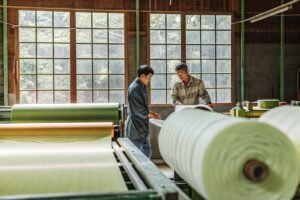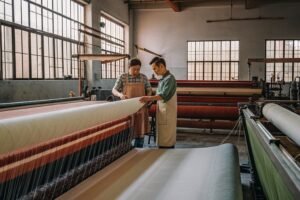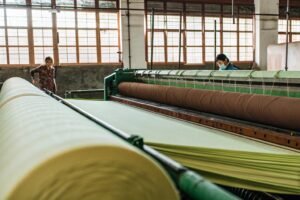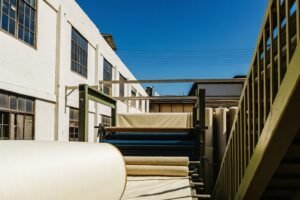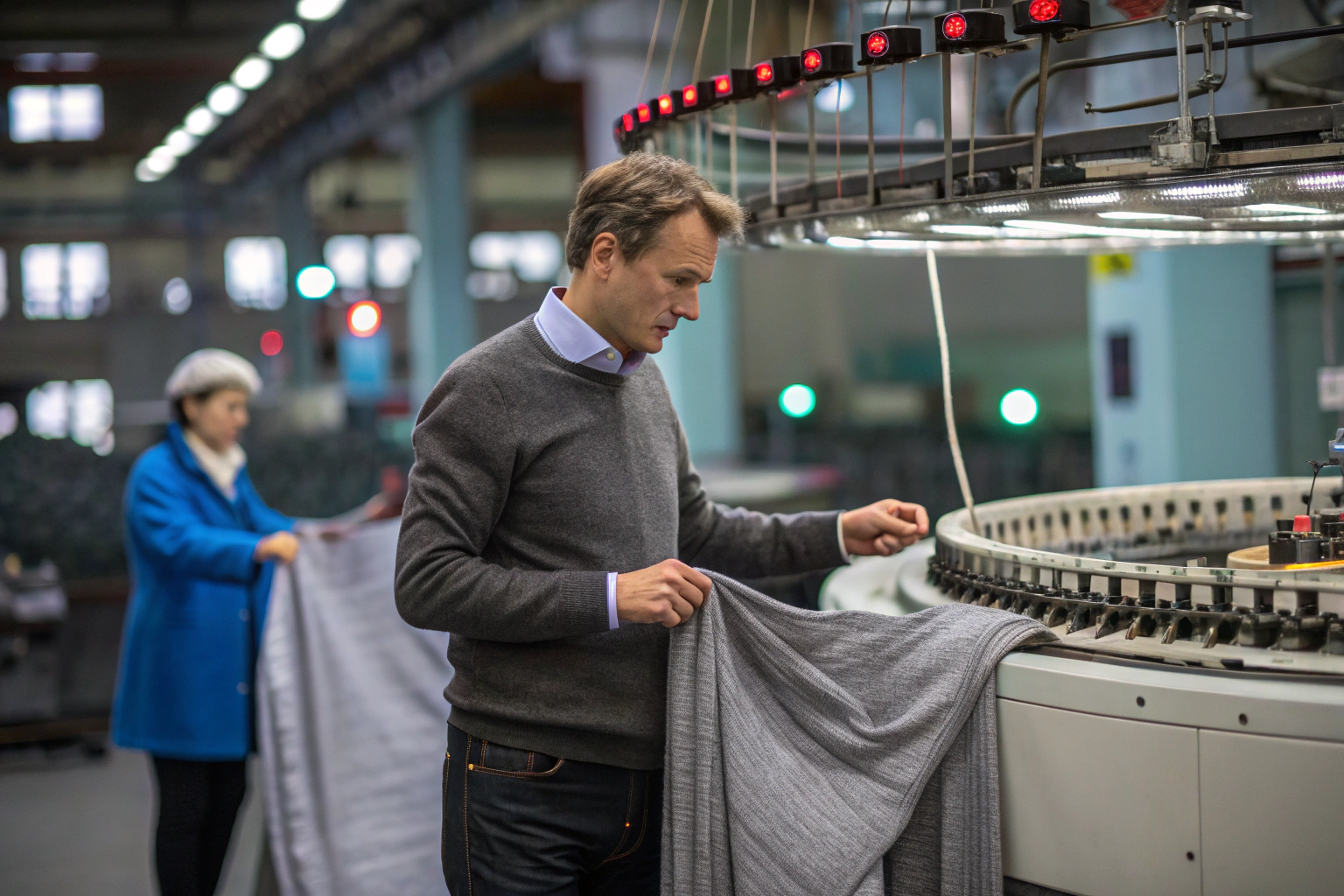
Picture this. You just received a swatch of the most incredible 400 GSM French Terry. The hand feel is perfect. The color is rich. The price? Unbeatable. You wire 30% deposit on a $45,000 order. Then, eight weeks later, the shipment arrives. You cut open the first roll and your stomach drops. The face of the fabric is fine, but the back loop is loose, nappy, and nothing like the compact, clean loops of the swatch. You call the supplier. They say, "This is within tolerance." You’re stuck. You can’t sell $20,000 worth of cheap-looking hoodies. This nightmare happens because a swatch is a curated lie. It’s a 4-inch square of perfection that tells you nothing about the 2,000-yard roll it came from or the conditions of the floor that made it.
Visiting a fabric factory isn’t a tourism exercise. It’s the single most effective risk mitigation tool you have in apparel sourcing. When you stand on that concrete floor, you verify three things that no Zoom call or Alibaba Trade Assurance can guarantee: Process Control, Real Capacity vs. Claimed Capacity, and Management Culture. You see if the machines are actually running your fiber type. You smell the air to know if they’re skimping on ventilation (which affects your fabric’s chemical smell). You look at the floor—is it clean or covered in oil stains that might end up on your white cotton poplin?
My name is Jack, and I run Shanghai Fumao. In twenty years of hosting buyers from Europe, the US, and Australia in our Keqiao facilities, I’ve seen the look on a visitor’s face change from polite interest to genuine relief—or occasionally, to quiet horror. And I’m talking about visits to our partners, not just our own factory. I encourage my clients to visit our dye house and finishing plant. Why? Because transparency is our only real differentiator in a market flooded with middlemen who have never touched a loom in their life. Let me explain exactly what you should be looking for when you walk through those factory gates, and why that one trip can save you more money than any negotiation on price per yard.
How Does a Factory Visit Reveal True Production Quality?
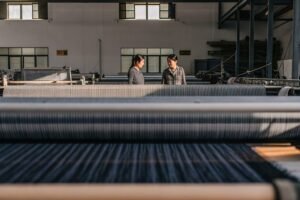
You can fake a swatch. You can fake a lab report. You can even fake a short video tour. But you cannot fake the rhythm and the habits of a 50-person workforce for an hour while a visitor walks the floor. Quality is a culture, not a checkbox. When you visit a factory, you get to witness the "Silent Signals"—the unspoken indicators that tell you whether this place cares about what leaves the loading dock. Does the operator stop the loom to trim a loose thread, or does she let it weave in and become a defect? Is the lint buildup on the knitting machine feeders an inch thick, or has it been blown off in the last 30 minutes?
I always tell my clients: Ignore the CEO for the first 20 minutes. Walk behind the machines. Look in the corners. Look at the trash bins. Are they full of perfectly good yarn cones with a few hundred yards left? That’s waste that you’re paying for. Are there fabric scraps on the floor? That’s a sign of poor housekeeping that leads to contamination. Quality isn’t just about the final inspection grade; it’s about the Discipline of the Process.
What Are the Silent Signs of a Poorly Managed Weaving Floor?
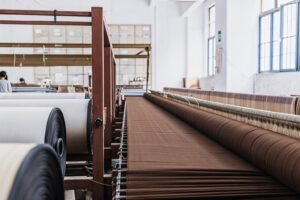
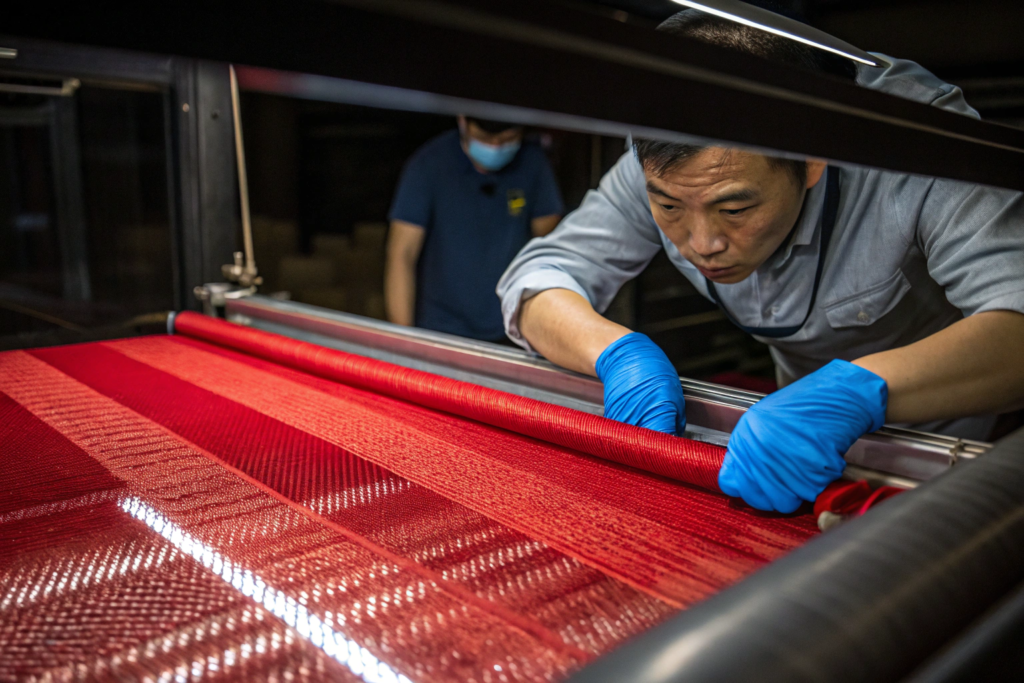
Let’s get specific about a weaving shed. You walk in. It’s loud. That’s normal. But listen to the type of noise. A well-maintained rapier loom has a specific clicking rhythm—click-clack, click-clack. A machine with a loose bearing or a worn cam follower makes a grinding or screeching sound. That noise means friction. Friction means heat. Heat means broken filaments and inconsistent yarn tension. If the factory manager is walking you around and ignoring that screeching machine, he’s ignoring the quality of the fabric coming off it.
Here is a checklist I use internally when I audit a new partner mill for Shanghai Fumao. You can use this when you visit:
| Observation Point | What "Good" Looks Like | What "Bad" Tells You |
|---|---|---|
| Floor Cleanliness | Slightly tacky concrete (catches dust). No oil puddles. | Oil stains on floor = likely oil stains on grey fabric. |
| Warp Stop Motion | Lights flashing only during tie-in. Loom stops immediately on break. | Loom running with missing end. Operator is asleep or pressured to hit yardage targets at cost of quality. |
| Yarn Storage | Wrapped in plastic. Off the floor on pallets. | Open cones collecting ambient dust and humidity. Expect slubs and weak spots. |
| Selvage Waste Bin | Consistent, thin strips of waste. | Wide, ragged strips. Indicates poor temple settings or reed alignment. |
This isn’t rocket science. It’s just looking. I remember a buyer from Canada who visited a mill and noticed they had tied a piece of cardboard to the harness frame to stop it from rattling. (Here I need to be blunt—if you see cardboard or duct tape on a moving part of a textile machine, turn around and leave. That’s a breakdown waiting to happen on your production run.) For more insight into what a world-class facility should look like, you might find it useful to read about how to identify best practices in textile mill housekeeping and maintenance and the specific challenges of common mechanical defects in woven fabric and their causes.
Can You Trust the Color Matching Lab You Can’t See?
Here’s a secret: many small trading companies and even some mid-sized factories don’t have a real lab. They have a guy with a lightbox in a dark corner and a subscription to a Pantone book. That’s fine for a solid black polyester, but it’s a disaster for a complex heather grey or a specific brand color like Lululemon’s "Gull Grey."
When you visit, ask to see the Spectrophotometer. This is the machine that reads the color digitally and gives you the "Delta E" reading—the mathematical difference between your target and the sample. If they can’t show you a calibrated spectrophotometer with a recent service date (and they should be able to show you the calibration tile), they are matching by eye. Matching by eye changes based on the weather, the time of day, and whether the colorist had a fight with their spouse that morning. It is not reliable for production.
At Shanghai Fumao, our lab is CNAS-certified, which is the highest standard in China. This means our spectrophotometers are calibrated against international standards, and the humidity in the lab is controlled (this matters for cotton and rayon, which change shade as they absorb moisture). We don’t just show the machine; we show clients the Data Log. We can pull up a graph showing the shade variation across five rolls of their last order. It either looks like a flat line (good) or a mountain range (bad). This transparency is what builds confidence that the bulk fabric will match the lab dip. Without seeing the lab, you’re just hoping the guy’s eyesight is 20/20. You can dive deeper into the technology behind this by exploring how spectrophotometers ensure color consistency in textile production and the industry standards for understanding Delta E tolerance in fabric dyeing and printing.
When Is the Best Time to Schedule a Textile Factory Tour?
Timing is everything in this business. We operate on a calendar that is partly Gregorian and partly Lunar. If you show up at the wrong time, you’re not going to see a factory operating at normal capacity. You’re going to see a ghost town, or worse, a chaotic mess of rushed workers who don’t have time to talk to you. You need to understand the Chinese Manufacturing Rhythm to maximize the value of your trip.
There are windows of opportunity where you get the perfect storm of: A) Full production running so you can see real speed and quality; and B) Managers have time to actually sit down and talk engineering with you. Miss these windows, and you’re just getting a sales pitch in a dusty conference room while the factory manager is on his phone trying to find a missing container of dyestuff.
From my perspective as the owner of Shanghai Fumao, the ideal visit is during the Peak Production periods (March-May or August-October). Why? Because that’s when we’re running at 90-95% capacity. You see the real deal. You see how the team handles pressure. You see if the scheduling system holds up. It’s like test driving a car in the rain—you find out if the windshield wipers actually work.
Why Should You Avoid Visiting During Chinese New Year and Golden Week?
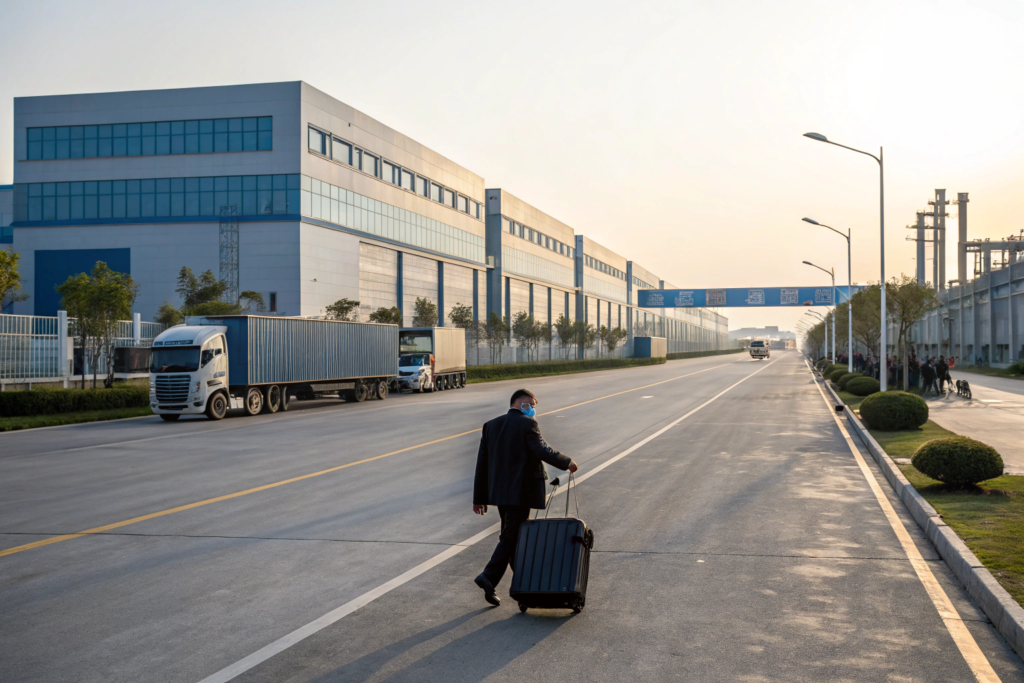
This is not a suggestion; it’s a warning. Chinese New Year (CNY) is not a "holiday" like Christmas in the West where people take a few days off and the office is quiet. It is the largest annual human migration on Earth. Every single worker in the textile industry—from the spinner in Jiangsu to the cutter in Guangdong—goes home to their village for 2 to 4 weeks. The factory does not just "slow down." It stops. Completely. The machines are off. The dye baths are empty. The steam boilers are cold.
If you visit one week before CNY, you will see a factory that is already shutting down. Managers are stressed about getting the last truck loaded. Workers are thinking about train tickets, not your hemline. If you visit the week after the official holiday ends, the factory is still not at full strength. Many workers extend their holiday or simply don’t come back, switching to a factory closer to their hometown. It takes a full 2-3 weeks after the holiday for the workforce to stabilize and for the machines to be re-threaded and warmed up.
Golden Week (First week of October) is similar but shorter—a 1-week hard stop. The trick here is the Pre-Holiday Rush. For six weeks before these holidays, every factory is working overtime to clear orders before the shutdown. They don’t have time to show you around. They are focused on output. So, if you want a real, unhurried visit where you can have a coffee and talk about fabric construction, avoid these blackout dates. If you need to plan a complex development project, read up on how to plan production schedules around Chinese New Year shutdowns and the specific impact of golden week holiday schedules on manufacturing and logistics in China. It will save you a lot of frustration.
Is There a "Right" Day of the Week for a Factory Walkthrough?
Yes. And it’s not what most people think. Never visit on a Monday morning. Never visit on a Friday afternoon. Let me explain from the inside.
Monday Morning: The weekend maintenance is just finishing up (or maybe it’s not finished). The machines are cold. The operators are tired from travel or maybe a bit slow to get back into rhythm. You will see a lot of people standing around waiting for the steam pressure to build up. It’s not a true picture of production efficiency.
Friday Afternoon: The team is mentally checking out. The production reports are being tallied. The focus is on hitting the weekly output target, which sometimes means pushing machines too fast and sacrificing quality to get the numbers on the board. Plus, if you find a problem on Friday afternoon, it won’t get fixed until Monday. Your visit is less effective.
The Sweet Spot is Tuesday through Thursday, between 10:00 AM and 3:00 PM.
- Morning (10:00 AM): The first shift is in full swing. The steam is up. The dye machines have completed their first cycle. You can see the fabric moving.
- Afternoon (2:00 PM): The second shift is overlapping. You can observe the shift change meeting—this is a goldmine of information. Do they actually do a verbal handover of machine issues? Or do they just punch a time clock and walk out? A good shift change indicates good management.
I always encourage my European and American clients to arrive mid-week. It gives us the bandwidth to actually sit down and look at the warp beam calculations without feeling like we’re holding up a 50,000-yard run. This is the kind of insider detail that makes a trip worth the 15-hour flight.
Can You Spot Production Bottlenecks Just by Walking the Floor?
This is the part of the visit that separates the amateur buyer from the pro. Anyone can look at a finished roll and say "nice color." But it takes a trained eye to look at the spaces between the machines and see where the money is getting stuck. In textile manufacturing, Inventory is the enemy of speed and a sign of poor planning.
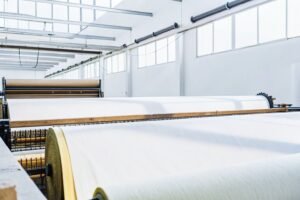
When you walk the floor with me at Shanghai Fumao, I don’t just show you the machines running. I want you to look at the Grey Storage Area (where the un-dyed fabric sits) and the Finishing Holding Area (where the dyed fabric waits to be heat-set). If those areas are overflowing—if you see rolls stacked three-high in the aisles—that factory has a bottleneck. And that bottleneck is a tax on your timeline.
A smooth operation looks like a river: constant, steady flow. A bad operation looks like a traffic jam: stop-and-go, honking horns, and frustration. You are paying for the traffic jam, even if the price per yard is cheap.
What Does an Overflowing Grey Fabric Storage Area Tell You?
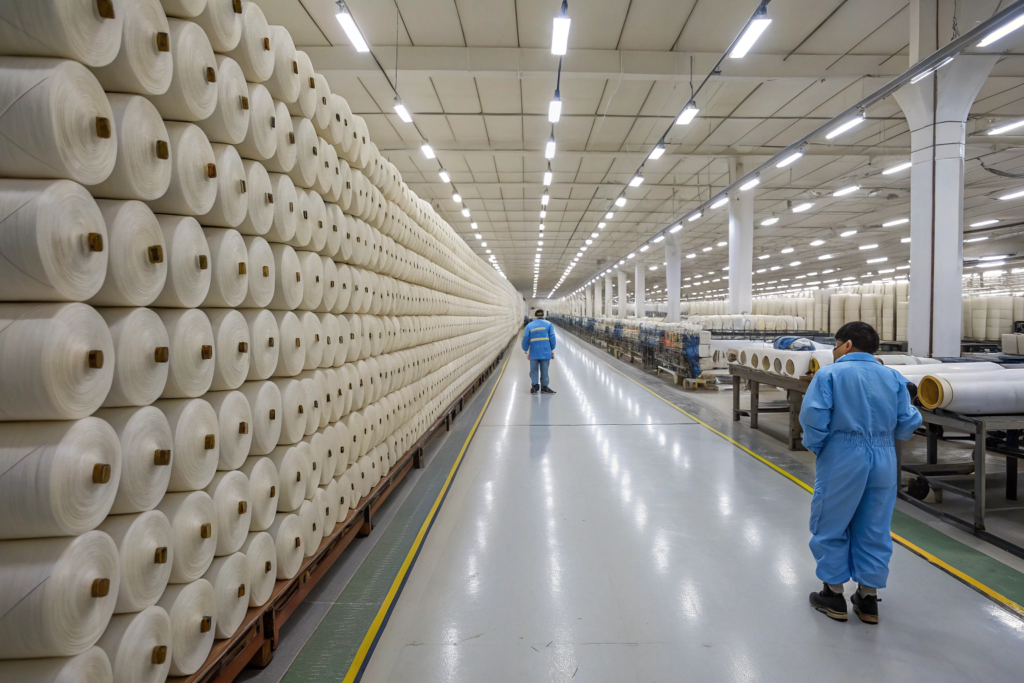
It tells you the Dye House is backed up. This is the single most common bottleneck in all of Keqiao. A weaving mill can produce greige fabric 24/7. It’s mechanical. It just spins out yards. But dyeing requires water, steam, chemicals, and time. The capacity of the dye kettles is fixed.
If you walk into the weaving mill’s warehouse and you see mountains of greige rolls with work orders taped to them dated from three weeks ago, you have just uncovered the real lead time. The factory might tell you "Delivery in 4 weeks." But if there are 3 weeks of backlog sitting right there on the floor, that’s a 7-week delivery minimum. They are just giving you the dyeing time, not the waiting time.
Here’s a specific trick I use: I check the dust on the top of the greige rolls. Is it a thin layer (a few days old)? Or is it thick and gritty (weeks old)? If it’s thick, that fabric is aging like wine, but unlike wine, it’s getting dirty and absorbing moisture—which makes dyeing it evenly harder. This is why we at Shanghai Fumao invest so heavily in Synchronized Planning. We try to match our weaving output precisely to the dye house’s kettle availability. We don’t stockpile greige goods unless it’s a commodity program item we know we’ll sell. This keeps the flow moving. If you want to understand more about this constraint, reading about how to calculate textile dyeing capacity and manage wet processing lead times is a good start, as well as understanding the basics of lean manufacturing principles applied to textile finishing plants.
Why Are Half the Finishing Machines Idle While Workers Stand Around?
This is a classic "Hidden Bottleneck" you can only see in person. You walk through the finishing department and you see three massive stenter frames (the drying ovens). One is running full speed. Two are silent. But there are six workers standing around. You think, "Wow, they have plenty of spare capacity!"
Wrong. They are likely waiting for Steam Pressure or Fabric from the Dye House. Stenter frames are energy hogs. Maybe the factory’s boiler can only support running two out of the three machines at full temperature. Or maybe the dye house is releasing fabric in a "batch" process—they finish all the reds for the week, then switch to blues. While they dye the blues, the red finishing line is idle.
This inefficiency costs you money because the factory builds this "standing around time" into their cost per yard. I call it the "Friction Tax." At Shanghai Fumao, we use Hot-Coupling. This means we schedule the dye cycle to finish exactly when the stenter frame is free and hot. We plan the color sequence (light to dark) to minimize cleaning downtime. When you walk our floor, you won’t see people standing around with their hands in their pockets. You’ll see a constant, deliberate motion. That’s the difference between a factory that understands Flow Manufacturing and one that’s just a collection of random machines.
How to Assess Worker Skills and Safety Culture In-Person?
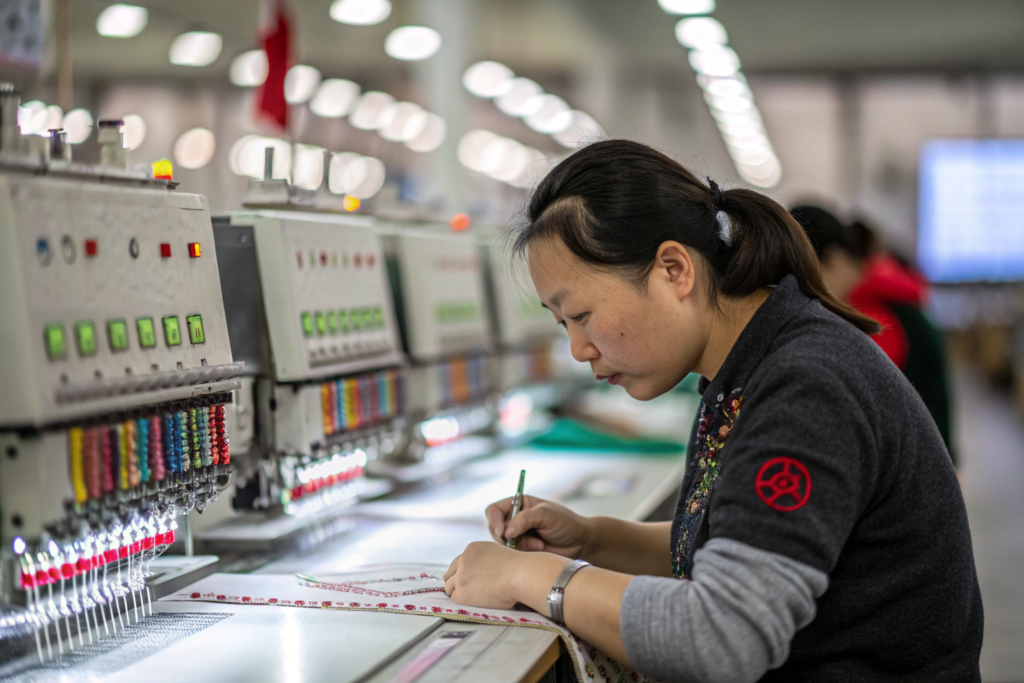
The machines are just iron and plastic. The fabric is just yarn. The only thing that turns those into a $15/yard premium textile is the Human Element. And you can’t assess that on a spec sheet. You have to look the people in the eye and watch their hands. A skilled textile worker moves with an economy of motion that looks almost lazy to an outsider, but it’s actually the result of 10,000 hours of muscle memory. A novice moves like a robot—jerky, hesitant, and slow.
When I bring clients into our specialized areas—like the coating line or the schiffli embroidery floor—I tell them to ignore me for a second and just watch the operators’ hands. Are they fighting the machine? Or are they dancing with it? This is crucial because complex fabric development requires Tacit Knowledge. You can’t write down in a manual how hard to tap a jammed yarn feeder to get it to release without breaking. The worker just knows. If the factory has a revolving door of untrained labor, that knowledge doesn’t exist, and your complex order is their training exercise.
Are the Operators Engaged or Just Watching the Clock?
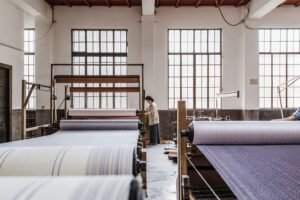
You can spot an engaged workforce from 50 feet away. It’s in the posture. An operator who owns her machine will have her area organized. She’ll have a small stool set just right. She’ll have her snips hanging on a hook she made herself. She’ll be looking at the fabric before it hits the take-up roll. She’s anticipating problems.
A disengaged operator sits on an overturned bucket scrolling on her phone, waiting for the red "Machine Stop" light to come on. She reacts to problems. She doesn’t prevent them. By the time that light comes on, you’ve already woven 20 yards of defective fabric.
Here is a specific check I use at Shanghai Fumao: The Spare Parts Drawer Test. It sounds silly, but ask a senior operator to show you their spare parts drawer for their specific loom. Is it organized? Do they know they have 3 left-threaded screws and 2 right-threaded screws? Or is it a tangled mess of random springs? An organized drawer means this person can fix a minor stoppage in 2 minutes instead of waiting 30 minutes for a mechanic. Multiply that by 50 machines, and you have a massive difference in Overall Equipment Effectiveness (OEE) .
I often get into discussions about this on industry forums. There’s a great thread on how to calculate OEE in textile manufacturing and improve operator engagement that highlights why this soft skill matters to your bottom line. Another useful resource is a case study on improving worker retention and skills development in the apparel supply chain. Good factories invest in their people. Bad factories just burn through them.
What Does the Condition of the Safety Equipment Actually Mean?
I’m not just talking about fire extinguishers. I’m talking about the Needle Guards on the sewing machines and the E-Stop Cables on the finishing ranges. In a high-speed textile plant, the difference between a minor injury and an amputation is often a $5 piece of clear plastic guarding that’s properly installed.
If you see a machine with the safety guard tied back or removed "because it slows down the operator," you are standing in a factory that values output over human life. Run. But more relevant to you: If they don’t care about their workers’ fingers, they definitely don’t care about your fabric’s selvage. Safety culture and quality culture come from the same root—Discipline and Respect for the Process.
Look at the floor markings. Are the aisles clearly painted yellow? Are the electrical panels blocked by rolls of fabric? Blocked panels are a fire hazard. Textile lint is basically gunpowder. A clean, safe factory is almost always a high-quality factory. I remember a buyer from a major European workwear brand who spent 15 minutes just looking at our air filtration ducts. He knew that if the ducts were clean, we were managing the lint. If the lint was managed, the fabric wasn’t being contaminated. It was a brilliant, indirect way to check our quality system without looking at a single piece of fabric. This is the level of detail that protects your brand reputation.
Conclusion
There is an old saying in our industry: "Trust, but verify." But in the world of global textile sourcing, I think it’s more accurate to say: "Verify, so you can trust." A factory visit isn’t about catching people in a lie. It’s about aligning expectations with reality. It’s about seeing the river of production flow—from the yarn shelf to the inspection table—and confirming that there aren’t any hidden dams or toxic spills along the way.
You’ve seen the checklist now. It’s not just about counting looms. It’s about the Rhythm of the Floor, the Timing of the Visit, the Flow of the Inventory, and the Skill in the Hands. These are the intangibles that determine whether your fashion brand gets a reliable partner or a costly lesson. A swatch can be faked, but a well-run factory cannot.
At Shanghai Fumao, our doors are always open to partners who want to see how fabric should be made. We don’t just want your PO; we want your confidence. If you’re ready to move beyond emailing back-and-forth and actually see where your next collection will come to life, we invite you to Keqiao. Come walk the floor with us. And if you can’t make the trip right now, we can still build that trust through the level of transparency we offer remotely.
If you are planning your next production run and want to discuss how a partnership with a transparent, vertically integrated supplier can work, please reach out. Contact our Business Director, Elaine, directly. She can coordinate a call or a visit, and she knows the ins and outs of our production calendar better than anyone. She’ll give you a straight answer on when to come and what you’ll see. You can email her at elaine@fumaoclothing.com. Let’s make sure the fabric you sign for is the fabric you actually get.